
Inactive· since Aug 13, 2026
- 16
- days it ran
- 0
- relaunches
Ad copy
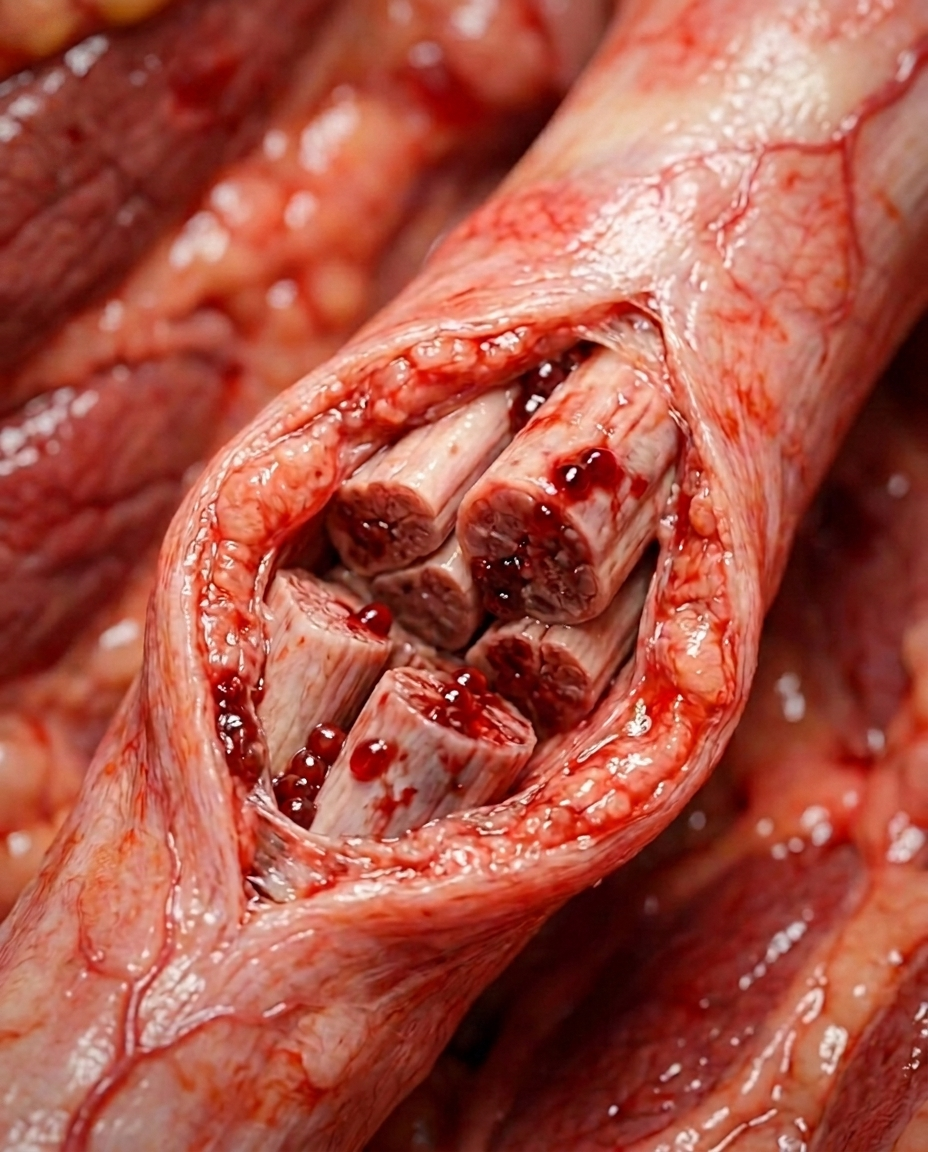
It's not the chemo. It's not the scan you're waiting on. It's not even the fact that you beat it. I've watched survivors — people who won, who rang the bell — lose their feet an inch at a time to something nobody warned them about. Every one of them did everything right. They finished treatment. They beat the cancer. That's the part nobody explains — and it's the part that should scare you more than the diagnosis ever did. I beat cancer. Nobody told me I'd lose my feet doing it. I used to chart every survivor's complaint the same way: burning, tingling, numbness, "worse at night." After sixteen years and the same three words in the same three feet every single week, I stopped being surprised by it. It was always someone who'd finished a platinum or a taxane. Always someone who'd been told the neuropathy was "a known side effect," that they were "lucky it wasn't worse," and to mention it at the next follow-up. The survivors I watch struggle to walk aren't people who ignored their bodies. They're people who were told numb feet were the price of being alive — and to be grateful. I'm telling you this now because fourteen months ago I finished my own chemo — the same taxane I've hung for hundreds of patients — and now there's a burning in my own two feet at night I recognize better than anyone should. And I refuse to spend the rest of the life I fought for hanging my feet off the side of the bed. I'm not a researcher. I'm the one who hangs the bag and holds your hand while it drips in. I've done it for sixteen years. Oncology infusion. Thousands of feet, most of them going numb before their owners ever said a word — because how do you complain about numb feet after beating cancer? Let me tell you what that actually looks like. The slow, quiet slide. First the toes. Then the whole foot. Then it climbs. Until one day someone says the word they all say: "It's chemo-induced neuropathy. It's likely permanent. We'll manage the pain." A small blister you never felt forms on a heel. It gets bigger because you can't feel it to protect it. It turns into a wound that won't close on a body chemo already put through the wringer. Then comes the sleeplessness. Not normal tiredness. The kind where the burning gets worse the second your head hits the pillow, and you're hanging your feet off the side of the bed at 2am praying the cool air does something. The balance goes. You lean on the counter at the stove. You hold the wall in the hallway. You look down to make sure your shoes are still on your feet, because you honestly can't tell. The medications that trade one misery for another. Gabapentin, or Lyrica, or whatever you're on. They fog your head. They cost you your coordination. Relief that costs you your sharpness — after you already gave chemo your hair, your energy, and a year of your life. And the part nobody says out loud. You survived the thing that was supposed to kill you, and you're still not living. Cancer-free, and not feeling alive. I've watched marriages buckle under it. I've watched a woman ask her husband to check her feet every night because she can't trust her own eyes. I've watched a survivor sit in a support group, telling the room she can barely feel the floor, and wondering out loud why nobody warned her the fight didn't end when the treatment did. I've watched survivors stop coming to the group. I know what that means. One of them — Carol, from my own chemo cohort, three years cancer-free now — told me something I think about every day. She said: "I'd have signed up for the chemo all over again. Nobody told me the feet were the part that stays." Every. Single. One. So here's the trap most survivors are stuck in. Two paths. Both lead to suffering. Path one: Accept it. "It's a known side effect." Fill the gabapentin prescription. Tell yourself you should just be grateful to be here. Mention it at your next follow-up, get told it's expected, come back in six months. Watch the numbness climb up your ankles anyway. Path two: Do nothing. Leave it alone. The burning at night. The feet that feel like ice by evening. The pins and needles that never fully quit. Most survivors tragically talk themselves out of these signals until it's too late. They blame the burning on standing too long. They blame the numbness on being tired. They blame the balance on everything the year took out of them. And underneath all of it: who am I to complain, after what I got to keep? It's none of those things. And you have every right to complain. It's your nerves fraying. But there's a third path nobody in that treatment room will ever mention. And it's the only one I've ever seen actually quiet the burning instead of just covering it up. Fourteen months ago I finished the last cycle. They handed me a card and a hug and told me to go live. And I tried. But within weeks there was a burning in the balls of both feet, worse at night, and a tingling in my toes that felt like they'd fallen asleep and never woke up. I'd hung that exact drug for hundreds of people. I knew what it was the moment it started. It was late — I was charting a patient's neuropathy complaint at the end of a shift, writing down her words, "burning, worse at night, can't feel the floor," and I stopped mid-sentence because I realized I wasn't describing her feet anymore. I was describing mine. On paper, none of it was alarming. "A known side effect." "You're lucky." "We'll keep an eye on it." But I've heard those exact words handed to the survivors who can't walk their own dogs anymore. I know what a burning foot looks like at the BEGINNING. Because I've held the feet of people whose burning started exactly where mine did. I felt something I'd never felt in sixteen years of nursing — real, bone-deep terror. Not for my patients. For myself. So I stopped accepting "a known side effect" and started asking a different question. Not "how do I turn the pain down" — but "why is my body actually doing this in the first place?" Here's what nobody explains to you. Think of a nerve like a wire running down your leg. It carries a signal — a tiny current — from your foot up to your brain. And like any wire, it's wrapped in insulation to keep that signal clean and protected. In your body, that insulation is called myelin. You've never heard the word and it's been doing its job every second of your life. Now picture what a taxane or a platinum drug does to that insulation. It doesn't cut the wire. It frays it. Chemo is built to hit fast-dividing cells, and in the crossfire it batters the long nerves and the tiny vessels feeding them, and the insulation starts to wear thin and split. And here's the cruel part — the damage was already being done while the drip was still running, cycle after cycle. By the time you feel it, the fraying has a head start measured in months. And here's the thing that made me put my coffee down and stare at the wall for a minute. When the insulation frays, the wire doesn't just go quiet. It short-circuits. The current leaks. The signal crosses. That's the burning. That's the electric shock out of nowhere. That's the pins and needles when nothing is touching you. It isn't your foot sending a real message — it's a frayed wire firing on its own. And where the insulation is worn clean through, no signal gets through at all. That's the numbness. That's not feeling the floor. That's a blister you never felt form. Same fraying. Two faces. Burning where it's short-circuiting, numb where it's worn through. And it doesn't stay in your feet. The same fraying works on every long nerve in your body. It's why the tingling climbs from your toes to your ankles to your calves. It's why your hands start dropping cups. It's why your balance goes and you find yourself holding the wall. It's why the cold sits in your feet like ice no matter how many blankets you pile on. It's why 2am is the worst hour you have. ALL of it traces back to the same fraying wire. Everyone watches the cancer. The story underneath is your wiring coming apart while everyone congratulates you on beating it. Now let me address what you're probably thinking. First: "But treatment's over — shouldn't it just heal on its own?" Sometimes it settles a little. But once the fraying has started, it doesn't rebuild what's already worn on its own timeline, and for a lot of survivors it doesn't settle at all — it stays, or it climbs. Waiting for it to fix itself is how a year turns into two. The signal keeps crossing — quieter, some days, but still crossing. Second: "I've been taking gabapentin." Gabapentin turns down the volume on the signal. It doesn't repair the wire. It just makes the short-circuit harder to hear. The fraying continues underneath. And you pay for the quiet with the fog and the coordination — after chemo already took a year of both. Third: "My B12 came back normal." Here's what nobody told you. "Normal" was calculated for the average healthy adult, not for someone whose nerves are already fraying, and not for a body that just spent months under chemo, which is hard on the very nutrients a nerve leans on hardest. You can be "in range" on paper and still be short of what a damaged nerve actually needs to hold its insulation together. All of these target one piece and miss the whole mechanism. The signal is still crossing. The wire is still fraying. The damage continues underneath whatever you're doing on top. The monitoring just measures how far the fraying has gotten. Nobody is repairing the wire. When I started pulling research, I found two nutrients that the nerve actually uses to protect and rebuild that insulation. The first is a specific form of B12 — methylcobalamin. Not the cheap form in the drugstore bottle. This is the form the nervous system actually puts to work, and the published work on it is about myelin — the insulation. It's one of the raw materials a nerve draws on to support and maintain that protective coating around the wire. The second is magnesium. Magnesium supports healthy nerve and muscle function — it's part of how a nerve keeps its signal steady instead of firing off on its own. I sat there reading and thought: I've been telling patients to try the vitamin aisle for years for exactly this, and it almost never did anything. Why? And that's when I understood the real problem. It was never the ingredient. It was how it was getting in. A pill has to survive your stomach acid, run the gauntlet of your gut, and then pass straight through your liver — which strips out a huge share of it before it ever reaches your blood. That's called first-pass metabolism. By the time whatever's left reaches a nerve in your foot, it's a fraction of what you swallowed. And after chemo, a gut that's been through what yours has absorbs even less. So when someone tells me "I spent thousands on supplements and nothing worked" — I believe them. The nutrient may have been right. It just never got where it needed to go. And every time I bring this up with a survivor whose feet are burning, I get the look. Raised eyebrows. That "You mean a vitamin? Through the skin? That's supposed to help my nerves when nothing else did?" face. I get it. It sounds too simple. But the ones who come back to me weeks later come back different. The burning at night is quieter. They're sleeping. They've stopped checking the floor before they stand. After I understood the mechanism and the delivery problem, I found something called NerVana+. It's a transdermal patch. You put it on and it releases magnesium chloride and active B12 — methylcobalamin, the form nerves actually use — steadily through the skin over eight to ten hours, straight into circulation. No stomach. No gut. No liver stripping it down first. It also carries alpha lipoic acid and B9, two more compounds that support that same nerve-repair work — alpha lipoic acid helping protect the nerve from further oxidative damage, B9 working alongside the B12 to support the nerve's own repair processes. One patch. That's the whole routine. The delivery is the entire point. Every nutrient in it, going in the one way that skips the filter that wrecked every pill you ever tried. No pills to choke down. No horse-sized capsules. No thirty-gram-of-sugar juice. You wear it. That's it. Here's what happened to me. Week one, I wore the patch and honestly felt nothing. I almost talked myself out of it. I kept the routine anyway — one patch, same time every night. Week two, I slept through the night. All the way through. For the first time in longer than I could remember, the 2am burning didn't wake me and I didn't wake up reaching for the edge of the bed to hang my feet off it. Week three, my husband Mike was the one who noticed. He said I'd stopped feeling for the edge of the shower with my toes before I stepped in. He said I wasn't holding the counter at the stove anymore. I hadn't even clocked it — I'd just started trusting my feet again. Week four, I did the survivor group's 5K walk. I'd been dreading it for a month — a mile in, the year before, my feet had gone to blocks I couldn't feel. Carol was dreading it too. She'd been favoring her left foot for months, stopping every half mile to shake out the pins and needles, telling everyone she was "just pacing herself." I'd watched her do it at three walks in a row. This time I finished the whole thing. And at the end, out of breath and laughing, I knelt down and re-tied both my running shoes without once looking down to check my feet were still in them. Two years I'd been checking. That morning I just knew. But the thing I remember most isn't the walk. It's Carol, who'd finished a few steps behind me — no limp, no stopping to shake out her foot, for the first time since I'd known her — watching me tie those laces, and going quiet. Then she said: "Whatever you're doing for those feet — you tell me. You tell all of us." And then walking back into infusion the next morning knowing — for the first time in months — I wasn't going to spend the rest of what I fought for hanging my feet off the bed. I told Carol the whole of what I'd found. She looked at me with tears running down her face and said: "Tell everyone. Don't let another survivor find out the way we did." That's why I'm writing this. I don't have a survey to hand you. What I have is a count. The survivors I've handed that page to, and their families — fourteen so far. One never started. Eleven are still wearing it. Nine have been back and told me what changed. Six describe some version of what I felt — quieter nights, feet they can trust again. Two wore it a full month and felt nothing and stopped, and I'd rather tell you that than not. And here's the honest truth I owe you: this is not a cure. Nobody has run the trial that takes people exactly like me — chemo just finished, burning just started, nobody in a wheelchair yet — puts them on this delivery format, and prints what happens over a year. Nobody funds that trial on magnesium and a vitamin, and I'll come back to why. I decided I wasn't going to sit in the monitoring phase waiting for it. Even "I haven't gotten worse" would have been worth it to me. In sixteen years of hanging those bags — not one oncologist has ever sat a patient down and explained why this happens. Not because they're hiding it. Because the pipeline that moves this from research into a treatment room runs on patent money. You can't patent magnesium. You can't patent a vitamin. No patent, no sales reps, no guideline changes. That should make you angry. Not at your oncologist, who saved your life. At the structure that kept this from all of us — including the nurse who holds the hand while it drips in. You're in a window right now. The early phase — the "it's a known side effect" phase, the burning-just-started phase — is the ONLY window where the fraying can still be supported before the wire wears clean through. Every survivor I watch struggle to walk was in that window once. Every one of them would give anything to have it back. One side — nothing changes. The burning climbs from your toes to your ankles to your calves. The numbness spreads. You look down to check your shoes. A blister you never felt turns into a wound that won't close. The other side — one patch. On before bed. Ten seconds. Done. Over the next few weeks the nights get quieter. The burning eases. You stop hanging your feet off the bed. You stop checking the floor before you stand. And the next time your survivor group does its walk, you're not the one stopping every half mile to shake out your foot — you're the one finishing it, on feet you can feel, like the person you were before any of this started. The window stays open. The wound never opens at all. If you go, get the multi-month option. It works out cheaper that way, though the price isn't the reason. A few months is roughly what it takes for a nerve to show whether the support is doing anything — which means at the end of it you're not guessing based on one week. You're deciding based on what your own feet can feel. Methylcobalamin — the active form nerves actually use, not the cheap kind. Magnesium chloride to support healthy nerve and muscle function. Delivered through the skin over eight to ten hours, the one way that skips the gut and the liver that stripped down every pill you ever swallowed. Every order comes with a 60-day money-back guarantee, and the sixty days start the day the box lands on your step. Wear it that whole time, and if you don't notice a difference, one email gets you every dollar back — and they don't ask for the empties. Treatment's over. The fraying is still spreading. But the window is still open. Don't let another survivor tell your story with the words "I wish someone had told me sooner." I just did. Tell every survivor you know. If you're in that early window right now — the burning at night, the pins and needles, the numbness that's started to climb, everyone telling you it's just the price of getting to be here — at least go look at that page. It breaks down exactly how the patch delivers what your nerves need, and why the pills you tried before never got where they needed to go. https://uk.avalaine.com/pages/avalaine%C2%AE-magnesium-nerve-relief-patches-story
Fix Neuropathy Naturally
"I've been feeling like my old self again since starting with these patches. Years of pain erased."
SHOP NOWLike this ad? Make it yours.
Crush rebuilds this exact creative around your product — your brand, your colors, your offer — in about a minute.