
Active· since Feb 13, 2026
- 210
- days running
- 1
- relaunches
- 350
- EU reach
Ad copy
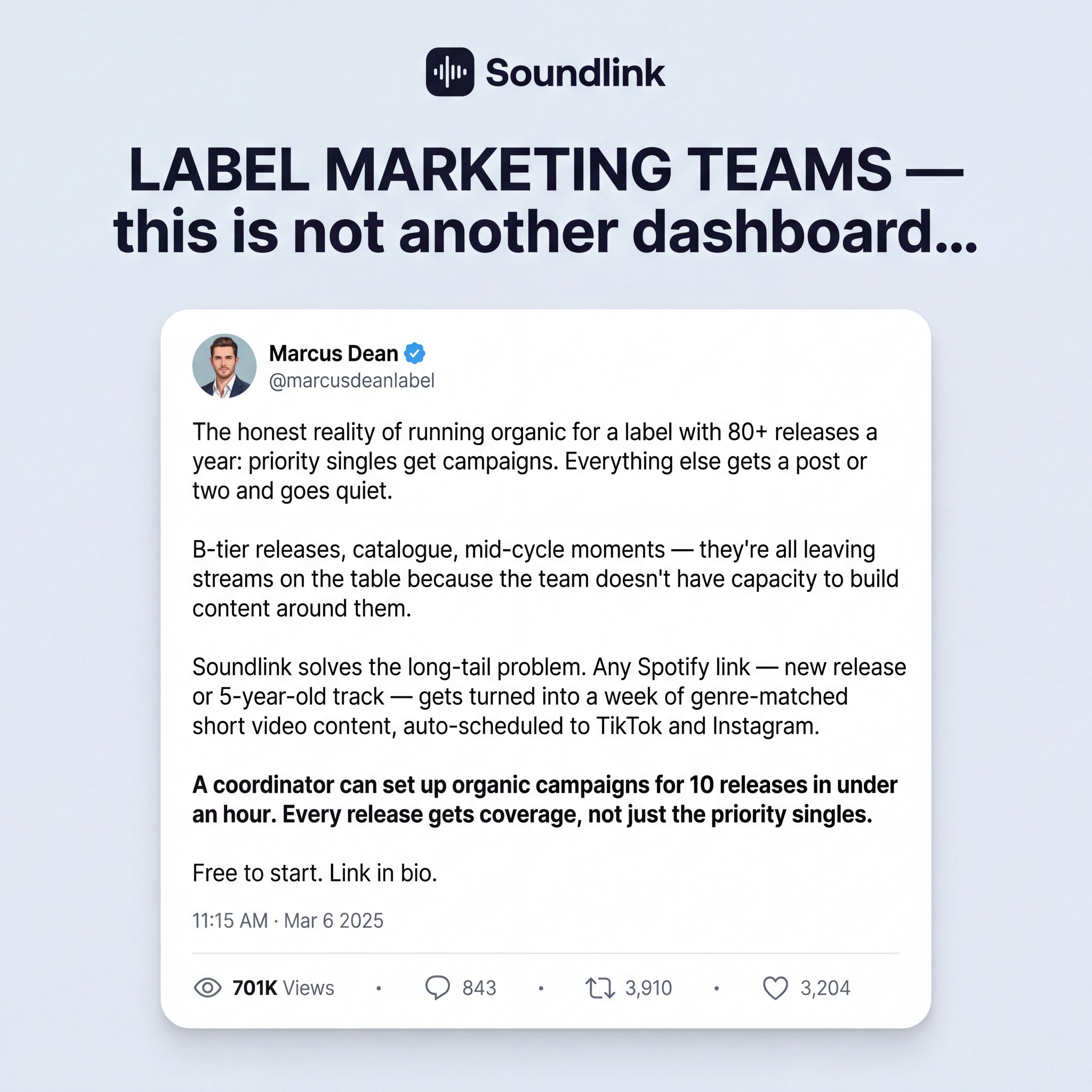
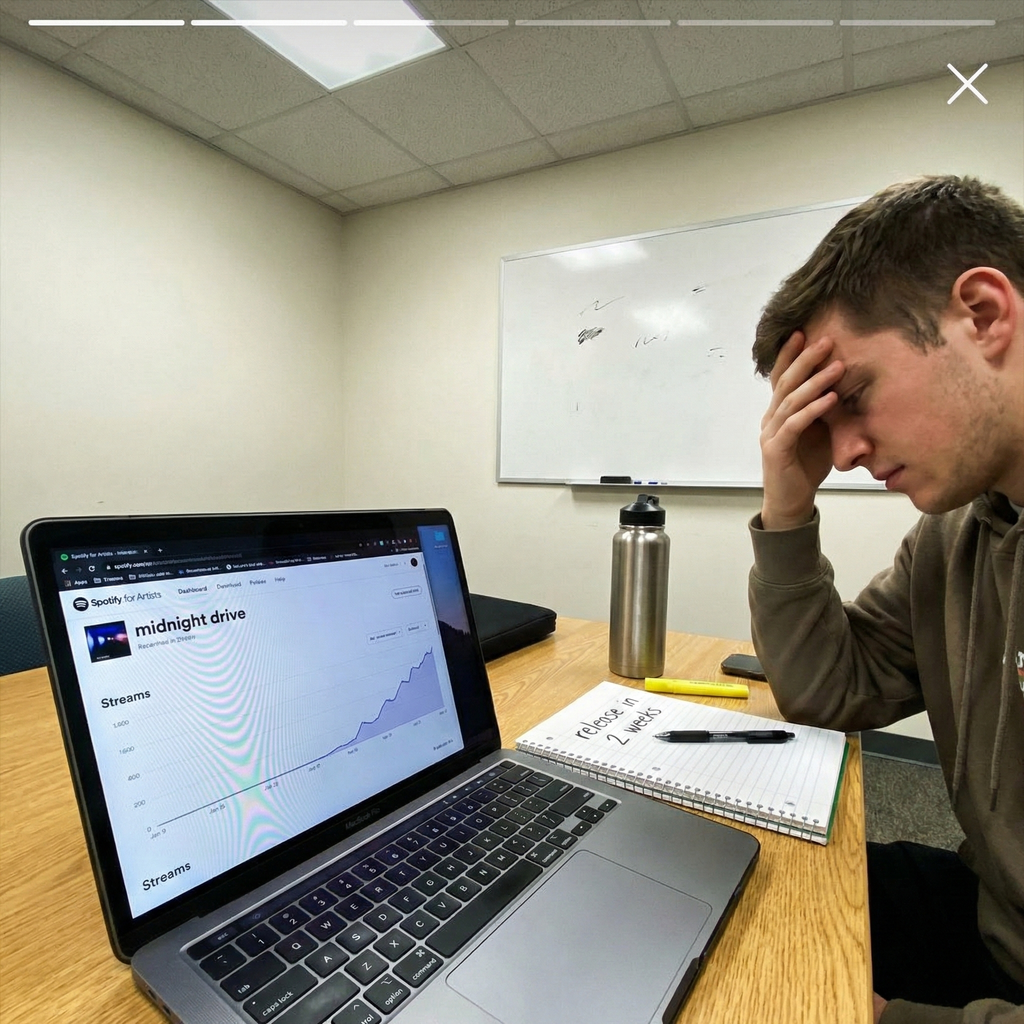
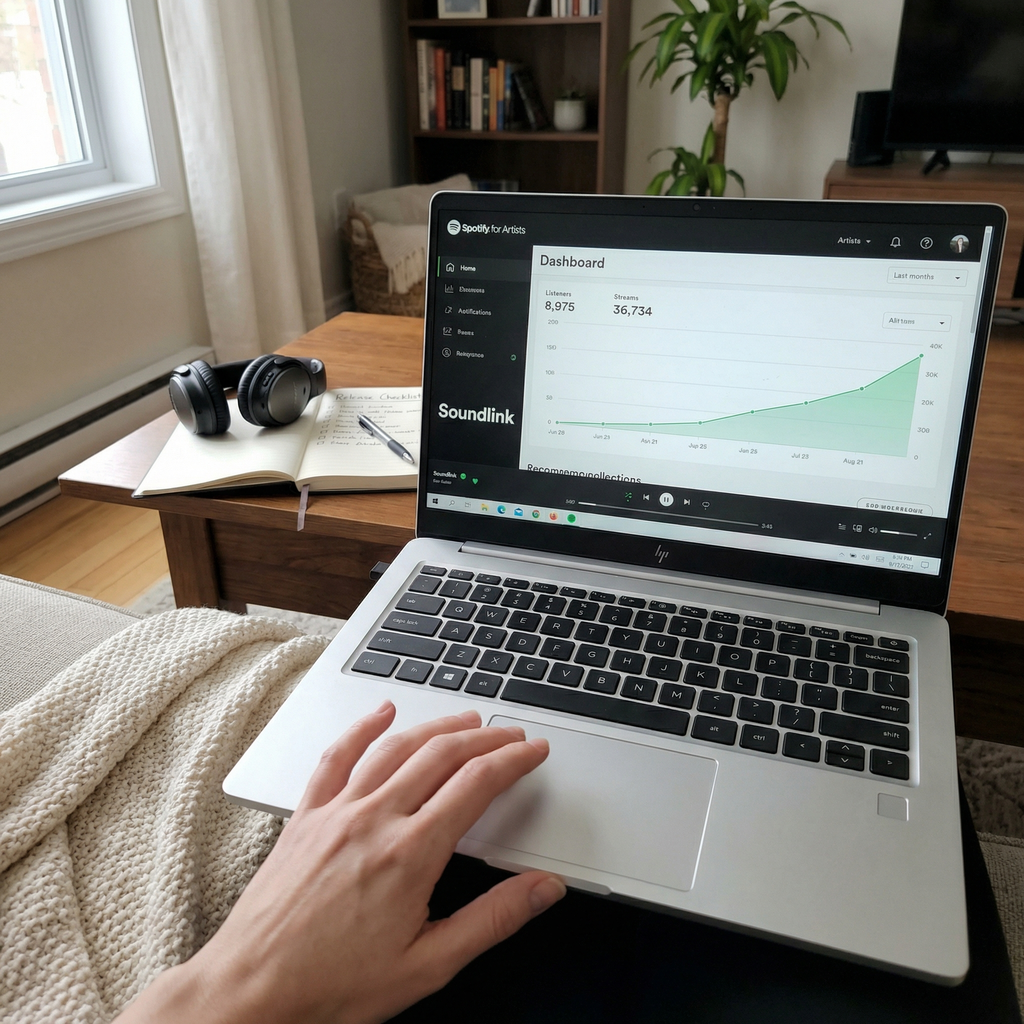
“‘I went from 3k streams… to… 1.4 million streams,’” the LinkedIn comment said, and everyone assumes those artists are posting 3-5 videos a day on camera, but it has nothing to do with hustle or charisma, it comes down to a 30-day pre-scheduled clip calendar built in 1 sitting. That screenshot you’re looking at? I stared at it for 11 minutes like it was a magic trick. Because my “magic trick” lately looked like this: finish a song after 6 weeks of nights and weekends… then spend the next 30 days doom scroll TikTok, trying to figure out how the hell you’re supposed to promote it without turning into a full-time content creator. And you already know the line people throw at you: “Just be consistent.” Cool. With what time? I have a regular job. I’m not really comfortable being a presenter on camera. And promotion definitely feels like a full-time job, especially when you’re trying to make an impact on your own. My last release was brutal. I posted 1 clip on Monday. 1 on Wednesday. Then I missed Friday because I was editing until 12:48 AM and my brain felt like a wet sponge. I spent 1-2 hours every day creating content and posting on TikTok, and it sucks when you put in hours of editing only to get a few hundred views. Like 327 views. 412 views. 198 views. Meanwhile, the song itself? The thing you actually care about? Sat there at 43 streams for the day. That’s the part nobody warns you about: there’s barely any time left for… actually making music. By day 19 I was seriously burned out. By day 27 I had that ugly thought: “This is a waste of life.” And I’m not saying that to be dramatic. I mean literally sitting on the couch at 10:06 PM, laptop open, dragging subtitles around on a vertical video… while my guitar stayed in the case. Then, on a random Tuesday at 7:21 AM, I opened LinkedIn (of all places) while eating a rushed breakfast, and I see a post blowing up with raw screenshots of artists’ wins. Not polished. Not influencer-y. Just receipts. Numbers everywhere. “12,400 monthly listeners in 28 days.” “5,800 saves from 1 release.” “Booked 2 opening slots from 1 clip.” And that line that hit me in the chest: “I went from 3k streams… to… 1.4 million streams.” I did what you’d do. I looked for the catch. My BS radar tells me “2-3 times daily” is borderline ridiculous, so I assumed the comments would be the usual: “Grind harder.” “Post more.” “Go live.” “Be a personality.” But the people in the thread weren’t talking about being entertaining. They were talking about not syncing anything. Not filming face-to-camera. Not spending 90 minutes on CapCut per post. They kept referencing one very specific workflow: pick the song, pick a vibe, generate clips, schedule a month, move on with your life. That’s when it clicked. You’re not lazy. You’re stuck in a loop where the platforms reward volume, and volume punishes anyone who actually wants to make music. If you keep doing “edit a clip every night after work,” you’ll keep getting the same consequence: no catalog, no momentum, and that quiet resentment creeping in every time you open your DAW. So I went hunting for the exact tool they were using. Not a course. Not another “content calendar template.” Not a $499 “music marketing bootcamp.” A tool that makes the actual making-of-content part lightweight enough to stick to. That’s how I landed on Soundlink. And my honest reaction was not excitement. It was suspicion. Because I’m pretty terrible with social media and promoting, and I’ve been burned by “growth platforms” before. I’ve paid $79 for this, $49 for that, $200 on ads that went nowhere, and 1 “agency” consult for $150 that basically told me to “post more.” So I tested Soundlink in the most boring, practical way possible. I picked 1 song. The one I was avoiding promoting because I couldn’t face another month of filming random nonsense. I uploaded it, chose a vibe, and in a few minutes I had a stack of usable clips that actually matched the audio without me nudging waveforms around for 47 minutes. No “hold on, the lip sync is off.” No “wait, the drop hits 0.3 seconds late.” No exporting 5 times because the captions got cut off. Then I did the thing I never do: I scheduled the whole month. 30 days. Done. I set 1 post per day for 30 days (because I can handle that), with a few heavier days sprinkled in when it made sense. Not 3-5 times a day. I have a job and a nervous system. And here’s the part that surprised me. The relief didn’t come from seeing a viral spike overnight. The relief came that same night at 8:32 PM when I realized I wasn’t “behind” anymore. My evenings went back to being music. Rehearsal stayed rehearsal. My phone stopped feeling like a second boss. And because I wasn’t constantly scrambling, I could finally pay attention to what was working. By day 6, I wasn’t spiraling about being “shadowbanned.” By day 9, I had 3 strangers DM me asking what the track was called. By day 14, my daily streams went from 62 to 311. Not influencer numbers, but REAL momentum. The kind that makes you open Spotify for Artists twice just to make sure you’re not hallucinating. By day 21, I crossed 1,000 streams in 1 day for the first time on that project. And the weirdest part? I didn’t become a different person. I didn’t suddenly love being on camera. I didn’t turn into someone who can happily yap into a ring light for 45 seconds. I still hate that. What changed was the mechanism: instead of “make content from scratch every day,” I switched to “generate a batch from 1 song and schedule it.” That’s it. Soundlink’s thing, at least for me, was removing the time tax that makes artists quit. The syncing. The editing. The endless formatting. The feeling that you need a whole production just to post 12 seconds. So let’s kill the 2 biggest objections I had, because you probably have them too: 1) “I don’t have time.” Neither do I. That’s the point. I spent about 38 minutes setting up a month, versus 1-2 hours every day doing the piecemeal grind. Do the math over 30 days. That’s the difference between finishing another song or not. 2) “This is going to look fake or generic.” I thought it would. What made it work was choosing the vibe and then letting the clips be the vehicle, not the entire personality of the project. Also, I’m not trying to trick anyone. I’m trying to get people to actually hear the music. The LinkedIn screenshots weren’t “inspiring.” They were confronting. Because they proved something I didn’t want to admit: the gap between artists who grow and artists who stall isn’t talent. It’s whether promotion eats your life. If you’re stuck in the same loop I was stuck in, you don’t need motivation. You need a system that doesn’t require you to become a daily content machine. I wish I had done this before my last release, back when I was up at 1:13 AM moving text boxes around and telling myself “tomorrow I’ll write.” If you’re reading this and thinking, “Do you have any tips on how to handle this?” here’s my real answer: stop treating every post like a whole production. Build a month once, then go make music. If you want to see what those LinkedIn artists were using, look up Soundlink. Even if you don’t pick it, at least steal the approach: 1 song, batch the clips, schedule 30 days, protect your brain.
Soundlink | Spotify Music Ads That Actually Work - getsoundlink.com
Soundlink is the only music marketing platform that connects Meta Ads to real Spotify streams. Track real fans, not just clicks.
LEARN MORELike this ad? Make it yours.
Crush rebuilds this exact creative around your product — your brand, your colors, your offer — in about a minute.