
Inactive· since Jan 30, 2026
- 14
- days it ran
- 1
- relaunches
Ad copy
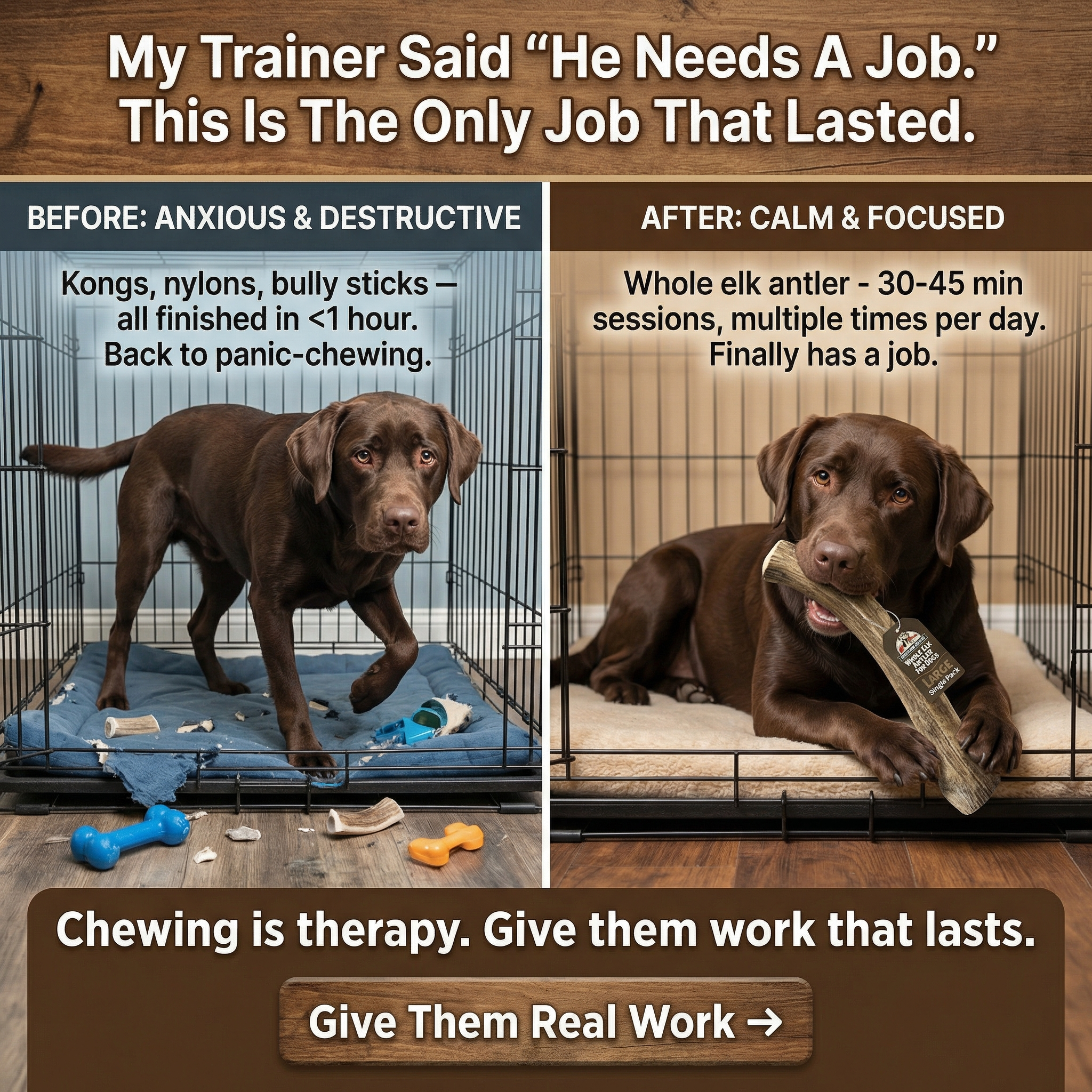
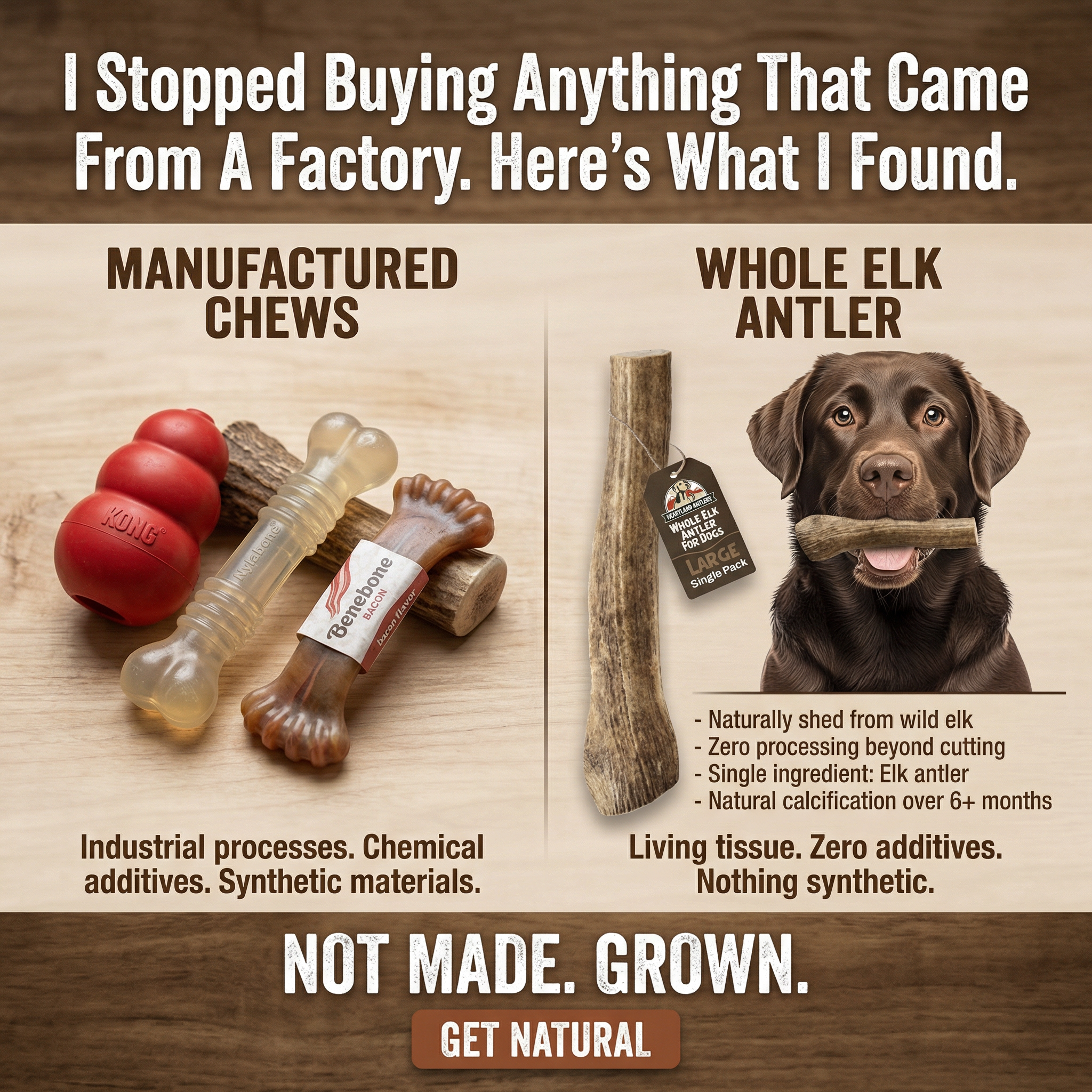
Who Else Wants To Stop Feeling Like An Idiot Every Time Their Dog Destroys Another "Indestructible" Toy? I spent $847 on dog toys in six months. PetSafe Extreme Kong. $28. Destroyed in three days. Benebone Wishbone. $15. Shattered in a week. BarkBox Super Chewer subscription. $35/month. Canceled after four months because every toy was destroyed within 48 hours or sat in a pile, ignored. West Paw Zogoflex. $22. "Guaranteed tough." Lasted five days. Nylabone Dura Chew. $18. Found it in pieces under the couch. Split elk antler from the pet store. $32. My German Shepherd Max hollowed it out in 90 minutes. I tried freezing peanut butter inside Kongs. Messy. Time-consuming. He'd lick it out in 20 minutes and then go back to destroying the couch. I bought "Giant" size toys meant for 100lb dogs. Max is 75lbs. Didn't matter. Destroyed anyway. I read reviews. Watched YouTube videos. Asked Reddit. Bought exactly what power chewer owners swore by. Nothing lasted more than a week. Every single time I clicked "Add to Cart," I told myself: "This one will be different. This one is actually tough." Every single time, I was wrong. And every single time Max destroyed another toy in a day, I felt like a complete idiot. How many times can you fall for the same marketing claims before you realize you're the problem? How many times can you see "INDESTRUCTIBLE" on a package and still believe it? I was tired. Frustrated. And honestly? Embarrassed. My friends would come over and see the graveyard of destroyed toys in my garage. Ripped plush. Shredded rubber. Nylon bones in pieces. "You really spend this much on dog toys?" Yeah. I really did. And I had nothing to show for it except a pile of trash and a dog who kept destroying my furniture because nothing I bought could hold his attention for more than an hour. --- The Moment I Stopped Blaming Myself After the fourth "indestructible" toy failed in a week, I stopped reading product descriptions and started reading actual research. I needed to understand why everything kept failing the same way. And that's when I learned something that changed everything. It wasn't the brands. It wasn't the price. It wasn't even the materials, necessarily. It was the way everything I'd been buying was made. Every Kong I bought - whether it was the regular, the Extreme, or the $30 Extreme Black - was molded rubber. Same manufacturing process. Same uniform density throughout the entire toy. Every Benebone, every Nylabone, every nylon bone was injection-molded plastic. Consistent hardness from the center to the surface. Every bully stick was processed, dried, compressed hide. Same density all the way through. Even subscription boxes - different brands, different shapes, different claims - were all manufactured using industrial compression or molding processes. Here's why that matters for power chewers: Uniform density means predictable failure points. When Max chewed a Kong, his sustained gnawing pressure would concentrate at the seams, the ridges, the edges - anywhere the material naturally had stress. Because the density was uniform throughout, once he found that weak point, the material would break down predictably. With Benebones, he'd target the ridges. The nylon would wear down in the same spots every time. With bully sticks, he'd find the natural grain in the hide and pull it apart. It didn't matter if it was a $15 toy or a $35 toy. If it was manufactured with uniform density, Max would find the weak spot and exploit it. I watched it happen over and over. First 10 minutes: Intense chewing all over the toy. Next 30 minutes: He'd zero in on one spot - a seam, a ridge, an edge. By hour 2: Chunks coming off. Or he'd lose interest because there was no challenge left. Every. Single. Time. The pattern was identical whether it was rubber, nylon, or processed hide. And then I understood: These toys were engineered for average dogs. Dogs who chew casually for 10 minutes and then lose interest. They were never designed to withstand the sustained, focused gnawing pressure of a power chewer. Making them "thicker" didn't help. That just meant more of the same material with the same structural weakness. Making them "harder" didn't help. Uniform hardness still meant predictable failure points. And "split" antlers? They exposed the soft marrow center, which Max would hollow out in an hour, leaving nothing to chew. Every solution I'd tried - from $15 PetSmart toys to $89 subscription box "super chewer" products - was solving the wrong problem. They were trying to make toys tough enough to resist destruction. But the problem wasn't toughness. The problem was uniform structure. --- What Finally Worked (And Why It Took Me Six Months To Find It) I found whole elk antlers completely by accident. I was at a small pet shop in Montana visiting family. Not a big box store - one of those local places with weird, niche products. They had a basket of antlers near the counter. Big ones. Like, bigger than my forearm. The owner saw me looking. "Those are whole elk antlers. Naturally shed. Fresh stock from this year's spring shed." I'd tried a split antler before. Max hollowed it out in 90 minutes. I told her that. She nodded. "Splits are for puppies and light chewers. For power chewers like yours, you need whole." I almost didn't buy it. I'd spent $847 on toys. I was done. But here's what made me pause: She explained the difference. Split antlers expose the marrow - the soft, spongy center. Dogs hollow that out fast. It's instant gratification, no challenge. Whole antlers keep the marrow locked inside. The outer cortex is calcified bone - naturally hard - and the density gradient from the outside to the center means the dog has to work through progressively harder layers to reach the marrow. It's not just "harder" than manufactured toys. It's structurally different. Manufactured chews: Uniform density throughout. Whole elk antler: Density gradient. Thousands of microscopic bone structures that distribute gnawing pressure instead of concentrating it at weak points. No seams. No ridges. No injection-molded stress points. Just naturally calcified bone tissue that grew over six months on a wild elk. I bought one. $47. The largest one they had - labeled "Mammoth" for 70-90lb dogs. I took it home expecting nothing. I'd been burned too many times. --- Day 1: I Recorded It Because I Couldn't Believe What I Was Seeing I gave Max the antler that afternoon. He went at it like every other toy I'd given him - full attack mode, trying to find the weak point. After 20 minutes, I checked it. Barely a scratch. He kept going. 45 minutes. An hour. I've never seen Max chew anything for a full hour without destroying it or losing interest. He was working. Actually working for it. Gnawing at the outer cortex, trying to get to the marrow inside. No chunks coming off. No seams to target. No weak point to exploit. I took a video because I genuinely couldn't believe it. Day 2: He chewed for 30 minutes in the morning. 45 minutes in the evening. The antler showed some wear on the surface, but it was still completely intact. Day 3: Same pattern. 30-45 minute sessions. He'd chew, take a break, come back to it. For the first time since I'd brought him home, I had something that held his attention for longer than a day. Week 1: The antler was still whole. He'd worn down about a quarter-inch on one end, but there were no chunks, no pieces, nothing to panic about swallowing. Week 2: I took him for a walk and came back to find him chewing the antler in his crate. Calm. Focused. Not destroying the crate pad. Not panic-chewing the bars. This was behavior I'd never seen with Kongs or Benebones. By week 2, those were always destroyed or abandoned. Month 1: I took a photo. The antler was visibly worn - maybe an inch shorter from the gnawing - but it was still a fully functional chew. One month. The longest anything had ever lasted. Month 2: He was still chewing it. 20-30 minutes per session, multiple times per day. He'd gotten through the outer cortex in one section and was working on the denser inner layers. The marrow was still locked inside. Month 3: The antler was about half its original size, but Max was still engaged with it. He'd chew it like a project - methodical, focused gnawing to get deeper into the bone. Three months. One antler. $47. Compare that to the $847 I'd spent in six months on toys that lasted days. --- What I Wish Someone Had Told Me $800 Ago Here's the truth I learned: The problem was never that I wasn't buying tough enough toys. The problem was that I was buying manufactured toys engineered for average dogs. Kongs, Benebones, nylons - they're great for dogs who chew casually for 10 minutes and move on. But for power chewers? Dogs with sustained, focused gnawing pressure? Manufactured toys with uniform density will always fail at predictable stress points. The structure can't handle it. Whole elk antlers aren't manufactured. They're not molded or compressed or engineered. They're living tissue that grew naturally over months. The calcification process creates a density gradient that distributes pressure across thousands of microscopic bone structures. No weak points. No seams. No hollowed-out center to exploit. The marrow is there - locked behind layers of progressively harder bone that takes weeks to penetrate. That's why it lasts. Not because it's "tougher" than a Kong. Because it's structurally different from anything manufactured. --- Here's What You're Actually Getting Look, I'm not going to tell you whole elk antlers are cheap. They're not. A Mammoth whole elk antler (for 70-90lb power chewers) is $47. That's more than most toys at PetSmart. But here's what that $47 gets you: One whole elk antler - naturally shed, Grade A fresh (this year's spring shed) - Naturally calcified bone with density gradient (not manufactured) - No hollow center (marrow is locked inside) - Lasts 2-3 months for aggressive chewers (some last 4+) - Odorless, non-greasy (unlike bully sticks) - No synthetic materials, no chemicals, no processing - Sourced from free-range elk in Montana/Wyoming - Weight: 8-12oz (varies - each antler is unique) **90-Day Money-Back Guarantee** If your dog destroys it in under 30 days, or if you're not satisfied for any reason in the first 90 days, send it back. Full refund. Including return shipping. You risk $0. Either your dog actually chews it for months and you finally end the cycle of buying toys that fail... Or you get your money back. --- The Math That Finally Made Sense I spent $847 in six months on toys that lasted days. Let's break that down: - $28 Kong Extreme: 3 days = $9.33/day - $35/month BarkBox (4 months): $140 total, each toy lasted 2 days average = $11.67/day - $22 West Paw toy: 5 days = $4.40/day - $32 split antler: 90 minutes = $512/day (if we're being honest) Compare that to the whole elk antler: $47 for 3 months (90 days) = $0.52/day For the first time, the math actually made sense. I wasn't buying another toy that would be destroyed in a week. I was buying three months of peace. Three months of Max being occupied and calm instead of destroying furniture. Three months of not feeling like an idiot every time I clicked "Add to Cart" on another "indestructible" toy. --- I Can't Make You Try This But I can tell you what I wish someone had told me before I wasted $800. The problem isn't that you haven't found the right toy brand. The problem is that manufactured toys - Kongs, nylons, subscription boxes, even split antlers - can't solve the structural issue. Uniform density means predictable failure points for sustained gnawing pressure. Once I understood that, the solution became obvious: Stop buying manufactured. Start buying natural. Whole elk antler worked for Max. It lasted three months. He's still chewing it. I haven't bought a new toy in 90 days. For the first time since I brought him home. The graveyard of destroyed toys in my garage? That stopped growing. The feeling of being scammed every time another "indestructible" toy failed? Gone. I spent six months and $847 learning this lesson. You know the problem now. You've tried the Kongs. The Benebones. The subscription boxes. The split antlers. You've watched them all fail the same way. The choice is yours. [Get Whole Elk Antler - 90-Day Money-Back Guarantee] https://heartlandantlers.com/collections/whole-elk-antler-chews To finding what actually lasts, Donald. --- P.S. — The 90-day guarantee means you risk nothing. If your dog destroys it in under 30 days, or if you're not satisfied, you get every penny back. But if it works - if the natural density gradient makes the difference for your power chewer like it did for Max - you'll wish you'd known about this $800 ago. P.P.S. — Max is 18 months into his second whole elk antler now. That's $94 total in 18 months vs. the $847 I spent in 6 months on toys that failed. The math is ridiculous. But more importantly? I don't feel like an idiot anymore when I buy a chew for my dog. I know this one will last.
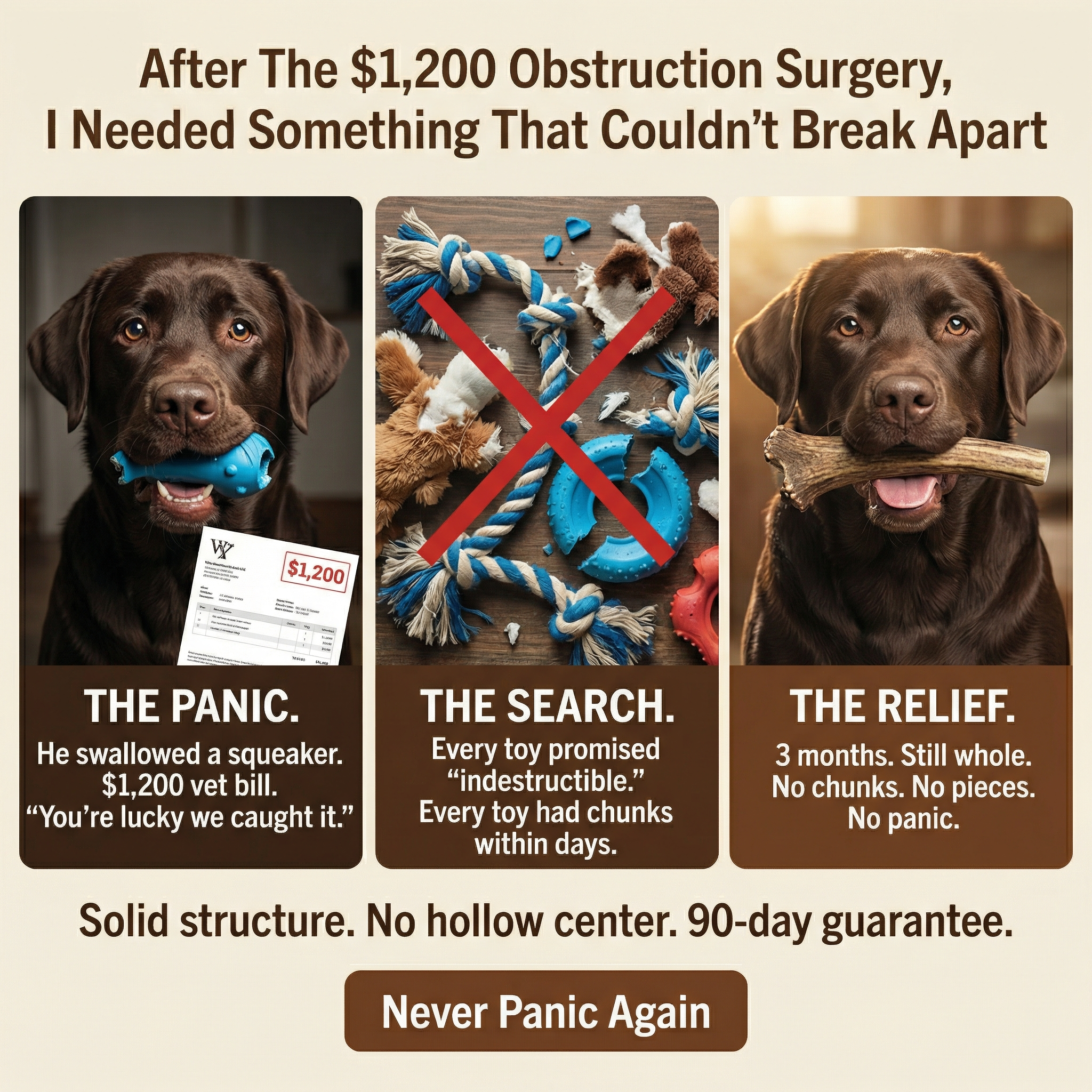
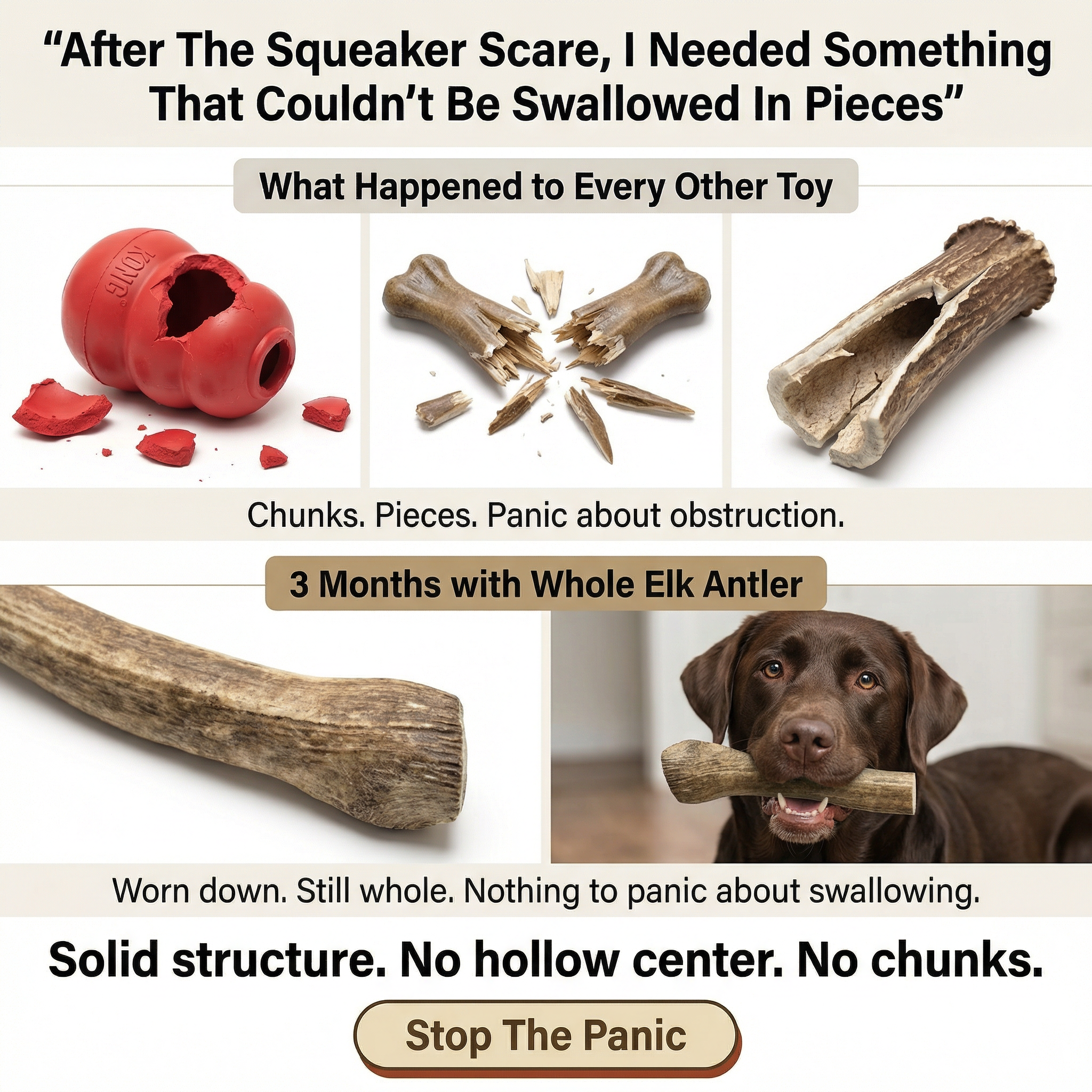
After The Squeaker Scare, I Needed Something That Couldn't Be Swallowed In Pieces
Medium-Hard with Rewarding Marrow Center
SHOP NOWLike this ad? Make it yours.
Crush rebuilds this exact creative around your product — your brand, your colors, your offer — in about a minute.