North Ridge Health Clinic
North Ridge Health Clinic Facebook ad: “Feel Like Yourself Again”
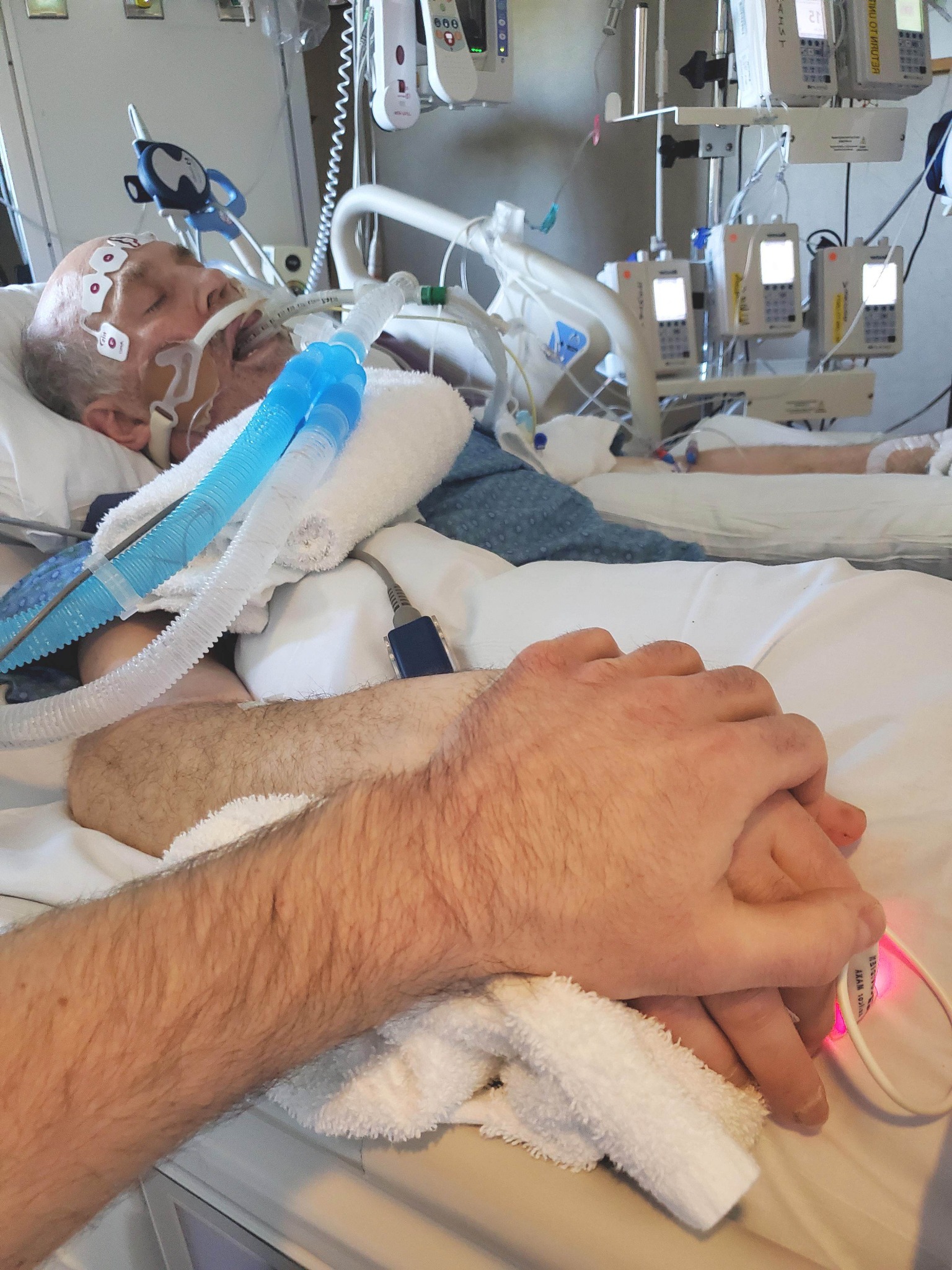
Ran for 32 days, from August 23 to September 24, 2026, the last day Crush saw it.
Run by North Ridge Health Clinic on Facebook. Crush is not the advertiser and does not verify its claims. See this ad in Meta's Ad Library(opens in a new tab)
Want an ad like this for your product?
Crush makes new ad images for your product from this ad: your logo, your product photo, your offer.
Trials from $19.95 USD, then $79.95 USD a month. Cancel anytime.
About this ad
- Meta Ad Library ID
- 1623551325808826
- Platforms
- Facebook, Instagram, Audience Network, Messenger and Threads
- Relaunches
- 0
- Niche
- Food & Beverage
Ad text
The most dangerous sign of a blood sugar problem isn't thirst. It isn't the number on your meter. High blood sugar is called silent for a reason. By the time a lab sheet finally flags it, the system underneath has usually been breaking down quietly for years. I've spent 18 years watching people find out too late. I'm Dr. Elias Warner. I've been an endocrinologist for 18 years. I've watched blood sugar wear a pancreas down from the inside out. I've watched it grind people down a tenth of a point at a time. I've sat across from patients and explained what starting insulin means. I've watched a grown man grip the armrests of his chair and stare at the floor when I told him his A1C was 8.6. Every single one of them had missed the real warning. Not because they weren't paying attention. Because nobody had told them what was actually driving their numbers up. And by the time their labs caught up to the damage, they'd already lost years they didn't need to lose. Here are the signs most people dismiss until it's too late. The wall at two in the afternoon. You ate a normal lunch. By two o'clock you can't hold a thought and you feel hungover without having had a drink. That isn't your age. That's your blood sugar spiking after the meal and then falling off a cliff, with your brain sitting in the crater. Cravings you can't reason your way out of. Four o'clock hits and something inside you starts screaming for sugar. You have the willpower to run a household, and you can't get past a cupboard. That's your body trying to climb out of a crash it never should have been in. A morning number higher than when you went to bed. You ate nothing for nine hours and you wake up at 150, 165, sometimes 180. It feels like your own body worked against you while you slept. And the one that breaks people. A meal you did everything right on. Eggs, chicken, a small salad, the exact plate every doctor has ever approved of. You test an hour later and the meter reads 165 anyway. Any one of these is your body telling you something. Most people blame age. They blame stress. They tell their doctor they'll keep an eye on it. I know what keeping an eye on it looks like from the other end of the desk. It looks like quarterly labs documenting the climb in neat little rows while the system quietly falls apart between appointments. It looks like an A1C that goes up a tenth or two every six months while everyone agrees to monitor the situation. It looks like the conversation I've had nine hundred times that starts with "I wish we'd caught this sooner." We did catch it. We just weren't looking at the right thing. I said those exact words, "we caught it early, we'll monitor it," to nine hundred patients over eighteen years. Then I said them to my brother. Roland is three years older than me. Type 2 for twelve years. Active. Disciplined. The kind of man who built furniture in his garage on weekends. Bookshelves, side tables, a rocking chair for his first grandchild. Precise work. The kind that requires steady hands and four hours on your feet. He followed every instruction I gave him, because his little brother is a diabetes specialist and he trusted me completely. He was on metformin. Weighed his food. Walked after dinner. His primary care doctor added glipizide when his numbers started creeping, the standard next step. Everything by the book. Everything I would have recommended to any patient. I monitored him personally. Quarterly labs. Every three months I pulled up his chart, reviewed his numbers, adjusted his medications if he needed it. His A1C at the first draw was 6.8. Elevated, but stable. Nothing alarming. A year later, 7.2. I raised the metformin. Told him we were on top of it. Roland called me on a Saturday afternoon about two years in. "I tried to get back to the garage today." His voice was flat. "Got the table saw set up. Pulled the cherry boards off the rack. About forty minutes in my hands started going and I couldn't hold a line. Sat down on the concrete until it passed." He paused. "I'm not going back out there until I can trust my hands for four hours. It isn't safe." His A1C that quarter was 7.7. I told him what I told every patient. We're monitoring it. We caught it early. Let's adjust the glipizide. Recheck in 90 days. At the three year mark, I pulled up his chart and his A1C was 8.3. Above eight, on two oral medications at the top of their range. That's the threshold where the conversation changes. Where managing becomes injecting. I stared at the screen. I'd watched that number climb from 6.8 to 8.3 in three years. Every tenth documented. Every appointment noted. Every medication adjusted according to the guidelines I'd followed my entire career. And he was sitting across from me. My brother, in my exam room, in my department, waiting for me to tell him what to do next. The way he'd trusted me to do for three years. The way nine hundred patients before him had trusted me to do. I couldn't say "we'll keep monitoring it" again. Not to him. Not with 8.3 on the screen and a man sitting on a concrete garage floor in the middle of his own unfinished work. That night I did something I hadn't done since residency. I sat at my kitchen table with my laptop and I went looking for what I'd missed. Not what the guidelines said. Not what the textbooks recommended. What I had missed. I typed: "A1C climbing despite metformin, sulfonylurea and carbohydrate restriction, mechanism." What came back changed everything I thought I understood about blood sugar. A paper in a metabolic journal I subscribe to. It cited fourteen studies I had never read. Fourteen. In a journal that arrives at my office every single month. The paper wasn't about how much sugar was entering the blood. It was about how fast. I called Dr. Yara Haddad the next morning. She runs a metabolic research lab. I told her what I was seeing. The steady climb despite the medications, despite the diet, despite perfect compliance. I told her about Roland. She was quiet for a moment. Then she said something I've never forgotten. "Elias, you've been measuring the flood. Not the speed." "What do you mean?" "The A1C tells you sugar pooled in his blood for three months. It doesn't tell you why it pooled. And the reason isn't the amount he's eating. Let me back up. Your body has a process that controls how fast the food on your plate turns into sugar in your blood. Food comes in, the process breaks it down, sugar enters the bloodstream. When it's running at the right pace, sugar trickles in. Insulin sees it coming and handles it calmly." "I know how digestion works, Yara." "I know you do. But you were trained on the wrong model for how it fails. The model is amount. Too many carbs, too much sugar, cut it down, control the portions. That's what most of us learned." She paused. "It isn't amount. It's speed. That pathway is fragile. Stress wears it down. Processed food wears it down. Soil farmed flat for fifty years grows food carrying a fraction of what it used to, and that wears it down too. Add the ordinary years on top and one day it can't control the pace anymore. Now the same meal converts almost instantly and floods in faster than his insulin can keep up." Not too much water. The same water, through a valve that stopped closing. "And it feeds on itself," she said. "Every flood makes the pancreas panic and dump a wave of insulin to catch up. The wave overshoots, so an hour later he crashes, and the crash sends him back to the kitchen. Meanwhile his cells get a little less responsive and his pancreas wears down a little more. The next meal converts just as fast, but now he's even less equipped to handle it. That's the slope you've been documenting for three years. You've been calling it disease progression. The natural course." I thought about every patient I'd ever told "we'll keep monitoring it." Every chart showing an A1C slope I'd called inevitable. It wasn't the natural course. It was speed. And I'd spent eighteen years never once looking for it. "And here's what matters for your brother," she said. "Cutting the carbs helps. It gives a broken pathway less to break down. But less isn't none. The little bit he does eat still hits his blood at full speed. The flood is smaller. It's still a flood." I asked her about the medications. "Metformin tells his liver to stop releasing stored sugar overnight. That's real, and it matters, because the liver is part of the picture. But metformin doesn't touch the speed of the food on his plate." I prescribed Roland metformin myself. Twelve years ago. Told him it would protect him. "And the glipizide?" "Glipizide pushes his pancreas to produce more insulin so it can catch a flood nobody is slowing down. That's real help after the fact. But it does nothing to the pace. The catching is stronger. The flood is exactly the same size." Metformin quieting the liver overnight. Glipizide chasing the flood after it landed. Both of them working on what happens after the sugar arrives. And the thing that decided how fast it arrived in the first place had never once appeared on a chart I reviewed. Because I'd never looked. Because nobody had told me to. Two thirds of the answer isn't the full answer. I asked her what actually slows the pace back down. "Punicalagins," she said. "One of the most powerful compounds your body uses to control how fast food becomes sugar. Your body can't make them. They have to come in from outside. And there's essentially one place on earth they show up in a meaningful amount. Pomegranate. Roughly three times the antioxidant power of red wine. Three times green tea. Nothing in the natural world is close." Then she said the part I wasn't expecting. "And the same fruit does the other half too. The polyphenols support how your cells respond to the insulin he's already making. Which is the same job the glipizide is chasing, from the opposite direction. One fruit. Both halves." I sat with that. One half did what the drugs do. Helped his body deal with the sugar once it landed. The other half did the one thing neither drug can. It went after the speed. Both sides of the problem, in one thing. Then I caught myself. "Yara, I tell my diabetic patients to be careful with pomegranate. It's sugar." "The juice and the whole fruit are. That's where the sugar lives. Thirty two grams in a serving of juice, which for a type 2 is the last thing you want, and most of the punicalagin content is destroyed in pasteurization anyway. You'd be handing him sweetened water with a fruit label on it. That's not what I'm describing. I'm describing a concentrated extract of the polyphenols. Different product entirely. Read the panel, and have him show it to whoever manages his labs." "Is there anything on blood sugar specifically?" I asked. "Real numbers." "There is. An analysis of thirty four clinical studies on standardized pomegranate extract, more than fifteen hundred people, showing measurable improvement in fasting blood sugar, in insulin levels, and in insulin resistance. Nobody is claiming this eliminates type 2 diabetes. That isn't what it is. What it is, is support. Real, measured support for a system that's been breaking down for years. Which is more than anyone ever offered your brother." Published. Peer reviewed. The kind of research that should have been on my desk years ago. I ordered a pomegranate supplement that week. Highly rated. Thousands of reviews. Four and a half stars. I gave it to Roland myself. He took it every day for six weeks. Didn't miss a dose. He said the first couple of weeks he thought he had a little more energy in the afternoons. Then it faded. By week five the wall was back at two o'clock and the garage was still empty. I ordered labs. A1C: 8.4. Essentially unchanged. Fasting glucose still sitting at 171. The fog was the same. The four o'clock cravings were the same. He still wasn't going to the garage. I called Roland with the results. Long pause. "So it didn't work." Not a question. I told him I was going to find out why. He said "okay" the way people say okay when they've stopped expecting anything. I recognized that tone too. I'd heard it from patients who were starting to make peace with the needle. I closed the laptop. Opened it. Stared at the wall above the screen for a long time. The research was clear. Punicalagins slow the pace of the breakdown. Pomegranate polyphenols support how cells handle the sugar once it's in. This should have worked. So I asked the same question I should have asked three years earlier. Not "does pomegranate work?" The research already answered that. "Why isn't THIS pomegranate working?" I took the bottle to the kitchen counter and twisted a capsule open over a white saucer. Pale pink powder. It smelled sweet. Faintly like candy. I put a little on my tongue, and that's when I knew. It tasted like fruit punch. Punicalagins are tannins. Real ones grip your tongue and pucker your mouth the way a strong black tea does when you steep it too long. That astringency is the compound. It's the whole thing you're paying for. Sweet and pleasant means the tannins aren't there. Then I read the label. It said, simply, "pomegranate fruit powder." Not extract. Not standardized. Nothing telling me how much of the active compound was in there, which almost always means the honest answer is very little. No organic certification either. So it was commercial fruit, grown in soil that's been farmed flat for decades and sprayed the whole way, picked early so it could survive shipping. And then heat processed to dry it into powder, because heat is the cheapest way to do it. Heat destroys punicalagins. Whatever survived the field died in the dryer. The dose was buried inside a proprietary blend, hidden where nobody would check. And nowhere on the bottle, nowhere on their site, was there any third party testing. No independent lab. No proof of what was actually inside the capsule. I'd given my brother red dust. I'd given him almost nothing. The equivalent of writing a prescription for a quarter of the dose and wondering why the number wouldn't move. And that small lift he felt those first two weeks? That part was real. Even a weak fruit powder carries a trace of polyphenols, and a trace is enough to nudge your energy for a week or two. That's the fastest, easiest thing it does, and it's exactly how the cheap ones fool you. You feel a little something, you decide it's working, and the flood goes on untouched. The feeling was never the proof. The lab sheet is the proof. And the lab sheet hadn't moved. I spent three days going through every pomegranate product on the market. I stopped grading them on stars and reviews and graded them on four things. The fruit. Certified organic, grown in living soil without pesticides, the way the fruit was actually meant to grow. Or commercial fruit off an industrial farm, which carries a fraction of the punicalagins no matter what the front of the bottle says. The processing. Kept cool and unheated so the compound reaches the capsule alive. Or heat processed for cost, which kills the exact thing you're paying for before the bottle is ever sealed. The form. A standardized extract, concentrated and verified, with no fillers padding it out. Or raw fruit powder in a proprietary blend, where they hope you never ask what's actually in there. The testing. Third party tested, every batch, for purity and for potency. Or nothing, which tells you they're hiding what isn't in it. And when you're swallowing something every morning for years, purity isn't a nice extra. Your body has enough to deal with. I eliminated them one by one. Wrong fruit. Heat processed. Right idea but powder instead of extract. Right form but the dose hidden in a blend. Right on paper but no lab testing anywhere. One brand met all four. Alevia. Their Organic Pomegranate Superfruit Extract. Certified organic fruit. A standardized extract, not raw powder. No heat processing, so the punicalagins survive to the capsule. No fillers. Made in the USA in small batches specifically to protect potency, and third party tested every batch for purity and potency, with the results available to anyone who wants to read them. Before I gave it to Roland, I did the one thing I should have done with the first bottle. I twisted a capsule open over the same white saucer. Deep burgundy. Almost brown red. No sweetness at all. I put a little on my tongue and it gripped, that dry pucker across the whole roof of my mouth, the way strong tea does. That was the tannin. That was what the research was describing. And that was what I had never once given my brother. He took the first two capsules with a glass of water on a Wednesday morning. He called me the following Tuesday. "I ate lunch at noon," he said. "It's ten past three." Six days. The wall that had been landing on him every afternoon for two years didn't land. I told him to keep going. Track everything. Don't get excited yet. He kept taking it. I checked on him weekly. By the end of the second week the four o'clock cravings had gone quiet, and he told me he'd walked past the cupboard twice without noticing he'd done it. The 3 AM bathroom trip stopped somewhere in week three. Week five, Roland called. "I went out to the garage today." Almost casual. Like he was mentioning the weather. "Didn't build anything. Just stood there for a while. Looked at the wood." He paused. "I stood for an hour and twelve minutes. I timed it." I ordered labs at 90 days. I pulled up his chart at my kitchen table that evening. Same screen I'd watched his A1C climb on for three years. I closed the laptop. Opened it again. Different number. First time in three years, a different number. A1C: 7.4. Seven point four. Down from 8.3. The first time Roland's A1C had come down in three years of quarterly labs. Three years of watching that line climb, adjusting medications, writing "recheck in 90 days." And for the first time, the line moved the other direction. Fasting glucose: 124. Down from 171. Two hours after a meal: 148. Down from 214. The afternoon wall was gone. The cravings hadn't come back. I called Roland. "Your A1C is 7.4." Silence. "It came down?" "It came down. You're back under eight. Nobody is starting you on insulin." I heard him exhale. A long, slow breath. The kind you let out when you've been holding something for three years and you didn't realize how heavy it was until it started to lift. "I'm going to finish that bookshelf," he said. I called Yara that evening and told her his numbers. She was quiet for a moment. "Now imagine if we'd known this eighteen years ago." I've imagined it. Every day since. Since Roland, I've recommended it to fourteen of my own patients. Eleven of them have come back with the same two words I hadn't heard in eighteen years of quarterly reviews. "It's improving." Not managed. Improving. If you've noticed the two o'clock wall, cravings you can't argue with, a morning number higher than when you went to bed, or a bad reading after a meal you did everything right on, don't wait for the next quarterly lab to confirm what's already happening. Your body is telling you something. The flood is happening at every meal right now. And your current medications, no matter how carefully they're dosed, were never designed to slow it down. Try it risk free. 90 day money back guarantee. Full refund, no questions asked. If your numbers don't move, if your fasting glucose doesn't come down, if you feel no difference in 90 days, you pay nothing. Every penny back. Ninety days is also the honest window. Your A1C is a three month average. It physically cannot tell you the truth any faster than that. You'll see the earlier signals long before the bloodwork, the afternoons, the cravings, the sleep, but the number your doctor cares about needs a full quarter to catch up to them. The guarantee means that quarter costs you nothing if the numbers don't move. Here's what happens when it does. The afternoon crash softens in the first week or two. The fog lifts. The energy levels out. The cravings stop shouting. Somewhere in the first month, the thing you gave up because you couldn't trust your body to get through it starts calling you back. And at your next lab draw, the one where your doctor has been writing "continue current management, recheck in 90 days" for two years, she pulls up the chart. Stares at the screen. Looks at you. Back at the screen. "These numbers are improving. What did you change?" Two capsules. One glass of water. Every morning. That's the whole protocol. Roland finished that bookshelf last month. Cherry wood. First one in two years. He sent me a photo. I have it on my phone. Your body has been warning you. Now you know what it's been saying. And you know what to do about it. 👉 https://alevia.com/pom/11 ~ Dr. Elias Warner, MD, Endocrinology, 18 years P.S. I want to be clear about something. I'm not telling anyone to stop their medications. Metformin matters. Glipizide matters. They're working on the liver and the insulin response, and that's real and necessary. What I'm telling you is that nobody has been addressing the speed underneath, the pathway that decides how fast the food on your plate becomes sugar in your blood. This doesn't replace your prescriptions. It addresses the part of the problem your prescriptions were never built to reach. I gave it to my own brother before I recommended it to a single patient. I gave him the wrong one first, pink dust that tasted like candy, and I watched it fail. Then I found the right one and watched his A1C come down for the first time in three years. Roland is the reason I trust it. Talk to your doctor. Show them your labs at 90 days. Let the numbers do the talking. P.P.S. Let me set your expectations honestly, because the cheap products lie about this. You won't feel anything in the first twenty minutes. This isn't a stimulant and it isn't a drug. What you're doing is slowing the flood so your body can start catching up on its own, and that takes a little time. The first real signal is usually the afternoon. Somewhere in the first week or two you'll look at the clock at three and realize the wall never came. Then the cravings go quiet. Then you sleep through the night. The A1C is last, which is exactly backward from what you want, and exactly why the guarantee runs a full 90 days. Here's how you know you got the real thing in the meantime. Twist a capsule open and put a little on your tongue. If it's sweet and pleasant, it's fruit powder and you're swallowing sugar. If it grips and puckers your mouth like over steeped tea, those are the tannins, and that's what you paid for. P.P.P.S. It works the same way regardless of gender. The pathway that controls how fast your food becomes sugar doesn't care whether you're a man or a woman. If your own A1C has been climbing, if your own labs have been trending the wrong direction, if your doctor has been writing "recheck in 90 days" while you watch yourself get more tired every quarter, this is for you too. P.P.P.P.S. Alevia is a small company and they sell out. Everything is made in small batches on purpose, because that's what protects the compound, and you can't rush a small batch to catch up with demand. When a batch is gone it's a wait for the next one. Roland had to wait nine days for a restock after his first bottle. Right now they have a buy 3 get 2 free offer running. Three months for you, and two for the person you've been thinking about the whole time you've been reading this. The cost of 90 days is less than most people spend on a single specialist copay. And unlike your copay, this one comes with a money back guarantee. If your next lab draw is in 30 to 60 days and you want to walk in with real numbers instead of another quarter of managed decline, check availability now. Roland waited three years under my care before I found the right answer. Don't wait because your doctor hasn't found it yet either. P.P.P.P.P.S. Don't forget about the 90 day money back guarantee. Full refund, no questions asked. 👉 https://alevia.com/pom/11
Where the ad sends people
alevia.com
Feel Like Yourself Again
"This actually worked, thank you so much." - Emily T.
Learn more: alevia.com(opens in a new tab)