
Inactive· since Jul 10, 2026
- 62
- days it ran
- 0
- relaunches
Ad copy
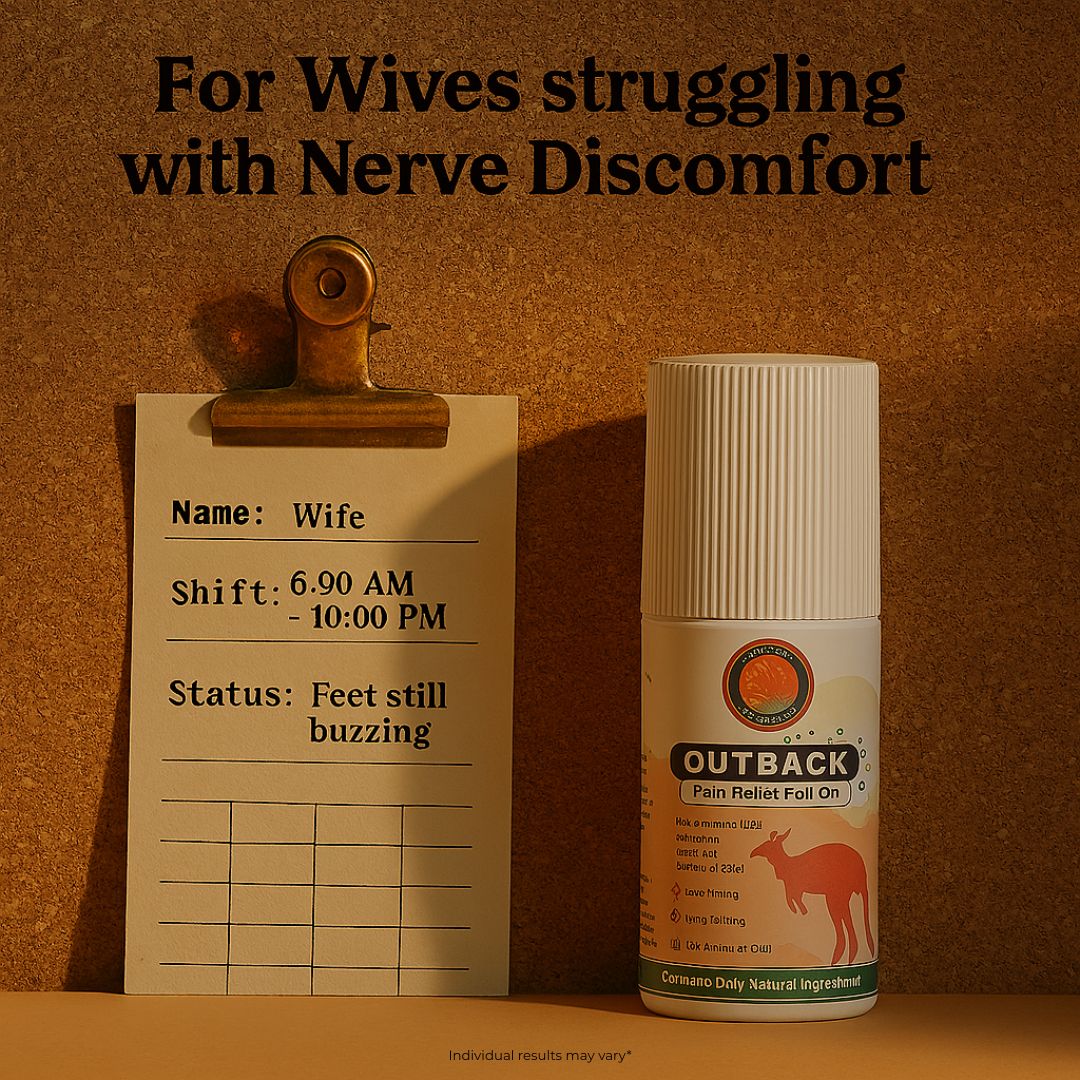
My husband stopped wearing slippers in October last year because he couldn't feel them on his feet anymore. He didn't say that's why. He's not the kind of man who says anything. He just stopped putting them on. I noticed because Pieter has worn the same brown leather slippers for 11 years, the ones our daughter Megan bought him in October back when she was still studying, and he wore them every morning from the bed to the kettle to the patio where he drinks his coffee and watches the hadedas and weavers in the garden. Then one Tuesday in October I came out of the bathroom and he was standing in the kitchen in just his socks. White cotton socks. On the cold tiles. I said, "Where are your slippers?" He looked down at his feet like he was surprised to see them there. He said, "I don't know. I guess I forgot." He didn't forget. I want to tell you about my husband. His name is Pieter and he's 65 years old and we live in a quiet neighbourhood just outside Durban, on a street where everybody mostly keeps to themselves but still gives you a wave when you drive past. Pieter was an electrician for 39 years. He retired at 62. He has hands like rugby gloves and a laugh that fills the whole house. He's the most patient man I have ever known. He's also lived with Type 2 diabetes since he was 53, which is 12 years ago now. We've done everything. The blood sugar checks. The notebook on the kitchen counter where he writes his readings every morning after testing his finger. The walking. Cutting back on the foods he loves. He doesn't drink Cream Soda anymore and that was probably the hardest thing he ever gave up. For a long time he was fine. The numbers looked okay.We were told to keep doing what we were doing. Then about three years ago his feet started going numb. Just a tingle at first. Pins and needles after sitting too long. He'd shake his foot a little and laugh it off. Then it was both feet. Then it felt like he was walking around with thick socks on all the time. Then came the burning at night. The kind he'd describe as, "It feels like my feet are on fire." He'd kick the blankets off around two in the morning. I'd hear him filling a basin with cold water in the bathroom just to soak his feet for a while. We were told it was diabetic neuropathy symtpma And we were told something I'll never forget. "We manage it. We don't fix it." That sentence stayed with me for years. We manage it. We don't fix it. For a while, we tried everything that was suggested. Some things took the edge off for a little while. Some left him feeling tired and not quite like himself. But nothing actually changed what was happening to his feet. The burning still came. The numbness stayed. Most nights he ended up sleeping in the recliner because lying flat seemed to make everything worse. This is what people call "managing it." This is what the system calls success. My husband, who used to spend entire days on his feet. Who used to dance with me in the kitchen whenever an old song came on the radio. Who used to chase our grandchildren around the garden pretending to be a monster... Couldn't even properly feel the floor beneath him. And his slippers stayed next to the bed. In May I started to lose him. Not all at once. Slowly. Like a radio station fading out as you drive farther away. He stopped going out to the patio in the mornings to watch the birds. He said it was too uncomfortable walking across the tiles with bare feet. He said they just didn't feel the same anymore. He stopped going to Builders Warehouse on Saturday mornings. He used to spend an hour or two wandering the aisles, chatting to the staff in the electrical section, and coming home with one small part and a story about someone he'd bumped into. He stopped going because he said it exhausted him. By the time he got back to the bakkie, his feet were burning. He stopped going to church. He said his feet got cold sitting through the service and he didn't want to spend an hour feeling uncomfortable. He stopped going down to his workshop. He used to disappear down there four nights a week building things. Bird feeders for the garden. A jewellery box for my sister years ago. A toy chest for our grandson Daniel. He stopped because he said the stairs felt strange beneath his feet. He didn't trust them anymore. He just sat in the recliner. And I sat in the kitchen pretending I wasn't watching. I want to tell you something I haven't told anyone. Not even Pieter. Late in October, after he'd been spending nearly every day in that recliner for about three weeks, I walked into our bedroom one afternoon while he was asleep. I sat on his side of the bed. And I looked at his slippers. They were dusty. Not covered in dust. Just enough for me to notice. His slippers had been sitting there untouched for three weeks. I sat there and cried so hard my chest hurt. Because I finally understood what they represented. It wasn't that he'd forgotten them. It wasn't laziness. He was quietly retreating from his own life. One small piece at a time. The slippers were the first thing to go. The patio was the second. Builders Warehouse was the third. His workshop was the fourth. And I didn't know what the fifth thing would be. But I knew it was coming. I've known this man since I was twenty-two years old. I was watching him disappear inside the very same body. That night, after Pieter had fallen asleep in the recliner, I phoned our daughter. Megan is our oldest. She's thirty-eight now. She lives in Hillcrest with her husband, Andrew, and their little boy, Daniel. She comes to see us whenever she can. She's always been one of the most practical people I've ever known. The kind of person who doesn't get carried away by trends or empty promises. I told her about the slippers. She went quiet. Really quiet. Finally she said, "Mum, I'm coming through on Friday. There's something I want to talk to you about." She arrived Friday afternoon. I made bobotie because it's always been her favourite. We sat around the kitchen table and ate together. Pieter ate slowly. The way he does now. Carefully. Almost as if every movement takes a little more thought than it used to. He still had his socks on under the table. After supper he settled into the recliner. Within fifteen minutes he was asleep. Megan and I stayed at the kitchen table with another cup of coffee. Then she reached into her handbag. And placed something on the table between us. It was a small bottle. She gently slid it towards me. Then she looked me straight in the eyes and said, "Mum... I need you to listen to me." I listened. She said, "Mum I've been watching Dad for months." "I didn't want to say anything because I kept hoping it would get better." "But it hasn't." "And I don't think anyone has explained what's actually happening." She picked up the little bottle for a second, then put it back on the table. She said, "I'm not asking you to believe me." "I'm asking you to understand something." Then she started explaining it in a way I'd never heard before. She said, "When nerves become damaged, they don't just stop working." "They start sending the wrong signals." "That's why people describe burning... tingling... pins and needles... stabbing sensations..." "The nerve becomes irritated." "It keeps firing even when nothing is actually touching it." She grabbed a paper napkin from the middle of the table and drew a little line with a pen. She said, "Think of this as a healthy nerve." "It sends clean signals from your feet to your brain." Then she scribbled all over the line. "But once that nerve becomes irritated..." "...the messages become distorted." "The brain starts receiving constant discomfort signals." "Especially at night." "When everything else becomes quiet." I remember sitting there thinking... Why had nobody ever explained it like that before? She said, "That's why so many people say their symptoms become worse when they lie down." "It's not because they're imagining it." "It's because there are fewer distractions." "The brain notices every faulty signal." She looked towards the lounge where Pieter was sleeping. Then she said something I'll never forget. "Mum if all we're doing is learning to live with those signals then we're never addressing what's actually happening." That sentence stayed with me. Just like, "We manage it." "We don't fix it." For years we'd accepted that burning feet, Numb toes and restless nights... Were simply something we'd have to live with. Nobody had ever explained why those signals kept happening. Nobody had ever explained why they became worse at night. Nobody had ever explained why he slowly stopped doing all the things he loved. I looked at Megan and asked, "So what do we do?" She slid the bottle a little closer. She smiled. Then she said, "Mum this is what I wanted to show you." She slid the bottle across the table to me. It wasn't another supplement. It was a small roll-on bottle. She said, "It's called Outback Relief Roll-On." "I know what you're thinking." "I thought the same thing." "I didn't think a roll-on could make any difference either." She smiled. "But this isn't about covering things up." "It's about giving those irritated nerves something they desperately need." She explained that when nerves become irritated, they stay in a constant state of overactivity. They keep sending discomfort signals long after they should have settled down. That's why the burning seems to come from nowhere. That's why the tingling keeps you awake. That's why so many people say nights are the worst. She said, "This is why so many people never get lasting relief." "They're trying to ignore the signals instead of helping calm the nerves where the discomfort starts." She told me the Outback Relief Roll-On uses a blend of natural oils that absorb quickly through the skin. She said the routine only takes a few seconds before bed. Just roll it onto the areas where the burning, tingling or numbness is the worst. Massage it in gently. Then let it absorb. She wasn't promising a miracle. She made that very clear. She simply said, "Mum, For the first time since Dad started pulling away from life I found something that actually made sense to me." Something that addressed why those overactive nerve signals kept happening. Instead of simply pretending they weren't there. I sat there turning that little bottle over in my hands. Thinking about the slippers. For nearly three years ee'd been trying to live around the problem. Nobody had ever explained why the burning became worse at night. Nobody had ever suggested something as simple as a six-second nightly routine. I want you to understand something. I am not someone who buys every product I see online. I'm naturally sceptical. I've learned over the years not to believe every promise people make. But this wasn't coming from an advertisement, it was coming from my daughter. Someone who had spent months watching her father slowly disappear from the life he loved. She wasn't asking me to believe in anything. She was asking me to give him a chance. So the following Monday evening, just before bed, I handed Pieter the roll-on. I said, "Megan brought this for you. will you just try it with me?" He looked at the bottle. Then looked at me. Then smiled that little smile he always gives when he thinks I'm worrying too much. He said, "Sue "I don't think a little bottle is going to change much." I said, "I know but if there's even a chance isn't it worth six seconds?" He looked at me for a moment. Then nodded. He said, alright I'll give it a try." Now I want to tell you what happened over the next 90 days. Because this is the part I want to be careful about. The first week, not much. I kept asking him every morning, "How were your feet last night?" He'd shrug."They still burned." Some nights were a little better. Some weren't. I told myself not to expect too much. The second week., something changed. Not a big thing. Just enough for me to notice. One morning he came into the kitchen and said, "I only woke up once last night." That caught my attention. For months he'd been waking up several times every single night because of the burning. I didn't say anything. I didn't want to get ahead of myself. I simply smiled and poured him another cup of coffee. We kept going. Every evening before bed six seconds, he'd roll it onto his feet, massage it in, then we'd go to bed. By the third week he looked at me one morning over breakfast and said, "You know my feet don't feel as angry when I wake up." That was exactly how he described it. Not perfect. Just less angry. The burning wasn't dominating every moment anymore. He still had numbness. He still had difficult days. But something was beginning to change. Then one Saturday morning something happened that I'll never forget. I was making breakfast. I heard footsteps behind me. I turned around. There was Pieter. Standing on the kitchen tiles. Wearing his slippers. For a second I just stared at him. He looked down at his feet. Then back at me. He smiled. A real smile. The kind I hadn't seen in months. He said, "I didn't even think about it, I just put them on." I felt my eyes fill with tears. Not because everything was suddenly perfect. But because those slippers had been sitting beside our bed for months. Untouched. Covered with a thin layer of dust. Now they were back on his feet. I walked over to him. Put my arms around him. And cried into his shoulder. He laughed softly. The way he used to. He said, "Hey, they're only slippers." I shook my head. "No, they're not." Because they were never just slippers. They were the first thing neuropathy symptoms had taken from him. And seeing them back on his feet felt like I was getting a little piece of my husband back. Over the next few weeks he started spending more time outside again. He'd take his coffee onto the patio. He'd stand there watching the birds like he'd done for years. A few Saturdays later, he said, "I'm going to Builders." I tried not to make a big deal of it. I just smiled and said, "Alright." He came home with a packet of screws and a twenty-minute story about someone he'd bumped into. I sat there listening to every word. Not because the story was exciting. Because it sounded like him again. The man I'd been missing. By week eight, he was spending more mornings out on the patio than in the recliner, he'd take his coffee outside, read the paper, watch the birds. Sometimes I'd look out the kitchen window and catch him smiling to himself. I hadn't seen that smile in a long time. A couple of weeks later, I heard something I thought I might never hear again. The sound of his tools. I walked downstairs to the workshop. There he was. Standing at his workbench. Running his hand across a piece of pine. He looked up when he heard me. He smiled. "I thought I'd make something for Daniel." I looked over at the bench. It was the beginning of a bird feeder. Nothing fancy. Just a simple little project. But to me it looked like hope. Over the following weeks he spent more and more time downstairs. Sometimes I'd hear the sander. Sometimes the drill. Sometimes I'd just hear him humming to himself while he worked. The house sounded like home again. Last weekend he told me he wanted to build Daniel a toy box for his birthday. He said, "I want him to have something his Oupa made." I had to turn away for a second because I could feel myself getting emotional again. I'm sitting at our kitchen table as I write this. Pieter is downstairs in the workshop. I can hear the sander going. I smile every time I hear it. I'm not going to sit here and tell you everything suddenly became perfect. I'm not going to tell you every uncomfortable night disappeared. I'm not going to tell you life became completely discomfort-free. Because that wouldn't be true. What I will tell you is that somewhere along the way... He stopped retreating from his life. He started sleeping better. He started wearing his slippers again. He started sitting outside with his coffee. He started building things again. He started becoming himself again. And that's something I honestly wasn't sure I'd ever see. One evening he looked at me while we were watching television. He smiled and said, "You know I didn't realise how much of my life I'd quietly given up." That sentence hit me harder than anything else. Because I hadn't realised it either. Not until I saw him getting it back. If you are reading this and you're watching somebody you love retreat from their own life one piece at a time, if you're watching a husband or a father or yourself stop doing the things that made you who you are, if every evening ends with burning, tingling or numb feet that keep you awake, I want you to know there may be another way to think about it. Outback Relief Roll-On is what Pieter uses every evening before bed. It takes about six seconds. He simply rolls it onto the areas that bother him the most, massages it in gently, and lets it absorb before going to sleep. That little routine has become part of our evenings now. I want you to understand something. I am not telling you it's a miracle. I'm not telling you it changed our lives overnight. I'm simply telling you that it gave Pieter a chance to start feeling like himself again. He wears his slippers. He sleeps in our bed. He sits on the patio with his morning coffee. He builds things again. And I have my husband back. If you've been looking for something simple to try, something that doesn't take over your day and only takes a few seconds before bed, then I honestly think it's worth learning more about Outback Relief Roll-On. They're currently running a Buy 2 Get 1 Free promotion, and every order is backed by a 90-day money-back guarantee. That was important to me because it meant we could try it without wondering whether we'd wasted our money if it wasn't right for Pieter. Try it for 90 days. The same 90 days we gave ourselves. The worst that happens is you decide it isn't for you. The best that happens? You find yourself putting your slippers back on, walking outside with your morning coffee, and getting little pieces of your life back that you thought were gone forever. P.S. Megan came over for dinner a few weekends ago. Pieter was downstairs in the workshop sanding another bird feeder. She looked at me across the kitchen table and smiled. She said, "Mum... Dad's back." I smiled and said, "I know." For a moment we just sat there listening to the sound of the sander downstairs. Sometimes hope sounds exactly like that. P.P.S.The 90-day money-back guarantee is real. That's one of the first things I checked. It gave me confidence because if Outback Relief Roll-On wasn't right for Pieter, we weren't risking everything by trying it. After everything we'd already spent over the years, that meant a lot. P.P.P.S. Outback Relief South Africa is a small company, and from what I've seen, they do sell out from time to time. We now keep extra bottles at home because neither of us wants to go back to October. I don't want to go back to those dusty slippers. I don't want to go back to watching my husband quietly retreat from his own life. If you've been putting this off, don't wait for the next thing to disappear. For us it started with the slippers. The patio came next. Then Builders Warehouse. Then the workshop. Don't wait until you're counting the things you've lost. Give yourself, or someone you love, the chance we gave Pieter.
My husband couldn't feel his feet anymore...
Often times, the greatest change happens when someone becomes overly frustrated with the way things are, prompting them to create something better. So when David Ireland, The Wildlife Man, was offered the chance to help create a fast nerve relief formula, he seized the opportunity. The Discovery Cha...
LEARN MORELike this ad? Make it yours.
Crush rebuilds this exact creative around your product — your brand, your colors, your offer — in about a minute.