

Inactive· since Feb 17, 2026
- 10
- days it ran
- 0
- relaunches
Ad copy
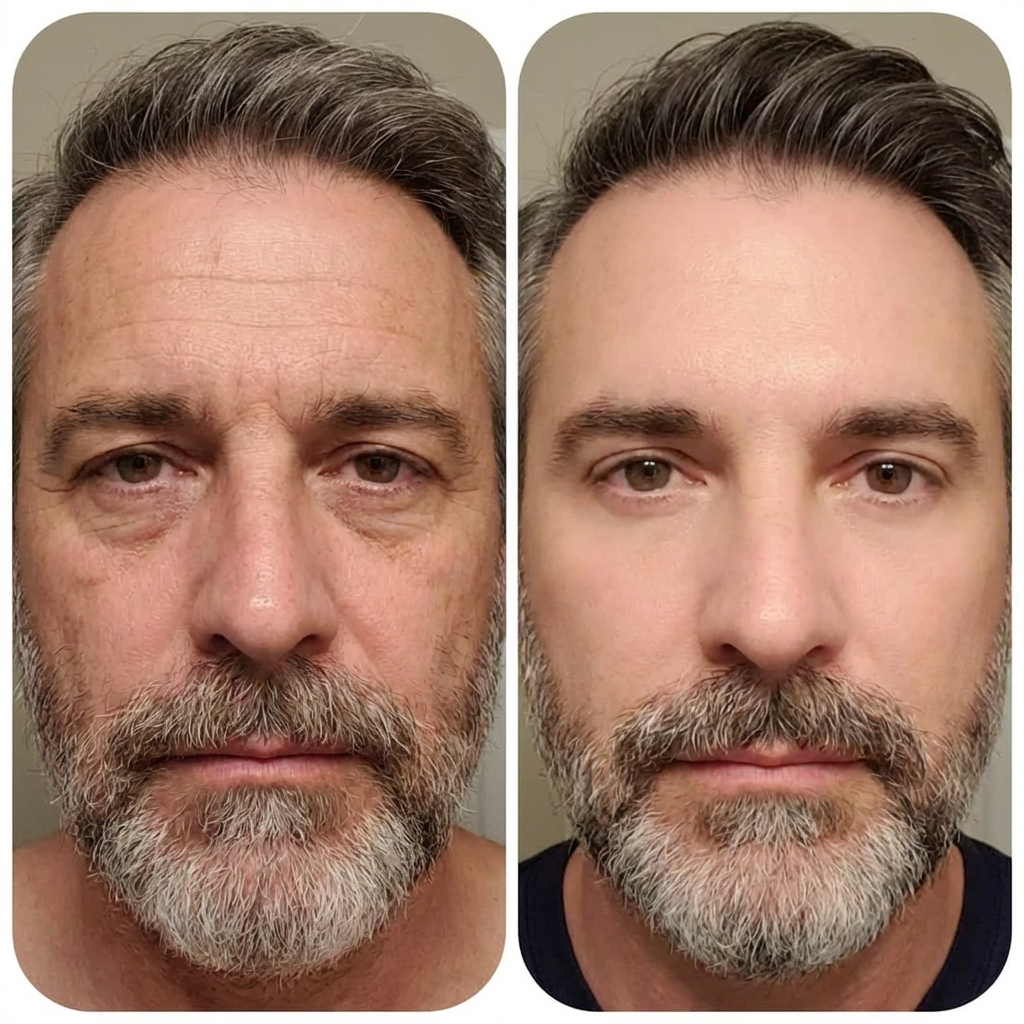
If your face keeps looking older, more tired, and more worn out every single month no matter what you put on it — your collagen cells have shut down. And every week you keep rubbing on creams that can't reach them, the structural damage underneath gets worse. And you're going to start seeing it accelerate sooner than you think. And by the end of this, you're going to be frustrated. Not at yourself — at the products that have been lying to you. Because there are three things happening right now. One — your skin is showing you something is structurally wrong underneath the surface. Two — every product on the shelf is designed to make you FEEL like it's working without actually fixing anything. And three — there's a multi-billion dollar skincare industry that profits every single day you keep buying creams that coat the surface and do nothing underneath. So let me tell you what happened with my dad, because his story is going to change the way you think about every cream you've ever bought. For years — and I'm talking like six or seven straight years — my dad watched his face fall apart. It wasn't dramatic at first. A few deeper lines on the forehead. Some crow's feet that didn't go away when he stopped squinting. The kind of stuff you notice but tell yourself is "just part of getting older." But then it accelerated. By 54, his face looked like it belonged to a guy in his mid-60s. Deep nasolabial folds that made him look angry even when he was relaxed. Forehead lines you could see from across the room. Under-eye bags that made him look exhausted no matter how much sleep he got. His jawline — which used to be sharp — had softened into this undefined blur that bled into his neck. And the fatigue on his face? It wasn't real fatigue. He felt fine. He was sharp mentally, still working hard, still the most capable guy in any room. But his face was broadcasting a completely different message to the world. People at work started saying "rough night?" when he'd slept eight hours. His ex-wife made a comment at their daughter's graduation that stuck with him for months. He told me later, "I looked at the photos from that day and I didn't recognize the old man standing next to my kid." That was the line for him. So obviously, he starts trying to fix it, right? He goes to the drugstore. Grabs Nivea Age Defense. Uses it every night for three months. Nothing. Not a single visible difference. His face felt slightly smoother for about an hour after applying it, and by morning he looked exactly the same as the day before. Three months. Every night. Zero change. So he upgrades. Buys a "premium" men's cream — one of those $70 bottles with the sleek packaging and the buzzwords all over it. "Peptide complex." "Advanced repair." "Clinically tested." Same result. Temporary smoothness on the surface. Nothing structural. Nothing that changed how he actually looked under real light, in real photos, in real life. Then someone at his gym tells him about beef tallow. The whole "ancestral skincare" thing. Natural. Masculine. "Matches your skin's biology." He buys a jar from one of those brands all over Instagram. Fifty bucks. His face was greasier than it had ever been. Pillow looked like he'd been sleeping on a pizza. And after two months of that? Exact same lines. Exact same sag. Exact same tired old guy in the mirror. Because — and nobody told him this — tallow is a decent moisturizer, but it contains zero active ingredients that signal collagen to rebuild. Nothing in it tells his skin to DO anything. It just sits there. Hydrating a surface while the structure underneath keeps collapsing. So at this point he's frustrated, right? He's spent a couple hundred bucks, tried three different approaches, and his face looks the same or worse because another six months have passed. And that's when someone — I think it was his dermatologist, actually — suggests retinol. "This is the one ingredient that's actually proven to rebuild collagen." So he buys a retinol product. Not prescription, but a strong over-the-counter formula. Starts using it. Within a week, his face is on fire. I'm talking redness across his cheeks and forehead. Peeling so bad it looked like a sunburn. Dry, flaky patches around his nose and mouth. His skin felt raw. Tight. Painful to touch. He calls the dermatologist. "Oh that's normal, it's called purging. Push through it." He pushes through it. Two weeks. Three weeks. His face looked WORSE than before he started. Guys at work were asking if he was sick. And here's the part that made me start digging into what the fuck is actually going on with men's skincare. He quit the retinol after a month. Obviously. And when his skin finally calmed down from the inflammation, the lines were THE SAME. Maybe even slightly worse. A month of misery. Zero improvement. Hundreds more dollars gone. So at this point, I'm watching my dad — who's done everything he was told to do, spent real money, followed the advice — get nowhere. Actually, worse than nowhere. He's demoralized. He tells me, "I think creams are just bullshit. Maybe this is just what happens when you get old. Maybe nothing works unless you get Botox or surgery." And that's when I started asking questions that nobody in the skincare industry wants you to ask. Why do moisturizers feel like they're working but never change anything? Why does the one ingredient that actually CAN rebuild collagen burn your face off in the process? And why does nobody ever talk about WHY the skin stops producing collagen in the first place — instead of just selling you another jar of surface-level filler? So I went down a rabbit hole. And I mean a deep one. I started researching why someone my dad's age would have skin that looks like it's deteriorating from the inside out — when he's healthy, active, takes care of himself in every other way. And every mainstream skincare site was giving me the same recycled answers. "Use SPF. Drink water. Try retinol. Moisturize daily." He'd done ALL of that. Nothing worked. But then I found this research paper from a group of dermatological scientists — people who actually study the cellular biology of skin aging instead of just selling products. And they described something I had literally never heard before in my life. Fibroblast senescence. Now pause for a second. You know what's insane? Every skincare brand in the world talks about collagen. "Boosts collagen." "Supports collagen." "Collagen-building formula." It's on every label, every ad, every bottle. But almost NOBODY explains what actually happens to collagen production as you age. They just tell you it "decreases" and sell you a cream. Here's what's actually going on — and once you understand this, every failed product in your bathroom is going to make perfect sense. After age 40, your skin doesn't just "lose collagen" the way these brands imply. The cells responsible for PRODUCING collagen — they're called fibroblasts — start going dormant. They don't die. They go silent. Researchers call it fibroblast senescence. But I think there's a better way to understand it. It's Collagen Ghosting. Your collagen-producing cells are still there. They're still sitting in your dermis — the structural middle layer under the surface. But they've stopped working. They've gone dark. Like a factory where the machines are still there, the workers are still at their desks, but someone turned off the power and nobody's flipped the switch back on. And this is why everything my dad tried failed. The moisturizers — Nivea, CeraVe, the premium stuff — they hydrate the surface. They coat the epidermis with emollients and silicones that trap a little moisture. But they send ZERO signal to those dormant fibroblasts in the dermis. None. They can't reach them. They weren't designed to reach them. It's like watering a garden where the seeds never sprouted. You can flood the topsoil all you want — nothing's growing because nothing's been activated underneath. The beef tallow — same problem. Good moisturizer, zero signaling capability. No active ingredient in tallow tells a dormant fibroblast to wake up and start producing collagen. He was essentially greasing the surface of a building while the internal structure kept crumbling. And the retinol — here's where it gets really fucked up. Retinol CAN actually reach the dermis. Retinol CAN signal fibroblasts. It's one of the only ingredients on earth that has this capability. But the form of retinol in most drugstore products is so aggressive — and it's delivered through such harsh synthetic penetration enhancers — that when it reaches those dormant cells, it doesn't gently wake them up. It slams into them like a sledgehammer. The skin's immune system detects this violent intrusion and triggers a massive inflammatory response. Redness. Peeling. Burning. Barrier destruction. And here's the part that made my blood boil when I found out. That inflammatory response releases enzymes called matrix metalloproteinases — MMPs. And what do MMPs do? They BREAK DOWN COLLAGEN. So the one ingredient that could have woken up my dad's dormant fibroblasts was simultaneously triggering the destruction of the collagen he had left. He was building with one hand and demolishing with the other. And the net result after a month of agony? Zero progress. Maybe negative progress. The fibroblasts that briefly woke up got hit with so much inflammation that many of them retreated right back into dormancy. Worse than before. THIS is why he quit. THIS is why most men quit retinol. And THIS is why they conclude "nothing works." But it's not that nothing works. It's that nobody has figured out how to wake up those ghosted cells GENTLY ENOUGH to get them producing again without triggering the inflammatory backlash that shuts them right back down. Until now. So I kept researching. I'm reading studies now. Clinical papers. Ingredient analyses. Talking to people who actually formulate skincare products for a living, not just market them. And I found out there's an actual system for reactivating dormant fibroblasts — but it requires three specific things working together. One — a collagen-rebuilding signal that converts gradually instead of all at once. Something that reaches the fibroblasts as active retinoic acid but arrives SLOWLY, below the inflammation threshold, so the cells wake up and STAY active instead of getting shocked back into dormancy. Two — a delivery system that carries that signal through the skin barrier without using synthetic penetration enhancers that trigger the immune response. Something the skin recognizes as "self" so it lets it pass without sounding the alarm. Three — deep hydration locked into the dermis where the new collagen fibers are forming, so they have the moisture architecture they need to organize strong and tight instead of weak and chaotic. And there's a biological window where all three of these work exponentially better. Between 11pm and 4am, your skin enters its peak repair cycle. Cell turnover accelerates. Blood flow to the face increases. Growth hormone levels spike. If you can deliver the reactivation signal during this window, you're amplifying a natural process instead of fighting against it. That's the Night Reactivation System. Now my dad hears all this and he's like "okay, great, so where do I get these three things?" And that was the problem. You can find retinyl palmitate products out there. You can find olive oil-based serums. You can find sodium hyaluronate serums. But getting all three in the right concentrations, in the right delivery matrix, formulated to work together as an integrated system? That basically doesn't exist on the American market. He'd have to buy three separate products from three different brands, layer them himself, hope the concentrations were right, and pray the formulations were compatible. He tried. Spent about $140 a month. Different brands. Different textures. Some of them pilled up on his skin when layered. Some of them were greasy as hell. The whole process took 10 minutes every night — which for a guy who's used to washing his face with bar soap, might as well be an hour. He did it for about three weeks before he said "this is ridiculous." But here's the thing — even with the janky DIY approach, he was starting to see something. The texture was changing. His skin felt different in the morning. Not dramatically, but something was shifting underneath. So now I'm thinking: okay, this protocol works. The science is real. But why the fuck is it this complicated and expensive? That's when I started looking for a company that actually had all three in one formula. I spent weeks researching. Looking at ingredient lists, concentrations, who was behind the formulation, where it was manufactured, what regulations governed the production. Because here's the thing — the men's skincare industry is shady as hell. Most "men's" products are reformulated women's creams in a dark bottle. Most "anti-aging" claims are backed by nothing. Most ingredient lists are packed with cheap fillers and the actives are present in amounts too small to do anything. Fairy dust concentrations. Marketing ingredients. I needed to find a company that had all three reactivation components, used meaningful concentrations, was formulated by people who actually understood dermal biology, manufactured under strict pharmaceutical-grade standards, and wasn't charging $110 a jar for branding and packaging. And I'm scrolling one night — honestly just reading skincare forums at 1am like a lunatic — and someone mentions this Italian brand called SerlinoLab. So I go to their site. Ready to be disappointed like I'd been with the last dozen companies I'd looked at. And I almost fell off my chair. They had a night cream with ALL THREE components. Retinyl palmitate. Italian olive oil derivatives — specifically hydrogenated olive oil unsaponifiables, which is the exact lipid structure that mirrors human skin. And sodium hyaluronate. In a single formula. Designed to be applied once at night. But that's not even the crazy part. When I dug into WHO was behind this company? It's a family-owned pharmaceutical lab on the Amalfi Coast in Italy. Not a marketing startup. Not a celebrity-backed brand. A pharmaceutical lab that's been formulating skincare for 38 years. Since 1987. They operate under Italian pharmaceutical regulations — which ban over 1,600 ingredients that U.S. products still freely use. No cheap fillers. No synthetic penetration enhancers. No harsh chemicals hiding behind a pretty label. And 73,000 men in Italy already use this cream. Not as part of some complicated routine. As their ONLY nighttime skincare step. These aren't guys who read skincare forums. These are regular Italian men who put this on before bed and go to sleep. That's it. 20 seconds. Done. And here's where my jaw hit the floor. When my dad was buying those three ingredients separately? $140 a month. Complicated layering routine. Products pilling up on his face. 10 minutes every night of a process he hated. SerlinoLab? $24 a jar if you stock up. Everything in one formula. Absorbs in seconds. Zero grease. Zero residue. Zero stained pillowcases. 20 seconds before bed and you're done. Already a no-brainer, right? But THEN — they have a 60-day money-back guarantee. Full refund if it doesn't work. No questions. No hassle. So there's literally zero risk. Try it for two months. If your face doesn't look noticeably different — less tired, fewer lines, tighter jawline — you get every penny back. My dad's been using it for four months now. The deep forehead lines? Still there — let's be honest, he's 57, they're not vanishing. But they're visibly softer. The harsh grooves that made him look angry all the time have smoothed out enough that people stopped asking if he was pissed off. The nasolabial folds? Significantly less pronounced. His face doesn't look like it's being pulled downward by gravity the way it was six months ago. The jawline? This is the one that gets me. It's tighter. Measurably. He has definition there again that he hadn't seen in years. But the thing he keeps talking about — and I think this is the one that matters most — is that people stopped telling him he looks tired. His face finally matches how he actually feels inside. Alert. Capable. Present. Not some worn-out old guy shuffling toward retirement. His girlfriend noticed around week three. Didn't say anything at first. Then finally asked him, "What are you doing different? Your face looks... I don't know... sharper?" He didn't tell her for another month. Just smiled. This is what happens when you stop coating the surface and start reactivating the cells that actually build your skin's structure from within. Because every drugstore cream, every tallow trend, every premium men's brand — they've been selling you surface maintenance while the real problem sits underneath, getting worse every month. Your collagen cells haven't died. They've ghosted you. And nobody's been giving them a reason to come back. Until now. Now here's the thing I need you to understand. This is a small Italian lab. Not a factory pumping out millions of units. Every batch is manufactured on the Amalfi Coast and shipped internationally. When stock sells out in the U.S., it takes three to four weeks to resupply from Italy. And that happens. Regularly. Especially after a batch gets attention on social media and guys start buying three or four jars at a time to stock up. So if you're dealing with ANY of this — a face that looks older than it should, lines that keep deepening, a jawline that's softening, skin that broadcasts "tired" and "old" when you feel neither of those things — this is the time. Not next month when you've lost another 30 days of potential rebuilding and the stock might be gone. Right now. I put the link below. And honestly? Even if you're skeptical — and I get it, because my dad was the most skeptical guy on the planet after everything he'd tried — grab one jar. Try it for a month. See if your face responds the way his did. Because the skincare industry isn't coming to save you. They profit too much from selling you $15 jars of petroleum and calling it "anti-aging." You have to save your own face. Go get it. 60 days risk-free. And use the money you save on not buying useless drugstore creams to take your girl out somewhere nice. 👉 https://quiz.serlinolab.com/quiz-v4
Like this ad? Make it yours.
Crush rebuilds this exact creative around your product — your brand, your colors, your offer — in about a minute.