Rachel Smith
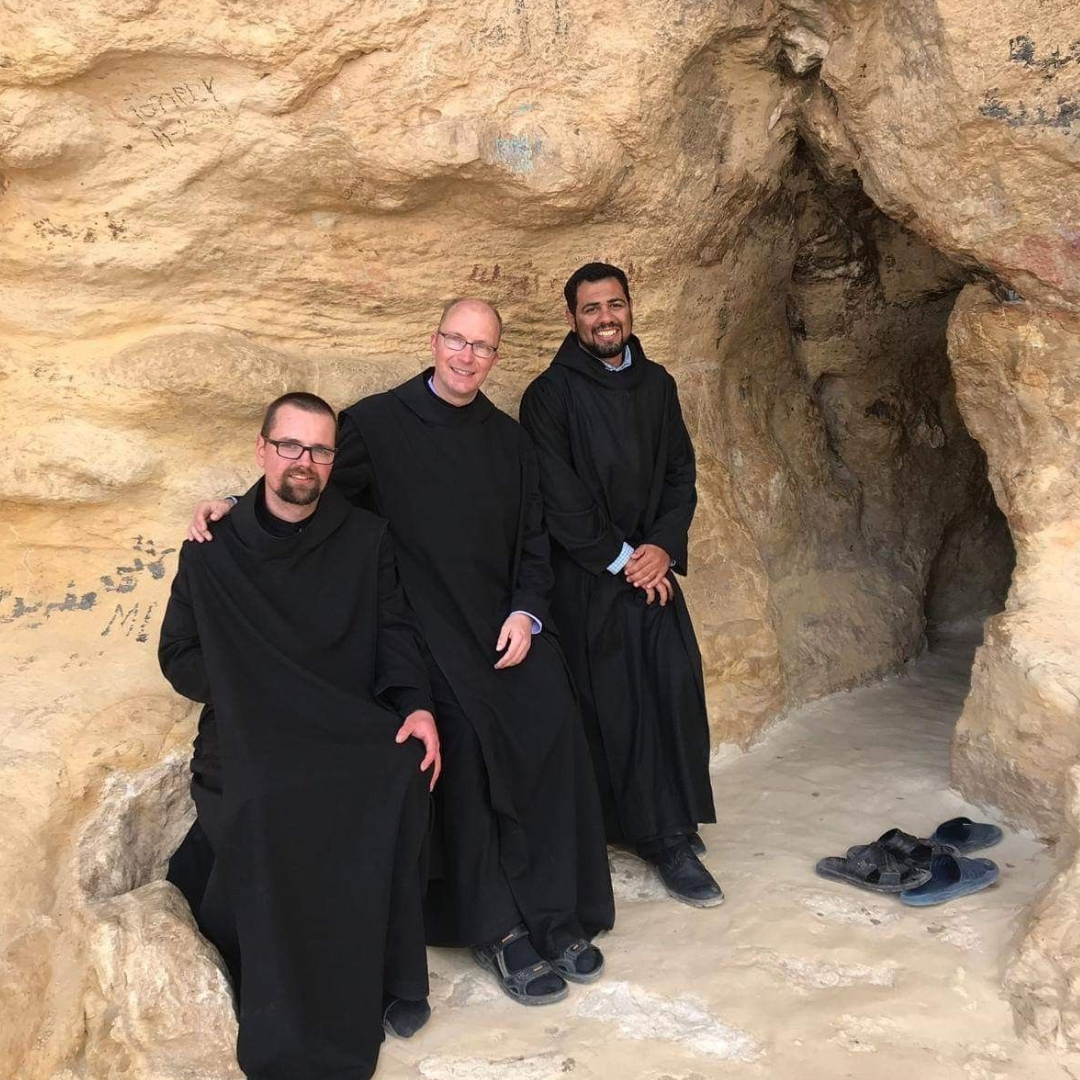
 Facebook ad: “Twelve Monks Tested In 2019. The Results Left Me Speechless”
Ran for 16 days, from October 17 to November 2, 2026, the last day Crush saw it.
Run by Rachel Smith on Facebook. Crush is not the advertiser and does not verify its claims. See this ad in Meta's Ad Library(opens in a new tab)
Make your own version of this ad
Crush makes it, launches it in your own Meta ad account, scales the winners and pauses the losers.
About this ad
- Meta Ad Library ID
- 1627479098958098
- Platforms
- Facebook, Instagram, Audience Network, WhatsApp and Threads
- Relaunches
- 0
- Niche
- Fashion & Apparel
Ad text
There's a monastery in the mountains of northern Portugal where monks have been living in a stone building soaked in rain and condensation for 400 years — and the medical team that studied them in 2019 couldn't find a single mycotoxin marker in their blood. When I finally flew out to meet the oldest monk there last spring, he showed me a wooden spoon he puts under his tongue every night and said one sentence that made TWELVE YEARS of my mycotoxin research feel like it had been built on sand. I'm a mycotoxicologist. I've spent the last twelve years studying what mold does inside the human body. Running assays. Reading tissue biopsies. Documenting what happens when mycotoxins embed in human cells and refuse to leave. I work in a university research lab. Doctors send me samples when they've run out of answers. By the time a sample hits my bench, I already know what the chart is going to say. Because it always says the same thing. Patient presents with crushing fatigue that sleep doesn't fix. Doctor's notes: chronic fatigue. Blood panel normal. Recommend exercise. Patient returns. Waking up at 3am with a racing heart, drenched in sweat. Doctor's notes: likely stress. Prescribe sleep aid. Patient returns. Brain fog. Forgetting words mid-sentence. Doctor's notes: consider cognitive evaluation. Patient returns. Reacting to wine, cheese, sunlight, perfume. Doctor's notes: histamine intolerance. Patient returns. Puffy face she doesn't recognize in the mirror. Panic attacks at 2am. Doctor's notes: perimenopause. Or anxiety. Or fibromyalgia. Or IBS. FIVE visits. FIVE years. FIVE separate diagnoses. FIVE separate prescriptions. Then someone finally sends the sample to me. I run the assay and in less than sixty seconds I find what explains every single one of those visits. Mycotoxins. Ochratoxin A. Aflatoxin. Gliotoxin. Trichothecenes. Buried deep in her cells. Embedded in fat tissue. Hidden in membranes standard bloodwork will NEVER see. And surrounding all of it, a slime coating so dense her own immune system can't get through it. Biofilm. The fortress wall. Their personal bunker inside the patient's body. Five years of doctors. Five prescriptions. Thousands of dollars. And the answer was sitting on my bench in sixty seconds. The field consensus — the thing every young mycotoxicologist is taught in their first year — is that once mycotoxins embed in tissue behind biofilm, recovery takes YEARS. Most patients never fully get there. That's what I'd been telling patients for a decade. Then I read a paper that cracked everything open. — In 2019, a research team out of the University of Porto did something nobody had done before. They took blood samples from a Cistercian monastery in the Serra do Gerês mountains in northern Portugal. A stone building constructed in the 1600s. Walls that stay damp eight months a year. The kind of structure every mycotoxicologist would classify as a textbook mold trap. The paper was buried in a Portuguese environmental health journal. Barely anyone cited it. I only found it because I was running a literature review on cold-climate monastic populations. The results made no sense. Twelve monks. Ages 54 to 91. Living in that same stone building for an average of 34 years each. The researchers tested for 14 mycotoxin markers. Not a single one hit threshold. In any monk. At any age. By every piece of training I've received, their bodies should have been MYCOTOXIN GRAVEYARDS. The exposure load from the building alone, over three decades, should have shown up in blood, urine, and tissue. It didn't. I emailed the lead researcher. Six months of back-and-forth. Eventually she introduced me to the abbot — a 86-year-old monk named Padre Joaquim who'd been living in that building since he was 22 years old. Last April I flew to Porto, rented a car, and drove four hours into the mountains. — The monastery is older than most countries. Stone walls three feet thick. Condensation beading on the inside of the chapel windows. A kitchen with a cast-iron stove and a drying rack of herbs hanging from the ceiling. The smell of damp wood and incense sits in every room. Padre Joaquim met me in the courtyard. 86 years old. Full head of white hair. Walked up the stone stairs without using the railing. Finished his own sentences in Portuguese, Spanish, Latin, and the English he'd learned from a British novice forty years earlier. He had the hands of a man who still worked in the garden every morning. The first thing I noticed — because I was looking for it — was that he had no puffiness around his eyes. No skin dullness. No lymphatic swelling at the jawline. The things I see in EVERY American patient over 50 who's been living in a water-damaged home. I spent three days there before I asked the question. "Padre, forgive me. But I study mycotoxins. By everything I know about this building, your body should be very sick. The 2019 study says you aren't. How?" He smiled. Walked me into the pantry off the kitchen. Pulled a small dark bottle off a shelf. Then a wooden spoon worn smooth by decades of use. He opened the bottle. Put four drops onto the wooden spoon. Placed the spoon under his tongue. Held it there for thirty seconds. Then set the spoon back on the shelf. Then he said it. "The Americans swallow pills in the morning for things their body only does at night. They treat the stomach. The mold doesn't live in the stomach." He pointed at his own chest. "The blood. The lymph. The liver at the hour of the owl. That's where the work happens. If the medicine doesn't reach the blood directly, you are not treating the mold. You are feeding the stomach." I stood there in a 400-year-old stone pantry and felt my ENTIRE career shift under my feet. — Let me explain what I understood in that moment. Padre Joaquim had just described, in medieval monastery language, the exact mechanism I'd been trying to explain to colleagues for years. Here's what nobody tells you about mycotoxins. They don't do most of their damage during the day. They do it between 11pm and 3am — the exact window when your liver is running its detoxification cycle. These are the hours I've documented as PEAK toxin processing in every study I've ever published. "The hour of the owl," as the monks call it. But every oral protocol on earth is designed to be taken in the morning. By the time midnight rolls around and the mycotoxins mobilize, there's nothing left in the system to fight them. You're hunting nocturnal animals at noon. And every American protocol shares the same four fatal limitations. ONE. The supplements can't break biofilm. NOTHING you swallow penetrates the fortress walls mold builds inside your tissues. Whatever's floating loose gets touched. The toxins behind biofilm survive and recirculate the moment you stop. TWO. They don't reach what's embedded. Mycotoxins are buried in fat tissue and cell membranes. Oral capsules get destroyed by stomach acid and diluted across twenty feet of intestine. By the time anything reaches the cells, the concentration is a joke. THREE. They don't close the recirculation loop. When toxins finally get mobilized, the body has nothing to neutralize them. So they loop back through the bile into the gut and re-embed DEEPER than before. That's the "two-weeks-of-hope-then-crash" pattern. That's the herx everyone calls healing. It ISN'T healing. It's mold defending itself. FOUR. And they work during the wrong hours. The pill dissolves in the morning. By midnight it's gone. The mycotoxins emerge and NOTHING is waiting for them. Four limitations. Built into every binder, every CellCore stack, every CSM prescription, every $400-a-month functional medicine protocol on the market. The monks of Serra do Gerês bypassed all four without ever reading a research paper. — Padre Joaquim showed me the bottle up close. The abbot before him had made the formula. The abbot before him had made it. Six generations of monks refining the same base recipe inside the same stone pantry. NAC from a plant they grow in the courtyard. Milk thistle from the hillside. Fulvic acid pulled from the rainwater cistern. Glutathione and TUDCA added in the last century from a supplier in Lisbon. Every single ingredient I'd been studying for twelve years. But not swallowed. Not in capsule form. Four drops. Wooden spoon. Under the tongue. Thirty seconds. Right before bed. Every single night for sixty-four years, in his case. — When those compounds are absorbed sublingually — under the tongue, through the mucous membranes — they pass DIRECTLY into the bloodstream at 10 to 20 times the concentration of a capsule. No stomach acid destroying them. No dilution across twenty feet of intestine. Full strength to the cells where mycotoxins actually live. The NAC cuts through the biofilm shielding the mycotoxins in the tissues. The glutathione neutralizes them the second they're mobilized — before they can loop back through the bile into the gut and re-embed. The milk thistle protects the liver while it's doing the work. The TUDCA opens the bile pathway so the load actually MOVES OUT. The fulvic and humic acid bind what's loosened and carry it through the body's own elimination, replacing the trace minerals mold strips along the way. Every step of the recirculation loop. Closed. In one dropper. Every night. And it works during the EXACT window — 11pm to 3am — when the liver is already running detox and the mycotoxins are mobilizing. As a scientist, I can tell you. This is the ONLY approach that makes biological sense based on how these toxins actually hide, recirculate, and re-embed. The biofilm doesn't stand a chance. — Every ancient culture close to damp environments figured this out independently. That's the part that really got to me. The Portuguese monks in Serra do Gerês. Baltic grandmothers who kept sublingual tinctures for centuries. Ayurvedic practitioners in India prescribing sublingual bitters for over 4,000 years. Traditional Japanese medicine using sublingual mushroom extracts. Grandmothers in the American South who kept "spring bitters" under the tongue for the family. Monks in Tibetan monasteries putting herbal drops under the tongue before meditation. Different cultures. Different continents. No contact with each other. SAME practice. SAME delivery route. SAME results. In science, when independent groups arrive at the same conclusion without contact, we take that very seriously. We call it convergent discovery. Every civilization that lived close to damp, mold-breeding environments developed this practice. The ONE civilization that stopped? Modern America. And we're the ones with the brain fog epidemic. The chronic fatigue. The 3am wake-ups. The MCAS. The mold illness no doctor can explain. Meanwhile, Padre Joaquim is 86 inside walls that have been wet for 400 years, feeling like himself every single morning. — I flew home. Started the first batch at my own kitchen counter. It was a disaster. I bought NAC powder, glutathione, milk thistle extract, TUDCA, and fulvic acid separately from the lab supply shop. Tried to mix my own version. The glutathione oxidized overnight — turned brown by morning. The TUDCA wouldn't dissolve. The mixture tasted like battery acid and separated into layers within hours. I tried twice more. Different suspensions. Different ratios. Neither held. The compounds degraded before I could even dose a full week. Padre Joaquim's tincture was perfected across six generations of monks who did nothing else with their mornings. I had none of that infrastructure. Then I found Cerise. Every ingredient I'd been studying for twelve years. In the exact ratios the research supports. In a sublingual liposomal delivery system that holds the formula stable at full concentration. Two milliliters under the tongue. Thirty seconds a night. That's it. — Week one, my sheets were dry in the morning. No 3am wake-ups. First stretch like that in a year. Week two, the gurgling in my gut went quiet. First time in longer than I could remember. Week three — this is the week that matters. Every oral protocol I've ever studied CRASHES at week three. The mycotoxins mobilized in weeks one and two loop back through the gut and re-embed. Symptoms come back. Often worse. NOTHING came back. As a mycotoxicologist, I knew EXACTLY what that meant. The biofilm had been broken. The neutralization was happening in real time. The recirculation loop was actually interrupted. Week six. Full transformation. Fog gone. Energy steady all day. Sat through an entire research meeting without losing a single word. A graduate student I'd been supervising for two years stopped me in the hallway and said, "You seem different. Did something good happen?" Something had. I'd finally done for myself what Padre Joaquim has been doing EVERY NIGHT for sixty-four years. — I emailed Padre Joaquim three months later. Told him through the monastery translator what had happened. The sleep. The energy. The fog clearing. The reply came back in two lines. "Of course. The body already knew. You were only in its way." Then a second message a day later. "The sad thing is how many Americans will read your paper and still swallow their pills in the morning. The answer has been under their tongues the whole time." He's right. That's what makes this story different from every other longevity practice I've studied. You don't need to fly to Portugal. You don't need to find a 400-year-old monastery or convert to Cistercian monasticism. You just need the right formula. In the right delivery. At the right hour. — If you have crushing fatigue that sleep doesn't fix. If you wake up at 3am with a racing heart. If you have brain fog so bad you forget words mid-sentence. If you're reacting to wine, cheese, sunlight, perfume. If you don't recognize the puffy face in the mirror. If your doctor keeps saying "your labs are normal" while you feel yourself DISAPPEARING. Those aren't separate problems. Those are WARNINGS. Mycotoxins are recirculating inside you every single night. Hidden behind biofilm. Looping back through your gut. Re-embedding deeper every month. Your doctor won't find them. Standard bloodwork won't catch them. The pills won't reach them. I've spent twelve years proving that. But an 86-year-old monk in a 400-year-old stone building in Portugal showed me what actually works. The same thing every ancient culture on earth figured out independently. Under the tongue. Every night. During the exact hours the liver is already trying to clear. Every night you sleep without closing the loop is another night the mycotoxins recirculate. Another night they re-embed. Another night the person you used to be gets buried deeper. — The brand I use is called Cerise. Every ingredient I would have prescribed as a mycotoxicologist. Delivered the one way I would have wanted them delivered. Two milliliters under the tongue. Thirty seconds a night. One purchase. No subscription. 90-day money-back guarantee. If nothing changes, every penny back. But Cerise is a small company and they sell out constantly. If you click and it's in stock, don't wait. Padre Joaquim is 86 inside walls that have been wet for four centuries, feeling like himself every single morning. Because he cleans every night. Because the abbot before him taught him. Because the abbot before HIM taught HIM. Six generations of monks who figured out what modern medicine still refuses to see. The person you used to be is still in there. Give him — give her — the sequence that finally closes the loop. 👉 https://trycerise.com/pages/cerise-lp3 This story is based on experiences commonly reported. Individual results may vary.
Where the ad sends people
trycerise.com
Twelve Monks Tested In 2019. The Results Left Me Speechless😢
I spent 12 years studying mycotoxins. Then I came across an account of twelve Portuguese monks living in a centuries-old damp monastery, reportedly without elevated mycotoxin markers. I couldn't stop thinking about what those results might mean. So I started investigating.
Learn more: trycerise.com(opens in a new tab)