Actinic Keratosis Recovery
Actinic Keratosis Recovery Facebook ad: “I'm a Dermatologist. My Own Patches Spread for 3 Years…”
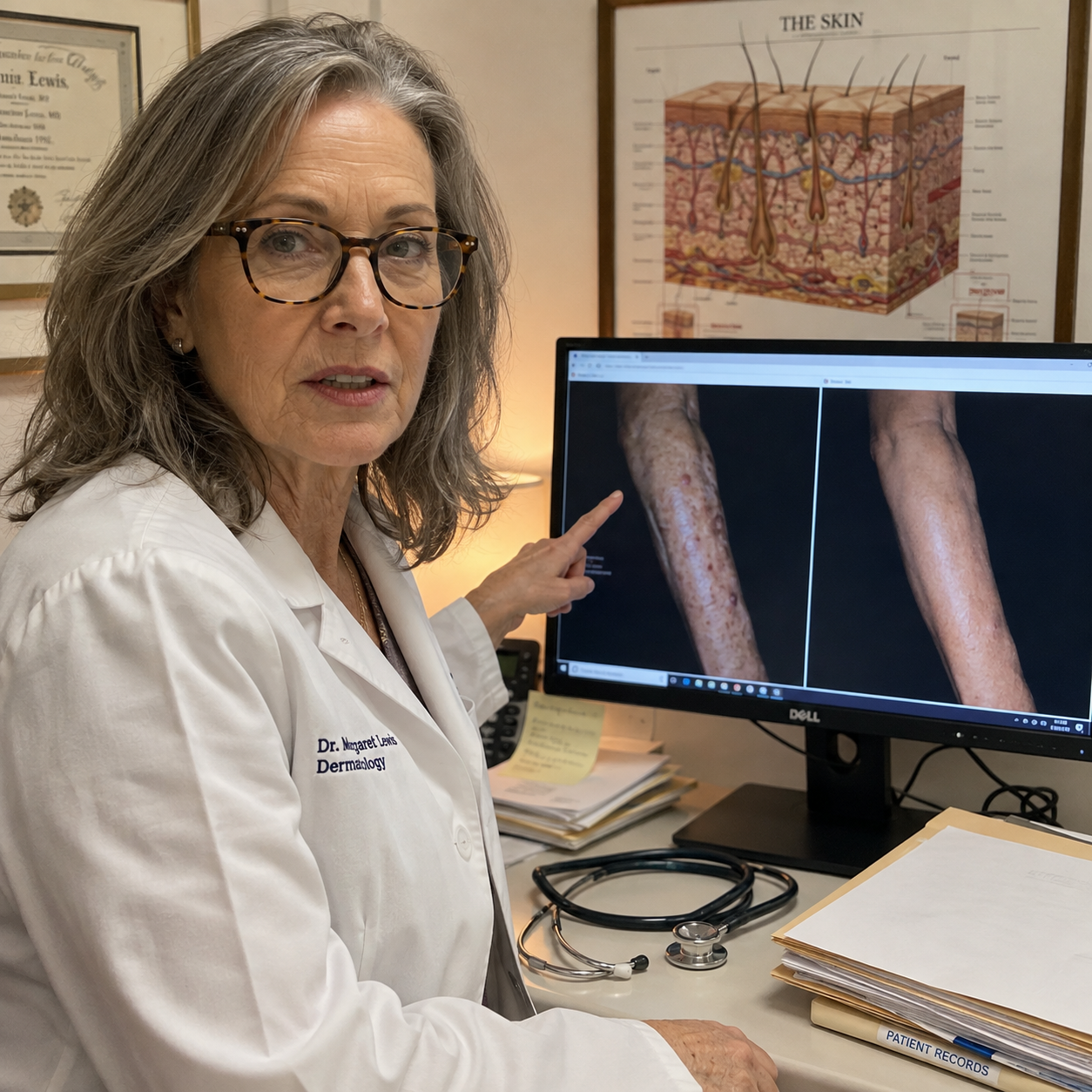
Ran for 7 days, from August 28 to September 4, 2026, the last day Crush saw it.
Run by Actinic Keratosis Recovery on Facebook. Crush is not the advertiser and does not verify its claims. See this ad in Meta's Ad Library(opens in a new tab)
Want an ad like this for your product?
Crush makes new ad images for your product from this ad: your logo, your product photo, your offer.
Trials from $19.95 USD, then $79.95 USD a month. Cancel anytime.
About this ad
- Meta Ad Library ID
- 1627533632299860
- Platforms
- Facebook, Instagram, Audience Network, Messenger and Threads
- Relaunches
- 0
Ad text
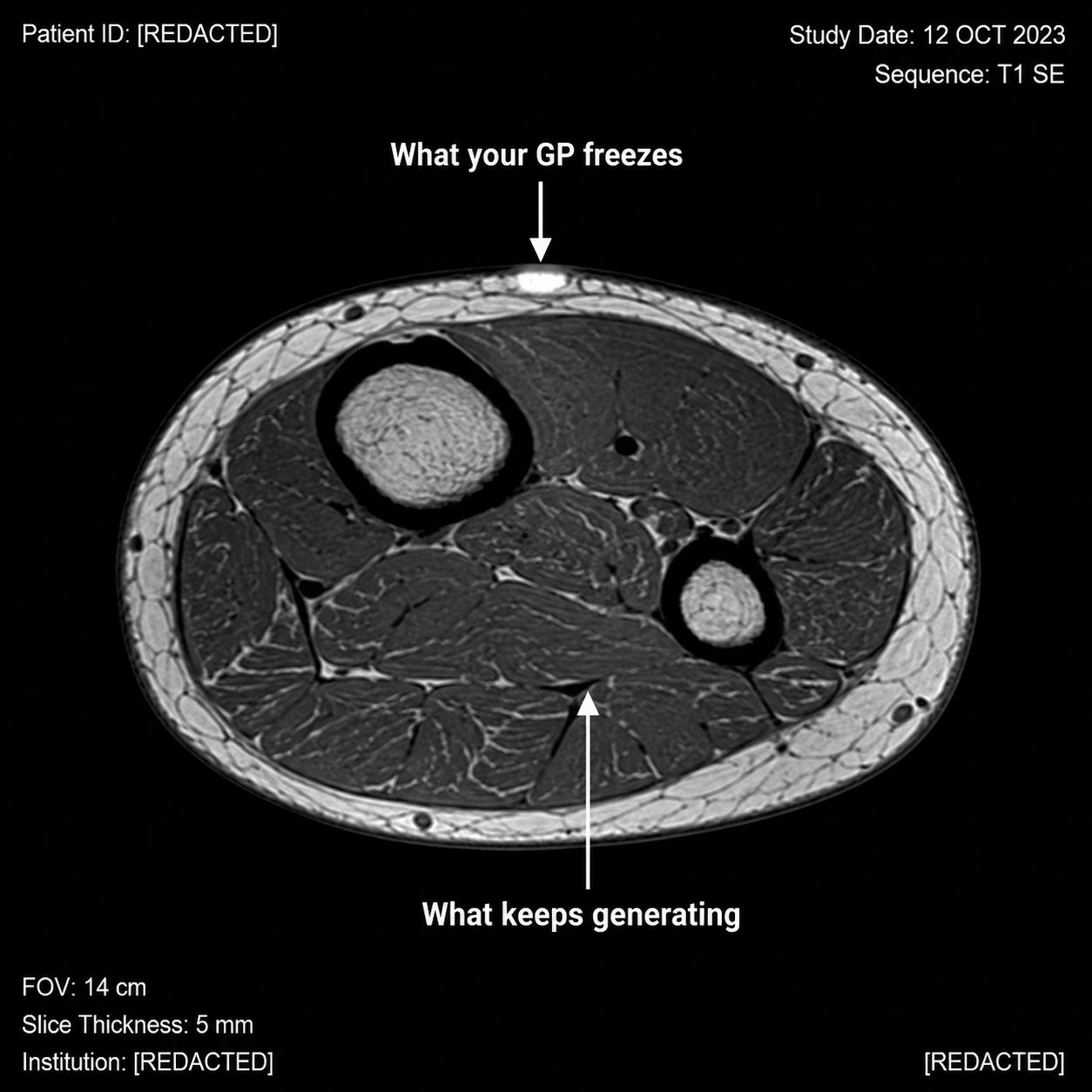
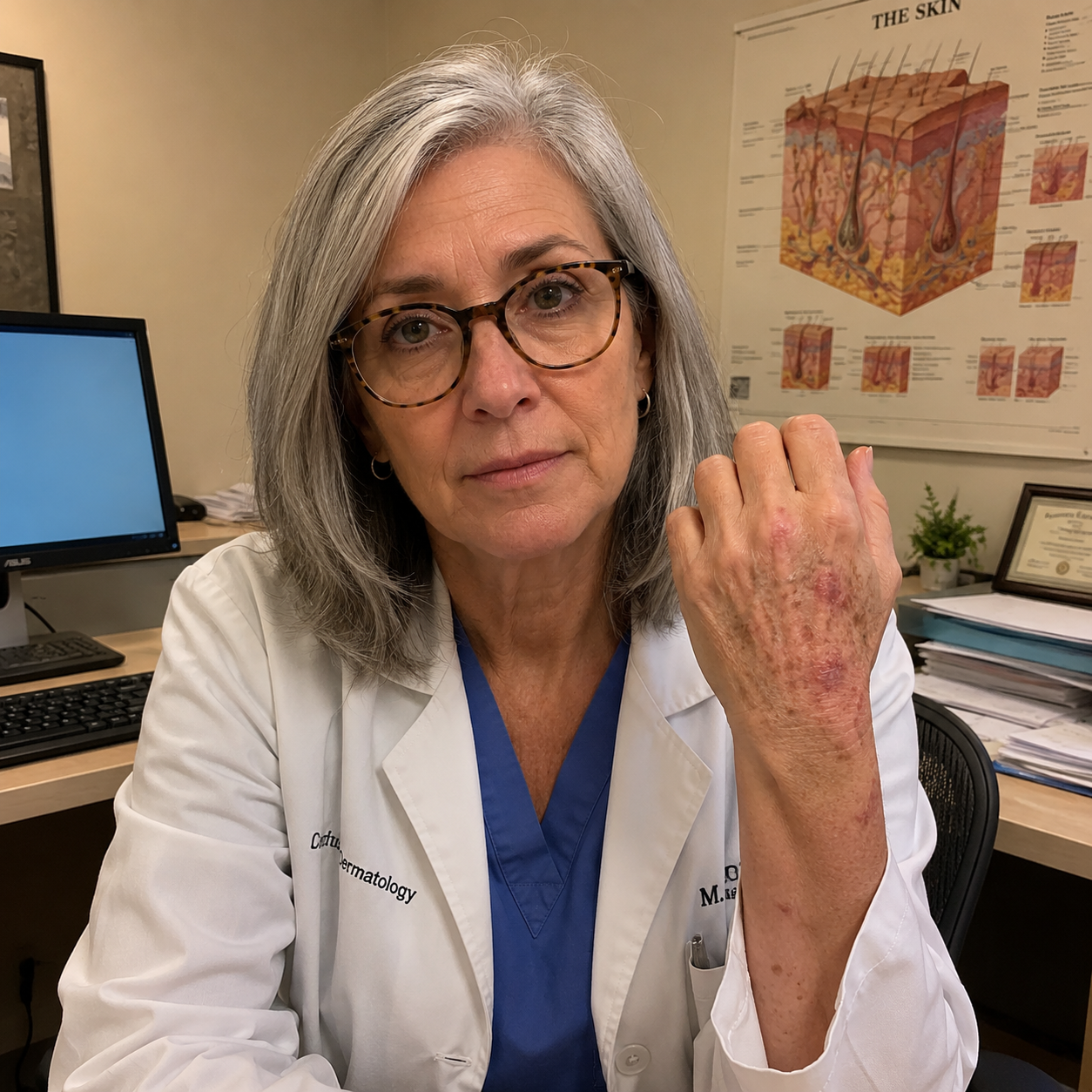
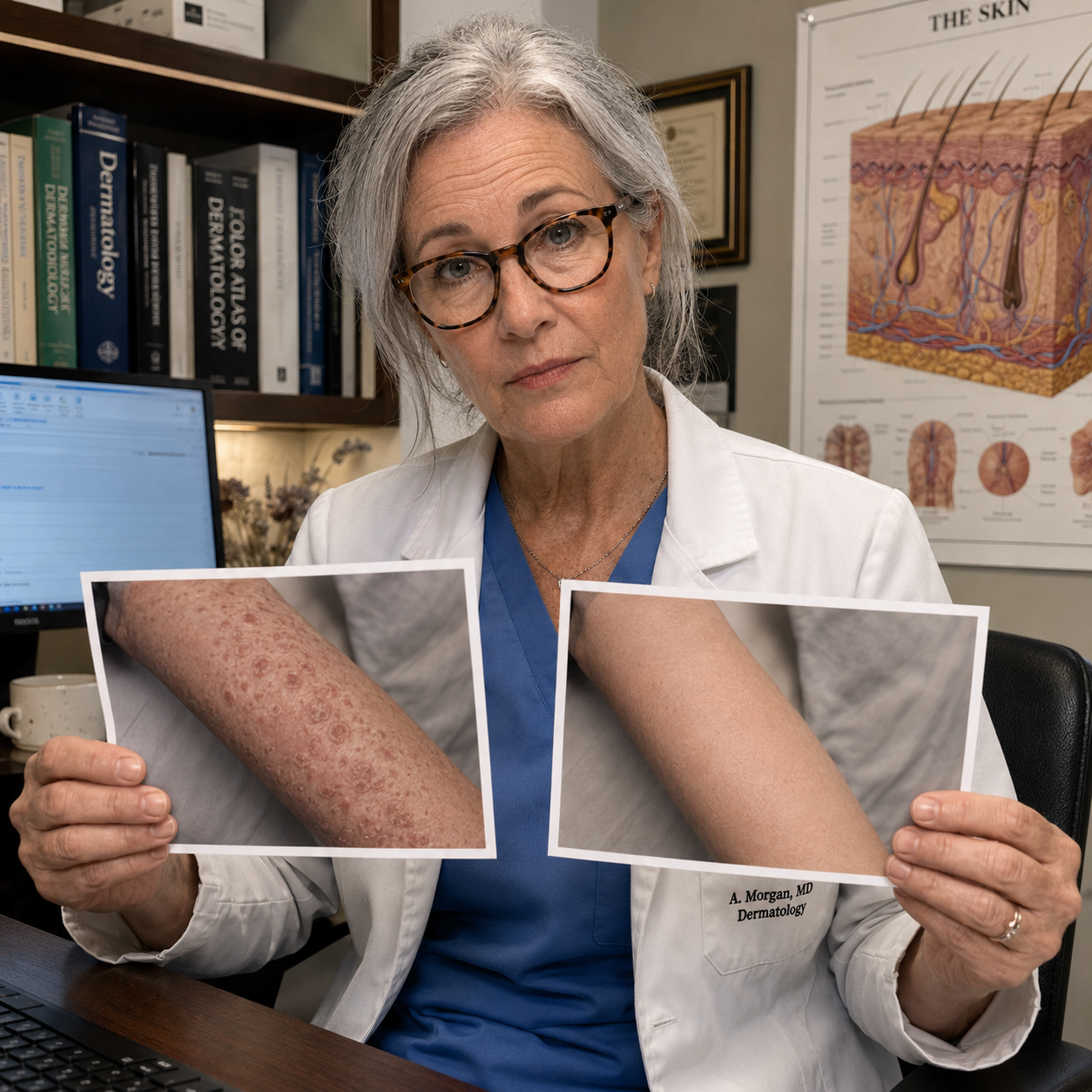
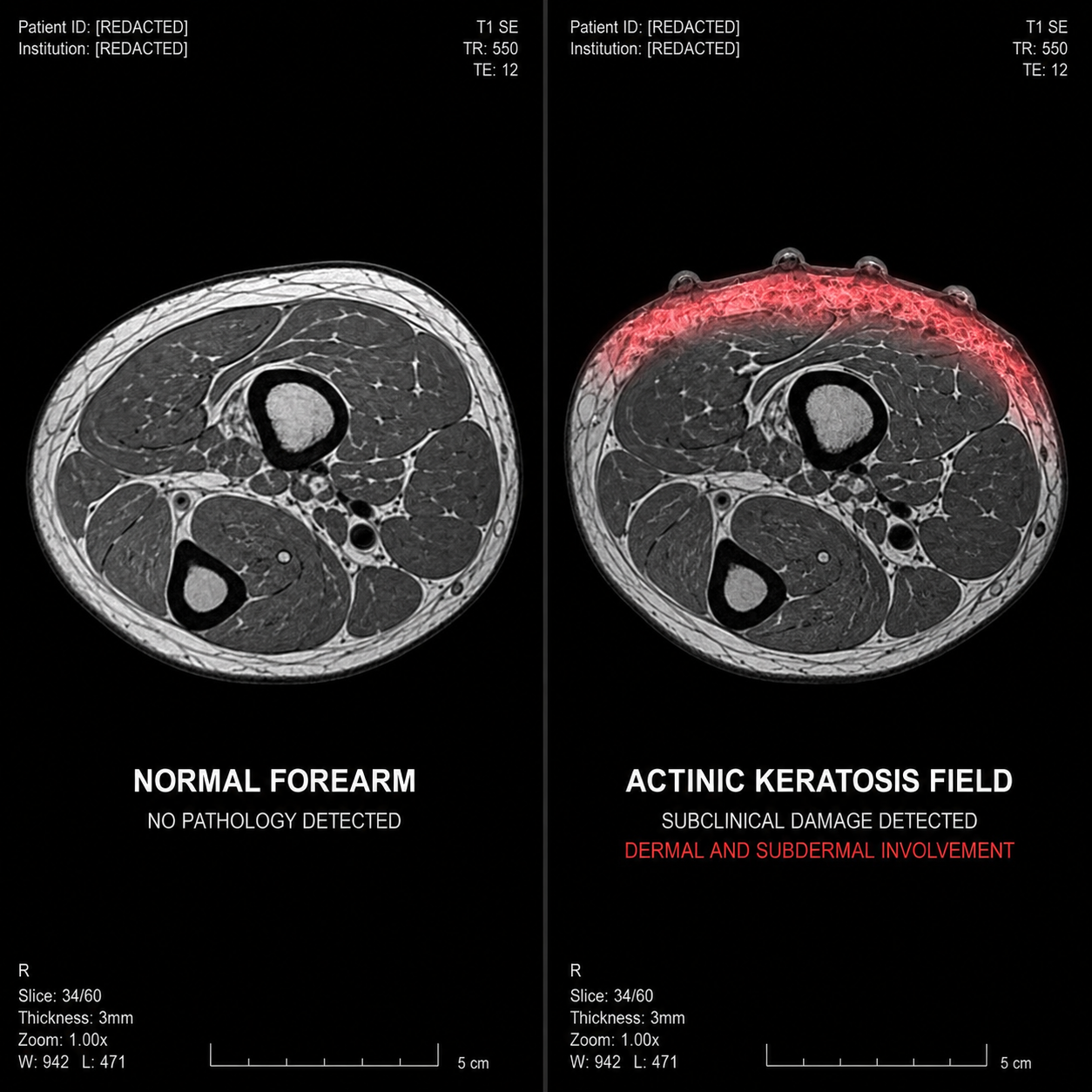
I'm a dermatologist. My forearms were covered in rough patches every morning and I refused the treatment I prescribe every day. Here's what actually cleared them. My name is Dr. Diane Whitaker. I am 62 years old. I've been a practising consultant dermatologist for 24 years, and actinic keratosis is the single most common condition I treat. I grew up watching my mother manage her skin the same way most women in Britain do. Mostly by ignoring the patches until she couldn't. She spent her last years hiding her arms under cardigans. Rough, scaly patches across both forearms, her hands, her chest. She stopped wearing short sleeves entirely by 65. She stopped going to her garden club. She stopped reaching for her grandchildren's hands. I became a dermatologist because of those years. Because I needed to believe there was something I could do about what was coming for our family. For two decades I sat across from patients and explained the same things. The rough texture that won't go away no matter what you apply. The new patches appearing on skin that looked clear last visit. The sandpaper feeling under your fingers every morning before you've even opened the curtains. I'd sit across from women specifically — women who applied diclofenac twice daily without fail, who wore SPF 50 every morning, who hadn't missed a single freeze session in years — and their patches were still spreading. I knew why. I told them what I'd been taught. Sun damage. UV exposure. The cumulative weight of decades of outdoor living that doesn't reverse with surface treatment but can be "managed" visit by visit. And when the diclofenac wasn't enough, which it often wasn't, I escalated. Freeze sessions every quarter. Fluorouracil field therapy. Photodynamic treatment. I prescribed those treatments thousands of times. I watched what they did to people. The weeping skin from fluorouracil that keeps you housebound for six weeks. The quarterly freeze sessions that clear one patch while three more appear. The endless diclofenac applications that leave the tube empty and the patches unchanged. I watched my patients come back again and again. Adding treatments. Switching protocols. Tolerating symptoms that became their new normal. Some of them were on three treatments and their patches were still spreading. I prescribed those treatments anyway. Because I didn't know what else to give them. Three years ago, it happened to me. I'd been noticing my own forearms for a long time. A couple of rough patches. A little texture. I told myself I was managing it. Then the patches stopped being occasional. Three new ones on my left forearm in one month. Rough spots on both hands the same week. A scaly area on my chest the following Monday. I sat at my kitchen table at 6 AM running my fingers across my forearm and I felt something I hadn't expected. Not medical concern. Fear. The same fear I'd watched on the faces of my patients for twenty-four years. I knew exactly what those patches meant. I knew what they became if you ignored the field. I'd sat with my mother as the patches spread to seven body parts over a decade. I was not going to follow the same path. My own GP wanted to start me on a more aggressive diclofenac schedule. Stronger concentration to start. I sat in that chair — the patient's chair, not the doctor's — and heard the exact conversation I'd had with hundreds of my own patients. I told her I'd think about it. But I wasn't going to take it. I prescribe diclofenac every week. I know the mechanism cold. I also know what it achieves over twenty years. Less than 4% penetrates the stratum corneum. The subclinical field in the dermis — the layer generating every visible patch — sits behind a lipid barrier that water-based compounds were never designed to cross. My mother was on diclofenac and freeze sessions for eleven years. Her patches spread every single year. I wasn't doing that to myself. So I did what I tell every patient to do first. Full sun protection. SPF 50 every morning without fail. Cut all unnecessary UV exposure. Added a retinoid cream every evening. My skin felt slightly smoother on the surface. Still rough. Still spreading. I tried vitamin C serum. The research on ascorbic acid is reasonable. I've mentioned it to patients for years. I bought a bottle from Boots, one of the top-rated ones. Applied it every morning for eight weeks. Nothing moved. Tried a different brand. Six weeks. Same result. I figured my field was just too established for a vitamin C serum to make a dent. That was my conclusion. I was wrong about why. About six months ago, one of my regular patients came in for a follow-up. She's 67. Been dealing with chronic actinic keratosis for over a decade. She'd been on diclofenac and quarterly freeze sessions for years and her patches had plateaued — spreading slowly but never calming. I pulled up her notes and stopped. Her photos showed significant flattening across both forearms. I asked her if she'd changed her diclofenac. She hadn't. I asked her what she'd added. She reached into her bag and set a small amber bottle on my desk. A botanical body oil. "I didn't want to bother you with it, Doctor. I know you probably think oils are a waste of time." I did think that. Mostly. But her notes were right in front of me. And I knew her well enough to know she wasn't imagining the change. She said: "The regular ones don't work. You have to get the one that's cold-pressed and oil-soluble. My sister found it. There's a difference." I thanked her. That night my own forearms were rough again. I sat at the kitchen counter with my laptop and I went deeper into the lipid-barrier penetration research than I ever had before. Here's what I found. The problem isn't the patches. It's the subclinical field — a layer of UV-damaged keratinocytes deep in the dermis that has tipped into overdrive. Your skin keeps pushing rough, scaly patches to the surface because the field underneath is generating constantly. Diclofenac, vitamin C serums, and retinoid creams are all water-based — so they sit on the stratum corneum and barely penetrate. Less than 4% reaches the dermis. That's the whole reason nothing worked. The compounds that actually reach the field are lipid-soluble. Oil-soluble vitamin C — ascorbyl tetraisopalmitate — merges with the lipid barrier and crosses through all seven skin layers to the dermis. Bakuchiol supports normal keratinocyte cycling from the deep layer out. Then I went and looked at the serum I'd been using. Water-based ascorbic acid. Bounces off the stratum corneum. And the retinoid cream: water-based delivery. Same problem. No wonder I wasn't seeing results. I kept reading. The second problem is the carrier oil. Most botanical body oils use sunflower or jojoba oil. They moisturise. They sit on the surface. They don't penetrate to the dermis. Only cold-pressed camellia oil and sea buckthorn oil have the molecular structure to carry actives through the stratum corneum to the dermis. The cheap oils from Holland & Barrett were never going to reach the field. So a label that says "vitamin C body oil" can have almost no functional penetration. You're paying for moisturiser. You're not getting the mechanism. I thought about my patients. All the times I'd said "the research on vitamin C is interesting" and they'd gone out and bought whatever was on the shelf at Boots. None of them were getting an oil-soluble form. None of them were using a cold-pressed lipid carrier. No wonder it hadn't worked. No wonder I had written it off. I started looking for any botanical body oil that used cold-pressed camellia and sea buckthorn as the carrier, oil-soluble vitamin C at clinical concentration, bakuchiol for cellular turnover, and zero water in the formula. One brand kept coming up in the research forums, in the review threads, and I remembered then — in my patient's bag. Dermèvia. I ordered it that night. When it arrived I checked the formulation before I opened the bottle. Cold-pressed camellia and sea buckthorn. Oil-soluble vitamin C — ascorbyl tetraisopalmitate. Bakuchiol at clinical concentration. Sixteen botanicals. Zero water. Zero filler. I applied the first drops that Monday evening to every sun-exposed area. Week 1: The rough sandpaper texture between my patches was calmer. Not gone. But something had absorbed instead of sitting on top. Week 2: The patches felt different. Softer. Less raised. I ran my fingers across my forearm three mornings in a row to make sure. Smoother. Smoother. Smoother again. Week 4: I looked at my forearms and the largest patch — the one that had been raised for three years — was flat. I hadn't felt that in three years. I pressed my forearm against the bathroom counter. No catching. No rough edges. Week 8: Smooth forearms. No new patches. The spreading that had been progressing for three years had stopped. I sat at my kitchen table and I didn't move for a long time. Twenty-four years as a dermatologist. And a patient had to teach me something about what actually works. I've quietly mentioned Dermèvia to eleven of my chronic AK patients since then. Because I know what happens when their patches don't stop. I know the conversation that comes next. Fluorouracil. Photodynamic therapy. Side effects that become their new baseline. I've watched that road. I've watched it go nowhere for people who deserved better from the system that was supposed to be helping them. The ones who've actually ordered it have come back with smoother skin. One woman, 63, been on diclofenac and quarterly freeze sessions for six years, came back at her follow-up with flat forearms for the first time since her diagnosis. She'd been checking her arms every morning for years. She said: "Doctor, I feel like I got my arms back." I think about my mother when she says that. Here's what I wish someone had told me sooner. The research on reaching the subclinical field is real. But most of what's on the shelf is water-based with the wrong form of vitamin C, and none of it is delivered in the lipid carrier your skin actually needs to cross the stratum corneum. Dermèvia is cold-pressed camellia and sea buckthorn as the lipid carrier. Oil-soluble vitamin C at clinical concentration. Bakuchiol for natural cellular turnover. Sixteen botanicals. Zero water. That's the difference. I wasted eight months on products that couldn't work. If my patient hadn't put that bottle on my desk, I'd still be managing patches that were slowly spreading toward what my mother's became. I'm sharing this because I know who's reading it. You've been doing the work. The diclofenac every morning. The SPF 50 without fail. The freeze sessions every quarter. And those patches are still there. Rough. Spreading. Relentless. There is a reason. It isn't that you're not compliant enough. It's that everything you've been applying was never built to cross the barrier. 👉 trydermevia.com/pages/actinic-keratosis-reset 90-day money-back guarantee. If your patches haven't visibly flattened, full refund. — Dr. Diane Whitaker, MBBS FRCP Consultant Dermatologist, 24 years P.S. A few things I wish I'd known before I ordered. Dermèvia comes with a 90-day money-back guarantee. If your patches don't flatten, you get a full refund. No questions. I wish I'd known that before I spent eight months on water-based serums that were dead before they reached my dermis. The rough texture was calmer by week one. Patches flattening by week four. Clear mornings — no new rough spots to find — by week eight. If you've been doing everything right and your patches won't clear, if you've watched this play out in your family and you're not willing to be the next one, try it before you start the fluorouracil. I went from rough spreading patches to smooth forearms in eight weeks. Without the treatments I prescribe every day. If there's any chance it works for you the way it worked for me, it's worth eight weeks to find out. P.P.S. I don't sell Dermèvia. I don't get a penny from this. I'm writing this because I sat at my mother's side as she hid her arms for a decade, and I'm not willing to watch my patients do the same when the research exists to reach the field their treatments never could.
Where the ad sends people
trydermevia.com
I'm a Dermatologist. My Own Patches Spread for 3 Years While I Prescribed the Same Treatment That Wasn't Working. A Patient Had to Show Me What Does.
Dermévia
Learn more: trydermevia.com(opens in a new tab)