
Inactive· since May 6, 2026
- 55
- days it ran
- 3
- relaunches
Ad copy
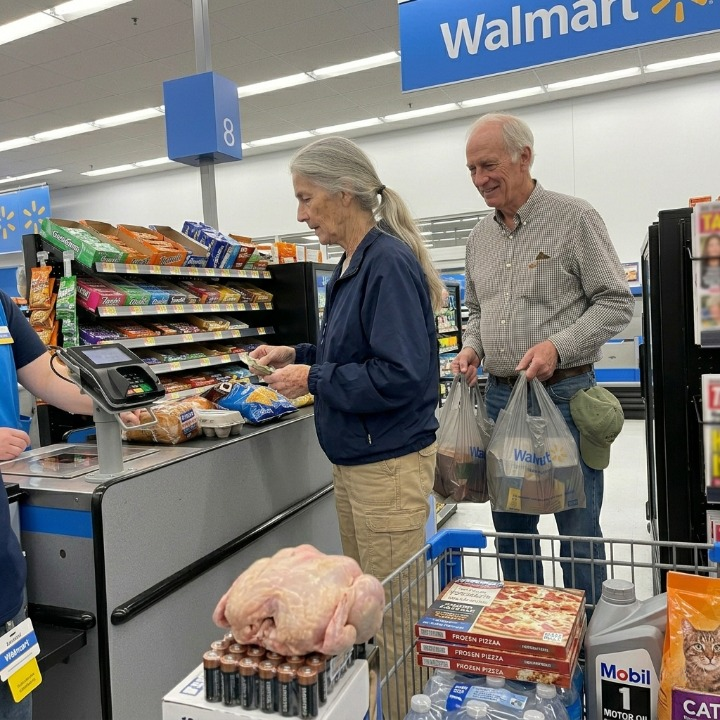
I found something at Walmart last Tuesday that changed my life. I wasn't looking for it. I went in for cat litter and a rotisserie chicken. I came out with a bag of cat litter, a rotisserie chicken, and a piece of paper that a stranger handed me in the checkout line. A folded receipt with three words written on the back in blue ballpoint pen. I still have it. It's on my fridge, under the magnet from my granddaughter's dance recital. I look at it every morning when I make coffee. Three words. I'll tell you what they were in a minute. But first I have to back up, because if I just tell you what was on the paper without telling you what came before it, you won't understand why a folded receipt from a stranger made me sit in my car in the Walmart parking lot and cry for fifteen minutes before I could drive home. My name is Jessica. I'm 57 years old. I live in a small town outside Chattanooga called Soddy Daisy, which I know sounds made up but I promise you it's real. Look it up. We have a Dollar General and two churches and a Sonic and that's about it. I've been married to my husband Wendell for 34 years. He's 61. He drove a delivery route for the same bread company for 28 years, retired three years ago, and has been quietly disappearing ever since. That's the only word I have for it. Disappearing. Not all at once. Not in a way you'd notice from the outside. But when you've slept next to a man for 34 years, you know the shape of him. You know what his footsteps sound like in the kitchen at 6:15 in the morning. You know how loud he laughs at the same Andy Griffith reruns we've been watching since the kids were little. You know which side of the bed he sleeps on and how heavy his arm feels when he reaches over in his sleep. And one day you start to notice that all of those things have gotten quieter. Lighter. Fainter. The footsteps got slower. The laugh got shorter. The arm stopped reaching over. I told myself it was retirement. I told myself it was 61. I told myself it was the weather, the news, the hip he'd been complaining about, the fact that our son moved to Knoxville two years ago and we don't see the grandkids as much as we used to. But I knew. I think wives always know. Something was wrong with my husband and I didn't know what it was. The cholesterol thing started about four years ago. His regular doctor, a man named Dr. Pace who has been seeing Wendell since before our youngest was born, sat us down after a routine physical and slid a printout across the desk. "Your numbers are getting away from you, Wendell." Total cholesterol over 260. LDL was the one he was worried about. I don't remember the exact number anymore, I just remember Dr. Pace circling it twice with a red pen and saying the word "atherosclerosis" out loud, which is one of those words that sounds worse the second time you hear it. He put Wendell on a statin. 20 milligrams. Once a day, with dinner. We did everything they told us to do. I cleared the pantry out. Threw away the white bread, the boxed mac and cheese, the breakfast sausage Wendell had eaten every Saturday morning of his adult life. I bought oat milk. I bought the kind of margarine the box says is good for your heart. I started buying salmon at Kroger even though Wendell hates salmon and would push it around his plate like a child. I made him walk. We walked the loop around our neighborhood every evening after dinner, even when his hip was bothering him, even when it was raining, even when neither of us wanted to. 22 minutes a loop. We did it 5 days a week for almost two years. His next bloodwork came back and the LDL had barely moved. Maybe 8 points. Dr. Pace doubled the dose. That was the year Wendell stopped going out to the workshop. He had this little detached workshop in our backyard, built it himself in 1998 from a kit, used to spend every Saturday out there refinishing furniture for our daughter or building birdhouses or just puttering around with the radio on and the door open. He stopped going. Not all at once. Just less. Then less. Then not at all. The workshop sat there with the door closed. Spiders started building webs across the doorframe. I noticed because I'd walk past it on my way to take out the trash and the webs got bigger every week. I asked him about it once. He shrugged. "Just don't have it in me anymore." That's a thing a 61 year old man should not be saying about a hobby he's had since 1998. But I let it go. Because what was I going to do? Argue with him? Drag him out there? The next bloodwork came back and his numbers had finally started to come down a little. Dr. Pace was happy. Wendell wasn't happy. Wendell wasn't anything. He was just there. In the recliner. Watching reruns. Going to bed at 8:30. He'd lost weight too, but in the wrong way. The way old men lose weight. Not from his belly. From his arms and his face. His wedding ring started spinning loose on his finger. I asked Dr. Pace about it at our next visit. I sat there in the little blue chair across from his desk and I said, "Doc, my husband is fading. I don't know how else to put it. He's fading." Dr. Pace was kind. He's always been kind. He took his glasses off and he said, "Jessica, this is what 60 looks like for a lot of men. The numbers are improving. That's what we're focused on. The rest of it is just, you know. Life." Just life. I drove home that day and I cried in the driveway before I went inside. Because if this was just life, I didn't want to watch the rest of it. Now I'm going to fast forward because if I tell you about every month of the next two years, this is going to take all day. Just know that things kept getting quieter. Wendell's birthday came and went and he didn't want a cake. Christmas came and went and he sat in the recliner while the grandkids opened presents and he smiled at the right times but he wasn't really there. Our anniversary came and went and he forgot. He's never forgotten our anniversary. I made an appointment with Dr. Pace by myself. Without Wendell. I asked if maybe the medication was doing something to him. The fog. The fatigue. The way his hands had started to shake a little when he held a coffee cup. Dr. Pace looked at the chart and said the medication was working as intended. The numbers were trending in the right direction. He said maybe we should think about an antidepressant. An antidepressant. I drove home and I sat in the driveway again and I thought, my husband doesn't need an antidepressant. My husband needs his life back. That brings me to last Tuesday. I was at Walmart picking up cat litter and a rotisserie chicken because Wendell had been wanting the rotisserie chicken from Walmart for some reason, said it was the only one he liked anymore, and I'd given up trying to make him eat the things on the heart-healthy list. If he wanted Walmart chicken, he was going to get Walmart chicken. At this point I'd have wheeled in a fryer truck if it would have made him say two sentences in a row. I was in the checkout line. Self-checkout was broken, half the regular lanes were closed, and I ended up in line behind a woman who had to be in her late 60s. Tall. Skinny. Grey hair pulled back in a loose ponytail. Cargo pants and a windbreaker. The kind of woman who looks like she gardens and walks dogs for the neighbors. She had a basket. I had a cart. She turned around to let me put the cat litter on the belt because the bag was heavy and I was clearly struggling with it. That's how it started. A bag of cat litter and a stranger being polite. She said, "You got grandkids?" I said yes. Two. A boy and a girl. The girl was the one in the dance recital photo on my keychain that I was holding in my hand. She said, "I got four. The youngest one's in Birmingham. We just got back from seeing her last weekend." We? She gestured behind her, and that's when I noticed the man. He was at the end of the conveyor belt, bagging her groceries. Tall like her. Maybe a little stooped. White hair. He had a baseball cap in his back pocket and he was moving with the kind of brisk efficiency that I hadn't seen in my own husband in years. He looked up and waved at me. "Hey there." That's it. Just a hey there. Two words. But it was the way he said it. Bright. Easy. Like he was actually present in his own body. Like he was glad to be at Walmart on a Tuesday afternoon bagging groceries for his wife. I don't know what came over me. I really don't. But I leaned a little closer to the woman and I said, kind of quiet, "Can I ask you something kind of weird?" She smiled. "I'm a kind of weird person, so go ahead." I said, "How old is your husband?" She blinked. Then laughed. "67. Why?" "My husband is 61 and he won't get out of his recliner." I don't know why I said it. I'd never said it out loud to anyone. Not my sister. Not my best friend Donna who I've known since high school. Not Dr. Pace. I said it to a stranger in a Walmart checkout line because something about her husband's voice cracked something open in me. She didn't laugh. She put her hand on my arm. Right there in the checkout line. Light. Just for a second. She said, "Is he on a statin?" I stared at her. "Yes." She nodded. Like she'd already known the answer. She said, "My Donald was on one for nine years. He's not on it now." The cashier was scanning her items. The line was moving. There were people behind us. This was not the time or the place to have this conversation. I knew that. But I couldn't move. I said, "What happened?" She said, "The same thing that's happening to your husband. He went away. He was right next to me and he went away. The doctor kept saying everything was fine because the numbers looked fine. And I kept watching my husband disappear." I felt my throat close up right there next to the gum and the magazines. She said, "We didn't take him off the medication. He's still managing his cholesterol. But we added something. And the part of him that had gone quiet, it came back. Slowly. Over a few months. But it came back." The cashier was waiting for her to pay. She paid. Cash. I remember because she counted it out. Twenties and ones. She picked up her receipt. She turned it over in her hands. She looked at me. She said, "You got a pen?" I dug one out of my purse. She wrote three words on the back of her receipt and she handed it to me. She said, "Look this up. Tonight. When your husband's asleep. Don't take my word for any of it. Just look it up. Read the research. Decide for yourself." Her husband Donald came around with the bags in one hand and a smile in the other and he said, "Ready, sweetheart?" and she said yes and they walked out into the parking lot and I watched them go. Then I paid for my cat litter and my rotisserie chicken and I sat in my car and I cried for fifteen minutes. Because of the way he said sweetheart. Because Wendell hadn't called me sweetheart in over a year. Because I'd been so used to my husband being a ghost that I'd forgotten what it looked like for a 67 year old man to walk through a parking lot like he had somewhere to be. I drove home. I made dinner. I gave Wendell his rotisserie chicken. He thanked me and ate it in the recliner with the TV on. He went to bed at 8:30. At 9:15 I sat down at the kitchen table with my laptop and the receipt. The three words on the back were: Amla. Oxidized cholesterol. That's it. That's all she wrote. I typed them into Google. And I sat there for the next four hours. What I learned that night, sitting at my kitchen table with my reading glasses on and a cup of decaf going cold next to me, was something nobody had told me in four years of doctor's visits. Your cholesterol number isn't really the problem. I had to read it three different ways before it sank in. Because for four years I had been treating that number like a verdict. The number on Wendell's blood panel was the score. High score bad. Low score good. That was the whole game. But here's what the research kept saying. Cholesterol on its own, just floating through your bloodstream doing its job, doesn't do anything bad. Your body needs it. It builds cell walls. It makes hormones. It's not the villain. What hurts your arteries is when cholesterol gets damaged on its way through your bloodstream. There's a process called oxidation. It's the same kind of thing that happens when you cut an apple in half and leave it on the counter and it turns brown. The cholesterol gets oxidized. And oxidized cholesterol is sticky. That's the kind that ends up parked in your artery walls. That's the kind your body has trouble clearing out. That's the kind that builds up. And the thing that nobody had told me, the thing that hit me sideways at my kitchen table at 11 at night, was this: If you only push the number down without addressing the oxidation, you're treating the smoke and ignoring the fire. The body keeps making more cholesterol to replace what got stuck. The number goes up. The medication pushes it back down. The number goes up. The medication pushes it back down. The cycle keeps spinning. And underneath it, the oxidation is still happening. That was the part nobody at Dr. Pace's office had ever explained to me. Then I started reading about Amla. Amla is a fruit. It grows in India. They call it the Indian gooseberry. It's been used in traditional medicine over there for, I don't know, a thousand years. Maybe longer. I'm not a historian. But what caught my attention was that researchers had been looking at Amla for years because of compounds it contains called emblicanins. And what emblicanins seem to do, based on the studies I read that night, is help protect cholesterol from oxidation. Not push your number down by force. Help protect your cholesterol from getting damaged in the first place. When cholesterol is better protected, less of it ends up in the sticky oxidized form. When less of it is getting stuck to artery walls, the body's frantic replacement cycle can start to ease. And when the cycle eases, the number can start to come down for a different reason than statins push it down. It can come down because your body isn't fighting an uphill battle anymore. I sat there with that for a long time. Because I'm not a doctor. I'm a 57 year old woman who used to substitute teach at the elementary school. But I understood that. I understood it in a way I had never understood the cholesterol conversation before. For four years I'd watched my husband swallow a pill that pushed a number around. For four years that pill had been doing nothing about the underlying problem. For four years the part of him I loved had been getting quieter while the number on the page got better. The medication was doing its job. The job just wasn't the right job. I went down a deeper rabbit hole. There were more recent studies. A trial out of India that ran for 12 weeks where they gave a standardized Amla extract to people with high cholesterol and tracked their numbers. Total cholesterol came down. LDL came down. The protective HDL number came up. And the thing the researchers kept noting, almost as a side effect, was that the people in the studies described feeling different. Not just looking different on a blood panel. Feeling different. I closed the laptop at 1:30 in the morning. I went into the bedroom. Wendell was asleep on his back, mouth open, breathing slow. I stood in the doorway and looked at him for a while. I thought about Donald in the Walmart parking lot. I thought about my husband at 35, in the front yard, lifting our daughter onto his shoulders so she could see the parade. I thought about the workshop with the spiderwebs across the door. I went back to the kitchen. I ordered a bottle of Alevia's Amla. It was just past 2 in the morning. I almost didn't do it. My finger hovered over the button for a long time. Because I'd tried things before. Fish oil. Red yeast rice. A green powder Donna had recommended that tasted like a swamp. But this felt different. Because for the first time, the explanation had matched what I was watching happen in my house. The mechanism made sense. Protect the cholesterol from oxidation. Let the body's own systems do what they were designed to do. The bottle came four days later. A small green and white bottle. 60 capsules. Two a day. I gave Wendell the first one with his coffee on a Saturday morning. I told him what it was. I told him about the woman in the Walmart line. I told him I'd read until 1:30 in the morning. He looked at me over the top of his glasses and he said, "Jessica, I'd swallow gravel if you asked me to." That was the most words he'd said to me in a week. I'm not going to tell you that something miraculous happened the next day. It didn't. He took two capsules a day with breakfast and dinner and life kept going. But here's what happened in week two. Wendell was sitting in the recliner watching the news. I walked through the living room with a basket of laundry. He looked up and he said, "You need help with that?" I said no, I had it. He said, "I can take the basket up the stairs." I almost dropped the basket. He hadn't offered to carry anything up the stairs in over a year. I let him take it. Just to see. He went up the stairs at the same speed I would have. He came back down and sat in the recliner and went back to the news. I went into the bathroom and I sat on the edge of the tub and I tried not to read into it. Week three. I came home from the grocery store on a Wednesday afternoon and the workshop door was open. I just stood there in the driveway with the bags in my hands. Wendell came out of the workshop with a piece of sandpaper in his hand and dust on his shirt and he saw me standing there and he said, "There's a chair in here that I started for Caitlin a few years ago. I think I'm going to finish it." Caitlin is our granddaughter. She turned 6 last month. I cried in the driveway again. For the second time in a month. Different reason this time. Week five. He started going to bed at 9:30 instead of 8:30. Then 10. He started talking through dinner instead of eating in front of the TV. One night he reached across the bed and put his arm over me the way he used to. I don't think he even thought about it. It was just muscle memory, after all those years, finding its way back. Week seven. His doctor wanted bloodwork. We hadn't told Dr. Pace about the Amla. I'd told Wendell I wanted to wait and see what the numbers looked like first. We went in. Got the labs. Came home. Waited. The call came two days later. "Wendell, your numbers look great. Whatever you're doing, keep doing it." Total cholesterol had come down. LDL had come down further than it had on doubled medication alone. HDL, the protective one, had come up for the first time in four years. Dr. Pace asked what we were doing differently. Wendell told him. About the Amla. About the research. About the woman in the Walmart line. Dr. Pace was quiet for a long time and then he said, "I'm going to look into that. Keep doing what you're doing. We'll check again in 90 days." That was last week. Last night Wendell finished the chair for Caitlin. It's a small wooden chair with a heart cut into the back. He's bringing it to her on Saturday. He's been smiling about it for two days. He called me sweetheart yesterday. Standing in the kitchen, drinking coffee, looking out at the workshop. He said, "Sweetheart, what do you want to do this weekend?" I had to leave the room. Not because I was sad. Because I was full. I'm telling you all this because I keep thinking about that woman in the Walmart line. I don't know her name. I never asked. She handed me a folded receipt with three words on it and she changed my life and I never even asked her name. So I'm doing what she did. If you're reading this and you've watched someone you love get quieter over the last few years. If you've sat in a doctor's office and been told the numbers are improving while the person you married is fading in front of you. If you've started to wonder if "this is just what 60 looks like" is something you should accept or something you should fight. I want you to know there's another way to look at this whole thing. The number on the page is not the whole story. The cholesterol itself is not the villain. The damage happens when cholesterol gets oxidized, and once you understand that, the conversation changes. Alevia's Amla is what we use. I picked it because the company is in the United States, the bottle is made here, and it comes with a 90 day money back guarantee, which meant if it didn't do anything for Wendell I could send it back and get my money back. I didn't have to send it back. But it mattered to me that I could have. Two capsules a day. That's it. With food. Wendell takes one with breakfast and one with dinner. If you want to read what I read that night at my kitchen table, you can. You don't have to take my word for any of it. The woman in the Walmart line told me the same thing. Look it up. Read the research. Decide for yourself. I keep the receipt on my fridge. Three words in blue ballpoint pen. Amla. Oxidized cholesterol. Sometimes I think about the version of my life where the self checkout wasn't broken. Where I went through the regular lane behind a different person. Where I never met the woman with the cargo pants and the husband who said "Ready, sweetheart?" in a Walmart parking lot. Wendell would still be in the recliner. The workshop door would still be closed. The chair for Caitlin would still be unfinished. I don't like to think about that version too long. If you're sitting where I was sitting six months ago, I'm telling you what she told me. Just look. Read. Decide for yourself. If your husband, your wife, your dad, your mom is fading in front of you and the doctor keeps saying the numbers are fine, the numbers might not be the whole story. Here's where I got the bottle. 👉 alevia.com/amla/33 P.S. The 90 day money back guarantee is real. I asked. You order it, you try it for 90 days, and if it doesn't do anything for the person you love, you send it back and they refund you. I'd never had a supplement company offer me that. Most of them want a credit card on file and a subscription you have to call to cancel. Alevia just sells you a bottle. You either keep buying it because it works for you or you don't. That's the whole transaction. That meant something to me. P.P.S. I went back to that Walmart three weeks later. I stood in the same checkout line at the same time of day, hoping I'd see her. I wanted to tell her about Wendell. I wanted to tell her about the chair for Caitlin. I wanted to ask her name. She wasn't there. I went back the next Tuesday too. Still wasn't there. I think about that a lot, that the only thing I have of her is three words on the back of a Walmart receipt and the sound of her husband saying "Ready, sweetheart?" in a parking lot. Sometimes the people who change your life are people you only meet once. P.P.P.S. If you do this, please write me a note one day. I won't see it but somebody will. Tell them about the workshop door opening. Tell them about the chair. Tell them about the moment your person came back to themselves. Pay it forward the way that woman paid it forward to me. That's the only thing I'm asking. Don't wait on it. The version of your life where you didn't try is not a version you want to live in. I know because I almost lived it. 👉 alevia.com/amla/33
Like this ad? Make it yours.
Crush rebuilds this exact creative around your product — your brand, your colors, your offer — in about a minute.