
Inactive· since Jan 24, 2026
- 10
- days it ran
- 2
- relaunches
Ad copy
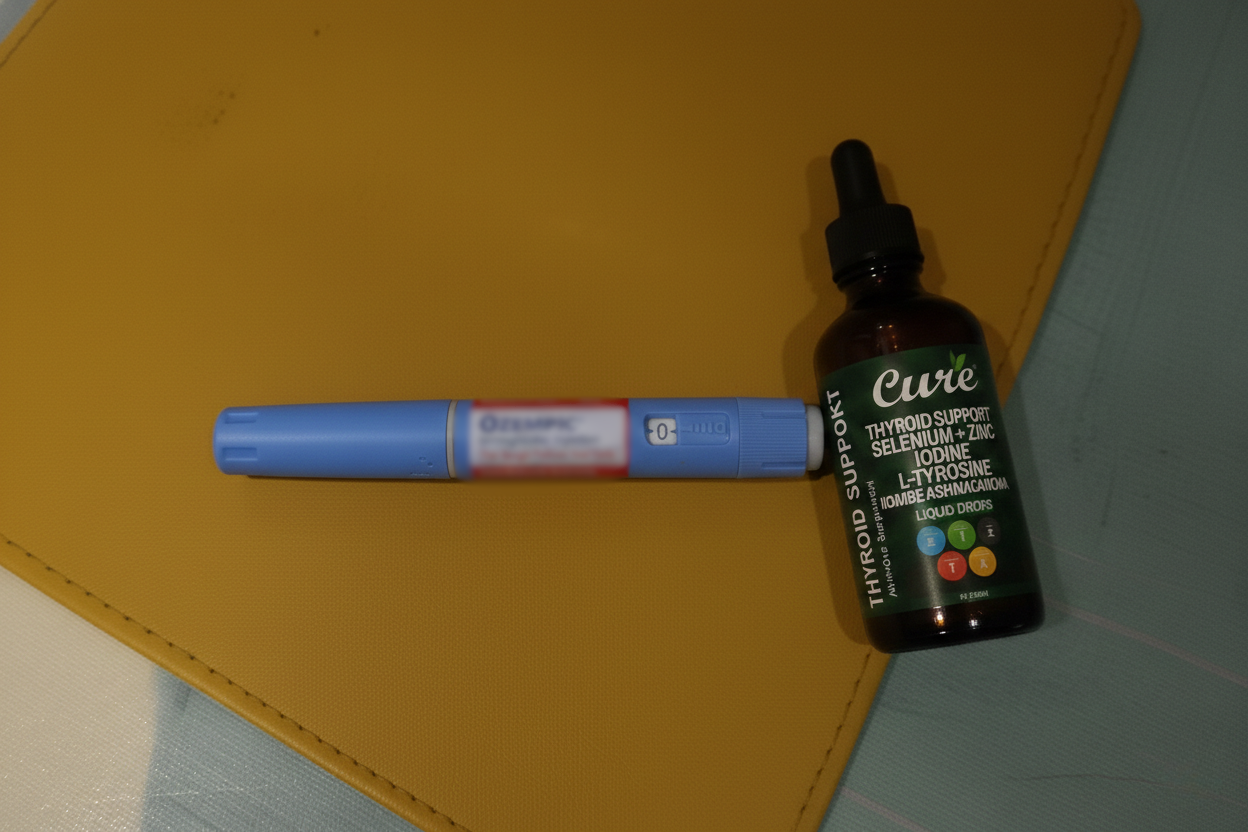
My endocrinologist's face went completely pale when I told her what supplements I'd been taking with my levothyroxine. My name is Dorothy, and I'm 72 years old. Every morning, I line up my pills on the kitchen counter. Levothyroxine for my thyroid. Blood pressure medication. Baby aspirin. Calcium supplement. Vitamin D. And then my thyroid support supplements—selenium, zinc, and B-complex capsules I'd been buying at the pharmacy for years. Five supplement pills on top of my prescriptions. The reality of being 72 with hypothyroidism. My endocrinologist always stressed the importance of supporting my thyroid. "Especially with Hashimoto's, Dorothy. Your body needs all the help it can get." So I became diligent about it. But here's my problem: I never felt better. Ever. Despite taking my levothyroxine faithfully for fifteen years. Despite adding expensive supplements to support it. Despite doing everything "right." That's when I started buying every thyroid supplement I could find. I know what you're thinking—isn't that overkill? But I was desperate. Exhausted. My labs said "normal" but I felt terrible. Selenium tablets from the vitamin aisle. A thyroid support complex from the health food store. Zinc capsules. Iodine drops. B-vitamins. I started keeping bottles everywhere. Medicine cabinet. Kitchen counter. Purse. Nightstand. I took them all day. With breakfast. After lunch. Before bed. Most importantly, I took them right after my morning levothyroxine. It made sense. Efficient. Support my thyroid all at once. The first few months seemed fine. But then I realized... nothing was changing. Tired all the time. Brain fog. Like I was moving through thick syrup. "Probably just aging," I told my daughter. "I'm 72, not 22." But it got worse. My weight concerns persisted despite eating 1,200 calories. I had trouble remembering words. Simple tasks felt exhausting. At my six-month checkup, Dr. Chen ran my full thyroid panel. "Dorothy, your Free T3 is still low. 2.0. Just barely in range. I'm increasing your levothyroxine again." "Again?" This was the fourth adjustment in two years. "Your TSH looks good, but your Free T3 won't come up. It's unusual for someone taking this much medication. But we'll keep trying." Three months later, same story. Free T3 still stuck at 2.1. "Let's add Cytomel—synthetic T3," Dr. Chen said. "Maybe you're not converting T4 to T3 properly." Another medication. Another three months of waiting to see if it worked. It didn't. My Free T3 barely budged. My energy was worse. The brain fog was constant. I felt like my body was broken beyond repair. Month 24: Dr. Chen looked genuinely puzzled. "I don't understand," she said, reviewing my chart. "You're on both T4 and T3 now. Your doses are high. You're taking all those supplements for thyroid support. But your cells aren't responding." "I take everything you prescribe. Every single morning. Never miss a dose. Plus all the supplements to support my thyroid." She leaned forward. "Walk me through your exact morning routine." "I take my levothyroxine first thing. Then about ten minutes later, I take my selenium, zinc, B-vitamins, and thyroid complex. I figured taking them together would help my thyroid work better." Her face went completely pale. "Oh no. Dorothy, stop. Right now." In that moment, everything changed. "You're taking your supplements ten minutes after your thyroid medication?" "Yes, every morning for two years. Why?" She pulled up something on her computer. Then grabbed a reference book from her shelf. "Dorothy, levothyroxine absorption is incredibly sensitive. You're supposed to take it alone, wait at least 30-60 minutes, then take other supplements." "But they're thyroid support supplements—" "Look at what's in them. Calcium. Iron. Magnesium in your zinc supplement. These minerals bind directly to levothyroxine in your stomach. They create compounds your body can't absorb." She showed me the screen. "When you take supplements too close to your thyroid medication, you might only be absorbing 30-40% of your dose." My hands started shaking. "Two years," I whispered. "I've been taking them together for two years." "And I kept increasing your medication, trying to overcome absorption that was being blocked by the very supplements meant to help you." She pulled up medical literature. "Thyroid medication must be taken alone on an empty stomach. Wait at least one hour before taking other supplements. The minerals—especially calcium, iron, magnesium—they physically bind to the medication and prevent absorption." "But nobody told me that." "Most people don't realize. Your prescription bottle says 'take on empty stomach,' but it doesn't specify you have to wait an hour before other supplements. People assume if it's 'thyroid support,' it must be fine to take together." She looked at my supplement list. "And these are all pills and capsules?" "Yes. Five pills every morning after my medication." "Here's the other problem—after years of hypothyroidism, your gut lining is compromised. Your intestinal motility is slower. Even IF you took these supplements at the right time, your damaged gut can't absorb them efficiently anyway." She pulled up another study. "Most hypothyroid patients taking oral supplements show minimal improvement in nutrient levels because their gut can't extract what's in the pills. They pass right through." I felt sick. "So I've been sabotaging my medication AND wasting money on supplements my body can't even absorb?" She nodded gently. "The timing issue is critical. But even with perfect timing, pills aren't the right delivery method for someone with long-term hypothyroidism." "What am I supposed to do? My body needs these nutrients for T4-to-T3 conversion." "You need the nutrients delivered in a way that bypasses your gut entirely. Sublingual delivery—under the tongue, directly into your bloodstream. No digestion required, no mineral interference, no absorption problems." "Where do I find that?" "That's what I wish I'd known to tell you two years ago. There are sublingual thyroid support options now that deliver the exact cofactors you need without interfering with your medication." I left that appointment feeling shocked and betrayed—not by my doctor, but by my own well-intentioned mistakes. Two years of dose adjustments. Two years of adding more medication. Multiple prescriptions and expensive consultations. All because I was taking supplements at the wrong time, in the wrong form. That night, I told my daughter everything. "Two years," she said, tears in her eyes. "You've been suffering because you were trying to help yourself?" I couldn't sleep. I kept thinking about all those supplement bottles. The pill organizers full of capsules I thought were helping. The labels that said "thyroid support" and made it seem like I was doing the right thing. At 2 AM, I was researching frantically. "Thyroid medication mineral interference." "Levothyroxine supplement absorption problems." "Sublingual thyroid support." "Why supplements don't work for hypothyroidism." Forum after forum of women discovering the same thing: "Thyroid meds weren't working—stopped taking calcium at the same time and levels improved." "Two years taking selenium pills that never absorbed. Switched to sublingual and Free T3 finally came up." "My gut can't absorb supplements anymore. Sublingual delivery changed everything." At 3:30 AM, I found a thread that gave me hope. A functional medicine practitioner wrote: "For hypothyroid patients, sublingual nutrient delivery bypasses the damaged gut AND avoids mineral interference with levothyroxine. It's the only method that reliably works." Someone replied with a link to Cure Thyroid Support Drops. I studied the ingredients like I was reading a prescription. Selenium. Zinc. Iodine. L-tyrosine. KSM-66 Ashwagandha. The exact cofactors needed for T4-to-T3 conversion. But in liquid sublingual form—no pills, no gut required, no mineral binding. And it could be taken separately from my medication—no interference. I ordered it immediately. When it arrived, I completely changed my routine. Morning: Levothyroxine at 7 AM with plain water. Set a timer for one hour. 8 AM: Two droppers of Cure under my tongue. Hold for 30 seconds. No pills to swallow. No mineral interference. No gut absorption gamble. I brought the bottle to my next appointment with Dr. Chen. She examined the label carefully. Checked the ingredients. Read the sublingual delivery method. A smile spread across her face. "This is exactly what I wanted you to find. Clean nutrients, sublingual delivery, taken separately from your medication. Perfect." The changes came faster than I thought possible. Week two: The afternoon brain fog started lifting. Week four: My energy improved. I could make it through dinner prep without needing to sit down. Week six: I felt sharper than I had in years. My follow-up labs were at eight weeks. Dr. Chen ran my blood work and stared at the results. "Dorothy, your Free T3 jumped from 2.1 to 3.5. That's the highest I've ever seen you. And we didn't change your medication dose." "I stopped taking pills that interfered with my medication. Started using sublingual drops that bypass my gut." She leaned back in her chair. "We spent two years increasing your medications and adding prescriptions. And the problem was timing and absorption the whole time." She made a note in my chart. "I'm going to start recommending this to my other patients. How many people am I treating for 'medication resistance' when it's actually a delivery problem?" Three months later: my Cytomel was discontinued. I didn't need the added T3 anymore. My Free T3 stayed stable at 3.4 on just my original levothyroxine dose. Dr. Chen shook her head at my follow-up. "Two years of adding medications. All because you were taking supplements at the wrong time in the wrong form." That was five months ago. My thyroid is now perfectly controlled on my original levothyroxine dose—the one I started with fifteen years ago. My energy is back to what it was before everything went wrong. I can think clearly all day. My body started responding in ways it hadn't—turned out I didn't need more medication, I needed my body to actually USE the medication I was taking. All because I take my medication alone now, wait an hour, then use sublingual drops that actually absorb. Last week, I was at my book club and saw another member, Helen, organizing her pill box—levothyroxine in one slot, selenium and calcium in the next. I approached her carefully. "Helen, do you take those supplements right after your thyroid medication?" "Yes, every morning. Why?" "The minerals bind to levothyroxine and block absorption. You're supposed to wait at least an hour. And even then, pills don't absorb well when your gut is compromised from years of hypothyroidism." Her face went pale. "My doctor just increased my dose for the third time. Says my Free T3 won't come up." I pulled out my phone and showed her Cure. "Take your levothyroxine alone. Wait an hour. Then use these drops under your tongue. Sublingual delivery—bypasses your gut entirely, no mineral interference." She took a photo immediately. If you're over 65 and taking levothyroxine—especially if you're also taking thyroid support supplements—please check your timing and delivery method. Those supplements aren't just "missing the mark." They're actively blocking your medication from working. Even if you take them an hour apart, if they're pills, your damaged gut can't absorb them properly anyway. You need your medication taken alone. Then you need nutrients delivered in a way your body can actually receive. Right now, Cure Thyroid Support Drops come with a 60-day money-back guarantee. At less than the cost of all those supplement pills that don't absorb, it's worth trying. More importantly, it might save you years of unnecessary medication increases and suffering. Get sublingual thyroid support here—the only delivery method your endocrinologist would trust: https://trycure.shop/products/cure-thyroid-support P.S. — I still take my levothyroxine every single morning at 7 AM. I'll take it for the rest of my life. But now I wait one hour, then take two droppers of Cure under my tongue. My medication does its job. The sublingual drops help my body convert and use it—without interfering with absorption. That's the difference between "optimized" on paper and actually feeling the medication work. Don't waste another two years taking supplements that sabotage your medication and don't absorb anyway. Try sublingual delivery now.
Read This If Your Doctor Said Your Thyroid Is "Normal" But You Know Something's Wrong👆
Try Cure
ORDER NOWLike this ad? Make it yours.
Crush rebuilds this exact creative around your product — your brand, your colors, your offer — in about a minute.