Peter Kirkland
 Facebook ad: “Small Town Trial: A Legal Thriller filled with Gripping…”

Ran for 186 days, from April 9 to October 12, 2026, the last day Crush saw it.
Run by Peter Kirkland on Facebook. Crush is not the advertiser and does not verify its claims. See this ad in Meta's Ad Library(opens in a new tab)
Make your own version of this ad
Crush makes it, launches it in your own Meta ad account, scales the winners and pauses the losers.
About this ad
- Meta Ad Library ID
- 1641559776879769
- Platforms
- Facebook and Instagram
- Relaunches
- 0
- Niche
- Martial Arts
Ad text
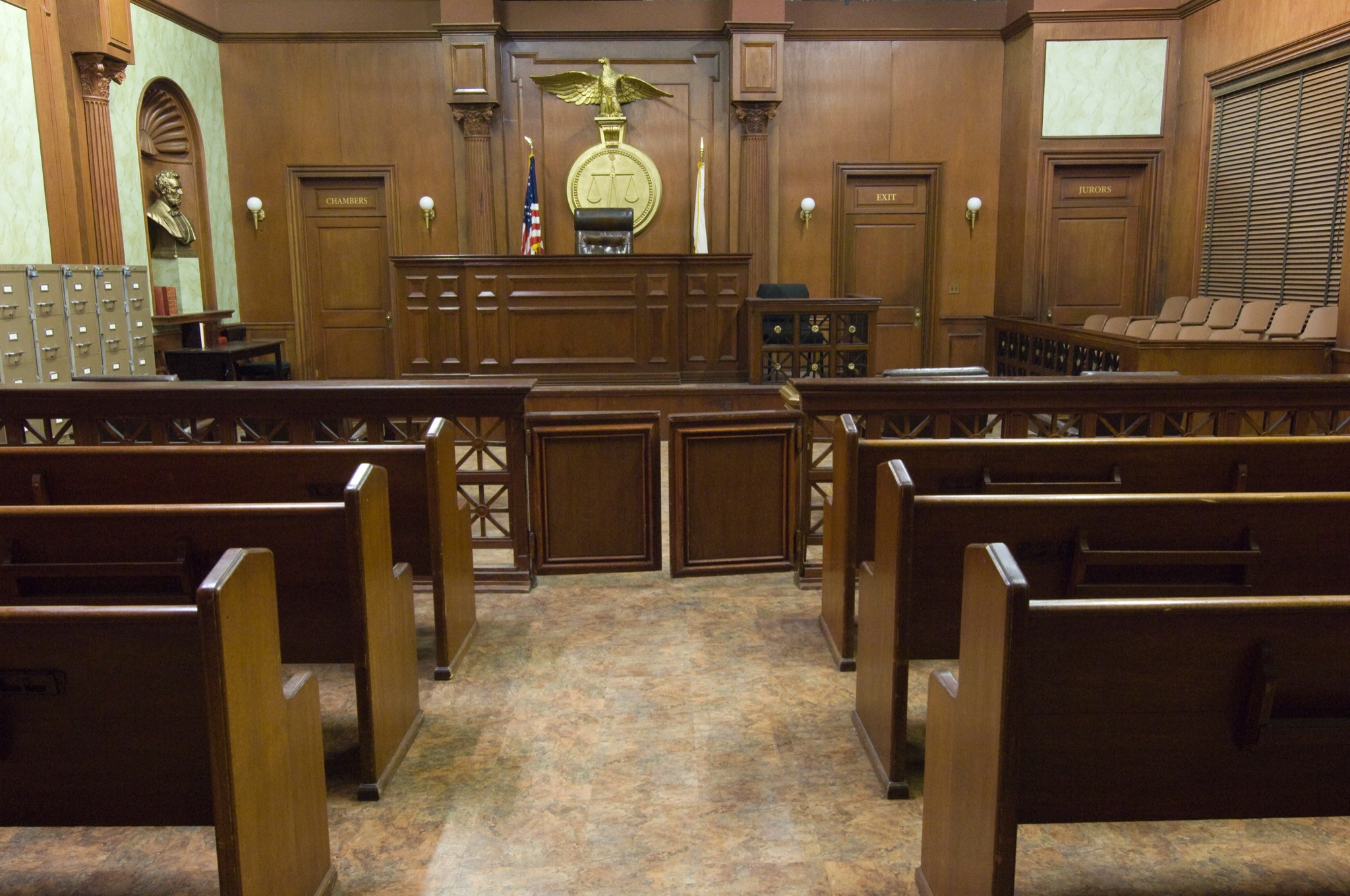
“A prosecution like this is a terrible experience for the Williams children,” I began. “At a time when they should be able to rely on their parents for stability and support, intolerance and vindictiveness define their family life. Their father filed criminal charges against their mother. Their private lives have been invaded by a public trial. The possibility of their mother’s conviction has imperiled their ability to feel secure and protected. Thank goodness this is finally coming to an end. What that end will be is up to you.” I couldn’t believe my client’s ex-husband had talked the prosecutor into filing charges for criminal restraint. Maybe he was a major contributor to the DA’s reelection campaign. I wasn’t yet sufficiently connected in Autumn Harbor to know. I had to hope the jury found the charge as ridiculous as I did. “Mary Williams was excited to take her children on an adventure in Canada. It was a special trip. Kids love to visit their grandparents. Grandparents let them get away with stuff their parents are strict about—candy, TV, you know what I mean.” I looked at the jurors old enough to have grandchildren and smiled. I gestured in Mary’s direction. “Mary planned the trip properly. She got an agreement from the children’s father to take the children out of the country. That’s the responsible and respectful thing to do, and that’s what she did.” I was starting to find my rhythm, though I still felt shakier than I liked. “When Grandpa suggested they spend a couple of days at his cabin in the woods, it promised to make their adventure even more exciting. Mary didn’t need her ex-husband’s permission for that. She was entitled to change her day-to-day plans in Canada. She had the right, as the custodial parent, to manage the trip as she saw fit.” So far, so good. “Then, suddenly, when they were in northern Ontario, there was an emergency. You can’t plan for emergencies. They come out of the blue, and you do the best you can. Sometimes everything goes well. Sometimes it doesn’t. When people are stressed and upset, they’re not always able to manage things perfectly. But this is life. We have to make allowances when someone’s plans are upset by unexpected and frightening events.” Judges generally kept their expressions neutral during arguments by counsel. Judge Callahan, a senior jurist with white hair and a pink complexion, was no exception. I got a little nod, however, from His Honor on the nature of emergencies. I pursed my lips and cocked my head. “That’s what happened here. Grandpa got sick. Very sick. He had to be airlifted to a hospital.” I shook my head. “What could be more alarming? Imagine it. The helicopter lifts off, taking Mary’s father away.” I raised my arm, mimicking the takeoff, and looked past it toward an imaginary sky. “Mary doesn’t know if she’s about to lose him. She wants to get to his bedside as quickly as possible. Maybe these will be the last few moments she has with her father.” I walked back to the defense table and stood behind my client, my hands on the back of her chair. “In that dire moment, Mary does the best she can for her children. She arranges for them to be looked after by a longtime friend of the family, someone who babysat Mary herself when she was a child. She sends a message to the children’s father, explaining the situation. She informs the kids’ school and their karate and music teachers that they will be absent, and why. She contacts the parents of her daughter’s friends to say her upcoming birthday party will need to be rescheduled. She does everything she can think of to keep the children’s life as normal as possible while she’s on her way to the hospital.” Shaking my head, I resumed my spot in front of the jury box. “Those are not the actions of someone who is engaged in the criminal restraint of her own children to infringe on their father’s rights.” A couple of the jurors shook their heads in response, and I felt—though didn’t show—a surge of optimism. “As you’ve heard, Mr. Williams never got Mary’s message. There’s no evidence that was her fault. As I said, in an emergency, sometimes things go off course. Was Mary trying to deprive her ex-husband of time with the children? Certainly not. In fact, in the message she sent him, she suggested he take an extra weekend with the kids to make up for the time he would be missing.” That, too, seemed to get a positive response from the jurors. “Mr. Williams complained that Mary didn’t confirm that he received her message. In an ideal world, where she wasn’t worried to death at her father’s bedside in the hospital, she might have done that. Her failure to do so under the circumstances here can hardly be considered a criminal act.” I turned and pointed at Mr. Williams. He was the kind of person whose resting face betrayed arrogance. I hoped that the jurors assigned that frame of mind to him. “He didn’t do everything perfectly either. He might have checked with the school, the karate and music teachers, or the parents of his children’s friends to see if they knew what was going on. If he was as worried as he now claims he was, wouldn’t you expect him to reach out to anyone and everyone who might have the slightest bit of information? He called no one.” I paused to let that sink in. “No one. Not until three days after he missed his weekend—just one day before Mary and the kids arrived home—when he called, again, not the school or other parents, but the police.” The idea of going the better part of a week without checking on a child’s welfare was so alien to me that I still found it hard to imagine… though I knew all too well that plenty of parents did far worse to their kids. “The prosecutor has tried to suggest that Mary had a history of keeping the kids with her on their father’s scheduled weekends. But in fact that only happened on two occasions. Once, one of the kids had a stomach bug, and Mary thought he wouldn’t do well on the hour drive to the father’s place. The other time was soon after the divorce, and the child had a meltdown and didn’t want to leave home. Two incidents over the whole time the parents have been separated is hardly a pattern. It doesn’t demonstrate disregard for the other parent or for the law. Young kids get sick. They throw tantrums. The same things might’ve happened at the father’s house. In his concern for the children’s health and feelings, Mr. Williams might well have delayed returning them to their mother until things calmed down.” I paused and gave another small shake of my head. I was glad I didn’t handle matrimonial disputes on a regular basis. Too often they ended up as battles between parents in which the children were the principal victims. “Managing visitation issues in a divorce isn’t easy. It takes patience and understanding. The parents have to be willing to give each other a break when problems arise—which can be a challenge when emotions run high. But,” I emphasized, “the most important thing is the children’s welfare. The Williams children were well taken care of in Canada. They were worried about their grandfather, but they were safe and nothing bad happened to them. And hopefully they’re fine now, despite the stress and publicity of this trial. But they won’t be fine if their father’s vendetta against their mother is successful.” I grimaced. “No. A prosecution like this is not the way to resolve minor problems that arise during a divorce. There is no evidence here of the criminal restraint of children. There is no evidence that Mary intended to deprive Mr. Williams of his right to spend time with his children. There is no evidence that she intended to violate any law. A guilty verdict would be a travesty of justice.” Time to wrap this up. I hoped I’d made all my points persuasively. “It’s up to you to set this family back on the right path,” I said, trying to press my sincerity into each juror’s heart. “The path of mutual respect, understanding, and cooperation. You can do that with a verdict of not guilty. That is the correct verdict under the law and, equally if not more important, the one that will protect the welfare of the Williams children.” I sat down. Mrs. Baynard, juror number four, the gray-haired schoolteacher in the front row, stared at me with an expression so stern, so angry that I wanted to turn away. I waited a second, then looked down and folded my papers into a pile. I couldn’t tell what her reaction meant. Was she angry at me? Why? While the prosecutor was getting to his feet for his closing argument, I reviewed everything I could remember. I couldn’t imagine what might have set Mrs. Baynard off… unless something had been said during the trial that I missed because of my hearing issues. I didn’t think so—I’d been carrying spare batteries every day, just in case I noticed my hearing aids giving the slightest bit of trouble—but if I had, it was too late to do anything about it. A lawyer can hope, can try to interpret and deduce, but we never really know whether we have reached the jurors. We have to wait for the verdict for the final grade on our performance. It’s always nerve-racking, but Mrs. Baynard’s granite visage made the situation even tougher to handle. The prosecutor’s summation held no surprises. He rehashed the father’s complaints about Mary and underlined them with some pompous verbiage about the sanctity of the divorce decree’s provisions for Mr. Williams’s time with the children. Then the judge instructed the jury on the law, and they retired to deliberate. In a complex case, I’d have gone back to my office to wait for word that the jury had reached a verdict. I was hopeful that this one might not take long. I told the bailiff I’d be just outside and sat with Mary on a bench in the yard of the courthouse. She was crying. “What if they put me in jail? I don’t want to lose my children,” she said into a tissue. “I can’t predict what the jury will do,” I said, “but the case against you was pitifully weak. I don’t think the judge is going to impose a prison sentence, no matter how the jury finds.” “He’s not going to take the children away?” “There’s no basis for him to do that. You’re a good mother, and your children need you. I’m sure the judge sees that.” We’d only been on the bench for twenty minutes or so when the bailiff appeared. “Jury has a verdict. Please return to the courtroom.” “Is it too soon?” From the look on Mary’s face, I knew she was terrified, and as much as I wanted to assure her that this was a good sign, I couldn’t make any promises. Instead, I squeezed her hand, murmuring something that I hoped sounded reassuring. Once the parties and counsel were back at the counsel tables and the judge was on the bench, the jurors filed into the courtroom and took their seats in the jury box. None of them looked in the direction of either party. Judge Callahan leaned forward. “Has the jury reached a verdict?” The foreperson, a thirtysomething woman in a blue linen shift, stood. “We have, Your Honor.” The judge nodded. “What say you? Is the defendant Mary Williams guilty or not guilty of criminal restraint?” The foreperson smiled at my client. “Not guilty, Your Honor.” Mary clutched my arm. “Is it over?” I smiled at her and patted her hand, nodding. There was a stir in the courtroom in response to the verdict. The judge banged his gavel. “Please be seated.” Judge Callahan scanned the courtroom until he spotted the father. “Mr. Williams, please stand.” When Williams was standing, the judge gave him a look that should have brought him to his knees. “These charges were spiteful, sir. You did not bring them with the welfare of your children in mind. You were thinking only of yourself, venting your anger at your ex-wife. I advise you to give some serious thought to the nature of your behavior. I don’t want to see you in my courtroom again.” The judge turned next to the prosecutor. “And as for you, sir, I expect your office to use the discretion you have more intelligently in the future. This case never should have been brought. Court’s adjourned.”
Where the ad sends people
amazon.com
Small Town Trial: A Legal Thriller filled with Gripping Courtroom Drama (Spencer Dunn Legal Thrillers Book 1)
Download the free Kindle app and start reading Kindle books instantly on your smartphone, tablet, or computer - no Kindle device required.
Learn more: amazon.com(opens in a new tab)