Inactive· since May 26, 2026
- 83
- days it ran
- 2
- relaunches
- 37,369
- EU reach
Ad copy
I Caught Myself in the Window of a Coffee Shop on a Tuesday Morning. What I Saw Started Six Months of Quiet Reading That Changed How I Think About Getting Older. I'm 59 years old. I want to tell you about a Tuesday morning in October that I have not been able to stop thinking about for almost a year now. I had just dropped off some dry cleaning. I was walking back to my car. The coffee shop on the corner has a big plate-glass window that faces the street, and as I was walking past it I caught my reflection in the glass. I stopped. I'm going to try to describe this carefully because I want you to understand what I saw, and I want you to understand that what I saw wasn't bad. It wasn't bad. It was just somebody else. The woman in the window was 59 years old. She was wearing the camel coat I'd had for eleven years. She had the haircut I'd been getting at the same salon for fifteen years. She was carrying the same purse I'd been carrying for six. But the woman in the window wasn't the woman I'd been carrying around in my head as me. The me in my head was somewhere around 47. The me in the window was 59. There was a softness around the jaw I hadn't noticed yet. The skin under the eyes was a little tired in a way that wasn't about a bad night's sleep. The posture was slightly different than I would have predicted if you'd asked me to describe how I stood. She wasn't a stranger. She was me. I just hadn't met this version of me yet. I went home. I didn't tell my husband about the window. I made dinner. I watched television. I went to bed. But for the next few weeks I kept catching myself in mirrors and windows and the little square on my phone when I accidentally opened the front-facing camera. And every time I did, I had the same small startled feeling. Oh. That's me. I want to be clear that I was not in crisis. I was not unhappy with how I looked. I was not unhappy with my age. I was not unhappy with my life. I have a husband who loves me. Two adult sons. A small dog who thinks I'm the most important person in the world. A part-time job I enjoy. A garden I look forward to in April. A book club. A standing Wednesday night dinner with three women I've known since 1991. My life is good. I was not in crisis. I just had a question. The question was: where had the gap come from. The gap between the woman in my head and the woman in the window. Between the 47-year-old I felt like and the 59-year-old I was. Between the way my body had worked when I was younger and the way it worked now. Because here is the thing nobody really tells you about turning 59. You don't feel different in a big way. You feel different in a thousand small ways. A short list of what I had been noticing, in the year before the coffee shop window, without really letting myself notice. I was going to bed earlier. Not by a lot. Maybe twenty minutes. But the 11 PM bedtime that had been mine for thirty years had quietly become a 10:40 PM bedtime, and the 10:40 had been creeping toward 10:30, and on Sundays it was 10:15. The recovery from things that used to be free was no longer free. A long Saturday of yard work used to leave me a little tired Saturday night and totally fine Sunday morning. The last few years it had been leaving me a little tired Saturday night and tired Sunday morning and faintly tired Sunday afternoon. The yard work hadn't gotten harder. The bouncing-back had gotten slower. My skin had been doing this thing where if I pressed my finger into the back of my hand and held it there and let go, the little dent stayed for a beat longer than it used to. Not for long. Half a second, maybe a full second. But the elasticity, the way the skin used to spring back instantly, had quietly dialed down. My fingernails were slower. They used to grow fast. I'd clip them every ten days. The last couple of years it had been every two weeks, and sometimes three. The little cut I got on my thumb when I was cutting peppers in August stayed there for almost three weeks. When I was 35 that cut would have closed in four days. I was thirstier than I used to be. Not in a clinical way. Just in a "I notice I want water more than I used to" way. My eyes felt tired earlier. The book in bed used to be a 45-minute ritual. The last year or two it had been a 20-minute ritual because my eyes would start losing the words. None of these were problems. Any one of them, taken alone, was nothing. But standing in front of that coffee shop window I'd caught the cumulative effect of all of them at once, written on the woman in the glass. The woman in the glass was 59. Because she was 59. Because every cell in her body had been doing 59 years of being a cell. I went to my doctor about four weeks after the window. I wasn't sick. I didn't have a symptom that fit anywhere on a form. I made the appointment because I had been thinking about the cellular layer of being 59, and I wanted to ask her about it. She is a doctor I have been seeing for almost twenty years. She is kind. She is direct. She does not waste my time and she does not waste hers. I sat in her office and I told her what I'd been noticing. The bedtime. The recovery. The skin. The nails. The cut. The thirst. The eyes. I expected her to wave it off. She didn't. She listened the whole way through. She made a few notes. Then she said: "Cynthia. None of these are problems. I'm going to be honest with you. Every one of these is what your cells doing 59 years of work looks like. You are healthy. Your bloodwork is excellent. You don't have a disease. You don't have a condition. You have a body. The body is 59. The body is doing 59 things." She said: "What you're describing is the cellular layer of aging. It's not a disease. It's not something I treat. It's what the body does over time." She said: "There are things you can do to support that layer. Sleep. Sun protection. The Mediterranean diet you've been on. The walking you've been doing. The water you've been drinking. The strength training I've been hassling you about for three years." She gave me a small smile. She said: "There's also a growing body of research on cellular wellness and antioxidant support. The body produces its own antioxidants. It has its whole internal balance. As we get older, that balance is something we can support in small ways. It's not a treatment. It's not a medicine. It's just a layer of how the body works that wellness research has gotten more interested in over the last twenty years." She said: "If you want, I can send you some reading. Nothing alarmist. Nothing wellness-influencer. Just the research that's out there, so you can decide for yourself what you want to do with it." I said: "I want the reading." She emailed me a list that afternoon. There were eleven items on the list. I read them over the next six weeks. I want to tell you what I learned, in plain terms, because the language got a lot easier to follow once I had read three or four of the items on the list and gotten used to the vocabulary. The body is made of cells. Every cell in the body does its work using small internal engines. Those engines produce the energy the cell needs to function. They also, as a by-product of producing energy, produce molecules called free radicals. The body has its own system for keeping those free radicals in balance. That system is called the antioxidant system. It's not one thing. It's a whole orchestra of enzymes and molecules the body makes itself. When the antioxidant system is doing its job, the cell stays in balance. When the antioxidant system gets behind on its work — because the cell is older, or because the demands on it have gotten higher, or for a thousand other reasons — the balance shifts. The technical name for that shift is oxidative stress. Oxidative stress isn't a disease. It's a state of the cellular balance. Most of what people call "aging" at the cellular level is the cumulative effect of decades of small balance shifts. The skin springs back a little slower because the cells underneath are running a slightly different balance than they were at 35. The cut on the thumb takes longer to close because the cellular repair work is being done by cells that are doing it with a slightly different balance than they were at 35. The book in bed becomes a shorter ritual because the cells in the eyes are running a slightly different balance. None of it is a problem. All of it is a slow drift. The research I was reading was about the body's own antioxidant balance and what supports it. I read about exercise. I read about sleep. I read about specific foods. I read about hydration. I also read about a small molecule that has been studied for over twenty years for cellular wellness. The smallest molecule in existence. Two hydrogen atoms bonded together. Molecular hydrogen. H2. The research on it surprised me. Not because it claimed anything dramatic. The research didn't claim anything dramatic. The papers I read kept using the same careful language — that molecular hydrogen supports the body's natural antioxidant balance, that it supports cellular wellness, that it supports healthy cellular energy. It wasn't a treatment for anything. It wasn't a medicine. It wasn't being studied as a cure for any disease. It was being studied as something that supports the balance the body is already trying to maintain. What surprised me was the depth of the research base. Over a thousand peer-reviewed papers. Real journals. Studies going back two decades. I had never heard of it. I went back to my doctor about three months into my reading. I asked her what she thought of the hydrogen research. She said: "I'm not as deep in it as your reading is. It's not something I prescribe because it's not a prescription. It's a supplement. There's a research base. It's a structure-function ingredient, not a medication. If you wanted to add a hydrogen tablet to your routine, I'd say it's a sensible thing to add. There are no interactions to worry about with anything you're on. Mention it at your next physical." She said: "But understand what you're adding. You're not adding a treatment. You're not adding a cure. You're adding support for a layer of how your body works. That's the whole claim. If you go into it with realistic expectations, it's a reasonable thing to try." I asked her if she had a brand she'd recommend. She said: "I don't recommend brands. But I'll tell you what I know about the category. Hydrogen is the smallest molecule in existence. It escapes the moment it's exposed to heat or left sitting. So if you're going to try a hydrogen product, look for one that's formulated as a rapid-dissolve tablet, dropped into a glass of cool water, and drunk fresh right away. That's the protocol that has the molecule in the water at the moment you drink it. The rest of the category is variable. Look for third-party testing for purity." She said: "And be patient. The cellular layer is slow. Whatever you do to support it, the body integrates it over weeks and months, not hours and days." I went home and spent a Saturday afternoon comparing options. I ended up choosing PrimeCell H2. It matched what my doctor had described — a rapid-dissolve tablet, dropped into cool water, drunk fresh right away. Third-party tested for purity. One tablet, once a day. I called my doctor's office one more time before I started. I gave the nurse the brand name and asked her to confirm with the doctor that there was nothing about that specific brand or formulation she wanted to flag. The nurse called me back the next day and said the doctor had said it was the kind of formulation she'd described and to mention it at my next visit. I ordered a bottle. It came on a Thursday. Friday morning I sat at my kitchen table with my coffee mug and a tall glass of cool water and a tablet next to the glass. I dropped the tablet in. It fizzed. I drank the water fresh, right away. It tasted like cool water with a slight mineral edge. I sat there for a minute. Waiting. Nothing happened. I laughed at myself. I had read for three months. I had talked to my doctor twice. I had compared brands for a Saturday afternoon. And I was sitting at my kitchen table waiting for a sensation that wasn't going to come because I had been told it wasn't going to come. I had been told to be patient. I drank my coffee and started my day. I want to be careful about what I tell you next, because I do not want to overstate what I noticed. I am one woman. My body is my body. What I noticed might not be what you would notice. It might be different. It might be slower. It might be faster. It might not be there at all. Bodies are different. What I can tell you is what I noticed. For the first ten days I didn't notice anything. Around day twelve I was reading in bed and I realized I had been reading for thirty-five minutes. I had not noticed thirty-five minutes pass. I closed the book and looked at the clock and thought oh, my eyes didn't get tired tonight. That was the whole observation. I didn't make anything of it. I just noticed it. Around the end of the second week I had a long Saturday in the garden. Five hours. The kind of Saturday that for the last three years had taken me into Monday to recover from. On Sunday morning I woke up and I was a little stiff and a little tired and that was it. By Sunday afternoon I was fine. Around the third week I cut myself with a paring knife. Small cut. Bottom of my index finger. The kind of cut I have been getting since I started cooking dinner at seventeen years old. It closed in five days. I noticed it because I had been keeping a small kitchen Band-Aid on it and on day five I peeled it off to put a new one on and the cut was closed. I stood at the kitchen sink looking at my finger for a long time. I want to be careful. I am not telling you that PrimeCell closed the cut on my finger. I am telling you that the cut closed in five days. The cut on my thumb in August had taken almost three weeks. The cut on my finger took five days. That's an observation. It is not a claim. By a couple of months in, I had stopped catching myself in windows with a startled feeling. The woman in the window and the woman in my head were closer together than they had been. The gap was still there. I am still 59. I am still doing 59 years of being a body. The recovery is still slower than it was at 35 and the skin is still doing 59-year-old skin things and my eyes still close at 11 PM most nights. I am not 47 again. I am not going to be 47 again. I do not want to be 47 again, because I have spent twelve years becoming who I am now and I would not trade who I am now for being 47. But the slow drift I had been quietly watching for years had stopped feeling like a drift. It felt more like a steady. I had my annual physical about five months into taking it. My doctor walked into the exam room. Looked at my chart. Looked at me. Smiled. She said: "Cynthia. You're not going to need much from me today. Your bloodwork is excellent. Your blood pressure is excellent. You look rested. How is the hydrogen going?" I told her. About the reading thirty-five minutes. About the Saturday in the garden. About the cut on my finger. She nodded. She said: "Those are the kinds of observations that line up with what the research describes. Cellular support is slow and quiet. People who are looking for a dramatic feeling tend to be disappointed. People who are paying attention to small things tend to notice them. You've always been someone who pays attention to small things. That's probably why you're noticing what you're noticing." She said: "Keep doing what you're doing. Don't add anything else without checking with me first. I'll see you next year." I walked out of her office with a feeling I had not had in a long time. Not the feeling of being 47. The feeling of being 59 and being okay with being 59. I am writing this almost a year after the morning in front of the coffee shop window. I am still 59 for another four months. I have been taking one tablet of PrimeCell H2 in a tall glass of cool water every morning, drunk fresh right away, for about eight months. The slow drift I had been watching is quieter. I do not have my old skin back. I do not have my old recovery back. I do not have my old fingernails back. I am not pretending that any of that has happened. What I have is the felt experience of my cellular layer being supported. The bedtime is steady at 10:45. The recovery on Sunday after a long Saturday is closer to what it used to be. The skin on the back of my hand bounces back the way I remembered it bouncing back two years ago, which is not how it bounced back at 35 but is better than how it had been bouncing back this past August. The book in bed is back to forty-five minutes most nights. I am 59. My body is 59. My cells are 59. None of that has changed. But the layer underneath is being supported. And the woman in the window and the woman in my head are closer together than they were a year ago. I'm telling you this because I think there's a chance you're where I was on that Tuesday morning in October. You caught yourself in a window or a mirror or the square on your phone and you had the same startled feeling. Oh. That's me. Or you've been noticing the small things. The bedtime drifting earlier. The recovery taking longer. The skin doing the slightly-slower spring-back. The cut that takes longer to close. The book in bed shrinking. The eyes that close earlier. You're not in crisis. You're not sick. Your doctor told you your bloodwork is excellent. Your life is good. You just have a question. The question is where the gap came from. I'm not a doctor. PrimeCell H2 isn't a treatment for anything. It isn't a cure. It isn't a medicine. It isn't an anti-aging product. It doesn't reverse anything. It doesn't turn back any clock. It is a rapid-dissolve tablet you drop into a glass of cool water and drink fresh right away. It supports the body's natural antioxidant balance. It supports healthy cellular energy. It supports cellular wellness. That's the whole thing. It's added to whatever else you're already doing. Not replacing any of it. Whether your body responds the way mine did, neither I nor anyone else can promise you. Bodies are different. Some people notice something in the first weeks. Others take longer. Some don't notice much at all. What I can tell you is what I noticed. I noticed the cut on my finger closed faster than I expected. I noticed I read for thirty-five minutes one night. I noticed I bounced back from a Saturday in the garden on a Sunday afternoon instead of a Monday morning. I noticed I stopped catching myself in windows with a startled feeling. That's what I can tell you. The rest is your phone call to your doctor and your six weeks of reading and your own decision about what you want to add to your routine. P.S. If you're the woman reading this and you have been quietly watching the small drift of your own cellular layer for years and you have not had a word for what you were watching, you're not imagining it. You're not being vain. You're not being dramatic. You've been paying attention to something real. Your body is doing the work of having been a body for as long as you've been alive. The work is invisible from the chart. The work shows up in the small things. Pay attention to the small things. They are telling you the truth about a layer of your body that doesn't have a number attached to it. P.P.S. My friend Beth, who I have known since 1991, asked me last month what I was doing differently because she said my skin looked good. I told her. She is 60. She read for three months the way I did. She called her doctor. Her doctor said the same thing my doctor said. Beth started a few weeks ago. She has not told me yet whether she is noticing anything. She will tell me when she's ready. Bodies are different and Beth is patient about her own. P.P.P.S. Here's what I'd tell you to do: call your doctor's or pharmacist's office first. That's the most important step. Tell them what you want to add, give them the brand name, and ask whether it's a sensible thing for you to add to what you're already doing. If they say yes, get a bottle. Drop a tablet into a tall glass of cool water in the morning. Watch it fizz. Drink it fresh, right away — that's the whole point of the protocol. Don't change anything else you're doing. Just add this. Give it at least a month before you decide anything. Some people notice something in the first weeks. Others take longer. Bodies are different. Be patient with yours. P.P.P.P.S. PrimeCell H2 has a 90-day money-back guarantee. If you're not satisfied for any reason, every penny back. No questions asked. That's a sensible policy for a supplement — it gives you time to actually see how your body responds. I'd take the full 90 days before deciding anything. P.P.P.P.P.S. PrimeCell is a small company. They've sold out before. I keep an extra bottle in the house because I don't like to think about running out. If you decide to try it, get a couple of bottles so you don't have to think about it again for a while. The thinking is the hardest . part of any of this. Once you're past the thinking, it's just a tablet in a glass of cool water in the morning. https://track.getamalahealth.com/5548c06d-d9c3-4785-b466-fec64a6fdb28 Individual experiences vary. These statements have not been evaluated by the FDA. This product is not intended to diagnose, treat, cure, or prevent any disease.
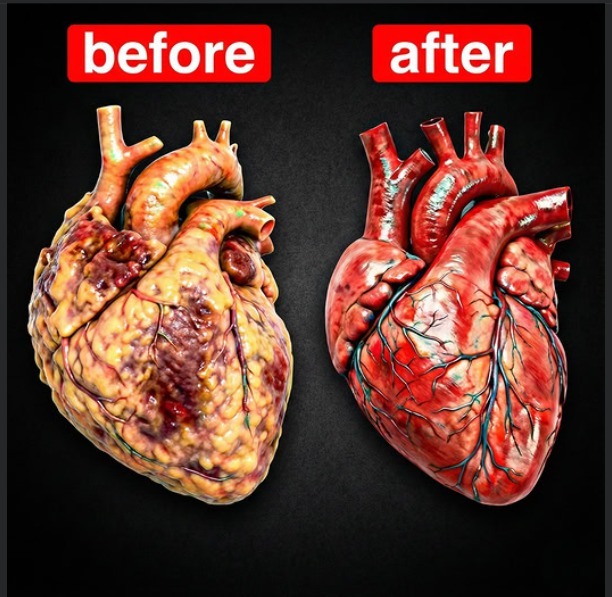
Fix Yourself at the Cellular Level
PrimeCell H2 is a next-generation molecular hydrogen tablet formulated to support your body's natural antioxidant defenses — helping you feel sharper, more energized, and more like yourself.
LEARN MORELike this ad? Make it yours.
Crush rebuilds this exact creative around your product — your brand, your colors, your offer — in about a minute.