
Inactive· since May 6, 2026
- 12
- days it ran
- 1
- relaunches
Ad copy
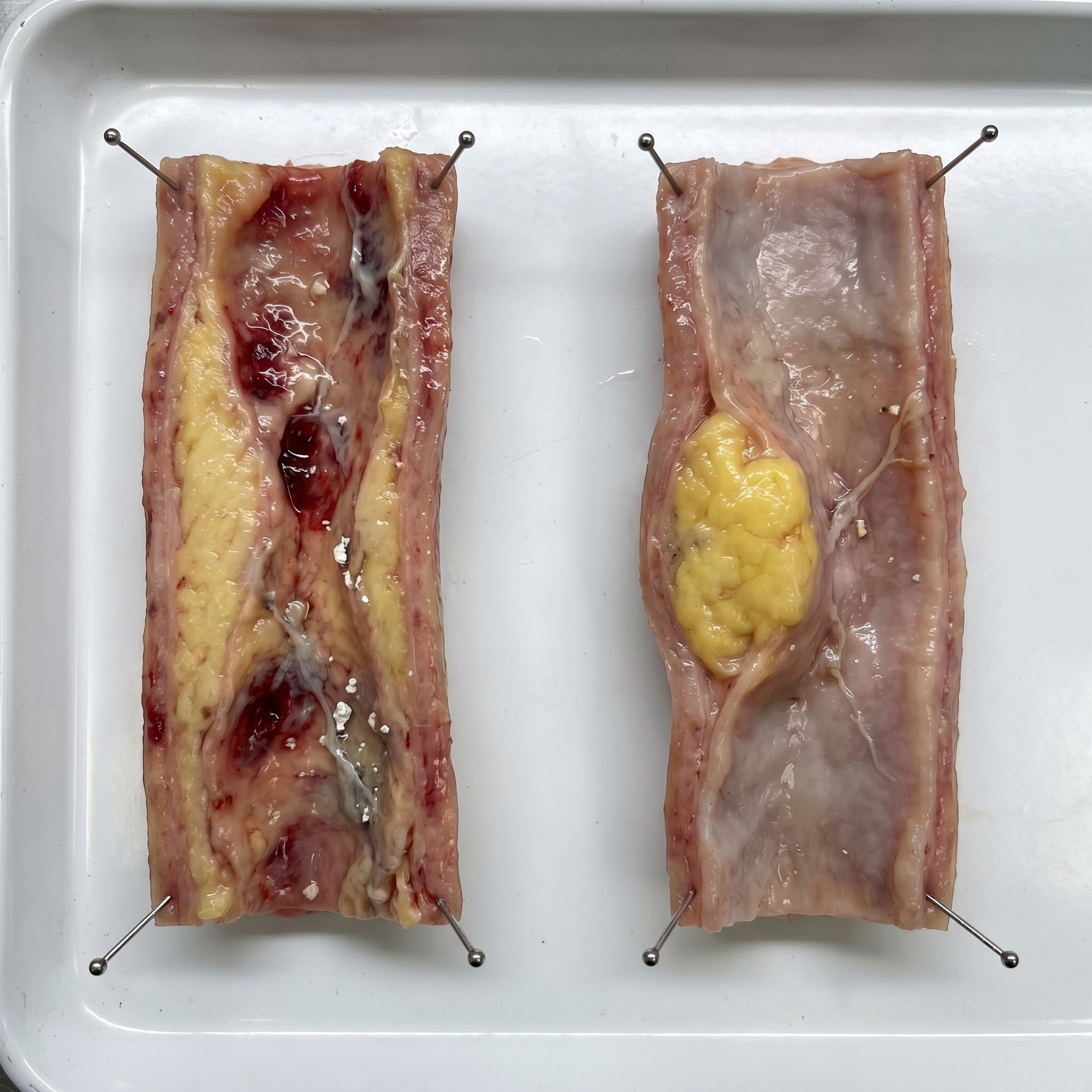
A cardiologist who prescribed statins for 31 years just told me he will not take one himself. Not wouldn't. Won't. He told me at his own retirement party. Over bourbon. After thirty-one years of prescribing the same drug to people who trusted him with their hearts. And what he told me about the money, the system, and what is actually happening inside your arteries while your doctor watches the wrong number is the reason I am writing this right now. If you have done everything right for years and your cholesterol will not move, I am going to tell you why. And it is not what you think. I am 57. I work in commercial insurance. I am not a doctor and I am not a health influencer. I am someone who has been fighting his cholesterol for six years with every tool the system told me to use. And I mean fighting. I did the Mediterranean diet. Not as a phase. Two full years. Olive oil, salmon, vegetables I did not want to eat. I remember standing in my kitchen at 10 PM eating grilled fish over a salad I was tired of and my wife walked in and said you look miserable. I said I am being healthy. She was right and I kept going anyway because I did not have another option. I walk 10,000 steps a day. I have the data going back 14 months without a gap. I took fish oil until my wife said the burps were going to end our marriage. Bergamot. Red yeast rice until I read it was basically an unregulated statin and threw the bottle away. Plant sterols. Niacin that made my skin flush so badly a coworker asked if I was having an allergic reaction. Six years. Thousands of dollars. More discipline than most people will sustain for six weeks. My cholesterol went from 231 to 239. It went up. Not because I was not trying. Because everything I was doing was aimed at the wrong part of the problem. I just did not know that yet. My neighbor Dave retired in March. Thirty-one years as a cardiologist. Good practice. Respected. The kind of doctor other doctors referred their own families to. We had talked over the fence for years. He gave me vague health advice when I asked but never went deep. It was a Saturday in April. His retirement party. About forty people in his backyard. I was standing by the grill when he came over. Second or third bourbon. Relaxed in a way I had never seen him. I mentioned my cholesterol. My doctor had pushed the statin conversation again, third time in two years. I told Dave I was running out of reasons to say no. He got quiet. Looked around to see who was nearby. "You want my honest answer?" "Yes." "Do not take it." I laughed. "You prescribed statins for 31 years." "I know." He was not laughing. "And I do not take one. Have not for years." The way he said it made me put my beer down. What Dave told me over the next hour and a half, while his own retirement party went on without him, is something he said he would never have said while he was still practicing. "I am only saying this because I am done. I have known you 30 years. And I am tired of carrying it." "Do you know what a statin prescription is worth over a lifetime?" he asked. "You prescribe one to a 50-year-old man. He fills it every month for the rest of his life. That is 25 or 30 years of refills. One patient. The entire system, the pharmaceutical company, the pharmacy, the insurer, is built around maintenance rather than resolution. Nobody in that chain benefits from a patient who no longer needs the prescription." I thought about my doctor's office. The branded pens. The drug company logos on the notepads. I had noticed those things for years without thinking about what they represented. "Did the system give you reasons to keep prescribing even when you had doubts?" I asked. He took a long drink. "The guidelines said prescribe. The continuing education was funded by the companies making the drugs. And the number went down, which meant the chart looked like progress. I am not saying anyone in that system is malicious. I am saying the incentive structure points in one direction and almost everyone follows it without asking where it leads. I spent the last ten years of my career asking where it leads." "And where does it lead?" I asked. He grabbed a napkin off the table and started drawing. A cardiologist at his own retirement party, drawing diagrams on a paper napkin because he had been holding this in for years and was finally free to say it. "Your LDL number is not your problem," he said. "Your LDL number is where your doctor is looking. Those are two different things." He drew an artery. Drew small tears along the inside wall. "When your artery wall gets damaged, from blood pressure, from inflammation, from the normal wear of decades, your body sends a repair protein to patch it. That protein is called fibrin. It forms along the damaged area and holds it together." He tapped the napkin. "Fibrin is sticky. That is what makes it work as a repair material. But when it forms inside an artery wall it does not just hold the damaged tissue together. It traps whatever is passing through. LDL cholesterol. Calcium. Immune cells. All of it gets caught in the fibrin and held there." He drew the deposits building up inside the wall. "Your body keeps sending more repair material. More fibrin forms around the trapped particles. Over months and years those layers press together and harden. That is arterial plaque. Not cholesterol floating loosely in a vessel. Cholesterol that has been physically caught inside the wall and sealed there by a fibrin scaffold." He looked at me. "Now. What does a statin do?" "Lowers cholesterol." "It reduces how much new cholesterol your liver produces. The number in the blood goes down. But does it dissolve the fibrin scaffold already built inside the artery wall?" "No?" "Not even slightly. The deposits that were there before your first pill are still there. The fibrin holding them is still there. The statin cannot reach either. It works in the bloodstream. The problem is inside the wall. Two completely different locations." Dave mentioned something else that stuck with me. "Nattokinase also reduces arterial inflammation," he said. "The inflammation that damages the wall and starts the whole process. The fibrin forms because the inflammation has already attacked the arterial lining. A clinical dose nattokinase addresses both. That is why the research showed results that no statin number was capturing. And it is why the comparison table between a standard nattokinase dose and the clinical dose tells you everything you need to know about why most supplements in this category produce nothing measurable." He folded the napkin. Set it on the table. "That is why patients with perfect numbers still have cardiac events. The drug is doing everything it was designed to do. It is reducing the cholesterol coming in through the bloodstream. Nobody is addressing the fibrin scaffold already built inside the wall. The plaque keeps building. The arteries keep stiffening. The heart keeps straining. And the lipid panel keeps coming back looking excellent." I stared at him. "You knew this while you were practicing." "The last ten years? Yes. The research was clear. But try telling a system built around a different approach to change direction. You do not. You prescribe. You watch the number go down. You move to the next patient." "So what actually addresses fibrin?" I asked. Dave smiled for the first time in over an hour. "Now you are asking the right question." He told me about an enzyme. Not like he was pitching something. Like someone explaining research he had spent years going through after he stopped trusting the guidelines he had followed his entire career. The enzyme is called nattokinase. It comes from a traditional Japanese fermented food called natto and has been consumed in Japan for over a thousand years. Western researchers have been studying it for decades for what it does inside the cardiovascular system. "Nattokinase is fibrinolytic," Dave said. "That word means one thing. It dissolves fibrin. When it reaches the bloodstream it does what the body is built to do naturally but loses the ability to do effectively after around age 40. It breaks down fibrin deposits. As the fibrin dissolves, the cholesterol and calcium trapped inside it lose their hold and the body can start clearing what has accumulated inside the wall." He pulled out his phone and showed me a study. Then another. "Studies following people who took nattokinase regularly found meaningful reductions in arterial plaque over time. Not just slower accumulation. Actual shrinking of existing deposits. Japan has had lower cardiovascular death rates than populations with similar diets for decades. One study tracked over 29,000 people and followed their cardiovascular outcomes over years of regular nattokinase consumption." He put the phone away. "You have been fighting your cholesterol for six years. Every supplement you tried worked on the bloodstream or the gut. None of them could reach inside the arterial wall where the fibrin was building. You were addressing the surface of the problem while the structural problem kept going underneath." Six years. Thousands of dollars. More salmon than I ever wanted to eat. And I had been working on the wrong part of the picture the entire time. "The dose matters," Dave said. "Nattokinase activity is measured in fibrinolytic units, FU. The clinical research showing actual plaque reduction used 10,800 FU. Earlier studies using lower doses found no measurable benefit. The same research. Different dose. No benefit at the lower amount. Most nattokinase supplements on the market deliver between 2,000 and 4,000 FU. Less than half of what the research used. The ingredient sounds legitimate. The dose is nowhere near what produced results in the trials." "What do you take?" I asked. "Specifically." He told me what to look for. The full 10,800 FU dose. Enteric coating so the enzyme survives stomach acid and reaches the bloodstream intact. Third-party lab testing with published results so the dose on the label reflects what is actually in the capsule. "One cardiologist's opinion," he said. "But it is an opinion based on the research I should have been reading thirty years ago instead of the guidelines the system rewarded me for following." I went home that night and ordered it before I went to sleep. That was twelve weeks ago. The first thing I noticed before any bloodwork was the fog lifting. I had been living with a low-grade mental heaviness for so long I had accepted it as just being 57. Within the first week it started thinning. My wife said I seemed like I was in a better mood. It was not my mood. Week ten I got bloodwork. Total cholesterol: 239 down to 201. LDL: 162 down to 128. HDL went up from 43 to 49. Triglycerides down from 178 to 124. My doctor looked at the screen. Looked at me. Looked back at the screen. "What changed?" I thought about telling him everything. The retirement party. The napkin. The 31 years of prescribing a drug Dave would not take himself. The arterial inflammation and fibrin scaffold that every statin he had ever written for me was designed to ignore. I just said: diet and exercise. He nodded. Wrote it in the chart. Did not push the statin for the first time in two years. I walked out of that office and sat in my car and felt something between relief and fury. Six years of doing everything right while the system pointed at the wrong number and waited for me to give up and take the pill. I told my brother that week. He is 63, has been on Crestor for five years, and complains constantly about the muscle cramps. Some mornings his calves are so stiff he grips the bathroom counter just to stand up. His doctor tells him it is normal. His last lipid panel, even after five years of Crestor, showed a total cholesterol of 228 and LDL of 155. The statin was not even doing its one job. I told him everything Dave told me. He said yeah right. I told him to try it for a month and if nothing changed I would stop talking about it. Seven weeks later his bloodwork came back. Total cholesterol down 38 points. LDL down 33 points. On top of a statin that had not moved those numbers meaningfully in five years. His doctor asked what changed. My brother actually told him. The doctor said he wanted to see the next panel before making any changes. After five years of a drug that was not working, he is now considering pulling it. Dave showed me his own labs the following week. He is 67. Total cholesterol 191. LDL 114. HDL 57. He has never taken a statin. He takes nattokinase at the clinical dose every morning. The system is not corrupt. It is just narrow. It was designed to identify a number, prescribe a drug that moves that number, and monitor the result. It was not designed to ask whether the number is measuring the right thing, or whether the arterial inflammation and structural problem driving the number are being addressed at all. Dave did not spend 31 years in a corrupt system. He spent 31 years in a system that measured what was easy to measure and treated what was easy to treat, and only started asking harder questions when he was no longer inside it. I am not a doctor. I cannot tell you what to do about your cholesterol. What I can tell you is that a man who spent 31 years prescribing the standard answer would not take it himself, explained exactly why in his backyard with a paper napkin, and pointed me toward something that produced better numbers in twelve weeks than six years of doing everything the system told me to do. You do not have to follow that design. If you have done the diet and the fish oil and the supplements and watched the number go up anyway, you were not failing. You were working on the surface of a structural problem that none of those approaches could reach. The research used 10,800 FU. That is the number to look for. Look for enteric coating so the enzyme reaches the bloodstream intact. Look for third-party testing with published certificates so what is on the label is what is in the capsule. What I found is at the link below. See the clinical dose formula that works where six years of doing everything right did not: https://healthletic.io/products/nattokinase
Six Years of Everything Right, Cholesterol Went Up
Clinical-grade 10,800 FU nattokinase formula proven in studies on 30,000+ people
LEARN MORELike this ad? Make it yours.
Crush rebuilds this exact creative around your product — your brand, your colors, your offer — in about a minute.