Elena Sánchez
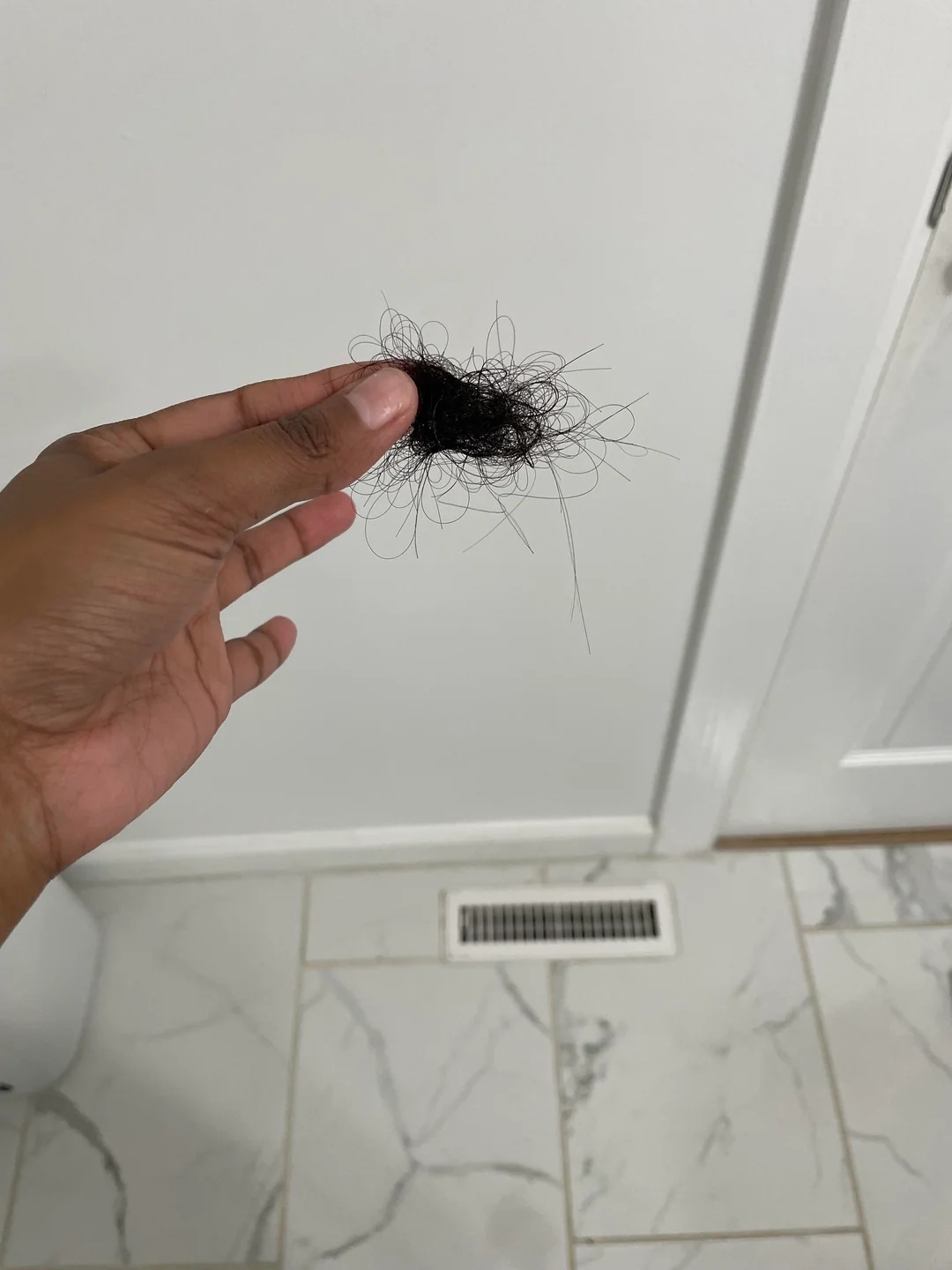
 Facebook ad: “Less Hair in Your Brush. More on Your Head.”
Ran for 2 days, from August 7 to August 9, 2026, the last day Crush saw it.
Run by Elena Sánchez on Facebook. Crush is not the advertiser and does not verify its claims. See this ad in Meta's Ad Library(opens in a new tab)
Make your own version of this ad
Crush makes it, launches it in your own Meta ad account, scales the winners and pauses the losers.
About this ad
- Meta Ad Library ID
- 1655980462166300
- Platforms
- Facebook, Instagram, Messenger and Threads
- Relaunches
- 0
- Niche
- Hair Care
Ad text
Japanese women wash their hair almost every day and are still shining at seventy. American women were told to wash it less to save it, and it's shedding anyway. That made no sense to me. Until I travelled to Japan for a week and saw it with my own eyes. Everything I had been told for six years pointed in one direction. Don't wash it so often. You're pulling it out. Every wash costs you. Go three days, four if you can stand it, use dry shampoo, wear it up, leave it alone. So I washed it twice a week. For six years. Frightened of my own shower. The Japanese wash daily. Sometimes twice on a hot day. They do it in public, at a sento, sitting on a plastic stool in a row of women, and they take a long time over it. And the older women in that room had more hair on their heads at seventy-five than I had at fifty-two. How? How does the country that washes the most have the women who kept the most? That's the question I brought home. And the answer was so simple it made me angry, because it means every piece of advice I followed for six years was aimed at the wrong half of my own head. An eighty-year-old woman who has worked in a bathhouse since she was nineteen explained it to me in about ten minutes. They wash the hair. And then they spend real time on the scalp underneath it. Every day. For their entire lives. We wash less. And we spend all our money on the hair itself. The part that is already finished. That's the whole difference. That's why they're still putting it up at seventy-five and I was standing in a bathroom at eleven at night with a phone flashlight aimed at my own part. My name is Susan. I'm fifty-four. Grand Rapids, Michigan. Let me tell you what I actually saw. Here's something nobody tells you about your hair. The strand is dead. Not fragile. Not damaged. Dead - in the same way your fingernail is dead. It is protein that was extruded, hardened, and pushed out. It has no blood supply, no nerves, no cells doing anything. It cannot repair itself, and nothing you put on it can repair it either. Every product I owned was for that dead part. The shampoo for volume. The conditioner. The mask on Sundays. The heat protectant. The thickening spray. The forty-eight dollar system my stylist sold me. All of it working on material that is finished, that has no ability to respond, and that will be gone within a few years no matter what I do. Meanwhile the living part - the follicle, the only part of this system that is actually alive, actually has a blood supply, actually decides whether a hair grows at all - sits a few millimeters under the skin on top of my head. And I owned nothing for it. Not one thing. In six years of trying. That's not stupidity. That's the entire American haircare aisle. Walk down it and count how many products are for hair and how many are for the skin the hair comes out of. I did this at a Target when I got home and stood there long enough that someone asked if I needed help. The question is not how to save the strand. You can't. The strand is a receipt for a decision your scalp made three months ago. The question is what you do for the skin. The Japanese do something. Americans do essentially nothing. That's the whole story. Let me tell you what "doing something" actually looks like. Because I sat in a room and watched it. My daughter Rachel teaches English outside Osaka. She's been there for four years. I went for three weeks around my fifty-second birthday and she took me to a sento on the second night, which I want to be honest about - I did not want to go. I am a fifty-two-year-old woman from Michigan. Public bathing was not on my list. You wash before you get in the water. That's the rule. So there's a row of low stools along the wall, mirrors, handheld showers, and everyone sits down and washes properly first. Which means I sat in a room with maybe forty women, ages roughly twenty to eighty-five, and watched every one of them wash her hair. I have never seen that. You have never seen that. You have seen your own hair wet and possibly your sister's. That's it. Nobody in America has any idea what a hundred wet scalps look like, which is exactly why nobody notices what I noticed. The older women had hair. Not styled. Not blow-dried into volume. Not covered. Wet, flat against the skull, which is the single most honest a head of hair ever looks - and there were women in there in their seventies with a part I would have taken in a heartbeat. And the second thing I noticed took me a few more visits to see properly. They weren't washing their hair. They were washing their heads. Fingertips. Slow. Two, three minutes on the scalp before anything else happened. Some of them had put something in before they came, an oil, and were working it in dry first. Several of them, after rinsing, sat there and worked something else into the scalp with their fingers before they got up. Nobody was in a hurry. Nobody was doing the ninety-second thing I do, which is shampoo, scrub, rinse, done, and out. I asked Rachel about it in the changing room and she looked at me like I'd asked why they take their shoes off. "That's just how you wash your hair." On my eleventh day I asked to speak to the woman who runs the place. Her name was Michiko. She's eighty, she has worked in that building since she was nineteen, and she has therefore watched roughly sixty years of women wash their hair in front of her. I do not know a dermatologist alive with that dataset. Rachel translated. I asked her the question I'd been carrying since the first night. "Why do the older women here still have their hair?" Michiko thought about it, and then she said something that Rachel had to try twice to get into English. The closest she got was: "Because we take care of the ground." I asked what she meant. She said - that hair is a crop and the scalp is the field. You do not improve a harvest by polishing what you already picked. You work on the ground it comes out of, and you do it constantly, in small amounts, whether or not anything is visibly wrong. "The hair is finished," she said. "The head is not finished." Then she said the thing I've repeated to about nine people since. "Americans wash the hair. We wash the head." She said the women who come to her bathhouse have been doing some version of this their whole lives, from their mothers. Oil before washing. Fingertips, not nails. Time. And then something left on the scalp after - a lotion, a tonic, whatever their mother used - that does not get rinsed off. That last part is the one that undid me, and I'll come back to it. She walked me through what goes into the scalp routine here, and later Rachel took me to a scalp clinic in the city - which is a normal business in Japan in a way it simply is not in Michigan - where a specialist named Ms. Ito went through it again with better English and a diagram. Four things. And every one of them is a thing I was getting wrong. Contact time. This is the one that made me put my head in my hands. Ms. Ito asked me what I'd tried. I listed it. Thickening shampoo. Caffeine shampoo. Rosemary shampoo. A rice water rinse I'd done religiously for four months after seeing it on TikTok. Scalp scrubs. She asked how long each of those stayed on my head. I said - I don't know. A minute? Two, if I remembered. She said: "So you are treating skin for ninety seconds a day and then removing the treatment." She asked me if I would put a face serum on and wash it off ninety seconds later. I said no, obviously not, that's not how skincare works. She said, "The scalp is skin. It is the same organ. It behaves the same way. But nobody sells you a leave-on for it, so you have never once done it." A shampoo is a cleanser. That is its job and it does it well. But it is designed to be removed, along with everything in it, before anything has time to sit against the skin and do anything. Every active ingredient you have ever bought for your scalp, you have then rinsed down a drain. Every one. And the rice water - she was kind about it, but clear. Rice water is a strand treatment. It coats. It's been on the dead part the whole time. Four months of it, and I had been carefully conditioning the finished product while the ground it grew out of got ninety seconds a day. The grease. The second thing was the reason I'd quit the only scalp thing I ever did try. Because I had tried oil. Everyone tries oil. I did castor oil on Sunday nights for about two months and then stopped, and I want to be honest about why I stopped: it looked worse than the thinning did. A woman with a thinning part cannot walk around with an oily scalp, because oil makes hair clump into separate strands, and separated hair shows more scalp, not less. I was applying something at night that made the exact problem I was trying to hide look twice as bad by Monday morning. So I stopped. Anybody would. Ms. Ito nodded before I finished. She said this is the single most common reason people abandon scalp care worldwide, and it's a delivery problem, not an ingredient problem. Heavy oils were how these compounds used to be carried because there wasn't another way. There is now. A light water-based serum puts the same actives against the skin without the visual cost. "The best routine," she said, "is the one that does not embarrass you at nine in the morning." Precision. The third one I'd never thought about once. When you spray something on your head, most of it lands on hair. That's what's in the way. The product coats the strands and a fraction of it makes it down to skin, and it makes it down more or less randomly - meaning the places you actually care about, the part line and the temples and the crown, get whatever happens to reach them. Michiko's version of this was fingertips. She kept doing it with her hands when she talked - parting, touching the skin, moving along. Ms. Ito's version was that you should be able to feel the applicator on your scalp. If you can't feel where it went, it didn't go where you think. Every day. And the fourth one is the one nobody wants to hear. Not a treatment. Not a course. Not a thing you do for eight weeks and assess. Every day, small, forever, the way you wash your face. Michiko has been doing this since the Kennedy administration. Ms. Ito said the biggest difference between her Japanese clients and the foreign ones isn't the products, it's that her Japanese clients don't expect to finish. Four things. Done daily. For a lifetime. By women who are still putting their hair up at seventy-five. I sat on a train back to Rachel's apartment and thought about my mother. My mother did everything right by the standards she was given. She had her hair set every Friday for thirty years. She used good shampoo. She never went to bed with it wet. She started thinning at about fifty. She asked her doctor about it twice. She was told it was normal for a woman her age, which is technically true and completely useless, and she never asked a third time. She stopped wearing it up at fifty-four. She never wore it up again. Thirty-one years of a woman who used to wear her hair up on a Sunday keeping it down and forward on one side, and getting a little annoyed with anyone who took a photograph of her from above. Nobody ever once told her that the skin on her head was skin. Not one person, in eighty-five years, told her there was a living part and a dead part and that everything she owned was for the dead part. She wasn't neglectful. She was thorough. She was thorough about entirely the wrong half. I came home with a page of notes and a photograph I took of Ms. Ito's diagram on my phone. And I want to say clearly what I did next, because it wasn't clever. I looked for a leave-on scalp serum. That's it. That was the whole search. Something water-light that stays on, that I could put exactly where the part is, that wouldn't make me look greasy at work. It's a shorter list than you'd think. Almost everything sold to a woman losing her hair in this country is a wash-out. What I found was a roller-ball serum. Rosemary and saw palmetto in it - which mattered to me, because rosemary is the one ingredient in this category with a real trial behind it. A hundred people, six months, compared directly against the standard treatment. It's not folklore. Michiko's mother was using a rosemary tonic on that scalp for reasons nobody in that family could have explained, and a lab in another country eventually got round to testing it. Peptides, caffeine, biotin, panthenol, niacinamide. Water-light, not oil. And a roller ball, which I initially thought was a gimmick and now think is the entire point. You part your hair, you put the ball on the skin, and you draw it along the line. You can feel exactly where it's gone. It goes on skin, not on hair. It takes about forty seconds and there is nothing to wash off afterwards, because it isn't supposed to come off. That's the whole idea. Rainbow Nutrients. Multi-Peptide Hair Growth Serum, roll-on. I ordered it the night I got back and I put Ms. Ito's diagram next to my laptop and went through the ingredient list line by line. Leave-on. Water-light. Applicator that touches skin. Rosemary. Every box. Week two. The first change I didn’t see, I felt it. The top of my head felt less tight during the day. I noticed it around day ten and assumed I was inventing it. Week four. Less hair in the drain. I stood there and looked at it and genuinely did not trust it, because I had been here before with other things. But the bigger change at four weeks was that I had started washing my hair every day. That sounds small. It is not small. I had spent six years washing twice a week out of fear, going out with hair I didn't like, using dry shampoo on a scalp that was already struggling, because I believed every wash was costing me. Once I had something that went on afterwards and stayed on, the shower stopped being the enemy. I wash it daily now. I have better hair on a Tuesday than I've had in years, and that alone was worth it. Week nine. This is the week everything crashes. Every product I have ever tried has quit somewhere around here - you get a good month and then it comes back, and I had come to expect it the way you expect the second week of January. Not this time. Nothing came back. Ms. Ito had actually warned me about that week: a follicle runs on a cycle, there's roughly a three-month lag between what happens at the scalp and what shows up on your head, so the batch that was already committed before I started arrives on schedule and everybody reads it as failure and stops. She said the single most common thing she sees is a client quitting four weeks before it would have shown her something. Monday nothing. Tuesday nothing. Wednesday nothing. I texted Rachel: It's holding. She wrote back: Mom I can hear your excitement from here. Week fourteen. Baby hairs. Along the front, short, standing straight up, obviously not breakage and obviously not there in the spring. I took a photograph at eleven at night with my phone flashlight - the same ritual I'd been doing for six years to frighten myself - and this time I sent it to somebody. Month five. I wore it up. To a wedding, with the light coming from overhead, at a table with photographs being taken all evening. Rachel was there. She looked across the table at some point and didn't say anything about my hair at all, which is how I knew. Fourteen months now. I wash daily. I do the roller along my part every night before bed, and it takes less time than brushing my teeth. My part is not what it was at thirty and I'm not going to sit here and tell you it is. It is meaningfully better than it was at fifty-two, and I have stopped rearranging my life around overhead lighting, and those two facts are the whole of what I wanted. I do it every night. The way Michiko has since she was nineteen. The way her mother did. Because a follicle doesn't run in courses. It runs continuously, all the time, whether you're participating or not. The Japanese know this. They've always known it. And they're putting their hair up at seventy-five. Americans don't know it. We were told to wash less, and we bought forty-eight dollar systems for the part of our hair that has been dead since the day it left our heads, and we wondered why nothing worked. My mother spent thirty-one years keeping it down because nobody told her the skin on her head was skin. I'm not doing that. If your part has been widening. If you've stopped wearing it up. If you check it under the bathroom light at night and then wish you hadn't. If you've been washing less out of fear and hating your hair the rest of the week. The women who kept theirs the longest didn't do anything exotic. They treated the ground instead of the crop, they used something that stayed on, and they did it every day for fifty years without expecting it to end. It isn't complicated. It's a leave-on, on the skin, where the part is, every night. Rainbow Nutrients Multi-Peptide Serum. Roll-on applicator. Water-light, no grease. Rosemary, saw palmetto, peptides, caffeine, panthenol. The thing you've never done once. 👉 https://www.rainbownutrients.com/products/hair-magic-hair-growth-serum-roll-on 30-day money-back guarantee, and it covers the open bottle. P.S. Japanese women wash their hair every single day. Every day. The thing you were told was destroying yours. They wash daily, in public, and the seventy-five-year-olds in that room had a part I'd have traded for on the spot. The difference isn't the washing. The difference is that they spend two minutes on the skin and leave something on it afterwards, and you spend ninety seconds and rinse everything you paid for down the drain. You have been treating the only living part of your hair for a minute and a half a day and then washing the treatment off. P.P.S. I sat on a stool in a room with forty women and watched every one of them wash her hair. It's the only place on earth you can see that. Nobody in America has ever seen a hundred wet scalps at once, which is exactly why nobody here has noticed what those women are doing differently. Michiko has watched sixty years of it. She summed my entire six years up in four words: Americans wash the hair. P.P.P.S. Here's what to expect, because guessing is what makes people quit. Weeks one to three, nothing on your head - but the scalp itself starts feeling less tight, and you'll stop dreading wash day, and honestly that part alone changed my week. Around week four the shed eases. Around week nine you may see it tick back up: that is a batch that was decided three months before you started, arriving on schedule, and it is the single most common week for a woman to give up four weeks early. Do not quit at week nine. Baby hairs around month three. The part itself is a four-to-six month conversation and anyone who says otherwise is selling you a month. P.P.P.P.S. Six years of thickening shampoo, volumizing systems, dry shampoo, castor oil I quit because it looked greasy, and four months of rice water. An eighty-year-old woman in a bathhouse explained what I was doing wrong in ten minutes with a towel around her shoulders. Every one of those products was for the dead part. Not one of them came with a guarantee. This one comes with thirty days, open bottle included - and thirty days won't grow you hair, nobody's will, but it's plenty of time to find out whether the shed is slowing. Count what comes out this week. Look at your part in the same light at the same time of night. Look again on day thirty. P.P.P.P.P.S. It's on the end-of-summer sale right now - a record low, a fraction of what it normally costs, and it goes back up at the end of the month. But start this month for the other reason. What your scalp decides over the next few weeks is what you'll be looking at in the mirror around Christmas, and it's deciding either way. Michiko would tell you what she told me. The hair is finished. The head is not finished. They wash every day and still have it at seventy-five. You washed twice a week to save it and it went anyway. The difference isn't the washing. The difference is what you leave on the skin underneath. They treat the ground. You've been polishing the crop. Start tonight.
Where the ad sends people
rainbownutrients.com
Less Hair in Your Brush. More on Your Head.
Our Hair Magic™ Hair Growth Serum Roll is powered by multi-peptides, rosemary oil, and saw palmetto to support the appearance of fuller, denser hair. This lightweight hair serum for hair growth helps improve the look of thinning areas while supporting overall scalp health.
Learn more: rainbownutrients.com(opens in a new tab)