
Inactive· since Jun 26, 2026
- 5
- days it ran
- 0
- relaunches
Ad copy
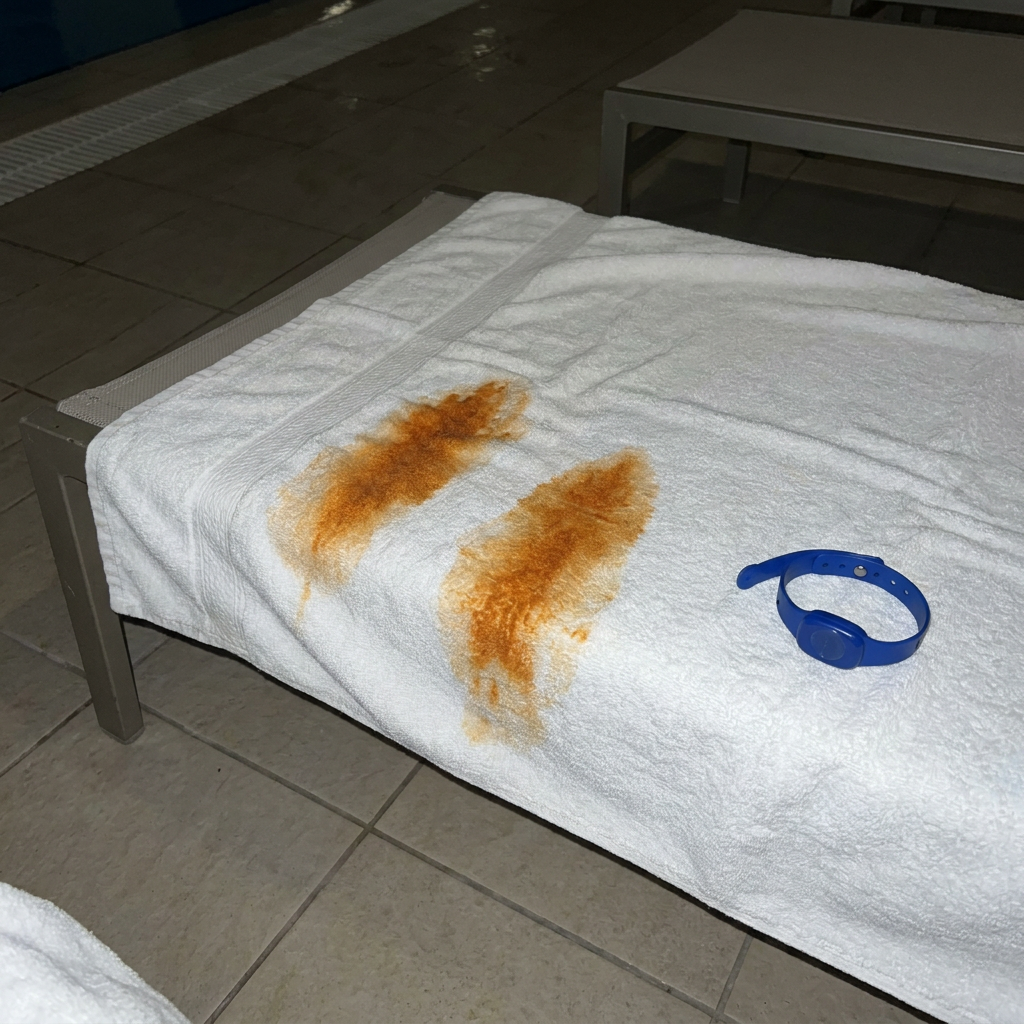
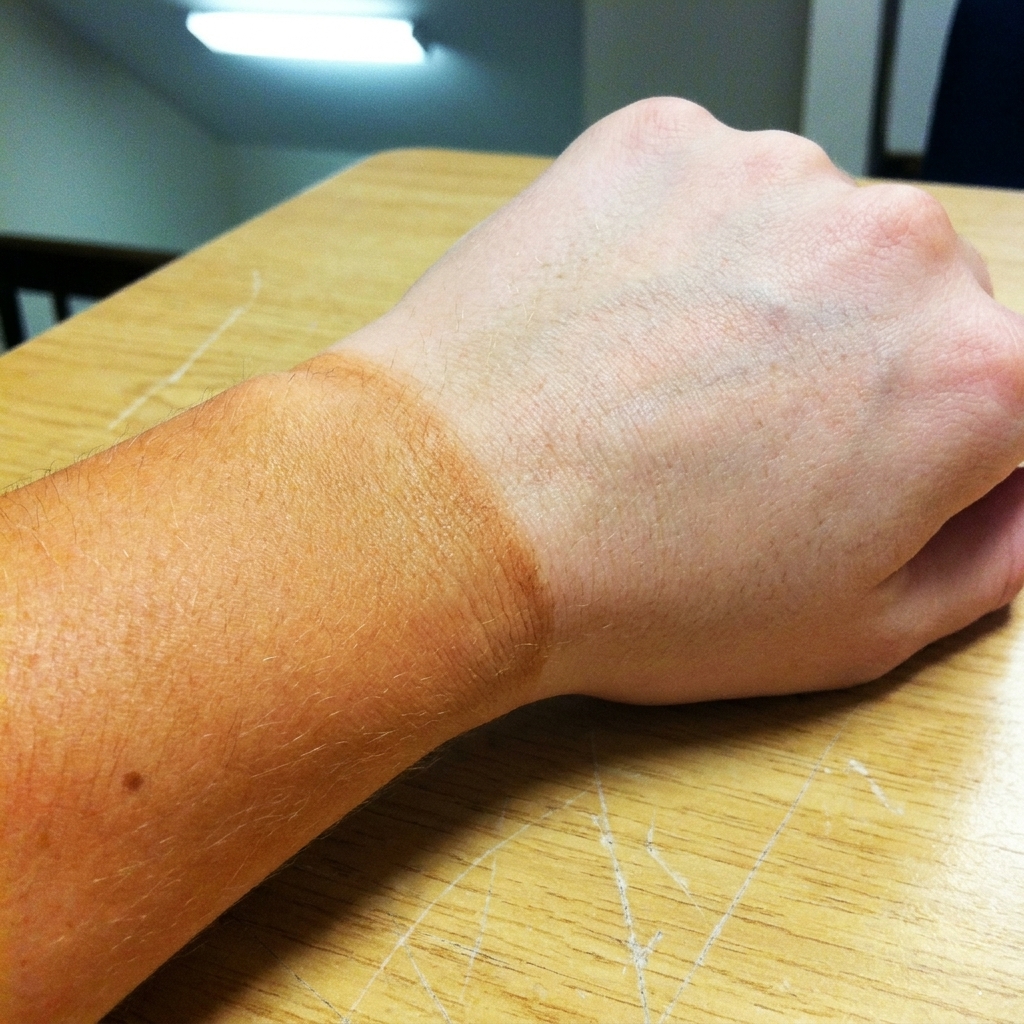
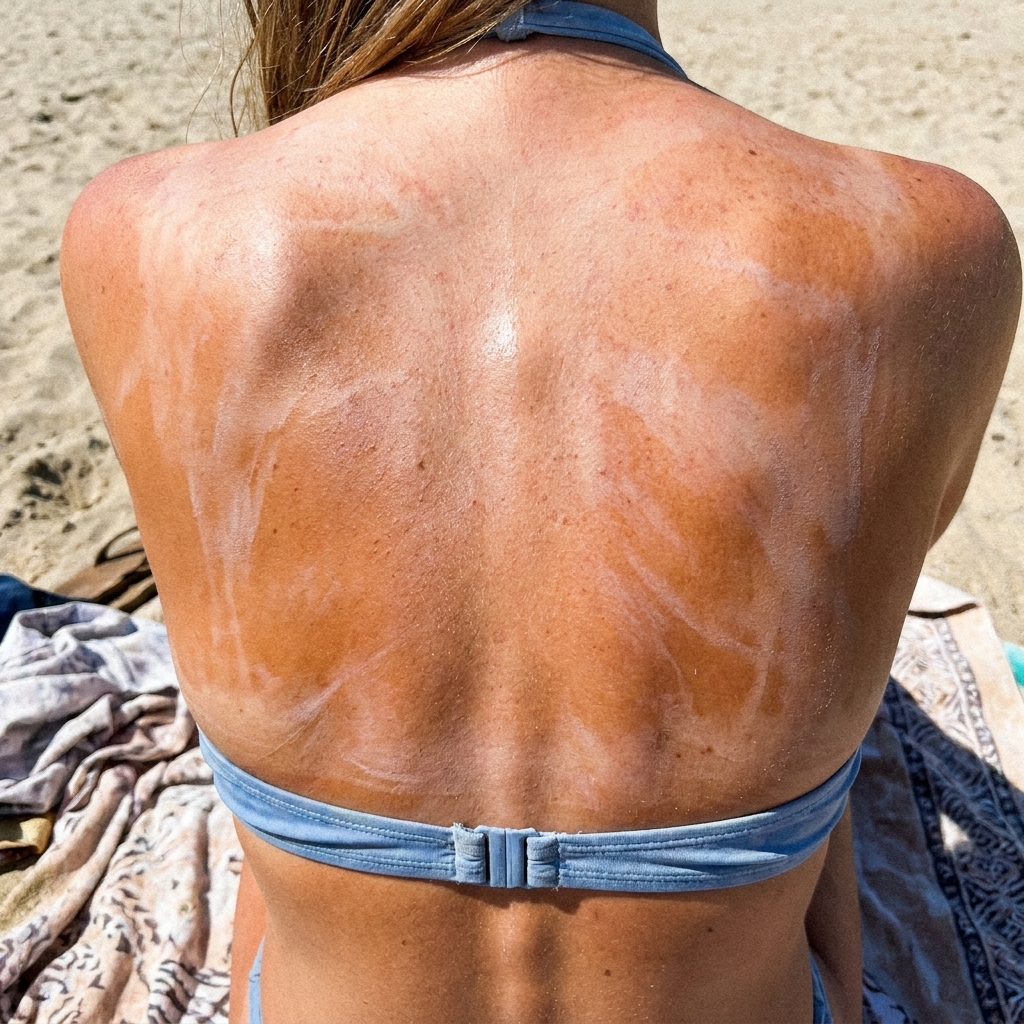
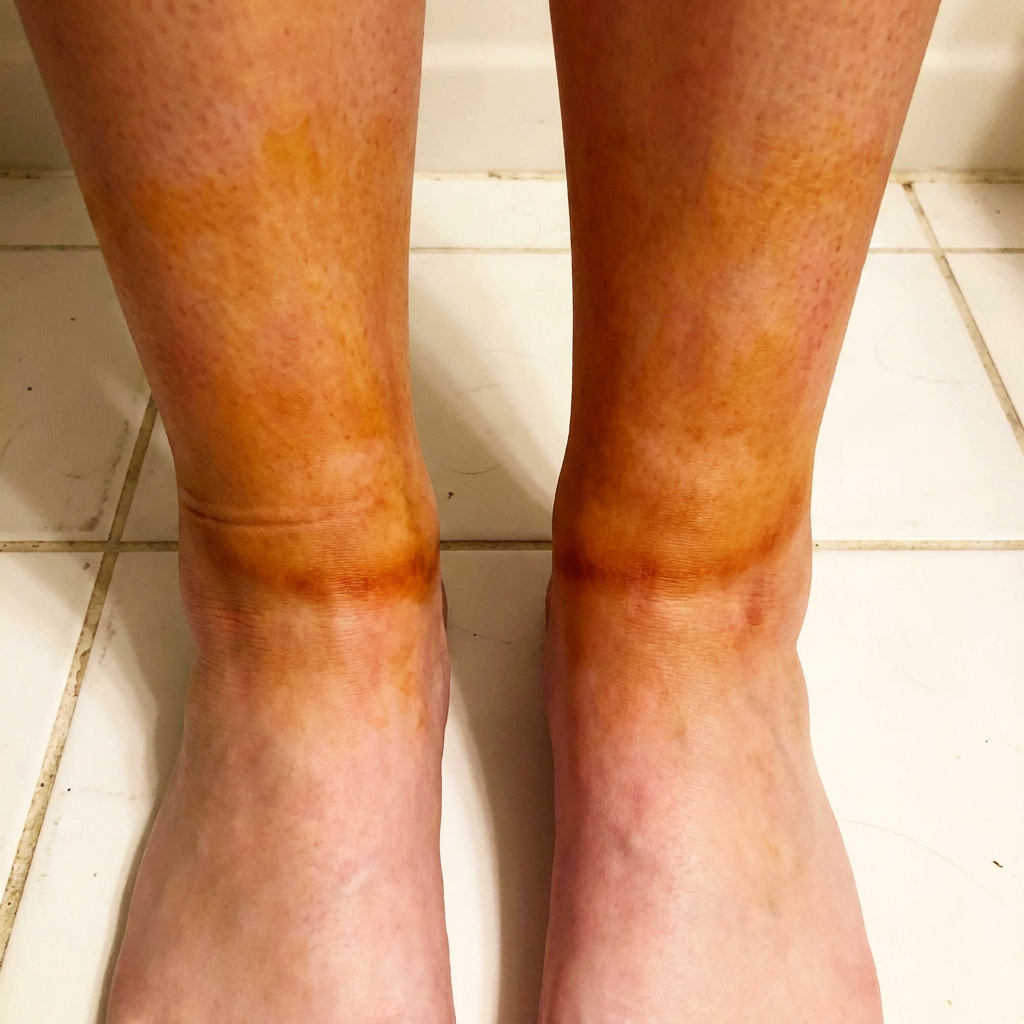
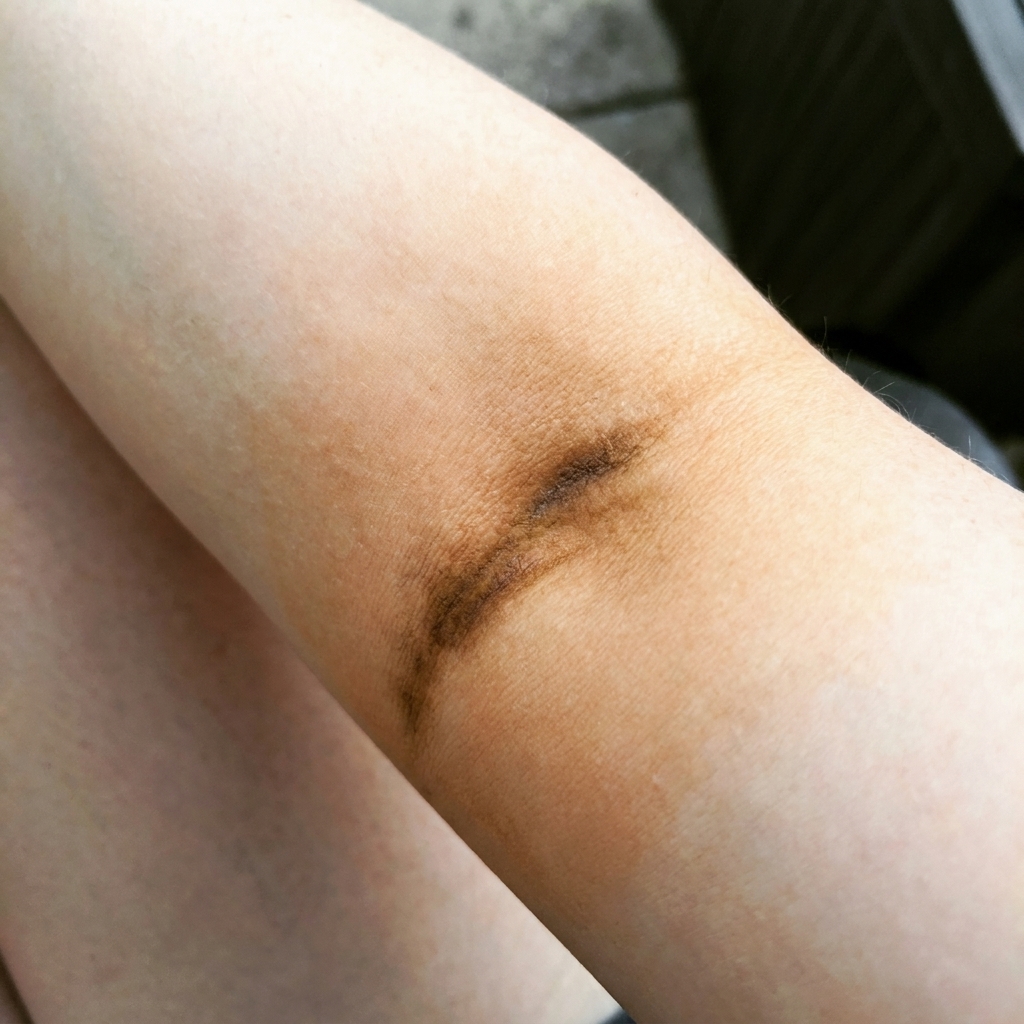
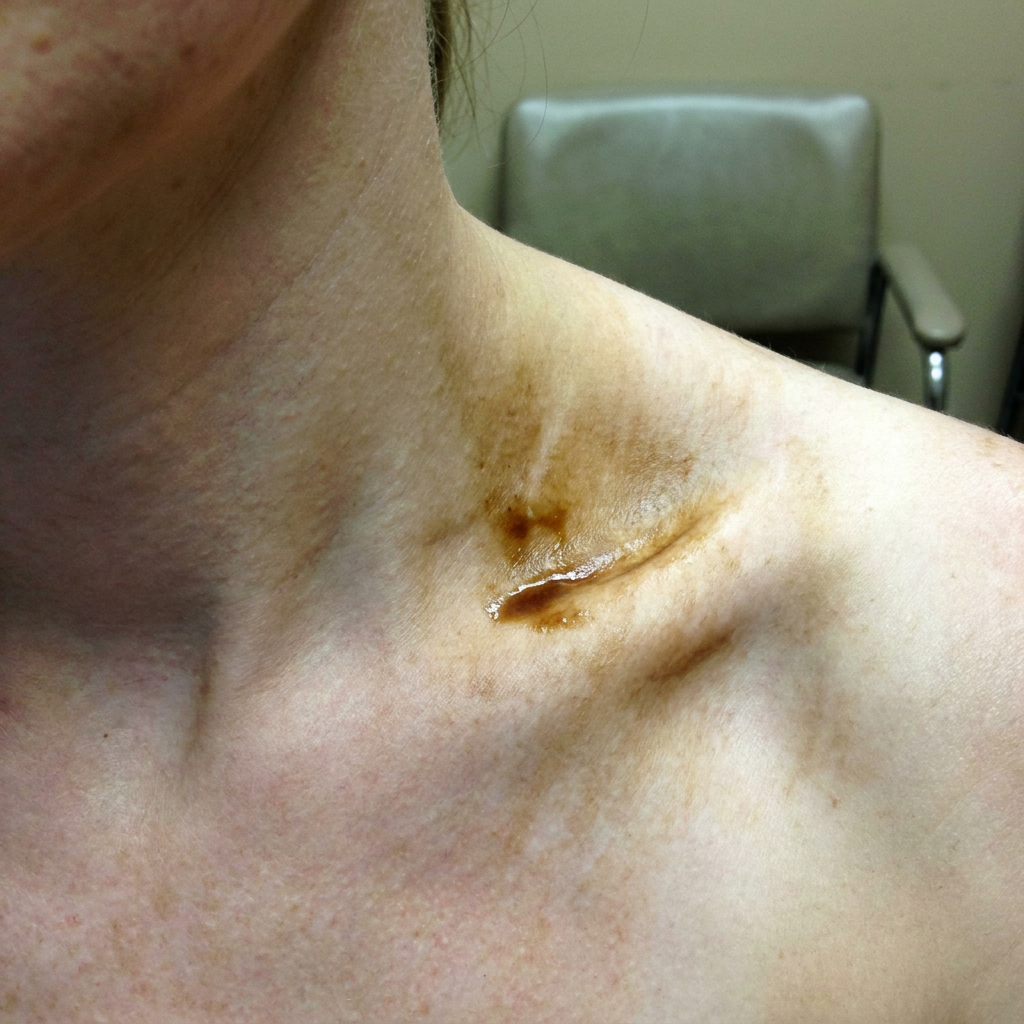
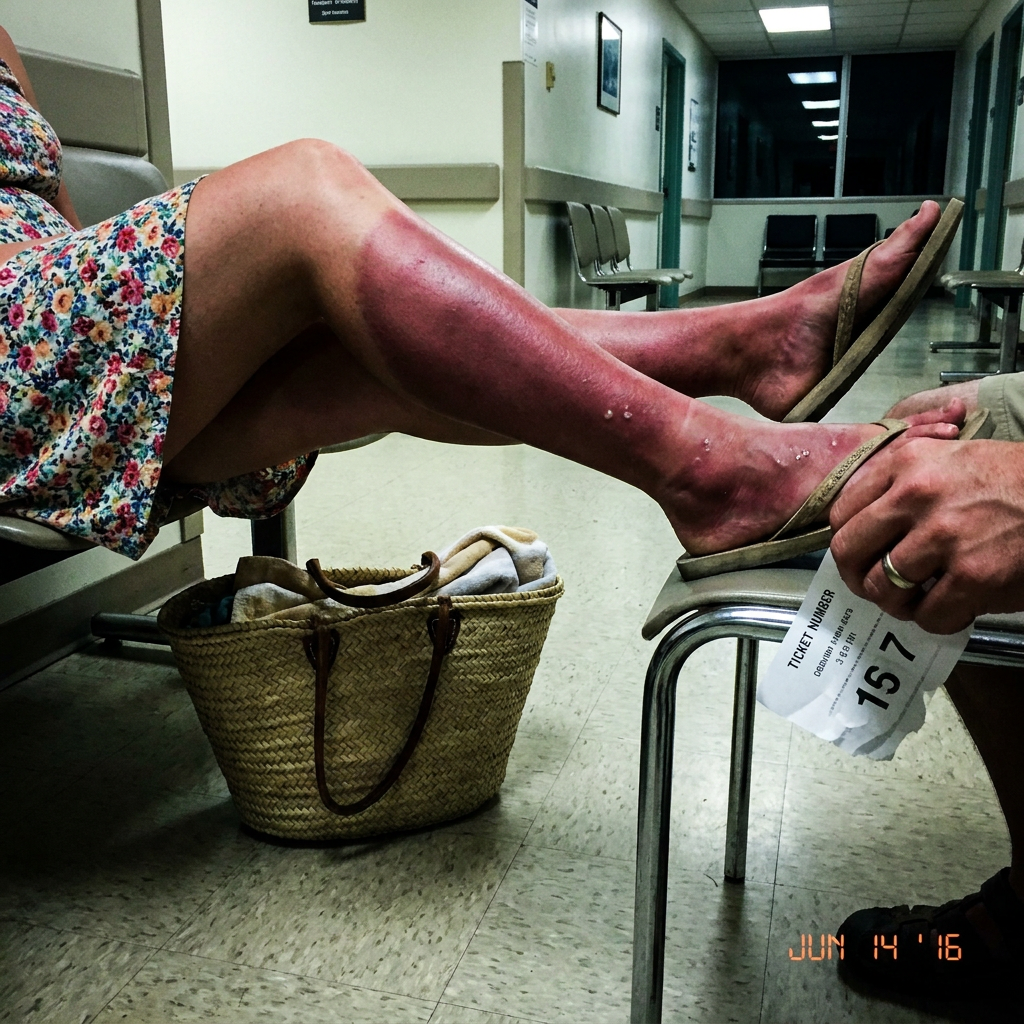
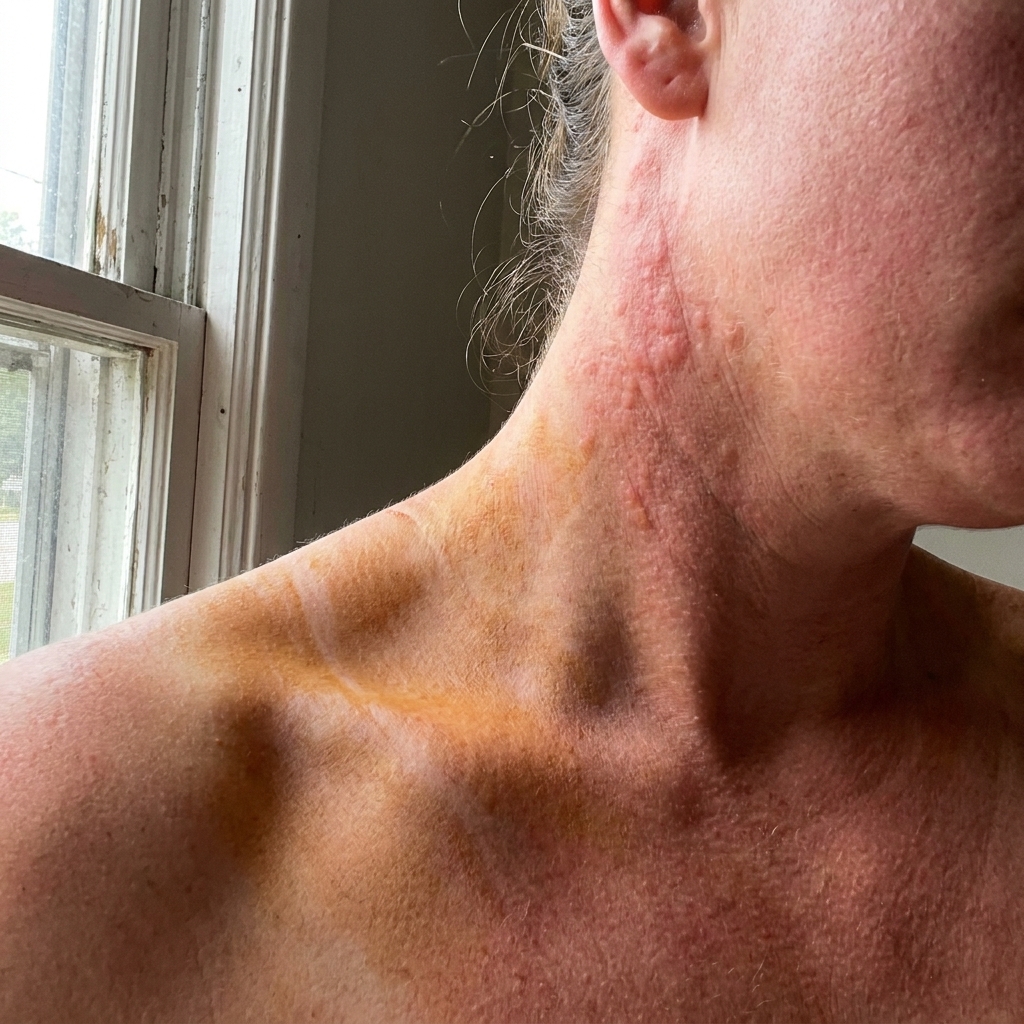
I woke up at 3am and touched the skin behind my ear and it felt hot. Not sunburn hot. Wrong hot. By morning the strip running from my collarbone up to my jaw looked exactly like the photo above this post and I sat in the bathroom on the edge of the tub for a long time just staring at it. I had not applied anything to my neck or chest the night before. The self-tanner I used on my arms two days earlier had migrated in my sleep and my skin had decided it was done tolerating the situation. That was the third time in fourteen months and it was the last. That photo is not a stock image pulled to frighten you. That is the dermatitis pattern that contact-reactive skin produces when DHA migrates and sits against the neck overnight. The strip of raised, flushed, hive-like welts tracking from the collarbone up behind the ear. The patchy amber discoloration pooled in the collarbone hollow underneath it. Both things happening to the same piece of skin at the same time. I know what that looks like because I watched it happen to me. I want to tell you the specific, embarrassing, medically annoying timeline of how I got there, because I spent years thinking I was doing something wrong, and the real answer was much more frustrating than that. Year one, I switched from a drugstore mousse to a mid-range salon brand because I assumed the reaction I was getting was a formulation quality issue. The rash moved with me. Year two, I went fragrance-free across everything in my routine and blamed my laundry detergent for four months before ruling it out. The rash stayed. Year three, I started applying the tanner only to my arms and legs and stopping at the collarbone specifically to protect my neck. I went to sleep and woke up with the strip behind my ear on a Tuesday morning in February. The product had moved in my sleep. My GP prescribed antihistamines, told me to stop using the product, and referred me to a dermatologist when I explained I had already switched brands three times and the reaction kept finding me. The dermatologist did patch testing. Patch testing is exactly what it sounds like. They apply small amounts of different substances to your back, tape them down, and you come back in 48 hours and again in 96 hours to see what your immune system decides to fight. Mine fought DHA. DHA is dihydroxyacetone. It is the molecule in almost every self-tanner on the market that reacts with the amino acids in your dead skin cells to produce the brown color you are trying to achieve. It is also a documented contact allergen. For most people, repeated exposure produces no reaction. For a specific subset of fair-skinned women, repeated exposure sensitizes the immune response and the reaction escalates over time, meaning the more you use it, the worse your skin gets, and switching brands does not help because the molecule is the same molecule regardless of what name is on the bottle. The dermatologist told me clearly that all standard topical self-tanners were off the table. I am not telling you this to be dramatic. I am telling you this because I sat across from her and thought about the previous three years of rashes and antihistamines and thrown-away bottles and ruined towels and the specific humiliation of walking into a meeting on a day when my neck looked like I had been stung by something, and I felt a very specific kind of exhausted. I went home and typed into a search bar whether there was any way to get a tan without putting anything on your skin. What I found took me a while to understand because it sounded like it was not a real category yet. Tanning gummies. Specifically, Bronzii Tanning Gummies. The mechanism is the opposite of everything I had ever tried before. Bronzii works from inside your body outward. The gummies contain plant-derived carotenoid pigments, sourced from superfoods, that are absorbed through your digestive system and carried through your bloodstream to accumulate beneath the outer surface of your skin. Your skin is not a static object. The color you see on the surface of a topical self-tanner is sitting on dead skin cells that are constantly shedding. That is why it streaks. That is why it fades in patches. That is why the bath goes brown. The color from Bronzii is not sitting on your skin. It is building underneath it, in living tissue, through systemic absorption, the same way food pigments influence your natural skin tone when you eat them consistently over time. Because the color is developing from within your skin rather than being deposited onto the surface of it, there is no DHA involved. There is no reactive chemical making contact with your skin at all. There is no application step where anything touches you. I want to be very specific about what that meant for me personally. It meant no trigger for the reaction. Not a reduced trigger. Not a gentler version of the same trigger. No trigger. The mechanism that was causing my immune system to produce those welts does not exist in this product. I started taking them and waited. The first week, nothing dramatic. The second week, I noticed that the base tone of my skin in natural light looked different. Warmer. Not orange. Not bronzed in the way that makes people say you look like you've been tangoed. Just warmer. Like I had been somewhere with sun recently. By the end of week three the color had built to the point where three different people at work asked me if I had been away. I had not been away. I had been sitting at my kitchen table eating gummies. Here is the part I think about when I think about how different this is from everything I tried before. I had a bath on a Friday night about three weeks into taking Bronzii. I got in and I looked at the water. It was clear. Not the color of weak tea. Not any color at all. Just water. I stayed in the bath longer than usual because I kept waiting for something to happen and nothing did. The color on my skin was not in the water because it was not sitting on top of my skin. It was inside it. I got out and used my good towel, the white one I had been saving for a time when I was no longer worried about what would happen to it. There were no marks on it. My neck looked even. There was no strip of welts behind my ear. There was no pooling at the collarbone. There was no smell from the steam. I put my clothes on and went downstairs and that was all. No prep, no mitt, no barrier cream on my knuckles and elbows, no timing around when I last exfoliated, no waiting the specific number of minutes before getting dressed, no sacrificed pillowcase, no explaining to anyone why my wrists had a line. I genuinely did not think about my skin for the rest of the evening. I realize that sounds like a small thing. It is not a small thing. If you have the dermatitis history I have, if you have been patch-tested and told that DHA is the problem and all topical tanners are off the table, if you have switched brands four times and watched the rash follow you, if you have woken up with your neck feeling hot and wrong in the dark at 3am, then you understand exactly how not-small this is. The color fades naturally when you stop taking the gummies because it follows your body's own pigmentation cycle. It does not peel. It does not blotch. It does not ghost. It just gradually returns to your base tone the way a real tan does, because the mechanism is systemic, not surface. I still take them. I use my good towels every time now. https://bronzii.com/pages/lp-1
Read This If You Have Ever Woken Up With Your Neck Feeling Wrong In A Specific Way
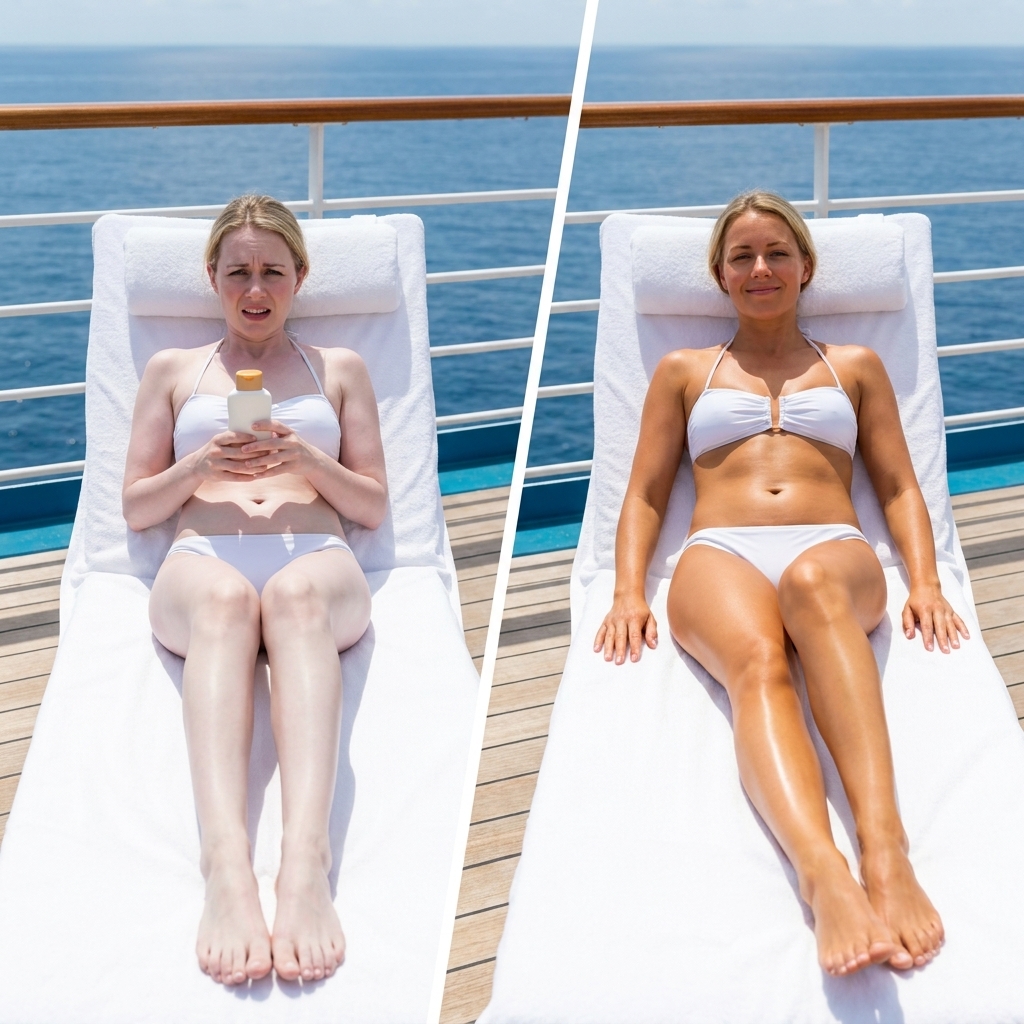
Get a natural, golden-bronze glow from within with our doctor-reviewed, 100% UV-free formula. No streaks, no mess, no orange. Shop our New Year Sale and save 50% off your order!
LEARN MORELike this ad? Make it yours.
Crush rebuilds this exact creative around your product — your brand, your colors, your offer — in about a minute.