Black skin Connoisseur
Black skin Connoisseur Facebook ad: “Read if Alpha Arbutin never changed your dark spots”
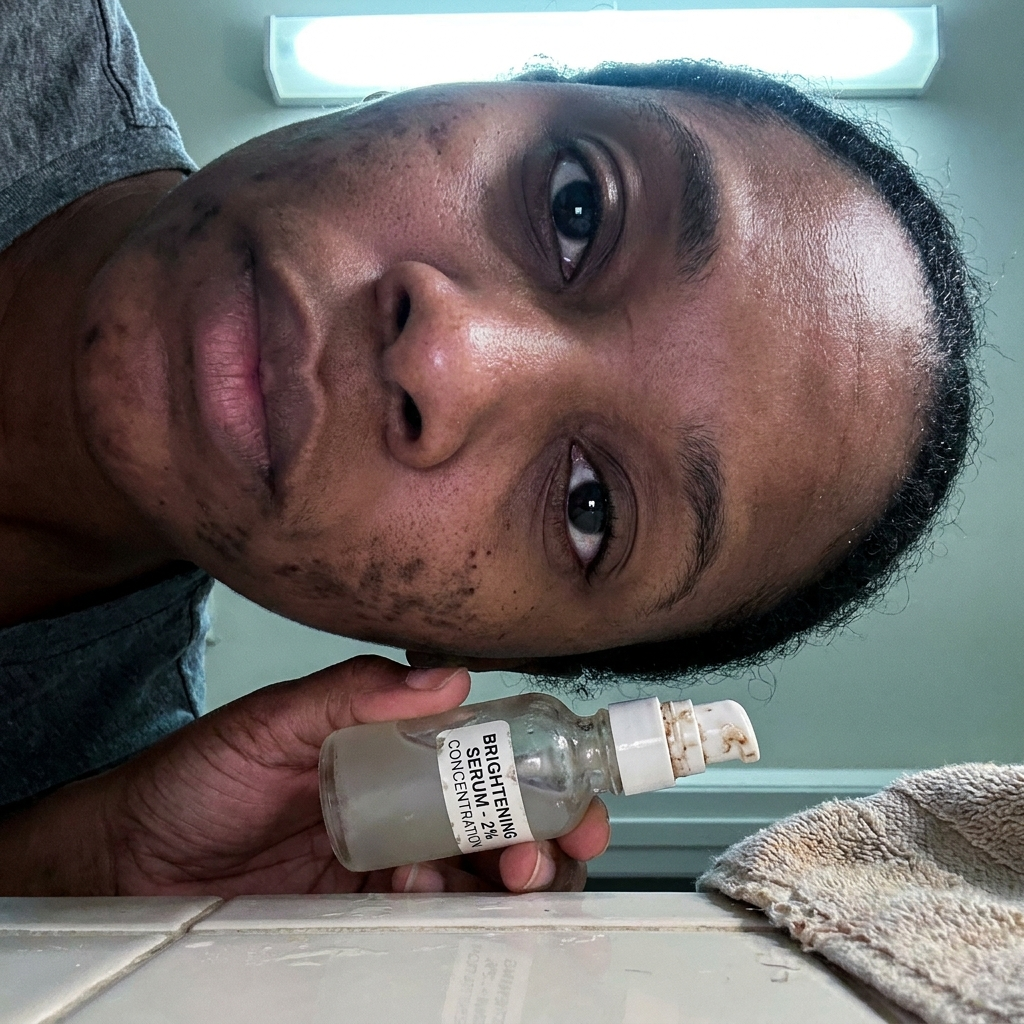
Ran for 1 day, from April 24 to April 25, 2026, the last day Crush saw it.
Run by Black skin Connoisseur on Facebook. Crush is not the advertiser and does not verify its claims. See this ad in Meta's Ad Library(opens in a new tab)
Want an ad like this for your product?
Crush makes new ad images for your product from this ad: your logo, your product photo, your offer.
Trials from $19.95 USD, then $79.95 USD a month. Cancel anytime.
About this ad
- Meta Ad Library ID
- 1666762517846109
- Platforms
- Facebook, Instagram, Audience Network, Messenger and Threads
- Relaunches
- 0
- Niche
- Skincare & Beauty
Ad text
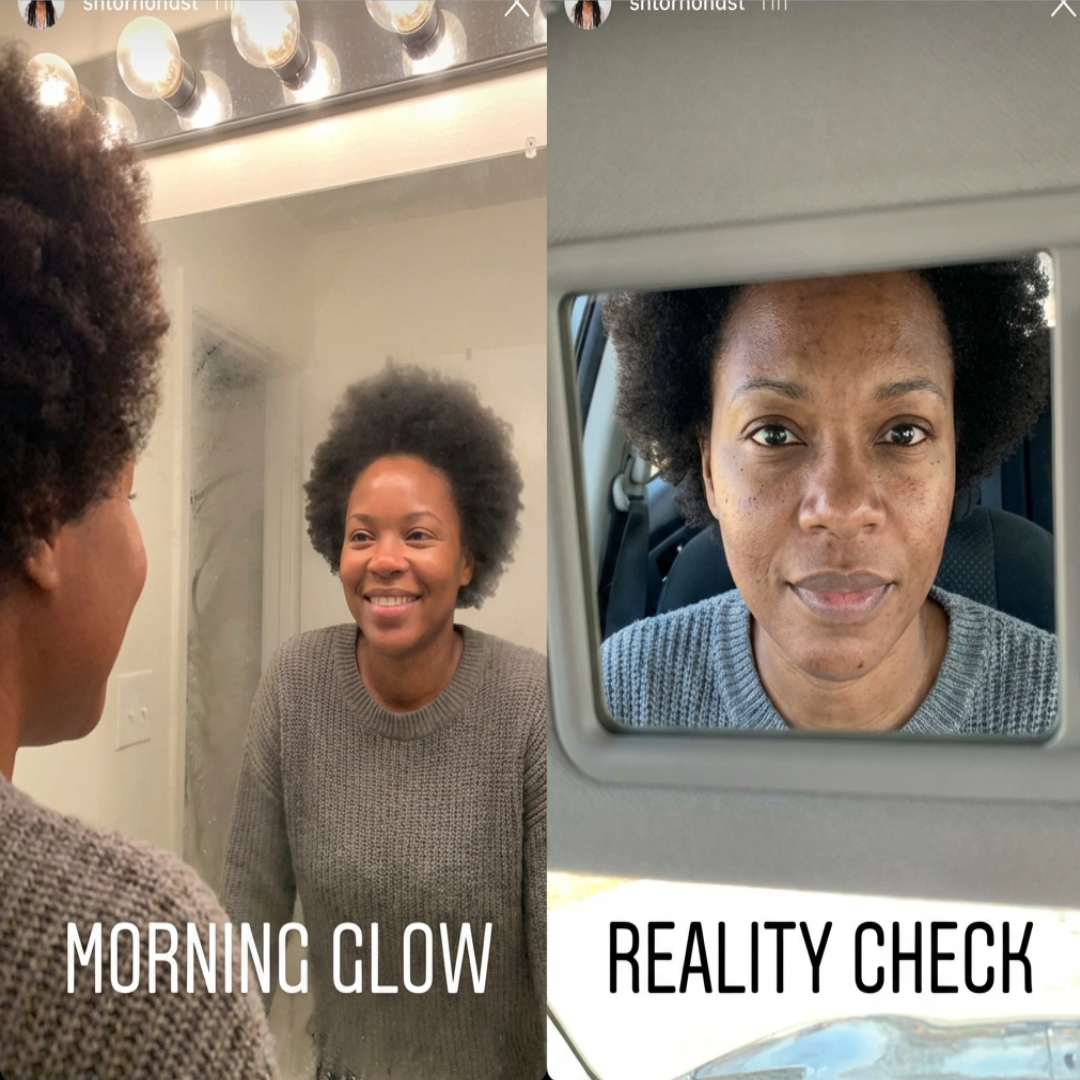
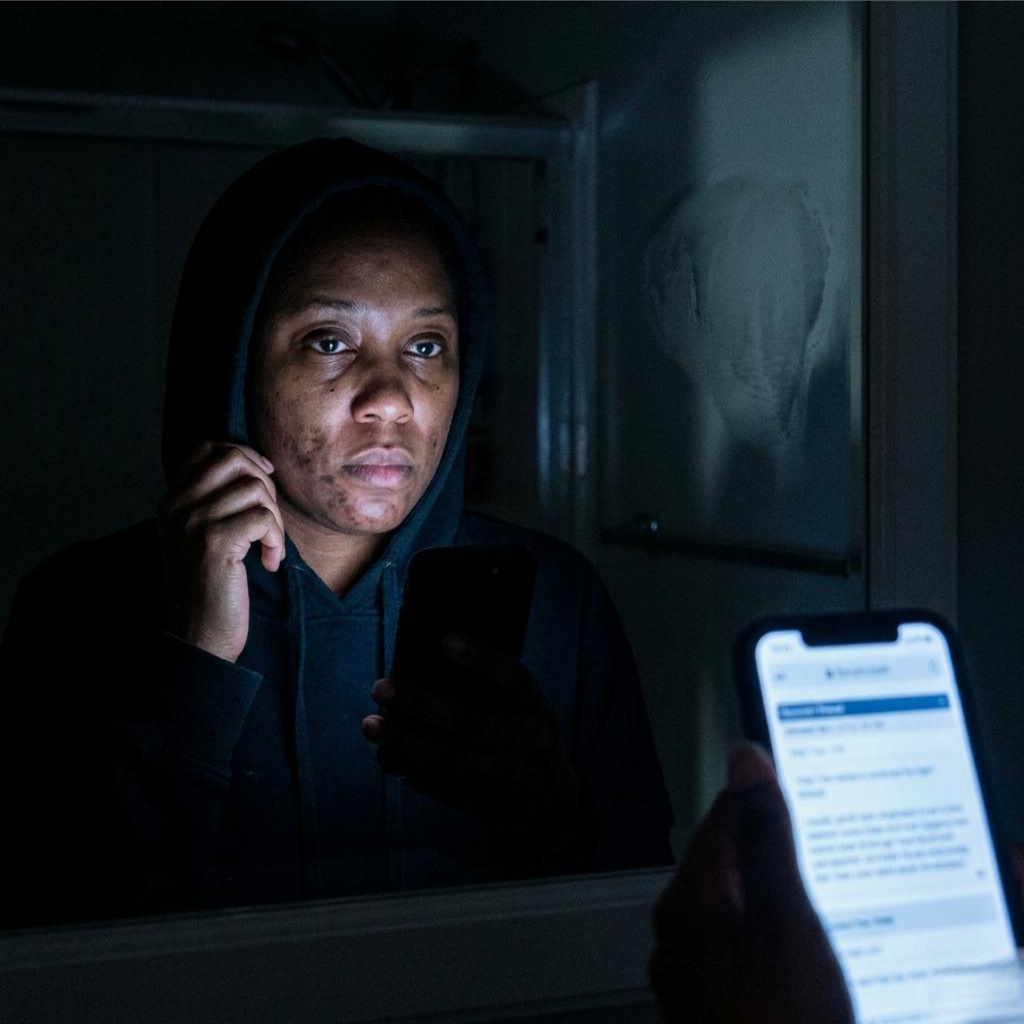
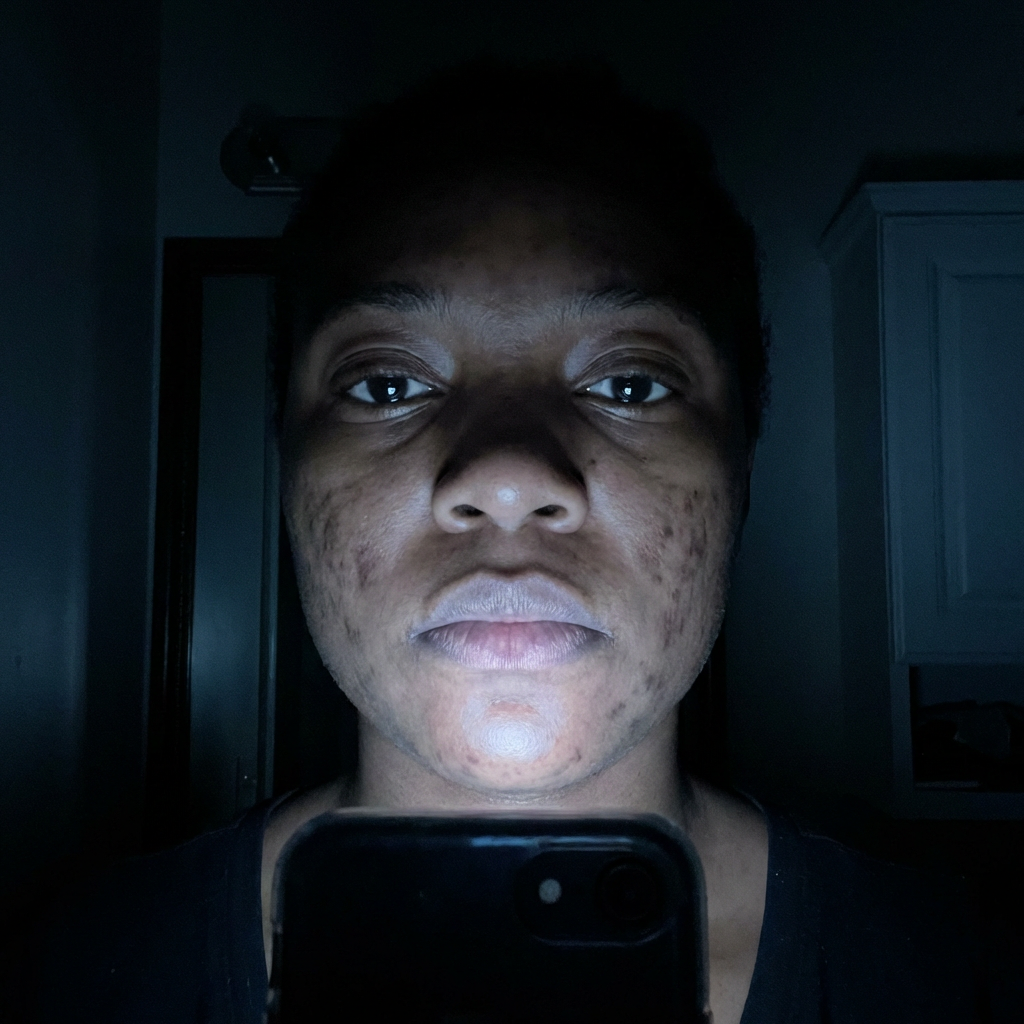
Do you make this mistake with your Alpha Arbutin? Most women with Black skin do. I did, for years. And the worst part is I kept making it with products that were specifically marketed to me as finally different. I know what it feels like to stand at the mirror at the end of a twelve-week cycle and see the same spots you started with. Not slightly lighter. Not different in any way. The same. After following every instruction. After not skipping a single morning or evening. After spending real money on something that promised it understood your skin. I've tried everything in the book. I mean that literally. The dermatologist-recommended serum. The one that was everywhere in every Black skincare community I was part of. The inclusive launches with women who looked like me in the campaign, with taglines specifically about hyperpigmentation in Black women, with pricing that said this was serious and professional and built for what I was dealing with. I still feel like I got ripped off. Not by one product. By all of them. By the pattern of buying something new with real hope and arriving at week twelve with the same darkness, the same depth, and no real explanation for why none of it had worked. I feel like they sometimes overhype products. And the worst version of that isn't the influencer getting paid to post. It's a brand that tells you this was made for skin like yours and puts the same formula inside that had been failing you all along. I tried more. I researched more. I spent more. Same spots. Same darkness. Every time. I was at my wit's end one night, going through research papers and forum threads at midnight, trying to find one explanation that actually made sense, when I came across something that reframed everything. The thread was from a Black woman who introduced herself as a cosmetic chemist. She wasn't posting theory. She'd spent years dealing with hyperpigmentation herself, buying the same products everyone else was buying, running the same twelve-week cycles, and getting nowhere. At some point she got frustrated enough to go looking for an actual reason, so she pulled the studies from the Journal of Investigative Dermatology and the Journal of Drugs in Dermatology and started reading the research that the industry had based its recommendations on. What she found moved her. She wrote it all out in the thread. The 2% concentration in virtually every product on the market, the number on every label, in every dermatologist recommendation, across every inclusive launch she'd ever bought, had been set based on clinical trials conducted predominantly on white skin. Not mixed skin tones. Not darker skin. White skin. Where pigmentation sits close to the surface and 2% reaches it and produces visible results. That's where the standard came from. That became the number on every label. She attached the studies. Two peer-reviewed journals, both with Black dermatologists among the authors, both showing the test subjects were overwhelmingly white-skinned. The trials ran, the spots faded on those subjects, and 2% became the industry standard. Not because it worked for everyone. Because the only people they tested it on happened to have pigmentation that 2% could reach. Black skin was never meaningfully included in those trials. The standard was set without us. And then every brand, every dermatologist, every inclusive launch built for women who looked like us used that same number without anyone stopping to ask whether it actually worked on Black skin. On Black skin, she explained, the pigment sits deeper. It's a direct result of how our skin responds to inflammation. And 2% doesn't get there. It works at the surface while the actual spots sit below it, completely untouched. Which is why she'd seen some general brightening on certain products but never real movement on the spots themselves. And why the before photo and the after photo looked identical at the end of every twelve-week cycle no matter what she used. I stared at my screen. Every product I'd used. Every inclusive launch. Every dermatologist recommendation. All of them 2%. All of them working above where my spots actually lived. She kept going. She said there was a second problem she'd found. Every time Black skin gets inflamed, a breakout, a scratch, a reaction to something applied, the skin produces a new spot in that exact location. And every brightening product she'd ever seen, including the ones marketed specifically for Black women, only tried to address the spot after it had already formed. Nothing in any of them interrupted the inflammation before it told the skin to produce more pigment. So while she was trying to fade what was already there, her skin was quietly making new spots in the same places, over and over, because that part of the process had never been touched. That was why the cycle never ended. Not because Black skin is resistant or difficult. Because the formula was designed around a biology that wasn't ours, and the market kept selling us the same thing with better packaging every time a new brand launched. She ended the thread with what the research pointed to instead. 7% Alpha Arbutin, the concentration that actually reaches where the pigment lives in Black skin. Tranexamic Acid, which interrupts the inflammation before it ever creates a new spot. And both in a cream, not a serum, because serums sit on the surface of the skin and when a foundation brush goes over them the product just moves around instead of absorbing. A cream integrates with the skin properly and the actives actually go in. I read the thread three times. Then I looked up the formula she mentioned. Then I understood why nobody had told me any of this before. The inclusive brands hadn't reformulated. They'd rebranded. Updated the imagery, added our faces, written new taglines, and kept the same under-dosed formula inside. Not because the formulation scientists didn't know. Because reformulating for a different biological threshold costs money and updating the campaign costs significantly less. I had been paying for the updated campaign for four years. And I was done. I read about it for two hours. Then I ordered it. Not because I was excited. I'd been through too many twelve-week cycles that ended the same way to let myself feel anything about a new product. But this was the first time I hadn't just found something new to try. I'd found an actual explanation for why everything else had failed. The concentration was wrong. The inflammation was never interrupted. The formula was never built for skin like mine. That felt different enough to try one more time. The first application felt like nothing. No tingling, no warmth, no sign that anything was happening at all. I'd been here before with enough products that sat on my skin for twelve weeks and did absolutely nothing. But I remembered what the thread said. Tingling usually just means irritation. And irritation was the exact thing that had been creating new spots every time my skin reacted to something. The absence of a reaction wasn't a bad sign. It meant the formula wasn't provoking the same process that had been working against me the whole time. I kept using it. Every night. I told myself I wasn't watching for results. That was a lie. Week two, I checked the mirror. Same spots. Same darkness. I stepped back and told myself to stop. I knew what it felt like to stare at your face long enough that you start imagining progress that isn't there. I wasn't going to do that again. Week three, the spot on my left cheek, the one that had been sitting there for ten months, the one I'd been covering every single morning without even thinking about it anymore because it had just become part of my morning routine, was lighter. I moved closer to the mirror. Changed the angle. Walked to the window to check it in natural light. It was lighter. I didn't tell anyone. Saying it out loud was how you got to week twelve with a story you'd already told and nothing to show for it. I just kept using it and kept my mouth shut. Week five, I had a breakout. Small one. I watched it heal the way I'd watched hundreds of them heal over the years, already doing the mental math on how long the mark would stay, which shade of concealer would cover it, how many months before it faded enough to stop thinking about. It left almost nothing behind. I put my phone down and just stood there. That’s when it hit me. In all the years I'd been dealing with this, every single breakout left something. A mark that stayed for months, sometimes longer. That was just how my skin worked. This time the skin healed clean. Like the inflammation that had always turned a breakout into a lasting spot had been stopped before it could do what it always did. That was the moment I stopped pretending I wasn't watching for results. Because something was actually happening. Week eight, I was getting ready to go out. I reached for the foundation the way I always do, same amount I'd been applying every morning for years. I stopped mid-application. I was putting on more than my skin needed. The spots I'd been covering every day were lighter. The coverage that had been non-negotiable for years, the amount I never left the house without, was more than what was actually required now. I used less. And for the first time in as long as I could remember, I left the house without feeling like I was hiding something. Week ten, I was in the bathroom at work, the one with the overhead light I'd been avoiding for years because it showed everything. I walked in without thinking about it. Looked up. I stayed there for a moment. The spots that had defined my relationship with every mirror I'd stood in front of for the last several years were lighter in a way that the harshest light in the building was confirming without me having to look for it. I walked back to my desk and sat down. I wasn't ready to tell anyone yet. I wanted to be certain first. I'm certain now. I spent years thinking the monitoring was just the price of having this skin in professional spaces. Something you paid quietly and didn't talk about. It wasn't the price. It was a leak. And I didn't know it was draining me until it stopped. I'm fully there now. In every room, every conversation, every meeting. Not managing anything. Not tracking anything. Just there. That's what I was chasing the whole time. Not clearer skin for its own sake. The version of myself that could walk into any room and just be in it. That woman exists now. I didn't know how close she was. If you've been buying every inclusive launch and arriving at week twelve looking at the same spots, it's not your skin and it's not your routine. The dose in every product you've used was never strong enough to reach where your pigment actually lives. The inflammation that keeps creating new spots every time your skin reacts was never interrupted. And the serum you were applying every morning was sitting on your skin, so when your foundation brush touched it, it just dragged that layer around instead of letting it sink in. The spots won't fade on their own. Every twelve-week cycle you run with the wrong formula is another cycle the inflammation runs unopposed. Another spot forming while you're trying to fade the last one. Another year paying for something that was never built for you. You deserve a formula that was actually designed for your skin. Not one that was designed for someone else's and relabeled. Three specific problems. Three specific fixes. The link is below, the full formula, the science behind it, and the before and after videos. Go see what Black women who were exactly where you are right now look like at week eight.
Where the ad sends people
omnelya.shop
Read if Alpha Arbutin never changed your dark spots👆
Overview Arbutin Brightening: Contains 7% arbutin to effectively reduce dark spots and brighten skin tone on black skin. Tranexamic Acid: Features 4% tranexamic acid to combat hyperpigmentation and even skin texture 50g Practical Size: Convenient packaging with sufficient product for regular skincar...
Shop now: omnelya.shop(opens in a new tab)