True stories
True stories Facebook ad: “My story”
Ran for 8 days, from July 20 to July 28, 2026, the last day Crush saw it.
Run by True stories on Facebook. Crush is not the advertiser and does not verify its claims. See this ad in Meta's Ad Library(opens in a new tab)
Want an ad like this for your product?
Crush makes new ad images for your product from this ad: your logo, your product photo, your offer.
Trials from $19.95 USD, then $79.95 USD a month. Cancel anytime.
About this ad
- Meta Ad Library ID
- 1672192227220010
- Platforms
- Relaunches
- 0
Ad text
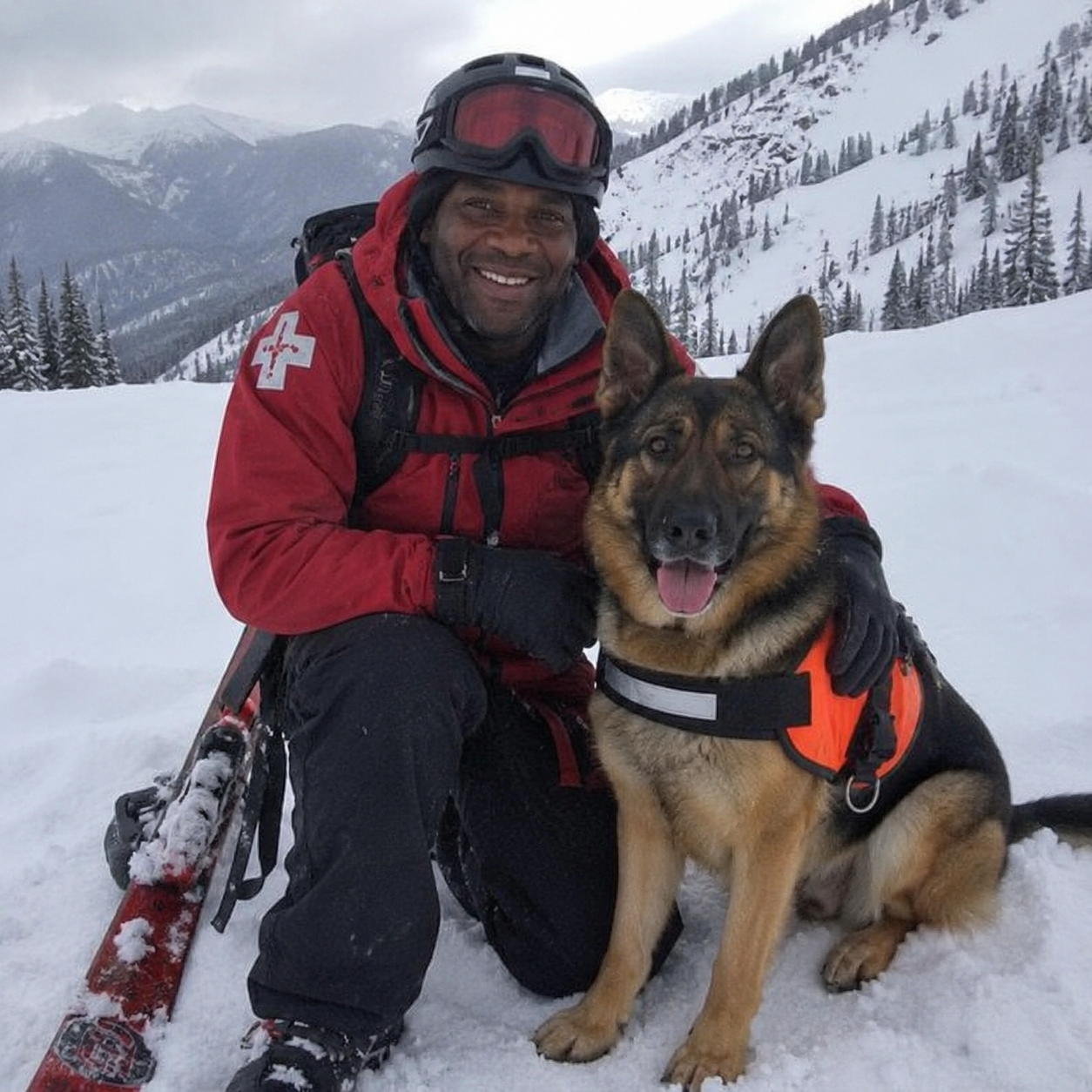
My dog found 34 missing children in six years. She was hit by a car while tracking the 35th. The vet said put her down. Day before yesterday she found the 36th. Alive. And I was kneeling in the mud, and for the first time in years I felt no pain. My name is Mark Webber. I'm 54 years old. Twenty-eight years with the Douglas County Sheriff's Office in Roseburg, Oregon. The last fifteen — on the missing children unit. I'm the one they call when a child doesn't come home. When the mother is standing in the doorway and can't breathe. When the father dials my number and his voice breaks on the word "please." Fifteen years — and every call is the same. Name, age, what they were wearing, when they were last seen. And the clock that starts ticking. In the first six hours — the chance we find them alive is above ninety percent. After twelve — sixty. After twenty-four — I stop counting. In fifteen years I've found 113 children. Eighty-nine — alive. Twenty-four — not. Twenty-four faces I found too late — they come at night. Not every night. But often enough. My wife, Jenn — elementary school teacher, second grade. Twenty-four years together. She knows what I do. She knows that sometimes I come home and can't speak. She doesn't ask. She sits beside me, takes my hand, and is quiet. Half an hour later I'm breathing normally again. Jenn says: "Mark, you save other people's children. Every day I'm proud of you." Without her I wouldn't have lasted fifteen years on this unit. Our daughter, Cassie, is twenty-one, at Oregon State. She calls every weekend. Lady. Bloodhound. Eight years old. Certified tracking dog, qualified for person-search. The bloodhound — a breed developed for one thing only: following a trail. A nose without equal in the animal kingdom. Two hundred and thirty million scent receptors — a human has five million. From a single glove, a single shoe, a single stuffed toy, she picks up the child's scent — and follows it through woods, across streets, over water. I got her as a puppy from the department kennel. One year of training. Six years working together. Thirty-four children found. Twenty-eight alive. Six — not. But found. Returned to their parents. Lady is not simply a tool. After fifteen years on this unit, when you've seen what I've seen — you need someone who doesn't ask how your day was. Jenn does that at home. Lady — at work. She lies down beside me and breathes. I listen — and that's enough for her. March 6th, Friday. Call at 2:40 pm. Connor Hayes, five years old. Walked out of the preschool with his mother, the mother's attention was pulled away for a moment — she turned back, Connor was gone. Roseburg, Eastwood neighborhood. Family homes, and two hundred yards away — the edge of the Umpqua National Forest. We were there in twelve minutes. The mother was standing by the car, white, her hands shaking. I took Connor's jacket — blue, dinosaurs on it. Gave it to Lady to scent. Lady picked up the trail in forty seconds. She moved — fast, confident, nose to the ground. The trail led from the car along the sidewalk, across the intersection, toward the forest. At the highway crossing — four lanes, heavy traffic — Lady threw herself after the scent. The leash tore out of my hand. She ran into the road without lifting her head — she was on a trail, she was working, the child's scent was on the other side. The car caught her broadside. Lady went airborne, spun. Landed on the asphalt ten feet away. Ninety pounds of bloodhound lay on the road. Her rear legs — motionless. Her front legs — clawing at the pavement. She was trying to stand. Trying to crawl. With broken rear legs, bleeding on the asphalt — she stretched out toward the forest, because that's where the child was. She didn't understand that she was broken. She understood that the trail hadn't ended. I dropped down beside her. Held her head. "Lady. Shhh. Shhh, girl. Lie still." She stopped clawing. She closed her eyes. The second team found Connor four hours later. In the forest, in an old garden shed. Alive. Frozen, terrified — but alive. Lady's trail led straight there. If the leash hadn't torn free — fifteen minutes. Roseburg Veterinary Emergency. Dr. Chen. "Detective Webber. Lady is alive. But I need to be honest with you." Both rear legs — multiple fractures. Pelvis — fractured. Spine — compression in the lumbar region, nerves are being crushed, the rear limbs aren't receiving signals. "We stabilized the fractures. But the rear limbs are paralyzed. The probability that she remains permanently disabled — very high." He paused. "A tracking dog that can't run — can't work. Humane euthanasia—" "No. This dog found thirty-four children. Twenty-eight are alive. We're not putting her down." Dr. Chen nodded. I spent two days at the clinic. Sat beside the kennel. Through the bars she rested her head on my palm. Her rear legs — motionless. Her tail — motionless. Her eyes — alive. She looked at me and whimpered softly when I pulled my hand away. On the third day I was at my desk at the office. Staring at Lady's empty bed in the corner. Couldn't focus. Went home — Jenn looked at me and understood everything. She hugged me. I didn't cry. Cops don't cry. But I stood in the hallway and couldn't move. Jenn told her friend Nolan's wife. Nolan called me that evening. Nolan — a contractor, we're friends through our wives, we see each other twice a year at the neighborhood cookout. Not a close friend — but the kind who doesn't walk past when they see trouble. "Mark. I heard about Lady. How is she?" I didn't want to talk. But Nolan asked quietly, no pressure. And I told him. Everything — the car, the fractures, the paralysis, the euthanasia, the refusal. That I'm not sleeping. That every night I lie there and think about her. Nolan listened. Then he said: "Mark. Listen. My brother-in-law — he's got horses near Bend. He had a horse — Major, seventeen years old, the grandkids learned to ride on him. Winter before last he slipped on ice in the paddock and came down hard on his side. Both hind legs — fractures, pelvis cracked, spine — compression. The vet said put him down. My brother-in-law wouldn't hear of it. Through a horse person he found a woman. Retired vet professor. Runs a rehabilitation center on a ranch near Bend. Dr. Grace Thornton. He took Major there. Seven weeks later — the horse walked. Three months later — the grandkids rode him again." "Nolan. Major is a horse. Lady is a dog." "Dr. Thornton treats all large animals. Dogs too. But she only takes a few patients a year, by referral only. I'll call my brother-in-law, ask him to reach out to her. I'll call you back in the morning." In the morning Nolan called. "She agreed. Take Lady Saturday. The ranch is outside Bend — you know the way, past the Cascade Lakes Highway, gravel road up the hill. Mark — one thing she said: the dog stays there. Six weeks. No visits. The dog needs rest. If she smells you — she won't settle, she'll try to break free, and she can't move for the first weeks. Bloodhounds — they bond so deeply they can't lie still when their handler is nearby. Dr. Thornton will send a video every Friday." Six weeks without Lady. Six weeks not knowing if she'd ever stand again. I agreed. Saturday. Two and a half hours from Roseburg southeast, through the Cascades, past the lava fields — ponderosa pines, quiet. The gravel road up the hillside. Dr. Thornton's ranch — a stone house on the ridge, views of the valley. Stalls, paddocks, silence. Grace Thornton came out to the yard. Small woman, sixty-five years old. Gray hair, cut short. Work pants, rubber boots. On her wrist — a man's watch, too big for her hand. I carried Lady in — ninety pounds. Thornton watched how I walked. In the office — books, light boxes. On the desk — a framed photograph: a young woman in a lab coat beside a man in coveralls, both standing around a horse. Thornton put up the scans. Examined Lady — legs, pelvis, spine. Lady flinched twice. "Detective. This is a severe case — multiple leg fractures, pelvic fracture, spinal cord compression. But the reflexes are present. The nerves are compressed, not destroyed. I have a cream — thirty years of development. I'll keep her for six weeks. Twice a day I'll apply it, monitor, image. Every Friday I'll send you a video. I'm not promising anything. But I'll try." She paused. "And don't come out. The dog needs rest. If she catches your scent — she won't lie down, she'll try to break free. Bloodhounds — they bond so that they can't rest when their handler is nearby. And for the first weeks she must not move." I put my hand on Lady's head. She pressed her nose into my palm. I stood up and walked out. I didn't look back. First Friday. Video from Thornton. Twenty seconds. Lady lying on a soft mat in a warm room. Her rear legs motionless. But she's eating. Her eyes are bright. Thornton applying the cream — dark green, thick — along the spine. Caption: "Nerves are silent for now. Her appetite is good. Don't worry." Second Friday. Video. Thirty seconds. Lady lying down. Thornton pressing points along the spine — Lady twitches her left rear leg. Caption: "The nerves are starting to respond." Jenn watched the video with me. She squeezed my hand. Third Friday. Video. Forty seconds. Lady has pulled her left rear leg toward her belly. The first conscious movement. Caption: "Improvement. Continuing." Fourth Friday. Video — one minute. Lady is standing. On all four legs. The rear ones trembling, splayed wide. Five seconds. She sits back down. But she stood. Jenn started crying. Cassie, who I'd forwarded the video to, texted: "Dad, she's STANDING!!!" Fifth Friday. Video. Lady walking across the ranch yard. Slowly, her rear legs weaker than the front. Her ears sweeping the ground — the way all bloodhounds carry them. Her nose down — scenting. Caption: "She walks. Her nose works. Come next week." Sixth week. Saturday. I drove toward Bend not knowing what to expect. The video is the video. A camera can lie. The camera didn't lie. When I got out of the truck in the ranch yard — from behind the corner of the barn Lady came running. Running. All four legs, her ears flapping, her nose out front, her tail — the same tail that three months ago didn't move — swinging left and right. She charged at me, slammed into my legs, nearly knocked me over, pressed her nose into my knee and let out a howl — loud, joyful, the way bloodhounds howl when they've found what they were looking for. I sat down on the ground. She climbed into my lap — ninety pounds — and licked my face. I sat on the cold dirt of the ranch yard, and ninety pounds of bloodhound lay on me, alive and running and found. Thornton stood in the doorway and watched. "Detective. The rear legs — full range of motion. The fractures — healed. The pelvis — restored. The spine — compression resolved. She will walk, run, and work. Forget about euthanasia." Then she looked at me — how I got up from the ground, how I shifted my weight, how I straightened. "Detective Webber. I can see how you move. Your right leg — you're limping. Your lower back — you can't fully straighten. When you brought the dog six weeks ago — I already noticed. How many years have you been in law enforcement?" "Twenty-eight. Thirteen on patrol, then fifteen in investigations." "Twenty-eight years — running, body armor, then fifteen years on your knees in mud and forest. I can see it." I nodded. "Detective. I'm not a human doctor. I can't treat you myself. But I have a former student. Dr. William Bennett. Thirty-two years old. He studied under me — veterinary science — then switched to human medicine. Together we adapted my formula into a cream for people — same active base, but calibrated for human tissue. He works as a doctor now — travels to nursing homes across the country, treating elderly people with destroyed joints. I can ask him to get in touch with you." She gave me his number. That same day I called Dr. Bennett. Young voice, calm. "Detective Webber. Dr. Thornton gave me your number. Tell me what's going on." I told him — twenty-eight years, law enforcement, thirteen on patrol, then fifteen years of searching, on my knees in mud, basements, forests. Knee, lower back, right leg limps. "Detective. I'm not a sports medicine specialist. I work with elderly people — arthritis, osteoarthritis, worn-out joints. But Dr. Thornton is right — if you have worn-out joints, the formula works on joint tissue regardless of age. I'll send you cream by courier within two days. Twice a day, morning and evening, rub it into the affected joint. Gentle circles, two or three minutes." The cream arrived two days later. White tube, dark green inside, smell of herbs — menthol and something bitter, maybe camphor, maybe arnica. Twice a day. Twenty-eight years of law enforcement teaches you one thing: don't believe what you haven't verified. If Thornton hadn't put Lady back on her feet — I'd have thrown this tube out after a week. First week — nothing. End of the second week — two days without painkillers. I'd forgotten to take them. Third week. Morning. I got up and walked to the bathroom. Without limping. My right leg — the one that had been dragging for three years — stepped straight. Jenn saw from the bedroom and said: "Mark. You're not limping." Fourth week. First field deployment with Lady — the first since the accident. She tracked a hidden garment in the park. Found it in four minutes. I ran after her — and my legs held. Fifth week. Annual fitness assessment. Three years running — "restricted duty." This year — I passed everything. The department doctor: "Webber. Three years I've been writing the restriction. What changed?" — "I recovered." Day before yesterday. Call at 9:00 am. Emma Taylor, four years old. Disappeared from an apartment complex garden on the north side of town. The mother stepped inside for one minute — came back, the child was gone. Nearby — the edge of the forest, acres of terrain. Eight minutes and we were there. From the mother I took the hat — pink, with cat ears. Gave it to Lady. Lady picked up the trail in thirty seconds. And she went. Nose to the ground, ears sweeping the grass, tail straight. The same movements as thirty-five times before. The same legs that three months ago didn't move. Through the park trail, along the path, past a creek, toward an old garden shed near the north fence. Eleven minutes. Lady sat down and barked. I opened the door. Emma was sitting in the corner, behind some crates, hugging her knees. Alive. Terrified, frozen, crying — but alive. I knelt beside her. My knee touched the cold concrete floor. And it didn't hurt. "Hi, Emma. My name's Mark. We're going to your mommy." She looked at Lady — huge, droopy ears, wet nose. She reached out her hand. Lady pressed her nose into the little palm. Emma hugged the dog's neck. And for the first time in an hour, she stopped crying. I knelt there and watched a four-year-old girl hug my dog. Thirty-six. Lady found the thirty-sixth child. Alive. After that last case I drove out to see Dr. Thornton. She made tea. "Grace. If this cream works like this — why isn't it in every drugstore in the country?" Thornton took her late husband's watch off her wrist and set it on the desk. "Mark. Six years ago people came to me from a large pharmaceutical corporation. They offered me three million dollars for the formula. On one condition — I stop production permanently. A person whose joints recover in a few weeks is a customer lost for life. They make their money when we're sick, not when we're well. I refused. I told them: in ninety-four my husband took a kick from a stallion while shoeing — lower back, pelvis. The doctors said wheelchair forever. Eight months in my lab. Three months later he stood up. He walked on his own legs for twenty-four years. He died of old age in 2018 at seventy-eight. This formula is my husband. It is not for sale." She was quiet. Then she added: "Mark. If I had accepted — Lady would be in the ground. And that little girl the day before yesterday wouldn't have been in that shed for eleven minutes. She'd have been there four hours. Or eight. Or a day. The formula is not for sale. That's why your dog found the thirty-sixth child." Nolan, my friend — forty years old, contractor. Twenty-five years on construction sites — both knees, lower back. Six weeks with the cream, climbing scaffolding without pain. Jenn — my wife, fifty-one. Twenty-five years teaching, six hours a day on her feet — both knees. Four weeks with the cream, every evening she walks Lady for two hours. A deputy on our unit — forty-three. Sixteen years of field searches — both knees, lower back. Five weeks, back on full field duty. Dr. Chen — the vet who treated Lady — asked for Dr. Bennett's contact. For his father. Seventy-one years old, hand arthritis. Two months later he's gardening. I don't get paid by Dr. Grace Thornton or by Dr. William Bennett. I'm writing this because what I saw cannot be kept quiet. The cream works. If my dog — who found thirty-four children, and who they wanted to put down — got her rear legs and her working life back; if I — twenty-eight years of service, fifteen years on my knees in any weather — got my body back, a body that can run after the dog and kneel beside the child — then your joints are not in worse shape than my dog's and not in worse shape than mine. If your knees hurt. If your back hurts. If your shoulders or your hands won't obey. If they've already said the words "surgery" or "wheelchair." Don't wait. Below this text — blue button: "Learn More." Click it. Enter your name and phone number. Dr. William Bennett's courier delivers the cream to your door in two to three days. My dog found thirty-four children. She was hit by a car on the trail of the thirty-fifth. They wanted to put her down. Day before yesterday she found the thirty-sixth. A little girl, four years old. Alive. My knee didn't hurt. If they've told you it's too late — don't believe it. With respect, Mark Webber, 54, Senior Detective, Missing Children Unit, Douglas County Sheriff's Office, Roseburg, Oregon.
Where the ad sends people
verolo-nixlit.top
My story 👉
See details: verolo-nixlit.top(opens in a new tab)