
Inactive· since Feb 15, 2026
- 164
- days it ran
- 1
- relaunches
Ad copy
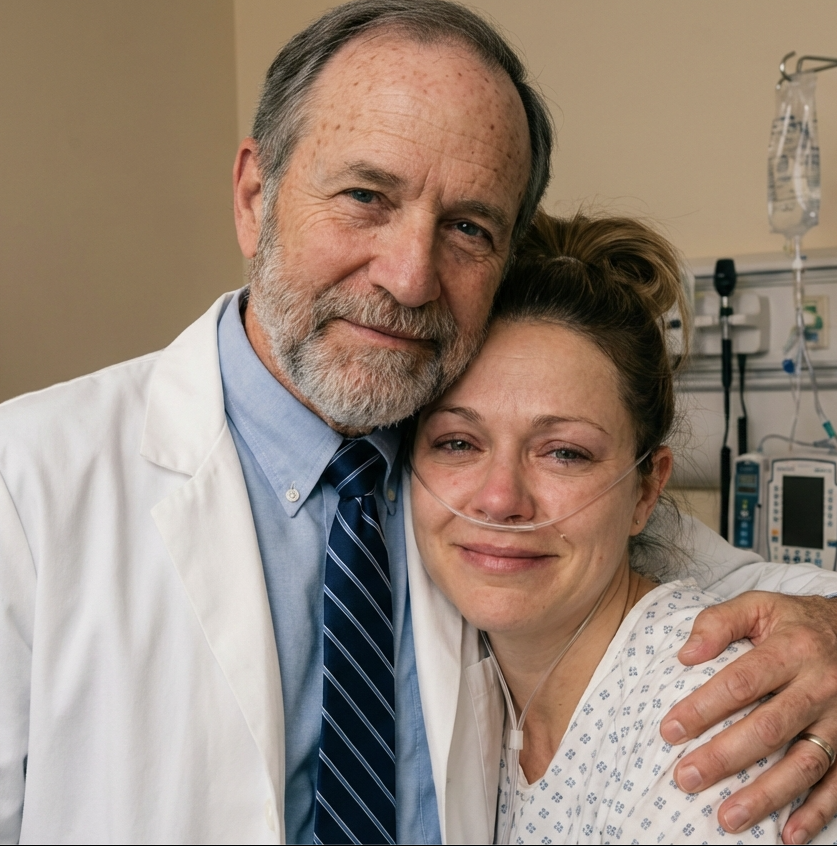
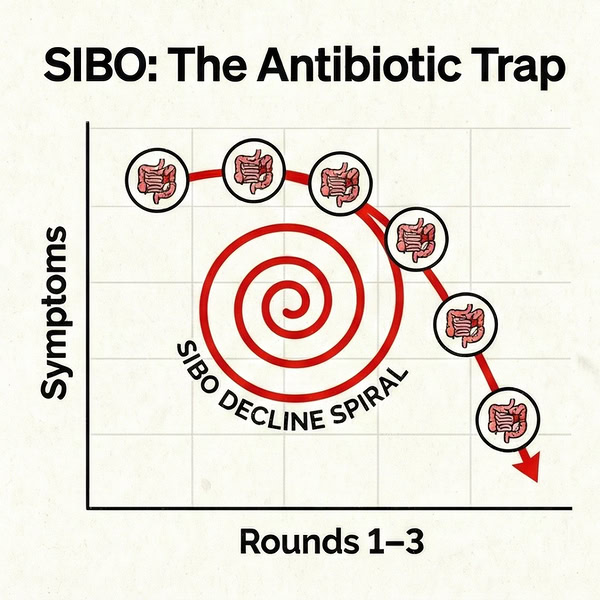
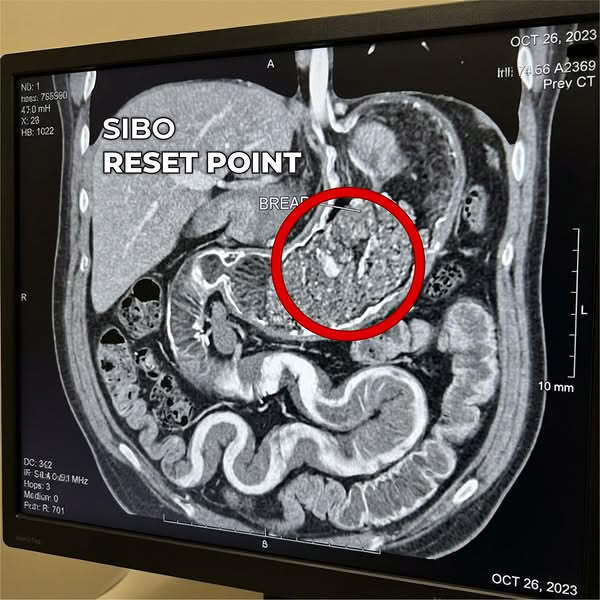
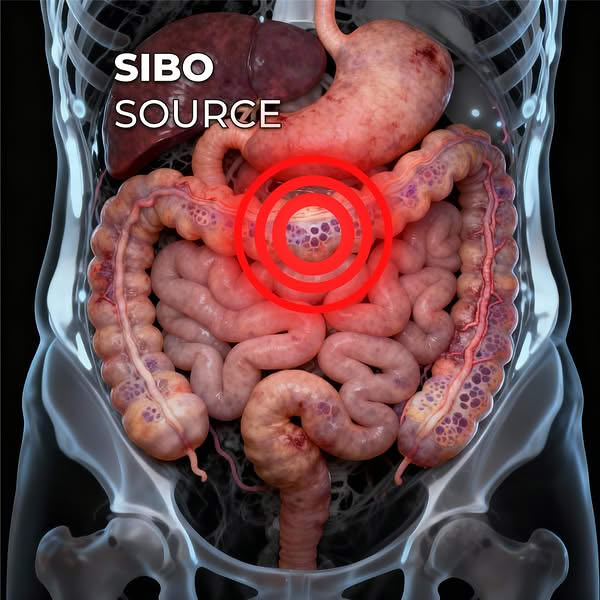
If your doctor diagnosed you with IBS, handed you a prescription for antispasmodics, told you to eat more fiber, manage your stress, and "learn to live with it"—while you're still bloated every single day, cramping after meals, and so exhausted you can barely function… I'm going to explain why you probably don't have IBS at all—and what's actually been causing your symptoms this entire time while every doctor you've seen has missed it. And by the time you're done reading this, you're going to be livid. Because three things are happening right now that the medical system doesn't want you to figure out: One - Up to 78% of people diagnosed with IBS actually have SIBO—Small Intestinal Bacterial Overgrowth—a testable, treatable condition that doctors are either too lazy or too uninformed to screen for Two - The "IBS" label is a medical dead end designed to stop investigation, not start treatment—it basically means "we don't know what's wrong with you, so here's a name for your symptoms and some pills to manage them" And three - There's an entire pharmaceutical and dietary industry built around IBS management that profits from keeping you symptomatic and dependent on medications, fiber supplements, and stress-reduction programs instead of running one simple breath test that could identify the actual cause Let me tell you what happened with my wife Sarah, because her story is going to make you furious about every doctor who ever looked you in the eye and said "it's just IBS." Sarah spent THREE YEARS being treated for IBS before anyone thought to look deeper. It started when she was 31. Bloating that came on after nearly every meal. Cramping. Alternating between constipation and loose stools. Brain fog so dense she'd lose her train of thought mid-sentence. Fatigue that no amount of sleep could fix. She went to her primary care doctor first. "Sounds like IBS," he said after a 12-minute appointment. No testing. No imaging. No labs beyond basic bloodwork. Just a cursory physical exam and a label. "It's very common, especially in women your age. Let's try an antispasmodic." He wrote a prescription for dicyclomine. Told her to increase fiber. Suggested she download a meditation app because "stress is a major IBS trigger." Month 1: Antispasmodics took the edge off the cramping. Bloating was exactly the same. She was still distended by lunchtime every single day. Month 3: She went back. "The bloating isn't improving." His response: "IBS is a chronic condition. We need to find the right management strategy. Let's add a low-dose antidepressant—sometimes SSRIs help with gut-brain signaling." Now she was on two medications for a condition nobody had actually confirmed she had. Month 6: Added fiber supplements at his recommendation. Psyllium husk every morning. The bloating got WORSE. Significantly worse. Her stomach was more distended than ever. "Some patients react to certain fibers," he said. "Switch to Benefiber. And maybe try a probiotic." Month 9: She was now taking an antispasmodic, a low-dose SSRI, a different fiber supplement, and a probiotic. Four daily interventions for "IBS." Total monthly cost between medications and supplements: roughly $120. Still bloated. Every. Single. Day. She asked for a referral to a gastroenterologist. Maybe a specialist would look deeper. The GI doctor ran a colonoscopy. Normal. An endoscopy. Normal. Celiac panel. Negative. H. pylori test. Negative. "Everything looks structurally fine," the GI doctor said. "This confirms IBS. The good news is there's no serious pathology. The challenging news is that IBS is a functional disorder—it's about how your gut functions, not structural damage. We need to focus on management." Management. Not diagnosis. Not root cause identification. Management. He added a prescription for Linzess because she was leaning constipation-dominant. Another $300 a month after insurance. One year in. Sarah was spending over $400 monthly on IBS medications and supplements. Taking five different pills every day. And she was no better than the day she walked into her first doctor's appointment. Still bloating after every meal. Still cramping. Still exhausted. Still foggy. Still cycling between not being able to go and going too much. But the worst part wasn't the symptoms. It was the gaslighting. Every doctor she saw treated her like the problem was between her ears, not in her gut. "Are you under a lot of stress at work?" "How's your anxiety? IBS and anxiety are closely linked." "Have you tried yoga? Mindfulness-based stress reduction has shown benefits for IBS." "Sometimes IBS is about learning to manage your relationship with food." She started questioning her own sanity. Maybe it WAS stress. Maybe she was too anxious. Maybe she just needed to relax more and the bloating would resolve. Maybe this was all in her head. I watched this brilliant, sharp woman—who ran a team of 15 people, who could solve complex problems in minutes—start to believe that her crippling daily symptoms were somehow her own fault. That she wasn't managing her emotions well enough. That her gut was punishing her for being stressed. That's what the IBS label does. It transfers blame from the medical system's failure to diagnose onto the patient's failure to cope. She told me one night, voice completely flat: "Maybe they're right. Maybe I just have a sensitive gut and I need to accept it. Maybe this is just what my life looks like now." She was 34 years old and surrendering to a lifetime of daily bloating, cramping, and medication dependence because three different doctors had all told her the same thing: It's IBS. Manage it. Accept it. That's when I lost it. Not at Sarah. At the system. Because I'd watched this woman dutifully follow every instruction. Take every medication. Try every supplement. Increase fiber, decrease fiber, try this probiotic, try that antispasmodic, meditate more, stress less. She did ALL of it. And she was exactly where she started. Except now she was also medicated, demoralized, and convinced she was broken. That's when I started asking the questions that nobody in her medical team wanted to hear: Has anyone actually tested what's causing the bloating instead of just labeling and medicating the symptoms? Why is every doctor's first instinct to prescribe something instead of investigate something? And why has nobody—in THREE YEARS and thousands of dollars in appointments, tests, and medications—ever mentioned SIBO? I went down a research rabbit hole that changed everything. And within the first hour, I found a statistic that made me physically nauseous: Studies estimate that up to 78% of patients diagnosed with IBS actually have Small Intestinal Bacterial Overgrowth as the underlying cause of their symptoms. Seventy-eight percent. That means the majority of people walking around with an IBS diagnosis—taking antispasmodics, fiber supplements, SSRIs, probiotics, and expensive prescription medications—actually have a bacterial overgrowth in their small intestine that is testable with a simple breath test and treatable with targeted antimicrobials. But they'll never find out. Because their doctors slapped the IBS label on them and stopped looking. Let me explain what SIBO actually is—because chances are nobody has ever explained this to you. Your small intestine is supposed to have relatively few bacteria. Most of your gut bacteria should live in your large intestine (colon). When bacteria from the colon migrate upward and colonize the small intestine—where they don't belong—they ferment the food you eat and produce excessive gas. This gas causes bloating. The bacterial byproducts irritate your gut lining, causing cramping and pain. The inflammation disrupts normal motility, causing the constipation-diarrhea cycling that's the hallmark of "IBS." The bacteria steal nutrients from your food, causing the fatigue and brain fog. Bloating. Cramping. Altered bowel habits. Fatigue. Brain fog. Food sensitivities. Sound familiar? It should. Because those are the exact symptoms that every IBS patient experiences—and they're the exact symptoms that bacterial overgrowth in the small intestine produces. IBS is not a diagnosis. It's a description of symptoms. A label that says "your gut isn't working right" without ever asking WHY. SIBO is the WHY for up to 78% of those patients. And the test to identify it? A lactulose breath test. You drink a sugar solution. You breathe into tubes every 20 minutes for 2-3 hours. The lab measures hydrogen and methane gas levels. That's it. Non-invasive. Takes a few hours. Costs $150-250. Sarah had a colonoscopy ($2,500). An endoscopy ($1,800). Celiac bloodwork ($200). H. pylori testing ($150). And nobody—not her primary care doctor, not her gastroenterologist, not her dietitian—ever suggested a breath test. When I brought it up to her GI doctor, he actually said: "Breath testing for SIBO is somewhat controversial. Not all gastroenterologists consider it standard practice for IBS workup." Controversial. A $200 breath test that could identify the cause of symptoms in up to 78% of IBS patients is "controversial." But a $2,500 colonoscopy that came back completely normal was apparently standard practice. That conversation told me everything I needed to know about where the medical system's priorities actually sit. Sarah ordered a SIBO breath test through a functional medicine practitioner who actually understood that "IBS" is a symptom description, not a root cause diagnosis. Results came back in a week. Hydrogen: 68 ppm (normal is under 10) Methane: 22 ppm (normal is under 10) Both gases. Massively elevated. She had severe SIBO—both hydrogen-dominant AND methane-dominant—that had been festering untreated for THREE YEARS while her doctors medicated her for "IBS." Three years. Thousands of dollars. Five daily medications. Weekly stress about whether she was managing her condition properly. Guilt about whether she was "too anxious" to heal. And the whole time, there were bacteria in her small intestine producing gas, creating inflammation, disrupting motility, and causing every single symptom that three separate doctors had dismissed as "just IBS." When the functional medicine doctor showed Sarah her results, she just stared at the paper. Then she said something I'll never forget: "So it was never in my head." "No," the doctor said. "It was never in your head. It was in your small intestine. And it's been there this whole time." That's when she broke down. Not from sadness. From rage. Three years of being told she was stressed. Three years of being prescribed antidepressants for a bacterial infection. Three years of doubting herself because every medical professional she trusted implied the problem was her inability to cope. And a $200 breath test could have identified it at the very first appointment. Here's where the story changes. The functional medicine doctor explained that Sarah's SIBO involved two distinct populations: hydrogen-producing bacteria AND methane-producing archaea. This was important because different organisms require different treatment approaches. "Most gastroenterologists would prescribe Rifaximin at this point," the doctor said. "But Rifaximin primarily targets hydrogen bacteria. Your methane is at 22 ppm—that's severely elevated. Rifaximin will barely touch the methane archaea. And neither Rifaximin nor any pharmaceutical addresses why the bacteria colonized your small intestine in the first place—your motility dysfunction." She recommended a three-compound antimicrobial protocol designed to address the complete bacterial picture: Compound 1: Berberine HCL A plant-derived alkaloid clinically studied against Rifaximin with comparable clearance results—but with a critical advantage: berberine works against BOTH hydrogen bacteria AND methane archaea. It doesn't have the methane blind spot that makes Rifaximin a half-measure for patients like Sarah with mixed overgrowth. And unlike any pharmaceutical option, berberine actively supports gut motility by stimulating the migrating motor complex (MMC)—the sweeping mechanism that keeps bacteria from accumulating in the small intestine. This addresses the root dysfunction that caused the overgrowth, not just the overgrowth itself. Compound 2: Allicin (from Garlic Extract) Garlic's primary antimicrobial compound, and uniquely devastating to the methane-producing archaea that were responsible for half of Sarah's bacterial burden. These organisms have specialized cell membranes that most antibiotics—including Rifaximin—cannot effectively penetrate. Allicin dismantles those membranes directly. Research highlighted by Dr. Cody Miller showed that allicin combined with antimicrobials outperformed Rifaximin alone for methane SIBO clearance. For someone with Sarah's methane levels at 22 ppm, this compound was absolutely essential. Compound 3: Piperine (from Black Pepper Extract) The absorption multiplier that most berberine supplements leave out—which is why most of them don't work. Berberine only absorbs at about 5% on its own. Piperine increases that absorption by up to 2,000%, ensuring therapeutic concentrations actually reach the bacterial overgrowth in the small intestine. Without it, you're essentially swallowing an expensive placebo. Sarah started the protocol immediately. And for the first time, she stopped all her IBS medications. The antispasmodic. The low-dose SSRI. The fiber supplement. The probiotic. The Linzess. All of it. Because none of it was treating what she actually had. "You don't have IBS," the doctor told her plainly. "You have SIBO. You've had SIBO for at least three years. We treat the bacterial overgrowth, and the symptoms your other doctors were medicating should resolve on their own." Two weeks in? The bloating started receding. Not just the intensity—the pattern changed. She wasn't inflating like clockwork after every meal anymore. Some meals passed with no distension at all. That hadn't happened in three years. Four weeks in? She realized she hadn't taken a single antispasmodic in two weeks. Not because she was being disciplined about stopping. Because she hadn't needed one. The cramping was fading. The bowel habits were normalizing—no more swinging between constipation and urgency. And the brain fog. My god, the brain fog. It had been so constant for so long that she'd stopped noticing it. It was just... how she was. Until it started lifting and she realized how much cognitive function she'd been missing. "I feel like I've been wearing a helmet underwater for three years and someone just pulled it off," she told me. "Is this how I'm supposed to feel?" Eight weeks in? She ate a full restaurant meal for the first time in over a year without pre-gaming with antispasmodics or spending the drive home clutching her stomach. Pasta. Bread. Garlic. Wine. The full spread. Her stomach stayed flat through the entire evening. Twelve weeks. Retest day. After three years of "IBS management," after thousands of dollars in medications that masked symptoms without ever addressing the cause, after being told her problems were stress-related and anxiety-driven… Hydrogen: 7 ppm (normal is under 10) Methane: 4 ppm (normal is under 10) From 68/22 ppm down to 7/4 in twelve weeks. Both gases. Solidly in the normal range. The bacterial overgrowth that had been causing her "IBS" for three years was eliminated. The functional medicine doctor went through the results methodically. "Hydrogen cleared. Methane cleared. Both populations resolved. Your symptoms over the past month?" Sarah listed them off: "Bloating is gone. Cramping is gone. Bowels are normal for the first time in three years. No brain fog. No fatigue. I stopped all five of my IBS medications and I feel better than I did on any of them." The doctor nodded. "Because you never had IBS. You had bacterial overgrowth producing gas, causing inflammation, disrupting motility, and creating every symptom that was being medicated instead of investigated. Remove the bacteria, and the symptoms resolve. Because there's nothing wrong with your gut once the overgrowth is gone." Sarah went back to her original gastroenterologist. Showed him the before and after breath tests. Showed him she was off every medication he'd prescribed. To his credit, he stared at the results for a long time. Then he said: "I should have tested for this sooner." Yeah. He should have. Three years sooner. I'm looking at Sarah right now, 14 months after she finished the protocol. She takes zero IBS medications. No antispasmodics. No SSRI for her gut. No fiber supplements. No Linzess. No probiotics. She eats whatever she wants. Garlic, onions, beans, dairy, wheat, high-fiber vegetables—everything that used to "trigger" her. Because there are no bacteria left to ferment those foods and create symptoms. Her stomach stays flat all day. Her bowel movements are normal and predictable. Her brain is sharp. Her energy is steady. Last weekend she ate pizza, drank beer, and had ice cream for dessert. Woke up feeling completely fine. No bloating. No cramping. No fog. After three years of being told she had IBS—after being medicated, gaslit, told to manage stress, told to accept a lifetime of symptoms—she's completely symptom-free without a single medication. Because she never had IBS. She had SIBO. And once the bacteria were cleared, there was nothing left to cause symptoms. That's when I discovered Berbino. They had the exact three-compound antimicrobial formula that eliminated Sarah's three-year "IBS" in twelve weeks: Berberine HCL – 500mg (full clinical dose for broad-spectrum bacterial clearance + motility restoration) Allicin from Garlic Extract – 350mg (targeted methane archaea destruction—the population that made up half of Sarah's overgrowth and that Rifaximin would have left untouched) Piperine from Black Pepper Extract – 15mg (up to 2,000% berberine absorption enhancement so the formula actually reaches therapeutic levels where the bacteria live) Everything needed to address the bacterial overgrowth hiding behind your IBS diagnosis. Both bacterial populations. Motility support. Proper absorption. One capsule. When Sarah was assembling these compounds from different suppliers? $280+ per month. One bottle of Berbino? Under $40 for a 30-day supply. The complete 90-day protocol? Around $105 total. Now compare that to what "IBS management" was costing Sarah: Antispasmodics: $30/month Low-dose SSRI: $25/month Linzess: $300/month after insurance Fiber supplements + probiotics: $45/month GI office visits: $200-400 each, multiple per year Colonoscopy: $2,500 Endoscopy: $1,800 Three years of medication copays, appointments, and tests: north of $15,000 And at the end of all that spending? She was exactly as symptomatic as day one. Because not a single dollar went toward treating the actual cause. Sarah takes Berbino now for maintenance—2 capsules a day, a few times per week. Her breath tests stay clean. Hydrogen: 5-8 ppm. Methane: 2-4 ppm. Consistently negative for 14 months straight. Her old gastroenterologist's office still sends automated appointment reminders for IBS follow-ups. She ignores them. There's nothing to follow up on. The condition they were "managing" never existed. Now here's what I desperately need you to understand: If you've been diagnosed with IBS—if you're taking antispasmodics, fiber supplements, SSRIs, or medications like Linzess or Xifaxan—if your doctor has told you this is a lifelong condition you need to manage with medication and stress reduction… There's a significant chance you don't have IBS. You have SIBO that nobody tested for. Up to 78% of IBS patients have underlying bacterial overgrowth. The bloating, cramping, altered bowel habits, fatigue, brain fog—they're not signs of a "functional disorder." They're signs of bacteria fermenting food in a part of your gut where they don't belong. And every month you spend medicating symptoms instead of identifying and treating the bacterial cause is another month of: Drugs masking what's actually wrong without fixing it Money hemorrhaging on medications you potentially don't need Your bacterial overgrowth entrenching deeper, untreated Your gut motility deteriorating further New food sensitivities developing as your intestinal lining takes chronic damage Self-doubt growing because doctors keep implying the problem is psychological Your life shrinking around a condition that might not even be what they told you it is I dropped the link below. But first—if you haven't already, get a SIBO breath test. Push your doctor to order one, or find a functional medicine practitioner who will. It's a $150-250 non-invasive test that could rewrite your entire understanding of what's been wrong. If your hydrogen or methane levels come back elevated—or if you already know you have SIBO because someone finally tested you—grab a bottle. Commit to 12 weeks. One full elimination protocol targeting BOTH bacterial populations with proper absorption. Watch what happens to the "IBS" symptoms that three years of medications couldn't resolve when you actually eliminate the bacteria causing them. Because the medical system's answer to your bloating will always be another prescription. Another management strategy. Another suggestion to reduce stress and accept your sensitive gut. They're not looking for the cause. They found a label and they stopped. You have to look for yourself. Go get it. And take the $400+ a month you've been spending on IBS medications and put it toward living the life you were told you'd never have. 👉 https://berbino.com/ P.S. - IBS is not a diagnosis. It's a label that means "we don't know why your gut doesn't work." For up to 78% of IBS patients, the answer is bacterial overgrowth in the small intestine—testable with a simple breath test, treatable with targeted antimicrobials. Berbino addresses BOTH hydrogen bacteria and methane archaea, the complete bacterial picture that IBS medications completely ignore because they were never designed to treat the cause. Stop medicating symptoms. Find the bacteria. Clear the overgrowth. And discover that you never had IBS in the first place.
Like this ad? Make it yours.
Crush rebuilds this exact creative around your product — your brand, your colors, your offer — in about a minute.