Daily Wellness Reset
 Facebook ad: “Ayurveda's King of Herbs”
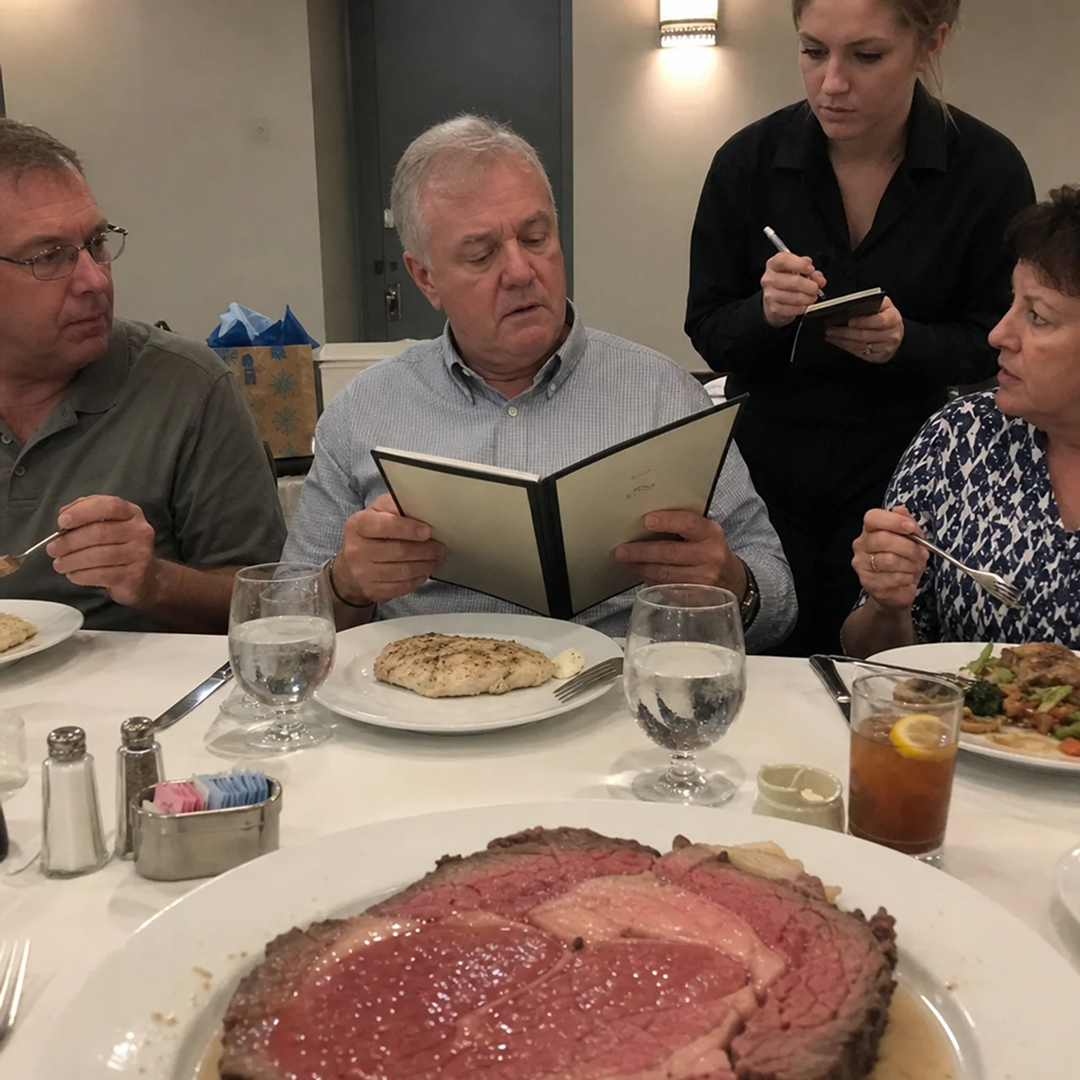
Ran for 21 days, from November 2 to November 23, 2026, the last day Crush saw it.
Run by Daily Wellness Reset on Facebook. Crush is not the advertiser and does not verify its claims. See this ad in Meta's Ad Library(opens in a new tab)
Make your own version of this ad
Crush makes it, launches it in your own Meta ad account, scales the winners and pauses the losers.
About this ad
- Meta Ad Library ID
- 1683035560047465
- Platforms
- Facebook, Instagram, Audience Network, WhatsApp and Threads
- Relaunches
- 0
Ad text
At a retirement dinner, I changed my steak order three times because I could not tell what “watch your protein” meant for my kidneys. The server waited, my coworkers watched, and I chose plain chicken without knowing whether it was actually the right decision for me. Learning my personal food boundaries and Haritaki’s limited support role helped me stop treating every menu like a kidney test. The dinner was supposed to celebrate thirty-one years of work. Instead, I remember the server holding his pen. I remember six people looking at me. I remember hearing myself say three different meals in less than a minute. “The prime rib, please.” Then I looked at the size listed on the menu. “Actually, the salmon.” The server nodded. I remembered the sauce and wondered how much sodium it contained. “Sorry, could I do the chicken instead?” My coworker smiled. “Big decision.” Everyone laughed gently. I laughed too. Nobody at the table knew that I had studied the menu for two days. I had opened it on my phone during breakfast. I had searched the restaurant's nutrition information at lunch. I had compared protein amounts from different websites that did not always agree. I had decided on the salmon before leaving home. Then the smell of steak reached the table beside us, and I wanted what I had ordered at every retirement dinner before kidney concerns entered my life. The problem began with a laboratory result that made eGFR and creatinine feel personal. My clinician did not tell me to panic. We discussed monitoring and the parts of my routine that might need attention. Protein was one subject. The advice was sensible. Avoid treating protein as unlimited. Understand what was appropriate for my condition. Pay attention to the overall eating pattern. I left before translating any of that into a restaurant meal. At home, I could control the ingredients. I could use the same plate. I could make portions look familiar. Restaurants removed those anchors. A steak might be six ounces, twelve ounces, or large enough for two meals. Sauces arrived without labels. Servers asked questions quickly. I worried that requesting too many changes would draw attention to a health issue I did not want to explain. So I began avoiding the decision. If friends suggested a steakhouse, I said any place was fine and then ordered the plainest thing available. If the menu described a special, I stopped listening. If someone asked why I no longer ordered steak, I said my tastes had changed. They had not. Fear had changed the order before taste got a vote. The retirement dinner made the pattern visible. After the server left, the colleague beside me leaned over. “Are you okay?” “Fine.” “You look like that menu asked you to sign a mortgage.” I told her I was watching what I ate because of my kidneys. She did not offer advice. She simply said, “That sounds exhausting.” The word fit. Not frightening. Not tragic. Exhausting. Every meal away from home had become an exam for which I did not have the study guide. When the chicken arrived, it was dry. I ate half. Across the table, someone cut into the prime rib. I did not envy the size of his meal. I envied the ease of his decision. On the drive home, I asked myself what I had actually accomplished. I had avoided steak. I had not learned whether the salmon or chicken fit my needs better. I had not understood the total meal. I had not enjoyed the celebration. Avoidance had reduced one worry while leaving the entire question unanswered. The next morning, I printed the restaurant menu. I circled every place where I had become uncertain. Portion. Protein. Sauce. Sodium. Preparation. Frequency. Then I wrote the question that had been hiding beneath all of them. “What does my kidney-friendly plan look like in a normal restaurant?” That was more useful than “Can a person with CKD eat steak?” The broad question treated everyone as the same patient. My question required context. It required someone to consider my kidney function, nutritional needs, other health factors, and overall diet. It required me to understand that a food could not be judged only by its name. Amount mattered. Preparation could matter. The rest of the day could matter. Medical circumstances mattered most. I brought the printed menu into a nutrition conversation instead of relying on abstract lists. The exercise was practical. We could look at an actual steakhouse menu and discuss how I should evaluate choices within the guidance made for me. I learned what information was useful to ask the restaurant. I learned which decisions I could make in advance. I learned that choosing a different meal could be a positive decision when it followed a reason, rather than a punishment selected through panic. Most importantly, I learned that “individualized” did not mean indulgent. It meant accurate. The correct plan might still limit foods I loved. It might still make a large restaurant steak inappropriate. It might change as my health changed. But at least I would know what the restriction was trying to do. That made it easier to follow without resenting every menu. The new clarity solved the restaurant problem only partly. I still disliked the feeling of waiting between kidney tests while my role consisted mostly of avoiding things. I wanted one proactive support action to investigate. That desire had to be handled carefully because it made bold supplement promises especially attractive. I saw products promising to flush the kidneys. I saw diagrams that made filtration look like a pipe someone could clean with the right capsule. I saw before-and-after laboratory numbers without enough information to know what else had changed. The same skill I was learning at restaurants applied here. Ask what the claim actually means. Ask what evidence supports it. Ask whether the information applies to my situation. That process led me to Haritaki. Haritaki is a name used for Terminalia chebula, a fruit with traditional use and preliminary research involving oxidative stress. Kidney-related experiments have included laboratory and animal models. Those findings gave the ingredient a reason to be investigated for kidney support. They did not prove that Haritaki improves eGFR in people. They did not prove it lowers creatinine. They did not prove it could protect me from an unsuitable meal. I appreciated the narrowness. The product did not need to solve the restaurant menu. That problem belonged to my individualized food guidance. Haritaki needed one clear job. For me, that job was to serve as the proactive daily kidney-support ingredient I had chosen to investigate within the larger routine. I examined TryHaritaki because Haritaki was central to the product and because the preliminary research matched the specific support question I was asking. I did not buy it because an advertisement showed a steak. I did not expect it to create food freedom by changing my laboratory results. I reviewed the ingredient, the evidence category, and the product information. I considered suitability alongside everything else I was already doing. That included asking about any concerns relevant to my health or medications instead of assuming that botanical meant harmless. The product decision and the menu decision remained separate. This separation became the most useful thing I learned. Dietary management has a job. Medical monitoring has a job. A supportive ingredient can have a job. Trouble begins when one is asked to do the work of another. Haritaki could not replace the diet. The diet could not answer whether Haritaki was suitable. One restaurant meal could not explain every movement in a kidney number. Each question needed the right tool. The ordinary proof came at a birthday dinner three months later. It was another steakhouse. I looked at the menu before arriving, but I did not study it like an emergency document. I identified two choices that fit the framework I understood. I wrote down one question about preparation. When the server reached me, I asked it. Then I ordered once. My friend across the table stared at me. “No revisions?” “I'm trying something new.” The table laughed. This time, I laughed without feeling exposed. The meal itself is not important enough to turn into advice for strangers. My choice reflected my plan, not a universal CKD menu. The important change was that I could explain the decision to myself. I was not choosing from fear alone. I was not using Haritaki as permission. I was following one plan and maintaining one support step, each for its intended reason. That clarity carried into other settings. It was especially useful during a work reunion a few weeks later. The group chose a barbecue restaurant with platters large enough for several people. In the past, I would have studied the menu alone, become overwhelmed by the portions, and ordered the smallest item without asking how it was prepared. This time, I called before the event. I asked whether a portion could be smaller, whether sauce could be served separately, and which details the kitchen could confirm. The employee did not need to know my diagnosis. He only needed to answer questions about the food. At the reunion, I chose once. Then I listened to stories about former coworkers instead of reviewing my order in my head. One woman remembered the retirement dinner. “No changing your mind today?” “I did the changing before I got here.” Preparation had replaced public confusion. The event also tested my product thinking. I had taken Haritaki as part of the routine I had investigated. The fact did not enter the restaurant calculation. I did not add protein because I had taken it. I did not relax a boundary because the ingredient had antioxidant-related research. The support action remained steady while the food decision responded to the setting. Keeping those roles separate prevented Haritaki from becoming a superstition. My reason for considering it existed whether I ate steak, fish, chicken, or no animal protein at all. It was a kidney-support ingredient with preliminary research that I had evaluated within my circumstances. The clearer explanation helped when friends asked about it. I gave them the same evidence ladder I used for myself. There is traditional use. There is laboratory and animal research involving oxidative stress and kidney-related models. There is not clinical proof that the product improves kidney filtration in people with CKD. There is a possible support role to investigate. There is no reason to abandon prescribed care or individualized nutrition. Some friends found that answer too cautious. I disagreed. The promise I wanted was not a guaranteed lab result. I wanted the product to be clear about the job I was asking it to do. Support was enough when support was the honest claim. Over time, the printed retirement menu accumulated notes. Beside prime rib, I wrote “portion and total pattern.” Beside salmon, I wrote “ask about sauce.” Beside chicken, I wrote “plain does not automatically mean appropriate.” That final note mattered. I had assumed the least enjoyable option must be the most kidney-friendly. Actual guidance was more specific than punishment. Sometimes I still chose not to eat steak. The emotional win was knowing why. The retirement menu eventually became useful to someone else. A former coworker received a kidney result that worried him and called me before a group dinner. He asked what he should order. I refused to choose for him. Instead, I showed him the questions written beside my three circles. What guidance had he actually received? Which parts of the menu could the restaurant explain? What remained a question for his care team? He sounded disappointed that I did not have a universal safe meal. I understood. A list is easier than a process. But giving him my plate would have repeated the mistake I had made with generic online rules. I told him the Haritaki story the same way. I could share why the ingredient interested me and how I defined its support role. I could not promise what it would do for his kidney numbers or whether it was suitable for him. That boundary made the conversation less exciting and more honest. Later, he thanked me for not turning my routine into his prescription. The comment reminded me that clarity is portable even when the exact meal is not. People can borrow the questions. They cannot automatically borrow the answer. That is also why the final story does not end with a universal steak portion. The portion would make the narrative feel concrete, but it could quietly become advice for someone whose needs are different. The honest takeaway is the decision process. Know the plan that applies to you. Ask the restaurant for facts it can provide. Keep Haritaki in the support role. Leave medical interpretation to appropriate testing and care. That principle kept Native 6 centered on food anxiety rather than drifting into a broad supplement success story. At family cookouts, I no longer hovered beside the food wondering which single item would determine my future. At the grocery store, I stopped reading every warning as if it were written specifically for me. At appointments, I brought examples from real meals instead of nodding at general advice I could not apply. When my needs were unclear, I asked. When they changed, I expected the plan to change too. Haritaki remained an active part of my routine because I understood why it was there. I did not judge it by a dramatic feeling after the first dose. I did not connect it to an invented laboratory result. I did not expect a support product to create a clinical transformation the research had not established. The believable value was having a specific proactive action that did not require me to deny the importance of food guidance or medical care. That mattered emotionally. Restriction alone had made me feel as though kidney care was a series of doors closing. Investigating support gave me a door I could choose to open carefully. The larger payoff was not getting every favorite meal back in unlimited portions. It was getting my ability to make a clear decision back. There is dignity in being able to order dinner without turning the table into a public debate about your health. There is relief in knowing why you chose one meal over another. There is also relief in understanding that one supplement does not need to carry the whole burden of hope. If you want to review the TryHaritaki page I used, it is here: https://www.tryharitaki.com/pages/kidney Read it for Haritaki's support rationale. Keep laboratory and animal research in the category where it belongs. Do not translate that research into a guaranteed human kidney outcome. Do not let the product overrule the dietary boundaries made for you. Use it as a starting point for a better support question. The printed retirement menu is still in my desk. Three meals are circled. Prime rib. Salmon. Chicken. Beside them, I wrote the question I should have asked before the dinner. “What fits my plan, and why?” That question did more for my peace around food than choosing the plainest item ever did. The next time a server held a pen beside my table, I did not feel tested. I felt prepared.
Where the ad sends people
tryharitaki.com
Ayurveda's "King of Herbs"
Buy 2 Get 1 FREE this week
Shop now: tryharitaki.com(opens in a new tab)