Homestead Ready
Homestead Ready Facebook ad: “If you're a parent or grandparent, please watch this”
Ran for 12 days, from August 13 to August 25, 2026, the last day Crush saw it.
Run by Homestead Ready on Facebook. Crush is not the advertiser and does not verify its claims. See this ad in Meta's Ad Library(opens in a new tab)
Want an ad like this for your product?
Crush makes new ad images for your product from this ad: your logo, your product photo, your offer.
Trials from $19.95 USD, then $79.95 USD a month. Cancel anytime.
About this ad
- Meta Ad Library ID
- 1686833872864602
- Platforms
- Facebook, Instagram, Audience Network, Messenger, WhatsApp and Threads
- Relaunches
- 0
Ad text
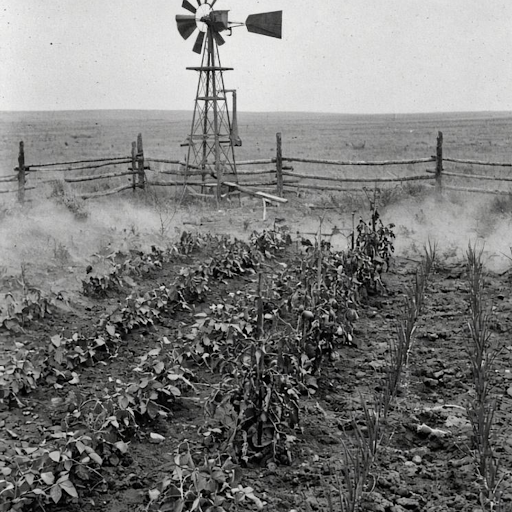
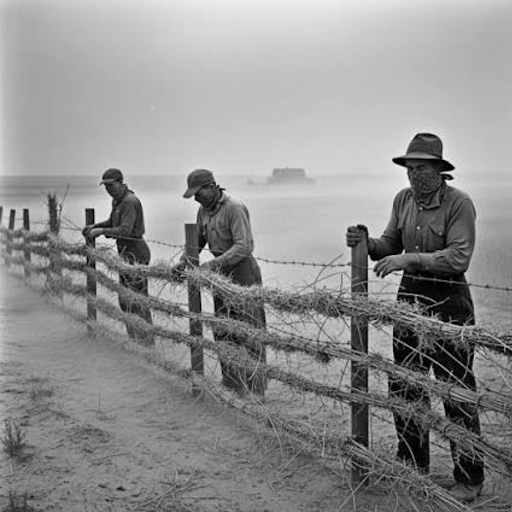
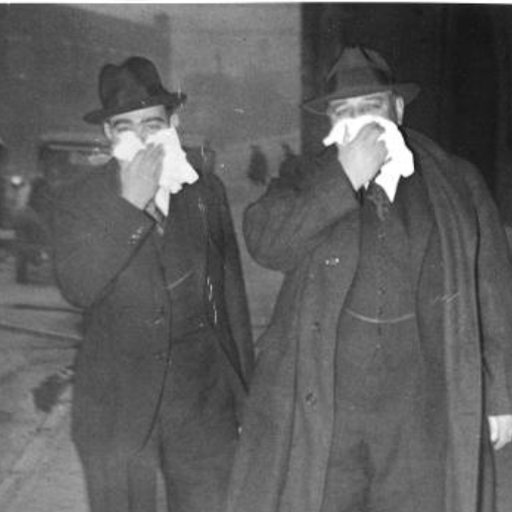
Western Kansas, 1935. The sky isn't really a sky anymore. It's a wall. A brown, choking wall stretching from one end of the horizon to the other... and it's moving toward the house. Inside, a family has pulled the curtains shut. There isn't much they can do. The windows are covered. The doors are pushed tight against their frames. A wet cloth has been stuffed underneath the door to keep the dust from coming through. But it still gets in. It gets into the kitchen. Into the bedrooms. Into the cupboards. Into the lungs. And sitting quietly on the mantel is something that looks almost worthless. A mason jar. Filled with dark soil. Nobody throws it away. Nobody opens it. Nobody even touches it unless they have to. Because to that family... it isn't just dirt. It's what they had left. The Dust Bowl wasn't simply a story about bad weather. The Plains had been changed long before the worst storms arrived. During the farming boom of the 1920s, enormous areas of native prairie were broken up and planted with wheat. The prairie grasses had evolved to survive the Plains. Their roots ran deep. They held the soil together through wind and drought. But when millions of acres were converted into cropland, that natural protection was dramatically reduced. Then the drought came. And the wind came after it. And suddenly there was nothing standing between the soil and the sky. The storms became so enormous that people called them black blizzards. You could look outside in the middle of the afternoon... and see darkness where the sun should have been. Dust came through cracks in houses. It coated furniture. It filled machinery. It covered fields that had once produced wheat. Children sometimes had to be kept indoors because the air itself had become dangerous. Farmers wore goggles and masks. Some families placed wet sheets over windows. Others watched helplessly as the land they had spent years working simply disappeared into the wind. And then came one of the most famous storms of the entire disaster. April 1935. A massive dust storm swept across the Plains. It became known as Black Sunday. The photographs from that era don't look real. They look like the end of the world. But they weren't fiction. They were photographs. And the people standing inside those houses weren't watching history happen from a distance. They were living it. For thousands of families, the question stopped being: "How do we grow this year's crop?" It became: "Can we stay here at all?" Around 2.5 million people eventually left the Dust Bowl states during the 1930s. Families packed their belongings into cars and trucks. Some sold their farms for almost nothing. Some abandoned homes they had spent years building. Some simply drove west because there was nowhere else to go. The migration became one of the largest in American history at the time. But here's the part that gets forgotten. A farm doesn't only depend on land. It depends on what you have left to plant. Because when a season fails... you can lose your crop. When another season fails... you can lose your savings. But if you don't have seed? You may not even get the chance to try again. Back then, saving seed wasn't some special survivalist hobby. For many farming families, it was simply part of farming. You harvested. You selected the best plants. You kept some of the seed. You dried it. You stored it. And when the next season came... you had something to put back into the ground. That doesn't mean a jar of seed magically saved families from the Dust Bowl. The reality was much harder than that. Millions still lost farms. Millions still left. And many people had almost nothing. But the principle was simple. If you had seed saved from a successful harvest... you still had a starting point. You didn't have to begin from zero. And that's why that jar on the mantel matters. Imagine opening that cupboard years later. Maybe the shelves are nearly empty. Maybe the family has eaten almost everything they stored. Maybe the fields outside are still brown. But sitting there is a small packet of something that can become food again. Not food today. Potential food. A second chance. And that is the idea we've almost completely forgotten. Because today, most of us don't think about where next year's seed is coming from. We buy a packet. We plant it. We harvest. And when the season ends... we throw the empty packet away. Next spring, we buy another one. And another. And another. But there's a question you can ask before buying seed. A very simple one. Can it come back? Because not all seeds are the same. Hybrid varieties can be excellent for growing, but saving their seed doesn't guarantee that the next generation will reproduce the same characteristics as the original plant. Open-pollinated varieties are different. They can be saved and replanted, provided they're properly grown, harvested, stored, and isolated when necessary. And heirloom varieties are generally open-pollinated varieties that have been preserved and passed down through generations. That's why the words matter. Open-pollinated. Heirloom. Non-hybrid. And if you're buying a seed collection, there's another thing I'd want to see. The actual variety list. Not just a picture of a giant garden. Not just "thousands of seeds." The varieties. The number of vegetables. The type of seed. Something you can actually check before you spend your money. That's exactly why we built the Garden's Pulse Heirloom Seed Vault. Not as some emergency fantasy. Not because we think the world is ending tomorrow. But because we believe a garden should be able to give you more than one season. Inside the Garden's Pulse Heirloom Seed Vault are 35 vegetable varieties, all open-pollinated. The full variety list is published so you can see exactly what's included before you buy. And there are more than 16,000 seeds in the collection. That's enough to give a beginner plenty of room to experiment... plant a little more... lose a few plants... learn... and try again. And if you've never grown a garden before? That's why we included the Beginner's Planting Guide. Because saving seed is pointless if you don't know how to grow the plant in the first place. There's also a Garden Planner with planting dates, harvest windows, and a seed-saving schedule. And honestly... that last part is what makes this different. Because the goal isn't just to give you a box of seeds. The goal is to help you understand how to turn one season into the next. Plant. Grow. Harvest. Save. Store. Replant. And repeat. That's the old idea we're bringing back. You don't need 10 acres. You don't need to become a farmer. You don't even need to build a perfect garden. Start with a small bed. Grow something you actually eat. Learn what works in your soil. Let one or two plants mature long enough to produce seed. Save some. Label it. Store it properly. Then plant it again. That's when something changes. Because the first harvest is something you grew. The second generation is something you carried forward. And eventually... you have a jar. Not a jar of dirt. Not a jar of something you bought. Your jar. Your harvest. Your seed. Your next season sitting on a shelf. That's what Garden's Pulse is really about. Not fear. Not panic. Not pretending we can predict the next disaster. Just having something useful before you need it. Because nobody in 1930 knew exactly what was coming. Nobody knew which storm would be the one that destroyed their field. Nobody knew which harvest would be their last. And that's the problem with preparation. You don't get to prepare after the thing happens. You prepare while everything still feels normal. Right now, the shelves are full. The grocery stores are open. Seed racks are everywhere. You can buy almost anything with a card and walk out with a receipt. Which makes this the easiest time to start. Not when you're desperate. Not when you're already out of options. Now. Garden's Pulse is currently offering the Heirloom Seed Vault at half price. And you get 90 days to decide if it's right for you. If you're not satisfied, there's a full refund. The guides stay yours regardless. And because the seeds are packaged in batches, availability can change when a batch sells through. So don't think of this as buying a box of seeds. Think of it as putting something on the shelf that can potentially come back next season. And the season after that. Because the people who lived through the Dust Bowl didn't have the luxury of knowing what was coming. Neither do we. The difference isn't knowing the future. The difference is what you already have when the future arrives. So plant a small bed. Grow something. Save some seed. And put a little of your own future... on the shelf 👇 https://gardenspulse.com/products/gardens-pulse-seed-vault-kit-1 P.S. — The jar on the mantel is the part of this I can't put down. It was worth nothing on any ledger. You couldn't eat it, you couldn't sell it, and it took up an inch of shelf. It was also the only thing in that house that could turn into a field again. Every generation before ours understood what that jar was for. Ours is the first that mostly doesn't 👇 https://gardenspulse.com/pages/page-8-advertorial P.P.S. — Before you spend a dollar with anybody selling seed, ask for the list. Not the seed count — the actual varieties, in writing, before you pay. "Thousands of seeds" is a number, not an answer, and a company that won't print the list is telling you something. All 35 Garden's Pulse varieties are published in the open where you can read them first. Go read them 👇 https://gardenspulse.com/pages/adv1 P.P.P.S. — You don't have to believe any of this to test it. One small bed, three packets, a corner of the yard. Watch what comes up, leave one or two plants standing long enough to make seed, and put a labeled jar on a shelf. That's the whole thing. Nobody who ever needed that jar got to choose the week they'd need it 👇 https://gardenspulse.com/pages/page-15-verification
Where the ad sends people
gardenspulse.com
If you're a parent or grandparent, please watch this 👆
35 heirloom varieties — 100% non-GMO and open-pollinated 16,000+ seeds in one vault — enough to plant a full garden Save and replant forever — never buy seeds again Airtight, moisture-resistant packaging with 10-year freshness guarantee
Shop now: gardenspulse.com(opens in a new tab)