Wellness Journal UK
Wellness Journal UK Facebook ad: “The 3 Stages of Neuropathy”
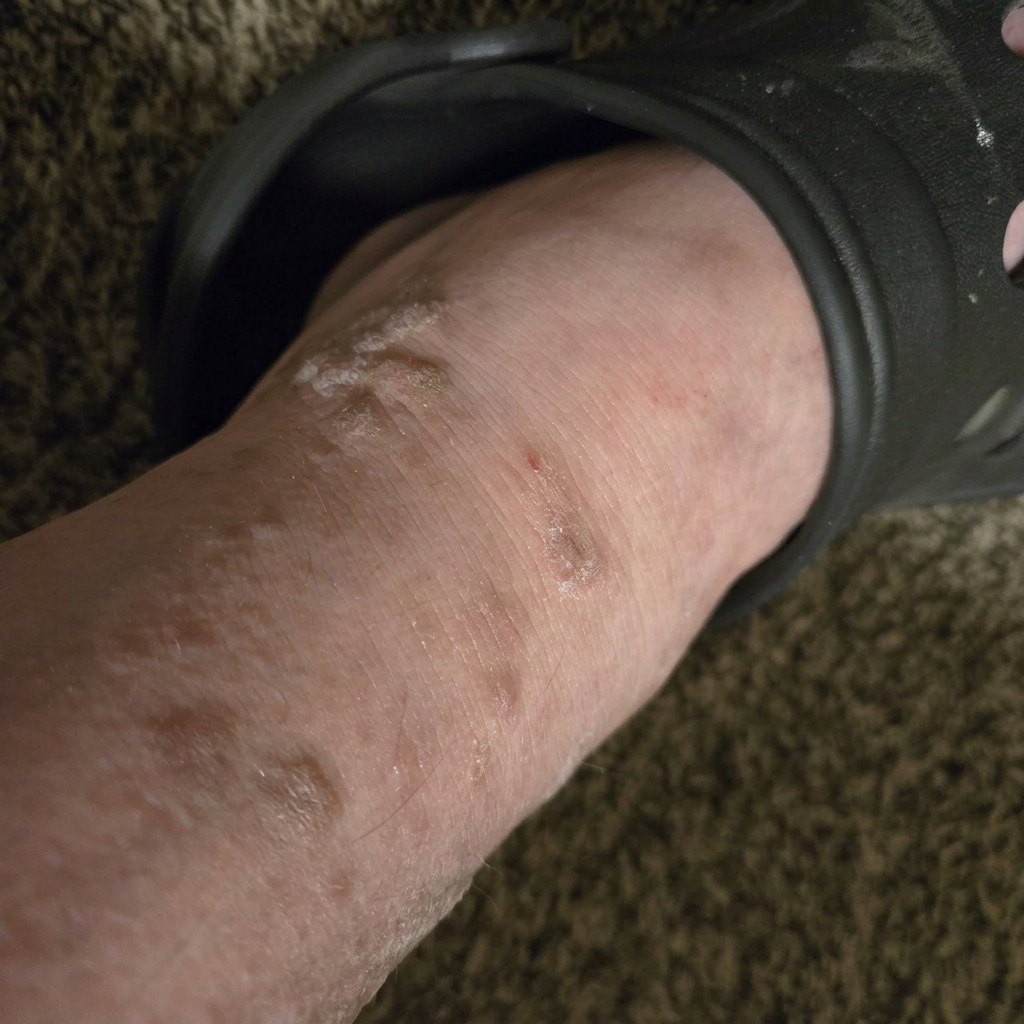
Ran for 14 days, from July 20 to August 3, 2026, the last day Crush saw it.
Run by Wellness Journal UK on Facebook. Crush is not the advertiser and does not verify its claims. See this ad in Meta's Ad Library(opens in a new tab)
Want an ad like this for your product?
Crush makes new ad images for your product from this ad: your logo, your product photo, your offer.
Trials from $19.95 USD, then $79.95 USD a month. Cancel anytime.
About this ad
- Meta Ad Library ID
- 1687541299175718
- Platforms
- Facebook, Instagram, Audience Network, Messenger, WhatsApp and Threads
- Relaunches
- 0
Ad text
I need to show you something that most doctors never explain to their patients. It’s a progression chart. Three stages. And if you’re currently experiencing burning feet, you need to know which stage you’re at — and what happens if you do nothing. I’m Dr. Sophie T., a neurologist with over 15 years of experience. I’ve seen hundreds of patients go through these stages, and I’ll be honest with you about what I’ve learned. Stage 1 begins at the toes. Usually, at first, it’s just a tingling sensation. Maybe a slight burning that comes and goes. Easy to dismiss. “Probably nothing,” patients tell me. “I just wanted to get it checked out.” Blood tests come back normal. Nothing unusual. So I said what I had learned: “We’ll monitor it. Come back if it gets worse.” That was my mistake. Because Stage 1 doesn’t stay Stage 1. Stage 2 is when the burning spreads over the entire foot. The tingling turns into constant burning. It wakes you at night. Certain shoes become unbearable. Walking hurts. Standing long enough to cook dinner — simply isn’t possible anymore. Most of my patients return at this stage. Six months, sometimes a year after Stage 1. They had hoped it would resolve on its own. It didn’t. And if we don’t address the cause in Stage 2, they end up in Stage 3. Stage 3 is when it starts climbing. The burning spreads from the feet up to the ankles. Then the calves. And what worries patients the most: their hands begin to tingle. The same symptoms that started in the feet a year earlier now appear in the fingers. This is how neuropathy works. And it’s predictable. Your longest nerves give out first — those that run from the spine down to the toes. They are furthest from the heart and brain, making them most vulnerable when the body can no longer protect and repair them. As these nerves begin to die, the damage moves upward. From toes to feet. From feet to ankles. From ankles to calves. And eventually to the hands. Until you can no longer feel the ground beneath you, can’t trust your own balance, can’t drive anymore, can’t stand long enough to cook — and a single fall could leave you wheelchair-bound forever. Earlier in my career, I didn’t fully understand this. I was trained to treat symptoms with medications like Gabapentin or Lyrica — to make the burning more bearable. But I didn’t stop the progression. I only reduced the pain while my patients’ nerves continued to deteriorate. Then I started researching oxidative stress and nerve cell starvation. And that changed everything: Your nerves aren’t just “damaged.” They’re being constantly attacked — by oxidative stress, chronic inflammation, and the breakdown of the myelin sheath, the protective layer surrounding every nerve fibre. And Gabapentin does absolutely nothing to halt any of that. Imagine the myelin sheath like the rubber coating around an electrical cable. When it breaks down, nerves send faulty signals. That’s the tingling in Stage 1. When more myelin breaks down and inflammation increases, the tingling becomes burning in Stage 2. When nerves completely die from starvation and oxidative damage, the burning turns into numbness in Stage 3. And it spreads because the damage isn’t confined to one spot — it’s everywhere in the body. Every nerve suffers, with those furthest from the core breaking down first. Then it climbs up. About three years ago, I noticed something. Some patients didn’t worsen. Their symptoms remained stable. What were they doing differently? They tackled the causes — oxidative stress, inflammation, myelin breakdown, and energy deficiency in nerve cells — all at once. One patient, Mark, came in with Stage 1 symptoms — tingling in his toes. Blood tests normal. I said what I always said: “We’ll watch it.” But Mark had done his own research. He asked me about Alpha-Lipoic Acid — the world’s most studied antioxidant for nerve regeneration. Specifically about the clinical dose. I knew about ALA but was sceptical of supplements. I said it probably wouldn’t hurt. He started taking a comprehensive nerve formula with 600mg of Alpha-Lipoic Acid plus therapeutic doses of B vitamins and other nerve-supporting ingredients. Six months later, he came for a check-up. The tingling in his toes hadn’t spread. On the contrary — it had noticeably reduced. He no longer woke up at night. “I thought it would only get worse,” he said. That was a turning point for me: We treat neuropathy as if it inevitably gets worse, when in fact it’s a reversible nerve starvation. I delved deeper into research. Several studies — especially from European university clinics — show that 600mg of Alpha-Lipoic Acid daily, combined with B vitamins and therapeutic-level anti-inflammatories, can slow or even stop progression in many patients. What matters: Be early, while there are still healthy nerves to save. Take 600mg of Alpha-Lipoic Acid — not the 100–200mg found in cheap supplements. Clinical studies show anything under 300mg is almost useless. Just enough to print on the label. Combine with Methylcobalamin B12 to repair the myelin sheath, Benfotiamine to block substances that destroy nerve cells, circulation boosters to deliver nutrients to starving nerves, and anti-inflammatories to stop oxidative stress. And use a formula where the ALA really reaches the nerve cells. Most antioxidants are either fat or water-soluble. ALA is one of the few that’s both — meaning it reaches nerve tissue where other supplements simply don’t. After Mark, I spoke differently to patients presenting with Stage 1 symptoms. Instead of “we'll monitor that,” I said: “Let’s tackle what’s destroying your nerves before it spreads to Stage 2.” The results speak for themselves. Patients who catch it at Stage 1 and consistently take the right formula don’t just stabilise — they actually improve. The tingling decreases. The burning eases. Sensation returns to areas they had written off. It doesn’t just stop. It reverses. Even Stage 2 patients see improvements. The burning lessens. They sleep through the night again. And crucially — it doesn’t progress to Stage 3. One patient, Petra, is a good example. She came in at Stage 2 — her feet burned, keeping her awake for eight months. Her previous GP had prescribed 900mg of Gabapentin. The burning persisted. She’d gained about 26 lbs and couldn’t think clearly. She started the formula I now recommend to most of my neuropathy patients. Last week — two months later — she told me the burning had decreased by about 60 to 70 percent. She sleeps soundly. Her balance is better. And the tingling in her fingertips hasn’t worsened — it’s even receded. “I wish I’d started this when the tingling began in my toes,” she said. I think so too. The formula my patients take is NeuroPulse™. It contains the full therapeutic dose of 600mg Alpha-Lipoic Acid — exactly what European clinical studies used — plus 17 other nerve-healing ingredients at therapeutic levels. Methylcobalamin B12 for myelin repair. Benfotiamine to block nerve-damaging substances. L-Carnitine for nerve cell energy. Magnesium to calm overactive nerve signals. I have no financial ties to the company. I recommend it because I’ve seen it halt deterioration in dozens of patients who began early enough. The difference compared to cheap Alpha-Lipoic Acid bottles from pharmacies is huge. Most contain 100 to 200mg ALA — a fraction of the clinical dose. No other active compounds. No B vitamins at therapeutic levels. No circulation boosters. No anti-inflammatories. Just a single, underdosed ingredient. That’s not nerve regeneration. That’s wishful thinking. NeuroPulse™ is also tested by independent labs in EU-certified GMP facilities. Every batch checked for purity, potency, and exact dosage. No fillers. No guesswork. I can tell my patients exactly what they’re taking because the tests prove it. I can’t promise it works for everyone. Some patients are too far gone. But for people in Stage 1 or early Stage 2 who stick with it for at least 3 to 4 weeks, I’ve seen good results. If your feet burn and it worsens or spreads — especially if your blood tests keep coming back “normal” — you need to know these three stages and where you stand. Stage 1 can be stopped. Stage 2 can often be reversed. Stage 3 is much more difficult. You have less time than you think. NeuroPulse™ is currently available at 50% off with fast delivery. But it regularly sells out. If the link below still works, it’s still in stock. I recommend multiple packs — 60 to 90 days of consistent use delivers the best results. — Dr Sophie T., Neurologist, 15+ years experience
Where the ad sends people
https://healthbloguk.com/NeuroPulse/how-this-68-ye...
The 3 Stages of Neuropathy
How this 68-year-old retired teacher finally stopped Gabapentin after 3 years – thanks to this revolutionary nerve protection supplement
Learn more: healthbloguk.com(opens in a new tab)