Sara - Better Over 50
Sara - Better Over 50 Facebook ad: “Transform your look with 3 sticks”
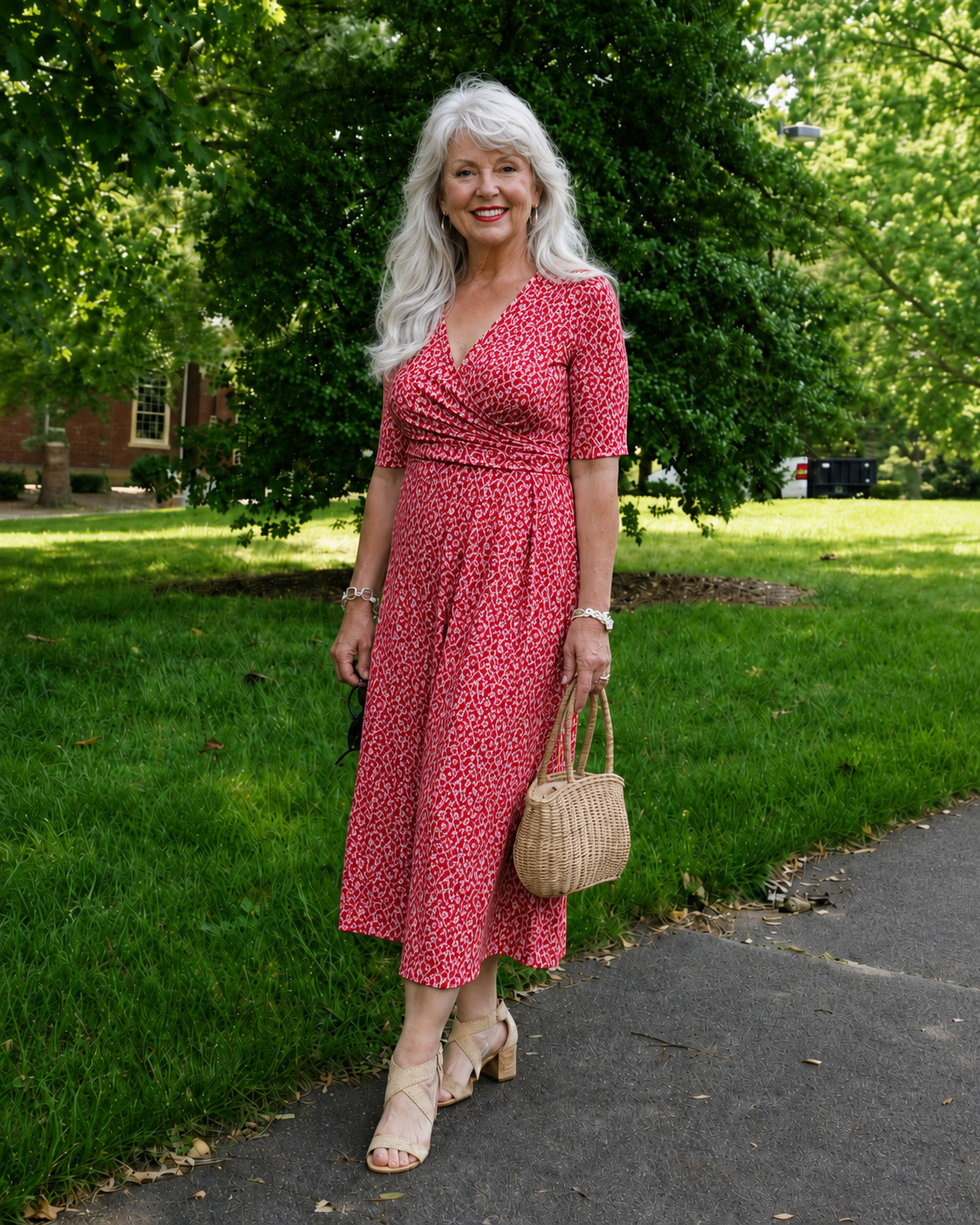
Ran for 62 days, from July 22 to September 22, 2026, the last day Crush saw it.
Run by Sara - Better Over 50 on Facebook. Crush is not the advertiser and does not verify its claims. See this ad in Meta's Ad Library(opens in a new tab)
Want an ad like this for your product?
Crush makes new ad images for your product from this ad: your logo, your product photo, your offer.
Trials from $19.95 USD, then $79.95 USD a month. Cancel anytime.
About this ad
- Meta Ad Library ID
- 1688582495763470
- Platforms
- Facebook, Instagram, Audience Network, Messenger and Threads
- Relaunches
- 0
Ad text
Nobody tells you that one day you will stop wearing your favorite dress. And nobody tells you that you won't remember deciding. There will be no conversation. No moment. It will simply stop coming off the hanger, one year, and then the next year, and then it will just be a red shape at the end of the closet that you move your hand past. I am seventy-four years old, and I want to tell you about my dress, and about what my oldest friend said to me over pancakes last May, because I have thought about it every single day since. My name is Linda. I live outside Grand Rapids, Michigan, with my husband, Ray. This July, we will have been married fifty years. For thirty-one years I worked the front desk at a dental office in town. I was the first face people saw when they walked in, scared, and the last face they saw when they left, relieved. I retired twelve years ago. We have two sons, five grandchildren, and — as of this past March — one great-granddaughter, who has Ray's ears and no idea yet what she's done to us all. Now. The dress. I bought it in 1979, for our third anniversary, at a shop downtown that has been four different things since. Red. Not a shy red. Ray's face when I came down the stairs in it was such an event that I wore it — or its replacements, because there have been four red dresses over fifty years, each one bought when the last one gave out — to every anniversary dinner for four decades. Ray never called it by a color. He called whichever one was current "the dress." As in: are you wearing the dress? As in: forty years of that man standing at the bottom of the stairs, jingling his keys, waiting for the dress. About eight years ago, without any conversation I can point to, the dress stopped coming off the hanger. I told him red was a lot at my age. I told him I'd be more comfortable in something quieter. I wore a nice cardigan to our anniversary dinner. Then another one, the next year. Then six more years of nice cardigans. He never said one word about it. I understand now what that silence was costing him. And here is the thing I need you to understand: the dress was not the only resignation. It was just the biggest one. Nobody tells you that getting older is not one event. It is a series of small, quiet surrenders, and you make almost all of them alone, and you do not remember deciding a single one. For forty years, I wore red lipstick. Every day. It started in 1974 because Ray said it made me look like Ann-Margret and I never corrected him. It was the thing about me — patients' children drew pictures of me and there was always a red mouth, and when I retired, the office put a pair of red lips on my cake in frosting. Then, somewhere in my early sixties, the red started to wander — creeping into the little lines around my mouth, feathering, they call it, though nobody told me that word either — and I went to a softer color, and then a softer one, and then, one day I could not name for you, I stopped. There is a tube of my red in the back of my bathroom drawer right now. I have not worn it in twelve years. I have also never once thrown it away. Nobody tells you that you will keep the tube. I stopped wearing my hair down. I told myself the clip was practical. I stopped standing in the front row of family pictures. I found reasons to be the one holding the camera. There are whole years of this family — birthdays, christenings, a wedding — where I exist mostly as a shoulder at the edge of the frame. And then, last March, on a Tuesday, it all arrived at once. I walked past a store window downtown — outside the Penney's that is not a Penney's anymore — and I saw a woman in the glass, and I felt a small pang of sympathy for her. And then I realized she was me. I stood on that sidewalk for a moment. Then I went home, and I did not tell anyone, and I hung my coat next to the red shape at the end of the closet and did not look at it. Nobody tells you about that either. There is one more thing, and it is small, and it is the one that makes my throat tight to write down. Ray has carried the same photograph of me in his wallet since 1975. I am twenty-three in it. Red mouth, hair down, laughing at something off to the side. He took it at his brother's lake house with a camera he'd bought that morning. For about the last fifteen years, every time that wallet fell open on the kitchen counter, I would tell him the same thing. Ray, replace that old thing. I don't look like that anymore. And every time, for fifteen years, he would close the wallet and say the same word back. No. I used to think he kept it because he was sentimental. I understand now that he kept it because he was waiting. Last May, a message showed up on my Facebook. Dottie. My best friend since 1968. Maid of honor at my wedding. We raised babies across a chain-link fence from each other for eleven years before her family moved to Ohio, and then it became Christmas cards, and then it became less than that. Nobody tells you that twenty years can go by between best friends, and that neither of you will remember deciding that either. The message said: Linda Kowalski, I am going to be in town Memorial Day weekend and if you do not have brunch with me I am driving to your house. We met on the Saturday at the diner out on 28th Street, in the building where the Bill Knapp's used to be, which is how we gave each other directions, because that is how old we are. I saw her through the window before she saw me, and I knew her instantly, across the parking lot, after twenty years. Dottie is seventy-five, and she looked like herself. Not younger. I want to be careful about this. Not like she'd had anything done. Not done-up — it was eleven in the morning at a pancake house. She looked like Dottie. Present. Lit from somewhere. Seventy-five and entirely, recognizably her. And I stood at the hostess stand and realized I could not remember the last time anyone could have said that about me. We sat at a corner booth for two and a half hours. The waitress gave up on us and just left the coffee pot. We talked about our kids, our grandkids, my great-granddaughter, her hip, our husbands. We laughed until the table next to us looked over. Twenty years folded up like they were nothing, the way they do with the real ones. And at some point — maybe she caught me looking at her the way you look at someone when you're trying to figure out what they know that you don't — I heard myself say the thing out loud that I had never said to anyone. I told her about the store window in March. And then I told her about the dress. The whole thing. The stairs. The keys. The cardigans. His silence. Dottie put down her fork. She reached across that booth and took my hand — my oldest friend, over the syrup and the coffee cups — and she said the sentence. She said: Linda. You didn't lose that woman. You've just been leaving her home. I am not ashamed to tell you that I cried right there in a corner booth at eleven-thirty in the morning, over pancakes, at seventy-four years of age, and Dottie handed me a napkin from the dispenser and kept right on holding my hand, and the waitress, God bless her, refilled the coffee and asked no questions. Then Dottie told me what she meant. She told me that a few years ago she had been where I was. Camera-holder. Back row. A closet full of quiet colors and a drawer full of makeup that had stopped working, because everything she put on her face either sank into the lines by noon or made her look, in her words, like someone's aunt at a costume party. Too much, or nothing. Those had been her two settings too. She told me she'd finally cleared out the whole drawer — foundation, powders, all of it — and replaced everything with three little sticks. She was careful about it, the way real friends are careful. She said: I'm not telling you it's magic, honey. It's makeup. It's five minutes with my fingers in the morning. But it's the first makeup I've ever owned that was made for this face — the one I have now, not the one I had at your wedding. It's cream, it goes on sheer, and it stays where I put it. Nothing sinks. Nothing wanders. And I'll tell you the part that took me a while to believe: I wear it on bare skin. No foundation under it. Nothing. Less on my face than I've worn since Nixon, and I have never in my life gotten more compliments. And then she smiled, and she said the other thing, the small one, the one that finished me. She said: And Linda — I wear red again. I looked at her mouth. Red. Soft, worn-in, Saturday-morning red. Sitting exactly where she'd put it, two and a half hours and one stack of pancakes into the day. I said: which lipstick is that? And Dottie laughed — that laugh, the one from across the chain-link fence — and she said: Honey, it's not lipstick. It's the blush. Same stick. Cheeks first, then lips. Fifty years of makeup counters and the best trick I ever learned came free with the stick. I asked her what they were called. She wrote it on the back of the receipt with a pen from her purse, because that is who we are. EarthsCure. Three sticks. A bronzer, a blush, a highlighter. Warmth, color, light. We hugged in the parking lot for a long time. Two women in their seventies, outside a pancake house, holding on. Nobody tells you those hugs get longer as you get older. Now you know why. I went home and I read about it, because I am not a woman who orders things off the back of a diner receipt without looking into them. What I learned made me angry, honestly, more than anything else. The makeup in my drawer — the makeup in your drawer — was built, tested, and photographed on young skin. Smooth skin. Skin without a single line for anything to sink into. Powder bronzer goes muddy and patchy over skin with texture. Powder blush sits down inside the creases by noon and stays there, drawing a map. And the shimmery highlighters they sell — the glittery ones — light up every line on a seventy-year-old face like frost on a windshield. That is why the drawer stopped working. That is why my red started feathering all those years ago. None of it failed. None of it was ever built for the face it ended up on. And the industry's answer, for fifty years of counters, was always the same word: more. More coverage. More foundation to smooth it. More powder to set the foundation. More product on top of product, sinking into more lines, until a woman looks in the mirror and decides the problem must be her face — and quietly hands over the lipstick, and the front row, and the dress. Nobody at any counter ever told me the truth, so I will tell it to you. The answer was never more. The answer was less, in the right three places. EarthsCure builds the other way. All three sticks are cream, so they melt into skin and move with it instead of sitting on top, cracking in the lines. All three go on sheer — you decide the amount with your own fingers. And all three were made for skin over forty from the very first batch — and I am a fair distance past forty, and it holds. You wear them on bare, moisturized skin. No foundation. Nothing to settle by noon, because there is nothing there to settle. Bronzer where the sun used to go — the edges of your face, under the cheekbones — because warmth is the first thing a face loses and the last thing anyone thinks to put back. Blush on the cheeks, for color. Highlighter at the places a face dims first — under the eyes, the inner corners. Warmth, color, light. Fingers. Five minutes. It will never look dramatic in an advertisement. That is the whole point of it. You cannot see the makeup. You can only see the woman. I ordered it on a Thursday night at the kitchen table while Ray watched the Tigers lose. I did not tell him. The box came the following week. The first morning, I stood at the bathroom mirror and did what Dottie told me. Moisturizer. Then the bronzer, thin, with my fingers, where the sun would go. The blush on my cheeks. A little light under the eyes, at the corners. No foundation. I want to be honest: skipping the foundation felt, for about ninety seconds, like leaving the house without pants. Fifty years of habit does not go quietly. It took about six minutes, because I was learning. And then I looked up. I want to tell you exactly what happened, and I want to tell it plainly, because this is the part I would want someone to tell me. There were no trumpets. I did not look forty. I did not look "transformed," and if I had, I would have washed it off, because that is the other fear and I know it well. What happened was quieter than that, and bigger. I looked in the mirror, and I recognized her. First try. No three seconds. The woman in the glass was seventy-four years old, wearing less on her face than she had worn in fifty years, and she was, unmistakably, immediately, me — me on a good morning, me after a real night's sleep, me the way I am in my own head, which is a place I had not seen in the mirror in a long, long time. I stood at that sink until the coffee maker beeped downstairs. Then I picked up the blush stick, and I did Dottie's trick. Cheeks first. Then lips. Red. Well — worn sheer, in cream, which on me reads as my red, grown up. It stayed where I put it. All day. I kept checking, out of forty years of habit, and every time, it was simply there, sitting quietly in place like it had never heard of wandering. I found the old tube in the back of the drawer that night. I didn't throw it away. I stood it up in the front. Retired, with honors. Nobody tells you that you can get a thing like that back. So I am telling you. Over the next couple of months, the small surrenders started coming back in, one at a time, in reverse. I wore my hair down to my granddaughter's graduation party. My daughter-in-law did a double-take in the driveway and said, Linda, your hair! — and I said, I know, like it was nothing, and it was not nothing. In June, my great-granddaughter was christened. Four generations of this family stood up for a photograph on the church steps. I did not hold the camera. I stood in the front row, and I held the baby, and when that picture went around the family text chain that night — four generations, and me at the front of them in the sunshine — I did not say one single word against the woman in it. I have it framed now, in the hallway. I walk past it every day on purpose. I want to be honest with you here, the way Dottie was honest with me. It was not only the sticks. Something came loose in me in that corner booth, when my oldest friend held my hand over the coffee cups and said out loud the thing I had been carrying alone. I started walking in the mornings again that spring. Dottie and I talk every Sunday now, and having her back is its own kind of color coming back into things. There were several things changing at once, the way there always are when a woman stops fading alone. All I know for certain is this: I replaced a drawer full of products built for a face I don't have anymore with three sticks built for the face I do, and the woman in the store window came home. That is the honest version. I would not give you a shinier one. And now I have to tell you about July, because I promised myself I would tell this part even though I cannot type it with dry eyes. Our fiftieth anniversary. The golden one. The boys threw us a party — the whole family, the backyard, the good tablecloths. Three days before, I drove to the mall — the good one, the one that still has stores — and I bought a red dress. The fifth red dress. Eight years after the fourth one went quiet on its hanger. The afternoon of the party, I got ready at the bathroom mirror. Five minutes. Warmth, color, light. The blush on my lips. My hair down. The good earrings. And the dress. I came down the stairs, and Ray was standing in the kitchen with his keys — seventy-six years old, in the good shirt our sons make fun of — and he looked up, and he went still. Fifty years of that man waiting at the bottom of the stairs for the dress, and I had forgotten what his face does. He didn't say I looked nice. He said: There you are. Three words. Fifty years. There you are. And then he did something I did not expect. He took out his wallet — the same wallet, the falling-apart brown one — and he opened it to the photograph. Twenty-three. Red mouth. Laughing at the lake. He looked at the picture. He looked at me. And he said: Now can I take the new one? He took it right there in the kitchen, on his phone, with fifty people waiting in a backyard across town. Me at seventy-four, red dress, red mouth, laughing at something off to the side, because he had just said keys, wallet, spectacles, testicles under his breath and I could not help it. He had it printed at the drugstore that week, wallet-size. He did not replace the old one. He put the new one in front of it. The two of them together, back to front. Fifty-one years apart. Both of them in red. Both of them me. I found the wallet open on the counter a few nights later and I stood in my kitchen and cried over a billfold like a fool, and I would do it again right now. Nobody tells you your husband has been waiting at the bottom of the stairs the whole time. He has. I am telling you all of this because I think you might be where I was in March. I think there might be a dress at the end of your closet that you move your hand past. And maybe for you it isn't a dress. Maybe it's the lipstick. The earrings. Your hair down. The front row of the picture. You know what yours is. You just felt it, reading this. That little catch. That's the one. I do not know you. I don't know your face or your coloring or your mirror, and faces are different — some women love this the first morning, some take a week to find their amount, some will decide it isn't for them, and that's allowed. At our age we have earned the right to decide things for ourselves. But here is how I think about EarthsCure now, in the words I would actually use. It is three sticks. A bronzer, a blush, a highlighter. Warmth, color, light. It is cream, so it moves with your face instead of sitting in the lines. It is sheer, and it goes on bare skin — no foundation, nothing underneath to cake or settle — so what people see is you, turned back up. Not product. It is not a miracle. It will not make you young. It will make you recognizable. To the mirror. To the wallet. To yourself. At our age, that is the whole prize. The company has a ninety-day guarantee. Any reason at all. You can use the sticks halfway down and simply change your mind, and they refund you. No pictures, no proving anything to anybody. That is the entire policy — a small-company policy, the kind companies had back when companies answered the phone. They make it in small batches, and there are stretches when shades sell out. I say that not to hurry you — nobody should be hurried at our age, we've earned that too — but so that if you go and yours is gone for the moment, you'll know why. That is all I have. Thank you for reading an old friend's handwriting off the back of a diner receipt, secondhand. I hope something in here found you. — Linda P.S. I keep thinking about all the things nobody tells you. Nobody tells you the dress will stop coming off the hanger. Nobody tells you the surrenders are quiet, or that you make them alone, or that you won't remember deciding. But nobody tells you the other part either, so I will. Some of what age took, it did not take. You handed it over. One small thing at a time. The dress, the lipstick, the front row. And what was handed over can be picked back up. Not all of it. I am seventy-four, not a fool. But more of it than anyone ever told you. P.P.S. Three sticks. Five minutes. Your fingers. Bare skin. That is the entire routine. No foundation. No brushes. No steps to memorize. No drawer. Mine live in a little zipper pouch next to my toothbrush, in a drawer that used to hold thirty things, and every morning there is something satisfying about all that empty space. Warmth, color, light. Out the door. Less on your face than you've worn in fifty years. We have earned that too. P.P.P.S. About the dress. If there is one at the end of your closet — a color you retired without ever deciding to — I want you to know it was never the dress's fault, and it was never your face's fault. A dress only ever needed a face that matched how alive it is, and the powders you were sold could not keep up with either one. Mine took three days and one trip to the mall to come back. And here is Dottie's trick, free, the way she gave it to me: the blush stick goes on your lips too. Cheeks first, then lips. One stick. The best thing I ever learned at any counter, and I didn't learn it at a counter. I learned it in a corner booth from my maid of honor. The dress is not gone. It is waiting, the same way he is. P.P.P.P.S. The guarantee, once more, in case you skimmed. Ninety days. Any reason. Used sticks count. Changed minds count. They send the money back and nobody asks you to prove a thing. The whole policy fits in one breath, which is how you know it's real. P.P.P.P.P.S. The thing Dottie said to me in that corner booth — you didn't lose that woman, you've just been leaving her home — is the sentence I hand you now, across this letter, the way she handed it to me across a plate of pancakes. If there is a dress you move your hand past — If there's a tube in the back of a drawer you cannot wear and cannot throw away — If someone has been carrying a photograph of you and refusing, year after year, to replace it — You are not imagining the fading. You are not vain for minding it. And you are not gone. You've just been leaving her home. Go get her. He's waiting at the bottom of the stairs, and he has been for fifty years.
Where the ad sends people
earthscure.com
Transform your look with 3 sticks
"This is magic for mature skin"
Shop now: earthscure.com(opens in a new tab)