
Inactive· since May 31, 2026
- 3
- days it ran
- 4
- relaunches
Ad copy
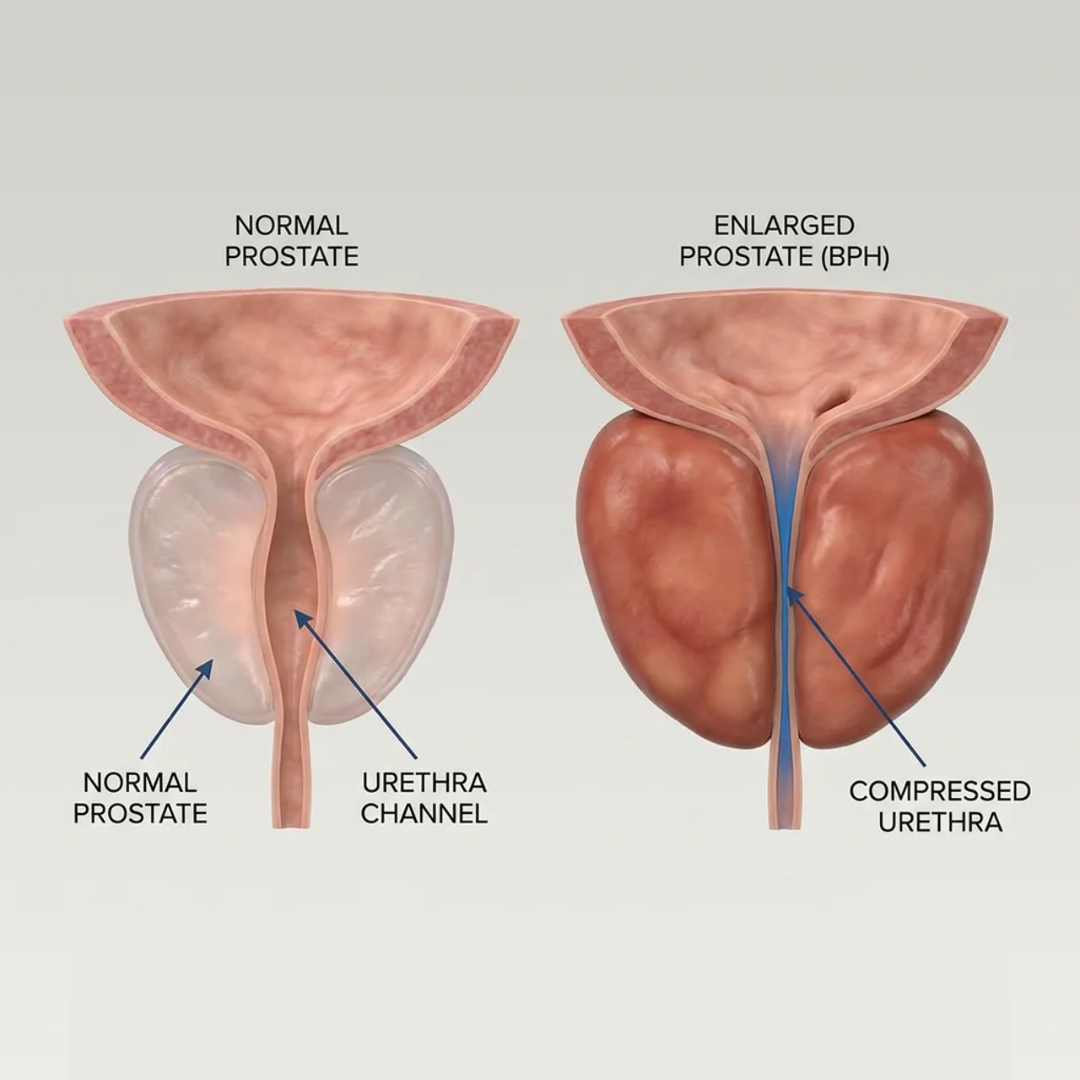
If you've been diagnosed with an enlarged prostate, your doctor put you on Flomax or tamsulosin, you're still getting up three to five times a night to pee, and every supplement you've tried has either stopped working or done absolutely nothing, I'm about to tell you exactly what they're not telling you and why they'll NEVER give you the real answer. For SIX YEARS my dad was watching his life shrink around his bladder. He was diagnosed with BPH at 58. Put on tamsulosin immediately. Doctor told him the medication would relax everything and he'd sleep through the night again. Within the first three months? He was getting dizzy every time he stood up. Went lightheaded at a family barbecue and had to sit on the porch while everyone else played with the grandkids. Side effect of the drug. His doctor said his body would "adjust." By year two? He was still getting up three to four times a night. The tamsulosin had taken him from five times down to three, and then stopped working. His prostate was still growing. The drug was relaxing the muscle but doing nothing about the growth. He was exhausted. Dark circles under his eyes that never went away. The kind of tired that coffee doesn't touch because it's not about energy, it's about never getting four unbroken hours of sleep. By year four? The stream was barely a stream. He'd stand at the urinal at a restaurant and wait. And wait. Thirty seconds before anything started. Then a weak, hesitant trickle that stopped and started while the guy next to him finished and walked away. He started using stalls instead. Then he stopped going to restaurants. And the urgency. God, the urgency. The sudden, overwhelming need to go, immediately, that hit in the car, at the store, in the middle of his grandson's baseball game. He mapped every bathroom within a ten-minute radius of anywhere he went. His world got smaller every month. Road trips disappeared. Movies disappeared. Sitting through a full church service became an exercise in clock-watching and anxiety. He wasn't sick. He was watching his prostate squeeze the life out of his daily routine while his doctor adjusted the dosage on a drug that had already stopped working. And every single doctor told him the same thing. --- "Tamsulosin will relax the smooth muscle and improve your flow." "Finasteride can shrink the prostate over time. Six to twelve months to see results." "Lifestyle modifications. Reduce caffeine, limit fluids after 6 PM." "If the medication stops working, we can discuss surgical options. TURP is the gold standard." One of them, and this still makes me clench my jaw, told him that BPH is just a normal part of aging and he should accept that his bathroom habits would be "different going forward." He was 60 years old. He'd just retired. He was supposed to be traveling with my mom, fishing with his buddies, enjoying the years he'd worked his entire life to reach. And a urologist was telling him to accept that he'd spend those years mapping bathrooms and sleeping in ninety-minute intervals. On medication. Getting worse. Every year. He went through three urologists in six years. Not one, NOT ONE, ever looked beyond the prostate volume measurement and asked WHY the prostate was still growing while he was on medication designed to manage it. --- So here's what they kept telling him to do. And I need you to pay attention because you've probably tried all of this too: Tamsulosin (Flomax), the first-line prescription for BPH. Four years. Reduced his nighttime trips from five to three initially. Then stopped improving. Dizziness that never fully went away. Retrograde ejaculation as a side effect that his doctor mentioned casually, like it was nothing. My dad stopped talking about it. My mom mentioned it to me once, quietly. That's what these drugs take from men and nobody discusses it. Finasteride, the 5-alpha reductase inhibitor. Prescribed at year three to shrink the prostate. His doctor warned about "possible sexual side effects." Within four months his libido was gone. Not reduced. Gone. He told my mom he just wasn't interested anymore. He was 61 years old. The drug was working on his prostate, PSA dropped, but it was castrating him chemically in the process. He stopped taking it after seven months. Everything the finasteride had improved reversed within weeks. Saw Palmetto, the supplement every men's health forum recommends. Two different brands. Eight months total. First bottle, he thought he noticed a slight improvement in flow. Second month, nothing. Third month, nothing. He switched brands. Four more months. No measurable difference. His urologist said "most saw palmetto on the shelf is underdosed and unstandardized, so it never reaches the level that does anything. But it won't hurt you." "It won't hurt you." Four months and $140 of doing nothing, and the best his doctor could say was it wouldn't hurt him. Beta-sitosterol standalone supplement, five months. Marginal improvement in urgency. No change in nighttime frequency. No change in stream strength. Pumpkin seeds from the grocery store. My mom read online that pumpkin seeds help the prostate. He ate a handful every day for three months. He liked the taste. Prostate didn't care. $60-a-month prostate support formulas with zinc, pygeum, stinging nettle, and lycopene. Two different brands. Both claimed "comprehensive prostate support." Neither moved a single symptom. Between the prescriptions, the supplements, the specialist co-pays, the ultrasounds, and the flow-rate tests, he spent over $8,400 in six years. Still getting up at night. Still standing at the toilet waiting. Still mapping bathrooms. Still on medication. Still getting worse. Every year. --- At this point I'm not frustrated anymore. I'm angry. Because I'm watching my father, who is taking every medication, following every instruction, eliminating caffeine, doing his kegel exercises, limiting fluids, trying every supplement his urologist shrugged at, get worse every year while his doctors keep adjusting dosages on drugs that aren't addressing what's actually driving the growth. Managing. The. Symptoms. Not fixing it. Not shrinking it. Not even trying to figure out WHY his prostate was continuing to grow despite being on a drug specifically designed to address prostate growth. Just managing his decline into a more exhausted, more anxious, more isolated version of himself while they treated the urinary symptoms as the problem rather than asking what was causing the prostate tissue to keep expanding in the first place. And that's when I started asking the questions nobody wants you to ask: Why are doctors so quick to prescribe alpha-blockers that relax the muscle but do NOTHING about the growth, and then act surprised when the prostate keeps growing around the relaxed muscle? Why does finasteride address the growth but come with sexual side effects so severe that most men stop taking it, and nobody offers an alternative mechanism? Why does every prostate supplement on the market use the same saw palmetto and zinc at doses too low to matter, and nobody questions whether they're being dosed and combined the way the research actually calls for? And why does NOBODY ever talk about the specific compound in pumpkin seed oil that works on the exact same enzyme as finasteride, without the side effects, and why it's NOT in any of the supplements he'd been taking? --- So I went down a rabbit hole. A deep one. I started researching why someone with BPH would have a prostate that keeps growing even on medication, even limiting fluids, even taking every supplement the men's health forums recommended. And every mainstream medical site gave me the same recycled answers. Alpha-blockers for flow. 5-alpha reductase inhibitors for shrinkage. Lifestyle modifications. Surgery when drugs fail. Here's the question that stopped me. If tamsulosin relaxes the smooth muscle of the prostate and bladder neck, and he'd been taking tamsulosin for four years, then his urinary symptoms should have remained stable or improved. They didn't. They got progressively worse. Which means either tamsulosin stops working, or the prostate tissue was growing FASTER than the muscle relaxation could compensate for. I couldn't find a single person in the BPH space asking that second question. Everyone was adjusting the tamsulosin dose or adding finasteride or switching to combination therapy. Nobody was asking what was driving the continuous prostatic tissue growth that made every intervention progressively less effective. So I kept searching. --- Here's what I found. Your prostate has an enzyme called 5-alpha reductase. Its job is to convert circulating testosterone into dihydrotestosterone, DHT. DHT is five times more potent than testosterone at the androgen receptor. And the prostate has an extremely high concentration of androgen receptors. When 5-alpha reductase is functioning normally, DHT levels in the prostate stay balanced. Prostate tissue maintains its size. But as men age, 5-alpha reductase activity increases. Not dramatically. Gradually. The kind of slow, steady escalation that you don't notice until you're getting up four times a night and can't remember the last time you slept past 5 AM. And when 5-alpha reductase activity increases, DHT accumulates in the prostate tissue. DHT binds to androgen receptors in the prostatic stroma and epithelium. Those cells receive a growth signal. They proliferate. The prostate expands. Not from the outside. From the inside. The periurethral zone, the tissue surrounding the urethra, is where BPH growth concentrates. The prostate swells inward, directly around the tube you urinate through. Think of it like a fist slowly closing around a garden hose. The hose is your urethra. The fist is DHT-driven tissue growth. Every month the fist tightens a little more. The flow gets weaker. The frequency increases. The urgency gets worse. The sleep disappears. That's the squeeze. And it's what nobody was addressing. Tamsulosin relaxes the fist slightly. But the fist keeps tightening because DHT keeps telling the tissue to grow. You feel temporary relief, then the growth catches up. The fist is tighter than before. The relaxation can't keep up. The drug "stops working." It was never designed to stop the squeeze. Only to loosen it temporarily while the squeeze continued underneath. Finasteride blocks 5-alpha reductase systemically, in the prostate AND everywhere else. DHT drops across the entire body. The fist loosens. But DHT isn't just a prostate hormone. It's involved in libido, sexual function, mood, energy, muscle maintenance. When you block it everywhere to address one organ, everything else pays the price. That's why men on finasteride lose their sex drive. That's why they stop taking it. That's why the prostate grows back. So my father was: Taking tamsulosin that relaxed the fist while DHT kept tightening it from within. Taking finasteride that blocked DHT everywhere, destroying his sexual function, while addressing the prostate as collateral benefit. Eating saw palmetto that contained theoretically active compounds at doses so low, and so poorly standardized, that they couldn't measurably inhibit 5-alpha reductase in the prostate. His doctors were managing the squeeze after it happened. Nobody was stopping the fist from closing. No tamsulosin dose can overcome a fist that DHT keeps tightening. No saw palmetto at 160mg of unstandardized extract can meaningfully inhibit the enzyme driving the squeeze. No lifestyle modification closes a fist that 5-alpha reductase is biochemically instructed to keep closing. On medication. Getting worse. Every year. Because every intervention was downstream of an enzyme that nobody was effectively and safely inhibiting. That's why his symptoms got progressively worse despite every intervention. The squeeze nobody was stopping, driven by 5-alpha reductase and DHT accumulation, was growing faster than every medication could compensate for. He wasn't broken. He wasn't old. He wasn't failing to follow instructions. He had an enzyme converting testosterone to DHT at an accelerating rate, and three urologists treating everything that resulted from it without once safely addressing the enzyme itself. --- And here's the part that made my blood boil. The medical system KNOWS about DHT-driven prostatic growth. It's in the urology literature. It's the entire basis for prescribing finasteride and dutasteride. The mechanism is well-documented. But the standard clinical approach gives you two choices. Take a drug that relaxes the muscle without touching the growth. Or take a drug that stops the growth but destroys your sexual function. That's it. Those are your options. Relax the squeeze temporarily. Or stop the squeeze but lose your manhood in the process. Because there's enormous money in keeping you on tamsulosin at $30 a month that doesn't address the growth. And finasteride at $45 a month when the tamsulosin fails. And specialist appointments every six months where they measure the growth that neither drug is safely stopping. And eventually a $15,000-$25,000 TURP surgery when the drugs fail entirely. Relax the squeeze. Ignore the growth. Profit from the progression. Schedule the surgery. --- So I kept digging. Research on 5-alpha reductase inhibition without systemic DHT suppression. Studies on plant-derived compounds that work on the prostate specifically without affecting DHT levels throughout the body. Clinical evidence on what actually stops the squeeze without the tradeoff. And I found one compound that kept appearing, not in wellness blogs, in peer-reviewed urology research, as the specific solution to DHT-driven prostatic growth without systemic sexual side effects. Pumpkin seed oil. Not pumpkin seeds from the grocery store. Not pumpkin seed extract in a multivitamin. The oil, cold-pressed from Cucurbita pepo seeds, containing a specific concentration of delta-7-sterols, beta-sitosterol, and fatty acid compounds that research has identified as natural 5-alpha reductase inhibitors that concentrate in prostatic tissue. The delta-7-sterols in pumpkin seed oil compete with testosterone for the 5-alpha reductase binding site, specifically in prostate tissue. When delta-7-sterols occupy the enzyme, testosterone can't be converted to DHT at that site. DHT production in the prostate drops. The growth signal weakens. The fist loosens, not because you relaxed the muscle, but because you reduced the signal telling the tissue to squeeze in the first place. And because these phytosterols concentrate in prostatic tissue rather than suppressing DHT systemically, the rest of the body's DHT levels remain intact. Libido stays. Sexual function stays. Energy stays. The prostate-specific squeeze loosens while everything else remains untouched. Not blocking DHT everywhere to help one organ. Addressing the enzyme in the organ where the squeeze is happening. And beta-sitosterol simultaneously reduces prostatic inflammation and improves smooth muscle relaxation in the bladder neck, the same relaxation effect that tamsulosin provides through a pharmaceutical mechanism, achieved through a phytosterol mechanism that doesn't cause dizziness, lightheadedness, or retrograde ejaculation. Both mechanisms. One compound. The squeeze loosens from the growth side. The flow improves from the relaxation side. Both simultaneously. Without the tradeoff. --- My dad tried to find a pumpkin seed oil supplement that actually matched what the research described. First — grocery store pumpkin seeds. Three months. Nothing. Raw seeds contain the compounds but at concentrations so low you'd need to eat cups per day to reach therapeutic levels. And the bioavailability of the sterols locked inside whole seeds is a fraction of what cold-pressed oil delivers. Second — a saw palmetto + pumpkin seed oil blend from a big-box store. Six weeks. The pumpkin seed oil was listed fifth on the ingredient panel. The amount was sub-therapeutic. The saw palmetto was the headline ingredient. The pumpkin seed oil was marketing decoration. Third — a standalone pumpkin seed oil capsule from Amazon. Four stars. Decent reviews. Eight weeks. Marginal improvement in urgency. Nighttime trips unchanged. He went back to the research. Read the methodology carefully. The studies showing significant improvement in BPH symptoms used cold-pressed oil from Cucurbita pepo at specific doses — 1,000mg per day of actual oil, not powder, not extract, not a blend where pumpkin seed oil is a minor ingredient in a prostate formula. The oil had to be cold-pressed to preserve the delta-7-sterols and beta-sitosterol that heat processing destroys. And it had to be at sufficient concentration. Most pumpkin seed oil capsules on Amazon contain 500mg of a heat-processed oil with degraded phytosterol content. He flipped over the Amazon bottle. "Pumpkin Seed Oil 1000mg." Looked promising. But the serving size was two capsules. Each capsule was 500mg. And nowhere on the label did it specify cold-pressed, Cucurbita pepo source, or phytosterol standardization. It could have been heat-extracted commodity oil with a fraction of the active compounds. Twelve weeks of taking expensive capsules of degraded, underdosed oil. The delta-7-sterols he needed might have been present in trace amounts. Might have been destroyed in processing. There was no way to know. Between the tamsulosin, the finasteride he quit, the saw palmetto, the specialist visits, the Amazon supplements, and the grocery store pumpkin seeds, he'd spent over $8,400 in six years. --- And I'm reading a men's health forum one night, researching because his urologist had just brought up TURP surgery as "something to start thinking about," and I see someone in a BPH support thread mention a small company called Ultima Peak. A man in the thread. Different state. Same diagnosis. Same tamsulosin that helped initially then plateaued. Same saw palmetto that did nothing on its own. Same enzyme that nobody was safely addressing. He'd found the DHT mechanism. Tried Ultima Peak Pumpkin Seed Oil Softgels. Posted his experience. Nighttime trips down from four to one in six weeks. Stream noticeably stronger by week three. Urgency reduced to the point where he stopped mapping bathrooms. Someone in the thread asked: "How? Because I tried pumpkin seed oil capsules and nothing happened." "Cold-pressed from Cucurbita pepo. A real therapeutic dose, 3,000mg, not the 500mg the cheap ones hide behind. Softgels, oil form, not powder. The cheap ones are heat-processed and the sterols are degraded. This one actually delivers the delta-7-sterols and beta-sitosterol at the concentrations the research used, and it pairs them with standardized saw palmetto. The powder capsules and grocery store seeds can't do that." I went to their site. Ready to be disappointed like I had been with every other supplement. Ultima Peak Pumpkin Seed Oil Softgels. Cold-pressed. Cucurbita pepo source. Oil-form softgels, not powder capsules, preserving the full phytosterol profile. At the therapeutic dose 3,000mg per serving. The delta-7-sterols and beta-sitosterol intact and bioavailable. Standardized saw palmetto included alongside it, so the two ingredients that should have been working together all along finally were, both at doses that matter. Not a twelve-ingredient prostate formula at sub-therapeutic amounts. The right compounds, at the right concentration, in the right form. Not managing the squeeze. Stopping the fist from closing. --- My dad started taking Ultima Peak Pumpkin Seed Oil Softgels. After one week? Nothing dramatic. He didn't notice anything different. I told him to keep going. The research showed measurable changes beginning at two to three weeks. After two weeks? He slept until 4:30 AM without getting up. He'd been waking at 1 AM and 3 AM and 5 AM for four years. That first unbroken stretch was three and a half hours. He texted me at 6 AM. "Slept until 4:30. Didn't think that was possible anymore." The delta-7-sterols were beginning to occupy the 5-alpha reductase binding sites. DHT production in the prostate was starting to decrease. The fist was beginning to loosen, not from relaxation, from reduced growth signaling. After three weeks? The stream. He'd been standing at the toilet for thirty seconds waiting for the flow to start for years. He called me on a Tuesday. "Started within five seconds today," he said. "And it didn't stop and start. Just... went." He paused. "I forgot what that felt like." After four weeks? He went to his grandson's baseball game. The whole game. Didn't get up once. Didn't think about the bathroom once. His wife texted me a photo of him in the bleachers, leaning forward, watching the game. Just watching. Not calculating how long until he needed to find a restroom. "He looks like himself again," she wrote. After six weeks? Down to one nighttime trip. One. From four. Without changing his tamsulosin dose. Without adding finasteride. Without a single sexual side effect. He went on a road trip. Three hours each way to visit his buddy at a lake house. Drove straight there without stopping. He hadn't done a road trip in over two years. He called me from the dock. I could hear the water behind him and his friend laughing at something. "I'm at the lake," he said. "Drove three hours. Didn't stop. I'm at the lake." I knew exactly what he meant. After eight weeks? He went back to his urologist for a follow-up. Flow rate test. Peak flow rate, up from 9 mL/sec to 16 mL/sec. Normal is above 15. His urologist pulled up the previous results. Looked at the current ones. Looked at him. "Your flow rate has improved significantly. Your IPSS score dropped from 24 to 11. What changed?" "I stopped the squeeze," my dad said. "DHT was telling my prostate tissue to keep growing around my urethra, tightening the fist every month. The tamsulosin was relaxing the muscle but doing nothing about the growth signal. I addressed the enzyme. The growth signal dropped. The fist loosened. The flow came back." His urologist typed notes slowly. "The mechanism is consistent with phytosterol-mediated 5-alpha reductase inhibition," he said. "We don't typically recommend plant-based interventions because the dosing and standardization are inconsistent across products." "This one isn't inconsistent," my dad said. "Cold-pressed. Therapeutic dose. Oil-form softgels. The compounds the research described, actually present, actually bioavailable." Long pause. "Your objective flow rate has improved more in eight weeks than it did in six years of alpha-blocker therapy. I'm comfortable reducing your tamsulosin. And we can take the TURP conversation off the table for now." Off the table. The surgery they'd been building toward for six years. Off the table. He walked to his truck. Got in. Sat there. Then he called me. "Flow rate normal. IPSS score cut in half. She's reducing the tamsulosin. TURP off the table. Six years. Three urologists. $8,400. On medication. Getting worse. Every year. Every single one of them relaxing the squeeze without stopping the fist. Nobody addressed the enzyme." --- Total improvement at four months: nighttime trips from four to one. Flow rate normalized. IPSS score from 24 to 11. Tamsulosin dose reduced. No sexual side effects. No dizziness. TURP surgery off the table. Road trips again. Movies again. Baseball games without clock-watching. Sleeping five and six hours straight. Going to restaurants and sitting through dinner without thinking about the bathroom once. Not from another pharmaceutical relaxing the squeeze while the fist keeps tightening. From stopping the fist from closing. --- This is what they don't want you to know. Because the second you address the 5-alpha reductase enzyme safely and reduce DHT accumulation in the prostate, you don't need their tamsulosin relaxing a squeeze that's no longer tightening. You don't need their finasteride destroying your sexual function to block an enzyme that a phytosterol addresses locally. You don't need their specialist visits measuring growth that isn't happening. You don't need their $25,000 surgery for a problem that a $30 softgel resolved. The fist loosens. The growth slows. The flow returns. The sleep returns. The way it would have years ago, if someone had addressed the enzyme instead of endlessly managing what the enzyme was doing. --- Now here's what I need you to understand. The squeeze doesn't stop itself. Every month it continues is another month of DHT-driven growth tightening around your urethra. Another month of weaker flow, more nighttime trips, more urgency, more isolation. Another month closer to the surgical conversation that could be avoided. So if you're dealing with ANY of this, getting up multiple times a night and can't remember the last time you slept through, standing at the toilet waiting for a weak stream that stops and starts, sudden urgency that controls where you go and what you do, a prostate that keeps growing despite medication, a urologist who's starting to mention surgery, this is the time. Not next month when your urologist adjusts the dosage again. Not when the nighttime trips increase to five. Not when the TURP conversation becomes a TURP date on the calendar. Right now. Ultima Peak Pumpkin Seed Oil Softgels. Cold-pressed. Cucurbita pepo source. Oil-form softgels preserving the full phytosterol profile, delta-7-sterols and beta-sitosterol intact and bioavailable. 3,000mg therapeutic dose with standardized saw palmetto. Not a prostate formula with twelve ingredients at sub-therapeutic doses. The actual compounds, at the actual concentration, in the actual form that the research used. Because your urologist isn't going to stop the squeeze. There's no protocol for plant-based 5-alpha reductase inhibition in their guidelines. There's no pharmaceutical margin in it. There's no surgery revenue in it. You have to stop the squeeze yourself. 👉 https://ultimapeak.com/products/ultimapeak-pumpkin-seed-oil-softgels
Support Healthy Prostate Function
Small → A once-daily gummy to support drive, energy, and overall performance with zero hassle.
LEARN MORELike this ad? Make it yours.
Crush rebuilds this exact creative around your product — your brand, your colors, your offer — in about a minute.