Amanda Foster
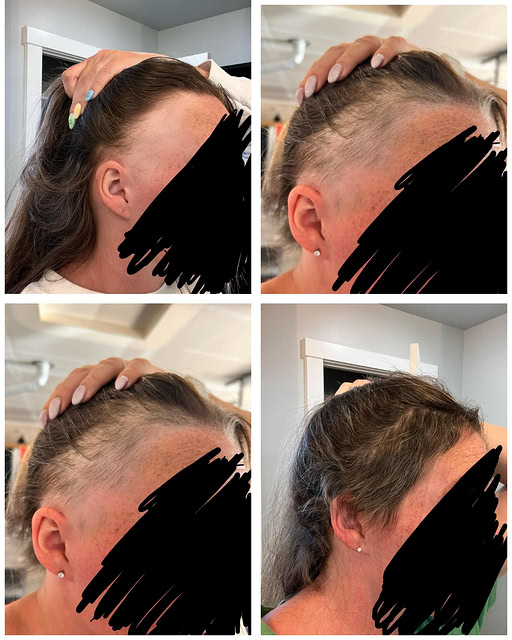
Amanda Foster Facebook ad: “If you're on Ozempic, watch out for this.”
Ran for 5 days, from May 22 to May 27, 2026, the last day Crush saw it.
Run by Amanda Foster on Facebook. Crush is not the advertiser and does not verify its claims. See this ad in Meta's Ad Library(opens in a new tab)
Want an ad like this for your product?
Crush makes new ad images for your product from this ad: your logo, your product photo, your offer.
Trials from $19.95 USD, then $79.95 USD a month. Cancel anytime.
About this ad
- Meta Ad Library ID
- 1695639511477996
- Platforms
- Facebook, Instagram, Audience Network, Messenger and Threads
- Relaunches
- 0
- Niche
- Hair Care
Ad text
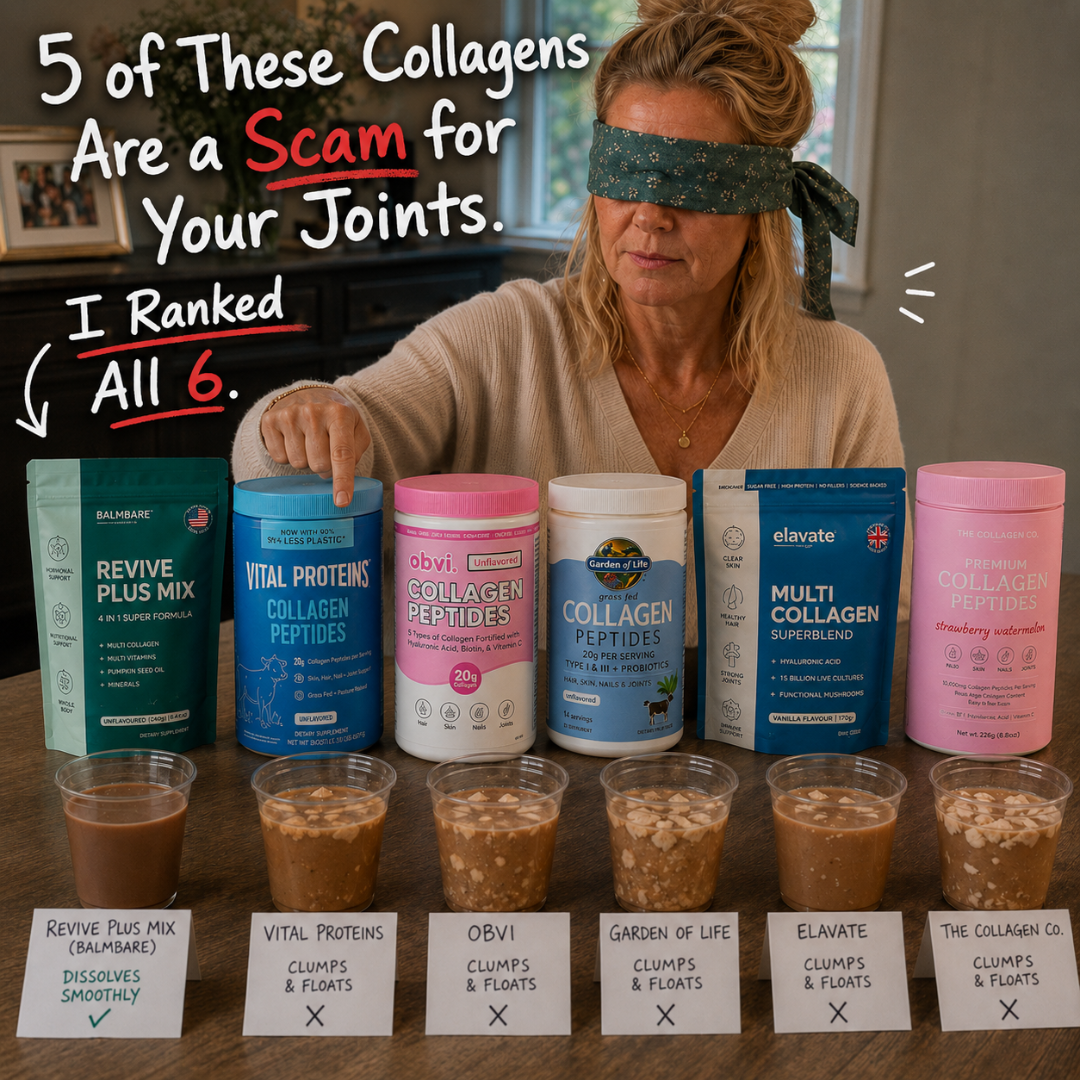
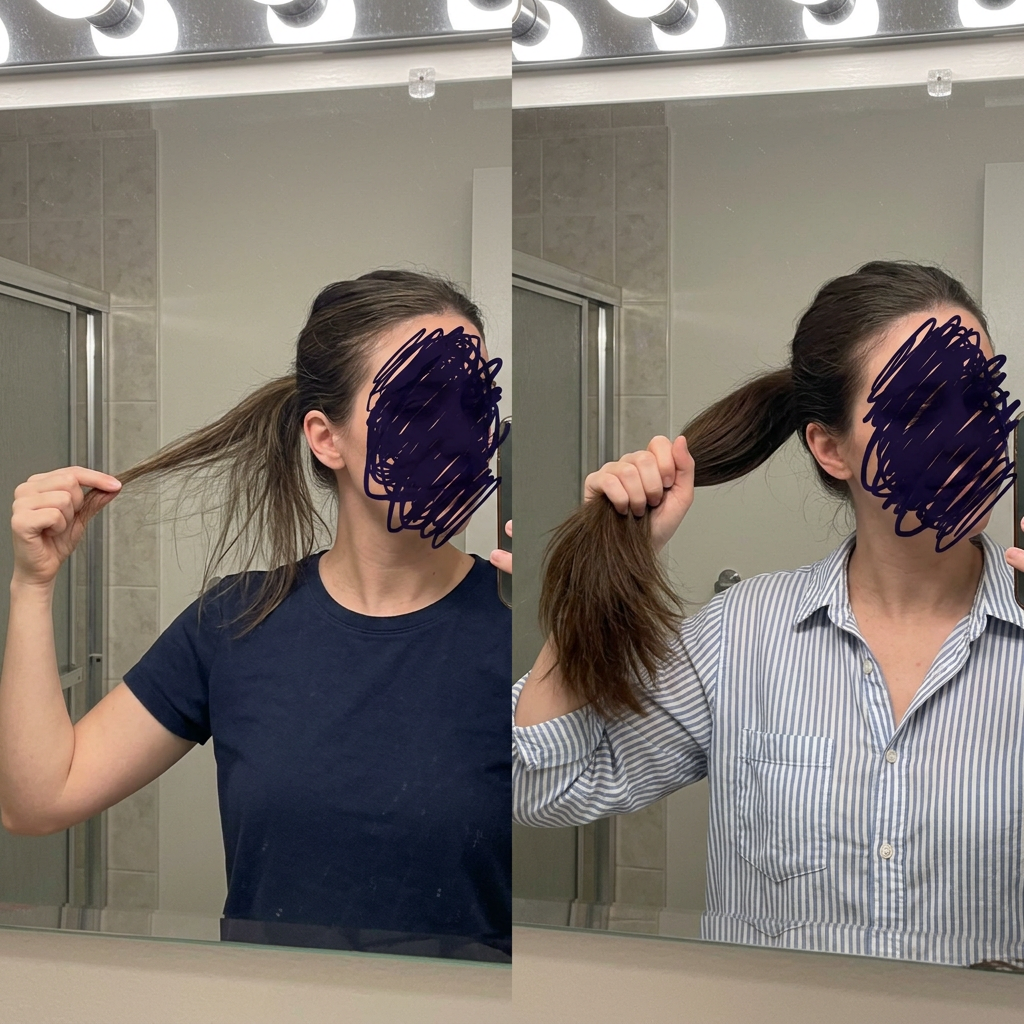
I Refused Minoxidil for 18 Months. Here's What Happened to My Hair. I've been a clinical therapist for 24 years, and hair loss is one of the hardest things I watch women struggle with. Not the hair loss itself. The treatments. The forever-dependency on minoxidil — stop using it for two weeks and your hair sheds out worse than before. The dread shed in month one that makes women panic and quit. The scalp irritation, the unwanted facial hair, the racing heart for women whose nervous systems were already on the edge. I've watched women follow their dermatologist's orders for years. Decades. Watched them get trapped in a regimen they could never stop without losing everything they'd grown back. Watched the side effects pile up. Watched some of them quit in tears at year three because they couldn't take it anymore — and then watched their hair fall out worse than before they started. About 18 months ago, hair loss struck me too. In the last few years, more and more of the women I see in my practice have started GLP-1 medications. Ozempic. Mounjaro. Wegovy. Zepbound. And the conversation that has become one of the most common ones in my office isn't about appetite or blood sugar or weight loss stalling. It's about hair. I'd been watching it happen to my clients for two years before it happened to me. I started Mounjaro fourteen months ago. By month four I was down 34 pounds. My blood pressure was the best it had been in years. My doctor was thrilled. My energy was back. For the first time in a long time, I felt like I was getting somewhere. And then — around month four — my hair started falling out. The first time it scared me, I was washing my hair on a Sunday. I looked down at the drain and thought somebody had left the plug in. It wasn't a plug. It was my hair. A wad of it. Wet. Heavy. The size of my fist. I stood there with the water still running and just stared at it. After that, it got worse every week. Clumps in the drain. Strands all over my pillow every morning. Bird nest in my brush by Friday. I'd run my fingers through my hair and three or four would come out at a time. My ponytail had gone from full to a pencil. The scrunchie wrapped three times where it used to wrap once. I started counting strands. How many in the drain. How many on the pillow. How many in the brush. Whether the count was good or bad decided how my day was going to go. I know how that sounds. I'm a therapist. I know. I couldn't stop. I checked my scalp in the bathroom mirror four, five, six times a day. And then I'd avoid the mirror for an hour because I couldn't bear to see it again. Then I'd check it again. I bought a beanie. Then another in a different color. Then a third. They lived in a drawer in my bathroom. I wore them inside my own house. I'd stopped getting in family photos. And underneath all of it — louder every week — was the question I could not answer. I was still on the medication. Still losing weight. By every measurable standard, the medication was working exactly as it should. So why was my hair still falling out? I was eating more protein than I ever had in my life. I'd upped my intake to over 100 grams a day. I was tracking it. And my hair was still falling out. I'd done everything I was supposed to do. And my hair was still falling out. So I did what every woman does. I got my bloodwork done. Ferritin — fine. Thyroid — fine. B12 — fine. Vitamin D — fine. Iron — fine. Everything was “normal.” Except I could see my scalp under the kitchen lights. Except my part was getting wider — and I knew because I'd been checking it in selfies for six months. Except a bun was the only way I could leave the house. Except the row of baseball caps in my closet had become my Plan B. I went to my dermatologist. She glanced at my scalp for ten seconds, looked at the bloodwork on her screen, and basically shrugged. “Your bloodwork is within normal range. Try biotin. We can talk about minoxidil at your next visit if it doesn't improve.” Biotin. Like I hadn't already been taking it for six months. Like it hadn't gotten worse. I sat in my car in the parking lot and cried. Not from sadness. From rage. I'm a clinician. Twenty-four years. And I had just been gaslit by a colleague who looked at a woman with a wad of hair in her drain every shower and shrugged. This was not in my head. Something was broken. Something real. So I did what every woman without anything to lose does. I started buying supplements. Biotin. Three more months. Nothing. Collagen peptides. Four months. Nothing. Rosemary oil — twice a day, scalp massage, the whole ritual. Nothing. Iron. Magnesium. Vitamin D. Zinc. A drawer full of bottles that all promised the same thing and delivered nothing. I bought a $90 bottle of Nutrafol. It made me so nauseous I had to stop after three weeks. I read every thread I could find. I memorized the explanation. “It's the rapid weight loss. It's telogen effluvium. Eat more protein. Your body is in shock from the calorie deficit. It'll resolve.” I knew the words. I could have given the lecture. What I could not explain was why it was still happening. And there were women in those threads who had been shedding for two years. Three years. Still on their medication. Still losing weight. Still losing hair. Reading their posts at 1 AM, I made myself a promise. I refuse to be that. I refuse to be the woman three years from now still counting hairs in the drain. Still wearing a hat to her own niece's wedding. Still avoiding photos with her own grandchildren. Still wondering if the woman in her old pictures would ever come back. I refuse. A few weeks later, my dermatologist's office called. “Mary, your shedding is significant. Dr. Palmer needs to confirm whether you're starting the minoxidil prescription.” I told them I needed more time. But the truth was, I didn't know what else to do. Minoxidil was the same medication I had watched destroy my mother's hair for the last twelve years of her life. She'd started it after a stress event of her own. Same shed pattern. Same bloodwork-is-normal dismissal from her doctor. Same eventual prescription. The first eight weeks she shed worse than she ever had. “That's normal,” the doctor said. “It's the dread shed. Push through.” So she pushed through. The hair came back, slowly. She got a little of her confidence back. And then she could never stop. She tried once, a few years in. Wanted to be done with the daily ritual, the sticky scalp, the way her hair felt different. Within ten weeks she'd lost everything she'd grown back, plus more. She begged the dermatologist for the prescription back. He gave it to her — but warned her she could never take another break. So she didn't. Twice a day, every day, for the next twelve years. My father's words still echo: “The medication didn't save her hair. It just took her hostage for the rest of her life.” I was not going to repeat the same mistake my mother did. I was not going to spend the rest of my life applying foam to my scalp twice a day with the knowledge that the moment I stopped, everything I'd grown back would fall out worse than before. I needed to find something else. Then about four months ago, one of my long-term clients came in for her regular session. Eleanor. I'd been seeing her for years. She'd started Wegovy about eighteen months ago and the hair loss had come with it — same pattern I was living through. She'd been wearing toppers for the last year. But this time she walked in different. Lighter, somehow. It took me a minute to realize what was different. Her hair. Her real hair. No topper. And it was fuller than I'd seen it in years. I asked how she was managing, and she said something I didn't expect. “My hair stopped falling out about ten weeks ago. New pieces are coming in along my temples. My hairdresser saw it before I did.” I almost dropped my notepad. “What happened?” She told me she'd found something. Not a hair vitamin. Not minoxidil. Something that targeted the actual reason her follicles had stopped working while she was on the medication. “I felt different within the first week,” she said. “By month two the shedding had slowed down. By month four the new growth started coming in.” She paused. “It worked on the cause. Not just the hair.” I sat with that for a long time after she left. That night, I stood in my bathroom and ran my fingers through my hair. Six strands came out in one pass. I sat down on the edge of the tub and opened my laptop. And I stayed up until 3 AM reading studies. Here is what the research says — and what nobody is explaining to women at the pharmacy counter when they pick up their GLP-1 prescription. Fat cells don't just store energy. They store estrogen. For most of your adult life, that stored estrogen has been travelling through your bloodstream and doing something your body never announced: Shielding your hair follicles from DHT. DHT is a hormone that already exists in your body. In normal amounts, it's fine. But when it reaches your hair follicles — really reaches them, without anything in the way — it binds to them. Shrinks them. Weakens them. Pushes them into the shedding phase before they're ready. Your fat cells were the shield. When you lose fat rapidly on a GLP-1 medication — and these medications work, they are extraordinary at what they do — the stored estrogen goes with the fat. The DHT didn't increase. The shield disappeared. And DHT that your body had been keeping away from your follicles for decades suddenly had direct, unobstructed access. Research published by dermatologists studying hormonal hair loss in women on GLP-1 medications has confirmed this mechanism. It is not the weight loss itself that causes the shedding. It is the hormonal shift that comes with the speed of the fat loss. That is why your bloodwork is normal. Blood tests measure levels. They do not measure the disappearance of a shield that was never tracked in the first place. That is why the protein isn't helping. Protein feeds a follicle. It does not rebuild hormonal protection around one. That is why biotin doesn't work. Biotin addresses nutritional deficiencies. It cannot do anything about a hormone that is actively shrinking your follicles at the root. That is why stopping the medication doesn't fix it either — because several of my clients have tried, and the shedding continued, and they gained the weight back, and then had to restart from the beginning. You are not broken. You are not malnourished. Your body is not failing. Your follicles lost their shield. And until something addresses that — until something blocks the DHT from reaching follicles that are suddenly exposed — nothing you put on your hair or into your body is going to stop what's happening at the root. Here's the part that terrified me into action. The longer follicles stay under sustained DHT attack without intervention, the more damage accumulates. Not all of it reverses. In 24 years of practice I have watched women wait. Wait for the shedding to stop on its own. Wait for the protein to kick in. Wait for the Nutrafol to do something. And I have watched some of them wait too long. DHT that goes unaddressed for long enough doesn't just slow growth. It miniaturizes follicles to the point where some of them stop producing visible hair entirely. That is what scared me at my kitchen table at 1 AM. I did not have another year to wait and find out. But then I noticed something in the research. Women weren't just saying “any hair supplement.” They were getting specific. One thing kept coming up. The supplements that actually worked on DHT-driven hair loss weren't general hair vitamins. They were formulated around DHT inhibition first — and follicle nutrition second. In that order. Because you cannot nourish a follicle that is still being attacked. You have to remove what's attacking it first. Step one: block DHT from binding to the follicle in the first place, using compounds that specifically target the DHT pathway — things like saw palmetto, certain adaptogens, and plant-based DHT inhibitors that research has linked to meaningful reduction in DHT activity at the follicle level. Step two: once the DHT is being addressed, give the follicles what they need to recover and re-enter the growth phase — sea moss, pearl powder, the B vitamins that support hair structure once the hormonal attack has been interrupted. No wonder the supplements I'd been taking did nothing. They were all step two. None of them were doing step one. So I went back to what Eleanor had told me. She'd been specific. “Most of them don't work. This one did.” Balmbare. I looked them up, expecting to be disappointed again. But they were different. The formulation was built around DHT inhibition first. Adaptogens and plant-based DHT blockers at meaningful doses — not trace amounts added for the label. Sea moss and pearl powder for follicle recovery. The B-vitamin complex for structure. And it was built specifically for women on GLP-1 medications. Not a general hair supplement with a GLP-1 sticker on it. Something actually formulated around the hormonal shift that GLP-1s cause. Third-party tested. Made in the USA. No fillers. And it was a gummy. Not four horse pills a day. My next dermatology appointment was in eight weeks. If my shedding wasn't slowing down, I knew what was coming. The prescription. The path my mother walked. I had nothing to lose. So I ordered it. When it arrived, I took the first dose that morning. Didn't expect much. I'd already been burned twice. Three days later, I didn't feel or see anything. Yes I kept a log. I'm a clinical therapist. I can't help it. Week 1. Nothing visible in the hair. The shedding looked the same. But I noticed I was sleeping more deeply than I had in months. That was the only sign anything was happening at all. Week 3. Shedding was slowing down. I cleaned the drain once instead of twice. The strands in the brush looked thinner than the bird's nest I was used to. Nothing dramatic. Just less. Week 5. I ran my fingers through my hair on a Tuesday morning. Three or four came out. A few months ago it would have been a handful. I went to wash my hair that night and did not stand there afraid of the drain. Week 8. I sat on the edge of the bathtub and cried. Not from grief. From relief. I took the photo under the same bathroom light. Same angle as week one. The part was narrower. Not by much. But it was narrower. I started to look like the old me. Week 12. Baby hairs appeared at my temples. Short. Soft. Standing up the way new hair does. I stood in front of the mirror and for the first time in fourteen months, I recognized her. The woman in the old photos. She was coming back. Around week 10 I realized I'd stopped reaching for the beanie when I left the house. Not consciously. I just… didn't put one on, and twenty minutes later realized I hadn't. I started getting in photos again. Slowly at first. The family Christmas card. A friend's birthday dinner. My niece took a picture of me at her engagement party and I didn't immediately ask her to delete it. The question I had stopped letting myself ask out loud was getting an answer. Is something broken in me? Am I ever going to feel like myself again? I finally did. When I went back to Dr. Palmer for my checkup, she examined my scalp under her dermatoscope. Looked at the photos in my chart. Looked back at my scalp. Then at me. “What did you do?” I told her. The DHT inhibition first. The follicle recovery second. The specific formulation for GLP-1 hormonal hair loss. The two-step approach — interrupting the DHT attack before trying to support regrowth. She typed notes. Nodding slowly. “Well,” she said, closing her laptop. “Whatever you're doing, keep doing it. I'm not seeing active shedding and I'm seeing new vellus hairs at both temples. No minoxidil necessary at this time.” No minoxidil necessary. I walked to my car. Sat there for a moment. Then called my sister. “My hair is growing back. No prescription. No forever-dependency.” I heard her exhale. Then a long silence. “Thank God, Mary. Thank God.” That was four months ago. My hair this morning? My ponytail is the thickest it's been in three years. My part has closed. I had my hair colored last week — the hairdresser didn't say a word, just did it, the way she used to. The drawer of beanies is still in my bathroom. I haven't thrown them away. But I haven't opened it in three months. No daily scalp foam. No dread shed hanging over me. No watching myself slowly become dependent on a treatment I could never stop. No following my mother's path. Last weekend my daughter brought her family over for the afternoon. A year ago, I would have made an excuse not to be in the photos. Would have worn a beanie inside my own house. Would have let my daughter take all the pictures and stayed behind the camera. But I said yes when she asked me to be in the family shot. And I sat there in full sunlight by the window. Hair down. No topper. No hat. No shame about my scalp showing in overhead light. Not thinking about it. Not being constantly self-conscious about if my scalp was showing. The photo is now framed in our living room. My eyes burned when my daughter sent it to me. Because for the first time since the hardest year of my life, I look at a picture of myself and I recognize her. The woman in the old photos. She's not gone. She was never gone. And she came back. I'm sharing this because I hope it can help someone else the way it helped me. If you've been on a GLP-1 medication and your hair started falling out. If you're dealing with hair loss that won't respond to anything you've tried. If your dermatologist took ten seconds to look at your scalp, told you your bloodwork was “normal,” and shrugged. Now you know why. They were working on the hair. None of them were working on the hormonal shift happening underneath it. You need something that works differently. Balmbare is a gummy that is simple and easy to take, formulated specifically for women on GLP-1 medications. The DHT inhibition first. The follicle recovery second. In that order. Because you cannot nourish a follicle that is still being attacked. This is not a medication you take forever. You take it until the DHT attack is interrupted, until your follicles have recovered, until the new hair is growing and holding. Most women I know stayed on it for four to six months. Nobody is dependent on it the way my mother was on her foam. After 24 years as a clinical therapist watching women suffer through one hair treatment after another, I thought I knew every option out there. Turns out, my client knew something I didn't. Here's where I got mine: https://balmbare.com/products/hair-revive-gummies They're running a buy-one-get-one-free right now and I just ordered four more bottles to keep on hand. Laura Bennett P.S. — A few things I wish I'd known before ordering: Balmbare has a 60-day money-back guarantee. If it doesn't work for you, you get your money back. No questions asked. I wish I'd known that earlier — would have saved me from wasting weeks prolonging this and trying other stuff. This is what I was thinking and so you might be too: “Does this mean I have to stop my GLP-1 to fix my hair?” No. That is the thing I most want you to hear. You do not have to choose. The medication is not the villain — the hormonal shift that comes with rapid fat loss is the mechanism, and that mechanism can be addressed while you stay on your medication. I am still on Mounjaro. I am still losing weight. My hair is growing back. You do not have to give up what is finally working. The only issue is Balmbare is a small company. They've been getting a lot of attention lately — probably because women on GLP-1 medications keep finding this and telling each other. So they can't always keep up with demand. I want to apologize in advance because when you click the link, you might see they're sold out. I've had clients wait two weeks for it to come back in stock. But I'd still suggest checking to see if they have any available. If you're dealing with GLP-1 hair loss and you're terrified of going on minoxidil — if you've watched someone you love get trapped on a hair medication for the rest of her life and you refuse to follow that path — I'd grab some before they're gone. I went from a wad of hair in the drain every shower to baby hairs at my temples in fourteen weeks. I'm not following my mother's path. If there's even a chance this could work for you, it's worth trying. 👉 Check if Balmbare is in stock here: https://balmbare.com/products/hair-revive-gummies
Where the ad sends people
balmbare.com
If you're on Ozempic, watch out for this...
Hair Supplement Made For Hormonal & Nutritional Support
Shop now: balmbare.com(opens in a new tab)