
Inactive· since Jul 10, 2026
- 61
- days it ran
- 0
- relaunches
Ad copy
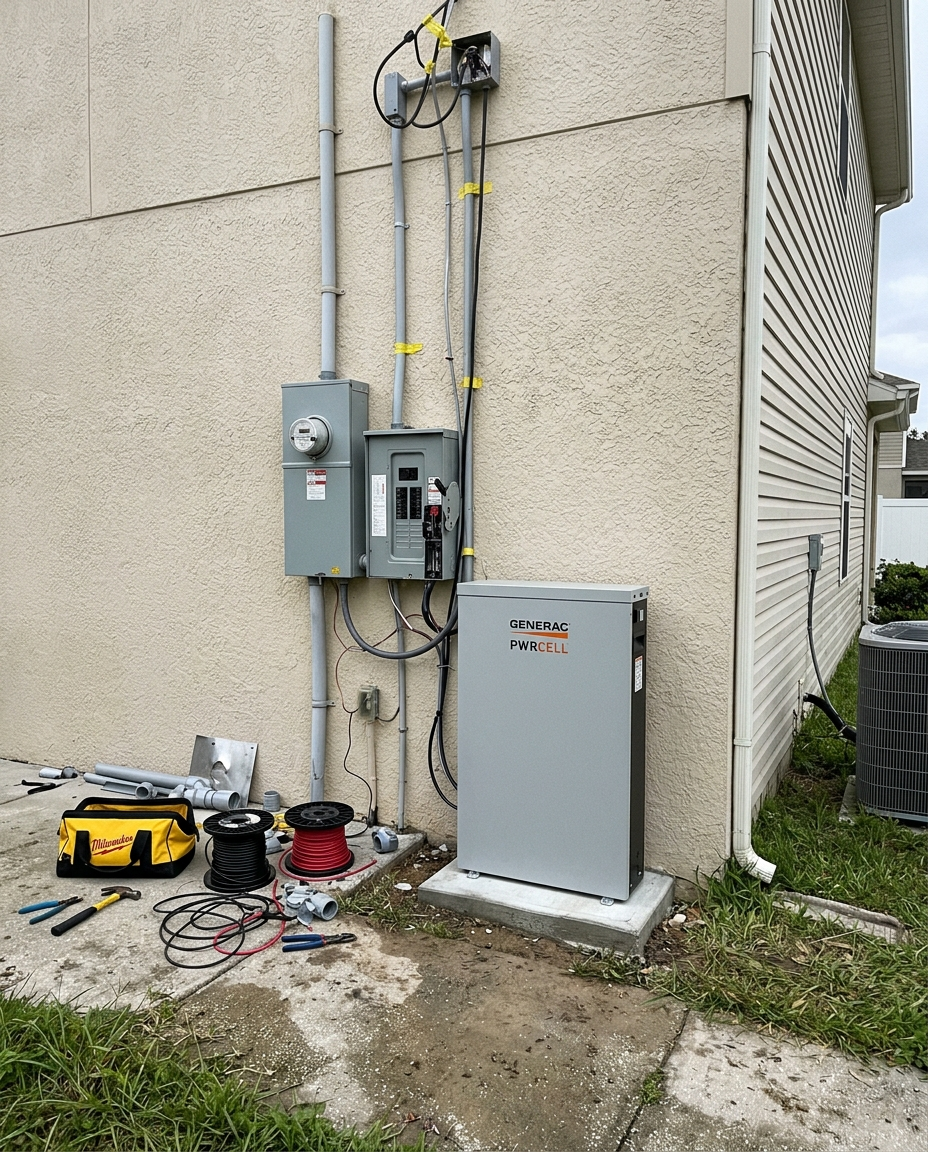
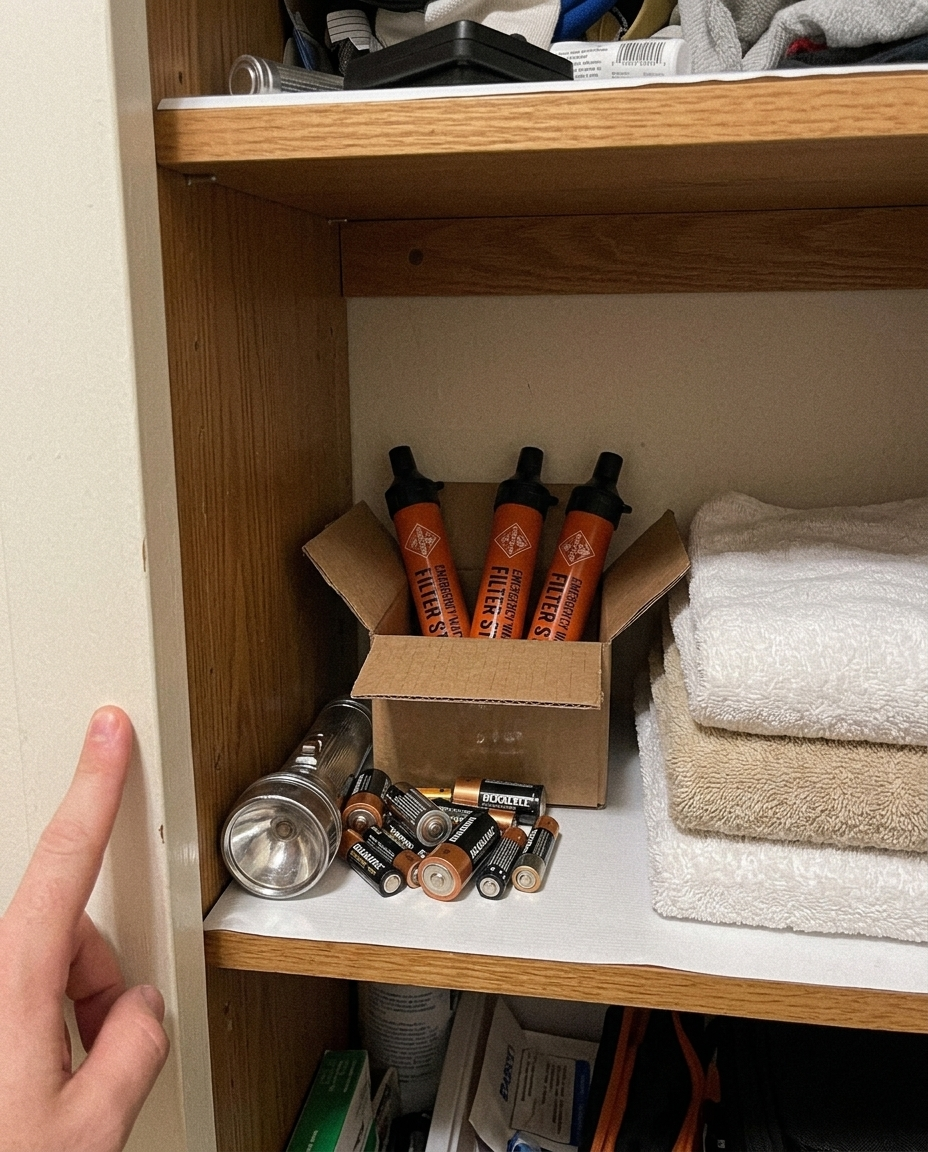
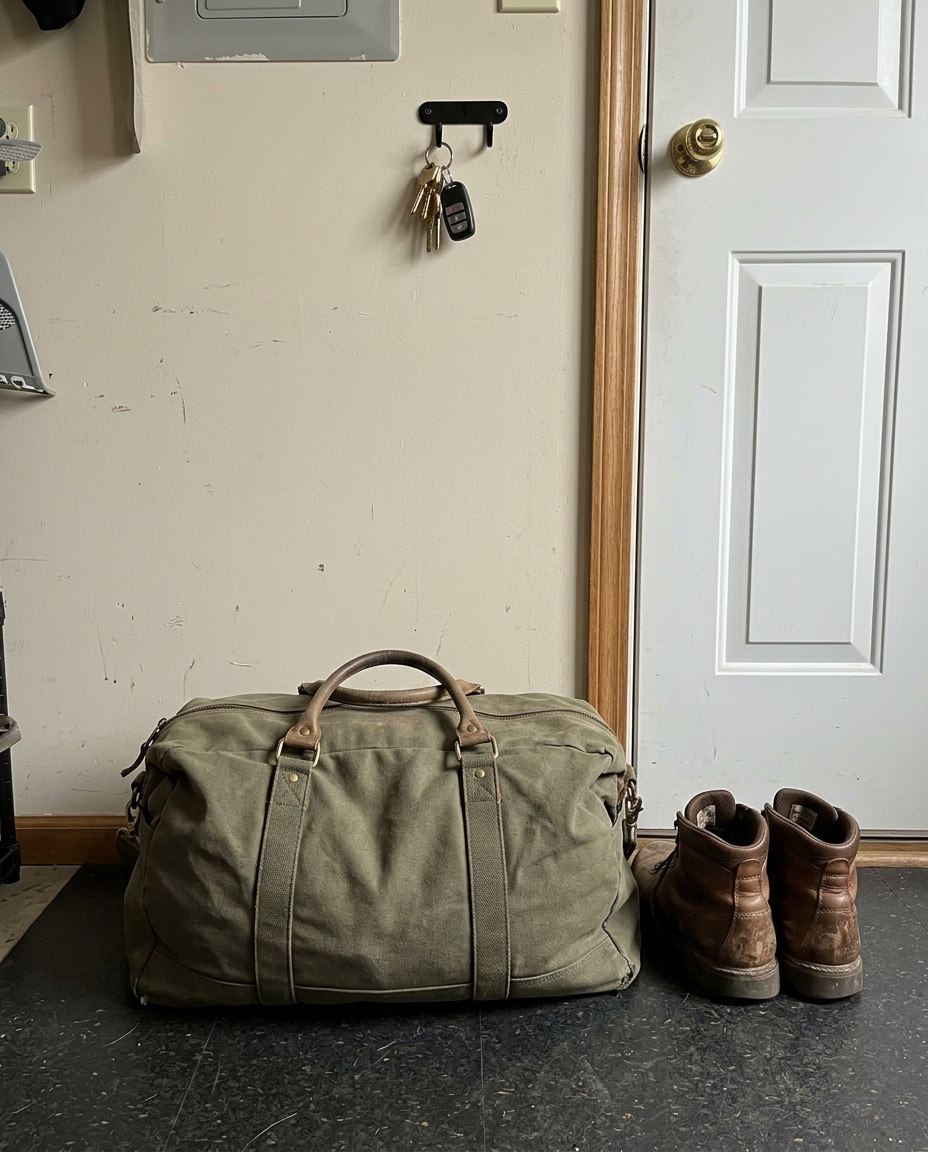
The man paying me $40,000 to keep his house running when the grid goes down told me, on the last day of a three-day job, that the most important thing he owned cost him $30. Then he put it in my hand and told me why there's one in every bag, every vehicle, and every kid's backpack he owns. I install backup power. Whole-house generators, battery walls, buried fuel, transfer switches. The kind of setup that lets a house ride out a week with no grid like nothing happened. My customers are people with quiet money, not the famous kind. Doctors, a few lawyers, guys who "consult" and don't say for who. Big houses set back off the road in the good school districts, an hour outside the city. I've been doing it 16 years. I'm good at it. It's how I keep my wife home with our two while they're little, and it's how I know I picked the right trade, because in the last year or so my phone hasn't stopped ringing. That's the first thing I want to tell you, before I get to the man on the Tuesday. The work changed this year. It used to be a generator so the fridge stays cold and the wifi stays up during a summer storm. Convenience jobs. Comfort jobs. Now it's people asking me how long they can go completely cut off. How much fuel they can bury legally, and then how much they can bury not-so-legally. Water storage. A second panel for a well. Guys who six months ago wanted the quietest generator on the market now don't care about the noise, they care about the runtime. I didn't think much about why. More work is more work. Then I got the Great Falls job. The house was one of the big ones. The man met me himself, which they usually don't. Early sixties. Fit in the way that isn't about the gym. He shook my hand, walked me through what he wanted, and I clocked three things in the first 10 minutes. One, he was home on a Tuesday, in work clothes that weren't work clothes, when every other client at his level is downtown until seven. Two, there was a bag by the door, and it wasn't a suitcase, it was a packed bag, the kind that sits by a door on purpose. Three, when I asked him the normal question I ask to scope a job, "what are we protecting against, storm or outage," he looked at me a second too long and said, "assume the grid doesn't come back for a while." He didn't say a bad storm, or a few days. "Assume it doesn't come back for a while." I've scoped a thousand of these. Nobody says it like that. I started the first morning on his power. He stayed home. He didn't hover. He'd come through every couple hours with coffee, look at what I was doing, ask a real question, go back to a room where the news was on with the sound down. Around lunch on the first day he stopped by the panel and said the thing this whole story turns on. "Do the water part last. It's the only part that actually matters." I told him sure, the water storage and the well tie-in were the last phase anyway. I figured he meant the schedule. He said, "That's not what I mean." And then he went back to his room. Second morning he was looser. Two men on a quiet job for enough hours, you start talking. He asked about my kids. I asked, careful, what kind of work kept a man home on a Tuesday watching the news like that. He gave me a job title that explained nothing on purpose. Then he said, "I spend my days looking at what other countries could do to us, and figuring out which ones they're actually going to try." I said that sounded like a heavy way to make a living. "It's a fine way to make a living," he said, "right up until the day the thing you've been looking at stops being a report and starts being a date." I didn't know what to say to that, so I ran conduit and let it sit. He kept talking. Not fast. Like a man who'd decided something. "You know why I'm having you do all this," he said, waving a hand at the cabinets, the fuel line, the whole invoice. "It isn't the weather." "I figured." "Everybody's looking at Iran wrong. They think if it goes hot it's missiles and aircraft carriers and something on the news that looks like a war. It's not going to look like that. They can't beat us that way and they know it. So they don't try to beat the Army. They go around it." "Around it how." "You don't fight the strongest country on earth by attacking its soldiers. You attack the things the soldiers can't guard. The power. The water. The stuff every single person needs and nobody thinks about, sitting out in the open in thousands of little towns with a chain-link fence and a padlock around it." He let that sit. "I've spent two years in rooms where we ran this out," he said. "What they'd hit, and in what order, and what it does to a whole country of people who have never in their lives missed a meal they didn't choose to miss. I'm not guessing. This is the part of my job I'm actually good at." I asked him the question you'd ask. "So when." He gave me a small, tired smile. "Everybody asks when. The when is the part that doesn't matter. The thing to be scared of is that it doesn't announce itself. There's no evacuation order for this. One day the grid in some region hiccups, and the news calls it a glitch, and by the time anybody in charge admits it wasn't a glitch, the part that matters is already over." "What part." "The water. The water is always the part." He put his coffee down. "Listen to me, because this is the whole thing, and almost nobody understands it. When the power goes, the water goes with it, and it goes fast. People think water and electricity are two separate bills. They're the same bill. The pumps that push water into your house run on electricity. The plants that clean it run on electricity. The whole road from the reservoir to your kitchen tap is electric from end to end. Take the power, and inside of hours the pressure drops, the tap coughs, and then there's nothing." "Asheville was 53 days," he said. "One storm, one city, the whole country free to drive help in, and it still took 53 days to get drinking water back. Now do it to 40 cities at once with nobody driving in." "Hours," I said. "Same day. You get hours, and most people will spend them standing at the sink turning the handle like it owes them an explanation. And here's the part that ends the conversation. You can go a month without food. You'll be miserable, you won't die. You can go a week in the cold. But three days with no clean water and your body is done deciding for you. There's no toughing it out, no rationing your way clever. Water is the one shelf where the store closing means people actually start dying, and it's the one shelf nobody stocks because the tap has never once failed them." "And when it starts," he said, "the bottled water in every store within reach is gone before lunch. Not rationed. Gone. People who never prepared for anything understand water on instinct the second the tap sputters, and they all move at the same time. 48 hours and there is no bottled water to buy at any price. After that your family drinks what you put away ahead of time, or whatever's standing in the creek out back. There is no third thing." Then he was quiet a second, and when he started again his voice was lower. "We ran this for two years, and there's one slide that stops the room every time. Not the grid map. The one about day nine, when the water's been off a week and change and every parent in three states is looking at the last case in the garage, coming up with the same answer at the same kitchen table at the same time. Every man in that room has kids. Nobody says a word on the drive home. That's the slide I built this house around." I'd stopped working. I was just standing there with a coil of wire in my hand. "That's why the water part is last on your invoice and first in my head," he said. "The generator's nice, the fuel's nice. If the power's out three weeks it makes my life comfortable. But comfortable isn't the problem. The water is the problem. And the thing about the water is, all the storage in the world runs out. You can bury a tank in the yard and it still has a bottom." "So what do you do," I asked. "For the water. If storage runs out." He looked at me for a long second, the way he'd looked at me when I asked storm-or-outage. "Come here on the third day and I'll show you," he said. "You've got kids. I'll show you." That night I went home and didn't say much at dinner. My wife asked what was wrong. I said long job. I didn't tell her a man had just spent an afternoon explaining to me, calm as a weather report, how my kids run out of water in a way I'd never once pictured. I lay awake counting. We had, what, a case of water in the garage. Maybe a case and a half. Four people. However I stacked it, it came out to less than two days, and I felt something cold go through me that I hadn't felt since my wife's first delivery went sideways. I told myself the guy stares at doomsday for a living and it's bent him a little. Anybody would. You look at the worst thing long enough, you start seeing it everywhere. Then I thought about the bag by his door. And the way he said "assume it doesn't come back." And the fact that a man that careful with his words was having me bury $40,000 of iron in his yard, and calling the cheapest line on my own invoice the only part that actually mattered. Third morning I finished his power and started on the water phase. He came out mid-afternoon, and this time he had a scuffed-up old plastic water bottle in his hand, the label long gone, the kind that's been carried a long time. "You asked what I do for water," he said. There was a small thing threaded onto the top of the cap, no longer than a marker, plain gray, the kind of part I'd have swept off the floor. "This," he said. He tipped the bottle and took a long drink, then handed it to me. "What's in it," I asked. "Right now, water I filled from the pond at the back of this property 20 minutes ago. The one with the algae and the geese. I've been drinking out of that pond all week to make a point to myself. Try it." I looked at the bottle. Looked at him. Drank. It was water. Cold, clean, plain water. No grit to it, no pond taste, nothing at all. I'd watched him fill nothing, but I knew that pond, I'd walked past it three times a day, and you would not put your hand in it, let alone your mouth. "That little filter did that," I said. "That little filter did that. Four stages inside it, no power, no batteries, no moving parts, no cartridge to swap, no app, no nothing. It doesn't care if the grid's up. It doesn't care why the water stopped. You put the worst fresh water you can find in the top, pond, creek, rain barrel, the bathtub you filled before the pressure died, and clean water comes out the bottom. It pulls out the bacteria and the parasites, the things that put you in a hospital you can't get to." "How long's it last?" "One of them does 1,800 gallons. That's about 5 years of drinking water for one person. It never expires sitting in a drawer. I keep one in this bottle, one in each of my kids' bags, two in each car, and a box of them in the house. My whole world runs on these. I've got $40,000 of your work in the ground, and if I could only keep one thing off this entire property, I'd keep the $30 filter. Because the generator makes my life easier and this makes my life possible." "Why hasn't everybody got one," I said. "If it's that simple." He capped the bottle. "Because the people who understand what's coming are quiet about it on purpose. The ones in my line of work, the ones with a friend in the right agency, they bought these a year ago and they don't post about it. You know why? Same reason you don't announce you've got cash in the house. The second everybody wants one, there aren't enough. Right now there are enough. That window is the whole opportunity, and it closes the day the rest of the country figures out what you and I just talked about." He walked me to my truck when I finished. Wrote nothing down. Just said the name of the thing and where he got it, not a store, not Amazon, one website, and told me to order before I did another single thing. "Not next payday," he said. "Tonight. Order a filter for every person you love and a couple extra, and do it before you go to bed, because the day the news gives you a reason to want one is the same day the website says sold out. This only works if you're early. The whole point is being early." He shook my hand. "You spent three days keeping my family alive," he said. "Go keep yours." I sat on it two more days. I want to be honest about that, because I think you might sit on it too, and I want you to know how that goes. I told myself I'd order the water when the job cleared and the check landed. I told myself the guy was intense and I was tired. I did the thing everybody does, which is nod at the truth and then go make dinner. Then two things happened the same week. My brother, who drives long-haul, called me about a run he'd turned down because a distribution hub two states over went to "priority loads only" for a week and nobody would say priority for what. The yard talk was pallets of bottled water going out the gate with escorts. I don't know what it was. Neither does he. But I heard the man's voice in my head, the part about it not announcing itself. And my wife came back from the store on Thursday annoyed that they were out of the big water jugs, the ones she buys for the cooler, and had a sign up limiting people to two of the small cases. In our town. On an ordinary Thursday. She mentioned it like it was nothing. I didn't sleep that night. Around one in the morning I got up, sat at the kitchen table, and ordered. A five-pack. One for each of us and one spare. They came that week. I did what the man did. I took one out back to the retention pond behind our subdivision, the nasty one, filled a bottle, screwed the filter on, and drank it standing in the wet grass at seven in the morning like a crazy person. It tasted like the water out of our own kitchen tap. I stood there a long time. Then I went inside and told my wife the whole thing, start to finish, the bag by the door and the Tuesday and the pond and the $40,000 and the $30. She listened to all of it without saying a word. When I was done she was quiet for a bit. Then she said, "Order more. My mom. Your mom. The kids' godparents." She didn't argue about the money. She'd heard the same thing in it that I had. She ordered the 10-pack herself that night. We put one in each of the kids' backpacks and made them each try it in the yard so it wouldn't be new to them if it ever mattered. My daughter, she's six, pulled water through hers on the first try, calls it her "special straw," and is weirdly proud of it. There's one in each vehicle and a box in the hall closet. It cost less than the brake job I did on the van the same month. I told my crew, too. Two of my guys bought that week. My lead installer, a man who has mocked every single thing I have ever gotten excited about, texted me a photo of his, filled from a mud puddle on a site, with three words. "Okay. I get it." So here's where I've landed, and I'm going to say it the way the man said it to me, because I can't improve on it. You can be wrong about the timeline. You can decide the whole thing blows over, and I hope you're right, I hope he was a paranoid man on a bad Tuesday and none of it comes. You can be wrong about all of it and lose nothing but $30. The water is the one thing you don't get to be wrong about even once. It doesn't run a warning on the news first, and there's no catching up after, because by the time you know for sure, every store within 50 miles knows too. The tap either works that morning or it doesn't, and everything you were ever going to do about it has to already be done. So do the water first. Everything else is comfort. This is the other thing. A single filter is $29.99. The Family 5-pack is $79.99, which comes to $15.99 each, and that's the one I'd get, so there's one in every bag and every car with a couple to spare, because you do not want to be splitting one filter between the people you love. There's a 20-pack too, for the ones covering parents and grown kids and a couple of neighbors. They sell out. I've watched the page flip to out of stock twice since I started sending people the link. When the news finally runs the story that makes everybody want one, that's the week there are none. Early is the entire game. You get 60 days to try it, money back if it doesn't do what they say. Fill the ugliest water near your house and drink it. That's what sold me, standing in the grass. Here's the link, the same one the man wrote down for me: https://shoppureflow.net/products/survivor-filter-straw There's a version of me that cashed that check, said the guy needed a vacation, and never ordered a thing. He's still out there, in a few million driveways, feeling fine, a case and a half of water in the garage and no idea that's less than two days. I think about him every time the news gets loud, and then I check the closet, and then I sleep fine. Do the water first. P.S. The thing that actually moved me wasn't anything he said about Iran. It was what he did with his own money. A man who reads the worst-case scenario for a living, who could buy any answer he wanted, protects his own kids with a $30 filter in each of their backpacks instead of a bunker or a pallet of anything. The people who know the most bought the smallest, cheapest thing there was, and they bought it quietly, a year before the rest of us. P.P.S. Sit at my kitchen table at 1 in the morning with me, because this is what turned "someday" into an order. Emergency guidance is a gallon of water per person per day. A case of bottled water is about 3 gallons, so a family of 4 burns through a case before dinner on day one, before you cook or clean with any of it. A 2-week outage is 19 cases. A real one, the kind that doesn't announce itself, is a lot longer than 2 weeks, and by hour 48 there's no water in any store to buy. One filter does 1,800 gallons. That's 600 cases of bottled water in something the size of a marker, and it never expires waiting for the day you need it. There was never going to be a garage big enough. There didn't need to be. P.P.P.S. Straight talk, the way the company is straight on their own page: it filters out 99.9% of the bacteria and the parasites, plus the sediment and the microplastics, from any fresh water, a creek, a pond, a rain barrel, the bathtub you fill the minute the pressure drops. It does not turn seawater drinkable and it does not pull out chemicals or heavy metals, and they tell you that themselves, which is more than the miracle sellers do. In a grid-down event, fresh water you can't trust is the entire problem, and that is the exact problem this solves, with no power, from your kitchen drawer. https://shoppureflow.net/products/survivor-filter-straw
Like this ad? Make it yours.
Crush rebuilds this exact creative around your product — your brand, your colors, your offer — in about a minute.