Liam Berg
Liam Berg Facebook ad: “Click here and stop Diabetic Retinopathy tomorrow”
Ran for 14 days, from June 7 to June 21, 2026, the last day Crush saw it.
Run by Liam Berg on Facebook. Crush is not the advertiser and does not verify its claims. See this ad in Meta's Ad Library(opens in a new tab)
Want an ad like this for your product?
Crush makes new ad images for your product from this ad: your logo, your product photo, your offer.
Trials from $19.95 USD, then $79.95 USD a month. Cancel anytime.
About this ad
- Meta Ad Library ID
- 1711389989887531
- Platforms
- Facebook, Instagram, Messenger and Threads
- Relaunches
- 3
Ad text
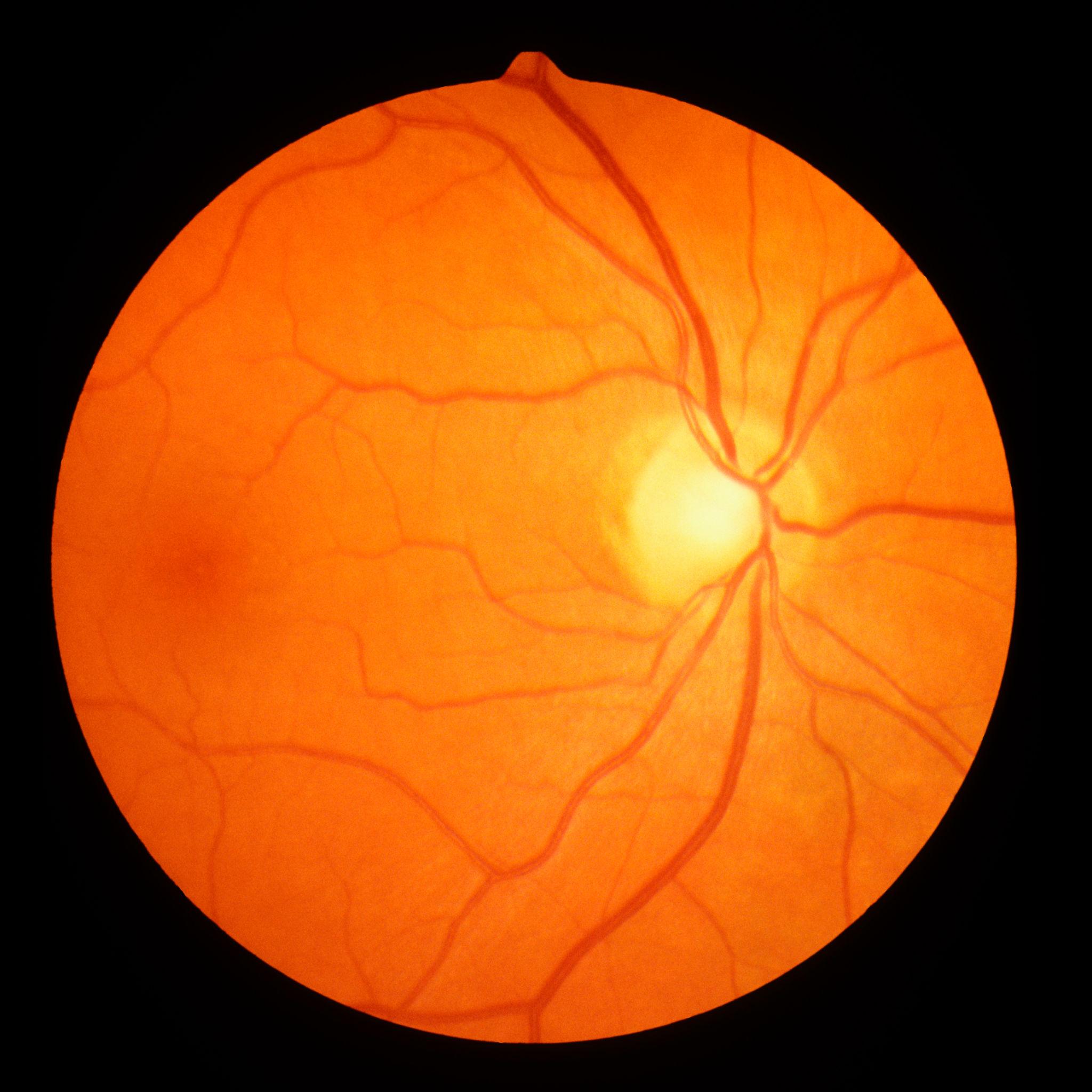
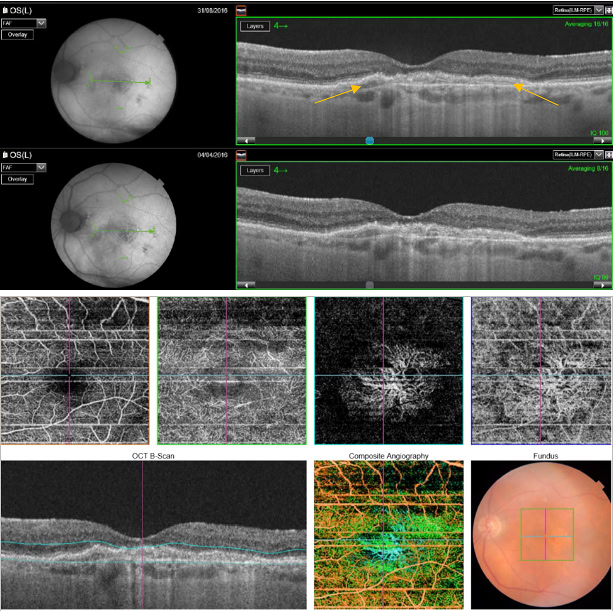
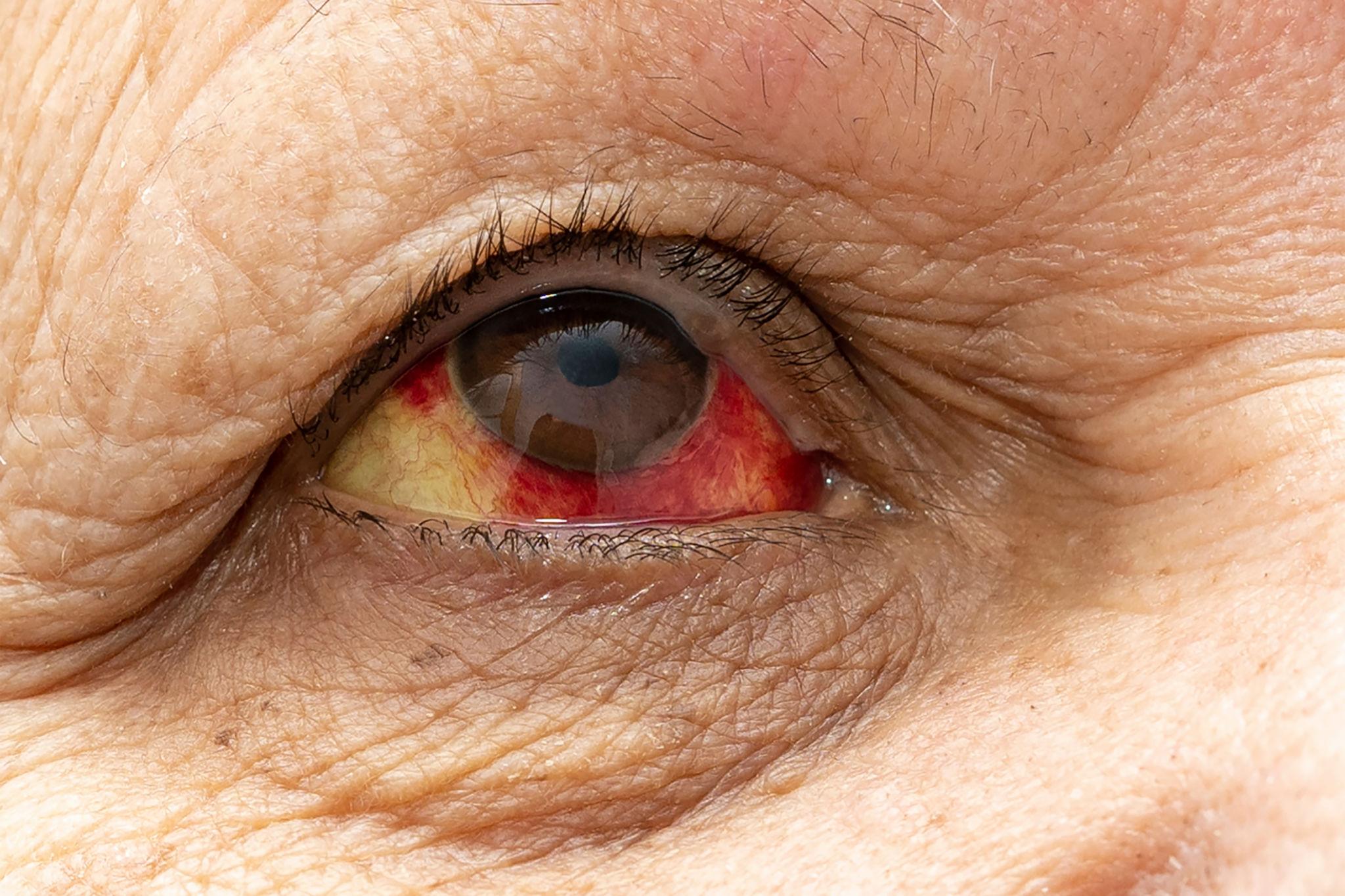
I'm a retina specialist. I've been treating diabetic eye disease for 24 years. And there's something I need to tell you that I don't have time to explain in a 15-minute appointment. Every week, I look into the eyes of diabetic patients who are watching the first signs appear. The microaneurysms. The tiny dot-like bleeds. The early changes that most doctors describe clinically, calmly, like they're reading a weather report. I see what those words do to people in that chair. I see the terror. I see the grief. I see the silent question they're too afraid to say out loud: "Am I going to end up like my mother?" And every week, I have to hand them a response that breaks my heart. "We'll monitor it. Come back in six months. Try to keep your blood sugar controlled." I watch their faces fall. I watch hope drain out of them in real time. I watch them leave my office believing the only road forward is the one they've already watched destroy someone they love — the needles, the laser sessions, the appointments that never end, the independence that disappears one visit at a time. It is the worst part of my job. Because here's what I cannot fully explain in a rushed appointment with three more patients waiting outside: There IS a second road. Something most eye doctors never mention. Something that addresses where the damage actually starts — not in your bloodstream, but on a battlefield your entire current treatment was never built to reach. And I'm going to tell you exactly what it is right now. First, let me tell you what I see every single day in my practice. I see 58-year-old women who have managed their Type 2 diabetes faithfully for over a decade — logging their meals, checking their blood sugar, taking every pill on schedule — sitting in my exam chair in shock because their last screening just showed "early changes." I see patients who did everything right. Whose A1C numbers look fine. Who followed every instruction their endocrinologist gave them. And whose retinas are bleeding anyway. I see the ones who watched their mothers go through this — Eylea injections every six weeks, laser sessions, $2,000 a needle, a medical system that shuffled them through "step therapy" like cattle and called it care — and who are sitting across from me with a single silent terror consuming them: I am not doing that. I am not following her path. There has to be another way. I see the guilt too. The quiet, devastating guilt that maybe they did this to themselves. That if they'd been more disciplined, caught it sooner, tried harder — they wouldn't be here. I want to tell every single one of them: you didn't fail. But I don't have time. So I'm telling you now. And I see the ones who come back too late. Who dismissed the early floaters — those little dark shapes that drift and dance in the corner of your eye, casting shadows over everything you try to look at, a constant reminder of how sick your eyes really are. Who ignored the blur that came and went — vision clear one hour and smeared the next, words on the page swimming, faces softening, never knowing if today was a good eye day or a bad one. Who stopped driving after dark because oncoming headlights exploded into blinding white starbursts, and slowly their world shrank to the hours before sunset — and told themselves that was just aging. By the time I see those patients, I'm holding their hand in a room with very limited options. I've watched patients describe waking up one morning to a dark red cloud slowly spreading across their vision — like a drop of ink dropped into a glass of water — terrified their sight is slipping away for good. That's vitreous hemorrhage. That's what advanced diabetic retinopathy looks like. And the people it happens to were standing exactly where you are standing now — at the early stage, with a window still open — when they decided to wait and see. This is what keeps me up at night. Because I know there's a window. I know that early intervention changes trajectories. I know that diabetic retinopathy does not have to end where your mother's ended. But the system doesn't give me time to have that conversation. So I'm having it now. With you. Right here. --- If you have Type 2 diabetes and you've been told there are early changes in the back of your eye — please pay close attention to what I'm about to explain. These are not just complications of blood sugar. Something very specific is happening inside your eye. And understanding it is the difference between the road your mother walked and a different one entirely. Let me show you what I see when I examine a diabetic retina. At the very back of your eye sits the retina — a thin layer of tissue packed with photoreceptors that translate light into everything you see. Running through it is a network of microscopic blood vessels, the smallest in the human body. When blood sugar runs chronically elevated, it attacks those vessels. It stiffens their walls. It triggers oxidative damage that slowly corrodes their structural integrity. It drives inflammation that degrades the blood-retinal barrier — the wall that separates your bloodstream from the delicate tissue of the eye. And then those walls begin to leak. That is what your doctor saw in your screening. The tiny bleeds. The microaneurysms. The fluid weeping into retinal tissue it was never supposed to reach. Now here is the part that no one explained to you. And this is the part that changes everything. Your A1C measures sugar in your blood. But the damage I just described is not happening in your blood. It is happening inside the eye itself — behind the blood-retinal barrier, in tissue your blood sugar management was never designed to reach. There are two battlefields. Your insulin, your pills, your diet, your finger-sticks — every single tool you have been handed fights on the first one: your bloodstream. The leaking, the swelling, the bleeding, the oxidative destruction happening right now between every appointment — that is all on the second battlefield. Deep inside the eye. Where nothing in your current treatment was ever built to go. That is why you can do everything right. Log every meal. Bring your A1C to a perfect 5.7. And still sit in that exam chair and hear "there's new progression." It feels like a punishment. Like your body is betraying you no matter what you do. It isn't. You haven't been losing. You've been fighting in the wrong place. And nobody told you there was a second place to fight. --- Here's what frustrates me about how this disease gets managed. The medical system has one answer for diabetic retinopathy once it progresses far enough: injections. Anti-VEGF therapy. Eylea. Lucentis. Indefinitely. Every four to six weeks. Billed at two thousand dollars a needle, run through a step-therapy protocol designed more around insurance reimbursement than your quality of life. I'm not saying those treatments don't have a place. In advanced disease, they do. But they are deployed on the first battlefield. They reduce VEGF — the protein driving abnormal vessel growth — in the bloodstream and surrounding tissue. They do not rebuild the retinal capillary walls already damaged. They do not restore the oxidative defenses inside the eye that were stripped away years before the first injection was ever prescribed. And they are presented to patients as the only road. They are not. --- Here's what the research shows — and what most eye doctors were never taught in medical school. The retina has its own nutritional needs. Specific nutrients that physically cross the blood-retinal barrier, accumulate inside the retinal tissue, and go to work exactly where the damage is happening — on the second battlefield. And the modern diabetic patient is almost universally depleted of them. It starts with all three retinal carotenoids. Most doctors know about Lutein. Some know about Zeaxanthin. Almost none discuss Meso-Zeaxanthin — and its absence from most eye supplements is, in my opinion, one of the most significant nutritional blind spots in ophthalmology today. Here's why all three matter: Lutein concentrates in the peripheral macula. Zeaxanthin in the mid-peripheral region. Meso-Zeaxanthin at the very center — the fovea — where your sharpest, most critical vision is processed. Without all three, you are building a defense with holes in it. You're leaving the most important part of the macula unguarded. The formula I'm about to describe contains: → 20mg of Lutein — most competitors use five to ten → 2mg of Zeaxanthin → 2mg of Meso-Zeaxanthin — which the diabetic eye can no longer synthesize efficiently on its own, and which nearly every supplement on the market skips entirely Then comes the ingredient specifically studied for diabetic eyes — Alpha-Lipoic Acid. It is the only antioxidant that works in both the water-based and fat-based environments inside your cells, meaning it penetrates every compartment of retinal tissue. It also recharges the other antioxidants as they're spent, multiplying the effect of everything around it. Generic eye vitamins leave this out entirely. It should be the cornerstone of every diabetic eye formula. It is absent from almost all of them. Then Astaxanthin — 6,000 times more powerful than Vitamin C at neutralizing the oxidative rust silently corroding your fragile capillary walls between every appointment. Those walls are what holds fluid where it belongs. When they weaken, they weep. The weeping is what your doctor is already seeing. Bilberry Extract at 50mg, standardized for anthocyanins — used in European ophthalmology for decades to structurally reinforce tiny vessel walls so they hold instead of hemorrhage. Ginkgo Biloba to drive blood flow back into the smallest retinal vessels that diabetes has been quietly starving of oxygen. Saffron Extract, with published clinical trials showing measurable improvement in retinal cell function within 90 days. Taurine and Luteolin to support the retinal cells directly and calm the chronic low-grade inflammation burning through the blood-retinal barrier. And the complete AREDS2 foundation — Vitamin C, Vitamin E as mixed tocopherols, Omega-3 fatty acids, and Zinc and Copper in the precise ratio that prevents one from depleting the other. 15 ingredients. One purpose. The second battlefield. This does not touch your glucose. It does not interfere with your insulin, your metformin, or anything else your physician has prescribed. It does the one job your entire current treatment was never built to do — it shows up where the leaking actually begins. --- Now let me speak directly to you. If you're reading this and you've been told there are early changes in the back of your eye — microaneurysms, dot hemorrhages, the first signs — you are not at the end of this story. You are at the beginning. And the beginning is the only moment where the gap between your mother's outcome and a different one is still wide open. I have watched too many diabetic patients come to me too late. I have watched too many people lose the ability to read. Lose the ability to drive. Lose the ability to thread a needle or hold a newspaper at arm's length under a brighter and brighter lamp. Lose the ability to look across a room at their grandchild's smile and see it clearly. I have watched people who were exactly where you are right now decide to wait and monitor — and come back two years later needing exactly the injections they were terrified of. Don't be one of them. When my own diabetic patients ask me what they can do beyond glycemic control, this formula is what I point them toward. Not because I say so. Because 24 years of watching this disease run its course on an undefended second battlefield tells me that doing nothing there is not a neutral choice. It is a choice. It just doesn't feel like one until it's too late. --- The formula is called Neurobella. It carries a 90-day money-back guarantee. If you don't notice meaningful improvement in your visual comfort and clarity, you receive a full refund — even if you've used the entire supply. Right now, new customers receive 55% off plus free shipping. You said you are not following your mother's path. You said you are not going on injections for the rest of your life. You said there has to be another way. There is. But the window to use it is not unlimited. Every month without targeted nutritional defense inside the eye is another month of uncontested oxidative damage to your retinal tissue — happening silently, between appointments, on a battlefield your blood sugar control has never reached. The time to act on the second battlefield is now. While the changes are early. While the gap is still open. While you still have something worth protecting. Click the link below. I wish I could sit across from every diabetic patient I've ever seen and have this conversation before it was too late. Since I can't, I'm having it with you. Don't wait for the next appointment to tell you the window has closed. → https://neuro-bella.com/products/neurobella-15-in-1-advanced-eye-formula-copy — Dr. Liam Berg Retina Specialist | 24 Years
Where the ad sends people
neuro-bella.com
👉 Click here and stop Diabetic Retinopathy tomorrow
Neurobella
Learn more: neuro-bella.com(opens in a new tab)