
Active· since Jun 22, 2026
- 86
- days running
- 0
- relaunches
Ad copy
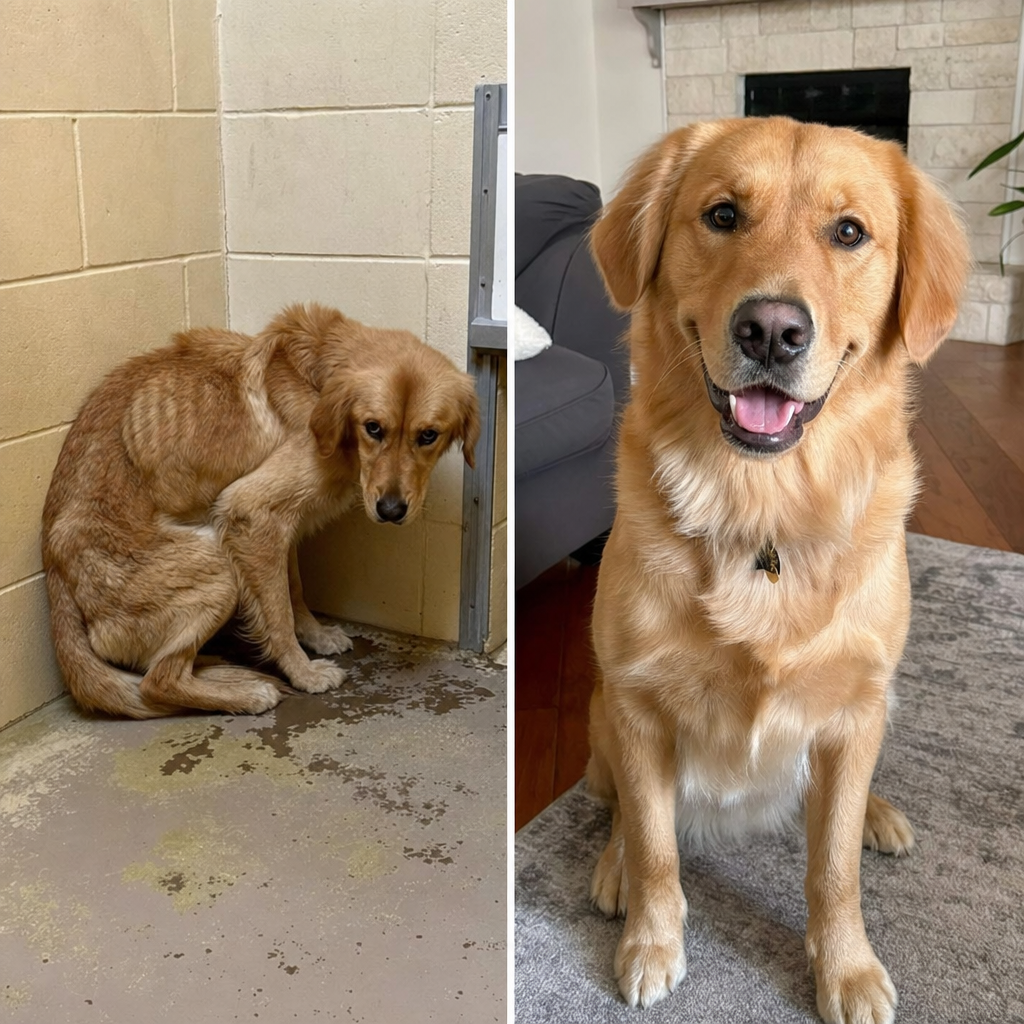
My boyfriend told me I was being "intense" about my rescue Golden's history and I said "she had never heard a human voice say her name in a kind tone, she had never been petted on the head without flinching, she had never eaten a meal without guarding the bowl, and she is three years old, which means somebody actively did all of that to her for three years" and he went quiet because I think for the first time he understood I had not been exaggerating. He went quiet. That is the part I want you to hold onto, because the quiet was a specific kind of quiet, the kind a partner produces when he has, for several weeks, been very gently filing his girlfriend's preoccupation with her new dog's background as a personality flaw, and has, in one breath, been forced to file it as the appropriate response to a documented set of facts. I had not been exaggerating. He had been calling it intense because intense was the word he had available for a thing he had not, in his own life, encountered before, and the word had been doing the work of allowing him to not engage with it. I am going to start at the beginning. My name is Greta. I am thirty four. My boyfriend is Marcus. We have been together a year and a half, living together for ten months. We got serious last summer, around the time I was starting to think about getting a dog, and we moved in together in January, into a two bedroom in a neighborhood we had both wanted to be in for years. The apartment is mine in the practical sense, in that the lease has my name on it because his credit was complicated when we signed, but it has been, in every emotional sense, ours. I had not had a dog in my adult life. I had been wanting one for years and had been telling myself it was the wrong moment, in the way you tell yourself things. The right moment, when it arrived, did not arrive because anything had changed in my life. It arrived because I scrolled past a photo of a Golden Retriever on a local rescue's Instagram page on a Tuesday in February and I could not stop thinking about her. The photo had been a single image. A four year old female Golden, sitting in a small kennel, with her head turned slightly toward the camera. The caption had been brief. It had said her name was Wren, she was four, she had been surrendered by her previous owner after what the rescue described, in their careful nonprofit language, as a "chronic neglect situation," she had been with the rescue for two months while they did the necessary medical and behavioral work, and she was ready to be adopted. The thing that stopped me on the photo was her eyes. Not the standard kind of dog photo eyes. Not the cheerful Golden eyes you see on every rescue page. Her eyes in the photo were doing something specific. They were not looking at the camera. They were looking at a point just slightly to the left of the camera. They were the eyes of a dog who had been photographed by someone she did not know, in a kennel, by humans who had not yet earned her trust, and who was, in the photograph, declining to engage with the lens. Her eyes were polite. They were vacant. They were the eyes of a dog who had decided, somewhere in the previous four years, that looking at humans directly was not the survival move. I sat in my kitchen with my phone and I looked at the photo for a long time. I did not, in the moment, frame what I was doing as a decision. I was just looking at the photo. I called the rescue the next morning. I was on the phone with the coordinator, a woman named Patrice, for forty minutes. Patrice was the kind of rescue coordinator who does not, for a dog like Wren, do quick placements. She talked to me about my apartment. She talked to me about my work hours. She talked to me about whether I had a partner and whether the partner was on board. She talked to me about what I knew about rescue dogs. She talked to me, in detail, about Wren's situation. She told me Wren had spent the first three years and ten months of her life in a backyard. Not chained, but in a backyard, with a doghouse, with food when the previous owner remembered, with water that was, by the surrender notes, often green. She told me Wren had been removed from the property after a neighbor's repeated reports to animal control had finally produced an inspection. She told me Wren had arrived at the rescue weighing forty one pounds, which is, for a Golden, twenty to thirty pounds below healthy weight. She told me Wren had not, at intake, been able to be handled by a male veterinarian, because she had, in her body, registered something specific about men that the rescue had not yet been able to fully map. She told me Wren had, in the two months at the rescue, gained fourteen pounds. She told me Wren had, in the two months, started to take food from a hand. She told me Wren had, in the two months, started to make brief eye contact with one specific volunteer, a woman in her sixties named Inez who had sat on the floor of Wren's kennel for thirty minutes a day for eight weeks without trying to touch her, and Wren had, in week seven, lifted her head and looked at Inez directly for the first time, and Inez had cried about it, and Patrice had cried about Inez crying about it. Patrice told me all of this in her steady professional voice and I sat in my kitchen and took notes on a yellow legal pad, because I am a person who takes notes in important phone calls, and I wrote down everything Patrice said, and I did not, at the time, know that I was producing the document I would, eight weeks later, in a kitchen in a different mood, read out loud to my boyfriend. I told Patrice I was interested. I told her I lived with my boyfriend and that I would talk to him that night. I told her I would call her back the next day. I talked to Marcus that night at dinner. I gave him the situation. I had been thinking for months about wanting a dog and he knew this. He was, in principle, supportive. He had grown up with dogs. He liked dogs in the abstract. I told him about Wren. I told him about the photo. I told him about the call with Patrice. I told him the basics. Surrender. Four years old. Spent her first years in a backyard. Underweight. Working through trust issues with men. He asked me, fairly, what specifically the trust issues with men involved. I told him what Patrice had told me, which was that Wren would, with a male vet, lower her body, freeze, and refuse to allow handling. The rescue was working on it. They had a male volunteer who was sitting in her kennel three times a week and Wren had, in the last two weeks, started to take a treat from him while keeping her body lowered. The progress was slow but it was real. Marcus listened. He was good at listening to me at dinner, in the way of a man who is, in his own description, "trying to be present." He asked the questions a thoughtful boyfriend asks. How long has she been at the rescue. What are the medical issues. What is the rescue's read on whether she can be a one-dog household dog. Is she good with other dogs. Is she house trained. I answered. I had the answers. I had taken notes. He said, at the end, "okay. If this is the one, let's do it. I will not get in your way." That sentence, in retrospect, was the first version of the sentence he was going to keep saying, in different forms, for the next eight weeks. I will not get in your way. It sounded supportive. It was, in some honest reading, supportive. It was also the sentence of a man who was, by a small margin, declining to be inside the project. He was not opposing it. He was, technically, agreeing to it. He was also, in the way the sentence was structured, leaving himself outside it. Your way. Not our way. He had, without quite naming it, made the dog mine. I did not, at the time, notice this. I called Patrice the next morning. I went through the home visit. I went through the trial weekend. I picked Wren up from the rescue on a Saturday in March, eight months after I had first seen her photo, six weeks after I had first called Patrice, and I brought her home. Marcus was at the apartment when I got home with Wren. He was, in his own description, "ready to meet her." He had, in the week leading up to her arrival, helped me set up her crate and the new dog bed. He had been involved. He had been present. He came to the door when I got home with Wren. He crouched down at the entryway. He held out his hand. Wren, on the lead, came to the threshold and froze. I want to be careful about describing what happened in the entryway because the freeze is the central physical fact of the entire eight weeks that followed. Wren saw Marcus. She lowered her body. Her ears went flat against her head. Her tail tucked, hard, between her hind legs. She did not retreat. She froze. She stood at the threshold of the apartment with her body lowered and her ears flat and her eyes not on him, looking at a point on the floor just to the left of his hand, and she breathed in small shallow breaths through her nose, and she did not move. Marcus, who had been crouched down with his hand out, looked up at me. His face was the face of a man who had not, in his life, been on the receiving end of this particular animal response, and who was processing, in real time, that the thoughtful gesture he had prepared was producing exactly the opposite of the result he had imagined. He said, quietly, "okay. Yeah. She's scared." I said, "she's terrified. Let's give her time. Sit on the couch." He went and sat on the couch. I sat down on the entryway floor with Wren. We sat there for, I want to say, fourteen minutes. Wren held the freeze for the first eight. By minute nine her ears had begun to come off her skull, slightly. By minute eleven her tail had begun to release. By minute fourteen she had lowered herself fully to the floor and put her chin on her paws. I sat on the floor and watched my new Golden, in her first fourteen minutes in her new home, recover from the fact that a man she did not know had crouched down at the entryway and held out his hand. Marcus, on the couch, watched the whole thing. He did not say anything. He sat with his elbows on his knees and his hands clasped in front of him and watched. When Wren had fully lowered to the floor, he said, gently, "is she okay." I said, "she will be. It is going to take a while." He said, "how long." I said, "I do not know. Patrice said it can take months. With some dogs, longer." He said, "okay." That was the end of the first day. I want to walk you through the eight weeks, because the eight weeks are the document I read to him in the kitchen. The first week was the worst week. Wren did not eat for the first thirty six hours. She had been told, by the rescue, that I should leave food out for her in a quiet area and not push it. I did this. She did not eat. She drank water in small amounts when I was not in the room. She did not move from the corner of the living room where I had put her bed unless I left the apartment, at which point she would move, in my absence, to a different corner. I figured this out by looking at the position of the rug and the slight indentation in the carpet when I came home from work. She would not let Marcus near her. She did not, the first week, let him within four feet of her without her body lowering and her tail tucking. He did not push it. He, to his credit, gave her space. He sat on the couch and let her exist in the apartment without making demands. He also, that first week, started saying, gently, the things that would become the recurring sentences. He said, on day three, "babe, do you think she's always going to be like this." He said, on day five, "I do not want to be the kind of guy who has a dog he cannot touch." He said, on day six, "I wonder if she might do better with someone who has more time." He said all of these things in a soft, considering voice. He did not, by his own account, mean any of them as ultimatums. He was, in his own description, just thinking out loud. He was processing a major change. He was trying to figure out what his life with a dog who would not let him near her was going to look like. I heard the sentences. I did not, in the first week, push back on them. I was running on the kind of adrenaline you run on when you have just brought a damaged creature home and you are absorbing what she actually needs. I did not have the capacity, in week one, to also manage Marcus's processing. By the end of week one, Wren had started eating. She ate, the first time, at two in the morning, when I was asleep and the apartment was dark. I found the bowl in the morning, half empty. I cried into my coffee. I texted Patrice. Patrice texted back, that is huge. Tell yourself it is huge. Then keep doing what you are doing. Week two. Wren started to follow me around the apartment, at a distance. Not close. Six or seven feet. She would, when I moved from room to room, get up from her spot and follow, at distance, and lie down in the doorway of whatever room I had moved into, and watch me. She would not enter the room. She would stay in the doorway, with her body half in the previous room. Marcus, in week two, started to do something I want to give him credit for, although in the context of what he said in the kitchen later, it is a complicated kind of credit. He started leaving the apartment in the mornings before I was up, very quietly, and going to a coffee shop to work for the first two hours of the day, so that Wren would have the apartment to herself with me in it for a stretch. He did not announce that he was doing this. I noticed it on day three of him doing it. He was, in his own quiet way, giving her space. I thanked him for it. He said, "I just want to give her a chance." He also said, the same day, "I have been thinking. I think we should give her three months. And if she is still like this with me in three months, we should think about whether this is the right placement." The right placement. He used the rescue's word. He used it gently, almost without noticing he was using it. He did not say whether we should keep her. He said whether this is the right placement. The word placement was doing the same kind of work that to be had done in another story I had heard about, the work of leaving open a door he was not yet ready to commit to closing. I said, "Marcus. She has been here twelve days." He said, "I know. I am just saying. Three months." I did not respond to him directly. I went and sat with Wren. Wren was in the doorway of the bedroom, watching me from her distance. I sat down on the floor of the bedroom, on the other side of the doorway from her, and I cried, quietly, into my own hands, while she watched me from six feet away. Week three. Wren made eye contact with me for the first time. Not the brief flicks she had been doing. Sustained eye contact. She was lying on her bed in the corner of the living room. I was on the couch reading. I looked over at her, the way I had been looking over at her for three weeks. She looked back. She held it. She held it for, I want to say, ten or twelve seconds. Her body was relaxed. Her tail moved, slightly, against the bed. Then she put her chin back on her paws. I sat on the couch and felt something in my chest do a thing. I had been with this dog for twenty days, and she had just made the decision to look at me directly. She had decided I was safe enough to look at. I texted Patrice. Patrice wrote back, that is the door opening. Keep walking through it. Marcus came home that night. I told him about the eye contact. He said, "that's great." He said it warmly. He also said, after a beat, "I made eye contact with her this morning when she came out of the bedroom. She looked at me for two seconds and then ran back in the bedroom." I said, "she will get there. It is going to take longer with you." He said, "yeah." He was quiet for a second. He said, "do you ever think about whether this is fair to her. Like, whether she might be happier somewhere where she does not have to share the apartment with a man." I sat with that for a long beat. I said, "Marcus. She is going to be okay with men. She is going to take longer. Patrice told us this. The rescue told us this. We knew this when we got her." He said, "I know we knew. I am just saying. I think about it." I said, "please stop saying it." He looked at me. He had been, until that moment, gentle. He was still gentle. He said, "okay. I will. I am sorry. I am just processing." He stopped saying it for about ten days. Then he started saying it again, in week five, in a slightly different form. I have been reading about rescue dogs and a lot of them do better in homes without a lot of variables. I am not saying anything. I am just sharing what I read. In week six. My mom asked me how the dog was doing and I said she was scared of me and my mom said maybe she would do better at her sister's farm. In week seven, the day before the kitchen conversation. I love you. I want you to know I love you. I also want you to know that I am tired. I am tired of being a stranger in my own apartment. I do not know how long I can be a stranger in my own apartment. A stranger in my own apartment. I had not, until that sentence, registered that Marcus was building a case. Each of the small considerings had felt, in isolation, like processing. They had not felt, in isolation, like a brief. He had been, in honest accounting, building a brief for eight weeks. The brief was that this dog might not be the right dog for him. The brief was, by week seven, almost ready to be delivered. He just needed one more piece of information to bring it across the line. The week seven sentence, a stranger in my own apartment, was the closing argument. He had not been a stranger in the apartment. He had been a man who had, by his own choosing, been gentle with a scared dog for eight weeks. The gentleness had cost him something. He was, by his own framing, beginning to send me the bill. The kitchen conversation was the next day, a Wednesday in May. I want to walk you through it because the kitchen conversation is the entire reason any of this is being written down. We were making dinner. I had been making the salad. Marcus had been at the stove with the pasta. Wren was on her bed in the living room. She had, by week eight, moved from the corner of the living room to the spot at the edge of the rug closer to the kitchen, which was the closest she had voluntarily been to the kitchen since she had arrived. Her body was relaxed. Her chin was on her paws. She was watching us cook with what I would describe as quiet alert engagement, which was, in Wren terms, a profound change from the frozen vacant watching of week one. Marcus, at the stove, said, "babe. I have been wanting to talk to you about something. And I want you to know I am not coming at this with any agenda. I am just thinking out loud." I knew, the way you know when you have been hearing the same processing voice for eight weeks, what was about to be said. I put the knife down. I leaned against the counter. I said, "okay." He said, "I have been thinking about Wren. I think you have done a beautiful job with her. I think she is, like, twenty percent of where she needs to be. And that is huge. I am not minimizing that. But I have been doing some math, and at the rate she is progressing, we are looking at probably another year, year and a half, before she is fully functional with me in the apartment. And I am not sure I can do another year and a half of being the person she cannot be near. I love you. I love her. I just, I am wondering if we should think about whether there is a placement where she does not have a man in the household, where she might progress faster, where her quality of life might just be higher." He said the whole thing in one careful breath. He had, I knew, rehearsed it. He was using the word placement, again. He was using fully functional, which is the language of a man who is trying to dress up a hard ask in the clinical register so it lands as neutral. I want to be honest about what I felt. I felt, first, a wave of clean rage. Not at Marcus, although the rage included him. The rage was at the original woman. The rage was at the person who had kept Wren in a backyard for three years and ten months, who had let her body get to forty one pounds, who had let her water turn green, who had so thoroughly broken her relationship with men that, three months after surrender, my own boyfriend was in our kitchen making the soft case for moving her along because her continued rehabilitation was costing him too much. The rage was at the cascade. The previous owner had broken Wren, and the breaking had, in real time, three months after I had taken her home, produced a kitchen conversation in which the man I loved was telling me he might not be able to stay in our shared apartment with her, because she could not yet love him at the speed he needed her to love him at. I felt, second, a different thing, which was clarity. I had been, for eight weeks, soft. I had been managing Marcus's processing. I had been receiving his small considering sentences without pushback. I had been, in some real way, allowing him to build the brief. I was not going to keep doing it. The brief was about to close. I had to deliver the receipts before the brief closed. I said, very evenly, "Marcus. Can I say something." He said, "of course." I said, "you keep using the word intense to describe how I have been about Wren's history." I have not been exaggerating. She had never heard a human voice say her name in a kind tone. The rescue noted this on her intake. She did not respond to her name in the first three weeks at the rescue because nobody had, in three years and ten months, ever said it to her the way you say a creature's name when you love her. She had never been petted on the head without flinching. Patrice told me this on the phone in February. The head flinch is, in rescue terms, the most common single tell of a dog who has been hit. Wren had the head flinch when I picked her up. She still has it, partially. She has it less than she did three months ago. She is going to have some version of it for the rest of her life. She had never eaten a meal without guarding the bowl. The first vet visit confirmed it. She came to me with what the vet called severe resource guarding consistent with chronic food scarcity. The guarding is, in some part, why I leave her food out for her in a quiet area. She is, slowly, learning to eat without standing over the bowl. She is not there yet. She may not be there for another year. She is three years old. Patrice said three at intake. She is now four because she had her birthday in July, while she was at the rescue. Three years old means somebody actively did all of that to her for three years. Not by accident. Not in one bad week. For three years. Three full circuits of the seasons. Three thousand mornings she woke up in a backyard. Three thousand evenings she lay down in it. Three thousand individual choices, by a human being, to leave her there. Three thousand individual choices to not feed her enough. Three thousand individual choices to scream at her, or hit her, or whatever it was that taught her the head flinch and the cabinet flinch and the freeze around men. You are telling me, after eight weeks of her here, that you are tired of being a stranger in your apartment. She was a stranger in a backyard for three years. She did not get the option of leaving. She did not get the option of telling somebody she was tired. She did the only thing she could do, which was survive, and the surviving turned her into the dog who flinches at cabinets, and the cabinets are mine now, and the man she has been learning to not flinch around is you, and you are about to give up on her at eight weeks because she is not progressing at the speed you need her to progress at. I have not been exaggerating. I have been describing, exactly, what the previous owner did to her, and the describing is the only loyalty I have to her, because she does not have language, and somebody has to keep the receipts of what was done to her, and I am the somebody. Marcus stood at the stove. He did not move. The pasta was probably overcooking. He did not turn around to look at it. He looked at me. His face was a face I had not seen before. Not in eight weeks. Not in eighteen months. It was the face of a man who had, in the space of one minute, been forced to receive a document he had been doing everything in his power for eight weeks to not receive. He said, very quietly, "I did not know it was that specific." I said, "you did not want to know it was that specific." He said, "Greta. I'm sorry." I said, "I know." He said, "I have been making it about me." I said, "you have." He said, "I am going to stop." I said, "I would like that." He turned off the pasta. He came over to where I was leaning against the counter. He did not, in some apology-narrative way, try to touch me. He stood about three feet from me, the way Wren had stood from him at the threshold in week one. He said, "I would like to do this with you. With her. I would like to actually do it. I have not been doing it. I have been managing my own response to her instead of doing the thing." I said, "okay." He said, "tell me how to do it." I said, "I do not know how to tell you. I have been figuring it out a day at a time. I think you should figure it out a day at a time. The first thing is to stop talking about placement and start being in the apartment with her like she is staying." He said, "she is staying." I said, "good." He said, "I am sorry it took me eight weeks." I said, "eight weeks is shorter than three years." He stood there for a long moment. Then he came the three feet to where I was, and he put his arms around me, and I cried into his shoulder. Wren, on her bed in the living room, watched us. Her chin was on her paws. She did not get up. She did not move. She watched, in the alert quiet way she has been watching, the woman she has been learning to love and the man she has been learning to be near, in the kitchen, holding each other. I want to tell you what happened the next day, because the next day is the rest of the story. I texted my friend Imani the morning after the kitchen. Imani has had three rescue dogs. She is the person in my life who has thought most carefully about how to work with a damaged dog without making the damage the whole conversation. I told her about the kitchen. I told her about the eight weeks. I told her about the receipts. Imani called me. She said, "Greta. First, I am proud of you. You said the things. Second, I am going to tell you the thing nobody tells you about working with a rescue dog who has had a bad first life. The thing nobody tells you is that the loyalty to her past is real, and the loyalty is important, and you are going to keep it for the rest of her life. But the next phase of the work is not about her past. The next phase is about her present. She is in your apartment. She is fed. She is safe. She is loved. The work now is not just protecting her from what happened. The work is giving her things she did not get to have." She said, "the things she did not get to have are not big. They are small. They are choices. They are preferences. They are the small daily experience of being a creature who gets to want something and have the want noticed. She did not get any of that. She does not yet know she can have it. You are going to have to teach her." She said, "and one more thing. Marcus. You let him in on the work. You teach him at the same time you teach her. He has just, in your kitchen, asked you to do this with him. He meant it. He needs a way to do it. The thing I am going to send you is a way." She sent me a link. A scratch off activity book called The Pawfect Adventure. Fifty small daily activities, two or three minutes each, one per panel. Taste tests, scent walks, treasure hunts, small new places, small daily choices. Imani said, "the reason this is the right thing specifically for a rescue dog and a boyfriend who has just realized he has been managing his own response instead of doing the work is that the activities are tiny, gentle, and they are about preference. They put Wren in the position of being asked, every day, what she likes. She has spent her entire life never being asked. The asking is the rehabilitation. The asking is also a thing Marcus can do. He can scratch a panel. He can sit on the kitchen floor. He can let her come to him in her time, not his. And he can watch her, in front of him, become a creature with preferences, and the watching will, in his own body, finally do the thing he has been failing to do for eight weeks, which is bond with her." She said, "the book is the bridge. For her. For him. For you." I ordered the book that night. I told Marcus about it. He said, "what is it." I said, "it is fifty small activities for me to do with Wren. And for you to do with Wren, when you are ready." He said, "I am ready." The book came on Friday. I scratched the first panel that night. Taste test. Four treats on the kitchen floor. I sat on the tile. I did not call Wren over. I sat on the tile with the four treats in front of me and waited. Wren, who had been on her bed in the living room, lifted her head. She watched. She waited for, I want to say, four minutes. Then she got up. She walked, slowly, to the threshold of the kitchen. She stopped. She watched. She waited. I did not move toward her. I waited. She took one step into the kitchen. Then another. She walked the seven feet to where I was sitting and she sat down in front of the four treats. She did not, the way a normal Golden does, dive in. She looked at each treat. She looked at me. She looked at the treats. She waited. I said, very quietly, "you can pick one. Whichever one. They are yours." She sniffed the first treat. She sniffed the second. She went back to the first. She sniffed the third. She returned, with her nose, to the second one. She leaned in, slightly. She picked it up. She held it in her mouth for a second, as if she was waiting to be told she could not have it. Then she ate it. Her ears, which had been flat against her skull for the entire approach, came forward. She had picked the duck one. Out of four. After a careful comparison. She had stated, in the only language she had, a preference. I cried, quietly, on the kitchen floor. Marcus came in. He had been in the living room. He had heard me crying. He stopped at the threshold of the kitchen, the way Wren had stopped at the threshold, and he watched. He said, "what happened." I said, "she picked the duck one. She compared all four. She picked the duck." He sat down at the threshold of the kitchen. He did not come further in. He sat there, four feet from me, and watched. He said, "she has a favorite." I said, "she has a favorite. Nobody has ever asked her before." He said, very quietly, "Greta. Can I do the next one." I said, "the panel for tomorrow says scent walk. Let your dog pick the direction. Do you want to do it with us." He said, "yes." I want to tell you what the last two and a half weeks have looked like, because they are the answer to the eight weeks before them. We have done sixteen panels. Most of them I have done. Three of them Marcus has done with me. He has sat on the floor of the kitchen with me, at the threshold, for every single one of them, because every single one of them has been the slow, patient, careful experience of Wren learning that she is a creature with preferences in a house where her preferences are noticed. She picks the duck treat. With me, the duck. With Marcus, the chicken. He found that out on his own one Saturday morning when he scratched a panel before I was up. He came to me in the bedroom while I was still half asleep and said, "Greta. With me, she picks the chicken. Not the duck. The chicken." I said, "she has a different favorite for you." He said, "she has a different favorite for me." His voice was the voice of a man who had just been let, for the first time, into the inside of a relationship he had been outside of for ten weeks. She has, in sixteen panels, started to do specific things she had not done before. She has started to come into the kitchen with both of us in it. She has started to lie on her bed in the living room when Marcus is on the couch, not in the doorway watching from a distance. She has, last Tuesday, walked over to Marcus on the couch while he was reading and put her chin on his foot. Marcus looked at me with his face frozen and his book open and he did not move. She held her chin there for forty seconds. She got up. She walked back to her bed. Marcus did not move for several minutes after she left. He sat with his book open. He looked at me. He said, very quietly, "Greta. I want to never do anything else for the rest of my life that does not include making her chin be on my foot again." I said, "okay." We have, in the last two and a half weeks, become a household of three. Slowly. In two-minute increments. With a book on the kitchen counter and a scratching panel a day and the steady quiet work of asking a damaged Golden Retriever what she would like, and writing the answer down, and doing it again the next day. The eight weeks before the kitchen are the eight weeks I am writing down here, because the woman who did the damage will never read them, and Wren will never be able to articulate them, and somebody has to keep them in language. The eight weeks were not nothing. The eight weeks were the cost. Marcus is the one who, in the kitchen, finally agreed to help pay it. I have not stopped being intense about Wren's history. I am going to be intense about Wren's history for the rest of her life. The intensity is the only loyalty I have to her, because she does not have language, and somebody has to be the loud one, and I am, by some accident of being the woman who scrolled past the photograph on a Tuesday in February, the loud one. She picks the duck. With me. The chicken with Marcus. The salmon, we found out on Tuesday, with the woman who lives upstairs who came over to borrow a measuring cup, and who Wren walked, slowly, to the edge of the kitchen to inspect, and who Wren accepted a treat from, and who chose, between four, the salmon. She has a favorite for every person. We are going to learn all of them. We have, by the math, ten or eleven years to learn them. We are going to use the years. If you want to check it out, this is where I found it: https://thepawfectadventure.com/pages/template-rescue-avatar
He said I was "intense" about my dog.
The first scratch off dog book. Adventure journal! A note book filled with scratch off dog adventures. Find new scratch off activities to do with your dog. Perfect gift for any dog owner. Help make dog training and bonding fun. Learn about your dog health and well being with new enrichment activitie...
LEARN MORELike this ad? Make it yours.
Crush rebuilds this exact creative around your product — your brand, your colors, your offer — in about a minute.