TipsEverysingleday
TipsEverysingleday Facebook ad: “2026 Best Kept Secret Behind Genius Kids”
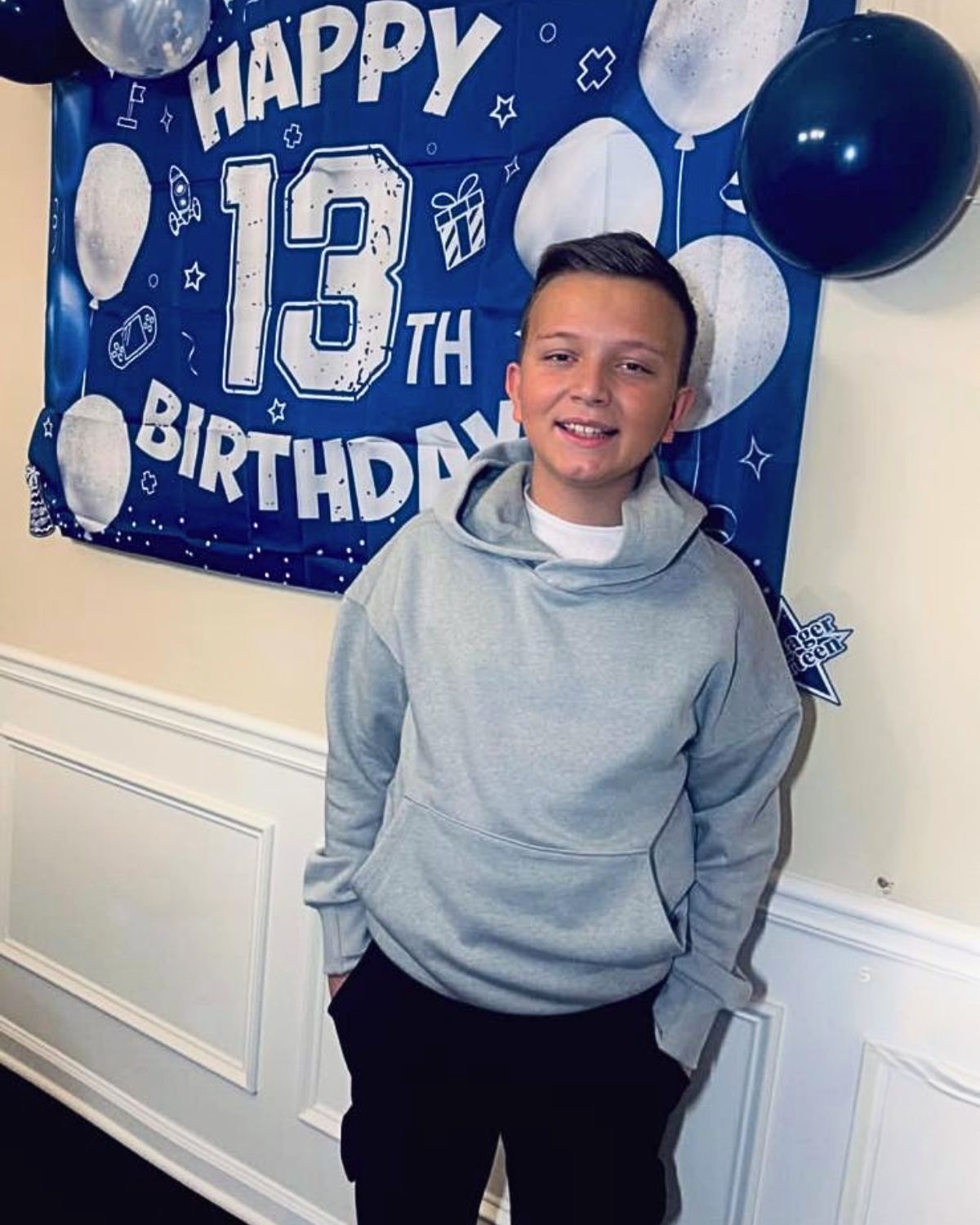
Ran for 13 days, from May 30 to June 12, 2026, the last day Crush saw it.
Run by TipsEverysingleday on Facebook. Crush is not the advertiser and does not verify its claims. See this ad in Meta's Ad Library(opens in a new tab)
Want an ad like this for your product?
Crush makes new ad images for your product from this ad: your logo, your product photo, your offer.
Trials from $19.95 USD, then $79.95 USD a month. Cancel anytime.
About this ad
- Meta Ad Library ID
- 1718083369185982
- Platforms
- Facebook, Instagram, Audience Network and Messenger
- Relaunches
- 0
Ad text
My son never said it out loud. That’s what scares me most now. He still came downstairs for breakfast. Still answered when I called his name. Still said “fine” when I asked how school was. But something had gone missing. The spark. The mischief. The little sideways smile he used to give me when he was trying not to laugh. Then one Thursday afternoon, I found his notebook open on the bedroom floor. I know I shouldn’t have looked. But one sentence was written so hard into the page that the pencil had nearly torn through it. “I wish I could disappear and nobody would notice.” I stopped breathing. Because there are sentences a child writes when they’re angry. And then there are sentences that feel like a door slowly closing. This one felt like a door. I sat on his floor for what felt like an hour, holding that notebook in my lap. Suddenly the bad grades didn’t matter. The complaints from teachers didn’t matter. The missed assignments, the attitude, the messy room, the arguments… None of it mattered. All I could think was: “How long has he felt this alone?” That night, I watched him eat three bites of dinner and push the plate away. I wanted to scream, “Please tell me what’s happening inside your head.” But I didn’t. Because something told me this wasn’t a moment for lectures. It was a moment for rescue. And I was about to discover the strangest rescue of all. What happened next might be called a miracle. You see, it wasn’t always like this. My boy used to be the one who’d stay up late building castles out of cereal boxes and asking me the kind of questions that send you to Google at 2 a.m. Then middle school happened. And somewhere along the way, the light dimmed. Homework turned into a nightmare. A 20-minute assignment stretched into two hours of sighs, frustration, and tears. I tried $90-an-hour tutors we couldn’t afford, color-coded planners, even a “motivation jar” filled with little rewards. Nothing worked. His grades slipped from solid B’s to scattered C’s, then to a D in Algebra that turned our kitchen table into a war zone. “Maybe he’s just not a school person,” one relative said, the way people say “maybe it’s not meant to be” when their own hope is running on fumes. 💔 I even paid $2,500 for a psychological evaluation that gave me a 31-page report full of terms like “executive dysfunction” and “low emotional focus control” — but no real solutions I could actually use. I enrolled him in a hyper-focus and discipline program that promised “incredible results in 60 days...” We made it to the second week. Arthur refused to go back, screaming in the parking lot while other parents stared. More money wasted. More trauma for Arthur. And more frustration building inside me. I even tried different medications, but they did nothing except turn him into a zombie — staring at walls, no appetite, no joy. When you’re a mom or grandma, you know this kind of ache. It feels personal, like you failed to pass down some secret gene for focus, discipline, and follow-through. I carried that feeling in my chest like a stone I couldn’t swallow. And then… I found the secret that gave me my boy back. A week after that meeting, I was back in another waiting room. Another specialist. Another clipboard shoved into my hands. Another polished voice saying, “We’ll run a few tests and see what we find.” By then, I already knew the routine. You fill out the forms. You answer the same painful questions. You try not to cry in front of strangers. And then you wait for somebody to tell you what’s wrong with your child… in words that sound intelligent but change nothing. I was staring at a poster about “Executive Function Disorder” when a man came over and sat beside me. He looked to be in his 70s, with silver hair and kind, observant eyes that didn’t carry pity — only recognition. At first, he didn’t say a word. He just sat there quietly, reading something on his tablet. Then he glanced up and said: “You look like a mother who hasn’t given up.” And God… That did something to me. I can’t fully explain it. Maybe it was because I’d been holding myself together with my last thread for so long… that a few gentle words felt like someone finally giving me permission to come apart. So I did. Everything spilled out. The grades. The calls from school. The fighting. The fear that my child’s future was shrinking smaller and smaller right in front of my eyes. The medications. The guilt. He simply listened... Not the way most people listen — just waiting for their turn to speak. He listened the way a doctor listens to a heartbeat. Focused. Still. Fully there. And when I finally ran out of words, he gave a small, quiet nod. Then leaned in slightly… as if what he was about to tell me might change everything. “I’m Dr. Joe Hartman,” he said. “I’ve spent most of my life studying how children’s brains respond under pressure — first at MIT’s Institute for Brain Research… and later as a consultant for a NASA cognitive performance project.” I just stared at him. NASA? For a second, I honestly thought I’d misheard him. But he only smiled. Not a big smile. Not a boastful one. The kind of quiet smile people wear when they know something that can change your life. Then he leaned in slightly and lowered his voice. “My son was once the boy everyone thought would never make it.” Those words hit me so fast I almost stopped breathing. He went on. “He was angry. Lost. Failing nearly every class. Getting into fights. One teacher told me, point-blank, that he’d be lucky just to make it through high school.” He paused. Then added, almost as if he still couldn’t believe they had said it out loud: “One counselor actually suggested I start looking into ‘vocational alternatives’ when he was only eleven.” His eyes drifted for a second, like he was seeing those years all over again. Then he looked back at me. “Today, he’s a Neuroscientist.” 😳 I didn’t move. Didn’t blink. Couldn’t. “He works two buildings away from the same campus where I used to teach,” he said. “And last year, he published his first paper.” My throat tightened so fast it hurt. Because suddenly, for the first time in what felt like forever… I wasn’t looking at another expert giving me a label. I was looking at a father who had stood exactly where I was standing now… and somehow found a way out. “How?” I whispered. My voice cracked on that one word. “How did you do it?” He never said “tutors.” Never once mentioned medication. Didn’t talk about stricter discipline… or better routines… or some color-coded system to “keep Arthur on track.” Instead, he reached into his canvas bag… pulled out a small card… and slid it across the table toward me. “Just Seven seconds,” he said. His voice was calm. Certain. “That’s all it took to help my son’s brain begin clearing what had been blocking him.” 🤔 Then he looked at me and quietly said: “Shakespeare once wrote…” “Our doubts are traitors, and make us lose the good we oft might win, by fearing to attempt.” He let that hang in the air for a moment. Then added: “Don’t let fear stop you from trying something this small.” I looked down at the card. Written across the front in neat handwriting were the words: **Every genius knows how to listen.** On the back… a link. That night, after the house had gone quiet and everyone was asleep, I sat alone at the kitchen counter with that card in my hands. Seven seconds. I almost laughed. NASA. Sound waves. Brain waste. Zombie Cells. Honestly? It sounded like the kind of thing you’d find in some feel-good wellness article written by a person who had never sat across from a teacher… never held a report card with failing grades… never watched their child slipping through their fingers. I just followed the card. The video on the link was short. Seven seconds? My skeptical brain rolled its eyes. My mother-heart whispered, “What if.” I didn’t tell Arthur. I didn’t make a speech or a “new system” chart to tape on the fridge. Headphones. Quiet. A tiny ritual while he brushed his teeth, the sound so gentle it felt like it was happening in the room next door. Seven seconds and done. He shrugged and said, “That’s it?” And I said, “Yep,” like I hadn’t just pinned my last hope on a whisper. I nodded. The next morning, something strange happened. He was up before I even knocked on his door. He ate breakfast without staring at his phone. Then he looked up and said, “I’m heading to school early. I want to ask Mr. Patel something about the lab.” I didn’t make a big deal out of it. Mothers know better. The second you celebrate too soon, whatever little miracle is happening has a way of slipping off and hiding. So that night, we did it again. Seven seconds. Nothing more. 🎶 By the third day, his Algebra teacher emailed me: “Big improvement in focus today. Whatever you’re doing… keep doing it.” On the fifth day, Arthur came home, spread his notes across the kitchen table, and looked at them like someone seeing progress with his own eyes for the first time. “It felt like… I could actually tell where the ideas connected,” he said, tracing one line into another with his finger. “Like my brain had Velcro.” 🧠 Velcro. That word stayed with me. Two weeks in, the C’s started turning into B’s. That D slowly climbed to a B-. One teacher wrote “clear and precise” across the top of his essay… and Arthur carried that paper around like proof that maybe — just maybe — he wasn’t broken after all. Then I cried. Not sad tears. Relief tears. We kept going. Seven seconds, daily. Sometimes he forgot and I remembered. Sometimes I forgot and Arthur reminded me, “Hey, the thing?!” and we’d both smile like we shared a secret handshake. 🤭 By the end of the semester, he pulled off something I will never forget: Straight A’s. 🥹 The boy who dreaded Algebra was now tutoring two freshmen. The change wasn’t just at school. At home, Arthur started talking to me again. Not one-word answers. Real conversations. “Mom, do you think it’s possible to run out of questions?” That question. The kind he used to ask before the world convinced him he didn’t belong. Was it magic? No. Was it a miracle? No. It was the 7-Second NASA Secret Song, helping Arthur’s brain activate its natural cleaning rhythm to clear toxic brain waste. Recently, Dr. Hartman and I met for a coffee. I thanked him so fiercely I probably scared the barista. 😅 “It’s not me,” he said. “It’s how your son’s brain was designed by God — and NASA discovered how to help activate it.” He leaned closer. “We used to think struggling children had lazy brains, broken attention, or poor discipline. But we were missing something much deeper.” He tapped his cup gently. “Every child’s brain creates waste. Every day. Every time they learn, think, focus, watch screens, process stress, or try to control emotions.” I just listened. “Normally,” he said, “the brain has a cleanup system. A kind of janitorial crew. It clears away damaged cells and toxic waste before they clog the pathways children need to focus, learn, remember, listen, and stay calm.” Then his face became serious. “But when that cleanup system slows down, the waste starts to pile up.” He paused. “Like trash in a city.” That image hit me. Arthur’s brain as a city. Roads. Signals. Instructions trying to travel. Focus trying to move. Emotions trying to stay controlled. And then… trash. Fog. Roadblocks. Blocking everything. “That buildup can create what we sometimes call Zombie Cells,” Dr. Hartman said. “Damaged cells that refuse to die. They linger. They spread toxic waste. They interfere with the brain’s communication pathways.” I swallowed. “So Arthur wasn’t just… refusing?” Dr. Hartman shook his head. “Not the way people thought.” He took a sip of coffee. “When those pathways get clogged, signals don’t move cleanly anymore. They get delayed. Scrambled. Blocked. Misfired.” He looked me right in the eyes. “So the child who wants to listen suddenly can’t process what you said.” “The child who wants to finish homework suddenly feels overwhelmed.” “The child who wants to behave suddenly explodes before he can stop himself.” Not because he’s bad. Not because he’s lazy. Not because you failed as a mother. But because toxic waste may be blocking the very pathways his brain needs to focus, learn, remember, and control emotions. My eyes filled again. Because for years, every report card, every call from school, every judgmental look in public had made me feel like Arthur was choosing to be difficult. Like I was failing to fix him. But what if the genius was still there? What if it hadn’t disappeared? What if it was buried? Buried under toxic brain waste. Buried under clogged brain pathways. Buried under Zombie Cells eating away at the signals he needed to be himself. “It can’t be that simple,” I said, because I’ve been trained to believe that anything that works must be complicated, expensive, or both. “It is that simple,” he said. “Simple doesn’t mean small.” He took another sip of coffee. “NASA discovered decades ago that certain sound frequencies can help guide the brain into the wave patterns linked to focus, learning, and healthy brain cleanup.” “The 7-Second Song does exactly that.” “It’s not meditation.” “It’s not hypnosis.” “It’s just a precise audio pattern that helps activate gamma — the brainwave linked to clearing waste, sharpening focus, and restoring cleaner communication between pathways.” “Think of it like turning on the cleanup crew.” I stared at him. “So the sound doesn’t force the child to focus?” “No,” he said. “It helps clear what’s blocking focus.” That sentence changed everything for me. It helps clear what’s blocking focus. Not more pressure. Not more shame. Not more yelling. Not another expensive system Arthur would hate. Just a tiny soundwave that helped his brain start clearing the toxic waste that had been clogging the roads. “Does anyone else actually use this?” I used to be embarrassed to talk about it. Now I share it like I’m handing out life jackets. A grandmother in our neighborhood who was forgetting names and dates said: “It’s like my brain found the filing cabinet again. I can THINK clearly.” A father at Arthur’s school said his son went from C’s and D’s to B’s and an A. A single mom sent me a photo of her daughter’s honor roll certificate with tears streaming down her face. Is it all because of the 7-Second NASA song? Life is more complex than one cause. But when domino after domino falls in the same direction… you pay attention. A couple months earlier, my son was being threatened with expulsion. Now he was being asked to help. The same counselor who warned me about his future stopped me in the hallway and said: “Arthur is not the same child who sat in my office last year.” I knew exactly what changed. Seven seconds. For the Skeptical Like I Was You’re allowed to roll your eyes. You’re also allowed to be the mom who tries something tiny because the stakes are huge. I wasted more time arguing over phone chargers than this takes. Here’s what I need you to know: Your child isn’t broken. They’re not lazy. They’re not a lost cause. Their brain may simply be clogged by toxic waste. Tiny Zombie Cells may be blocking the pathways they need to focus, learn, listen, remember, and control their emotions. And there’s a way to help those pathways begin to clear. Seven seconds. That’s all it takes. I’m going to share the exact link Dr. Hartman gave me that day. If the video’s still online, I highly recommend watching it. 🚨 Warning: This video could be taken down at any moment. Last time, it disappeared in just a few hours. If you close this page now... you may never find it again. Tap below to see if the video is still available. 👇 https://bit.ly/theinfinitemind ☝️
Where the ad sends people
vsl.motionsicknesswave.com
2026 Best Kept Secret Behind Genius Kids
Dang, F., Jiang, Y., Pan, R., Zhou, Y., Wu, S., Wang, R., Zhuang, K., Zhang, W., Li, T., & Man, C. (2018). Lactobacillus paracasei administration improves type 2 diabetes in mice. Food & Function, 9(7), 3630–3639. https://doi.org/10.1039/c8fo00081f
See details: vsl.motionsicknesswave.com(opens in a new tab)