Christine Walker
Christine Walker Facebook ad: “Same Chip As $5,000 Clinic Aids - For $149”
Ran for 5 days, from June 4 to June 9, 2026, the last day Crush saw it.
Run by Christine Walker on Facebook. Crush is not the advertiser and does not verify its claims. See this ad in Meta's Ad Library(opens in a new tab)
Want an ad like this for your product?
Crush makes new ad images for your product from this ad: your logo, your product photo, your offer.
Trials from $19.95 USD, then $79.95 USD a month. Cancel anytime.
About this ad
- Meta Ad Library ID
- 1720153952473663
- Platforms
- Facebook, Instagram, Messenger and Threads
- Relaunches
- 0
- Niche
- Gifts & Crafts
Ad text
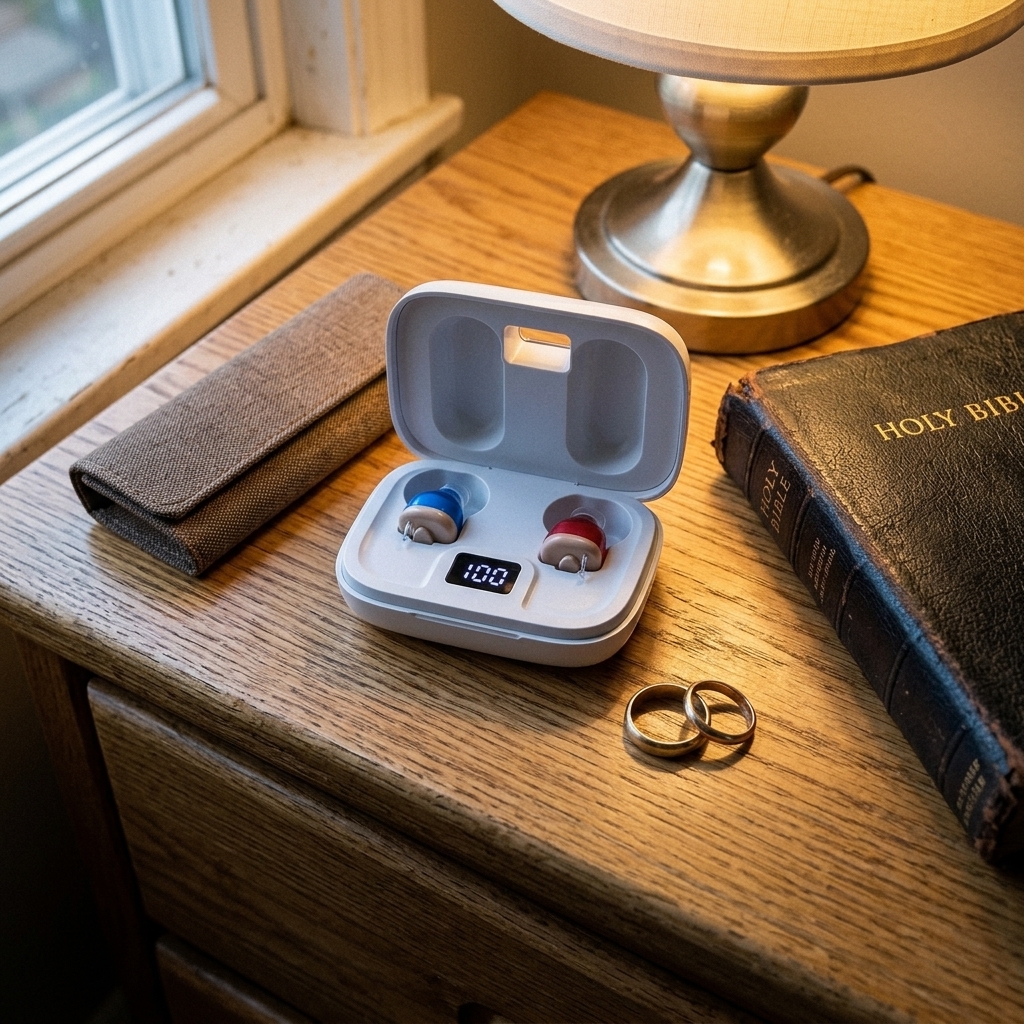
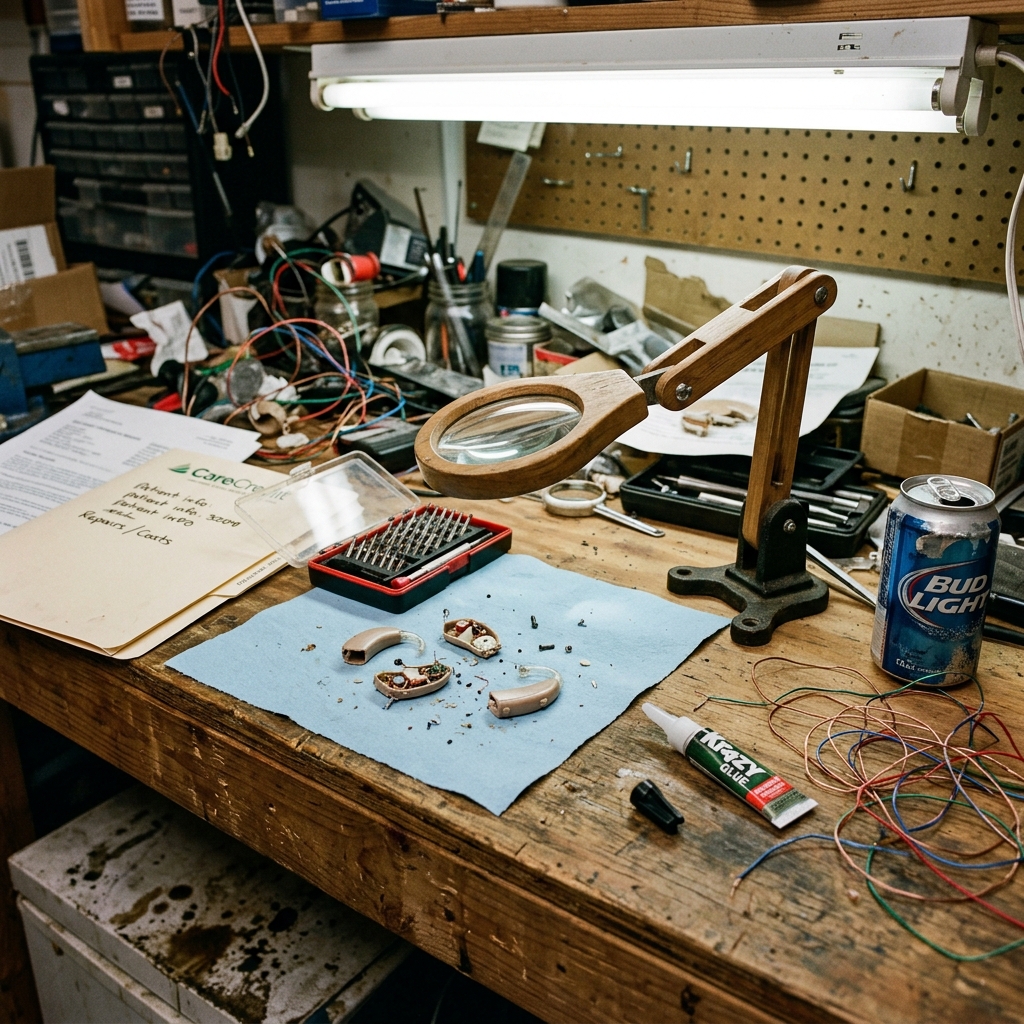
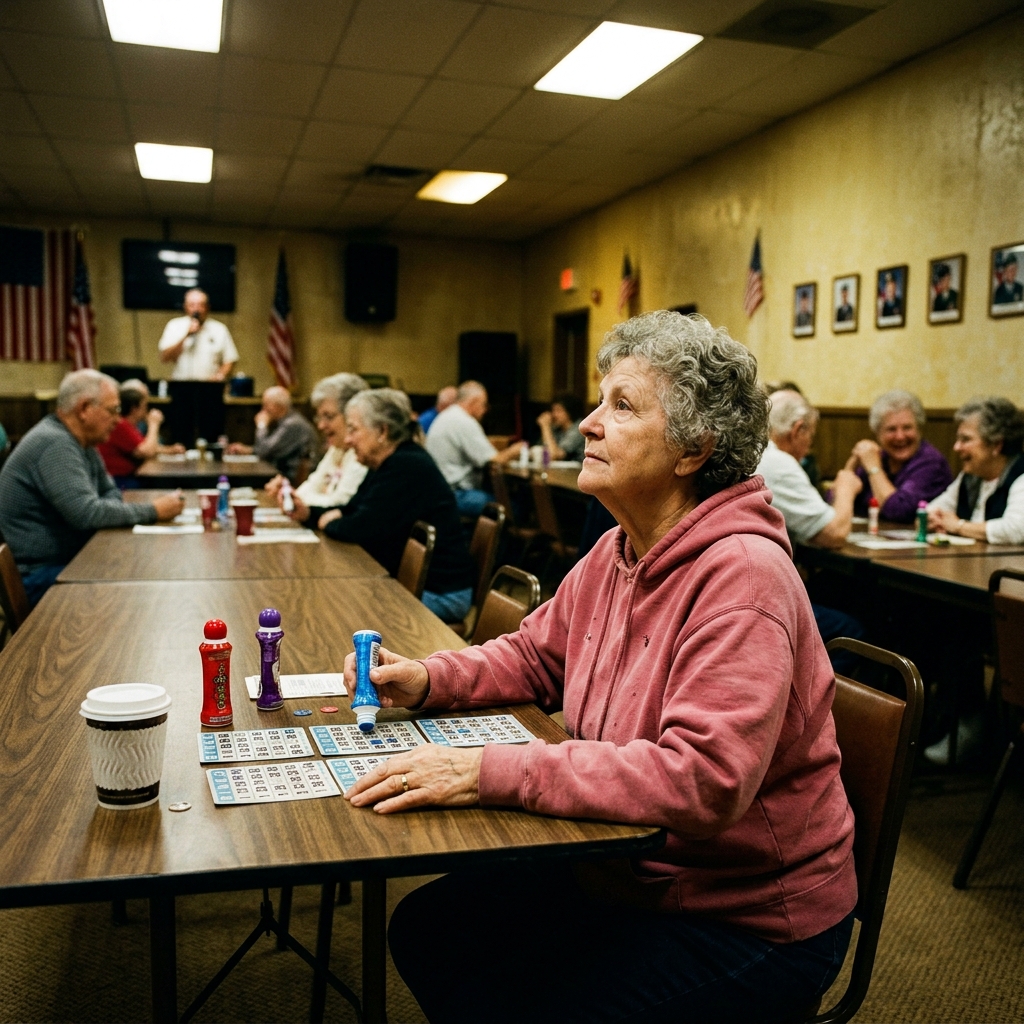
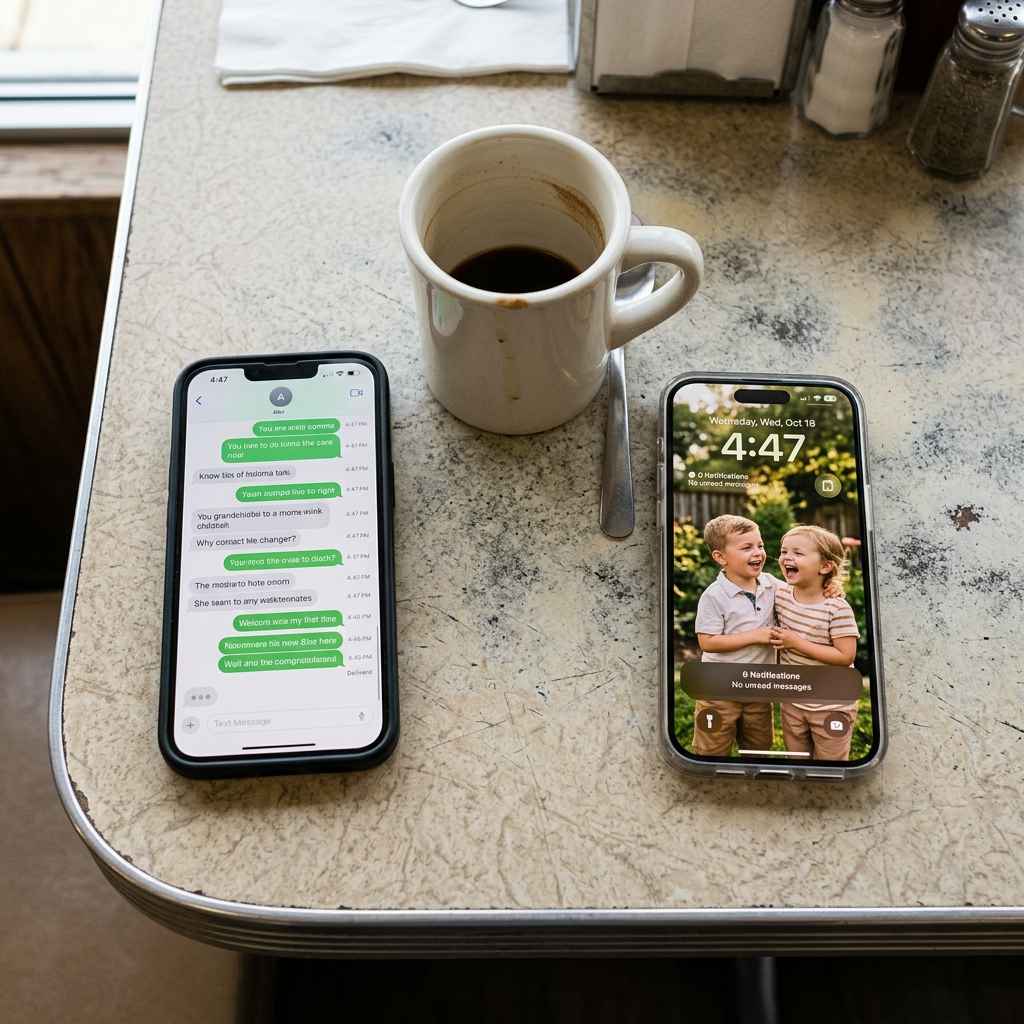
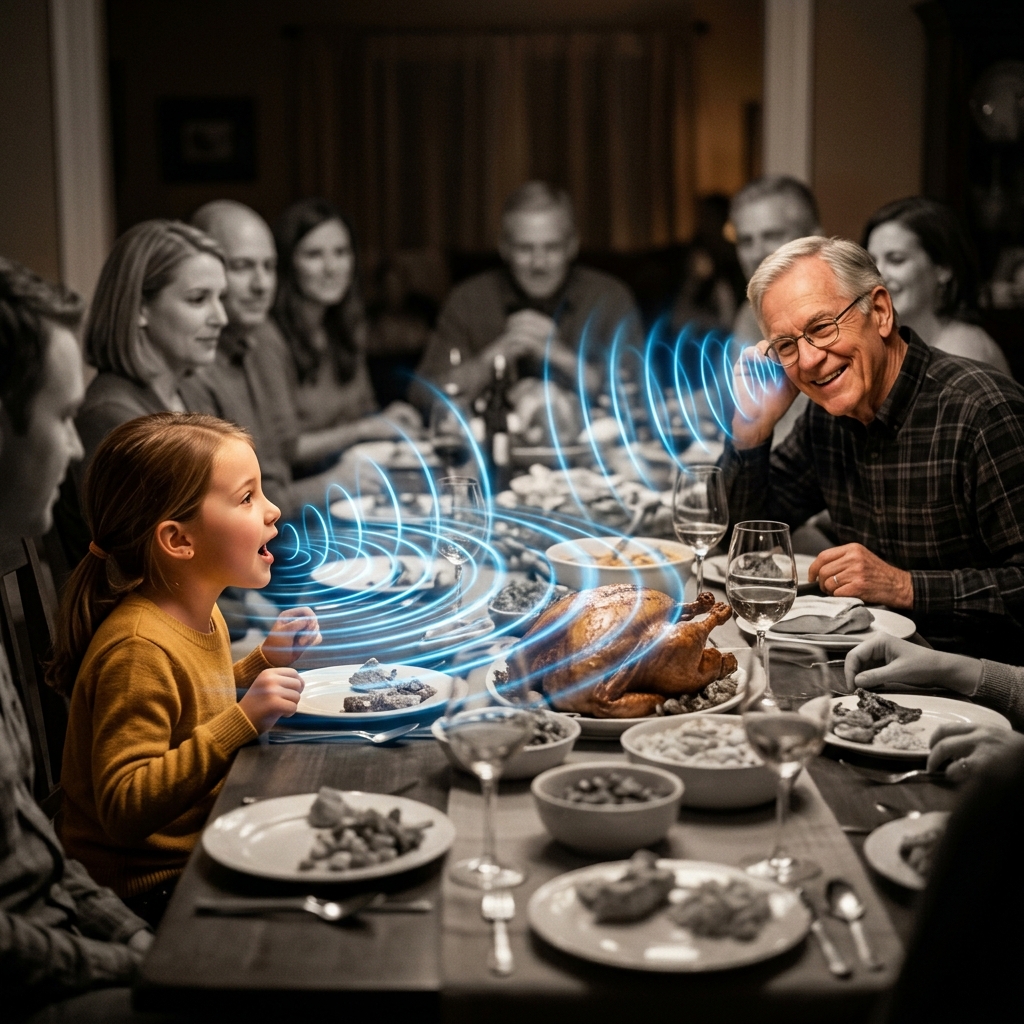
Thanksgiving 2024. 5:12 PM. Wheaton, Illinois. Eighteen people sat in my dining room. I could see the sound waves. I could not hear a single word. I mean that literally. I could see them. My granddaughter Hannah studies acoustical engineering at Northwestern. She had set a phone on the sideboard. It ran an app that draws voice frequencies on the screen in real time. Little ripples crossed the glass every time someone laughed or asked for the gravy. The ripples were beautiful. I sat at the head of the table and watched them move. I could not decode the words attached to them. I'm Christine Walker, and I run this page for the women who go quiet at their own holiday tables. The woman who wrote what follows is Maureen — a piano teacher who could see the sound waves at her own Thanksgiving and could not hear a word of them. She asked me to share her letter exactly as she wrote it. So here she is. My name is Maureen Caldwell. I am 73 years old. I taught piano for forty-one years and played the organ at Grace Lutheran. I made my living on listening. I listened for the one wrong note in a row of twelve children. And on the day my country gives thanks, I sat in a chair my late husband Harold bought at an estate sale in 1986. I watched eighteen people I love talk through me like I was a piece of furniture. Harold passed in 2021. Pancreatic. Fast. The morning of his funeral my daughter Caroline took my hand in the church parking lot. She said one sentence I have never been able to put down. She said, "Mom. You're going to have to start hearing us now. Dad can't translate for you anymore." I nodded. I said I would. I did not. Three years later I sat at Thanksgiving and watched sound waves I could see but could not understand. My grandson Ben is twelve. He pitches for his middle-school baseball team. He lost his front tooth in October to a comebacker he did not glove in time. He leaned across the cranberry sauce and said something that made his mother laugh into her hand. I caught the word "Gram" and the word "fastball" and a string of consonants between them. They might as well have been Mandarin. I smiled the smile I had practiced for two years in my bathroom mirror. I said, "Oh, that's great, buddy." Ben blinked once. Then he turned to his older sister and never looked back at me. That blink. That was the moment. That was the instant I understood the truth. My twelve-year-old grandson had just filed me away. I taught that child to grip a four-seam fastball on my front porch in the summer of 2019. Now he kept me in the same drawer he kept his great-aunt Edith, who has Alzheimer's. Not unkindly. Just permanently. Gram is the woman who smiles and nods. Gram is not really here anymore. I refused to let my father's silence become mine. My father Hermann was born in 1925 in a German farming town in Wisconsin. He went deaf in stages between 1989 and 1995. He refused every hearing aid my mother put in front of him because they whistled. They cost money. He was Hermann, and Hermann did not need help. He died in 2001 in a La Crosse nursing home. He had not finished a real sentence with my mother in seven years. At his funeral my mother held my hand in a parking lot. It was the same kind of lot where Caroline would hold mine twenty years later. She said, "I lost him before he was gone." I was 46 years old. I swore on that asphalt that his fate would not become mine. And then it started happening to me. You know the path if you are anywhere near 65. First the restaurants. The chain places with open ceilings and tile floors that bounce every fork-clink into a slurry. Then the family dinners. My chair shifted closer to whichever grandchild was loudest. Then the church. The pew moved forward two rows, then four, then the front, then the empty parking lot. What is the point of going if the sermon is a mumble? Then the phone. The volume cranked. The speakerphone preferred. The texts replacing the calls. The calls replacing nothing, because you stopped placing them. Then the bedroom. The TV on at 78, because the empty side of the bed where your husband used to be cannot complain anymore. Then one Thanksgiving you sit at a table you bought in 1986. A twelve-year-old you love more than your own life stops trying to talk to you. And you finally understand that you are halfway down your father's road. I spent the eighteen months before that Thanksgiving trying everything. Everything but the audiologist quote that scared me into doing nothing. I bought a $34.99 sound amplifier off an Amazon ad in March 2023. I wore it to the Wheaton Lions Club dinner. It amplified the air conditioner so loudly I took it out before the salad. I returned it in nine days for a $9 restocking fee. I tried the Costco Hearing Center in Lombard in June 2023. A pleasant young woman. A forty-minute appointment. The quote was $1,499.99 per ear plus a six-week fitting period plus three follow-ups. Three thousand dollars and a chunk of my summer on the counter. I drove home and ate a ham sandwich and watched the goldfinches on Harold's feeder. I tried Miracle-Ear in October 2023. The sales advisor — that was his actual title — walked me through a lifestyle assessment for fifty-three minutes. He handed me a printout for $4,890 mid-tier and $6,490 premium. He added a CareCredit financing application at 26.99% APR. I left with the printout in my coat pocket. I felt like I had just been measured for a coffin. I tried Phonak. The big one. The brand your audiologist names like it is a religion. The downtown Wheaton clinic. A real audiologist with a doctorate on her wall. She was kind. The audiogram took an hour. The quote was $5,498 for the pair. Add $400 for the premium fitting protocol. Add $250 a year for the continued care plan. I sat in the parking lot for nineteen minutes. I made a sound that was adjacent to crying. I tried Oticon at the suggestion of a Wednesday coffee friend. Same building. Different room. The quote was $5,898. I did not even sit down for that one. I tried a personal sound amplification product. A PSAP — that is what the FDA lets them call it, because they are legally not hearing aids. A YouTube reviewer with 2.1 million views swore by it. Eighty-nine dollars on Amazon. I returned it in six days. The seller kept $12 because I had used it. I tried a Sam's Club hearing screening at the suggestion of a friend. They walked me through a fifteen-minute lifestyle audio profile on an iPad. They emailed me a quote for $3,899 that same afternoon. I did not respond. The follow-up calls came every Tuesday at 10 AM for six weeks until I blocked the number. I tried a TV-shopping-channel set in February 2024. It was 11:47 PM on a Sunday and I could not sleep. Four hundred and $149.99 and ninety-five cents on three easy payments. I returned it in four days. They kept $40 in shipping. I tried doing nothing for four months in the spring of 2024. By far my longest experiment. I missed Ben's spring concert in May because I could not face two hours of mumbled middle-school band. I begged off my niece's bridal shower in June because the venue had concrete floors. I declined a fishing weekend with my brother Carl in July because the cabin generator had been the deal-breaker the last two trips. Four months of refusals. Four months of becoming the relative who does not come. Four months of my own slow disappearance. I was not stupid for the $34.99 Amazon device. Not stupid for the $2,999.98 Costco quote. Not stupid for the $4,890 Miracle-Ear printout. Not stupid for the $5,498 Phonak quote. Not stupid for the $5,898 Oticon quote. Not stupid for the $89 PSAP. Not stupid for the four months of doing nothing. The drawer in my nightstand is not my failure. It is the receipt of an industry. That industry has been selling symptom-treatment for thirty years. Symptom-treatment is what the strip-mall lease, the audiogram, and the fitting protocol can be billed against. The annual care plan can be billed too. Every device I tried was built on the wrong theory. The theory was wrong. The drawer was the consequence. The morning after that Thanksgiving my brother Carl called me on FaceTime. He called from the Hampton Inn near O'Hare before his flight back to Phoenix. Carl is three years younger than me. He had worn something behind his ears all of Thanksgiving that I had not noticed once. I had assumed they were Bluetooth earbuds for a phone call. They were not. "How long, Carl." "Six months. And I should have called you the day I started, Mo. You did not catch a single word last night. Not one. Ben told his mother you scared him. He thought you'd had a stroke and were hiding it." I had not had a stroke. I had a signal path problem. Carl explained. He sat in a hotel lobby with a paper cup of coffee, his flight at 10:35. What he wore was not Phonak. It was something an audiologist friend of his in Tempe had told him about. A new-generation device built around a mechanism called Direct-Audio Bypass. Nine grams per side. It sat behind the ear so completely that I had looked at him across a turkey for six hours and seen nothing. He gave me the mechanism the way I am going to give it to you. In the exact sentence his audiologist friend had given him. "Maureen. Your ears aren't broken. The signal path is." That sentence rearranged my entire understanding of the last four years of my life. Standard hearing aids amplify everything. They make the room louder. They take the muffled sound and push it harder into the same damaged hair cells in your cochlea. Those cells are already failing. You get louder muffled. You get squealing feedback. You get an underwater conversation cranked to 11. Direct-Audio Bypass does the opposite. It re-routes the high-frequency information. The s sounds, the t sounds, the sh and th and f. These are the consonants that age-related hearing loss kills first. It routes them into the adjacent frequency bands your cochlea still processes cleanly. Your brain remaps the new pathway in seven to ten days. The consonants come back. Not louder. Decoded. Carl said his audiologist friend had spent twenty minutes on the phone the morning he ordered them. He explained why the $9.4-billion-a-year hearing-aid industry had never built this device. The Big Four — Phonak, Oticon, Miracle-Ear, Costco Hearing — own the distribution channels. Every margin sits in the audiologist visit, the ear-mold lab, the six-week fitting cycle, the $250-a-year care plan, the 26.99% CareCredit application. The mechanism had existed in the cochlear-implant research literature since the late 1990s. Building it into a nine-gram in-canal device would force the Big Four to dismantle the strip-mall lease. It would force them to dismantle the sales-advisor commission, the audiogram appointment, the protocol, and the renewal. So they did not. So a company you have never heard of did. Your ears aren't broken. The signal path is. Carl ordered me a pair on the FaceTime call. He walked me through it on his phone. Ninety-Day Money-Back Promise. Two-Year Free Replacement Warranty. I did not have to put on a coat. I did not have to drive forty miles. I did not have to sign a CareCredit application. The case arrived on a Tuesday in a brown padded envelope. I opened it at the same kitchen counter where I had eaten three years of solitary dinners. Two earpieces about the size of a pencil eraser. A charging case the size of a Zippo lighter. A single-page instruction card. I put them in. I sat at the counter. I listened to the refrigerator hum I had not properly heard in two years. I went to my Wednesday coffee group the next morning. Six women I have known since 1991. I caught the punchline of Marge Tessaro's joke about her husband's GPS for the first time in fourteen months. I laughed out loud. Three of the women stopped stirring. Week 2 I called Caroline on a regular phone. Not speaker, not maxed volume, the actual handset. We talked for forty-six minutes about Ben's report card. Week 4 I went back to the 8 AM service at Grace Lutheran for the first time since the spring of 2022. I sat in row twelve, where Harold and I had sat for thirty-five years. I heard the sermon. The whole sermon. The pastor read from Isaiah 35. "Then the eyes of the blind shall be opened, and the ears of the deaf shall be unstopped." I had to leave during the closing hymn. I could not get through "How Great Thou Art" without crying. Week 7 Ben called me on a Saturday afternoon and asked if I would come watch him pitch. I sat in a folding chair behind the backstop. I heard the catcher call the pitches. I heard Ben's coach yell "atta boy." I heard the home-plate umpire say "ball four." Ben turned around and looked at me between innings and waved. Week 11 I gave the toast at Caroline's fortieth birthday. Three minutes long. Held the room. Made Caroline cry. Made me cry. Week 12 — twelve weeks to the day from the Tuesday the brown envelope arrived — I sat at the kitchen counter. I did the math one more time. Direct-Audio Bypass. Nine grams per side. Ninety-day promise. Two-year warranty. A grandson on a pitcher's mound looking for me behind the backstop. This Thanksgiving — last Thursday — I sat in the same chair at the same table. Hannah set up her acoustical-engineering phone app on the sideboard again. The ripples moved across the glass. And this time I was inside the ripples. I was hearing the words attached. Ben leaned across the cranberry sauce and told me about the fastball that took out his front tooth. He told it the whole way through. I caught every word. When he was done I asked him three follow-up questions and he answered them. His mother put her hand over her mouth again. For a different reason this time. I refused to let my father's silence become mine. I refused on a parking lot in La Crosse in 2001. I refused at a kitchen counter in Wheaton in 2024. I will refuse every morning I am still here to refuse. If you are reading this and you are 60 or 65 or 70, you may have a drawer with a $39 amplifier in it. A Costco quote and a Phonak printout. Please understand that you are not the problem. The devices are not the failure of your willpower. Direct-Audio Bypass is the mechanism the Big Four could not build. Phonak, Oticon, Miracle-Ear, Costco Hearing. Their entire distribution chain runs on the audiologist visit, the fitting, the mold, the adjustment, and the service contract. ClearSound Restore ships in a brown padded envelope from a website. There is no clinic. There is no $400 fitting fee. There is no 26.99% APR. There is a 90-Day Money-Back Promise. There is a Two-Year Free Replacement Warranty. There is a twelve-week transformation timeline that I have personally walked, end to end. Direct-Audio Bypass is the right theory and the brown envelope is the delivery. And there is a grandson on a pitcher's mound looking for you behind the backstop. PS. Carl flies back in for Christmas. He has not heard Ben laugh in three years either. He will this year. I cried at the kitchen counter the first morning. I had carried the silence for two years without knowing I carried it. The loophole that lets this device skip the audiologist gauntlet had been buried by industry lobbying for nineteen years. The first run sold out in March. The company has restocked twice. Another reader wrote me last week. She was one of the 8,400 patients Dr. Reeves has fitted across her 29 years. She had spent thousands on five different aids before this one. You weren't stupid for the aids in your drawer. The system was wrong, not you. Send this to a sister, a daughter, a friend. My father Hermann went silent the way I almost did. He died in a La Crosse nursing home in 2001, not hearing the bass line of any hymn. — Maureen Caldwell, 73 → https://stamiri.com/products/clearsound-restore-hearing-aids
Where the ad sends people
stamiri.com
Same Chip As $5,000 Clinic Aids - For $149
Stamiri
Learn more: stamiri.com(opens in a new tab)