
Inactive· since Aug 4, 2026
- 36
- days it ran
- 0
- relaunches
Ad copy
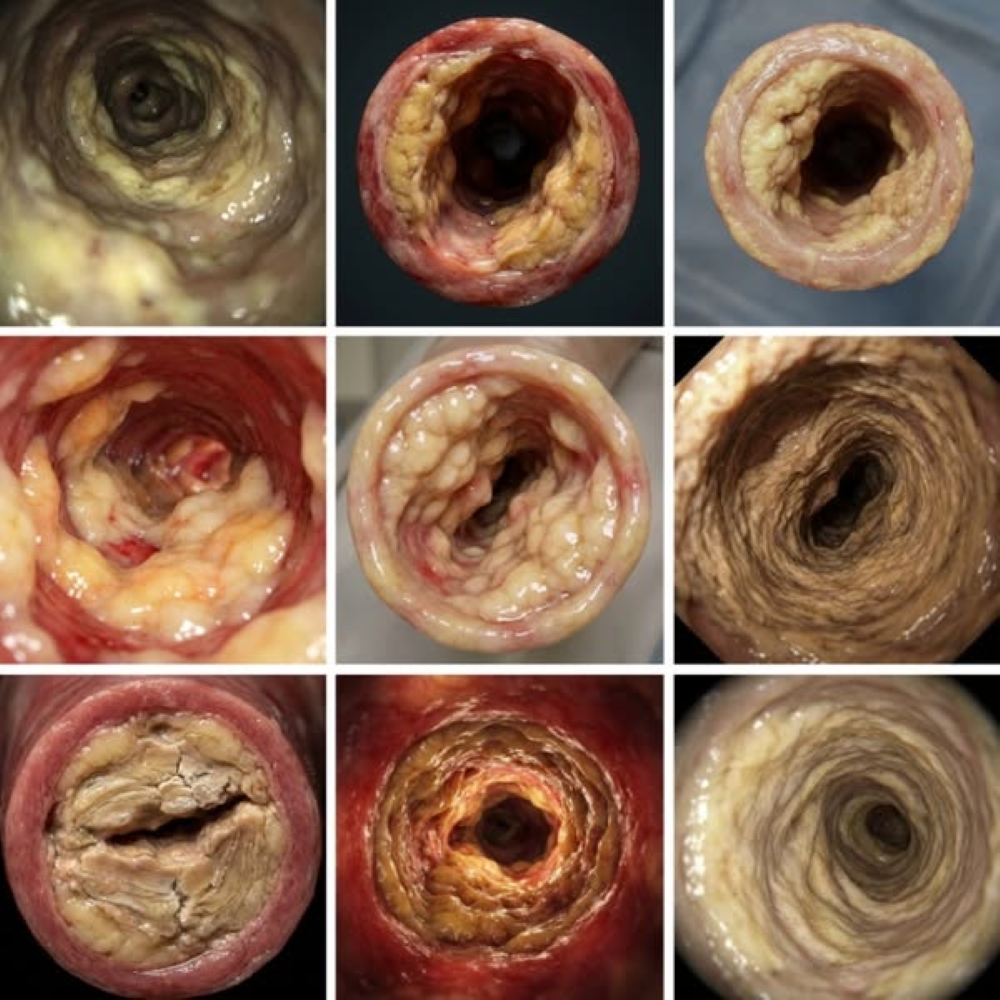
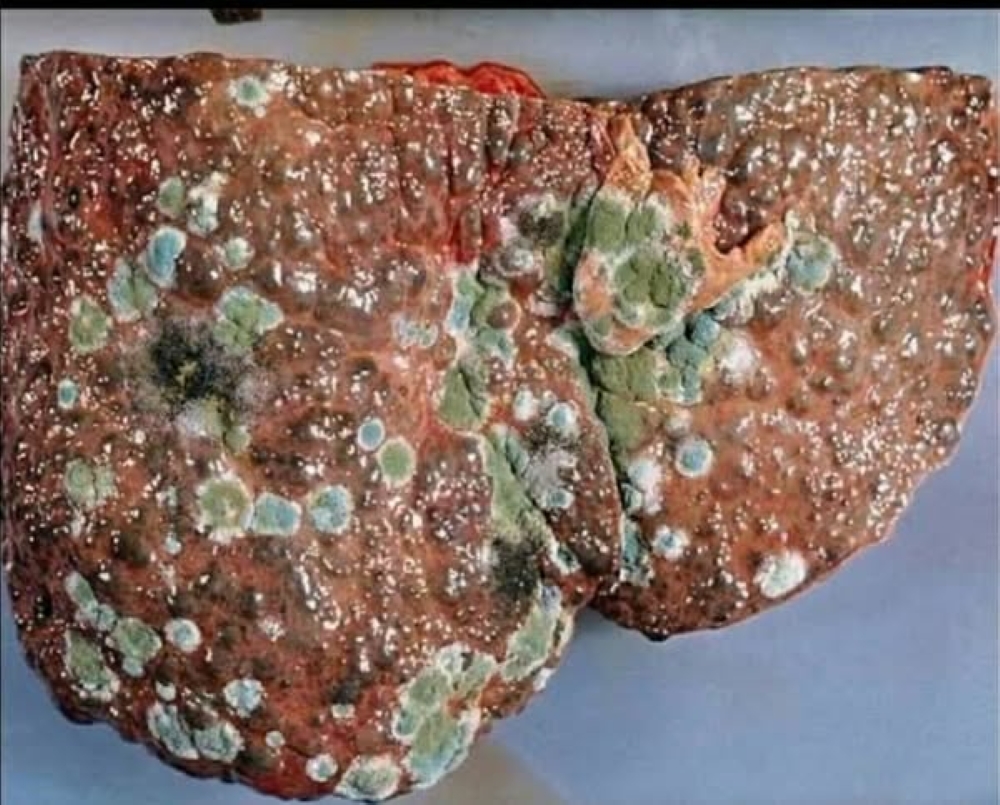
My older sister was diagnosed with fatty liver in March 2022. She never drank a day in her life. After the diagnosis, she cut out sugar. Went on the Mediterranean diet. Walked three miles a day. Lost 38 pounds. She died of liver failure on July 8th, 2024 at 4:33 AM. She was 62 years old. She cut out sugar completely on March 14th. Did the Mediterranean diet for two years and four months. Lost 38 pounds. Walked her yellow lab Daisy three miles every single morning before the Wisconsin sun got too high, summer and winter, didn't matter. She did everything the hepatologist told her. The hospital bill was $68,000. The funeral was $11,200. Her last voicemail is still on my phone. I can't delete it. If I delete it, she's really gone. I need to tell you what happened to Carol. Because every week I see posts on Facebook from women like her — "my enzymes are slightly elevated, the doctor said to cut carbs, any tips?" — and I can't keep scrolling past them. If you or someone you love has been told their liver enzymes are creeping up — or has walked out of a doctor's office with a diet plan and a six-month follow-up — please read this whole thing. I know it's long. I know you're scrolling. I know you have things to do. Fifteen months ago I would have given anything — everything — for someone to tell me what I'm about to tell you. Carol went in for her annual physical on March 11th, 2022. She felt fine. Better than fine. She'd just turned 60. She was still teaching the kindergarten Sunday school class at our church. She still tended the rose garden behind her house. She thought she was healthy and honestly so did I — she'd never smoked, never been a drinker, our dad was 87 and still driving. Three days later her primary called. ALT of 87. AST of 81. The ultrasound came back with moderate steatosis. The hepatologist confirmed it two weeks later. Non-alcoholic fatty liver disease. F2 fibrosis already. "There's no medication for this. We treat it with lifestyle. Mediterranean diet, drop 10% of your body weight, walk every day. We'll retest in six months." Carol hung up the phone and sat at her kitchen table for forty minutes without saying anything. Then she stood up, opened the pantry, and started filling a trash bag. I was there. I'd driven over the second she called. I watched her throw out the Honey Nut Cheerios. The Wheat Thins. Three boxes of Lorna Doones. Two jars of Welch's grape jelly her grandkids ate when they came over. The Stouffer's lasagnas in the freezer. The Marie Callender's pies. The Breyers mint chocolate chip she'd kept in the bottom drawer for thirty years. "That's it," she said. "I'm done." And she was. For 28 months, she didn't break the diet once. No bread. No pasta. No sugar. Not at her granddaughter's first communion party in May. Not on Bill's 65th birthday cruise where the dining room set down a slice of New York cheesecake in front of her and she asked them to take it back. Not at her own 61st birthday dinner where I made her grilled snapper and a salad and she smiled and said it was the best birthday meal she'd ever had. She stopped going to the Wednesday potluck at her bridge club because everyone was bringing pasta salads and bread baskets and she couldn't sit there with a plate of plain chicken without feeling like she was in the wrong room. She stopped coming to my Saturday morning coffee — the one we'd been having on my back porch since 1993 — because the smell of my homemade biscuits made her quiet in a way I couldn't fix. She lost her oldest friend Diane, who told her "you're no fun anymore" and stopped calling. She lost a piece of herself she'd been carrying for 35 years. And she did it anyway. Because the doctor said to. She lost 38 pounds. She walked Daisy — her yellow lab — three miles every morning before the heat got high, summer and winter, didn't matter. She bought a juicer. Carol. With a juicer. I still can't picture it. She took the milk thistle her hepatologist "wasn't against." She took a multivitamin. She drank lemon water every morning. She ate exactly what they told her to eat. She did everything right. The follow-up labs came back on September 14th, 2022. ALT: 84. AST: 79. Six months of doing everything right and the numbers had barely moved. The doctor said, "The liver heals slowly. Give it more time. We'll retest in six months. Keep doing what you're doing." So she did. March 2023 labs: ALT 89. AST 84. Higher. September 2023 labs: ALT 97. AST 92. The fibroscan in May 2024 showed F3. She had progressed. Carol came home that night and sat at her kitchen table. The same table she'd sat at after the first phone call. She didn't say anything for a long time. Then she said: "Janet, I gave up everything. Everything I loved to eat. For 26 months. And it's getting worse." I told her to give it more time. I told her the hepatologist said it could take two years. I told her to trust the process. She nodded. She kept walking Daisy. She kept eating the snapper and the spinach. She kept taking the milk thistle. Five days later — five days — she woke up at 2 AM with a pain in her right side that doubled her over. Bill drove her to the ER and called me from the parking lot at 4 AM. I got in my car in my pajamas. By the time I got there, the whites of her eyes were yellow. Not "a little off." Yellow. Like a highlighter. Like someone had switched a light on behind them. The ER doctor — a young woman, couldn't have been 35 — looked at Carol's bloodwork and her face did this thing. "Mrs. Whitaker, your bilirubin is 8.7. Your ALT is now 584. Your liver is in acute decompensation. We're admitting you to ICU." "But I've been on the diet for over two years," Carol said. The doctor just looked at her. "I know, Mrs. Whitaker. I'm so sorry." Carol spent 6 days in the ICU. I learned things about the liver I never wanted to know. I learned that when a liver shuts down, the toxins your body produces every single day — ammonia, mostly — start building up in your blood and crossing into your brain. They call it hepatic encephalopathy. It means your sister stops being your sister. She looks at you like she's trying to remember who you are. She says things that don't connect. On day 3, Carol asked me three times in twenty minutes where our mother was. Our mother died in 2018. I learned that they inject something called NAC intravenously when a liver is shutting down. The nurse told me it's the same compound they use for acetaminophen overdoses. She said it forces the liver to start rebuilding the master antioxidant it uses to protect itself — something called glutathione. She said it's the only thing they've got, and at this stage they were hoping it could buy her time. It bought her 6 days. Day 4, her kidneys started failing. The doctors talked about a transplant. Then they talked about her not being a candidate because of how fast she was declining. Then they stopped talking about transplants altogether. Day 5, her belly swelled up like she was nine months pregnant. They drained 3 liters of fluid out of her abdomen. The nurse called it ascites. I called Tom in Phoenix. Day 6 — July 8th — I was in the family waiting room down the hall. They'd asked me to step out. At 4:27 AM I heard the long beep down the corridor. At 4:33 AM, a young resident I'd never seen walked into the waiting room. I knew. "Mrs. Marsh. I'm so sorry. We did everything we could." I drove home at 6:30 AM. Then I drove to Bill's a few hours later, because he couldn't be in that house alone yet. Carol's juicer was still on the counter. Her walking shoes by the back door. The milk thistle on the windowsill above the sink, right next to the multivitamin. And on my phone, her voicemail from the day before. From when she didn't know yet. "Hey Jan, it's me. Call me back when you get a sec. I love you." Where it sits today. I went home that night and sat down in Carol's chair. The one she'd sat in every Saturday morning at my kitchen table for 35 years. I didn't move for seven hours. The house was so quiet I could hear the clock in the hallway tick. 56 years she'd been my sister. And the loudest thing in my house was a clock. The funeral was July 15th. Bill flew their daughter in from Portland with the grandkids. Our brother Tom flew up from Phoenix. The grandkids wore dresses that were too big for them. My five-year-old grand-niece asked me: "Aunt Janet, when is Grammy coming home?" I told her Grammy was in heaven now. She said: "Can we call her there?" I had to walk out of the room. After the funeral, I tried to go back to normal. I couldn't. Because every time I opened Facebook I saw women of Carol's age — posting things like, "my enzymes came back borderline, doctor said borderline fatty liver, anyone tried anything?" Or, "Mediterranean diet for 6 months, my numbers haven't moved, what else can I try?" And I knew — I KNEW — some of them were doing exactly what Carol did. The diet. The walking. The juicing. The milk thistle. And ending up where she ended up. I couldn't just sit there and watch it happen. So I started researching. Not because I wanted to. Because I had to. Because if Carol gave up two years and four months of everything she loved for nothing — if I can't save even one other family from what happened to mine — then I can't live with that. I read for weeks. PubMed papers I had to read three times to understand. Hepatology forums where people described Carol's exact trajectory. Studies out of Japan and Germany. And one thing kept coming up, over and over, that no hepatologist ever told us. The reason Carol's numbers didn't come down is that the lifestyle changes only slow the damage. They don't repair what's already gone. Specifically: glutathione. Glutathione is the master antioxidant your liver uses to filter everything that passes through your body — every medication, every environmental toxin, every fatty meal, every hormone, every breath of polluted air. Every cell in your liver depends on it. And here's what no one told us. After age 40, your body produces about 10% less glutathione every single year. Modern life — processed food, medications, environmental toxins — burns through what's left even faster. By 55 most people have lost nearly half their production capacity without knowing it. When your glutathione is low, your liver keeps running but has nothing to work with. Fat backs up inside liver cells. Toxins recirculate. Enzymes climb. The damage has nowhere to go. Read that again. Carol's liver wasn't damaged because she ate the wrong food. It was damaged because her glutathione tank was empty — and once it's empty, even the cleanest food in the world will slowly destroy your liver. And here's why eating clean alone didn't save her: cleaning up the diet stops the depletion. It doesn't refill the tank. Her tank was already empty by the time the hepatologist told her to cut the carbs. That's why her numbers wouldn't move. She gave up everything she loved to eat to stop the bleeding from a wound that was already inside her. I sat with that for three days. And then I started looking at what I'd been doing. I'd thrown out the milk thistle bottle Carol had left at my house. But I bought a new bottle for myself. Because I'm 57. Because my last physical came back with "mildly elevated" liver enzymes too. Because I was terrified. I took it for a month. My internist — a different one than Carol's, who I called because I trusted her — laughed when I told her. "Janet, milk thistle protects liver cells. But you cannot protect cells running on an empty tank. It sits on the surface while the depletion continues underneath. It doesn't refill anything." Then she said something I'll never forget. "If Carol had been on something that actually rebuilt her glutathione, her story might have been very different." I stopped breathing for a second. "Why didn't her doctor prescribe that?" She was quiet for a long time. "Because we don't prescribe supplements. And the version that works isn't a prescription." I went to Walgreens the next day. I stood in that aisle for forty-five minutes. Milk thistle. Liver detox tea. Dandelion root capsules. 30-day "liver cleanse" kits. Multivitamins with "liver support." Generic NAC capsules — $14.99 a bottle, 600mg, the cheap stuff. I bought the NAC. Took it for three weeks. Ran my labs. Nothing. I started digging again and what I found made me throw the bottle in the trash. A liver running on empty can't absorb a capsule properly. Most of the active ingredient passes through unused. The capsule passes through the organ that's already failing before it ever reaches the bloodstream. You're paying for compounds that never get where they need to go. Liquid bypasses this entirely. Liquid hits the bloodstream directly. I had been doing the right thing in the wrong form. I was furious. I'm still furious. About two weeks later I was up at 1 AM on the NAFLD subreddit — the same one I'd been reading since Carol died — and a woman in Oregon posted something that stopped me cold. She said her sister had been diagnosed with NAFLD at 58. F3 fibrosis. She did the diet. Her fibroscan progressed anyway — sound familiar? — and then she found a liquid formula that combined NAC with actual L-Glutathione, plus two bitter herbs to open the drainage pathway, plus choline to actually move the fat out of her liver cells. Her ALT went from 106 to 31 in twelve weeks. Her next fibroscan came back at F1. Without changing anything else. I read that post four times. I started looking into the formula she mentioned. And what I learned is that there are five things a serious liver support has to do at the same time, or it's a waste of your money. It has to rebuild the production of glutathione from the inside out. That's NAC — the same compound the ICU was putting into Carol's IV at the end. Not a vitamin. The actual building block. It has to replenish glutathione that's already been depleted, directly, while the rebuild is happening. That's L-Glutathione itself. NAC restarts the factory. L-Glutathione restocks the shelves at the same time. It has to package and move the fat that's already backed up inside your liver cells. That's choline. Choline is the fuel for the fat export pump. Without it, the fat just sits there hardening into scar tissue, no matter how much weight you lose. This is the part nobody told Carol. She was eating the cleanest diet of her life and the fat in her liver cells had no way out. There was no export pump because there was no fuel for one. It has to open the drainage pathway so what the liver processes actually leaves the body. That's a bitter herb blend — artichoke and dandelion, working in sequence. One opens bile production. The other clears the final pathway out. And it has to be in liquid form. Because a compromised liver cannot absorb a capsule properly. Five things. All five. At the same time. In liquid form. I went through every product I'd looked at in Walgreens. Not one of them did all five. Most did one. The expensive ones did two. Not a single liquid in the whole aisle. That's when I found Purelia. It was the only formula I could find that hit all five. NAC. L-Glutathione. Choline. Artichoke. Dandelion. Liquid dropper, two droppers in the morning. 60-day money-back guarantee tied to your actual labs — if your numbers don't improve, you get every penny back, no questions asked. I almost didn't order it. After the Walgreens aisle. After the milk thistle. After Carol. After everything. But my brother Tom was sitting on an ALT of 142 and a "borderline fatty liver" diagnosis his GP said to "monitor." My son-in-law in Atlanta had just been told his fibroscan showed early steatosis. I had my own labs creeping in the wrong direction. I ordered it. Tom first. ALT 142. Diagnosed NAFLD eighteen months ago, doing the diet, watching the numbers climb anyway. I didn't ask. I sent him a bottle and a note that said, "If you don't take this every day I will never speak to you again, Tom, I mean it." He took it. He didn't give up his food — he's stubborn the way Carol was stubborn — but he took the two droppers every morning. He went back to his doctor last month for his follow-up. ALT: 41. Down from 142. In ten weeks. He hadn't changed anything else. Same diet, same walks, same life. The only thing he changed was the liquid he took with his morning coffee. He called me crying. My 54-year-old brother. Crying on the phone like a kid. He said, "Jan, I think Carol died because nobody told her about this." I had to hang up. Then there's my son-in-law in Atlanta. 39, two little girls, early NAFLD on his last fibroscan. Started taking it eight weeks ago. He says the dull ache he'd had under his right rib for two years — the one his doctor told him was "probably just gas" — is gone. He says his afternoon energy is back for the first time since the diagnosis. My neighbor across the street, Patricia. Her husband died of cirrhosis fourteen months before Carol. She and I started having coffee on Tuesdays after the funeral. She started taking it three days after I told her, just for prevention. She says it's the first time in years that she doesn't feel like she's waiting for her own diagnosis. I told Bill, Carol's husband. I told the women in my Bible study. I told Carol's old quilting circle when they came by to drop off a casserole. I'm not a doctor. I'm not a scientist. I'm not selling anything and I don't get one penny from any of this. I'm a 57-year-old woman sitting in my kitchen at 2 in the morning because I can't sleep and I can't stop thinking about Tom in Phoenix and my son-in-law in Atlanta and the women on the NAFLD subreddit posting "my sister's numbers won't come down, what else can we try." Here's what I know because I lived it: Eating clean stops the depletion. It doesn't refill what's been depleted. It doesn't repair the damage. Milk thistle protects liver cells. But you cannot protect cells running on an empty tank. A liver running on empty cannot absorb a capsule properly. Liquid bypasses this. Carol gave up everything she loved to eat for 28 months and it didn't save her because nobody told her what was actually broken. I wish someone had told us before March 11th, 2022. Before the diagnosis. Before the trash bag of food in the pantry. Before the 28 months of plain grilled snapper. Before July 8th at 4:33 AM. I can't go back. Carol can't come back. Her chair at my kitchen table is going to stay where it is. But you can still go forward. Your sister can. Your mother can. Your daughter can. You can. The page that explains all of this — the glutathione mechanism, why the Mediterranean diet alone wasn't enough, what your hepatologist doesn't know about liquid absorption, and exactly what's inside Purelia — it's the page I found at 3 AM. Not protecting. Restoring. That's the line that finally made it click for me. I want you to read it. Not for me. For whoever you'd leave behind. 👇 https://try.officialpurelia.com/liver-support-pdp1 Carol used to say, "You can't change what already happened. But you can ask better questions about what comes next." You can ask better questions. — Janet Marsh, age 57, Madison, WI P.S. Carol's voicemail is still on my phone. I still can't delete it. Every morning I scroll past it and for one second I think it's new. For one second I think she's calling to ask if I want to come over for Saturday coffee. She's not. $68,000 in hospital bills. $11,200 for the funeral. 28 months of her giving up every food she loved for nothing. And a liquid that costs less than the bag of organic kale she was juicing every morning — a liquid my own doctor told me could have changed everything if we'd known. Please. Don't end up here. Don't let someone you love end up here. 👇 https://try.officialpurelia.com/liver-support-pdp1 P.P.S. I don't work for Purelia. I don't get a penny from this. I'm writing this at 2:41 AM because I can't sleep and Carol's chair across the table is empty and Tom in Phoenix is 54 and the women on that subreddit are still posting at 2 AM and I'm terrified every time my phone rings. Share this with anyone you love who has fatty liver. Even "mild." Even "borderline." Even if they're doing the diet perfectly. Especially then. Please. DISCLAIMER: Individual experiences vary. These statements have not been evaluated by the FDA. This product is not intended to diagnose, treat, cure, or prevent any disease.
Support your liver without giving up the life you built
Try Purelia for 60 days. If you don't see real changes in your energy, mornings, or how you feel overall, we'll refund every cent. Just an email. That's it.
SHOP NOWLike this ad? Make it yours.
Crush rebuilds this exact creative around your product — your brand, your colors, your offer — in about a minute.