
Inactive· since May 15, 2026
- 33
- days it ran
- 4
- relaunches
- 54,333
- EU reach
Ad copy
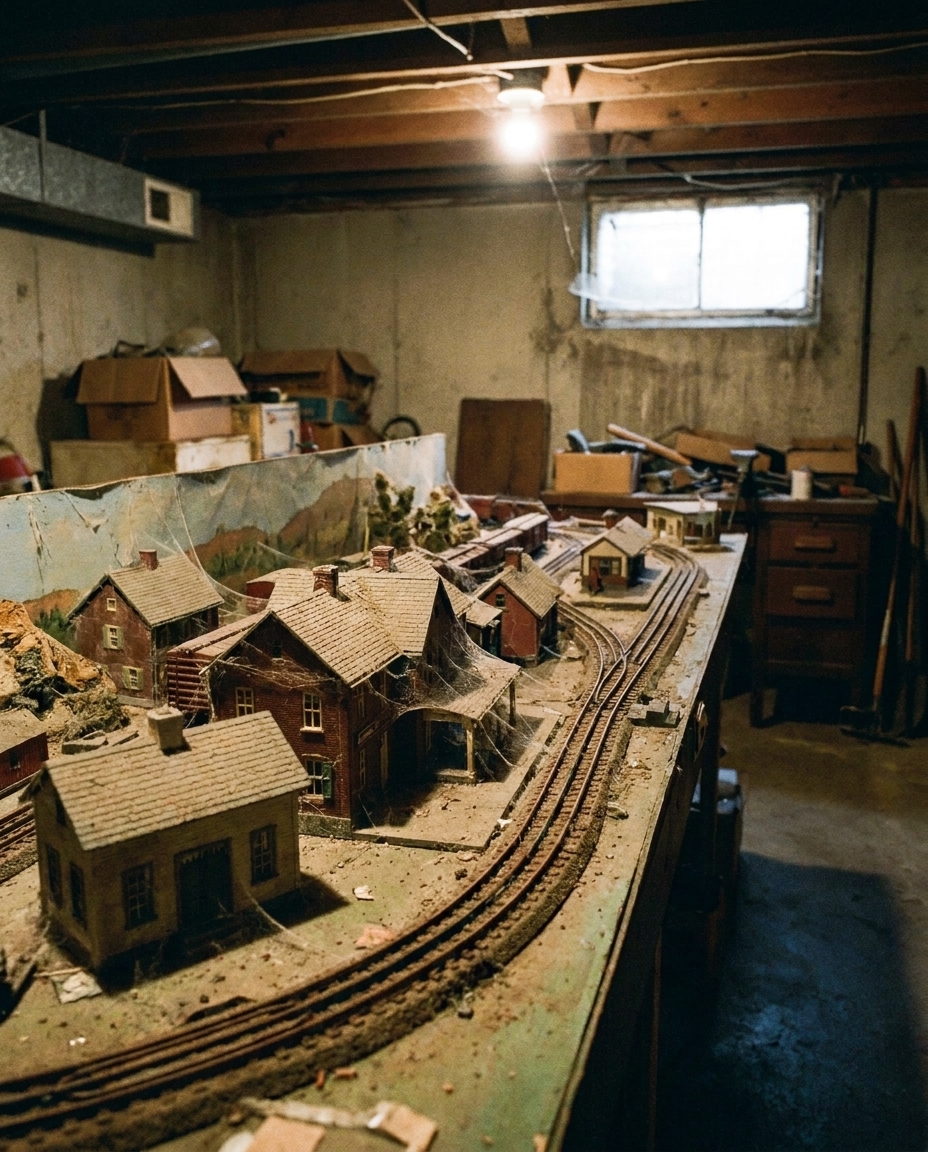
The chart said he was fine. The man was not. My name is Carolyn. I am sixty-two. I live in western North Carolina, about thirty minutes outside Asheville, with my husband, Hank. Hank is sixty-six. He was a civil engineer at the state Department of Transportation for thirty-eight years. He retired two years ago. We have a son in Charlotte and a daughter in Raleigh. I retired four years ago, after twenty-eight years as a branch manager at a small credit union three miles from our house. We were, on paper, finally at the years that careful people work for. I want to tell you something about Hank that I want you to hold while you read this. Hank has been a careful man for as long as I have known him. His mother had high blood pressure that was not well-managed in the seventies, and Hank watched her come down with the things you come down with when the blood pressure is not well-managed. He decided, in his twenties, that he was going to do everything that could be done. He walked every morning at six-thirty for twenty-five years. He ate the way a careful eater eats — fish twice a week, vegetables at every dinner, fruit instead of dessert most nights. He never smoked. He had one glass of red wine with dinner and that was it. He slept seven hours a night. He saw his doctor — Dr. Bryant, a careful man we have both been seeing for seventeen years — for his annual physical every year. Eleven years ago, when Hank was fifty-five, his numbers started to creep. Not alarming. Just a little. Dr. Bryant put him on a low-dose blood pressure medication. Hank has been on the same low-dose for eleven years. His numbers have been in the ranges Dr. Bryant wants them in ever since. Not borderline. Not perfect. In the ranges. Hank has done everything anyone has ever asked him to do. Everything. That is the part I want you to hold. For the last eighteen months, my husband — who has done everything right for forty years — has been quietly disappearing inside our house. I am going to tell you what I mean. It looked like this. It looked like Hank still doing his six-thirty morning walk every day, but the walk had gotten four minutes longer over the previous year. Hank times his walks. He has timed them for twenty-five years. The timer does not lie. The same loop he had been doing in thirty-eight minutes for years had become forty-two minutes. He had not said anything about it. I had been pretending not to look at the kitchen clock when he came in. It looked like Hank sitting in his recliner after lunch with the newspaper open on his lap, falling asleep, in a man who had never been a man who napped. It looked like the Sunday crossword. Hank had done the Sunday New York Times crossword in pen for forty years. He had been a Sunday-crossword-in-pen man for as long as I had known him. He had stopped about a year ago. He told me he just wasn't in the mood. He had not been in the mood for fifty-two Sundays in a row. It looked like the basement. Hank had been building a model train layout in our basement for thirty-one years. It is a small layout — a town with a station, a creek, a trestle bridge over the creek, a small church on a hill above the town. He had spent thousands of hours on it. He used to come up from the basement on Saturday afternoons with sawdust on his sleeves and tell me about a new piece he had built. He had not been down to the basement in eight months. The trains were where he had left them in July. None of it was alarming. Hank was still walking. He was still eating well. He was still sleeping. His numbers were still where Dr. Bryant wanted them. He was, by every measure anyone could see on his chart, a sixty-six-year-old man doing everything right. But the man I had been married to for thirty-nine years was quieter than he used to be. He was slower than he used to be. He was, somewhere inside the man I could see, dimmer than he used to be. The chart did not know. I knew. I had been pretending not to know for a year and a half. I started taking a watercolor class on Tuesday evenings about a year ago. I had wanted to paint since I was a girl and I had never made the time for it. When I retired, I made the time. The class is at our community college, two miles from our house. Eight people in the class. We met every Tuesday at six in a small studio in the back of the art building. There was a woman in the class named Marlene. She is, I would guess, around sixty-five. Silver hair, a quiet manner, painted small careful watercolors of birds. We had been sitting at adjacent easels for the full year. We had said hello at the start of every class and goodbye at the end of every class and we had not really talked. That kind of friendship is its own thing. You can have it for a year with another woman in her sixties without ever knowing very much about her. The Tuesday in March was a Tuesday like every other Tuesday. We painted for two hours. When we got to the parking lot at eight-fifteen, the sky had opened up. A thunderstorm. Hard rain. The kind of rain you don't drive in for a few minutes if you can avoid it. Marlene and I had walked out together because we were the last two in the studio. I had an umbrella. She did not. I held the umbrella over both of us as we walked to my car. I unlocked my car. I said: get in. I will sit with you until the rain eases. There is no point getting drenched between here and your own car. She got in. We sat in my car for almost twenty-five minutes. The rain came down so hard I could not see the parking lot lights. We talked. We talked about the class. We talked about a painting she had been working on for three weeks of a goldfinch on a thistle. We talked about her grandchildren. We talked about Asheville. Then, somewhere around fifteen minutes into the storm, she asked me about Hank. I had mentioned him a few times in class over the year. She asked the way someone asks who has been quietly noticing. She said: you have been quieter for the last few months. Is he all right? I sat with that for a moment. I looked at the rain on my windshield. I said: he is doing everything right. Every single thing he has been doing for forty years, he is still doing. The numbers are good. The doctor is happy. The chart is fine. And the man inside the chart is quieter than he used to be. Slower. Smaller. I do not know how to say it any plainer. Marlene was quiet for a long minute. Then she said something I have been thinking about every day since. She said: the chart told us Stew was fine. The man was not fine. I had been reading the chart for three years and refusing to read the man. She told me about her husband. She told me Stew was seventy now. She told me he had retired eight years ago after a long career as an accountant. She told me he had done everything right his whole life. She told me that for four years after he retired, he had quietly faded inside their house. The way the men in their sixties and seventies sometimes do. The way nobody on the outside notices. The way only the woman in the kitchen with him notices. She told me she had been pretending not to see it for four years. Then she said: about five years ago, I added one small thing to his mornings. I read for a month before I added it. I talked to his doctor and to his pharmacist before I added it. I want to be careful with you about what I say next, because Stew is one man and you are looking at one man and bodies are different. But Stew has been more himself for the last five years than he was for the four years before that. He has been doing the small daily things he had quietly stopped doing. He has been a man I recognize again. She said it without performance. She said it the way a woman in her mid-sixties says something in a car in a thunderstorm to another woman in her sixties she has been sitting next to in a watercolor class for a year. She wasn't selling me anything. She was just telling me. I asked her what she had added. She said it was a beetroot capsule. She said the brand was called Rosabella. She said she had picked it because the small company that made it cold-pressed the beetroot at low temperatures rather than processing it with heat, and because her husband's doctor had specifically said the way the supplement was processed mattered for what would make it from the field into the capsule. The rain started to ease around eight-forty. She put her hand on the door handle. She said: Carolyn. Please call your husband's pharmacist before you add anything to what he is taking. That is the only thing I am going to be insistent about. Promise me. I promised her. She got out of the car. She walked across the lot to her own car. She waved once before she got in. I sat in my car for a few minutes longer. I drove home thinking about Marlene. I drove the rest of that week thinking about Marlene. By the weekend, I was thinking about what I was going to do. I am, by temperament, a careful person. I run a small home and I had been running a small credit union for almost three decades before that. I do not add things to my body or to my husband's body without understanding what I am adding. I went home and I started reading. I read for almost three weeks. I read about beetroot. I read about the deep crimson pigment in the root. It is called betalain. It is the color that stains your cutting board for three days. It is also, according to a long and patient body of research the cardiovascular community has been quietly building for decades, one of the more potent antioxidants in the food supply. I read about the long, slowly built relationship the structure-function research has had with this vegetable. In the context of supporting healthy circulation. Supporting cardiovascular wellness. Supporting the body's own cellular energy. In people whose numbers are already in the range their doctors want them in. None of what I read was a fireworks story. It was the opposite of one. It was a vegetable that has been quietly studied for a long time by careful people who were not making outlandish claims. The language being used in the careful corner of the conversation was the language I had been quietly looking for. Supports healthy circulation. Supports cardiovascular wellness. Supports the body's own cellular energy. Not lowers blood pressure. Not fixes anything. Not replaces the medication Dr. Bryant had Hank on. That was the language I had been waiting eighteen months to find. I read about the cold-press, too. The chemistry is straightforward. The betalain pigment is heat-sensitive. If you process beetroot the standard way, with heat, you lose some of the compound to the heat. Rosabella cold-presses at low temperatures because they want as much of the compound as possible to make it from the field into the capsule. That is a slower way to make a supplement. It costs them more. At sixty-two, after twenty-eight years of looking at small businesses' books in my credit union, I have come to pay close attention to the small decisions companies make when no one is watching. Those decisions tell you everything. The other thing I liked was the simplicity. Two capsules in the morning with a glass of water. I have a husband. I have a quiet house in the mountains. I have a watercolor class. I am not interested in a protocol that requires its own shelf. Now I need to tell you the most important part of this letter. I made Marlene a promise in the car. I kept it. Before I added anything to what Hank was already taking, I called his pharmacist. His name is Steven. He has been the pharmacist at the small independent pharmacy in our town for fifteen years. I have been filling Hank's prescription there for as long as we have been together. I called him for a specific reason. Hank is on a blood pressure medication. Beetroot supplements and blood pressure medications can interact. The interaction is not necessarily dangerous. It is not necessarily anything. But it depends on the specific medication, the specific dose, what else is being taken, and what the prescribing physician would want for the patient. That is exactly the kind of small, specific, individualized question that a pharmacist can answer in two minutes. It is not a question I, as a careful patient's wife, was going to answer on my own. I called Steven. I told him what I was thinking about adding for Hank. I told him the brand, the dosage, the protocol. He pulled up Hank's profile. He looked at the prescription, the dose, the history, and the other small things Hank was taking. He told me he had no concerns about adding it at the dosage on the label. He told me to give it in the morning, with the blood pressure medication, the way the bottle suggested. He told me to come back to him if anything changed — if Dr. Bryant adjusted the prescription, if he added anything new, or if Hank had any symptoms we wanted to ask about. He told me, before we got off the phone, that he wished more of his patients made the call I had just made. I also called Dr. Bryant's office that afternoon. I left a message with his nurse, with the same information. She called back the next day to tell me Dr. Bryant had no concerns and to let him know how Hank was doing at his next appointment. I want to say something now, plainly, to every reader of this letter. If your husband — or your wife, or you yourself — is on any prescription medication, especially anything cardiovascular, please make the call before you add anything new. I made two calls. Hank is on a blood pressure medication. I would have made three if I had been more nervous. The two minutes the call takes is the most important two minutes of your engagement with any supplement. I told Hank that night. I told him about the parking lot, the storm, Marlene, the bottle. I told him about Steven and Dr. Bryant's office. I told him I wanted him to try it for me. He looked at the bottle. He looked at me. We have been married thirty-nine years. He knows when I am asking something that matters. Steven said it was alright? He said it was a sensible thing to add at the dosage on the label. And Dr. Bryant? The same. He nodded once. Alright. For you. In the morning I set two capsules on a saucer next to his coffee. He took them with his first sip, alongside his blood pressure medication. I did not say anything more about it. He started on a Monday. The first two weeks he felt nothing in particular. I had read enough alongside what Marlene had told me to know that bodies are different. Some people notice something within the first week or two. Some take much longer. Some don't notice much at all. I was prepared to land in any of those camps. I was prepared to be honest with myself about the result. What I noticed, I noticed slowly. The first thing I noticed, around week six, was the timer. Hank came back from his walk on a Wednesday morning and stood at the kitchen counter with his water glass. He said: forty. I said: forty what? He said: forty minutes. The loop. Back to forty. He had been at forty-two for over a year. He had been quietly creeping for over a year before that. He had not been at forty for almost two years. He drank his water. He went upstairs to shower. I did not say anything about it. I did not want to make a thing of it. I had read enough not to make a thing of one observation. A week after that, he came back from his walk and stood at the counter and said: thirty-nine. Two weeks after that he said: thirty-eight. The second thing I noticed, around week ten, was the basement. It was a Saturday afternoon in May. I was in the kitchen putting away groceries. I heard the sound of the model trains running. Not just one — the whole layout, the small towns and the trestle and the little church on the hill, the trains moving through it the way Hank had built it to do. I went to the basement door. I did not go down. I could hear Hank moving around down there. I went back to the kitchen and I made him a sandwich and I left it on the workbench at the top of the basement stairs. He came up at five with sawdust on his sleeves. He had built a small piece of fencing for the field next to the church. He said it had taken him longer than it would have taken him five years ago. He said it had felt good to do it anyway. The third thing I noticed was the Sunday crossword. It was a Sunday in early June. I came downstairs at seven in the morning. The kitchen light was on. Hank was at the kitchen table with his coffee. The newspaper was open in front of him, folded to the crossword. He had a pen in his hand. In pen. I poured myself a cup of coffee and I sat down across from him without saying anything. He was on the third clue. He finished the crossword by ten-thirty. He has done the crossword in pen every Sunday since. I want to be careful with what I am telling you. I am not telling you Rosabella did any of those things on its own. Hank had been walking more deliberately for several weeks before the timer started coming down. He had started getting back to bed at the same time every night, including weekends, on his own. He had been doing the careful things he had been doing for forty years, just a little more carefully. Something had unlocked in him the night I told him about the parking lot, that had nothing to do with a capsule on a saucer. There were several things changing at once, the way there are when a person finally decides to read the man again, after a year and a half of reading only the chart. All I am telling you is that he added one small thing to a long list of things he was already doing. He kept everything else exactly the same — including the blood pressure medication Dr. Bryant has him on. And a stretch of months followed that was qualitatively different from the eighteen months that had preceded it. That is the honest version. I would not give you a cleaner one. Hank went into Dr. Bryant for his regular appointment about six months after he started. Bloodwork the week before. Dr. Bryant studied the results. He looked at Hank. He said: whatever you are doing, your numbers are in better shape than they have been in a few years. Keep doing it. Hank told him about the walking. About the basement. About the beetroot. Dr. Bryant nodded. He said: that is a sensible thing to add at your dosage. There is good research on antioxidant support. Keep doing what you are doing and let's check in at the usual time. Hank called me from the parking lot. He didn't say anything at first. Then he said: Carolyn. I think I am back. I was standing in our kitchen. I sat down at the table. I cried the way a woman cries when something she thought was leaving comes back to her instead. I saw Marlene the following Tuesday at watercolor class. I waited until after class to talk to her. I told her, briefly, what had happened. She put her hand on my arm and she said: I am glad. Now you read the man for the rest of his life. Promise me that, too. I promised her. We have been painting together, side by side, every Tuesday since. I have not had to share an umbrella with her in another thunderstorm. I owe her one anyway. I am telling you this because I think you might be where I was the morning of that thunderstorm. Watching someone you love quietly disappear inside the careful prudent life he is still living. Watching the small things he used to do quietly stop being things he does. Watching his doctor look at his chart, and smile at his numbers, and tell you he is fine. If you have been telling yourself the chart is right because the chart is right, maybe it is also worth asking whether the chart is the whole story. It is not the whole story for everyone. It was not the whole story for Hank. Not as a replacement for anything his doctor has him on. Just as a question. A thing to add. A conversation to have at his next appointment. Here is how I think about Rosabella now, in the words I would actually use. It is something the body uses. The research community talks about it in the context of supporting healthy circulation, supporting cardiovascular wellness, and supporting the body's own cellular energy. In people whose numbers are already in the range their doctors want them in. It is not a fix for anything. It is not a substitute for a medication. It is not a treatment for the quiet decline a man can have in his sixties while doing everything else right. It is one small thing you add to the long list of things he is already doing for himself, alongside everything else. Please call his pharmacist or his doctor's office before you add it. If he is on any blood pressure medication, any cholesterol medication, or anything cardiovascular at all, this is non-negotiable. I called Steven. I called Dr. Bryant's office. I would not have added anything to a prescription without those calls. Neither should you. The people who know his chart will tell you in two minutes whether the supplement is safe to add given what he is already taking. I am a sixty-two-year-old retired credit union manager in North Carolina. I am not the person to ask. His pharmacist or his doctor is. The company has a ninety-day satisfaction guarantee. If you are not satisfied — for any reason at all, including just changing your mind — they refund you. It is not tied to his blood pressure. It is not tied to his bloodwork. It is not tied to anything you have to prove to anybody. If you are not satisfied, you are not satisfied. That is the whole policy. The beets are grown on a small operation that harvests on its own schedule. There are stretches when they are in stock and stretches when they are not. I mention that not to push you — please do not let anybody push you into a health decision — but so that if you go to the site and they are out, you know why. That is all I have. Thank you for reading this far. I hope something here was useful to you. I hope, somewhere today, your own Marlene is sitting at the easel next to yours, painting a goldfinch on a thistle, waiting for the right thunderstorm. — Carolyn P.S. I want to come back to the cold-press for a second. The betalain pigment — the deep crimson, the part the research community keeps circling back to — is heat-sensitive. That is the chemistry of the molecule. Process beetroot the standard way, with heat, and you lose some of the compound to the heat. Rosabella chose the slow way. Cold-press. Low temperatures. More of the compound through to the capsule. It costs them money. It costs them time. They made the choice anyway. At sixty-two, after a lifetime of paying attention to how small businesses make their small decisions, I have come to believe that the small decisions companies make when no one is watching tell you everything. P.P.S. Two capsules. In the morning. With a glass of water. That is the entire protocol. No powder to mix. No afternoon dose to remember. No schedule taped to the inside of the cupboard. Hank keeps the bottle on the counter next to his blood pressure medication. He takes both at the same time, with his first sip of coffee. I have been making the coffee for thirty-nine years. I am not retiring from that. We have earned a simple morning. P.P.P.S. I am going to say it one more time, because I have to. Please. Call his pharmacist or his doctor's office before you add anything new to what he is already taking. Especially if he is on a blood pressure medication, a cholesterol medication, or anything cardiovascular. They have his whole picture in front of them. I have written you a letter. There is a difference, and the difference matters. The two minutes it takes to ask are the most important two minutes of your engagement with any supplement. P.P.P.P.S. The guarantee, again, in case you skimmed. Ninety days. Any reason at all. You do not have to prove a single thing — not to them, not about his numbers, not about how he feels. If he tried it and you are not satisfied, you are not satisfied. They send the money back. That is the whole policy. A small-company policy. The kind of thing companies used to do when companies still answered the phone. P.P.P.P.P.S. The sentence Marlene said to me in my car — the chart told us Stew was fine, the man was not fine, I had been reading the chart for three years and refusing to read the man — is the sentence that has stayed with me longest. I had been doing that exact thing about Hank for eighteen months. I had not realized, until Marlene said it, that the chart and the man were two different things. You can read both. You should read both. If you are reading this letter and you have a husband who has been doing everything right for forty years, and his numbers are good, and his doctor is happy, and the man inside the numbers is dimmer than he used to be, I want you to know that you are not imagining the dimming. You are not being dramatic. You are reading the man. The chart will keep telling you he is fine. Read the man. I hope you find your own Marlene in your own thunderstorm. I hope you read carefully. I hope you make the call before you add anything. I hope, in a year from now, you are sitting at your kitchen table on a Sunday morning across from the man you love, and he is doing the crossword in pen. I hope that for you. That is the whole reason I wrote this. — C. https://track.tryrosabella.com/cdc16426-3e48-40a7-9fad-21098084f6cf DISCLAIMER Individual experiences vary. These statements have not been evaluated by the FDA. This product is not intended to diagnose, treat, cure, or prevent any disease.
Support stamina and heart health every day
"Best customer support ever. My issue was resolved quickly and professionally. I so love how the beetroot capsules are helping manage my blood pressure."
LEARN MORELike this ad? Make it yours.
Crush rebuilds this exact creative around your product — your brand, your colors, your offer — in about a minute.