
Inactive· since Jul 6, 2026
- 24
- days it ran
- 0
- relaunches
Ad copy
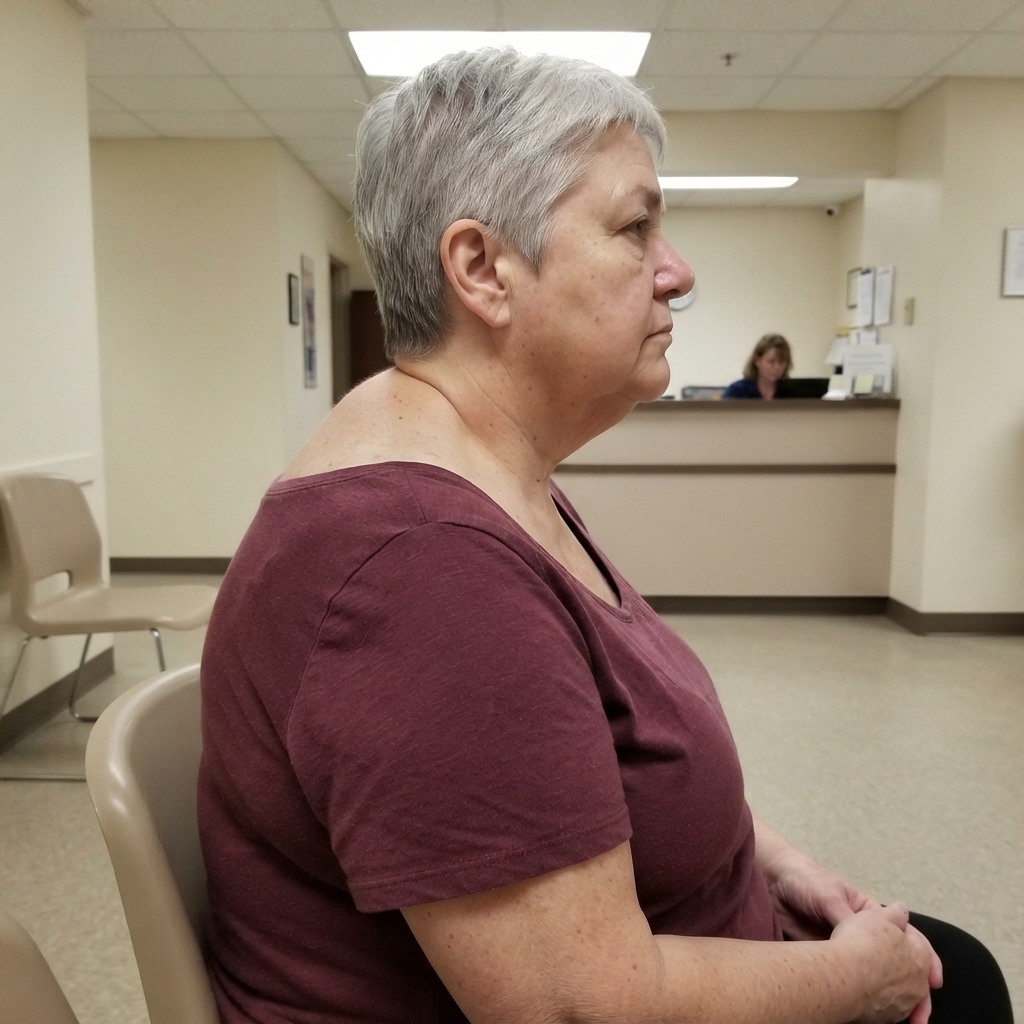
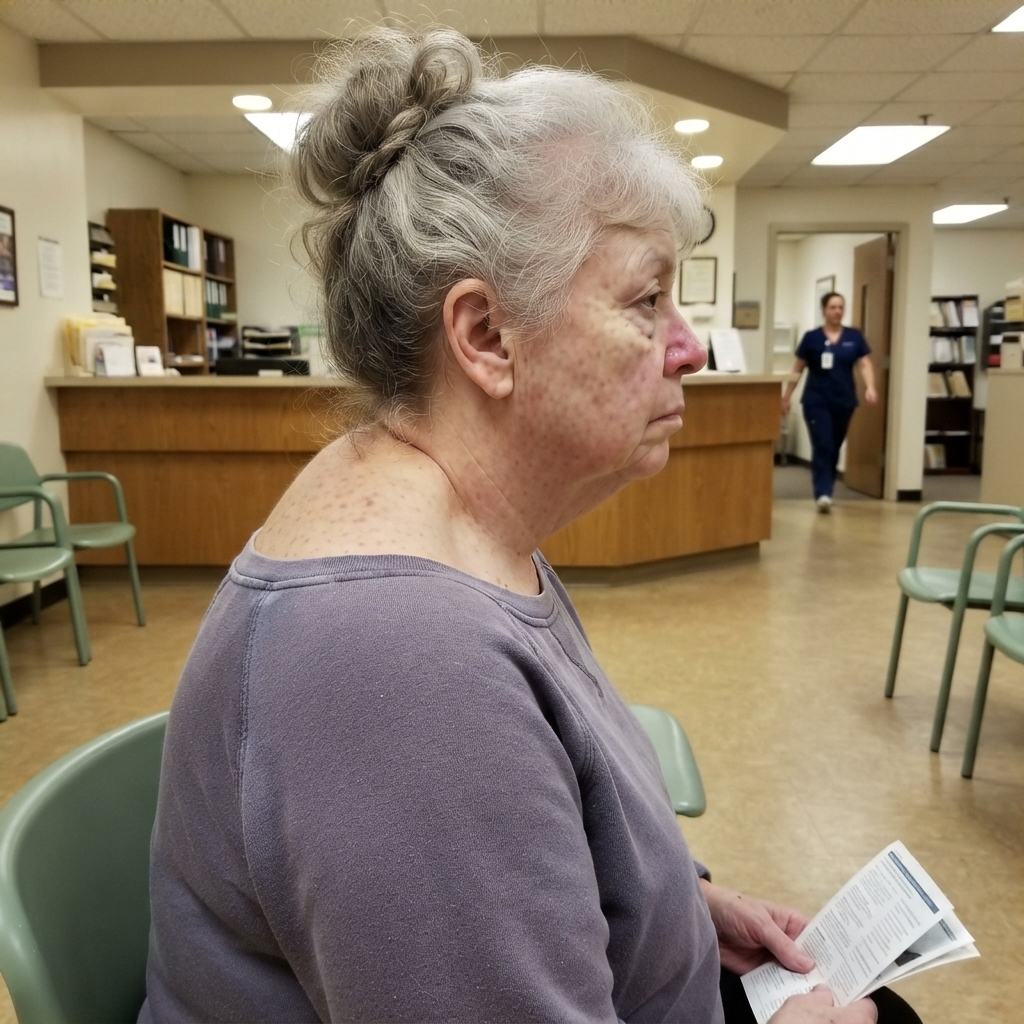
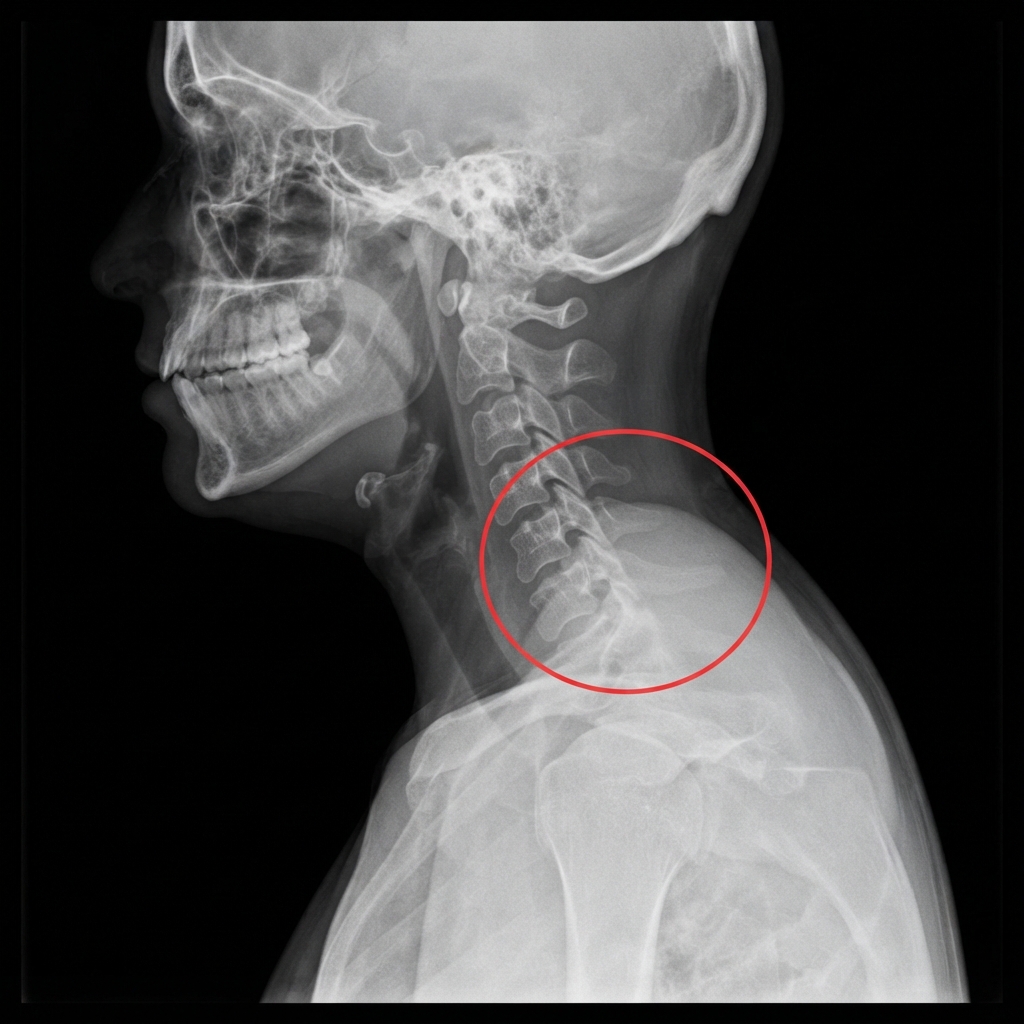
My older sister had a neck hump. She disappeared from her own life seven months ago. She was 60. I have one too. Same daily brace. Same assessments that always "looked stable." Same forward head position her practitioner was "watching." After watching her go... I went looking for what actually happened. What I found is the reason I'm writing this. ======== Her name was Barbara. She was an elementary school librarian for 28 years. Two grown sons. A husband she'd been married to since she was 23. Made the best Sunday dinners in the family. Could recommend a book for anyone. Called me every Sunday afternoon without fail. She was the steady one. The one everyone called when something fell apart. She was 60 years old. She should still be fully in her own life. ======== Barbara got diagnosed with early cervical thickening in her mid-40s. Got fitted with a posture brace. Her practitioner said it was the standard. Said her displacement would be checked twice a year. Said the progression would slow. It didn't. The photos she stopped appearing in she blamed on not liking how she looked. The edge-of-room positioning she blamed on getting older. The gatherings she declined she blamed on being tired. The self-consciousness that followed her everywhere she blamed on stress. Her forward head position started creeping up at her regular checkups. Her practitioner called it borderline. Said they'd watch it. Watched it for eight years. Barbara used to call me on her way home from those appointments. Frustrated. Saying her numbers were "stable" but she felt like she was disappearing. I told her the same thing every time. "If your practitioner says it's fine, it's fine." I wish I could take those words back. The last symptom she mentioned to me was the gatherings. She said she'd stopped being able to walk into a room without calculating every angle. She thought she just needed to be more confident. She was going to work on it. Four weeks later I visited and saw her standing at the edge of her own son's birthday dinner. ======== It was a Sunday afternoon. I drove over to see her. She was in the kitchen when I arrived. Back to the door. Collar up. Head forward in a way that stopped me in the doorway. I hadn't seen her in three months. I stood there and I couldn't speak. This wasn't the Barbara who called me every Sunday. This was someone managing. Compensating. Getting through. The thickening at the base of her neck was visible through her cardigan. Her husband caught me staring and mouthed "I know." I drove home in silence. That was the moment I stopped accepting that "stable" meant anything. The rehabilitation specialist met us at her next appointment. Tired eyes. Soft voice. Said something I'll never forget. "Forward head displacement advancing. Tissue building. On passive support for years. We see this all the time in women her age. There's not much that could have been done differently." She said it the way you'd talk about the weather. Like my sister disappearing at 60 was just... what happens. There was a half-finished book on her kitchen table. She'd been reading it with her morning coffee for six weeks. There were Sunday dinner notes on the counter she'd started planning for the following week. She'd texted me two days earlier asking if I was coming for Christmas. Her granddaughter was due in April. Barbara had been knitting a blanket. All of that was still happening. But Barbara wasn't fully in it anymore. ======== Two weeks after that visit, I went to my own regular assessment. The specialist took my measurements. Frowned. Took them again. Pulled up my chart. Forward head displacement 3.1 centimeters. Up from 2.7 centimeters the year before. My practitioner sat down across from me. Same tone. Same words I'd been hearing for years. "Your displacement is advancing and your tissue is building. With your history, I think we should move you to a stronger brace protocol. This happens to a lot of women your age." A lot of women your age. Like my sister. I sat in the parking lot afterward and couldn't turn the key. I'm 55. Same neck hump as Barbara. Same daily brace. Same assessments that "look stable." Same displacement advancing. Same collar-pulling before every room I walk into... a habit I'd been blaming on getting older. Just like she did. I knew, sitting in that car, that I was looking at the same trajectory. That if I did nothing, I was going to become the woman in my sister's kitchen — back to the door, collar up, standing at the edge of every gathering that was supposed to be hers. I drove home. Didn't fill the new brace referral. I was going to find out what was actually happening to my sister. ======== That night I couldn't sleep. I went downstairs at 2 AM and opened my laptop. I wasn't searching for posture advice. I wasn't searching for brace help. I was searching for what actually causes a neck hump to keep advancing despite everything. What I found stopped me cold. A study on cervical neuromuscular inhibition. One line buried in the data: "Patients using passive cervical support daily for six months or longer demonstrate measurably increased deep muscle dependency, reduced automatic signal firing, and greater forward head displacement than baseline — independent of compliance." Nobody had ever told Barbara. Nobody had ever told me. I kept digging. Found a forum thread with over 4,000 comments. The title: "Why don't Amish women get neck humps?" I almost scrolled past. Something made me click. Lancaster County, Pennsylvania. Cervical thickening rates significantly lower than surrounding populations. Women in their 70s and 80s upright, present, active. Person after person in the comments. Stories. Studies. Pictures of Amish women working, at family dinners, in every photo, no forward head position, no visible thickening. Someone posted a Google Maps link. An Amish farm. I looked at the clock. 2:47 AM. By 6 AM I was in my car. By noon I was in Pennsylvania. ======== I didn't have an address. Just drove until I saw farmland. Turned down a dirt road when I spotted a hand-painted sign. "Vegetables and Preserves." First farm I came to, there was an old woman on the porch. Had to be pushing 80. Small. Thin. Gray hair pulled back under a white cap. She was shelling peas into a bowl so fast her fingers blurred. Upright. No collar adjustment. No calculation. Just easy, steady presence. I parked and walked up to the porch. "Excuse me," I said. "I don't want to bother you. But how old are you?" She looked up with sharp, clear eyes. "Seventy-eight." I stood there. 55 years old. One hand touching my collar automatically. And this woman 23 years older was sitting on her porch with a neck I hadn't had since my forties. "I'm 55," I said. "I have a neck hump. My older sister has one too. She's been on a brace protocol for eight years. Last month I visited and she was barely present in her own life anymore. My practitioner wants to put me on a stronger brace protocol. I'm scared I'm next." She set down the bowl. Looked at me for a long moment. "You came here for a reason," she said. "Come inside. I'll show you something." Her kitchen smelled like coffee and rising bread. She poured me a cup without asking. Pulled out a chair. "Your brace," she said. "It's not the problem. Don't stop using it entirely. Your practitioner is right about that part." I blinked. Not what I expected her to say. "But your brace is only half the job. And nobody has told you about the other half." "I know about forward head position," I said. "I know the brace holds it. I do my exercises too. That's not new to me." She smiled. "Then you know more than most. But you don't know the last step. Because nobody teaches it. And without the last step, the first steps don't matter." She folded her hands on the table. "There are two things happening in your neck. The position you can see. And the signal underneath it." She held up two fingers, separated. "They are NOT the same thing. Your assessment only measures the first one. Your position. The signal is a different country. The failure is already in there. And that is where the whole thing has been failing you." I stared at her. "Every month you've worn your brace, something happened. The deep muscles that are supposed to hold your head automatically — left and right, together, without thinking — they stopped waiting for the signal. They waited for the brace instead. They don't flare up and announce this. They just go quiet. For weeks. For months. For years. Telling your body to keep compensating. Even when your assessment looks clean." She leaned forward. "And here's the part no one has told you. That dependency does not clear on its own. The signal has to be restored. And the cells that restore it — the activation that travels to those quiet muscles and wakes them up — they have to be sent directly. Not through a brace. Not through an exercise. Directly." She looked me straight in the eye. "Your assessment measures the position you've already lost. It cannot measure the signal that's losing it. Those are two different things. And the one that matters... the signal in your deep cervical muscles... nobody is measuring at all." She reached across the table. "Now here's what a neck hump really is. It was never just your position. Years of signal failure that started in one muscle and spread. Like smoke filling a house one room at a time. Every month the brace held what the signal should have held. The same failure working on your displacement and your presence at the same time. Your assessment still looks stable. Your life feels smaller every year." She tapped the table once. "And here's the piece that will make you angry. Every part of you feels this failure. But one place pays the highest price. Your presence. The same signal collapse softening your cervical holding is taking away your ability to fill a room. Year after year. That's where the collar-pulling comes from. The edge-of-room positioning. The numbers your practitioner wants to manage one at a time... never once asking what's quieting all of them." My eyes started to burn. "That is what is happening to your sister. Not her posture habits. Not her bad compliance. The signal nobody restored. A cervical system that has been waiting for the right instruction every single day for eight years while her practitioner read her assessment and told her she was stable." I couldn't speak. "Now hear me clearly," she said. "I'm not telling you to throw your brace away. A bad day is a bad day, and that's between you and your practitioner. But understand what it is. It holds the position. It never restores the signal. And worn every morning, year after year, it deepens the very dependency that the signal failure already created. It was never going to restore you. It couldn't restore your sister." I asked her what does restore the signal. She smiled. A small smile. "The signal has a way back. For generations the women on this land have used one thing for it. My grandmother used it. Her grandmother before her. Three generations of women on this farm present in their own lives into their eighties." She stood. Walked to a small shelf along the wall. Pulled down a device — compact, considered, clearly used every evening before bed. "Direct activation," she said. I'd tried a generic EMS unit from a pharmacy. Did nothing. She must have read my face. "That's not what you think it is," she said. "What you tried was noise." She held up the device. "Real cervical signal restoration has to reach the deep muscles directly. Generic EMS delivers a single undifferentiated pulse — designed for surface muscle soreness after exercise. It never reaches the deep cervical musculature where the signal has actually failed. The pulse passes through and the deep system gets almost nothing. Then they fix the intensity and call it a protocol. The women who try it feel nothing lasting. Their signal keeps failing. Their position keeps advancing." She set the device down. "And it has to be bilateral. Left and right simultaneously. The deep cervical system co-activates — both sides together. A single-channel device misses the coordination pattern entirely. Most devices won't even tell you their channel configuration." She looked at me. "Get real bilateral stimulation. At calibrated intensity across the right programs. Eight programs for different stages of signal failure. Nineteen intensity levels. And the signal that's been going quiet for years finally gets the instruction it's been waiting for. The drift eases. The thickening softens. And the presence that's been shrinking starts to return." I asked her if anyone made it the way she was describing. She nodded. "A company that understood the mechanism. Spent years getting the calibration right. Bilateral delivery. Eight programs. Clinical-grade parameters. Third-party tested." She wrote the name on a piece of paper and handed it to me. Cevera. ======== I ordered it from her kitchen table. Device arrived four days later. I used it for the first time that evening. Sat on my back porch after dinner. Fifteen minutes. ======== Week one. The first thing I noticed was the collar. I walked out to get the mail one morning and realized halfway down the path that I hadn't adjusted my collar before leaving the house. The same automatic gesture that had been there every single morning for months. I went back inside. Then out again. Just to make sure. That's when I started crying. Because that was the habit Barbara had described to me four weeks before I visited. And it was already gone. Week two. The morning forward pull loosened. My head used to feel like it was being pulled forward from the moment I woke up. That week it was quieter. I kept checking, sure I was imagining it. I wasn't. Week three. I sat at the center of a dinner table without once calculating my angle. Didn't check who was behind me. Didn't plan the seating. Just sat down. Week five. Walked the dog up the hill behind my house — Barbara's dog actually. Her husband couldn't bear to keep him after, so he came to live with us. I made it to the top without once thinking about my neck. I stood at the top of that hill thinking about Barbara. About every gathering she'd stood at the edge of. Every room she hadn't filled. Month two. Follow-up assessment. The specialist took my measurements. Frowned. Did it again. "2.4 centimeters. Down from 3.1 centimeters." My practitioner walked in. Pulled up my chart. Stopped. Scrolled. Looked at me. "What did you change?" I told her. The farm. The woman. The bilateral EMS. The eight programs. The signal. She wrote it down. Said keep doing whatever I was doing. Month four. Got down on my knees in the garden — the bed Barbara and I planted together every spring — and spent three hours in the dirt. The kind of afternoon that used to leave me calculating every movement afterward. I kept waiting for the forward pull to set in. It wasn't there. My husband pulled me aside that night and said I looked like myself again for the first time in years. I cried in the bathroom for ten minutes. Month seven. Full assessment. Forward head displacement 1.8 centimeters. Down from 3.1 centimeters at baseline. Tissue softening confirmed. Morning calculation gone. My practitioner cancelled the stronger brace protocol for good. No escalated intervention. No more numbers to manage one at a time. Just fifteen minutes of Cevera every night. ======== I'm here. My numbers are better than they've been in fifteen years. My signal is active. My neck held me up on that hill. I should be celebrating. But Barbara is still disappearing. Christmas this year had a different version of her. Present but not fully present. In the photo but at the edge. Her first grandchild was born in April and she held him with a forward head that had been advancing for eight years while her practitioner said she was stable. I get my presence back. Barbara hasn't gotten hers yet. There is no version of this story where I get to fully celebrate while she's still standing at the edge of every room. And the worst part... the part that keeps me up at 3 AM... she could have had this. If anyone had told her about the signal. If anyone had told her that her assessments were measuring the position, not the failure underneath it. If anyone had told her that her presence was shrinking for years while her practitioner said she was stable. She would still be in the center of every photo. ======== So I'm writing this. Not because I want to sell you anything. Because if you're reading this... you're sitting where Barbara sat. A neck hump. A daily brace. Assessments that "look stable." Forward head position your practitioner said to "watch." Collar-pulling before every room you walk into that you've been blaming on getting older. You have every single one of her qualifiers. And nobody is checking the one thing that actually matters. Your deep cervical signal is failing. That same failure is taking your presence. The brace only holds the position. Your neck keeps drifting. Your presence keeps shrinking. And every year that goes by it gets harder to reverse. Please. Don't be my sister. Your husband doesn't want to watch you stand at the edge of every room. Your kids don't want to watch you disappear from your own life. Your grandkids deserve to see you in the center of every photo. ======== This is what I found. 👉 Cevera: https://trycevera.com/pages/adv2-womens-wellness-report Calibrated bilateral EMS. Eight programs for different stages of cervical neuromuscular inhibition. Nineteen intensity levels. Third-party tested. No passive dependency. Fifteen minutes a day. The only one I've found that goes after the signal instead of just holding the position. 90-day money-back guarantee. Full refund, no questions. Over 11,600 reviews from women who've taken it. ======== Real reviews from women like me: "My forward head displacement went from 3.8 centimeters to 2.1 centimeters in three months. My practitioner took me off the escalated protocol she'd just added." "Morning collar-pulling was my habit every single day for nine years. I got out of bed last week and walked straight to the door without touching my collar once." "I started this for my neck. My social presence came back as a bonus. I had no idea the two were so connected." "My rehabilitation specialist saw the device, the bilateral delivery and the calibrated programs, and said this is exactly the kind of intervention she wishes more of her patients had access to." "My sister disappeared from her own life at 64 because of her neck hump. I have cervical thickening and I refused to walk her road. Four months in. Displacement down. Presence back. I'm going to be in every photo for my kids." ======== I tried ordering another device last month. Backordered for ten days. Over 27,000 devices sold in the last 90 days. If it's in stock when you click, don't wait. ======== P.S. Last week I was at Barbara's house helping her clear out a room. On her bedside table, behind a stack of books, I found an unopened posture corrector and a half-empty bottle of a generic EMS device she'd ordered online months ago. She'd been trying. Looking for something. Same as the rest of us. She just never made it to the right one in time. I sat on the edge of her bed and held those things for a long time. If she'd known about the signal. If anyone had told her her assessments were measuring the position but not the failure. If she'd had this. She'd be in the center of every photo. Your family wants you in the center of every photo. https://trycevera.com/pages/adv2-womens-wellness-report
Everyone with a building neck hump needs to see this 👆
High-potency calibrated bilateral EMS. Designed to bypass the broken brain-muscle signal for maximum cervical reactivation, forward head correction, and deep holding restoration.
LEARN MORELike this ad? Make it yours.
Crush rebuilds this exact creative around your product — your brand, your colors, your offer — in about a minute.