
Inactive· since Jun 9, 2026
- 10
- days it ran
- 0
- relaunches
Ad copy
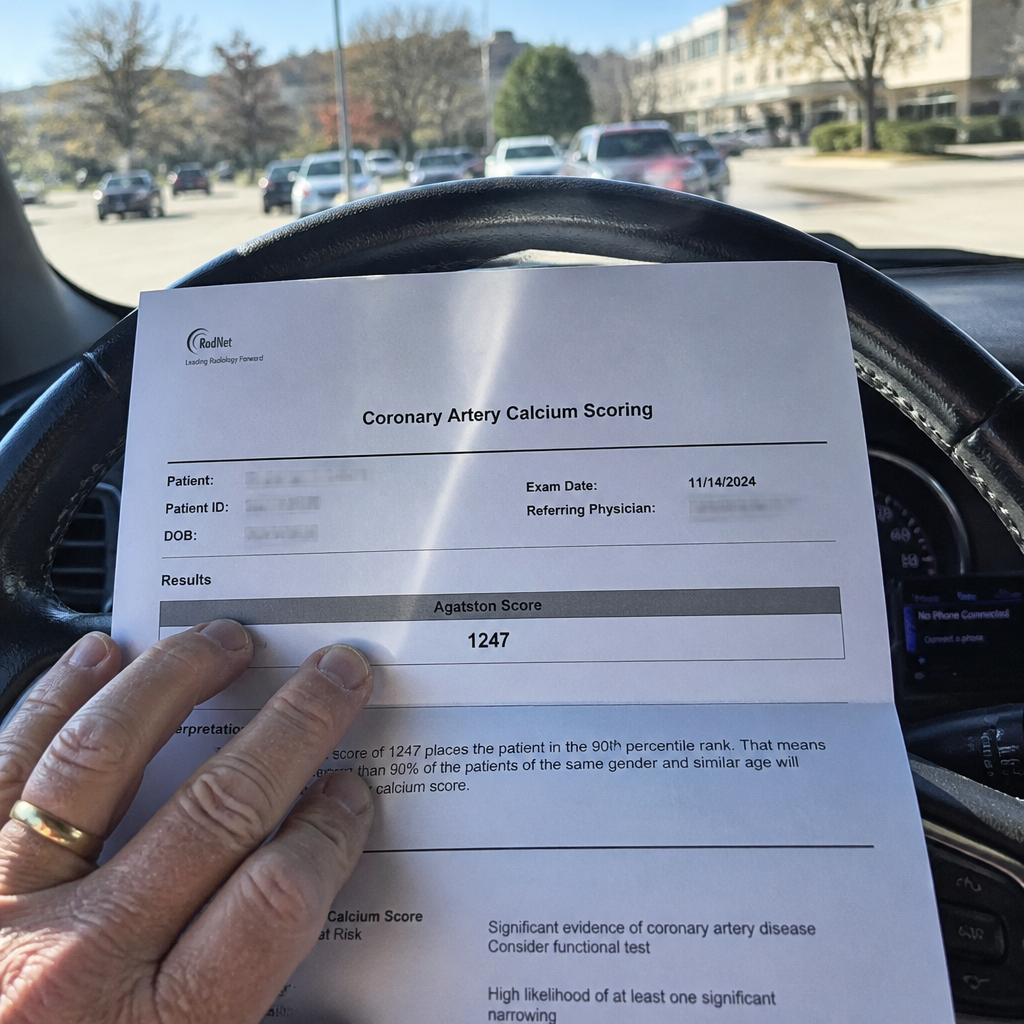
Artery plaque took my father when I was twenty-seven. He was sixty-one. He'd been told his cholesterol was high. He'd been told to eat less red meat. He'd been given a statin. He took it every morning with his coffee. And six months later, we lost him. It happened in the driveway, while he was carrying groceries. The specialists told us afterward that his arteries were like concrete. Not clogged. Calcified. The plaque had hardened into his artery walls so completely that even if they'd gotten to him in time, there wasn't much they could have done. My name is David. I spent thirty-three years as a mechanical engineer before I retired. I designed pumps and fluid systems for industrial plants. And after my father passed, I couldn't stop thinking about pipes. Because that's what arteries are. Flexible pipes. And when pipes lose flexibility, when they calcify and stiffen, flow becomes dangerous. Pressure spikes. Blockages form. The system fails. My father's specialists had focused entirely on lowering his cholesterol. On reducing the amount of plaque being deposited. But nobody had talked about the stiffness. Nobody had talked about the fact that his arteries had lost the ability to expand and contract with each heartbeat. That's what makes plaque so dangerous. Not the plaque floating around. The plaque that's already there, turning your arteries into rigid tubes that can't handle the pressure anymore. I didn't think about any of this again for years. Then, about four years ago, I got my own calcium score. 1,247.00 My specialist said it very calmly. He said, "That's significant." He said we'd monitor it. He added a statin. He told me to walk more. But I knew what that number meant. I'd seen what a number like that did to my father. And I started researching the way I used to research engineering problems. I read everything. I found study after study showing that statins can lower cholesterol, but they don't reverse calcification. In some cases, they might even accelerate it. I read about procedures. Stents. Bypass surgery. Atherectomy, where they literally drill out the plaque. All of them invasive. All of them managing the problem, not solving it. And then I found a paper from 2015 in the journal Integrated Blood Pressure Control. It was about an enzyme called nattokinase. Nattokinase is extracted from natto, a fermented soybean food that's been eaten in Japan for over a thousand years. The study showed that nattokinase didn't just thin the blood. It supported the body's natural ability to break down fibrin, the protein mesh that traps plaque and hardens it inside artery walls. It helped maintain arterial flexibility. Not by removing calcium. Not by scraping anything out. By supporting the body's own process of keeping arteries soft and pliable. I'm an engineer. I understand systems. And this made sense to me in a way that nothing else had. Your body already has mechanisms to prevent calcification. Enzymes that dissolve excess fibrin. Processes that keep your arteries flexible. But as you age, those systems slow down. Nattokinase supports them. I started taking it myself. Five thousand fibrinolytic units per day, which is the dose used in most of the research. I didn't expect to feel anything. But about eight weeks in, I realized I wasn't getting winded on my usual uphill walk anymore. I wasn't stopping halfway to catch my breath. I didn't tell my specialist. I didn't want to sound like I was chasing a miracle. But six months later, when I went back for a follow-up scan, my arterial stiffness index had improved. Not dramatically. But measurably. My specialist said, "Whatever you're doing, keep doing it." I told him about the nattokinase. He didn't dismiss it. He said there was decent research behind it, and as long as I wasn't on a blood thinner, he had no objection. That was three years ago. I'm still taking it. My calcium score hasn't gone down, but my pulse wave velocity has continued to improve. My arteries are more flexible now than they were at sixty-two. And I kept thinking about how hard it had been to find a nattokinase supplement I trusted. Most of them were low-dose. Fifteen hundred FU or less. Some of them were mixed with other ingredients I didn't want or need. None of them explained where the enzyme came from, or how it was processed. So I did what any retired engineer would do. I found a manufacturer who could make it the way I wanted it. Non-GMO soybeans. Fermented under controlled conditions. Tested for activity at five thousand FU per capsule. No fillers. No additives. Just the enzyme. I started sharing it with a few friends. Then a few more. Then I built a small website. I called the company Maia, after my mother. I'm not a supplement company. I'm one guy who wanted a product that didn't exist, so I made it. I don't run ads most of the time. I don't have a marketing team. But every few months I write something like this, because I know there are other people out there who've been told their calcium score is high and they just need to "monitor it." People who remember what happened to their fathers. People who want to do something that actually supports the system, instead of just managing the symptoms. Maia Nattokinase is what I take. It's what I'd give to my own kids if they ever faced what I'm facing. It supports healthy circulation. It supports your body's ability to maintain arterial flexibility. It helps keep blood viscosity where it should be. It doesn't cure anything. It doesn't reverse disease. But in people whose arteries have started to stiffen, whose calcium scores have started to climb, it supports the body's own repair processes. The processes that slow down as we age, but never fully stop. I keep a bottle on my kitchen counter. I take two capsules every morning. And I don't feel like I'm waiting anymore. If you've been looking for something like this, the link is below. We ship in small batches. We test every lot for potency. And we offer a sixty-day money-back guarantee, because I know what it's like to spend money on supplements that don't do anything. I built this for my father. I take it for myself. And I'm offering it to you. https://www.buymaia.com/shocking-discovery-nattokinase-plaque
Like this ad? Make it yours.
Crush rebuilds this exact creative around your product — your brand, your colors, your offer — in about a minute.