
Stopped· since Jul 21, 2026
- 63
- days it ran
- 2
- relaunches
Ad copy
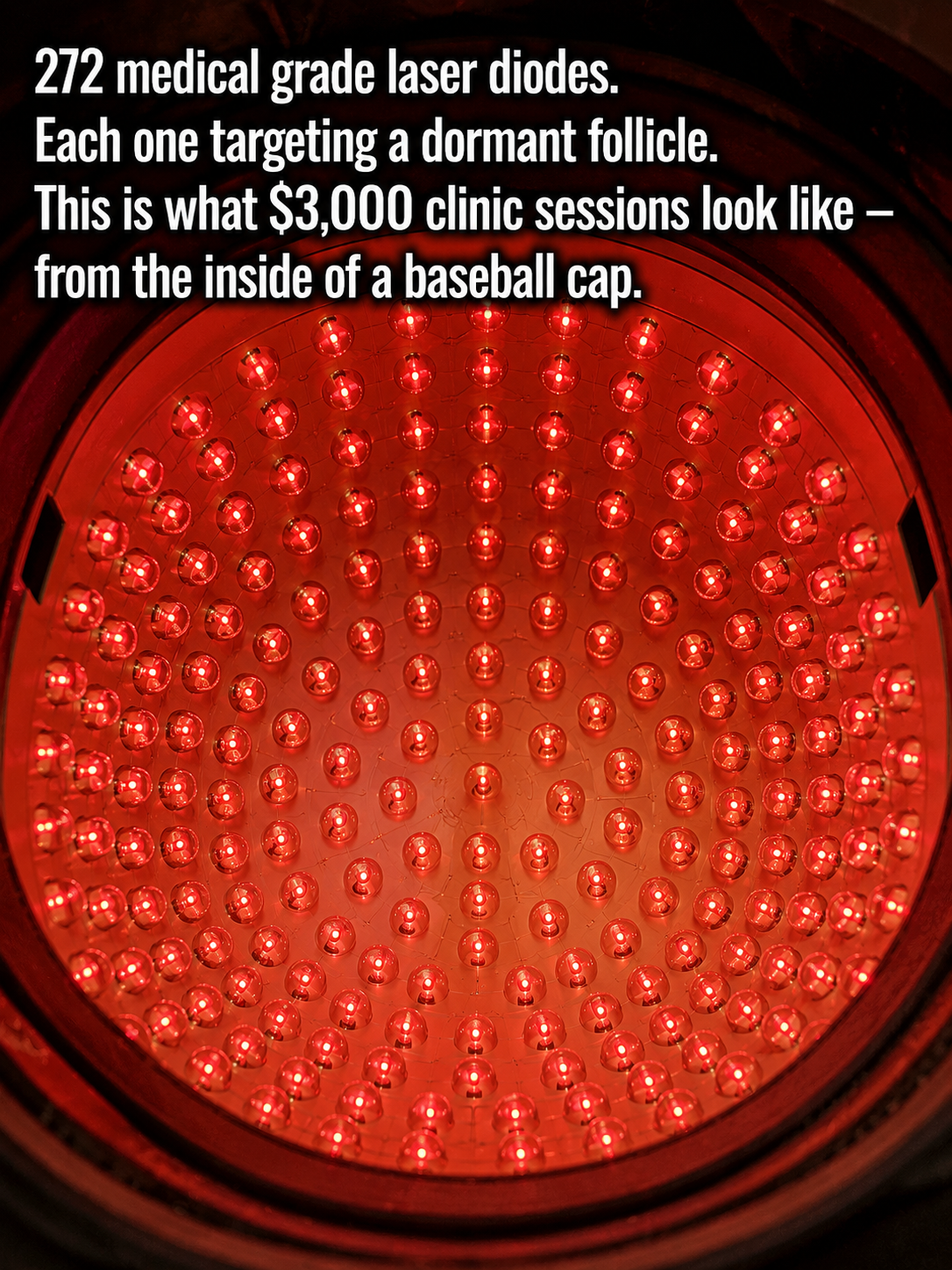
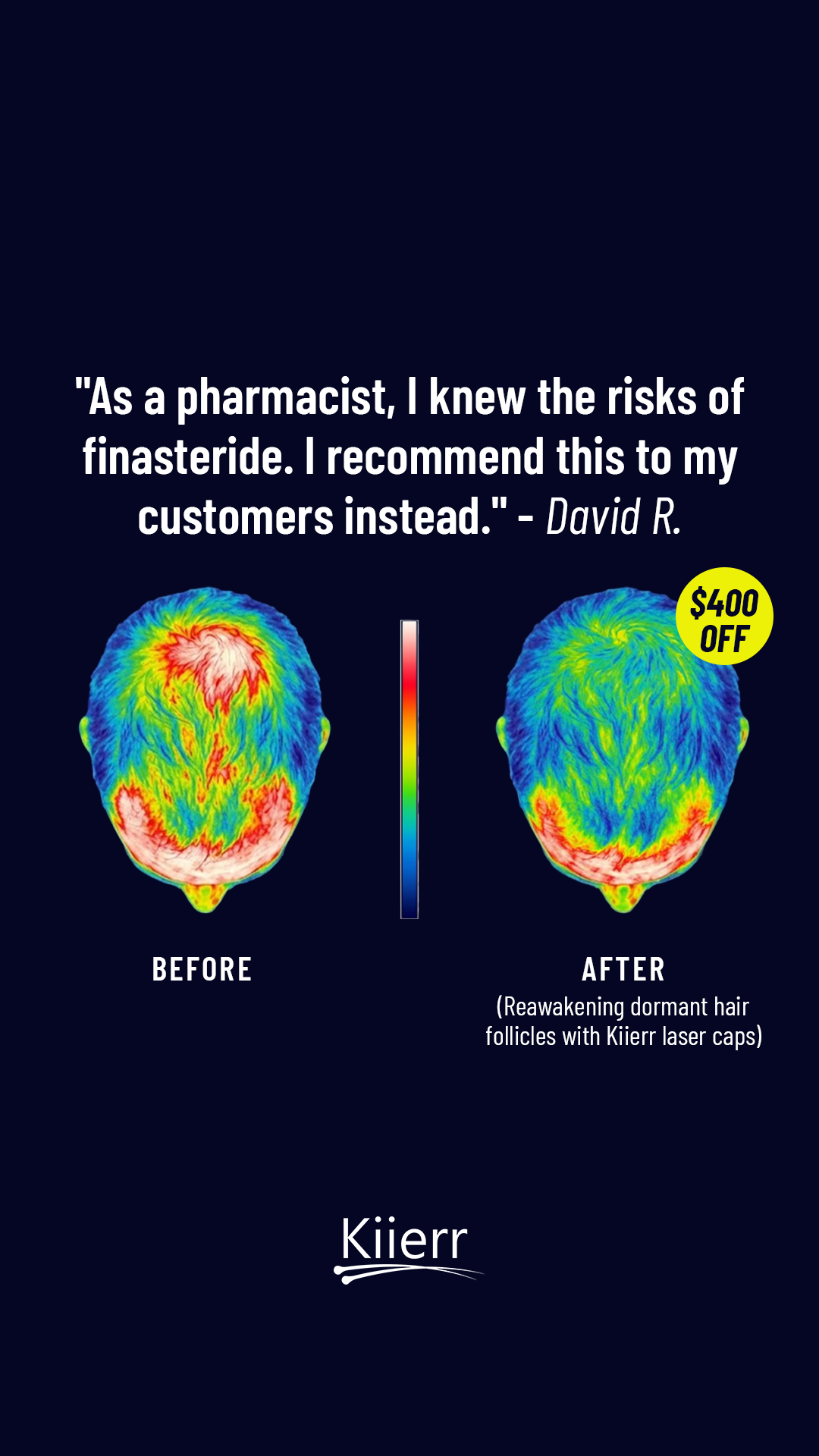
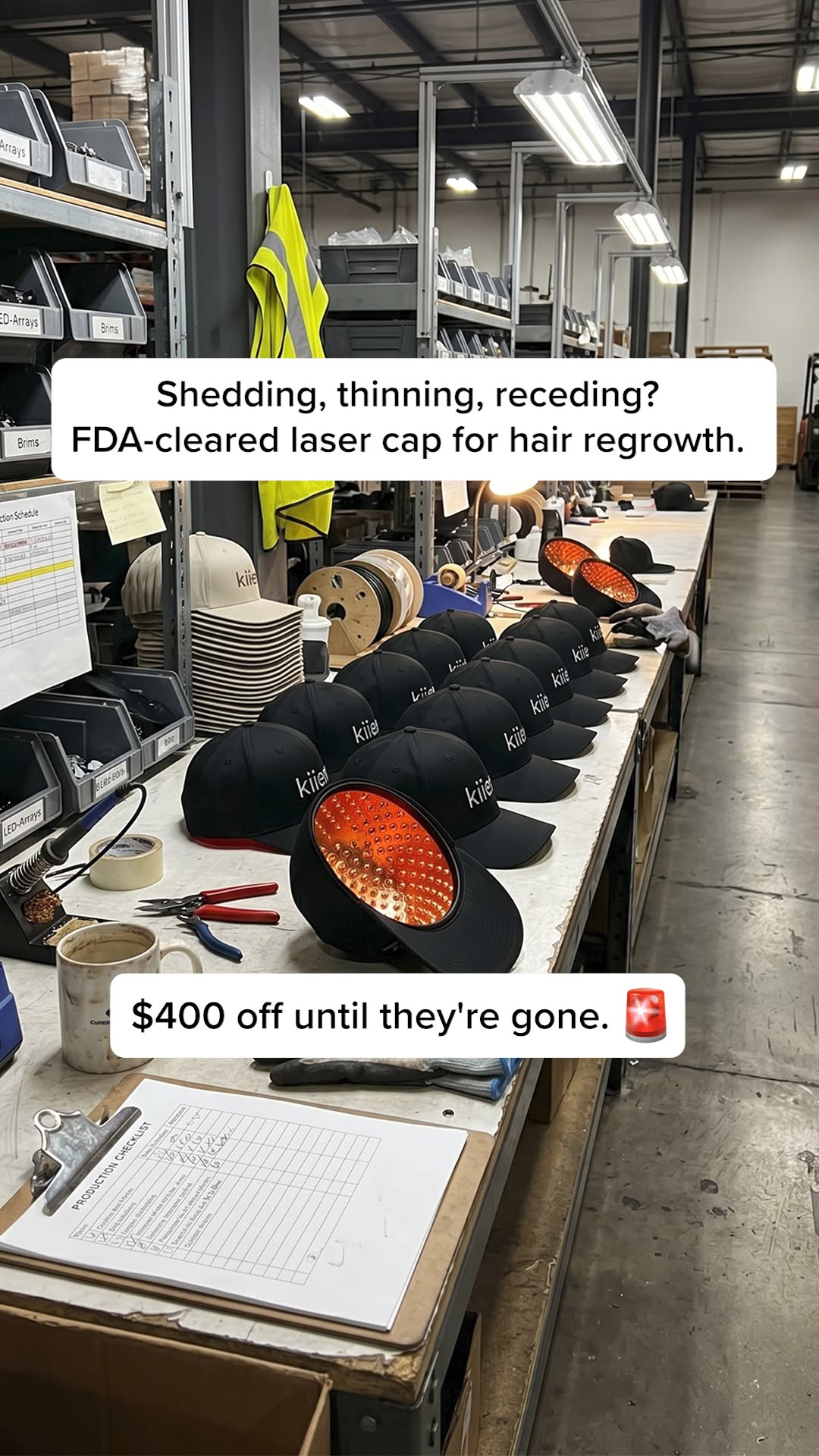
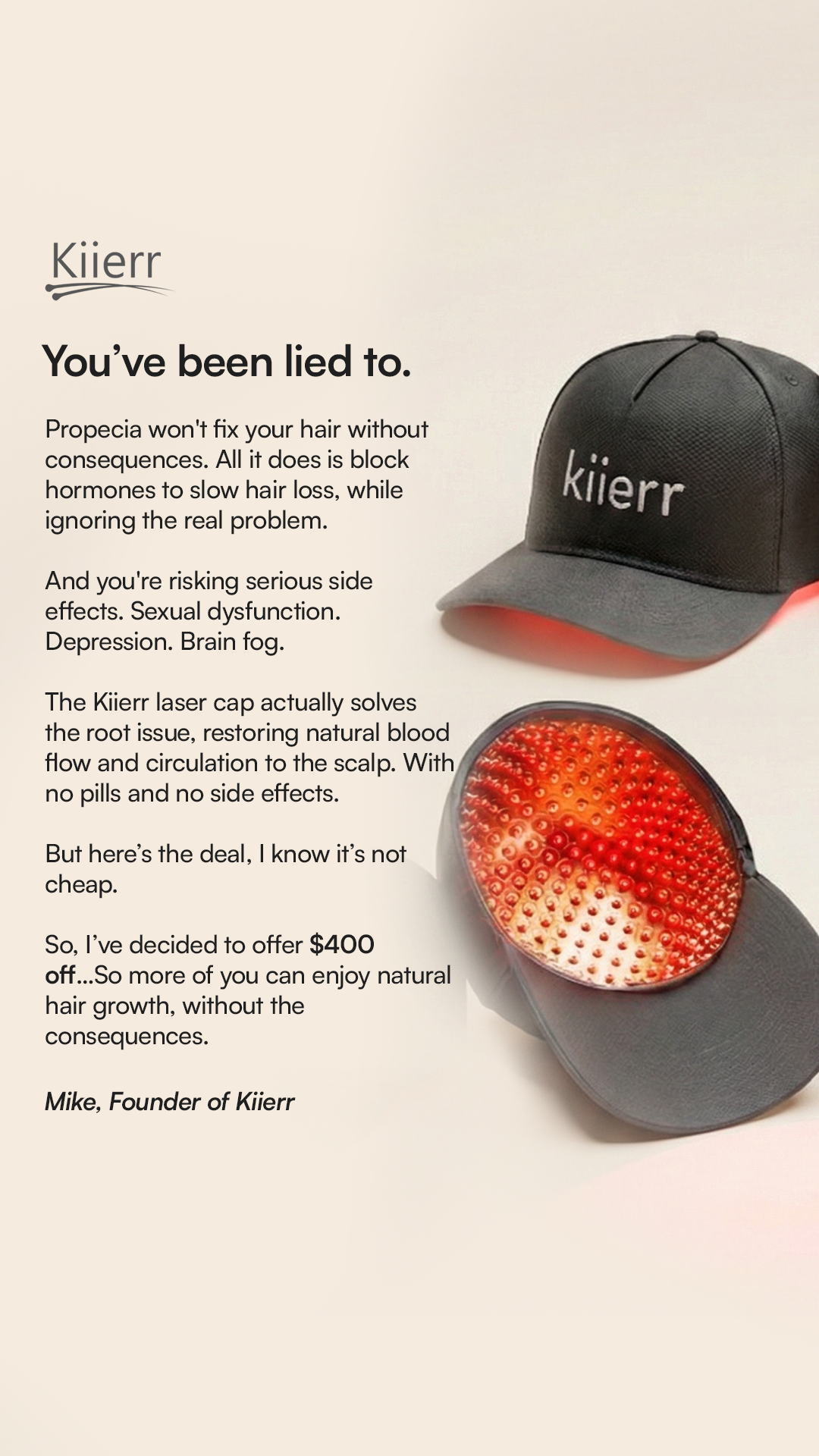
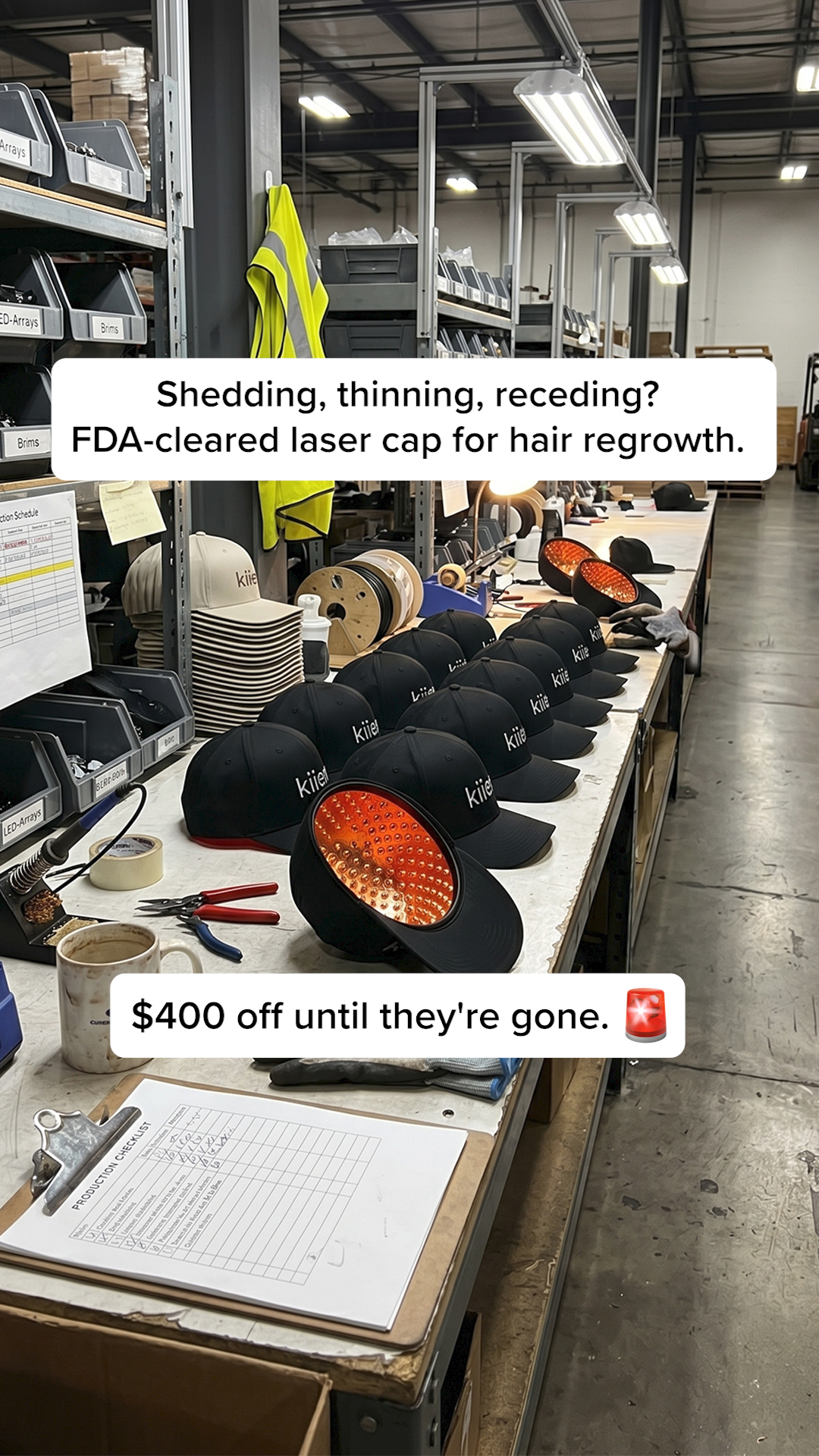
I make laser caps for hair loss. My own father wears one. But I wouldn't let him within ten feet of most of the ones I manufacture. I know how that sounds. Let me explain. I've been in this industry for eleven years. Eleven years of sourcing components, running production lines, filling purchase orders for brands you've seen on Instagram, on late-night TV, in the ads that follow you around the internet. The ones with the slick websites and the before-and-afters and the doctor with the nice coat nodding seriously at a camera. I'm the one who makes those products. Not the doctor. Me. I need to get something off my chest. Because I've been watching this happen to people for a long time and I can't keep quiet about it. So here's what actually goes on. And I want you to understand — this isn't one bad brand. This isn't a rare exception. This is Tuesday. This is every third call on my calendar. A company reaches out. They want to launch a laser cap. The hair restoration market is booming, they've done their research, they know what sells. Great. Let's talk specs. That's when it starts. "Can we use LEDs instead of lasers?" And I go through it. I always go through it. Because there's a reason the clinical literature — the actual peer-reviewed studies — is built on laser, not LED. It comes down to wavelength precision. Coherence. Penetration depth. A real laser diode emits light at a specific, locked wavelength. For hair follicle stimulation, you need to be right around 650 nanometers. That's not arbitrary. That's where the photoreceptors in your follicle cells absorb light most efficiently. That's where the cellular energy production — the ATP — actually gets triggered. That's the mechanism. That's how it works. LED spreads. LED scatters. LED gives you a range — maybe 630nm, maybe 660nm, maybe somewhere in between depending on the temperature of the diode, the quality of the component, how old the bulb is. You're not hitting 650nm consistently. You're hoping you're in the neighborhood. And in this application — reactivating dormant follicles through photobiomodulation — close isn't good enough. You're not close enough until you're exactly there. They nod along. And then: "But LEDs are so much cheaper." I know they're cheaper. I know exactly how much cheaper. You can buy an LED component for about seven dollars. A real medical-grade laser diode costs considerably more. That gap — that specific gap — is the entire reason this conversation is happening. It's why the shelf is full of "laser caps" that aren't laser caps. "What about calling it a laser LED? Or LED laser? Can we say it uses laser technology?" I've had some version of this conversation more times than I can count. The question isn't "will this work." The question is "what can we call it." And I get it. From a margin perspective, I genuinely understand the logic. Source $7 components. Call it a laser device. Charge $200, maybe $300. Some brands push $400. The customer doesn't know the difference. They can't see inside the cap. They can't test the wavelength. They just want their hair back. So they buy it. They wear it. For weeks. Some for months. They do everything right — they're consistent, they're patient, they believe in the process because they read the studies and the studies are real. The science is real. But the product isn't. And nothing happens. Their hair doesn't come back. The shedding doesn't slow. They look in the mirror after three months of effort and they see exactly what they saw before. So they tell themselves: laser caps don't work. Red light therapy is a scam. They tell their friends. They post a review. They move on to the next thing — some shampoo, some supplement, something else that probably also won't work. And the tragedy of it — the part that keeps me up at night — is that the science absolutely works. Photobiomodulation for androgenetic alopecia has clinical evidence behind it. Real studies. Peer-reviewed. Independent. Laser therapy at the correct wavelength, applied consistently, genuinely reactivates follicles. The mechanism is understood. The results are documented. They just never got laser therapy. They got an LED cap with good copywriting. I made that LED cap. I made it because that's what the brand ordered. It's not just the laser-versus-LED question, either. That's the biggest one, but it's not the only way these products get hollowed out. Diode count. This one is subtle and lethal. More diodes means more coverage. More of your scalp getting therapeutic light, more follicles getting stimulated. A high-quality cap has a couple hundred medical-grade laser diodes arranged to cover the full scalp, top to back to sides. You know what I get asked to do? "How few diodes can we use and still technically call it a multi-diode device?" I've made caps with 21 diodes. I've made caps where they pad the count with non-functional decorative lights — they look like diodes, they even glow — but they're not emitting therapeutic wavelengths. They're just there to make the number look good in the spec sheet. Someone buys that cap thinking they're getting comprehensive scalp coverage. They're getting a fraction of it. The front hairline, maybe. Everything else: nothing. And the power output. God, the power output. Therapeutic photobiomodulation operates in a specific power density range. Too weak and the photons don't penetrate the scalp tissue to reach the follicle. You need a certain amount of energy delivered to a certain depth. There's math here. There's physics. "Can we dial it down? Battery life is better if we dial it down." Yes. Battery life is better. Clinical efficacy is not. I've shipped products with power outputs so low I wouldn't call them medical devices. I'd call them night lights. Red night lights shaped like hats. Sold to people who are losing their hair and just want something that works. I need to tell you when this stopped being theoretical for me. About four years ago, my younger brother started losing his hair. He was 31. Early onset, aggressive — you could see the temple recession starting to come in fast. He was embarrassed about it in a way he didn't talk about directly, the way a lot of men don't. He'd just quietly changed how he styled it, started wearing hats more. We didn't discuss it. But his wife mentioned it to my wife. And my wife asked me: wasn't I the person who made these devices? Wasn't there something I could do? And I sat with that for a long time. Because the honest answer was: I make these devices, and I wouldn't use them on someone I love. I make them. I know what's in them. I know what's not in them. And I couldn't look at my brother and say "here, wear this for six months" knowing what I knew about the components inside. I started quietly doing what I'd never done in eleven years in this business: looking for a product I'd actually put my name on. Not a brand I manufactured for. One I'd buy with my own money for someone who mattered to me. I pulled specs. I called contacts. I had components tested by a third party. Most of what I found was exactly what I already knew. LED dressed up as laser. Diode counts padded with decorative lighting. Power outputs that wouldn't do anything meaningful. FDA registration — not clearance, registration, which is a form you fill out, not a clearance you earn — positioned as though it means the same thing. And then I got to Kiierr. I'll be honest. I was skeptical going in. They had clinical language on their site and I'd seen clinical language used as decoration for years. I almost didn't dig deeper. But then I saw the diode spec. 272 laser diodes. I looked it up. That's not a marketing number — that's a number that corresponds to actual scalp coverage geometry. That's enough diodes, properly placed, to reach the full treatment area. Then the wavelength: 650nm. Fixed. Medical-grade laser, not LED approximation. Not "approximately 650nm." Not "650nm range." 650nm. Then the power output. I ran the numbers. It's in the therapeutic window. Not derated for battery convenience. Not weakened to reduce component cost. Calibrated for clinical efficacy. Then I saw the FDA clearance. Not registration. Clearance. That means they went through the actual regulatory process. They submitted clinical data. They got reviewed. They met the bar. Six independent clinical studies. Not one. Six. I've worked for brands that cited zero studies and sold the product anyway. Six is not normal for this market. I kept waiting for the thing that would disqualify them. The corner that got cut somewhere. The spec that didn't hold up when I dug into it. I couldn't find it. So I called them. Just to ask some questions. I expected the usual. "Our technology is proprietary." "The exact specifications are confidential." The language brands use when the specs don't survive scrutiny. It wasn't like that. They answered my questions. Specifically. With documentation. And I thought about that for a few days. Then I ordered one for my brother. I didn't tell him what to expect. I didn't want him to be watching for it, measuring it week to week. I just said: wear this every other day, be consistent, give it time. He was skeptical. He told me he'd seen the ads. He said these things never work. I said just do it. Around month three, he texted me a photo. Not a dramatic transformation. Not overnight regrowth. But the temples had stopped receding. The thinning had slowed visibly. The texture along the hairline was different — denser. He called me that same night. "What is that thing. What's in it." I explained it to him the way I'd explained it to brands for eleven years — the 650nm wavelength, the ATP production, the follicle reactivation from resting phase back to growth phase. He didn't fully follow the science. He didn't need to. He just said: "Is this the one you actually trust?" Yeah. It's the one I actually trust. He's been wearing it for fourteen months now. Last month he told me he'd gone back to a barber he'd avoided for two years — a guy who used to know exactly what was happening up top and never said anything, which is somehow worse than if he'd said something. He went back. And the barber asked him what he'd been doing differently. He told him. I've ordered six Kiierr caps since then. One for my father, who started thinning in his late 40s and thought it was just how things were. One for a colleague who asked me point-blank what I'd buy if I were the customer. Two for friends who'd already wasted money on the competitor products — the ones I'd probably manufactured, actually. And two that I keep in reserve, because I know how supply chains work, I know when stock gets tight, and when something is genuinely the only one I trust in its category I don't like running low. My father called me about two months in. He said the barber had asked him the same question. His barber of twenty years. Who knows his head. Who noticed. That's when I know. Not the ads. Not the reviews. When the barber who sees your scalp every six weeks — who has nothing to gain by lying to you — notices something different. That's the signal. I want to tell you something I've never said publicly before. There are products on the market right now that I manufactured. They are sitting in Amazon warehouses. They are being advertised on the platforms you use. They look like the real thing. Some of them even reference studies — not studies on their product, studies on laser therapy in general, borrowed credibility from research they had nothing to do with. They will not work. I made them. I know what's in them. The components I sourced, the wavelengths, the power outputs — none of it meets the threshold for clinical efficacy. It meets the threshold for "looks like a medical device when photographed." I'm not telling you this to alarm you. I'm telling you because the gap between "looks like it works" and "actually works" in this category is enormous, and it's mostly invisible to the person buying. The only way I know to bridge that gap — the only shortcut that actually works — is to find the one product where the specs weren't negotiated down to the minimum. Where someone made it correctly because they wanted it to work, not because they calculated exactly how little quality they could include while still charging full price. In eleven years in this business, Kiierr is the only one where I've looked at the specs and thought: yes. That's how you make it. They have a seven-month money-back guarantee. Seven months. That number is not arbitrary — that's long enough to see real results if the product is working. Brands that have something to hide don't offer seven-month guarantees. They offer thirty days, because thirty days is before most people have fully committed to the protocol and before the results window has opened. Seven months is what confidence looks like in this category. Go look at the specs. Not the marketing language — the actual specs. 272 laser diodes. 650nm. FDA cleared. Six clinical studies. Seven-month guarantee. Then go look at whatever else is in your consideration set and ask the same questions. I'll tell you what you'll find: the numbers don't match. They never match. Because nobody else is building it this way. I know. I'm the one they called when they wanted to build it the cheap way. Kiierr is the one that didn't call me. Link is below. Make sure you're on the actual Kiierr site — kiierr.com. There are knockoffs and listings that use similar names, and I'll tell you from personal knowledge: I know what's in those too. Don't waste another month on something that was never going to work.
Tap below. Try it for seven months. If it doesn't work for you, you get your money back, no argument.
It works or your money-back
LEARN MORELike this ad? Make it yours.
Crush rebuilds this exact creative around your product — your brand, your colors, your offer — in about a minute.