Sarah's Skincare Blog
Sarah's Skincare Blog Facebook ad: “The hidden reason makeup stops working after 50”
Ran for 3 days, from February 21 to February 24, 2026, the last day Crush saw it.
Run by Sarah's Skincare Blog on Facebook. Crush is not the advertiser and does not verify its claims. See this ad in Meta's Ad Library(opens in a new tab)
Want an ad like this for your product?
Crush makes new ad images for your product from this ad: your logo, your product photo, your offer.
Trials from $19.95 USD, then $79.95 USD a month. Cancel anytime.
About this ad
- Meta Ad Library ID
- 1731560904488387
- Platforms
- Facebook, Instagram, Audience Network, Messenger and Threads
- Relaunches
- 0
- Niche
- Skincare & Beauty
Ad text
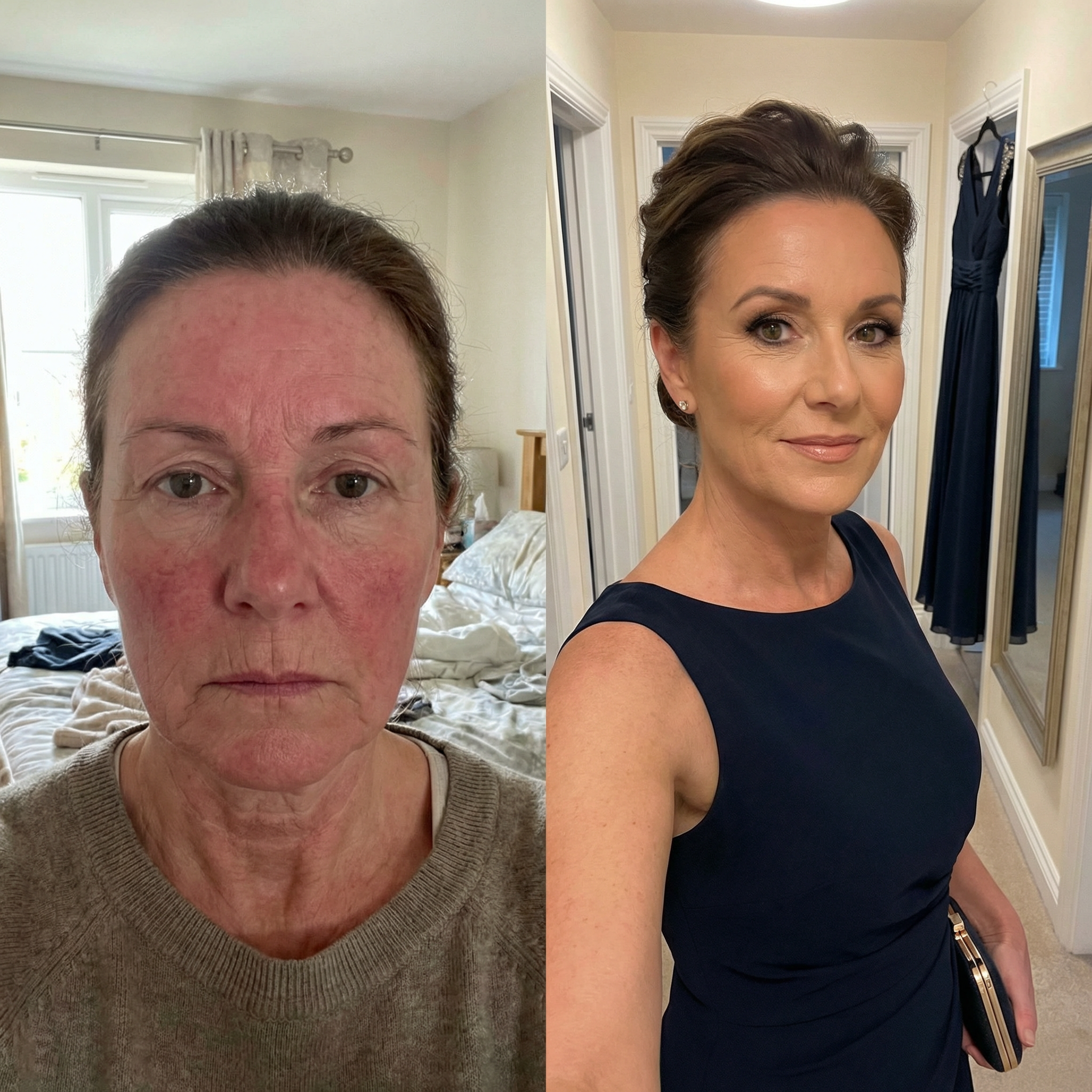
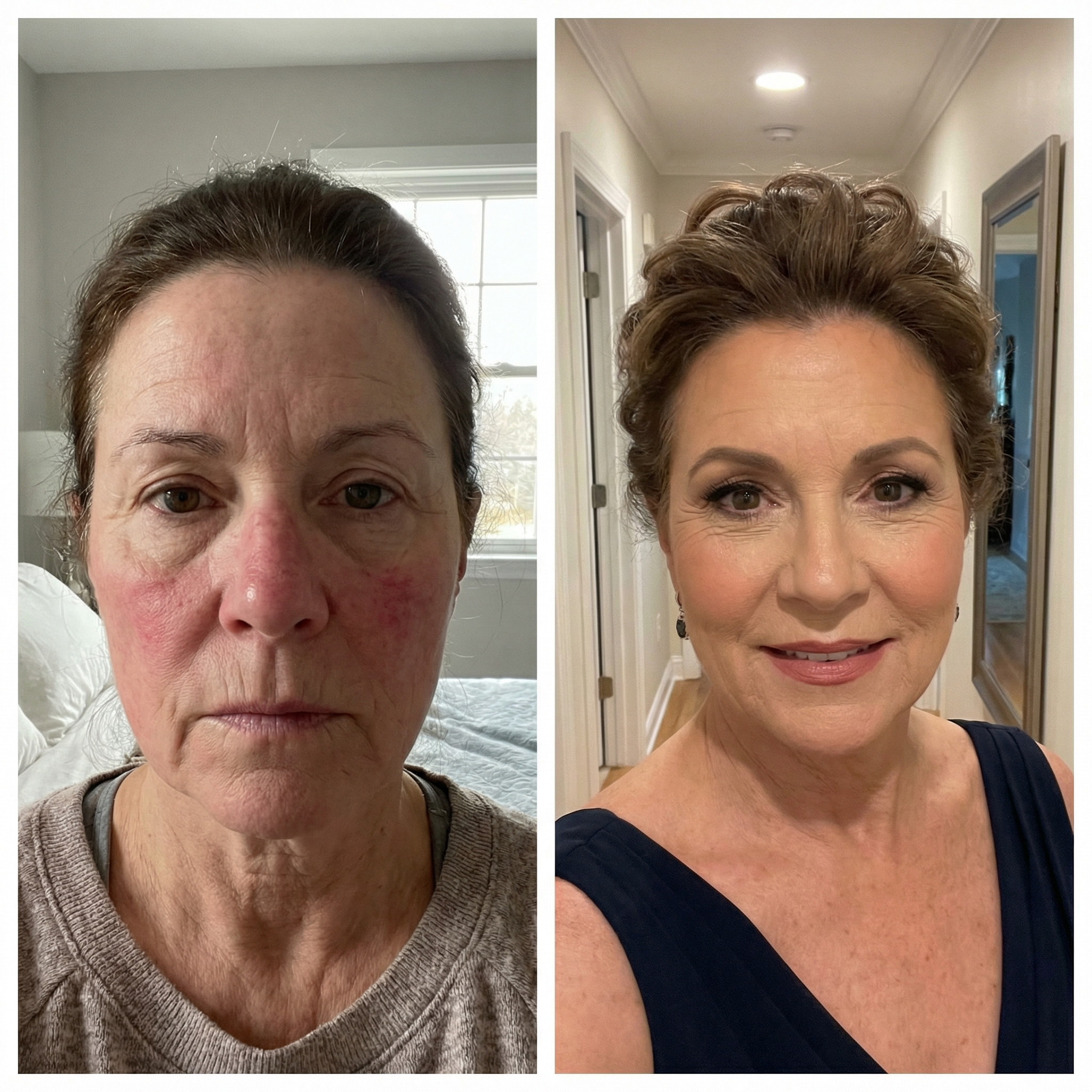
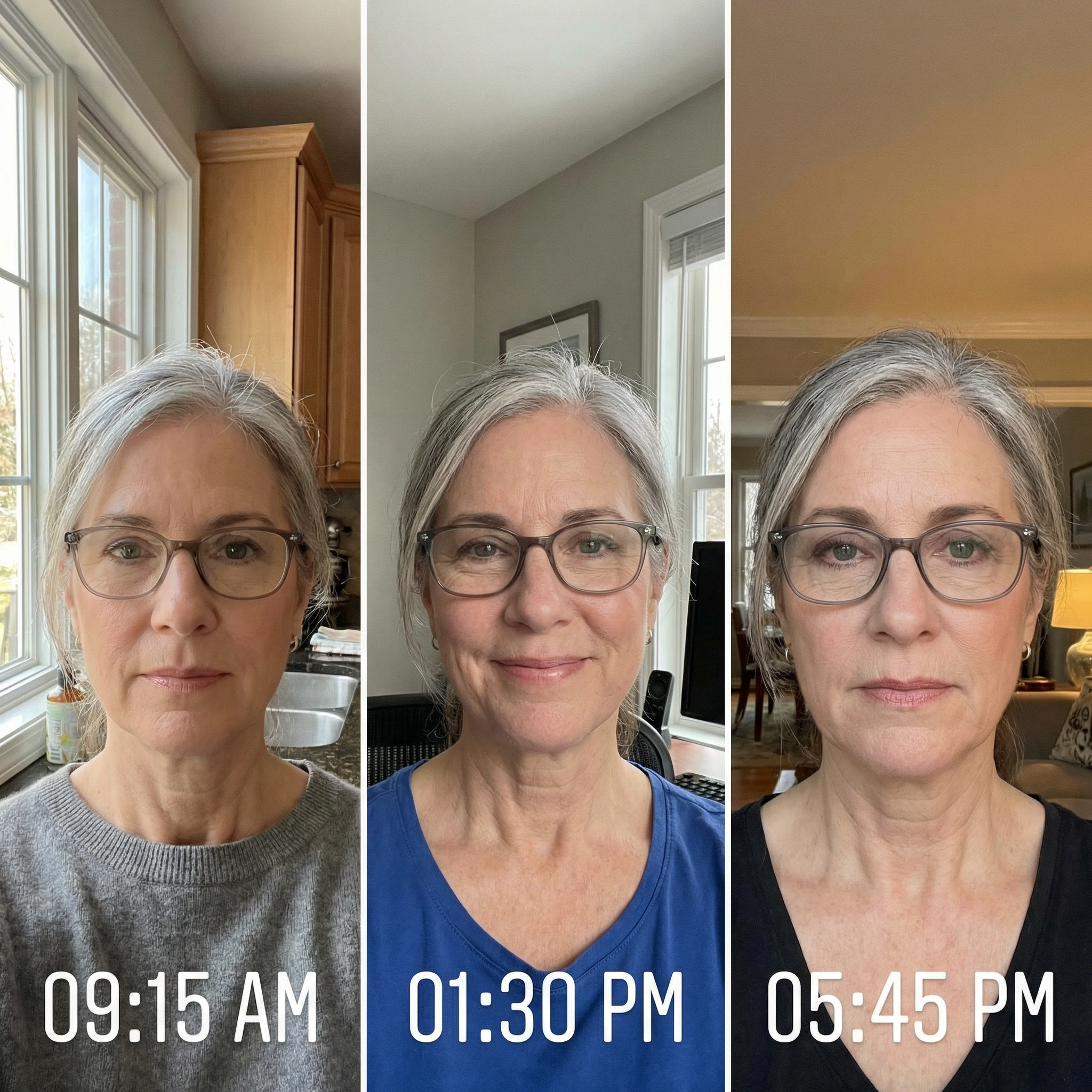
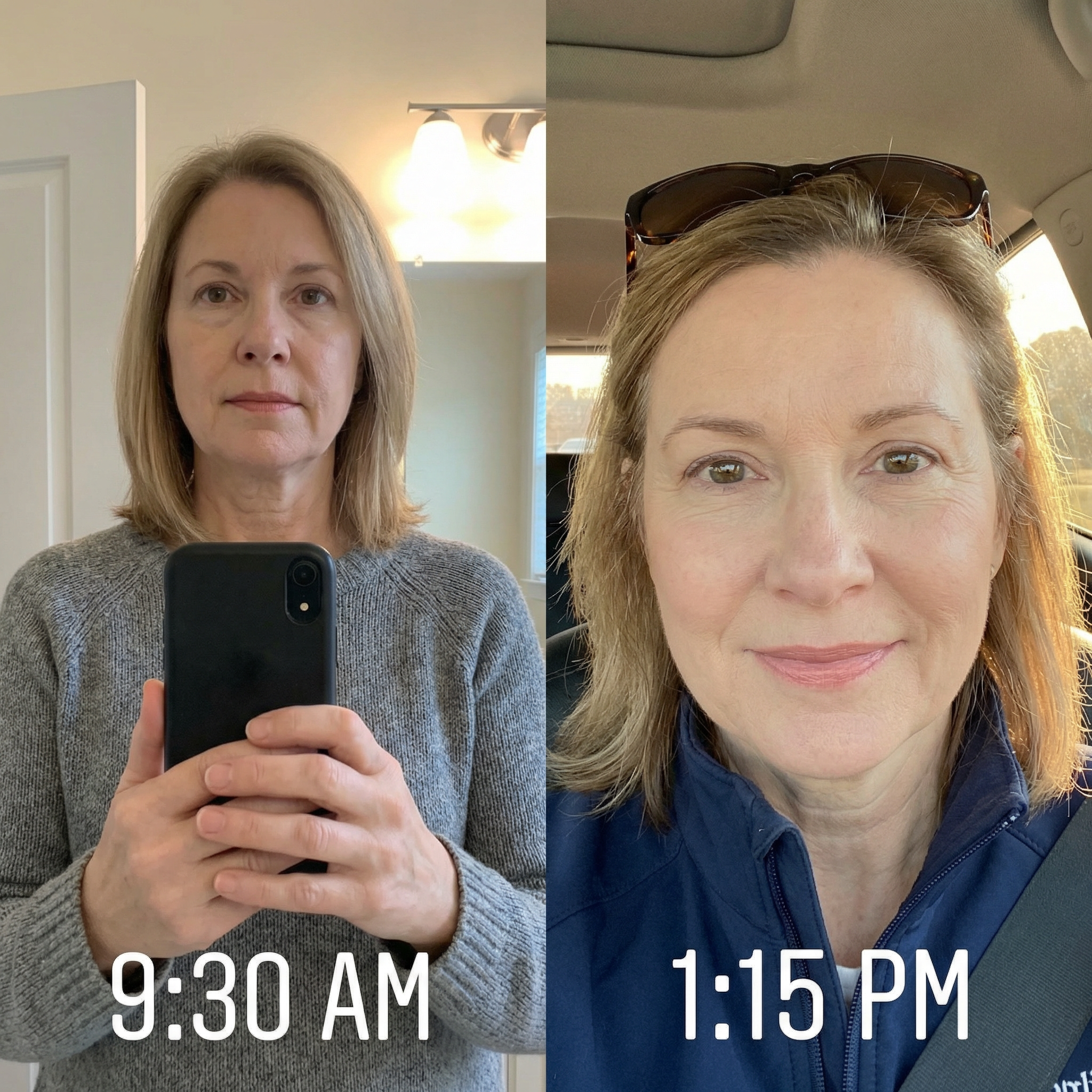
I'm 56. I Stopped Wearing Foundation Because It Aged Me. Then I Found This. IT Cosmetics CC+ Cream was my holy grail for eight years. $45 a tube. Worth every penny. Looked flawless at application. Lasted all day. Made my skin look like... my skin. Just better. And then I turned 54. Same tube. Same application. Same routine I'd perfected over nearly a decade. But by 11 AM, I could see it settling into the lines around my eyes. By 1 PM, every expression line on my forehead had a visible crease of foundation pooled in it. I thought maybe the formula changed. Companies do that—reformulate without telling anyone. So I bought a fresh tube. Different batch number. Maybe the old one had gone bad. Same thing. Settled by noon. Fine. Maybe IT Cosmetics wasn't what it used to be. I switched to Laura Mercier Tinted Moisturizer. $48. Recommended by three different beauty influencers over 50. "The only foundation I trust on mature skin." Day 1: Looked beautiful. Light, dewy, natural. Day 3: Settled into the same lines by 2 PM. I tried L'Oréal Age Perfect Serum Foundation. $15.99. "Specifically formulated for mature skin." Settled by lunchtime. Kosas Tinted Face Oil. $42. "Skin-like finish, never cakey." Settled. Kosas Revealer Super Creamy. $38. Different formula, same brand. "Buildable coverage." Settled by hour three. I tried the Kosas BB Burst too. Third formula. $38. Guess what happened. By the end of six months, I'd spent over $400 on seven different foundations. Drugstore. Prestige. Serum. Cream. Oil-based. Water-based. "For mature skin." "Hydrating." "Lightweight." Every single one looked perfect when I applied it at 9 AM. Every single one had settled into my fine lines by 1 or 2 PM. And I came to the same conclusion a lot of women my age come to: I'm just too old for foundation to work anymore. --- Maybe you're in the same place right now. Maybe you've tried IT Cosmetics. Laura Mercier. Kosas. L'Oréal Age Perfect. Charlotte Tilbury. The "holy grails" that beauty editors recommend for women over 50. Maybe you've spent $200. $400. $600. And every single one—regardless of price, regardless of brand, regardless of marketing claims—does the same thing. Looks smooth at application. Settles into lines by midday. I know that exhaustion. I know what it feels like to stand in Sephora staring at a wall of foundations, knowing you've already tried half of them, and wondering if you're just wasting money testing the other half. I know the creeping thought: "Maybe I'm just not supposed to wear foundation anymore." Maybe you've had that thought too. I had it. That's why I stopped wearing foundation entirely for four months. Bare skin felt better than foundation that made me look older by lunchtime. But here's what I couldn't figure out: Why did seven completely different foundations all fail the exact same way? Different brands. Different price points ($15 to $48). Different formulas (serum, cream, oil, tinted moisturizer). But identical results. Settled into lines by hour 2-3. Every time. That's when I stopped trusting beauty blog recommendations and started reading actual dermatology research on how foundation interacts with aging skin. And that's when I found out why. --- Here's what nobody tells you about how foundation actually works: When you apply foundation at 9 AM, it looks smooth. Perfect color match. By 2 PM, it's settled into your expression lines. But here's the part that made everything click: It's not just that foundation has settled into your lines. It's that the foundation in your lines looks DARK. Orange-tinted. Like shadowing. Way worse than just having "product in a crease." And here's what I discovered: Every foundation—regardless of brand or price—contains iron oxide pigments. That's how foundation gets its color. Iron oxide is FDA-approved, safe, and the industry standard. IT Cosmetics uses it. Laura Mercier uses it. Kosas uses it. L'Oréal uses it. Charlotte Tilbury uses it. There's no alternative that performs as well for skin-safe color. But iron oxide has a chemical property nobody advertises: It oxidizes when exposed to oxygen in the air. The same chemical reaction that makes metal rust. Or makes a cut apple turn brown. When you apply foundation at 9 AM, the iron oxide pigments are at their original color—the color you see in the bottle. Throughout the day, oxygen reacts with those pigments. Over 2-3 hours, the iron oxide turns progressively darker and develops an orange cast. By afternoon, the pigment has shifted 2-3 shades darker than when you applied it. And here's the critical part: This color shift happens WHILE foundation is settling into your lines. So by 2 PM, your expression lines don't just have foundation in them. They have foundation that's turned 2-3 shades darker and orange-toned—concentrated in the deepest creases on your face. Dark orange pigment in deep lines creates shadowing. It makes your lines look dramatically deeper and more pronounced than they actually are. That's the mechanism nobody talks about. --- Now here's the part that made everything make sense: I went to see my dermatologist about it. I showed her photos of my foundation at 9 AM versus 2 PM. "Look at this," I said. "The color in my lines is so much darker. Almost orange." She nodded. "That's oxidation. Iron oxide pigments react with oxygen in the air. It's basic chemistry—happens to all iron oxide, regardless of what brand puts it in their formula." She pulled up something on her computer. "It's the same reaction that makes metal rust or apples turn brown when exposed to air. The pigment literally changes color from the chemical reaction." "All foundations use iron oxide?" "All of them. It's FDA-approved and the best option for skin-safe color. There's no alternative that works as well. The industry has been using it for decades." She showed me a cosmetic chemistry article. "When you first apply foundation, the pigments are at their base color. But the moment they're exposed to air, oxidation starts. Over 2-3 hours, the iron oxide darkens and develops that orange cast you're seeing." "So it's not my skin making it look orange?" "No. It's chemistry. Happens on everyone's face—young, old, all skin types. But..." She pulled up another study. Collagen loss post-menopause. "Here's why you're noticing it more now. Look at this." First five years after menopause: 30% collagen loss. 30%. "At 48, your expression lines were shallower. When oxidized foundation settled into those shallower lines, there was less depth for the darkened pigment to concentrate in. Less visible shadowing." "At 56, after 30% collagen loss, your expression lines are significantly deeper. When oxidized foundation settles into these deeper creases, you get dark orange pigment concentrated in deep crevices. The color contrast creates shadowing—makes lines look even deeper than they are." She showed me a visual comparison. "It's not just that foundation has settled. It's that DARKENED, OXIDIZED foundation has settled. The combination—deep lines plus dark orange concentrated pigment—creates that aged appearance you're seeing by afternoon." Two things happening simultaneously: Mechanical settling (gravity + expressions move product into lines over 2-3 hours). Chemical oxidation (iron oxide darkens and turns orange from air exposure over same 2-3 hours). "That's why every brand you tried looked identical by afternoon. They all use iron oxide. They all oxidize on the same timeline. Chemistry doesn't care about price point." --- I sat with that information for a week. Then I thought back to all the foundations I'd tried. IT Cosmetics. Laura Mercier. Kosas. L'Oréal. Charlotte Tilbury. Seven different foundations. $15 to $48. And every single one looked like a perfect color match at 9 AM. Every single one looked orange and dark in my lines by 2 PM. I'd thought it was my skin. My undertone. My age. But it was chemistry. Universal chemistry that affects every iron oxide pigment in every foundation at every price point. The $48 Laura Mercier oxidized just as badly as the $15 L'Oréal. Because they both use iron oxide. And all iron oxide oxidizes when exposed to air. Then I found an article from a cosmetic chemist who'd worked at Lancôme for 12 years. She was explaining why even luxury foundations develop that orange cast, and she said something that changed everything: "Iron oxide is the industry standard for foundation pigments—it's FDA-approved, safe, and performs better than alternatives. But oxidation is an inherent chemical property of iron oxide. When exposed to oxygen in the air, it darkens and shifts orange-toned. This happens over 2-3 hours regardless of the formula it's suspended in. Premium ingredients, better textures, and sophisticated delivery systems can't change iron oxide's reaction to oxygen. If you want foundation that doesn't darken and turn orange in your lines, you need a delivery system that prevents the pigments from being exposed to air after application." Pigments that aren't exposed to air after application. So they can't oxidize. Can't darken. Can't turn orange. Think of it like this: Traditional foundation = pigments exposed to air from the moment you open the bottle. By the time they settle into your lines (2-3 hours later), they've been reacting with oxygen the entire time—they're now 2-3 shades darker and orange-toned. Protected-pigment foundation = pigments sealed until application, then immediately bonded to skin where air can't reach them. No ongoing air exposure = no oxidation = color stays the same. Your expression lines are still there. Foundation still settles into them. But the settled foundation hasn't darkened or turned orange—so it doesn't create that shadowing effect that makes lines look worse. That was the answer. Not a better color match. Not a different undertone. Not "non-oxidizing formula" (they all use iron oxide). Different delivery system. Prevent air exposure after application. --- That's when I looked back at everything I'd tried. IT Cosmetics. Laura Mercier. Kosas. L'Oréal. Charlotte Tilbury. Seven different foundations. $15 to $48. Cream, oil, serum, tinted moisturizer. And they all failed the exact same way. If it was about the *brand*, at least one should have performed differently. If it was about *price*, the $48 should have stayed true-to-color better than the $15. If it was about *undertone*, getting professionally color-matched should have prevented the orange cast. But they didn't. They all settled into the same lines. All looked orange and dark by 2 PM. Same timeline. Because they all do the same thing: use iron oxide pigments exposed to air. It doesn't matter if it's a $15 drugstore serum or a $48 prestige cream. The iron oxide in both oxidizes when exposed to oxygen. Chemistry doesn't care about price. Same problem. Same chemistry. Same result. And the color-matching and undertone advice? I got professionally matched at Sephora. Twice. I tried warm undertones. Cool undertones. Neutral undertones. All of them looked perfect at application. All of them looked orange by afternoon. Because I wasn't looking at my undertone—I was looking at oxidized iron oxide pigment. The "perfect match" at 9 AM had chemically changed color by 1 PM. I wasn't testing seven different solutions. I was testing the same chemistry seven times with different packaging. --- I started searching. "Non-oxidizing foundation." "Foundation that doesn't turn orange." "Oxidation-proof pigments." Most results: tips for delaying oxidation (primers, setting sprays). But nothing that prevented it. Because every foundation uses iron oxide. And all iron oxide oxidizes when exposed to air. But then I found Chromia. The description said: "Microencapsulated pigments that release and bond to skin cells on contact." I read it carefully. Encapsulated. Sealed inside protective capsules until application. Then they bond to skin cells—locked against the surface where air can't reach them. You apply it like normal foundation. But instead of the iron oxide pigments being exposed to oxygen from the moment you pump it out, they're sealed inside capsules. When those capsules break on contact with your skin, the pigments bond immediately to your skin cells. Once bonded, they're pressed against the skin surface—no longer exposed to oxygen in the air. No air exposure = no oxidation = no color shift. The color at 9 AM is the color at 5 PM. Your expression lines still collect foundation (gravity and movement still happen). But the foundation that's collected hasn't turned dark and orange from oxidation. So it doesn't create that shadowing effect. Doesn't make lines look deeper than they are. --- I ordered it skeptical. I'd spent $400 on seven foundations that all claimed to be "different" in some way. Chromia said it was different because the pigments are protected from air until application, then bonded to skin where air can't reach them to trigger oxidation. I'd heard "different" before. But the 30-day guarantee covered return shipping. So I had nothing to lose except another $45. It arrived on a Tuesday. I applied it at 9 AM. Watched it change color in about 30 seconds to match my skin tone (that part was weird but cool). Felt dry to the touch after a minute. Not tacky. I looked closely at the color. Perfect match to my skin. Then I did something I'd learned to do with every foundation: I swatched some on the back of my hand so I could check the color shift later. And then I went about my day. 11 AM: Checked the mirror. Checked the swatch on my hand. The swatch looked... the same. Same color as when I applied it. With every other foundation, by this point the hand swatch would be noticeably darker. 1 PM: Checked again. Still the same color. No orange cast developing. I looked at my face. Foundation had settled into my expression lines a bit (gravity happens, expressions happen). But the color in my lines looked the same as the color on my cheeks. No dark orange shadowing. 2 PM: Checked the hand swatch and my face. Same color as 9 AM. No darkening. No orange shift. By 5 PM I was taking pictures because I couldn't believe it. The foundation on my face at 5 PM was the same color as the foundation I'd applied at 9 AM. The swatch on my hand—five hours of air exposure—still looked the same. No oxidation. I wore it the next day. Same thing. Day 3: Same. Week 2: I stopped checking the hand swatch compulsively. It wasn't changing color. At all. The difference was observable, immediate, and exactly what the mechanism predicted: No air exposure to bonded pigments = no oxidation = no color shift = settled areas don't look dark and orange. --- Here's what happened over the next 30 days: Week 1: Wore it daily. Checked constantly (still skeptical from seven previous failures). The color never shifted. Week 2: Tested it on a particularly humid day (humidity can accelerate oxidation). Still no color change by afternoon. Week 3: Wore it to dinner with friends. Sat under restaurant lighting for 3 hours. Asked my friend to check if my foundation looked orange or dark in my lines. She said, "I can't even tell you're wearing foundation." Week 4: Stopped wearing it one day to compare. Bare skin at 2 PM vs. Chromia skin at 2 PM the day before. The Chromia day looked better. Not "covered up" better. Not "masked" better. Just... more even. Natural. Like my skin on a good day. And here's what really struck me: With every other foundation I'd tried, by afternoon my lines looked dramatically darker than the rest of my face. That's oxidized pigment creating shadowing. With Chromia, my lines looked the same color as my skin. Foundation had settled into them (it happens), but it hadn't darkened and turned orange—so it didn't create that aging shadow effect. That's when I realized I'd been asking the wrong question. The question wasn't "Which foundation won't settle?" The question was "Why am I using foundations where the settled pigment turns dark and orange?" --- Chromia isn't a "non-oxidizing formula." It's a different delivery system. The iron oxide pigments are sealed until application, then bonded to skin where oxygen can't reach them. Your expression lines still collect some foundation (gravity and movement still happen). But the foundation that's collected hasn't oxidized—hasn't darkened—hasn't turned orange. So it doesn't create shadowing. Doesn't make your lines look deeper than they are. IT Cosmetics couldn't do this. The iron oxide pigments are exposed to air from application and continue oxidizing for hours—turning dark and orange in your lines. Laura Mercier couldn't do this. Even the premium formula uses iron oxide exposed to air—still oxidizes on the same timeline. Kosas couldn't do this. All three formulas—oil, serum, cream—use iron oxide that oxidizes throughout the day. They're excellent products with excellent ingredients. But they're all fighting the same chemistry problem: iron oxide exposed to air + 2-3 hours = oxidation = darkened orange pigment concentrated in lines. Chromia sidesteps that problem entirely by preventing air exposure after bonding. Bonded pigments = no air exposure = no oxidation = color stays true all day. Your expression lines are still 30% deeper from collagen loss. Foundation still settles into them. But the settled foundation hasn't turned dark and orange—so it doesn't create that dramatic shadowing effect that ages you. --- Here's the mechanism breakdown: Traditional foundations (IT Cosmetics, Laura Mercier, Kosas, L'Oréal): - All use iron oxide pigments (industry standard, FDA-approved) - Pigments exposed to oxygen in the air from moment of application - Over 2-3 hours: iron oxide oxidizes (same reaction as metal rusting) - Oxidation turns pigments 2-3 shades darker and orange-toned - This happens WHILE mechanical settling occurs (gravity + expressions) - By afternoon: expression lines contain foundation that has BOTH accumulated AND darkened/turned orange - Post-menopause: 30% deeper lines from collagen loss - Dark orange concentrated pigment in deep lines = shadowing effect - Makes lines look dramatically deeper and more pronounced than they actually are - All brands fail identically (same chemistry, same timeline, price doesn't prevent oxidation) Chromia: - Uses iron oxide pigments (same industry standard) - But: pigments sealed in protective capsules until application - Apply like normal foundation - Capsules break on contact with skin - Pigments bond immediately to skin cells - Color develops based on your skin chemistry - Once bonded: pigments pressed against skin surface - No longer exposed to oxygen in the air - No air exposure = no oxidation reaction - Color stays the same all day (no darkening, no orange shift) - Foundation still settles into expression lines from gravity/movement - But settled foundation hasn't oxidized—same color as surrounding skin - No dark orange shadowing effect making lines look worse --- The settling you've been experiencing isn't your fault. It's not your age. It's not "stupid aging skin." It's iron oxide pigments oxidizing from air exposure—turning 2-3 shades darker and orange-toned—then concentrating in expression lines that are 30% deeper from collagen loss, creating shadowing that makes lines look worse than they are. The category was designed with iron oxide exposed to air—which works fine on younger skin with shallower lines where oxidized pigment concentration is less visible. When your lines got 30% deeper (post-menopause), dark orange oxidized pigment concentrating in those deeper crevices became dramatically more visible. --- You can get Chromia right now. One bottle (lasts 30 days): $45 But right now they're running Buy 1 Get 1 Free. So you get two bottles for $45. (That's $22.50 per bottle.) Includes: - Chromia 4-in-1 Adaptive Foundation - Free mystery gift 30-day money-back guarantee. If this makes you look older instead of better, full refund. If the color turns dark and orange in your lines by 2 PM, full refund. If foundation is creating shadowing that makes your lines look worse, full refund. Why? Because if preventing air exposure actually prevents the oxidation effect iron oxide creates (and it does—the mechanism is chemistry, not marketing), you'll see the difference within one wear. The color in your lines will look the same at 2 PM as it did at 9 AM—not dark and orange from oxidation. And if you don't—if this oxidizes and turns orange like everything else—you shouldn't pay. [Get Chromia - Buy 1 Get 1 Free - 30-Day Guarantee] --- You can keep trying formulas with exposed iron oxide. Maybe the eighth foundation will be different. Maybe there's a $60 "color-true" formula out there that's finally solved the oxidation problem. Maybe if you just get better color-matched, or try a different undertone, the next iron oxide formula won't darken and turn orange over 2-3 hours of air exposure. But you know now: They all use iron oxide (industry standard, no alternative). Iron oxide oxidizes when exposed to oxygen (universal chemistry). Over 2-3 hours, the pigment darkens 2-3 shades and turns orange. When that darkened, orange pigment settles into your expression lines (30% deeper from collagen loss), it creates shadowing that makes lines look worse. That's not speculation. That's documented chemistry and physics. The exposed-iron-oxide category can't solve an oxidation problem—the chemistry is inherent to the material. --- Or you can try the formula where pigments are protected from air after bonding. Apply it at 9 AM. Pigments bond immediately, protected from air. Over the next several hours, no oxidation occurs because there's no air exposure. Foundation still settles into your lines—but it hasn't darkened or turned orange. See if the color in your lines looks the same at 2 PM as it did at 9 AM—not dark and orange from oxidation. $45 for two bottles. 30-day guarantee. If it oxidizes and turns orange like everything else, you pay nothing. But if protected pigments work the way chemistry says they should, you'll finally have foundation that doesn't turn dark and orange in your lines by lunchtime. Foundation that looks at 5 PM like it did at 9 AM. Foundation that minimizes aging instead of emphasizing it. [Get Chromia - Buy 1 Get 1 Free] --- P.S. - Zero risk with the 30-day guarantee. Wear it for a week. Check the mirror at 2 PM like you've been doing. If you see dark, orange-tinted foundation in your lines creating shadowing—the exact thing you've been trying to avoid—get every penny back. But if protected pigments prevent oxidation the way they should, you'll finally have foundation that doesn't betray you by noon. And you'll wonder—like I did—why you spent six months watching seven iron oxide formulas all oxidize and turn dark orange in your expression lines throughout the day.
Where the ad sends people
trychromia.com
The hidden reason makeup stops working after 50
Chromia
Learn more: trychromia.com(opens in a new tab)