
Inactive· since May 22, 2026
- 28
- days it ran
- 0
- relaunches
Ad copy
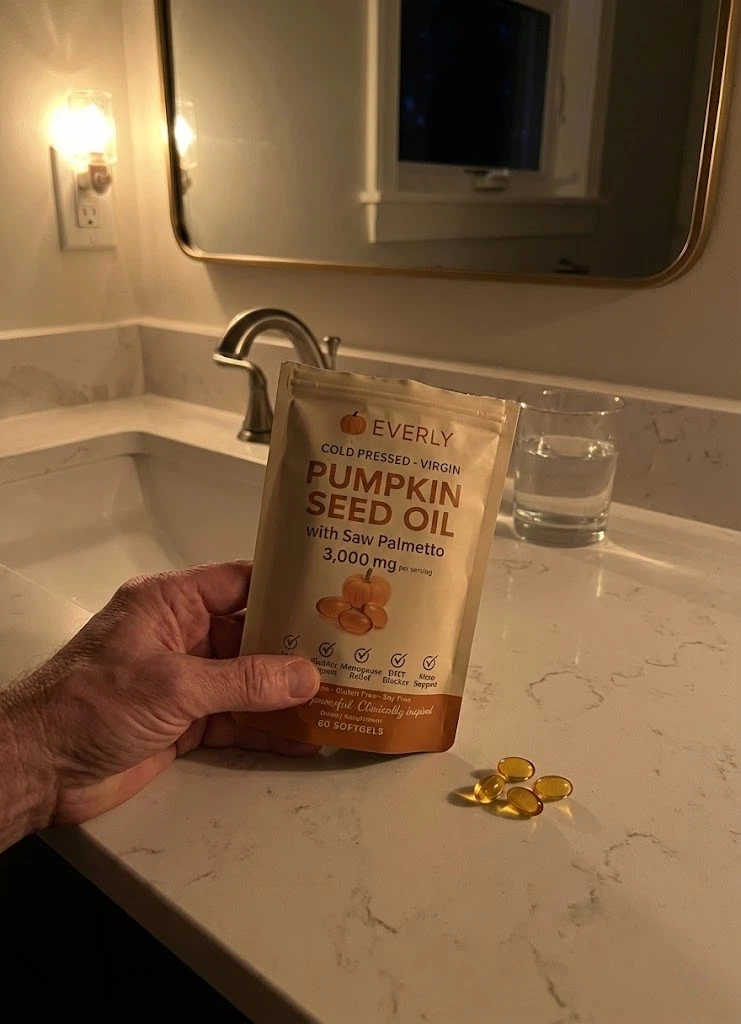
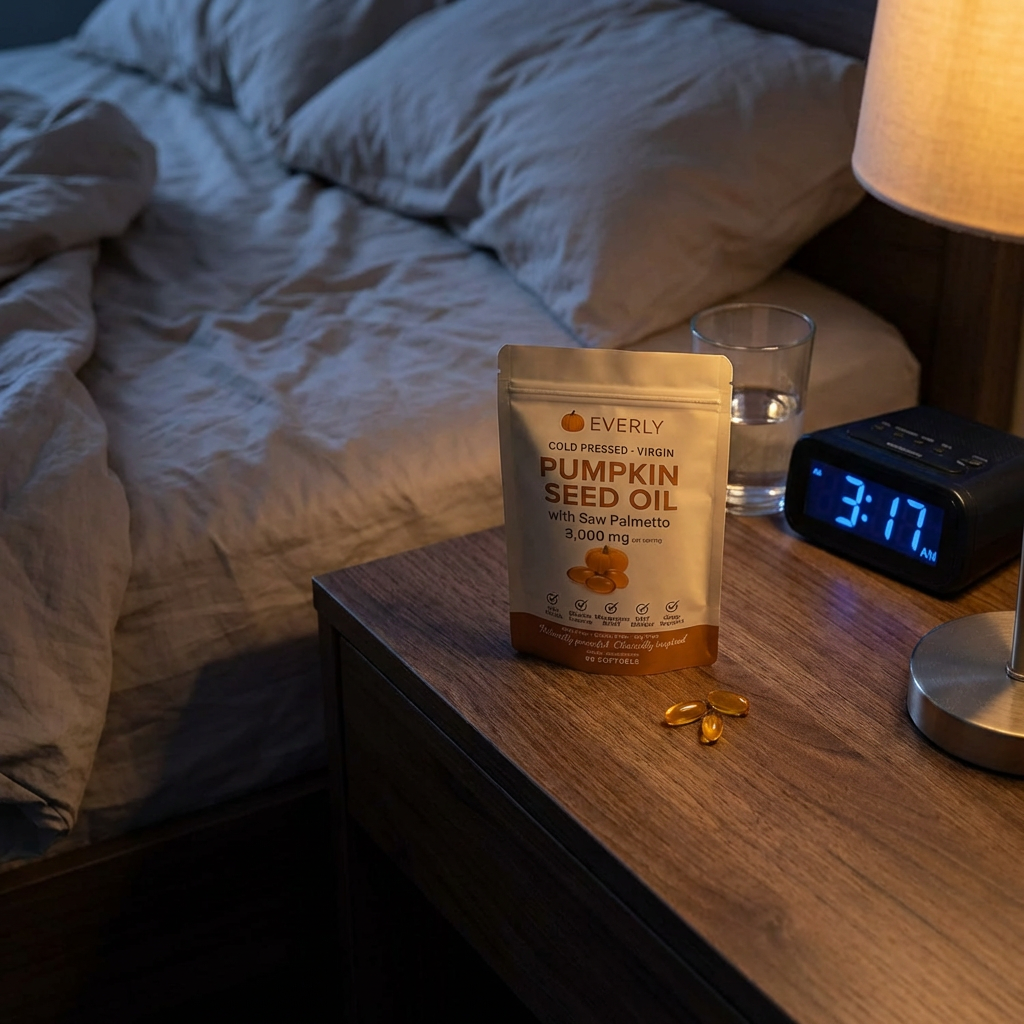
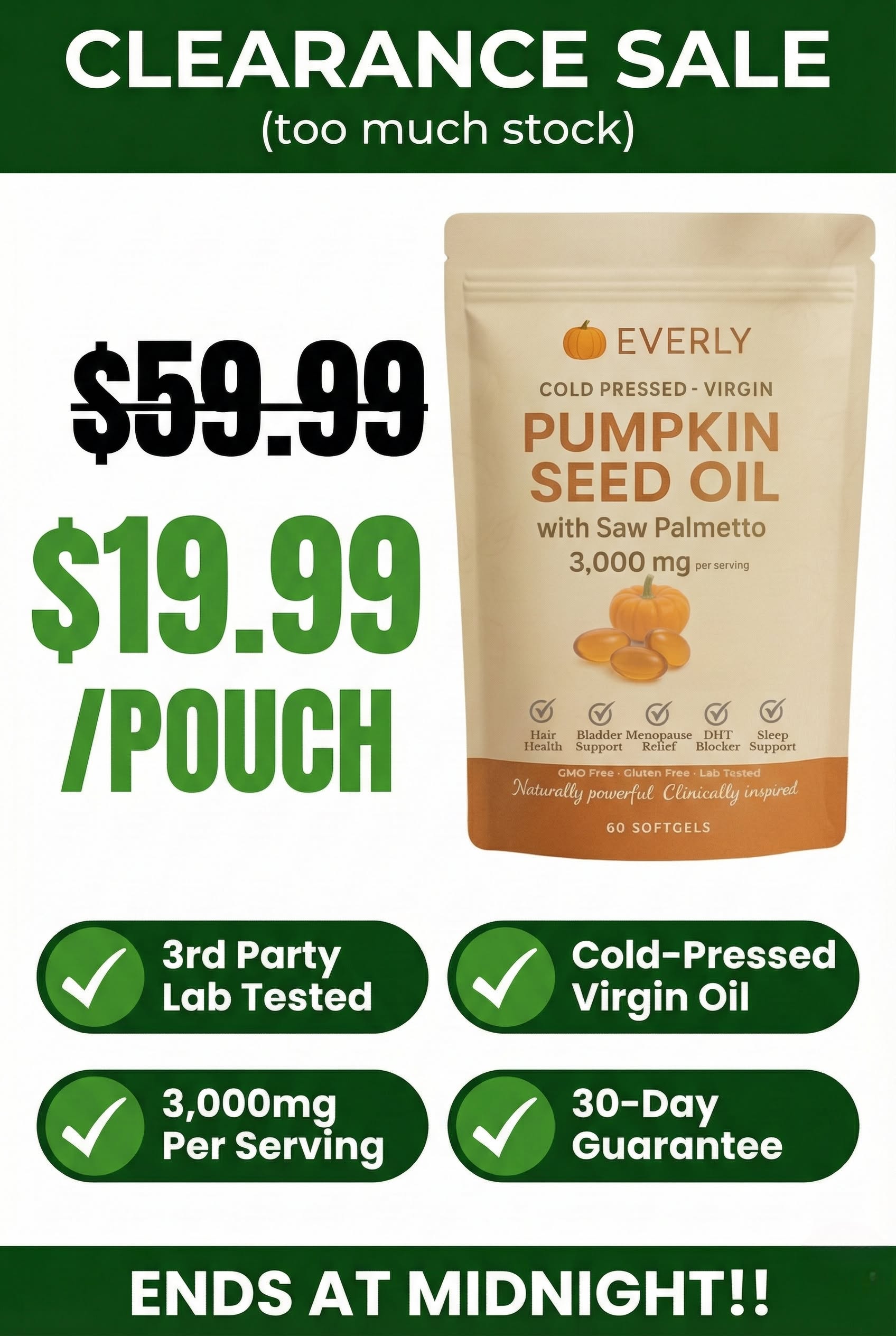
He Was Up Four Times Last Night. His Wife Found Him Standing in the Kitchen at 3 AM Drinking Water Out of the Faucet. He Told Her He Was Fine. He Wasn't Fine. I was at the hardware store on a Saturday morning in October picking up a box of deck screws and a can of wood stain. Nothing special about the Saturday. Nothing special about the screws. I've been doing my own projects around the house for thirty-some years — deck needs staining every couple falls, gutters need cleaning, there's always something in the garage that needs bolting down or building up. I like the work. I like the hardware store. I like walking the aisles slowly and not being in a hurry about it. I was in the fastener aisle when I ran into Gary. Gary lives three houses down from me. We're not close friends exactly — we're the kind of neighbors who wave when we drive past, who lend each other tools without making a thing of it, who stand in the driveway talking longer than we planned to when one of us is taking out the trash. You know the kind. He looked tired. Not the tired of a long week — the tired that sits behind the eyes and doesn't leave when you sleep. The kind that makes a man look five years older than he looked last month. "You alright?" I said. He was holding a pack of batteries and a tube of silicone caulk and he just stood there for a second, like the question surprised him. "Yeah," he said. Then: "No. I don't know." We ended up in the parking lot, leaning against the tailgate of his truck, and we talked for the better part of half an hour. --- Gary is sixty-one. Retired from the plant two years ago. Still works with his hands every day — the garage, the yard, the little woodworking bench he finally built himself after talking about it for a decade. He's the kind of man who doesn't sit still. Never has. His wife Linda says he'd mow the lawn in a thunderstorm if she didn't stop him. But for the last eight months, something had been off. It started with the bathroom trips. Once a night became twice. Twice became three times. Now it was four, sometimes five. Every ninety minutes his body would wake him up with that urgent pressure — not painful exactly, just relentless — and he'd walk down the hallway in the dark, stand there for two minutes, produce almost nothing, walk back, lie down, and wait for it to happen again. "The sleep is the worst part," he said. "I haven't had a full night in I don't know how long. I fall asleep fine. Then 12:30, I'm up. Then 2. Then 3:15. Then the sun's coming up and I've been awake more than I've been asleep and the day hasn't even started." He'd mentioned it to his doctor at his last physical. The doctor checked his PSA — it was normal. Did a quick exam. Said the prostate was slightly enlarged, which was common for men his age. Wrote him a prescription for tamsulosin. Told him to cut back on coffee after noon and limit fluids before bed. "I did all of that," Gary said. "The pill helps a little with the flow. But I'm still up. Still standing in the bathroom at 2 AM. Linda doesn't say anything about it but I know she hears me get up and I know it wakes her up too and neither of us talks about it." He said it the way men say things they've been carrying alone — flat, factual, with the emotion tucked behind the information. "What did your doctor say when the tamsulosin didn't fix it?" Gary looked at me. "He said it takes time. He said some men respond faster than others. He said if it didn't improve in six months we could discuss other options." "Like surgery." "Like surgery." I nodded. My brother-in-law had been in almost the same chair — different doctor, same conversation. The moment when the standard protocol runs out and the next step involves a scalpel and a recovery period nobody's excited about. "So you've been looking for something else," I said. "I've been looking for someone to explain what's actually happening," Gary said. "Because I can follow the instructions. I can take the pill. I can stop drinking water after 7. I just want to understand why I'm still up four times a night after doing everything they told me to do. Nobody has explained that part." I looked at him for a moment. "Can I tell you what I found out?" I said. "Not what the pill bottle says. What I actually learned." Gary set his batteries on the tailgate. "Yeah," he said. "Please." --- I'd spent a solid three months reading about this, about a year and a half ago, when I realized my own situation was heading in the same direction. I was fifty-eight at the time. Not as bad as Gary — maybe two, three trips a night. But the pattern was unmistakable. The urgency that wakes you up. The weak stream that takes forever to start and dribbles to nothing. The feeling, twenty minutes after you finish, that you didn't actually finish. The low-grade awareness all day long that the bathroom is never far from your mind — planning where it is at the restaurant, at the store, at church, on the drive. The quiet rearranging of a life around a problem you don't talk about. My PSA was fine. My doctor said the same things Gary's doctor said. Mild enlargement. Common with age. Take this. Limit that. We'll watch it. But I wanted to understand the mechanism. Not the symptom management. The reason. Here's what I found. The prostate — that walnut-sized gland that sits right below the bladder — doesn't just enlarge randomly because you hit sixty. It enlarges because of a specific hormonal process that accelerates as men age. And the process has a name that nobody at the doctor's office mentioned to me once. It's called the DHT cascade. DHT — dihydrotestosterone — is a hormone your body makes from regular testosterone using an enzyme called 5-alpha reductase. When you're young, the conversion happens at a controlled rate and the DHT does useful things. As you age, the enzyme doesn't slow down. It speeds up. More and more of your testosterone gets converted into DHT. And DHT does something very specific to the prostate: it binds to the receptor cells in the tissue and tells them to grow. Not maliciously. Just relentlessly. The cells divide. The tissue swells. The gland presses against the urethra and the bladder neck. And the bathroom trips begin. That's checkpoint one. Checkpoint two is inflammation. The swelling tissue triggers an inflammatory response — your body's reaction to something pressing where it shouldn't be pressing. The inflammation makes the tissue even more swollen. Which increases the pressure. Which increases the urgency. Which increases the trips. It's a feedback loop. The problem feeds itself. Checkpoint three is smooth muscle tension. The prostate and bladder neck contain smooth muscle tissue that contracts and relaxes to control urine flow. When the tissue is inflamed and the DHT signal is running constantly, that smooth muscle stays partially contracted. Which is why the stream is weak. Why it takes so long to start. Why it feels like you're pushing against something that won't open all the way. Because you are. Three checkpoints. All running simultaneously. All downstream of the DHT signal that the standard approach — tamsulosin — doesn't address. Tamsulosin relaxes smooth muscle. That's checkpoint three. It doesn't touch checkpoints one and two. Which is why it helps a little with the flow but doesn't stop the trips. The growth signal is still running. The inflammation is still building. The muscle relaxes temporarily while everything behind it keeps getting worse. That's why the pill works a little and the problem doesn't go away. Gary was quiet for a long moment. "So the growth hasn't stopped," he said. "The pill is just opening the door a little wider while the hallway keeps getting narrower." "That's exactly it." "And the supplements — saw palmetto and all that —" "Most of them are aimed at the wrong checkpoint or they're not standardized to do anything meaningful. The saw palmetto you buy at the drugstore usually isn't extracted to the concentration that the research was based on. The zinc and the selenium are fine minerals but they're not addressing the DHT signal. They're background nutrition, not mechanism intervention." He looked at the parking lot. Then back at me. "So what does?" --- I told him. I told him what I'd found after reading more clinical research than any retired electrician has a right to read. The answer kept pointing to one specific thing — not a prostate supplement, not a multivitamin — something that worked upstream of the enlargement, at the hormonal signal driving the entire cascade. Pumpkin seed oil. But not the kind you drizzle on a salad. The active compounds in pumpkin seed oil responsible for interrupting the DHT cascade are called phytosterols — specifically delta-7-sterols. These compounds bind to the 5-alpha reductase enzyme and slow it down. Less enzyme activity means less testosterone converts to DHT. Less DHT means the growth signal weakens. The prostate tissue stops being told to expand. That's checkpoint one — addressed. The same oil contains a specific concentration of omega fatty acids — the right ratio of omega-3, omega-6, and omega-9 — that directly reduces the inflammatory response in the prostate tissue. Not a general anti-inflammatory like ibuprofen. A targeted one. The inflammation that's driving the feedback loop begins to quiet. That's checkpoint two — addressed. And the combination of the phytosterols with the fatty acid profile has been shown in clinical research to relax the smooth muscle tension in the bladder neck and prostate — not by forcing it open the way tamsulosin does, but by reducing the underlying signal that's keeping it contracted. That's checkpoint three — addressed. All three. From one mechanism. But here's the part that matters: concentration. The pumpkin seeds you eat as a snack don't contain these compounds at therapeutic levels. The grocery store pumpkin seed oil isn't cold-pressed or standardized. To get the delta-7-sterol concentration that the clinical research used, you need a specific extraction process — cold-pressed, from Styrian pumpkin seeds, at a concentration that delivers the compounds where they need to go. The one I found was Everly. Pumpkin Seed Oil Softgels. Cold-pressed. Standardized. Each softgel delivers the phytosterol and fatty acid profile at the levels the research was actually based on. No proprietary blends. No filler oils. No saw palmetto hiding the fact that the primary ingredient is underdosed. Just the oil, at the right concentration, in a form your body can actually absorb. "The label doesn't say it cures BPH," I told Gary. "That's not what it is. It supports the hormonal and inflammatory pathways that are driving the enlargement. Which lets the pressure come down naturally so the medication you're already taking — or even without it — can work the way it's supposed to. That distinction matters. A company that's honest about what it does is one I trust more." Gary looked at me for a moment. "That's what I want," he said. "I don't want a miracle. I just want to stop getting up four times a night and start feeling like myself again." "That's exactly where I was," I said. --- I pulled up the product on my phone right there in the parking lot and showed him. Everly Pumpkin Seed Oil Softgels. I pointed to the extraction method, the standardization, the concentration. I showed him the page. "Look it up when you get home," I said. "Read what's in it. And mention it to your doctor at your next appointment. Not because he needs to approve it — it's pumpkin seed oil, not a prescription — but because he's managing the full picture and he should know what's in the picture. That conversation takes three minutes." Gary looked at his phone. Then at me. "When did you start noticing a difference?" he said. "It was gradual," I said. "First couple weeks, maybe not much. Around week three I realized I'd slept through to 4:30 without getting up. That hadn't happened in over a year. By six weeks the trips were down to once — maybe twice on a night when I had too much water at dinner. The stream was stronger. The urgency wasn't running in the background all day. I wasn't mapping bathrooms in my head every time I left the house." "And your doctor?" "He looked at the panel. Looked at the previous one. Said whatever I was doing, the numbers were moving in the right direction. He wanted to see the next one before drawing conclusions. That's the right answer. That's what a careful doctor says." Gary put his phone in his pocket. "I've been standing in the supplement aisle at Walgreens twice this month," he said. "Both times I left without buying anything because I couldn't tell what was real and what was just a label." "I know that feeling," I said. "That's exactly where I was." He thanked me. We shook hands the way men shake hands when something real has just passed between them — firm, brief, with a nod that says more than the handshake. I got in my truck and drove home thinking about Gary. --- About the particular frustration of being a man who fixes things — who has spent his whole life diagnosing problems and solving them with his hands — and having something happening inside his own body that he can't reach and can't fix and can't even get a straight answer about. You just lie there in the dark waiting for the next trip. And the next one. And the next one. I'd been in that dark hallway. In some ways the management of it is ongoing, because bodies at sixty don't work like bodies at thirty and that's just the truth. But something shifted when I understood where the failure actually was. Not in the prescription. Not in my discipline. In the three-checkpoint cascade that the standard protocol was only touching at one point — because there's no pharmaceutical that addresses all three simultaneously, and pharmaceutical management is what standard protocols are built around. I want to be honest with you the way I was honest with Gary. Everly Pumpkin Seed Oil Softgels is not a treatment for BPH. It doesn't replace tamsulosin or finasteride or whatever your doctor has you on. It supports the hormonal and inflammatory pathways that are driving the prostate enlargement that causes the symptoms — which is a different thing from treating the condition, and a brand that's clear about that distinction is one I trust. Two softgels in the morning. With food. Added to whatever you're already doing — not instead of any of it. Your doctor should know you're taking it. That call takes three minutes. It's the step that comes first. I saw Gary about a month later. He was in his garage, working on that woodworking bench. I waved. He waved back. Then he walked over to the end of the driveway. "I slept through to 5:15 this morning," he said. Just like that. No preamble. No drama. Just a man reporting a fact that meant everything to him. "How long has it been?" I asked. "Almost three weeks of solid sleep. Linda noticed before I did. She said I stopped making noise at night." He didn't say anything else about it. He didn't need to. He turned around and walked back to his bench and picked up a piece of sandpaper and got back to work. That's what it looks like when something quietly starts working. Not a miracle. Not an overnight transformation. Just a man sleeping through the night and getting back to the things he loves in the morning. If you're in a similar place — the prescription is there, the PSA is fine, and you're still up three, four, five times a night standing in the dark wondering why nothing has changed — I'm not here to tell you what to do. I'm just a man who found something useful and is passing it along the way one neighbor passes it along to another. Talk to your doctor. That comes first. Then, if everything checks out: two softgels with breakfast. Not instead of anything. In addition to everything. Give it real time. Some men notice something within the first two or three weeks — an extra hour of unbroken sleep, a stream that starts when you tell it to, an urgency that doesn't run the whole day. Others take longer. Bodies are different. A lot of what happens is quiet. Be patient with yours. --- P.S. My doctor asked at my last appointment what had changed. I described what I described to Gary — the DHT cascade, the three checkpoints, the enzyme that's converting testosterone faster than it should be, the inflammation loop, the smooth muscle tension. He pulled up the previous panel. Looked at the current one. PSA stable. Symptom profile improved. On the same tamsulosin dose I'd been taking. He said the research on phytosterols and 5-alpha reductase inhibition was well-documented. He wanted to see the next panel before drawing firm conclusions. That's the right answer. He's been managing my care for five years. He knows this is added to my routine, not substituted for anything. P.P.S. The thing about getting up four times a night is that it does something to a man over time that goes beyond tired. You stop planning evening things. You stop driving anywhere that's more than an hour away without mapping the rest stops. You stop being the guy who says "sure, let's go" because you're always calculating where the bathroom is. Something small gets taken from you every night and you don't realize how much is gone until something gives a little of it back. I don't know how to put a number on that. I know it was real. P.P.P.S. Here's the practical version: mention it to your doctor at your next visit. Or call the nurse line — three minutes. Tell them it's cold-pressed pumpkin seed oil softgels, standardized phytosterol profile, and ask if there's any reason it would be a concern given everything else in the picture. If they say it's fine: two softgels, with breakfast, every morning. Don't change anything else you're doing. Just add this one thing. Give it a few weeks before you decide anything about it. Some men notice something within the first couple weeks. Others take a full month or more. Be patient. P.P.P.P.S. Everly offers a money-back guarantee. Every penny, no questions asked. I think that's the right policy for a supplement — it gives you enough time to actually find out whether it's doing something, rather than having to decide in two weeks. Take the time. P.P.P.P.P.S. I keep an extra bottle on hand. Small company, real extraction process, and once a batch is gone it takes time for the next one. I'm not going to be the man who runs out of the thing that finally let him sleep through the night. 👉 https://try.shopeverly.shop/esl
🎃 Natural Support for Your Daily Routine
“I’ve been feeling stronger and more balanced since taking Everly Pumpkin Seed Oil. My bladder feels so much calmer, I’m sleeping through the night again, and my hair feels thicker than it has in years. I love how natural it feels — just pure support for my body.”
LEARN MORELike this ad? Make it yours.
Crush rebuilds this exact creative around your product — your brand, your colors, your offer — in about a minute.