Sharp Eyes After 55
Sharp Eyes After 55 Facebook ad: “My Mother Has Been on AREDS2 for 16 Years. She's Still…”
Ran for 39 days, from August 2 to September 10, 2026, the last day Crush saw it.
Run by Sharp Eyes After 55 on Facebook. Crush is not the advertiser and does not verify its claims. See this ad in Meta's Ad Library(opens in a new tab)
Want an ad like this for your product?
Crush makes new ad images for your product from this ad: your logo, your product photo, your offer.
Trials from $19.95 USD, then $79.95 USD a month. Cancel anytime.
About this ad
- Meta Ad Library ID
- 1738899640594554
- Platforms
- Facebook, Instagram, Audience Network, Messenger and Threads
- Relaunches
- 0
Ad text
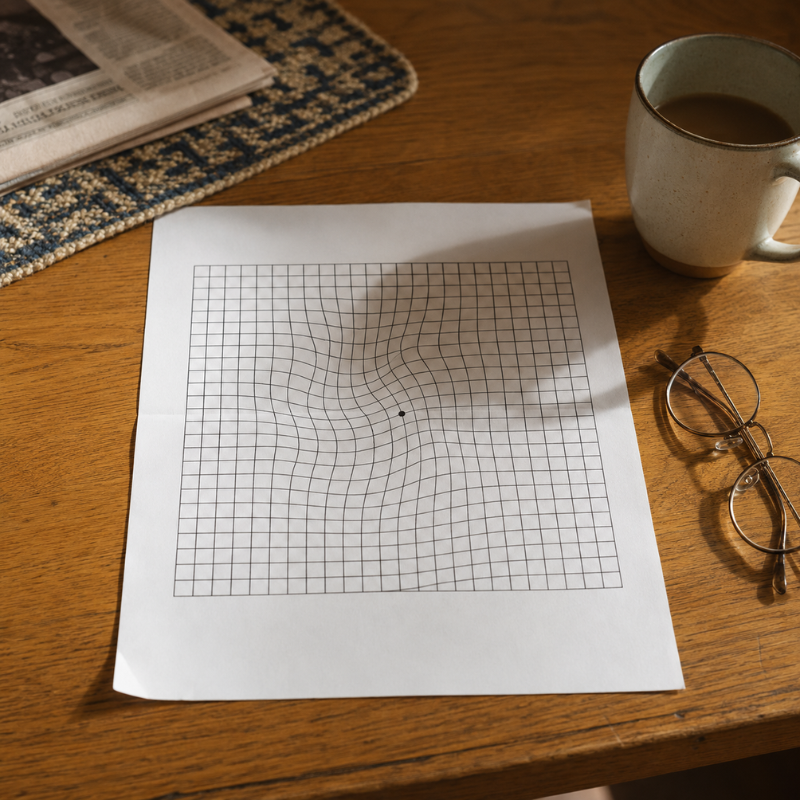
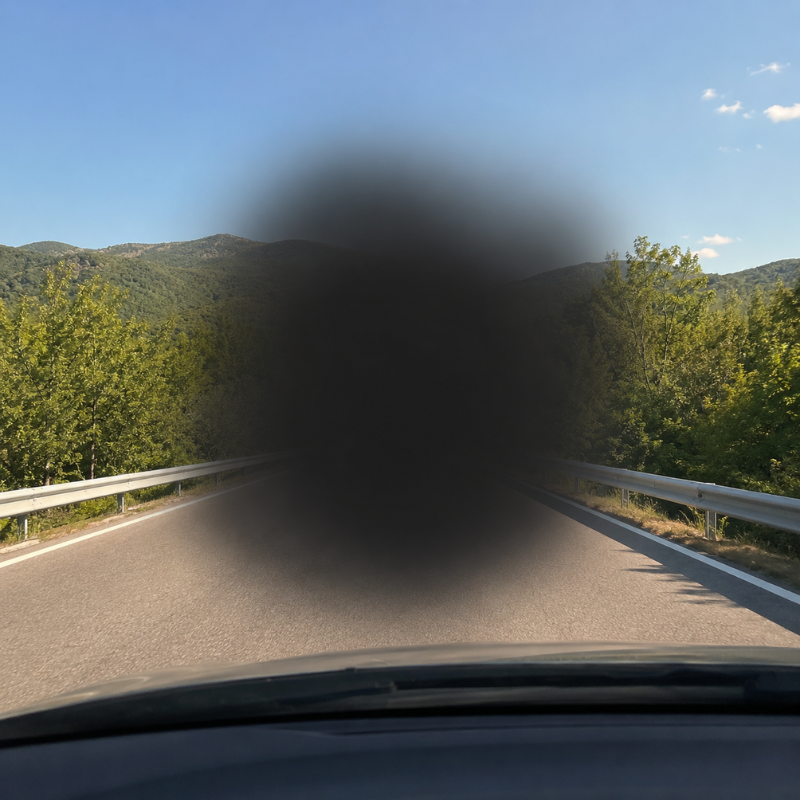
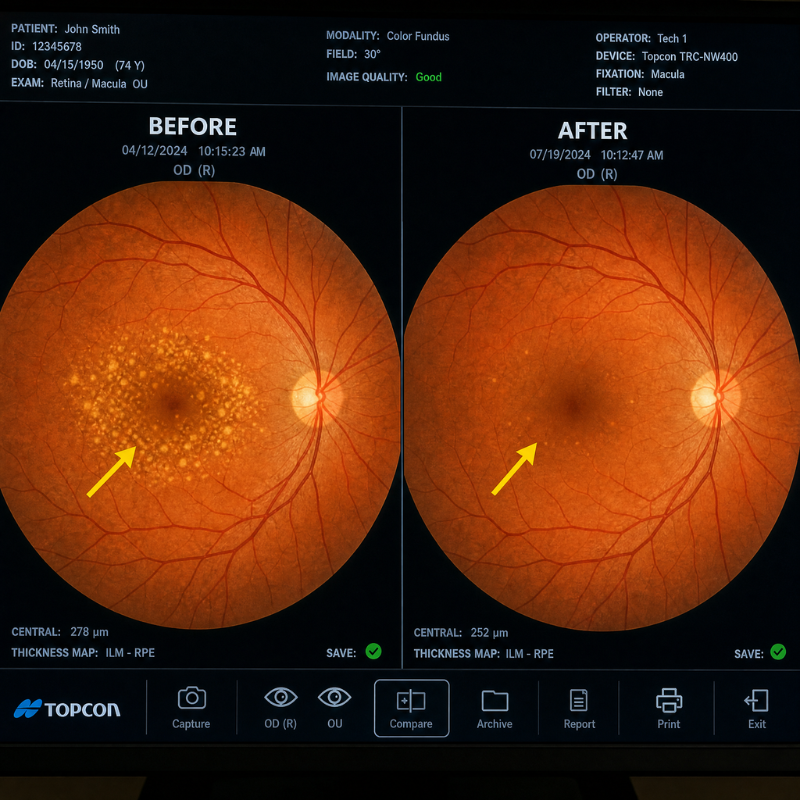
In 2013, the National Eye Institute published the AREDS2 trial results in JAMA — the Journal of the American Medical Association. That paper established the treatment protocol every retina specialist in the country has been handing out for over a decade. In the discussion section of that paper — a paragraph almost nobody outside the research community reads — the AREDS2 authors explained why the formula they were recommending would not work for three out of four patients. They did not say it as bluntly as I just did. But that is what the numbers said. I am going to explain how I know this, because I have spent the last year applying the same research methodology I use for a living to my own family's medical situation, and what I found made me stop what I was doing and write this letter. My name is Julia. I am 48. I work as a research analyst at a mid-sized law firm in Philadelphia. My job is to read complex documents — regulatory filings, clinical trial data, pharmaceutical patent disclosures, medical literature — and translate them into plain language for attorneys who need to understand what a document is actually saying versus what it appears to say. I have been doing this work for twenty-one years. I got into it because I like reading things carefully. I stayed in it because I discovered that a document's most important information is almost always in the discussion sections, the footnotes, and the limitations paragraphs that nobody quotes in the marketing materials. The AREDS2 paper is no exception. I want to tell you what I found in it, because I think you might be where I was last April. Last April, I sat in a small exam room at an ophthalmology practice in Bala Cynwyd, Pennsylvania, and my retina specialist told me my left eye had two small drusen. He used the phrase "very early dry AMD, not yet intermediate." He said we were not going to do anything about it yet. He said we would monitor it. He used the exact phrase "watch and wait." I recognized the phrase. Because I had been reading it for the previous twelve years, in my mother's chart notes, at the appointments I drove her to after she stopped being able to drive to her own retina specialist. My mother is Nancy. She is 78. She was diagnosed with early dry AMD at 62, sixteen years ago. Her retina specialist put her on AREDS2 that same year. She has taken two soft gels every morning with her coffee for the last sixteen years. She never missed one. At 68, she stopped being able to read the small print in her novels. She switched to large-print editions. At 70, she stopped being able to read the large-print editions and switched to audiobooks. At 72, she failed her driver's license renewal test and had to hand in her keys. At 74, she stopped being able to recognize my son's face across the kitchen table without his voice as a cue. She is now in the intermediate-to-advanced stage. Her central vision is nearly gone in the right eye and going in the left. Her retina specialist told her three months ago that they would begin discussing intravitreal injections at her next visit if there was any evidence of neovascularization. She has done everything her retina specialist has told her to do. For sixteen years. I want to tell you what I found in the AREDS2 paper that explained why it did not work for my mother. The AREDS2 trial tested a specific formula — the one currently in the PreserVision bottle sitting on my mother's kitchen counter. It compared that formula against a placebo across roughly 4,200 patients over five years. The result the paper reports, in the abstract that everyone quotes, is that the formula reduced progression from intermediate to advanced AMD by approximately 25 percent over five years. That is a real result. It is a statistically significant result. The formula does something. But the discussion section of the paper — in a paragraph I doubt one in a thousand AMD patients has ever read — explains what the 25 percent figure actually means for an individual patient sitting in an exam room. It means that three out of four patients on the formula, in the trial, still progressed to advanced AMD within the five-year window. Not because they were noncompliant. Not because they were not taking the formula correctly. Because the formula's effect size is what it is, and its effect size does not prevent progression in the majority of patients — it slows it in some, does nothing in others, and cannot fully address what causes the underlying damage. My mother is one of the three. The 25 percent figure got translated into the language a doctor uses in an exam room. This is the treatment for what you have. This is what we recommend. Take two of these a day. The three-out-of-four figure did not. When I sat in my own exam room last April and heard the phrase "watch and wait" applied to my own drusen at age 47, I understood, in a way I had not understood before, that the treatment plan being offered to me was the same treatment plan that had allowed my mother to progress from reading her novels at 62 to needing my voice to recognize me at 74. I refused to start AREDS2 at that appointment. I told my retina specialist I wanted to research my options first. He told me that research was fine, but there were no other options. AREDS2 was the standard of care. Everything else on the market was, in his words, not backed by the same evidence. I nodded. I paid my copay. I went home. And I started reading the way I read for a living. Here is what I found. The AREDS2 trial was designed in the early 2000s. It was funded to test a specific set of ingredients — lutein, zeaxanthin, vitamins C and E, zinc, and copper. Those ingredients were chosen because the original AREDS trial, published in 2001, had established a preliminary case for them. AREDS2 was the follow-up trial that refined the formula. The AREDS2 trial did not test astaxanthin. Not because astaxanthin had been ruled out. Because at the time the AREDS2 trial was being designed, the retinal research on astaxanthin had not yet accumulated to the point where the NEI would have included it in the trial's ingredient list. By the time AREDS2 was published in 2013, the astaxanthin retinal literature had accumulated. There were peer-reviewed papers from research groups in the United States, Japan, and Northern Europe — all documenting that astaxanthin does something specific in the retina that lutein and zeaxanthin cannot do. But the AREDS2 trial had already closed. The formula had already been codified. The standard of care had already been named. And here is the specific procedural fact that most patients do not understand. A codified clinical protocol — the standard of care in a specialty — does not get updated on the back of newer research. It gets updated on the back of a new multi-center trial, funded to the tune of tens of millions of dollars, run for a minimum of five years, and reviewed by a federal committee before the professional societies will issue a revised recommendation. Somebody has to fund the trial that would add astaxanthin to AREDS2. Nobody has. For a specific reason. Pharmaceutical companies fund trials on molecules they can patent. Astaxanthin is a natural carotenoid produced by a microalgae called Haematococcus pluvialis. It has been sold as a food-supplement ingredient since the 1990s. It cannot be patented by anybody. There is no financial mechanism by which a private company would spend forty million dollars proving what a Harvard research team already showed in 1997. So the follow-up trial does not get funded. The AREDS2 formula stays frozen at its 2013 formulation. The retina specialists keep handing out PreserVision. The patients keep taking two soft gels with their coffee. And the molecule that the peer-reviewed literature had already shown could reach parts of the retinal tissue AREDS2 was never designed to reach — sits in the medical journals, well-documented, well-replicated, and completely absent from my mother's kitchen counter. This is not a conspiracy. Nobody buried the research. It is right there in PubMed. Any ophthalmologist with a library card can read every paper I read. But medicine does not run on library cards. Medicine runs on continuing-education seminars sponsored by pharmaceutical companies, drug-rep visits, and clinical guidelines issued by professional societies whose members were trained under the previous guidelines. Nobody sends a drug rep to talk to an ophthalmologist about a natural algae extract. There is no professional society bulletin recommending a supplement that no member can prescribe as a covered treatment. The pipeline that would carry astaxanthin from the medical literature into my mother's exam room simply does not exist, because there is no money moving through it. That is the finding I applied twenty-one years of research training to and could not make go away. Let me explain what astaxanthin does at the level of the retina, because this is the part of my research that changed how I was thinking about my own drusen and my mother's decline. The macula sits behind a barrier called the blood-retinal barrier. It is essentially the eye's version of the blood-brain barrier — a tight cellular seal that keeps most compounds in the bloodstream from reaching the retinal tissue. Lutein and zeaxanthin — the two macular carotenoids in AREDS2 — do cross the blood-retinal barrier. They are the reason the AREDS2 formula does the roughly 25 percent of work it does. They sit in the outer layers of the macular pigment. They filter blue light before it reaches the photoreceptors. They are, in effect, an outer shield. The other ingredients in AREDS2 — vitamin C, vitamin E, zinc, copper — largely do not cross the blood-retinal barrier in meaningful concentrations. They do useful antioxidant work in the bloodstream. They do not reach the retinal tissue in doses that matter for the specific damage happening in an AMD patient's retina. And here is the mechanism gap that has taken my mother's central vision. The photoreceptor cells themselves — the delicate light-sensitive tissue at the very back of the retina — are being damaged by oxidative stress that happens inside the cell, at the mitochondrial level, independently of whether the outer pigment shield is intact. Lutein and zeaxanthin do not enter the photoreceptor cell. They do not reach the mitochondria. They do not neutralize the oxidative damage inside the cell. The outer shield holds. The cells behind the shield are dying anyway. That is what the peer-reviewed literature described. That is what my mother's OCT scans have been documenting for sixteen years. Astaxanthin does something none of the AREDS2 ingredients do. It crosses the blood-retinal barrier. It also crosses the photoreceptor cell membrane. It enters the mitochondria directly. It stays biologically active in the cell for as long as 48 hours after a single dose. The peer-reviewed retinal literature on astaxanthin — visual fatigue trials, contrast sensitivity trials, choroidal blood flow measured on doppler ultrasound — has been running for more than two decades. It uses a specific dose in a specific delivery format. Twelve milligrams per day, delivered in a fat carrier so the molecule can cross into the tissue where it needs to go. None of that is in the AREDS2 formula. I want to be careful here, because I have spent enough time reading pharmaceutical marketing to know that when a supplement claim sounds too good, it usually is. The reason most astaxanthin products on the market do not produce the results in the clinical literature is that most of them are not the astaxanthin the clinical literature tested. Three problems, in three bottles out of four on the shelf. The first is source. Astaxanthin can be manufactured synthetically in a laboratory from petrochemical precursors. It looks similar to the natural molecule. It does not perform the same way in the human body. Synthetic astaxanthin is cheaper to produce and is what fills most private-label bottles. The clinical trials did not use it. The second is dose. The trials that produced the retinal outcomes I was reading used twelve milligrams per day. Most retail bottles contain four milligrams. Some contain six. A four-milligram bottle is not a smaller dose of the trial protocol — it is a different intervention entirely, one that does not reach the tissue concentrations the trials measured. The third is delivery. Astaxanthin is a fat-soluble molecule. Cell membranes are made of fat. For the molecule to move from the digestive tract into the bloodstream and across the blood-retinal barrier, it has to be delivered in a fat carrier. Most retail products are sold as dry powder in a hard capsule. The powder passes through the digestive tract and comes out the other side without ever crossing a single cell membrane. If you have tried astaxanthin before and felt nothing, one of those three things was almost certainly the reason. Possibly all three. I spent about ten days researching brands. I read certificates of analysis. I compared source documentation. I looked at extraction methods, concentration, delivery format, and third-party testing. I chose CoraLume. Twelve milligrams per softgel — the dose the human clinical trials actually used. Natural astaxanthin from Haematococcus pluvialis microalgae, ocean-cultivated, not synthesized in a lab. The same source used in the peer-reviewed literature. Suspended in a fat carrier so the molecule reaches the retinal tissue. Softgel, not dry capsule. Every batch third-party tested. The certificate of analysis is published on the product page. I read it before I ordered. That is the whole formula. One molecule. One clinical dose. Correctly delivered. Here is what I did. I ordered two bottles. One for me. One for my mother. I did not tell my mother's retina specialist. I did not tell my own retina specialist. I called both of their offices, spoke to the nursing staff, and asked whether adding a natural astaxanthin softgel at 12 milligrams per day would interact with anything in my mother's or my own current protocols. Both nurses checked with the physicians and both physicians said no. I did not stop my mother's AREDS2. I did not start AREDS2 myself. My mother now takes both — her AREDS2 in the morning with her coffee, and CoraLume with breakfast. I take only CoraLume, because at 48 with two small drusen, I want the protection at the photoreceptor level. My retina specialist has not recommended starting AREDS2 for me yet given my earlier stage, and I did not want to preempt that conversation. My arc, since I am the one asking you to trust the research I did: April. Two drusen on the left OCT scan. Foveal preservation intact. Right eye clear. First bottle of CoraLume ordered from the parking lot outside the ophthalmology practice. June. Six weeks in. Reading legal briefs at night without needing to reset my eyes every twenty minutes for the first time in about a year. October. Six months in. Follow-up OCT scan. The drusen had not grown. There was no new drusen formation on either eye. My retina specialist looked at the comparison images and asked whether I had made any changes to my protocol. I told him. He wrote it in the chart. He did not endorse it. He did not disendorse it. He said, continue what you're doing, we'll follow up at your annual next April. My mother's arc is quieter, and I want to be careful about how I describe it, because sixteen years of AREDS2 have already taken from her what they were going to take. She is not getting the central vision she has lost back. Nobody with her level of retinal damage does. But she is watching the news on the television at a distance she could not manage six months ago. She has stopped asking me to describe the photographs on her refrigerator to her. She read three sentences of the Sunday paper out loud to me last week — slowly, one word at a time, with her reading magnifier at full strength — but she read them. She had not read a printed sentence in eleven months. That is what I have. It is not a miracle. It is a small, specific set of things she can do this month that she could not do last spring. I want to tell you what I want you to do with this letter. If you have been diagnosed with early or intermediate dry AMD in your own eyes, or you have a parent or a sibling who has been on AREDS2 for a decade and is progressing anyway, or your last eye exam included the word drusen and the phrase "watch and wait" — you have a window. Not next year, when the drusen have grown and the small print in your books has started to gray. Now. While the photoreceptors are still there to protect. CoraLume comes with a 90-day money-back guarantee. If your OCT scan does not look different from your previous one, if your visual fatigue does not lift, if your night vision does not sharpen — you send back a partially-used bottle and you do not pay. That is CoraLume's commitment, not mine. Mine is this. Give it twelve full weeks. That is the amount of time astaxanthin needs to accumulate in retinal tissue at the concentrations the clinical trials measured. Any shorter and you are testing an incomplete dose. One softgel with breakfast. That is the entire regimen. Alongside whatever AREDS your retina specialist has you on. Not a replacement. A completion. I am not writing this because anyone paid me to write it. I am writing it because I spent twenty-one years training to read documents carefully, and when I applied that training to my own family's medical situation, I found a molecule that a Harvard research team documented in 1997, that has been replicated by international research groups every year since, and that is completely absent from the AREDS2 pill on my mother's kitchen counter. That gap is not going to close on its own. It has been open for twenty-eight years, and every year it stays open, another mother in this country goes from reading her novels to needing her daughter's voice to recognize her. I am not starting AREDS2 at 48 to have that conversation with my own son in twenty years. I am doing something else. You have the same window I had.
Where the ad sends people
trycoralume.com
My Mother Has Been on AREDS2 for 16 Years. She's Still Going Blind. Here's What I Found in the Research.
Twenty-one years reading clinical trial data taught me that the most important information in a document is almost always in the discussion sections that nobody quotes in the marketing materials. When I applied that training to the AREDS2 paper my mother has been trusting for sixteen years, I found ...
Learn more: trycoralume.com(opens in a new tab)