
Inactive· since May 29, 2026
- 21
- days it ran
- 2
- relaunches
Ad copy
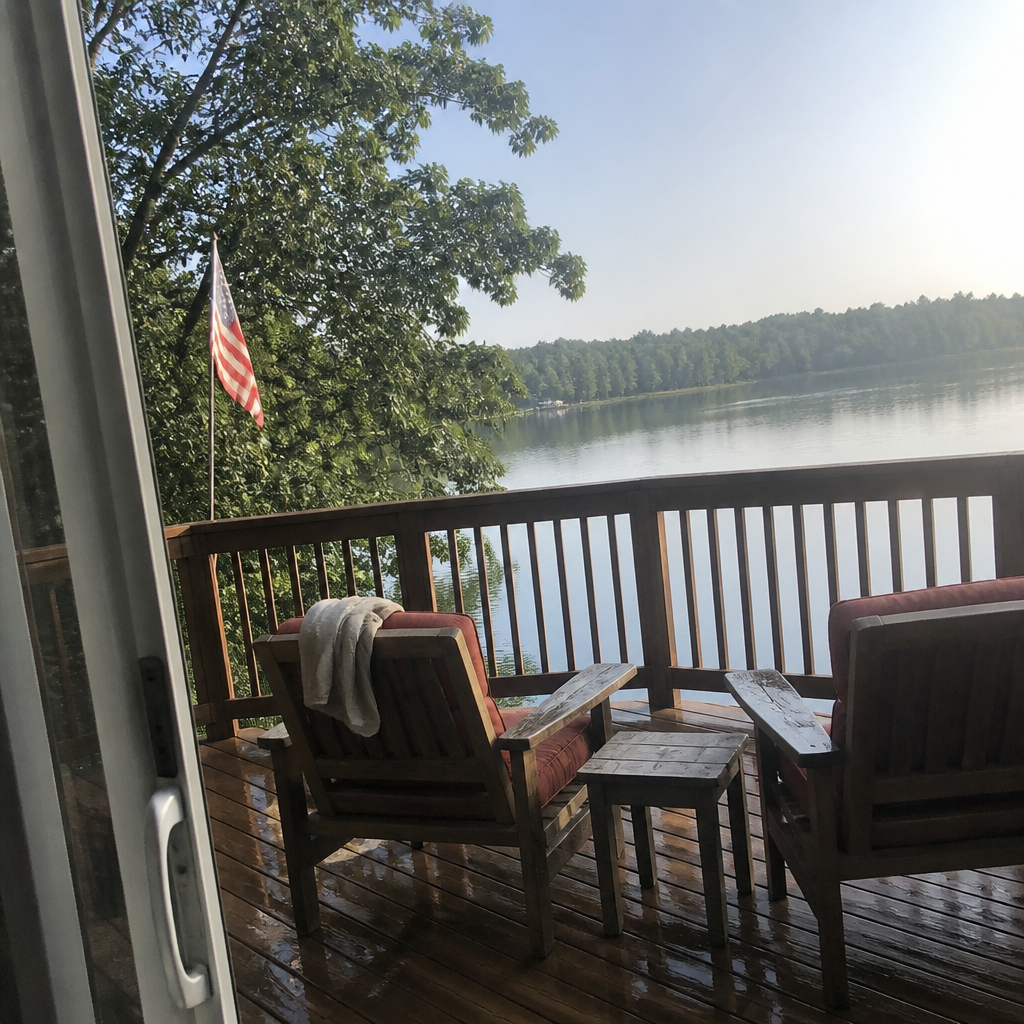
I manage an Airbnb. Last week, I received a message from a guest that brought me to tears. Not a complaint. Not a question about check-in. Not a request for extra towels. A photo. And five words I can't stop thinking about. Let me start from the beginning because this story is going to take a turn you won't expect. My husband Ryan and I have been running a five-star vacation rental for the past 4 years. Lake house, sleeps six, wraparound deck, the works. We've hosted hundreds of guests. We've dealt with red wine on white couches, a guy who somehow broke the hammock on the first night, teenagers who thought the fire pit was a trash incinerator. Normal stuff. But about 6 months ago, something started happening that we'd never experienced in four years of hosting. Guests started asking about the kitchen counter. Not the granite. Not the backsplash. Not the coffee maker. The little glass jar next to the water pitcher. See, I keep a small wellness tray on the counter for guests — a filtered water pitcher, a few herbal tea bags, and a glass jar filled with a morning powder. There's a handwritten card next to it that says: "Cortisol cocktail — mix one scoop into a glass of water. Great for travel fatigue and brain fog." Most guests try it the way they'd try a complimentary coffee pod or a mint on a pillow. But the checkout reviews started shifting. "Slept through the night for the first time in months." "My morning stiffness was completely gone by day two." "Felt more energy in 3 days at your place than I've felt in the past year." One couple — both in their late 60s — rebooked specifically because the husband told his wife he hadn't felt that clear-headed in five years. A retired teacher extended her stay by two nights because her hands had stopped aching for the first time in years. She kept flexing her fingers at the kitchen counter looking at them like they belonged to somebody else. Something was happening. Something real. Then last month, something happened that still keeps me up at night. A woman named Diane checked in on a Thursday with her husband. Mid-60s. Warm, chatty, organized. Her husband was quieter. Moved slowly. Smiled politely but there was something behind it. Something dimmed. They stayed three nights. On checkout morning, Diane left the place spotless. But when I went to flip the house, something was wrong. The jar was gone. Not the tea bags. Not the water pitcher. The glass jar of powder. Gone. I pulled up the camera footage. 5:22 AM on checkout day. Diane walked out of the bedroom, crossed the living room, went straight to the counter. She picked up the jar. Looked over her shoulder. Wrapped it in a dish towel. Put it in her suitcase. Zipped it shut. She took the whole jar. I texted her: "Hi Diane — hope you and your husband had a wonderful stay. I noticed the jar of powder is missing from the kitchen counter. Everything okay?" Forty-five minutes later, my phone rang. She was crying. "I'm so sorry. I know it was wrong. I'll pay for it. I just —" "My husband Don has been exhausted for almost five years. Not the normal kind of tired. The kind that sleep doesn't touch. His doctor has run every panel. Thyroid fine. Bloodwork fine. 'You're 64, Don. This is normal. Manage your stress. Try to get more sleep.'" "But he's NOT fine. He hasn't been fine in years." "His hands started first. Stiff in the morning. Then aching. He used to refinish furniture in our garage — built our daughter's bookshelf, our grandson's toy chest. Now the tools sit in a drawer and he pretends he doesn't notice." "Then the fog. He'd be mid-sentence and lose the word. 'Hand me the...' and then nothing. Standing there with his arm out, waiting for his own brain to catch up." "Last Thanksgiving he looked at our grandson — the one whose toy chest he built — and asked me, 'When did Katie have a son?' He's SEVEN. Don was in the delivery room." "His doctor says it's chronic stress. Says it's aging. 'These things are connected, Diane. Try meditation. Get him out for walks.'" "It's not aging. I've been married to this man for 38 years. Something is being taken from him. I've been watching it happen for four years and nobody will listen to me." "That powder on your counter — Don mixed a scoop into a glass of water Thursday evening because his legs were sore from the drive." "Seventeen minutes later he looked at me and said, 'Diane, my head feels different.'" "'Clear. Like someone cleaned a window I didn't know was dirty.'" "That night he slept through until morning. He hasn't slept through the night in two years." "Friday morning his hands weren't stiff. He picked up a coffee mug with his left hand and didn't wince. He didn't even notice. But I noticed. I've been watching those hands for four years." "By Saturday his sentences were finishing themselves again. He told a whole story about our daughter's wedding without stopping. Without searching. Without the fog swallowing the middle of it." "And Sunday morning I looked at that jar on the counter and I thought: I cannot go home. I cannot take him back to what he was before we got here." "I panicked. I took it anyway. Because I'd watched my husband come back to life over three days and I could not let that end." I was crying too. She could have been telling my story. Word for word. Because two years ago, I was Diane. Ryan's doctor had been flagging his cortisol markers and stress hormones for three years. Nothing dramatic — just chronically elevated in a way that nobody ever treated directly. "Manage your stress. Better sleep habits. Cut back on caffeine." Same advice every visit. Ryan did what he was told. Nothing changed. And every night I sat across from a man who was fading behind his own eyes. The details were different but the shape was the same. Don lost his grip on a jar lid. Ryan lost his grip on a screwdriver. Don forgot his grandson. Ryan forgot where he'd put things — his keys, his wallet, the name of the restaurant we'd been going to for fifteen years. Don's doctor said "that's aging." Ryan's doctor said the same thing. Same script. Same dismissal. Same woman sitting in the room knowing in her bones that something else was happening. What I need to tell you is what I found when I went looking for answers. One night — 1 AM, couldn't sleep — I was sitting at the kitchen table with my laptop. Ryan was asleep in his recliner again. TV still on. Reading glasses still on his face. The man I married used to stay up with me on the deck until midnight. We'd talk about nothing. Share a bottle of wine. Listen to the lake. Now he couldn't stay conscious past sundown and the doctor called it aging. I started researching. Not "supplements for stress." I'd already wasted months on that — magnesium, ashwagandha from Amazon, melatonin, CBD. None of it touched the fog or the pain or the exhaustion. I researched WHY. Why was this happening to him? And I found something that changed everything. It was a long post on a health forum. Written by a retired endocrinologist. Twenty-eight years of practice. She'd left clinical medicine because she said she couldn't keep telling patients to "manage their stress" while watching them deteriorate from the very thing nobody was treating directly. I almost scrolled past it. But her credentials checked out. Her writing was precise. Clinical. Not angry — just tired. Like a woman who'd spent three decades doing something she'd finally realized wasn't enough. She started by explaining what chronically elevated cortisol actually does inside your body. "Cortisol is your body's primary stress hormone," she wrote. "In a healthy rhythm, it rises in the morning — giving you energy and focus — and falls by evening so your body can repair, recover, and reset overnight. That rhythm is what allows your muscles to recover, your brain to consolidate memory, your energy to restore." I thought about Ryan's evenings. The recliner by 7:30. The TV watching him instead of the other way around. "But after decades of chronic stress, poor sleep, and modern metabolic pressure, your HPA axis — the system that controls cortisol production — loses its ability to self-regulate. Cortisol stops falling when it should. It stays elevated around the clock." "And chronically elevated cortisol does something nobody explains in plain language: it breaks down muscle tissue for fuel. Your body literally consumes its own muscle — including the small muscles of the hands — to feed the permanent emergency it thinks it's in. That's why the hands stop working. That's why the grip goes quiet." I thought about Ryan's hands. The ones that used to build things. The screwdriver he'd stopped trusting. "Cortisol also directly impairs hippocampal function — the part of the brain responsible for memory and word retrieval. The mid-sentence stops. The word that disappears mid-thought. That's not aging. That's a stress hormone suppressing the exact brain structure it needs most." I thought about Ryan stopping mid-sentence at the dinner table. Reaching for a word that had moved somewhere he couldn't get to. "And the energy depletion. Chronically elevated cortisol keeps the nervous system in fight-or-flight around the clock. The body burns through its energy reserves just maintaining the stress state. By evening there's nothing left. That's the recliner at 7:30. That's the man who used to stay up until midnight asleep before his wife finishes doing the dishes." I looked across the room at Ryan. Asleep. Glasses on. Mouth open. His doctor had noted elevated cortisol markers for three years. Every appointment. Then said "manage your stress" and sent him home with advice he'd already tried. Nobody had ever given his body the compounds it needed to actually bring the rhythm back. Nobody had ever treated it directly. She continued. "The question becomes: if chronically elevated cortisol is the driver, what actually brings it back into rhythm?" "Lifestyle changes help at the margins. But for a body whose HPA axis has been dysregulated for years, lifestyle advice alone is like telling someone to bail out a flooding boat with a coffee cup. You need to address the hormonal system directly." "Over the past two decades, a body of peer-reviewed research has examined specific compounds — adaptogens and phospholipids — that work at the HPA axis level to restore cortisol rhythm. Not calming herbs. Not general stress support. Compounds that have been shown in randomized controlled trials to measurably lower cortisol levels and restore the natural rhythm the body has lost." "KSM-66® Ashwagandha — the most clinically studied form, with over 22 randomized controlled trials. Shown to directly lower serum cortisol at the HPA axis level. Not generic ashwagandha — KSM-66® is standardized to 5% withanolides, the specific compounds responsible for cortisol reduction." "Phosphatidylserine — one of the most well-researched cortisol modulators available. Studies show it specifically blunts the night-time cortisol spike — the spike that prevents deep restorative sleep and causes the morning stiffness and cognitive impairment that nobody can explain." "Rhodiola Rosea — reduces the frequency and intensity of cortisol spikes. After years of chronic stress, the HPA axis becomes hair-trigger sensitive. Rhodiola rebuilds the body's ability to self-regulate." "L-Theanine, Myo-Inositol, Turmeric — each addressing a specific downstream consequence of chronic cortisol: nervous system overactivation, insulin dysregulation, systemic inflammation." "Together they don't just calm the body. They restore the rhythm. And when the rhythm restores, the muscle ache resolves. The fog lifts. The energy returns. The man who used to be present comes back." I closed my laptop at 3 AM. Opened it again at 5. I found the product she'd referenced. A complete cortisol formula — every compound at clinical doses, in one clean powder. One scoop into a glass of water every morning. Natural orange taste. That's the whole protocol. I ordered Harmonia. Ryan thought it was an orange electrolyte drink. I didn't correct him. I just set a glass of water on the table next to his recliner that evening, mixed in a scoop, and said "drink this." He looked at it. Looked at me. Shrugged. Drank it. Nineteen minutes. He was doing his crossword puzzle — the one his doctor told him to do to "keep his brain sharp." Most nights he'd get through half and give up. Set it on the armrest. Drift off. Nineteen minutes after that first glass, he looked up. "Jenna. Something feels different." "Different how?" "My head. It's quiet. Like the static turned off." He went back to the puzzle. Finished the whole thing. Didn't hesitate on a single clue. I went into the bathroom and cried. By week two, his hands had stopped aching in the morning. I heard him in the kitchen one afternoon — a sound I hadn't heard in over a year. Metal on metal. I walked in and he was tightening a cabinet hinge with a screwdriver. Didn't even look up. Just working. Like it was nothing. It wasn't nothing. I stood in the doorway and watched him and my throat closed up. By week three, the recliner stopped swallowing him at 7:30. We watched an entire movie together for the first time in over a year. He stayed awake. Talked about it after. Had opinions. Remembered the characters' names. By week six, he got his bloodwork done. I went with him. His doctor scrolled through the results. Stopped. Scrolled back. "You look different," she said. "Before I even opened this. You walked in here differently." Ryan shrugged. "I feel different." "Your cortisol rhythm has normalized. Your inflammatory markers are down. Your energy markers — everything is moving in the right direction." She was quiet for a while. Then: "Whatever you changed, keep doing it." She didn't write a new prescription. That was eight months ago. Ryan's been off the doctor's stress management cycle for seven months. His hands work. His brain works. He refinished two chairs last month. He remembers our grandson's birthday. He sleeps through the night. He carries the groceries in from the car without stopping halfway up the driveway. He's not the man who was fading in his recliner. He's the man I married. A few weeks after Ryan's bloodwork came back, we were at the rental doing a maintenance weekend. Ryan mixed his scoop into water at the kitchen counter out of habit — it's just part of his morning now. I watched him drink it. And I thought about all the guests who come through this house. The ones who move slowly. The ones whose wives hover near them with that look I know too well. I went home that afternoon and filled a glass jar with Harmonia. Wrote a card: "Cortisol cocktail — mix one scoop into a glass of water. Great for travel fatigue and brain fog." Set it on the counter next to the water pitcher. Didn't overthink it. Just did it. That was six months ago. And those guest reviews I told you about at the beginning? Now you know why they don't sound like electrolyte reviews. Because they're not electrolytes. They're what gave me my husband back. So here's what I told Diane on the phone that day: "Keep the jar. Keep every bit of it. But let me send you the link so you can order your own supply. Because that jar will run out. And when it does, I don't want Don to go back to the way he's been." She laughed through her tears. "Deal." I sent her the link that afternoon. She ordered three bags. Last week — exactly three weeks after their stay — she texted me a photo. Don at his workbench. Holding a sanding block. Both hands gripping it. No wince. No hesitation. Five words underneath the photo: "I have my husband back." That's the message from the beginning of this story. That's what made me cry. Not the theft. Not the confession. A photo of a man holding a sanding block with hands that work, sent by a wife who thought she'd lost him. I printed it. It's on my fridge next to the thank-you note she left on the counter. If you're reading this, I know exactly where you are. You've been watching someone you love disappear. The hands that used to build things. The mind that used to be sharp. The energy that used to carry him through a full day. The man who used to be present — really present — at dinner, at family gatherings, in conversations that mattered. And the doctor keeps saying it's stress. It's aging. Manage the lifestyle factors. The chart looks fine. But the chart isn't married to him. You are. One path: keep hearing "manage your stress" and "these things take time" while the man you married disappears into his recliner every evening at seven. Another path: give his body what it's actually missing. Bring the cortisol rhythm back with a complete formula that addresses the mechanism directly. Watch the markers move. Watch HIM move. Watch him pick up a screwdriver, finish a sentence, stay awake past sundown, throw a football in the backyard. I chose the second path. Diane chose the second path. Ryan is living proof. Don is becoming proof. — Jenna P.S. — Diane left us a five-star review last week. It didn't mention the lake or the deck or the coffee maker. It said: "This place gave me my husband back. I don't know how to rate that. Five stars isn't enough." Ryan read it over my shoulder and squeezed my hand — with the hand that couldn't grip a screwdriver two years ago. If your husband has been fading and nobody can explain why — the fog, the fatigue, the hands, the half-finished sentences — the powder on my counter is Harmonia. That's what Diane took. That's what Ryan takes every morning. That's what I leave for every guest who walks through our door. P.P.S. — Try it yourself first. Mix a scoop into a glass of water in the morning. Set a timer for 20 minutes. If you don't feel something shift — a clarity, a quiet, like someone turned off static you didn't know was playing — maybe this isn't for you. But if you feel it, that's not placebo. That's cortisol beginning to come back into rhythm. That's his HPA axis getting the support it's needed for years. The full marker improvement takes weeks. But that first-morning clarity is his body telling you: finally, something that actually addresses what's been running unchecked. P.P.P.S. — Harmonia has a 30-day money-back guarantee. Every penny back if you're not satisfied. No questions asked. Nobody offered Ryan a refund for three years of fog and muscle ache and falling asleep before his wife finished doing the dishes. The system doesn't do refunds. Harmonia does. That difference tells you exactly who believes in what they're selling. P.P.P.P.S. — Don't buy random cortisol supplements. Most are single-ingredient ashwagandha at doses that barely move the needle. The research that produced real results used complete formulas with KSM-66® Ashwagandha specifically — not generic ashwagandha — alongside Phosphatidylserine, which most formulas don't include. Both at clinical doses. That's what Harmonia is. Don't let an underdosed imitation be the reason you write off the real thing. P.P.P.P.P.S. — I keep extra bags in the house now. One for Ryan. One for me — cortisol dysregulation doesn't care about gender. And one backup for the rental. Because I'm not running out again. Diane made sure I understood that. https://drinkharmonia.com/cortisol
She Stole From My Airbnb. I Told Her to Keep It.
Discover Harmonia—the smart cortisol cocktail that lowers stress, balances hormones, improves sleep, and boosts energy. Vegetarian, natural & USA-made.
LEARN MORELike this ad? Make it yours.
Crush rebuilds this exact creative around your product — your brand, your colors, your offer — in about a minute.