
Active· since Jul 17, 2026
- 60
- days running
- 0
- relaunches
Ad copy
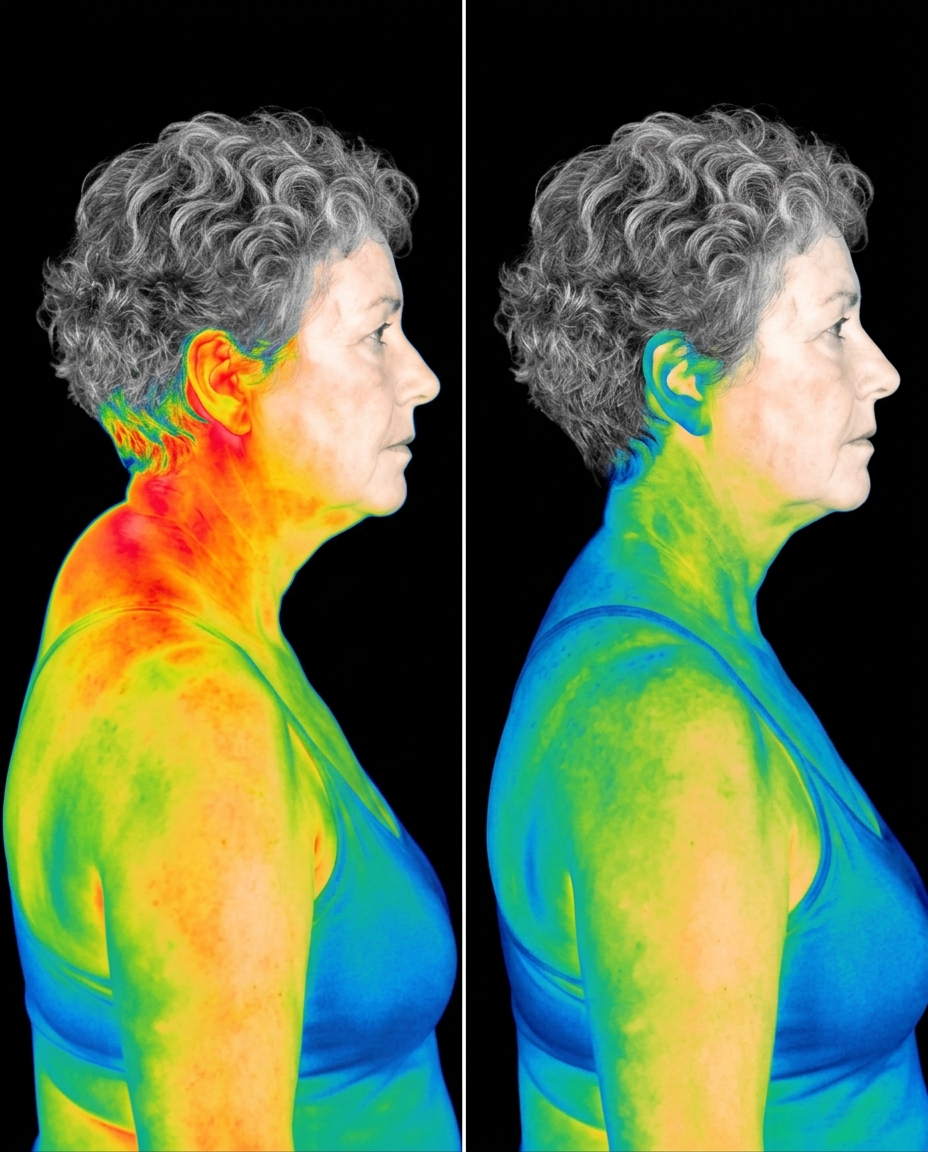
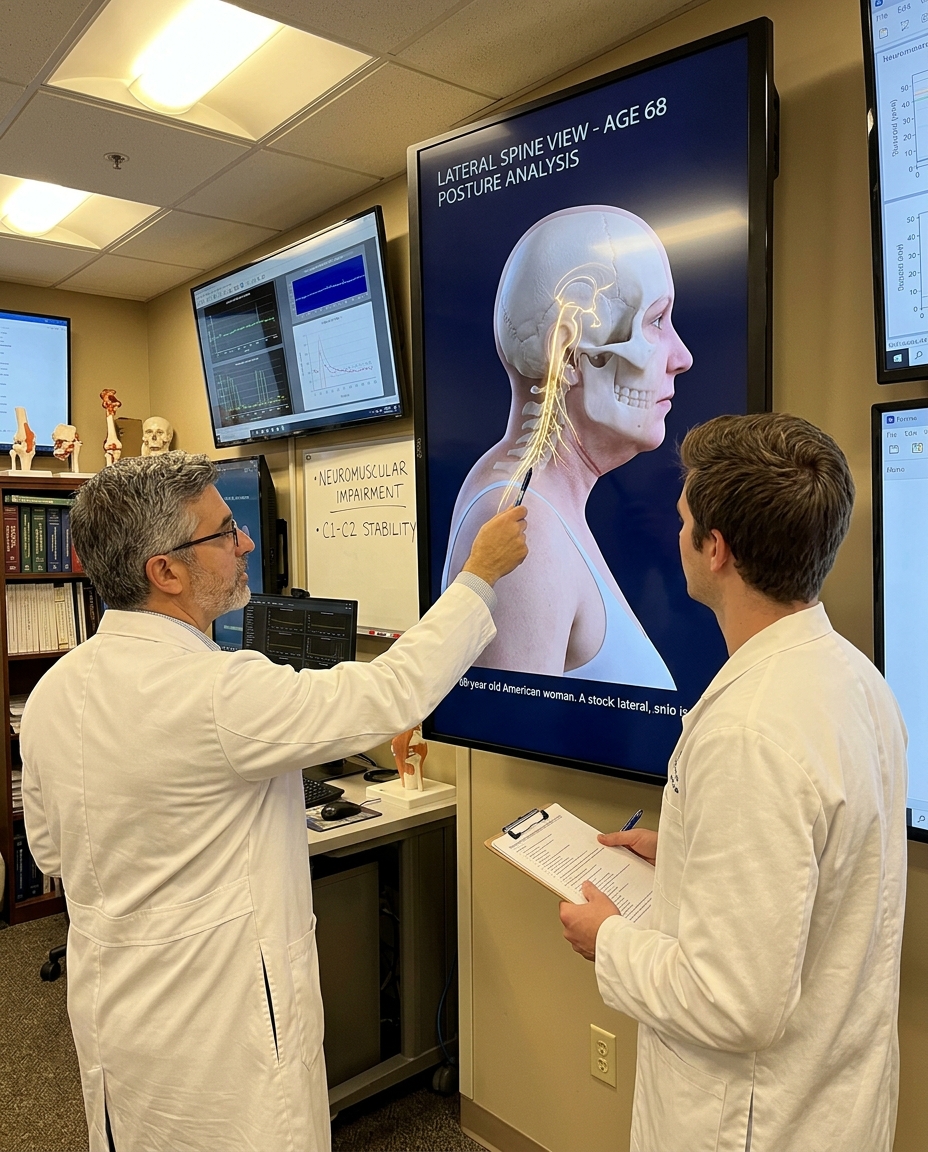
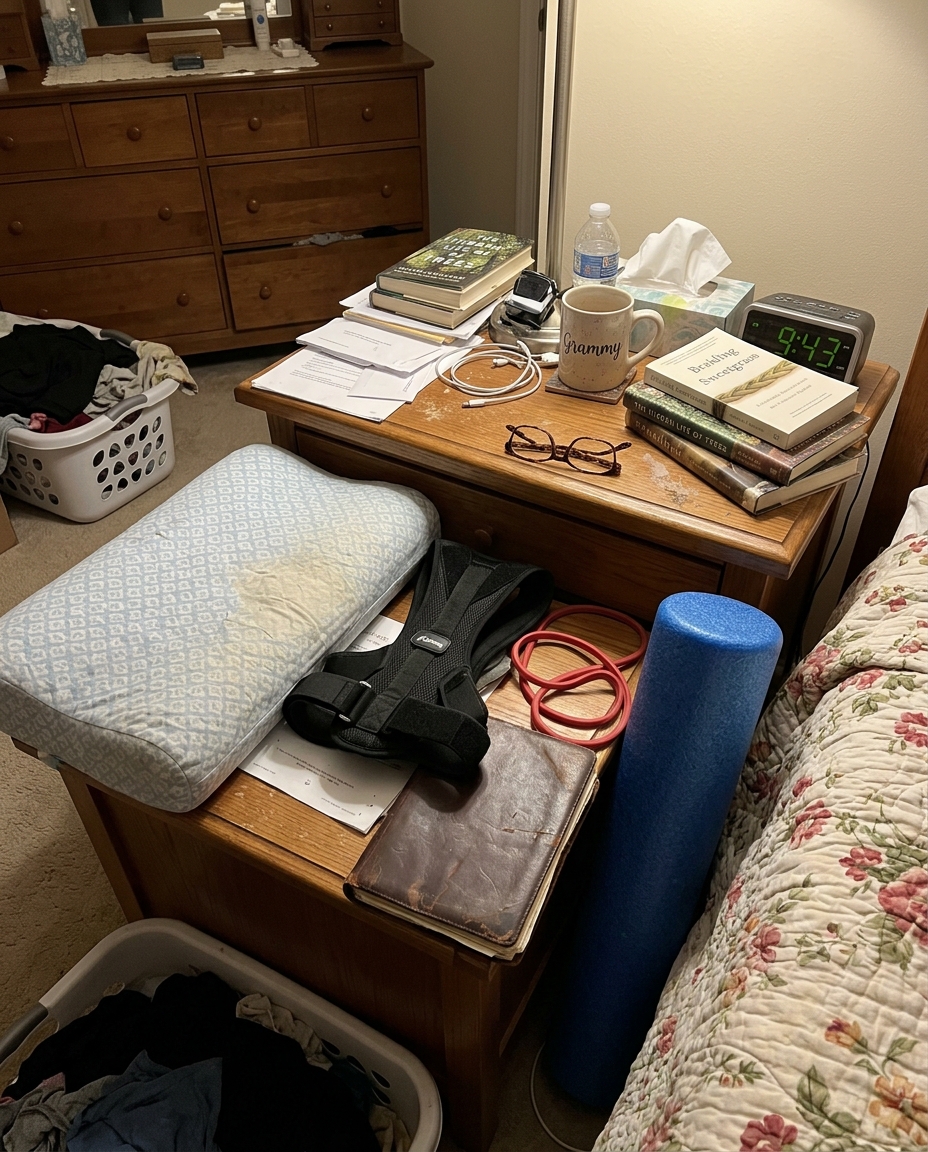
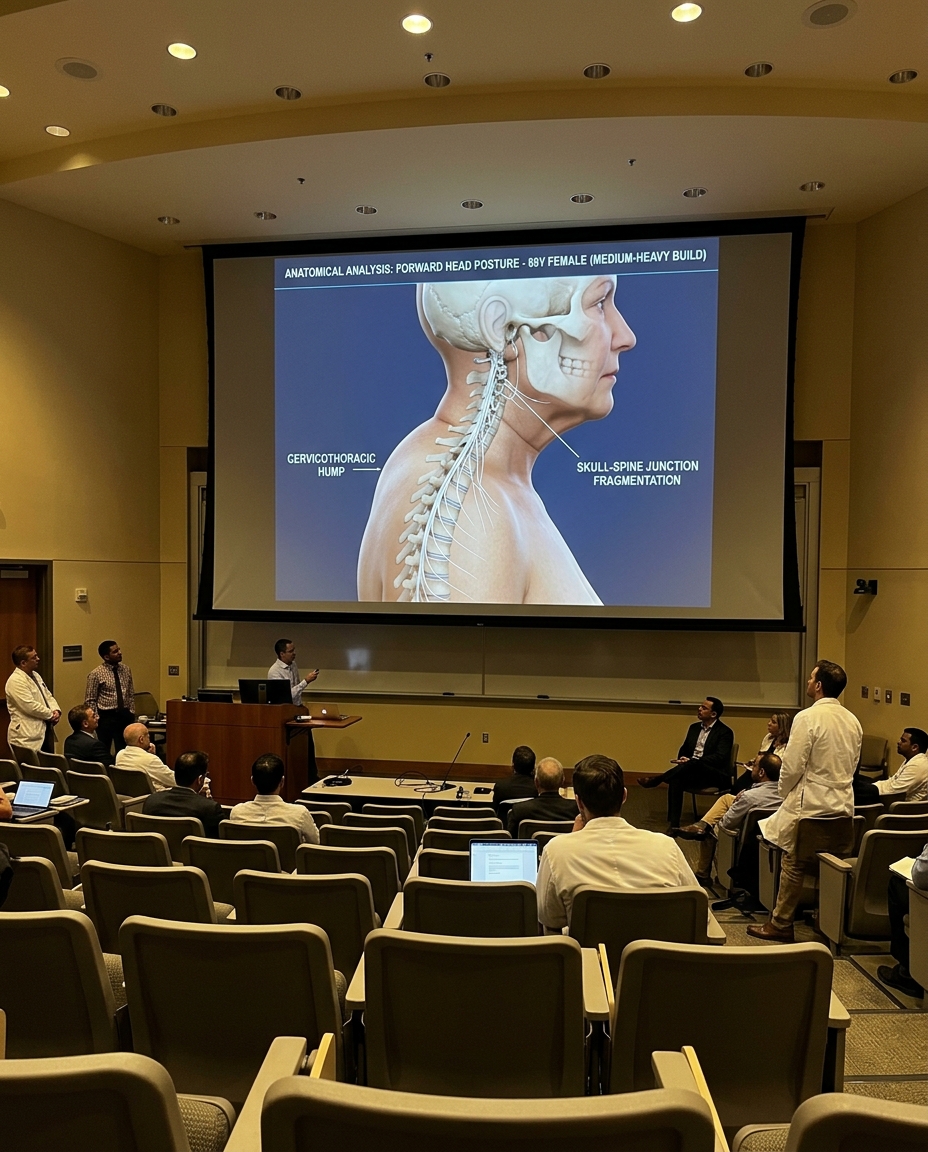
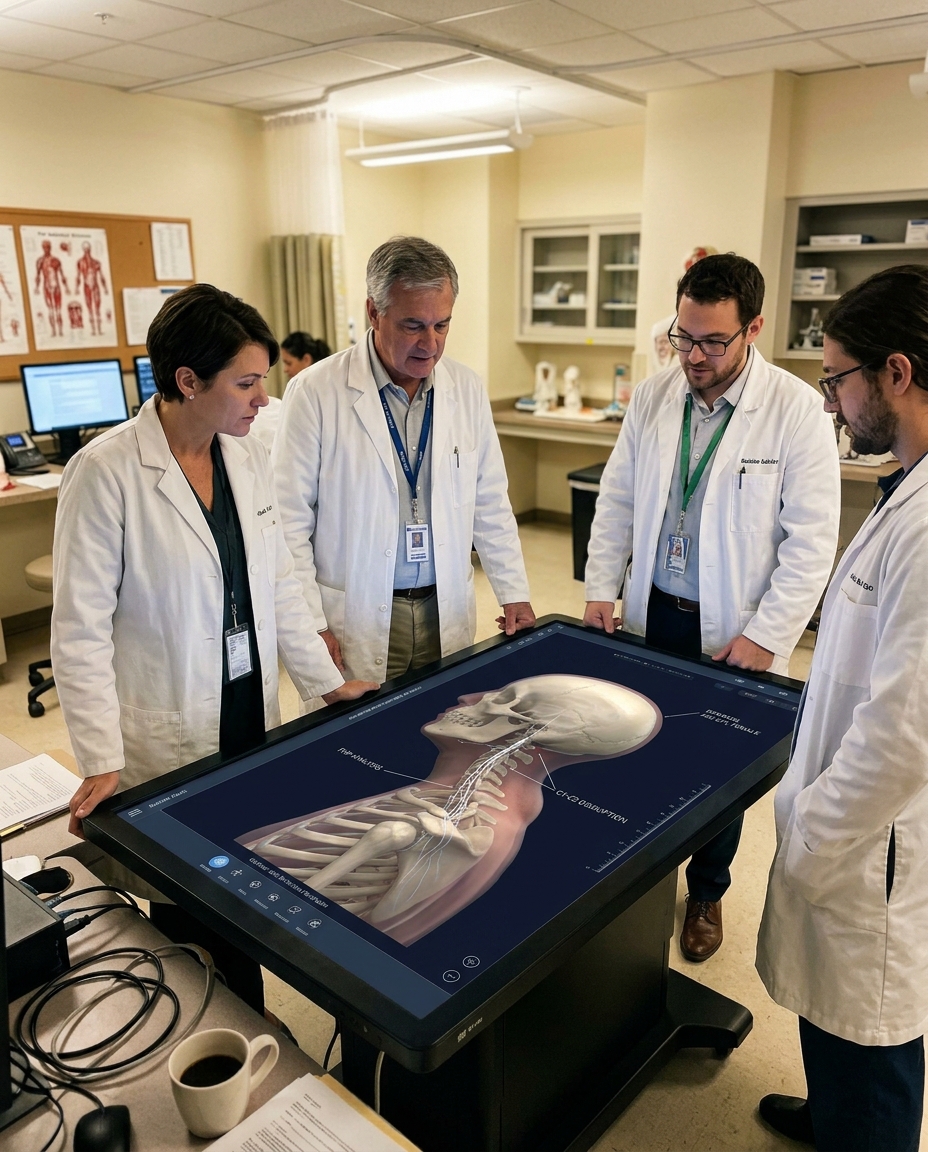
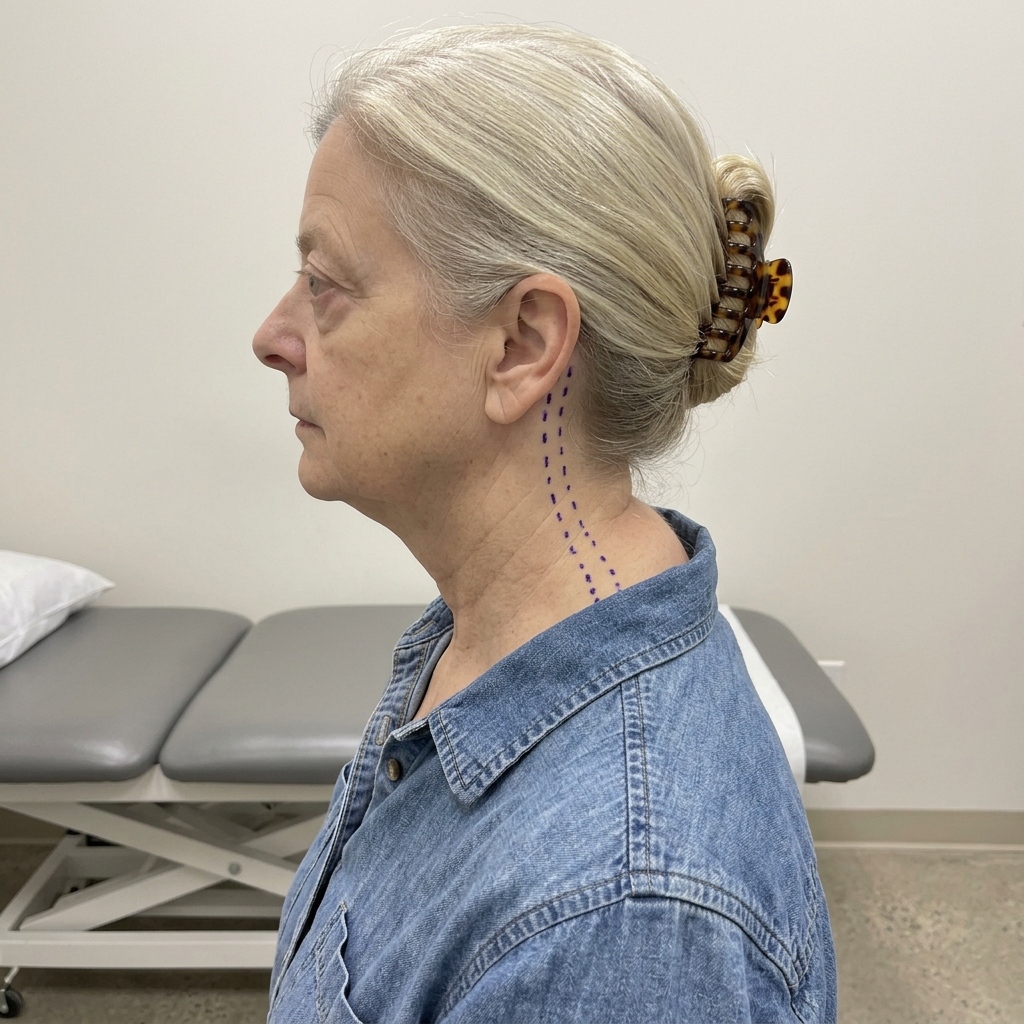
I almost lost my career as a Cervical Rehabilitation Specialist to a progressive neck hump. Here's what saved me… I've been a cervical rehabilitation specialist for 21 years. Last September, I almost had to close my practice… Not because of money. Not because of a lawsuit. … Because I couldn't walk into a professional setting for more than 20 minutes without managing what my neck looked like. There were three mornings last summer when I sat on the edge of my bed and could not face the mirror. Not "didn't want to." Could not. The displacement had advanced so visibly that I just sat there. A 51-year-old specialist. A doctor. Stuck on the side of her own bed because her neck had progressed further than she was willing to walk into her own clinic. My husband found me on the second morning. He didn't say anything. He just brought me coffee and sat next to me until I was ready. That's when I knew I was in trouble. Let me back up. I'm a cervical rehabilitation specialist. I've been doing this since I was 30 years old. I see 30 patients a day. I assess cervical displacement, prescribe protocols, manage progressive neck hump cases. Progressive neck hump is the most common thing I treat. I see it 15 times a day. I know every treatment. Every protocol. Every procedure. I've done over 400 posture assessments in my career. So when my own cervical thickening started advancing two years ago, I thought I had it handled. I knew what to do. I'd been telling patients what to do for two decades. I was wrong. The drift started small. A little thickening at the base of my neck in the morning. Gone by 10 AM. No big deal. Six months later it was visible in photos. The morning forward pull lasted until lunch. A year in, I was getting out of bed in stages. Sit up. Check the mirror. Adjust the collar. Wait five minutes. Then face the day. My husband started bringing me coffee before I came downstairs. Not because he's sweet. Because I couldn't walk past the hallway mirror without stopping. By month 14, I was lying to my staff. I'd tell them I had a phone call so I could sit facing the wall in my office for ten minutes. I'd skip the staff lunch because the seating meant people were behind me. I'd schedule my assessment days on Tuesdays so I could spend Monday and Wednesday managing less. My medical assistant noticed. She didn't say anything. But I saw her watching me. I tried everything I tell my patients to try. Specialist injection protocol. My partner administered it. Better for five weeks. Then the drift came back worse. Every specialist knows passive management never addresses the signal. We just don't tell patients because we have nothing better to offer. Custom orthotics equivalent — a premium brace system. $700. Molded to my cervical profile. Wore it every day for four months. The displacement didn't move. Night support collar. The structured support device that holds your head at neutral while you sleep. I lasted nine nights before I put it in the closet. Stretching and exercise. Twenty minutes every morning. Twenty minutes every night. For seven months. The first mirror check of the day still made me stop. Anti-inflammatory protocol. My stomach started reacting. My labs started changing. My doctor told me to stop. By month 16, I was sitting in my own assessment room on a Saturday morning, looking at my own measurements, and thinking about referral. Advanced cervical intervention. I've assessed 400 patients for it. I know the outcomes. About 70% get real relief. The other 30% develop adjacent compensation patterns or instability that's worse than what they started with. I wasn't going to gamble on 30%. Not on my own neck. Not when my career depended on it. So I sat in that assessment room and I made a decision. I would close the practice. I'd sell it to my partner. I'd take the buyout. I'd step back at 51 years old and figure out something else to do with my life. Something where nobody was looking at my neck from behind. I went home that Saturday and I didn't tell my husband. I couldn't say it out loud yet. I just sat in the backyard and watched the sun go down. Three days later, a patient walked into my assessment room and changed everything. Her name is Diane. She's an ER nurse. 58 years old. 30 years on her feet and her neck. I'd been treating her progressive neck hump for almost two years. We'd tried everything together. Brace protocols twice. Physiotherapy. Assessment monitoring. Nothing worked for more than a few weeks. She was one of my most frustrated patients. She walked into my assessment room that Tuesday morning and I noticed it before she even sat down. She wasn't adjusting her collar. I asked her how her neck was doing. She said, "Dr. Marsh, I think I'm done with the forward drift. I worked a 12-hour shift on Saturday and didn't even think about my collar." I sat down on my rolling stool and just stared at her. This was a woman who couldn't walk from her car to the ER doors six months ago without calculating every angle. "Diane. What did you do?" She told me about a calibrated bilateral EMS device her daughter had ordered for her. Said she let it sit on a shelf for a month because she'd "tried every gadget online" and didn't believe another one would work. But her daughter kept asking, so she finally tried it. "First week, my neck felt less pulled," she said. "Week four, the morning drift was half. Week eight, I forgot to use it one night and only noticed the next morning because I didn't have to brace for the first mirror check." I'm going to be honest. I was skeptical. After 21 years in cervical rehabilitation, I've heard every recovery story. Magnetic collars. Posture shirts. Alignment crystals. Patients who swear something worked when really their displacement was just in a low cycle. But Diane wasn't that kind of patient. She was a charge nurse. She was as skeptical as I was. And I'd watched her struggle for two years. And she wasn't adjusting her collar. Here's the thing though. I'd been seeing calibrated bilateral EMS everywhere lately. Elite rehabilitation clinics using it for cervical recovery. Olympic physios. High-performance training rooms. I'd read a clinical review a few months back about how the performance medicine specialists were talking about it for neuromuscular signal restoration and deep tissue activation. I figured if elite rehabilitation programs were spending real money on bilateral EMS for cervical recovery, there had to be something to it. I just never thought about it for progressive neck hump. I'd been trained that progressive neck hump was a brace problem. A physiotherapy problem. An assessment-and-monitor problem. It never crossed my mind that a calibrated bilateral signal could reach the deep cervical pathway directly. But Diane was standing there in my assessment room and she wasn't adjusting her collar. That night, I woke up at 2 AM to use the bathroom and my forward pull had set so badly during sleep that I had to stand at the sink for four minutes before I could walk back to bed. I sat there in the dark, in the bathroom, and I thought about Diane walking into my assessment room that morning. I started researching. Turns out, the science on calibrated bilateral cervical EMS is real. Really real. There's a study from the Journal of Rehabilitation Medicine — peer-reviewed clinical research — with 18 randomized trials, hundreds of patients, 11 of those trials specifically on cervical neuromuscular inhibition. Calibrated bilateral EMS showed clear signal restoration and displacement reduction. No side effects. The studies using the right calibration outperformed passive management by a significant margin. Not fringe. Not pseudoscience. Real clinical research. I'd been a cervical specialist for 21 years and I'd never seriously studied this. None of us do. We're trained in bracing, physiotherapy, and assessment monitoring. That's it. But then I noticed something in the research that stopped me cold. The studies that failed had a pattern. Wrong delivery. Wrong calibration. Wrong program stage. The studies that worked used very specific parameters: bilateral delivery AND stage-matched inhibition programs. Both mechanisms. Together. At therapeutic calibration. For 15 minutes per session. That's the problem with the home EMS market right now. Most products either claim to use bilateral delivery but don't actually deliver both sides simultaneously. Or they only use one channel — usually just a generic surface pulse. Or the calibration is so low it doesn't matter what delivery they're using. There's a lot of generic product out there. Your deep cervical signal pathway sits below the surface layer of muscle and tissue. To reach that pathway, you need stage-matched bilateral stimulation calibrated to the actual level of inhibition. That's the only delivery format that goes deep enough. But most consumer devices don't even list their inhibition-stage calibration. The label just says "EMS device." That's it. No program stages. No bilateral specs. Just a vague promise. So you're buying what you think is therapy, but you're really getting a surface pulse pressed against your neck. I tried two anyway. First one was $49. Used it every night for five weeks. My morning drift didn't budge. Second one was $89. Six weeks. Same result. I was running out of time. I'd already told my partner we needed to talk about the practice. I had three weeks before the conversation I couldn't take back. So I went back to what Diane said. She'd been specific. She said most EMS devices didn't work — but this one did. She showed me the packaging in my assessment room. The Cevera Posture Release Pulse. I looked it up expecting to be disappointed again. But it was different. True bilateral delivery — both sides simultaneously, the way cervical co-activation actually works. The exact combination from the clinical studies. Eight programs calibrated for different stages of cervical neuromuscular inhibition — printed right on the specification sheet. Designed to place at the cervicothoracic junction and the deep cervical musculature. The two zones where 95% of progressive neck hump signal failure originates. Not a generic EMS pad. A device designed for the actual anatomy of the cervical neuromuscular pathway. I ordered it that night. I didn't tell my husband. I didn't tell my partner. I had three weeks before I had to make a decision about my career. It arrived four days later. I used it that night on the couch after a 9-hour clinic day. Placed the bilateral electrodes at the cervicothoracic junction. Set the program to stage one. Fifteen minutes. About ten minutes in, I noticed something. The deep forward pull I always had in my neck by the end of the day — the dull drift I'd lived with for so long I'd forgotten what its absence felt like — was just quieter. Not gone. Quieter. The next morning I stood at the mirror and checked my profile. Still present. But it was a 5 out of 10 instead of a 7. I stood there in my bedroom and I just stared at the mirror for a minute. A 5 was the best morning I'd had in 14 months. Week two: morning drift was a 4. I walked to the bathroom without checking my collar for the first time in over a year. Week four: I forgot to use it one Thursday because I fell asleep on the couch. Friday morning was worse than Wednesday. That's when I knew it was actually working. The absence created a measurable change. Week six: I worked a full clinic day, came home, and went for a 20-minute walk with my husband after dinner. We hadn't taken an evening walk together in over a year. He didn't say anything during the walk. When we got home, he put his hand on my back and his hand was shaking. He'd noticed everything I thought I'd been hiding. Every collar adjustment. Every excuse. Every morning I sat on the edge of the bed too long. He'd been watching me disappear and he didn't know how to say it. Week eight: I got out of bed at 5:45 AM, walked straight to the bathroom, made coffee, and was halfway through reading the news before I realized I hadn't done my morning mirror check. I hadn't needed to. I stood in my kitchen holding the coffee mug and I just laughed. Out loud. By myself. In my own kitchen at 6 AM. My husband came downstairs and asked what was so funny. I told him, "Nothing is pulling." He didn't say anything. He just put his arms around me and held on. I went into the office that morning and I pulled up the meeting I'd scheduled with my partner. I cancelled it. I didn't tell him why for another month. When Diane came back for her six-month follow-up, I told her everything. How close I'd come to closing the practice. How I'd been sitting on the edge of my bed in the mornings unable to face the mirror. How her offhand comment about calibrated bilateral EMS had probably saved my career. She just smiled and said, "Dr. Marsh. You've been treating my neck for two years. I'm just glad I got to do something for you." That was four months ago. My morning drift this week? A 0 or 1. Some mornings I feel nothing pulling at all. No surgical referral. No passive management deepening my dependency. No $700 brace system. No night collar. No anti-inflammatories. No selling my practice. No retiring at 51. No watching my career disappear because my neck decided to quit before I was ready. Last weekend my daughter asked me to hike with her. A real hike. Five miles. Elevation. Two years ago I would have said no and made up a reason. I'd been quietly saying no to her for almost a year because I knew what my collar habit would look like in the trail photos. I said yes. I did the whole hike. She kept looking at me like she was waiting for me to ask to turn back. I didn't. The next morning I got out of bed and walked to the kitchen and made coffee. No warmup. No collar check. No mirror stop. Just walking. Like a person whose neck works. I'm sharing this because I think you might be where I was eight months ago. Maybe you're a nurse. A teacher. A line cook. A grandmother who keeps standing at the edge of family photos. Maybe you're a cervical specialist like me who knows every treatment and none of them are working. Maybe you've started thinking about giving something up. A job. A trip. A walk you used to take without thinking about your collar. If you've watched bracing and physiotherapy do nothing. If your specialist is talking about escalated protocols or surgical referral. If you've tried the cheap EMS devices and they did nothing — now you know why. Most of them are single-channel surface toys with no real calibration and no real penetration. They can't reach your deep cervical signal pathway. They were never going to work. The Cevera Posture Release Pulse is different. True bilateral delivery. Eight programs calibrated for cervical neuromuscular inhibition stages. Nineteen intensity levels. Designed for the deep cervical pathway, not a generic surface pad. The exact specifications from the clinical literature. I'm a cervical rehabilitation specialist who almost gave up her career. A patient I'd been treating for two years gave it back to me. Here's where I got mine: https://trycevera.com/pages/adv2-womens-wellness-report — Dr. Marsh, DPT P.S. — A few things I wish I'd known before ordering. The Cevera Pulse has a 90-day money-back guarantee. If it doesn't work, full refund. No questions. Three months is more than enough time to know if it's working for you — I knew by week two. The company that makes it is called Cevera. They're running a BOGO promotion right now — two devices for $69.95. That's how I picked up a second one for my husband (he's a physiotherapist and has been managing his own cervical drift for 20 years). The only issue is the first batch is going fast. Cevera is a small brand and they have limited current inventory. Once this first run sells out, the next shipment is about 6 weeks away. I want to apologize in advance because when you click the link you might see they're out of stock. But I'd still suggest checking. If you're dealing with progressive neck hump and you've started to dread your own mornings — if you've started thinking about what you might have to give up — you owe yourself a look. I almost closed my practice last September. I'm hiking five miles on weekends now. I'm not gambling on surgical referral. I'm not closing my practice. I'm not following the path I've watched 400 patients walk. If there's even a chance this could work for you, 90 days is nothing compared to what your neck hump is taking from you right now. 👉 Check Cevera Pulse availability here: https://trycevera.com/pages/adv2-womens-wellness-report
Like this ad? Make it yours.
Crush rebuilds this exact creative around your product — your brand, your colors, your offer — in about a minute.