Modern Women's Health Community
Modern Women's Health Community Facebook ad: “Why the weight won't shift on a perfect TSH”

Ran for 17 days, from August 5 to August 22, 2026, the last day Crush saw it.
Run by Modern Women's Health Community on Facebook. Crush is not the advertiser and does not verify its claims. See this ad in Meta's Ad Library(opens in a new tab)
Want an ad like this for your product?
Crush makes new ad images for your product from this ad: your logo, your product photo, your offer.
Trials from $19.95 USD, then $79.95 USD a month. Cancel anytime.
About this ad
- Meta Ad Library ID
- 1744445746707969
- Platforms
- Facebook, Instagram, Audience Network, Messenger and Threads
- Relaunches
- 0
Ad text
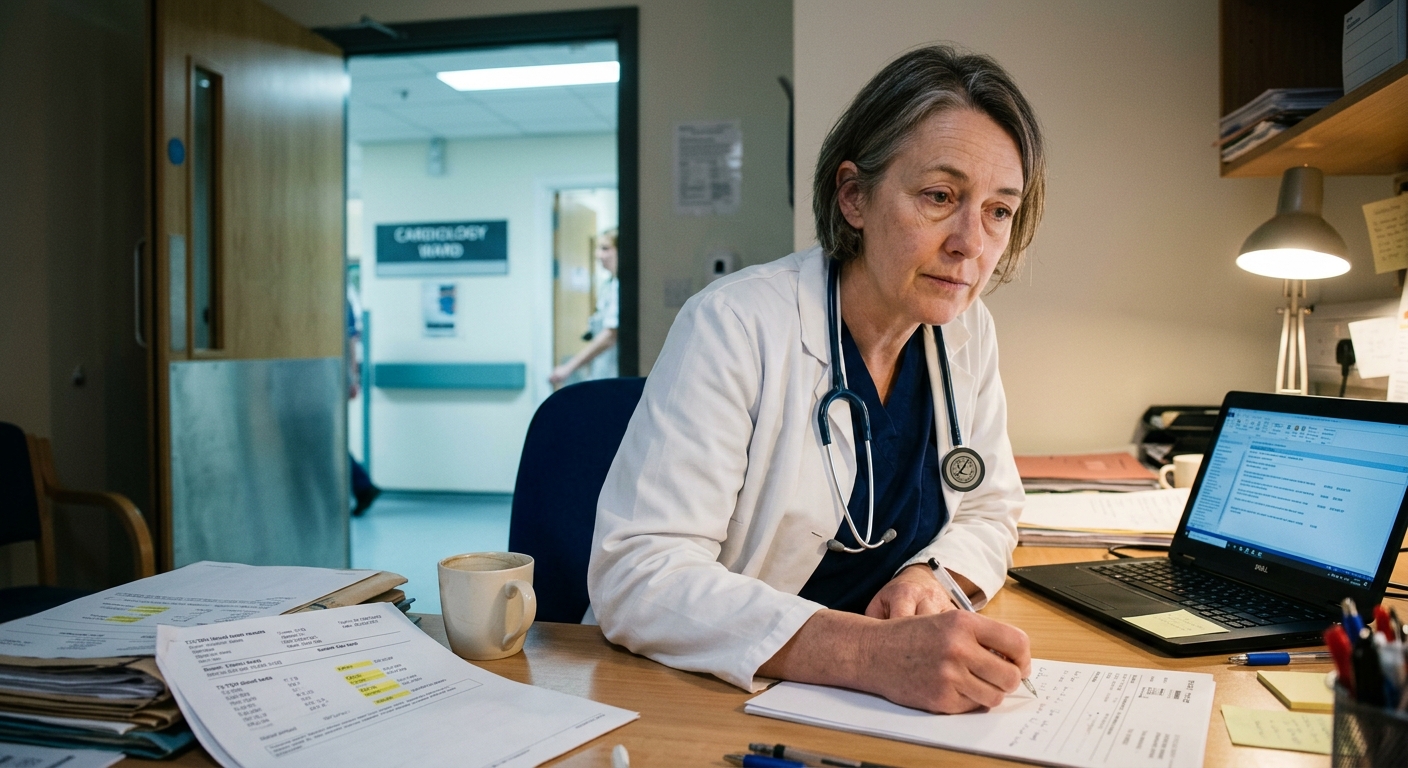
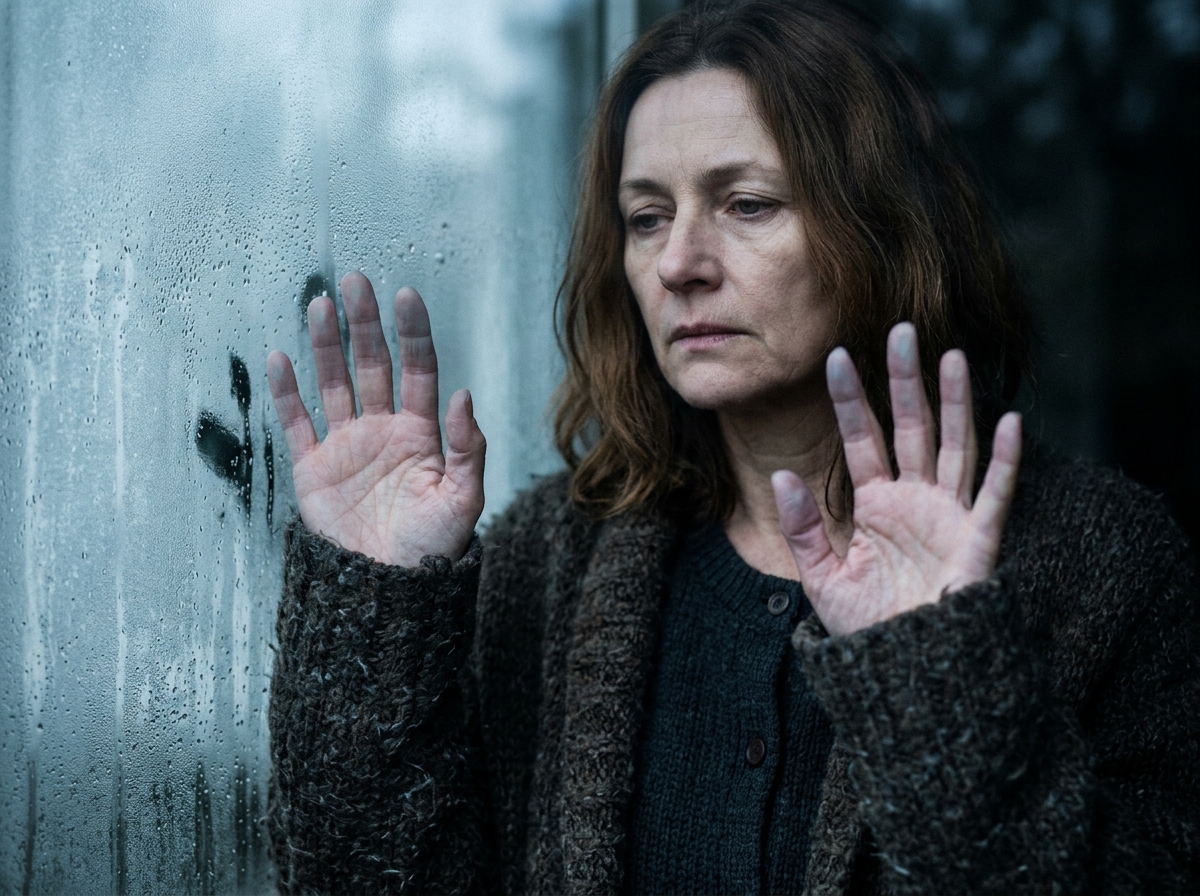
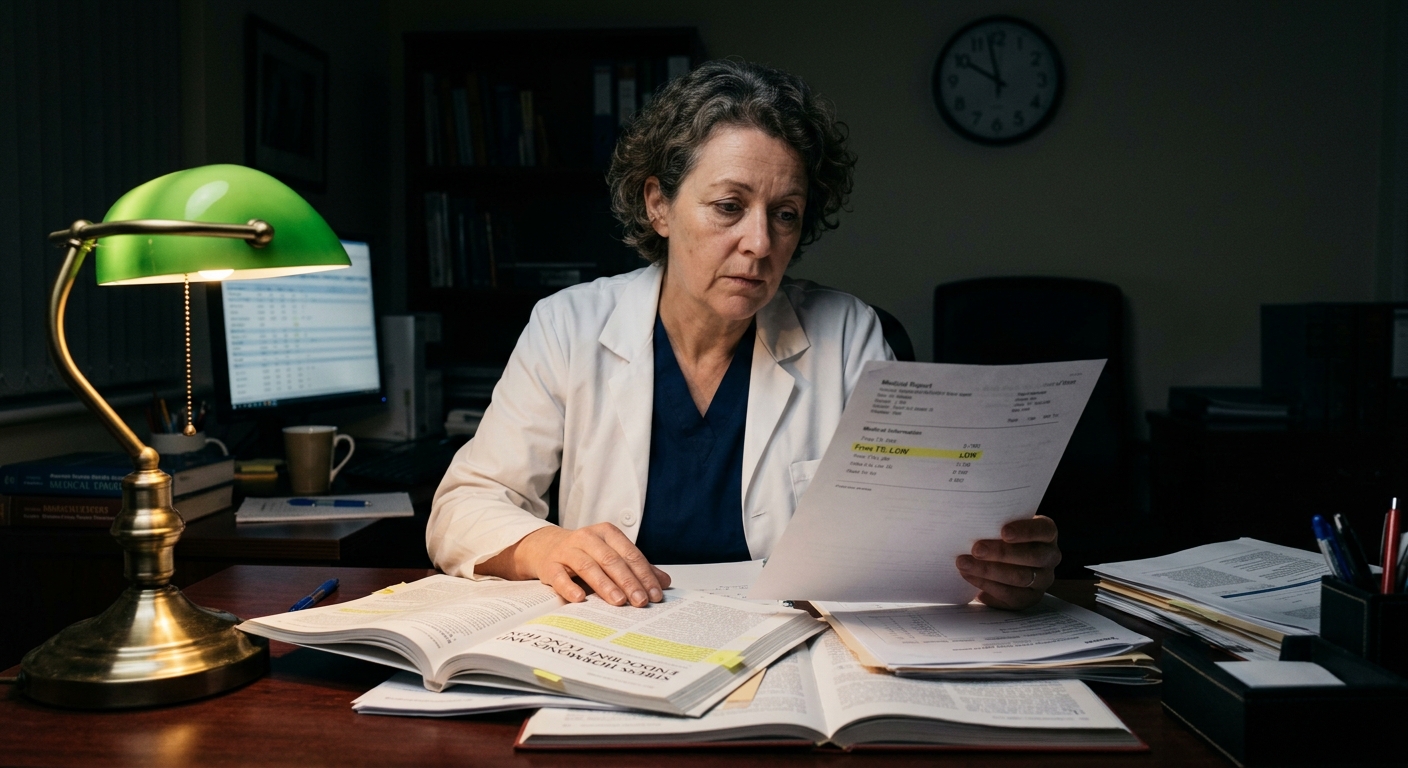
If you're on levothyroxine, your bloods are "fine," and you're still wide awake at 2am every single night — what's waking you was never your sleep. And it was never your thyroid dose either. I run a sleep clinic. It took an 84-year-old reindeer herder to show me what it actually was. For fifteen years, treating insomnia has been my whole job. CBT for insomnia. Sleep restriction. Light therapy. Every tool there is. Most people who walk through my door, I can help. But for years, there was one group of women I quietly dreaded seeing. Not because I didn't care. Because nothing I did worked. She's usually in her forties or fifties. She sits down and apologises for wasting my time — which tells you everything about how she's been treated so far. And then she describes the same night. Every one of them. Almost word for word. Exhausted all day. Running on coffee and willpower. Then the moment her head touches the pillow, her body switches on. Eyes open. Heart ticking. Brain replaying every conversation she's had since 1997. 2am. Wide awake. Staring at the ceiling while her husband sleeps like a stone beside her. Then up at half six, feeling like she's been hit by a bus, to do it all again. "Wired but tired," she says. They all say it. The exact same phrase. And here's the thing that took me fifteen years to notice. I'd take her history. And somewhere on the second page, there it was. Every time. Levothyroxine. An underactive thyroid — often Hashimoto's — diagnosed years ago. Tablet every morning. Bloods come back "normal" every single time. And alongside the sleep, always the same list. Weight creeping up no matter what she eats. Cold hands in July. Losing the word mid-sentence. Hair in the plughole. Bloated by evening. Her GP says her levels are fine. Maybe try the Calm app. Her endocrinologist — if she ever gets to see one — checks her TSH and sends her on her way. And then she ends up with me. The last resort. So I'd run her through everything in the toolkit. Sleep hygiene. Blackout blinds. No screens after nine. Melatonin. Sleep restriction. And with these women — these exact women — it would fail. Not partially fail. Fail. For years I told myself sleep was just complicated. Then one afternoon, I laid the stubborn charts out side by side on my desk. The women my clinic couldn't fix were nearly all on levothyroxine. Bloods normal. Doses correct. Everything "fine." And I felt slightly sick. Her GP manages her prescriptions. Her endocrinologist manages her TSH. I was managing her bedtime routine. The thing waking her at 2am sits between the three of us. And nobody — nobody — is paid to look there. Last January I was invited to speak at a sleep conference in Tromsø, in the far north of Norway. Tromsø sits inside the Arctic Circle. From the end of November to the middle of January, the sun does not rise. At all. Six weeks without a single sunrise. By everything I know — everything I teach — it should be the worst place on earth for sleep. We build entire treatment plans around light and darkness. But over dinner, a Norwegian colleague said something I couldn't let go of. "The old women out in the herding villages sleep through the polar night like stones. My grandmother has never had a bad night in her life. Ask her what she takes." So I did something a bit mad. Instead of flying home after the conference, I hired a car and drove east. Into Sami country — the reindeer-herding communities of the far north. Which is how I found myself a few hours inland, drinking bitter coffee at the kitchen table of a woman called Máret. She was 84. She'd herded reindeer with her husband for fifty years. Now she kept a vegetable patch, a wood stove, and the sharpest pair of eyes that have ever looked at me. And — this is the part where I nearly dropped my cup — she'd had an underactive thyroid since her forties. Forty years. On the same little tablet my patients take. Collected from a pharmacy in Alta, same as anywhere. I asked how she slept in the polar night. She laughed. "I sleep when I lie down. Doesn't everyone?" I must have looked at her strangely. Because she put her cup down and looked straight back at me. "You don't." It wasn't a question. "You're tired all day. Then at night — ping. Awake. Yes?" I nodded. Because she was right. I run a sleep clinic, and I hadn't slept properly in three years. She was quiet for a moment. "My sister was like you. Ingrid. She moved south to Oslo when we were young. Office job. Busy life. She thought the old ways were embarrassing." "Same thyroid as me. Same tablet as me. And for thirty years, every time she rang, she said the same words. 'I'm so tired, Máret. And I cannot sleep.'" "Awake every night at two in the morning. And asleep inside her own life. Her grandchildren knew her as the tired one who left early." "She's gone now. And what I remember is not how she died. It's how she lived. Thirty years of running on empty, three metres from her own bed." Then she looked at me the way I imagine she looked at misbehaving reindeer. "You are walking my sister's road. Turn around." She got up, went to the pantry, and came back with a small jar of dark dried root, cut into pieces. It smelled faintly of roses. "Golden root," she said. "It grows on the cliffs and riverbanks here. The herders chewed it on the long migrations. My mother gave it to me. Her mother gave it to her." And then this 84-year-old woman explained my own field to me better than any textbook I own. "Your body has an alarm inside. In the old days it rang for wolves. Now it rings for everything. The job. The children. The phone." "The alarm is meant to ring in the morning, to wake you. And go quiet at night, to let you sleep." "But if life squeezes you for years, the alarm forgets its times. It goes quiet in the day — so you are half asleep at your desk. And it rings at night — so you are wide awake in your bed." "You are not broken. Your alarm is ringing at the wrong times. That is all." Then she tapped the jar. "And your little thyroid tablet. My doctor explained me this years ago. The tablet is only half the medicine. Your body must finish it. A body whose alarm never stops ringing cannot finish it properly. So you take your tablet, your tests are fine — and you are still cold, still tired, still growing." She pushed the jar across the table. "Quiet the alarm. Then everything remembers how to work. The sleep. The tablet. You." I flew home two days later and did what I do. I went to the journals. And I sat up past midnight — ironically — with that feeling you get when something you should have seen years ago finally comes into focus. The golden root has a proper name. Rhodiola rosea. And it is not folklore. It's the one herbal adaptogen recognised by Europe's own medicines regulator for symptoms of stress. The only one with that status. The studied extracts share one specification: standardised to 3% rosavins and 1% salidroside — the active compounds, in the ratio found in properly grown root. And the modern research says, in long words, exactly what Máret said in short ones. Chronic stress keeps the body's alarm system — the circuit that runs your cortisol — stuck in the wrong rhythm. Cortisol is meant to be high in the morning and lowest at night. Years of low-grade, never-switches-off stress can flip that pattern. Flat in the day. Climbing at night. Flat in the day feels like exhaustion no coffee touches. Cold hands. Fog. Climbing at night feels like your head hitting the pillow and your body switching on. Wired but tired. My patients had been handing me the diagnosis for fifteen years. And for a woman on levothyroxine, there's a second layer. The one that explains her entire chart. Levothyroxine is a storage hormone — T4. Your body has to convert it into the active form, T3, before a single cell can use it. And that conversion is exquisitely sensitive to a stress signal that never switches off. So the alarm waking her at 2am is the same signal quietly stopping her medication finishing its journey by day. One signal. Both problems. Her tests look perfect, because the tablet is in her blood. She feels dreadful, because it never fully reaches her cells. And every professional she sees is looking somewhere else. Her GP at the prescriptions. Her endocrinologist at the TSH. Me at her bedtime routine. Nobody is looking at the alarm. Which is why everything you've tried has failed. Each thing, for its own reason. Sleep hygiene, blackout blinds, no screens after nine. That treats the bedroom. The alarm doesn't care how dark the room is. Melatonin. That tells your body it's night-time. Your body knows it's night-time. The alarm rings anyway. Nytol and the shelf at the chemist. Antihistamines sedate the brain on top of a ringing alarm. Knocked out is not the same as asleep — which is why you wake groggy and unrested. Magnesium, chamomile, lavender on the pillow, the Calm app. Gentle nudges. None of them retrain a rhythm that has flipped. And a higher dose of levothyroxine — for the daytime half — puts more storage hormone into a body that can't finish converting what's already there. Earplugs. All of it. Different kinds of earplugs, while the alarm rings on. I'll save you one more dead end, because I went down it myself. When I got home, I bought rhodiola from a high-street health shop. Then a top-rated one online. I turned both tubs over. Neither listed a ratio. Just "Rhodiola rosea extract." No standardisation. No way of knowing whether the active compounds were in there at all. Eight weeks between them. Nothing. The research is blunt about this: it's the 3% rosavin, 1% salidroside specification at a proper dose — or it's expensive ground-up plant. And there's a second catch nobody prints on the tub. Even the right root, at the right ratio, is no use if it passes straight through you. Plant compounds are notoriously hard to absorb. You can swallow a perfect capsule and deliver almost none of it to the system that needs it. Which is why the shop-bought tubs fail twice. Wrong specification. And no way in. The one I take now is from a small British company called Rosewyn. I found them the way my patients find everything — late at night, in a UK thyroid group, someone mentioning the name almost in passing. Rhodiola rosea, standardised to exactly 3% rosavins and 1% salidroside. The specification from the research. 400mg. A proper dose, not a sprinkle to dress up a label. And paired with one thing only: BioPerine — a black pepper extract whose entire job is absorption. It carries the active compounds in, instead of letting them pass straight through you. The rhodiola does the work. The pepper extract makes sure it arrives. Nothing else. No blend hiding how little you're getting. Made in the UK. Third-party tested, with the certificate there if you ask for it. One capsule in the morning. That's the entire routine. And before anything else, hear this part, because I say it to every patient. You keep taking your levothyroxine. The tablet does the front half of the job — it delivers the hormone. What was failing was the back half — the settled system that lets your body finish it and use it. This is alongside your prescription, not instead of it. And as with anything new, mention it to your pharmacist or GP. I want to be honest about my own eight weeks, because miracle stories are half the reason these women trust nobody. I'm 49. I'd been wired-but-tired for three years and telling myself it was the job. Week one, nothing much. A little calmer in the evenings, if anything. Week two, I noticed I'd stopped lying awake replaying my clinic list. I still woke — but I went back off. Week three — and I watched for this, because week three is where every supplement I've ever tested quietly gives up — it held. By week four, I was sleeping through most nights. Not every night. Most. Week six, my husband asked what had changed, because I'd stopped inhaling coffee at four in the afternoon. And the thing I didn't expect: my hands. I'm one of the cold-hands women too. Somewhere around week five I noticed they were simply warm. I couldn't tell you the last time. Modest. Gradual. Real. That's what it actually looks like when a rhythm rights itself. I've since suggested it to the women in that exact pile of charts — the levothyroxine women my toolkit had failed. What they report back is remarkably consistent. Evenings calmer first. Then the 2am waking loosening its grip around week three or four. Then the daytime following behind — the energy, the warmth, the fog thinning. One of them put it better than I ever could: "It's the first thing that's worked with my tablet instead of on top of it." If you want to try it the way I'd tell a patient to, do it properly. Sixty days. One capsule every morning. Keep a scrap of paper by the bed. Each morning, jot down two things: what time you woke in the night, and how you felt at three the previous afternoon. Rosewyn gives you a 60-day money-back guarantee. If nothing on that scrap of paper changes, you send the tub back — empty or not — and they refund you. No hoops. It was £39.99 when I ordered mine, down from £69.99, with free UK delivery. Less than a single month of the things that did nothing. Here's what I keep coming back to, and it does make me angry. If millions of men were taking a daily medication, testing "normal," and still spending decades exhausted, cold, and wide awake at 2am — there would be a protocol. There would be a clinic. It would have a name. But it's mostly women. Mostly in their forties and fifties. So it gets "your labs are fine." It gets "try to worry less." It gets a leaflet on sleep hygiene and a six-month waiting list. There are entire care pathways for her TSH. There is no pathway — none — for the stress signal sitting between her thyroid and her sleep. We don't even look. I'm a sleep specialist. It took an 84-year-old reindeer herder to make me look. So. If your bloods are "normal" and you feel anything but. If you're exhausted all day and wide awake at 2am. If your hands are cold in a warm room. If the weight creeps up while you eat less than everyone around you. If you lose the word in the middle of the sentence. Listen to me, as one professional who finally caught up. You are not crazy. You are not lazy. And you were never bad at sleeping. Your alarm is ringing at the wrong times. And in fifteen years of clinics, nobody ever looked at it. You're at a fork, the same one I sat at, at Máret's kitchen table. One path: keep the blackout blinds, the melatonin, the earlier nights that change nothing. Keep being told you're fine. Stay the tired one who leaves early — awake every night at two, asleep inside your own life. Ingrid's road. The other path: quiet the alarm. Let sleep come back on its own. Let the tablet you already take every morning finally finish its journey. Sixty days, refunded in full if nothing changes. I chose the second one. So did Máret — about seventy years before me. Every night this stays as it is, is another 2am ceiling. Another day run on fumes. Another morning your medication sets off on a journey it can't finish. Rosewyn is a small British company and stock does come and go. If the site shows a waiting list, join it. If it's there, I'd order while it's £39.99. The link is rosewynhealth.com. Give it the same sixty days I did. P.S. My own eight weeks: calmer evenings first, the 2am waking loosening by week three, sleeping through most nights by week four, warm hands by week five. Your timeline will be different. But you have sixty days to find out at no risk. P.P.S. This isn't only for Hashimoto's. If your thyroid is underactive for any reason — or was removed entirely — the story is the same. Your tablet still has to be finished by a body whose alarm isn't ringing all night.
Where the ad sends people
rosewynhealth.com
Why the weight won't shift on a perfect TSH
Rosewyn
Learn more: rosewynhealth.com(opens in a new tab)