
Inactive· since May 6, 2026
- 52
- days it ran
- 1
- relaunches
Ad copy
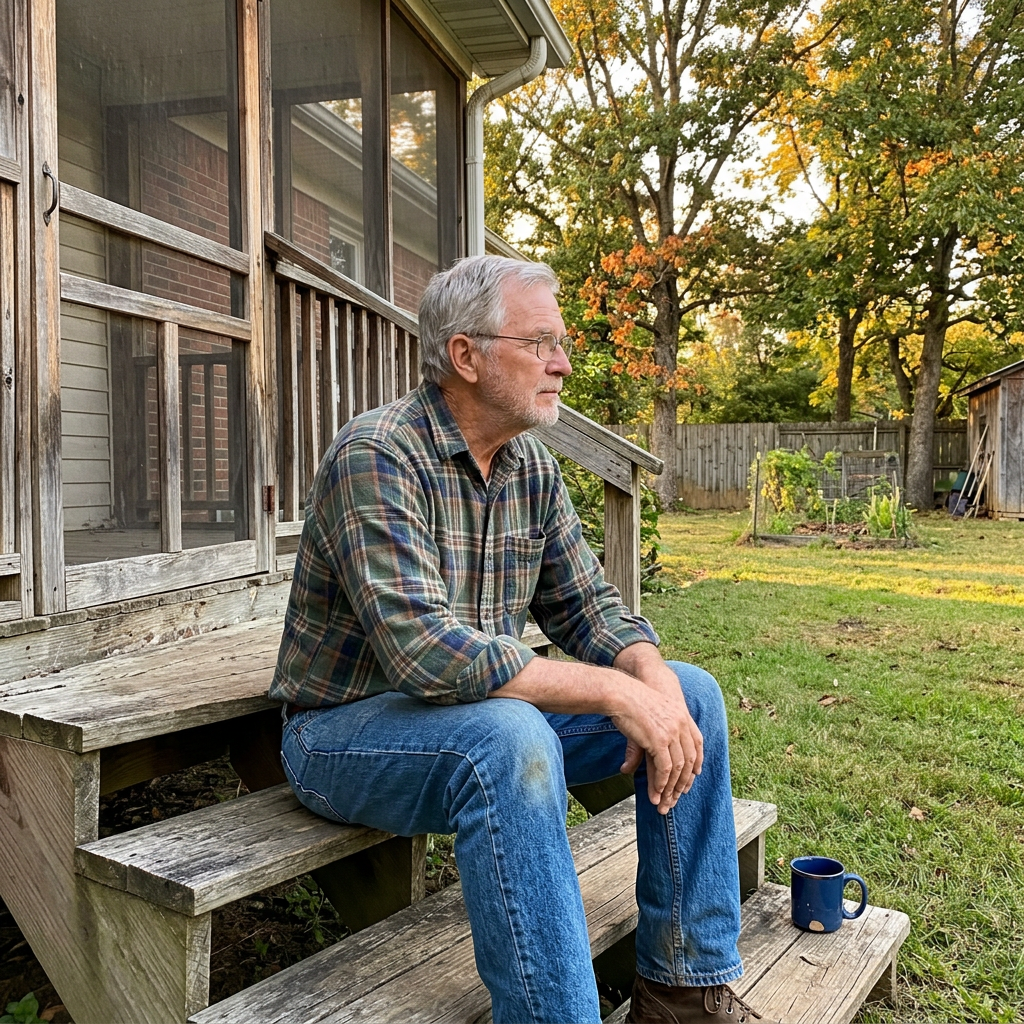
My father's handwriting changed before anything else did. I want to start there because I think if I'd paid attention to it sooner, things might have looked different. But I didn't. I just thought he was writing in a hurry. Or that the pen was bad. Or that he was on the phone while he was writing. I came up with a hundred small reasons because the real reason wasn't something I was ready to look at. His name is Earl. He's 72 years old. He lives by himself in a 3 bedroom ranch in Bowling Green, Kentucky, the same house he and my mother bought in 1986, the same house she died in 4 years ago next month. He worked 41 years for the Louisville and Nashville Railroad, then CSX after the merger, mostly as a signal maintainer, which is the guy who keeps the trackside signals running. It's the kind of job that requires a steady hand, a clear head, and good circulation in your fingers, especially in February in Kentucky when you're working outside on a switch box at 5:30 in the morning. His handwriting used to look like an architect's. That's not me being romantic about my father. That's a literal description. He printed in tight, even capitals, every letter the same height, every line straight even when there was no line on the paper. He kept a logbook for 41 years. I have a few of them now, in a box in my hall closet, and you can flip through them and see what 41 years of consistency looks like in a man's hand. The first time I noticed something was off, I was at his kitchen table going through his mail with him because his eyesight had started slipping and he liked someone to read the small print on bills. He wrote a check for the gas company while I was sitting there. And the signature was wrong. Not catastrophically wrong. He didn't sign someone else's name. But the letters wobbled. The E in Earl had a little tremor in the curve. The L tilted backward when his Ls had always tilted forward. He wrote his middle initial twice and then crossed one out. He didn't notice. I noticed. I didn't say anything. I sat there at that table with a stack of envelopes in my lap and I felt something I couldn't name, something that landed in my stomach and stayed there for the rest of the day. My name is Karen. I'm 54. I live about an hour and a half north of my father, in a suburb of Louisville called Anchorage with my husband Mike and our 2 dogs. I drive down to see Daddy every other weekend because he won't move closer and I won't let him be alone forever and that's the compromise we've worked out without ever quite agreeing to it. The handwriting was the first thing. The second thing was the way he started taking the porch steps. His house has 3 wooden steps from the back porch down to the yard. Not steep. Not even particularly tall. He'd built them himself in 1992 and reinforced them in 2008 and they were the same 3 steps that I had run up and down a thousand times as a kid, the same steps where my mother took her tomato baskets in summer, the same steps where Daddy used to sit and clean his work boots before coming inside. I noticed him pause at the top of those steps. Just a beat. Like he was looking down to make sure they were still where they'd always been. Then he'd take them one foot at a time. Same foot leading every time. Holding the railing. Daddy never held a railing in his life. I'd watch him from the kitchen window and feel that same stomach-drop. The handwriting was wobbling. The legs were hesitating. And I started doing what people do when they don't want to admit something. I told myself it was age. He's 72. Everybody slows down. He earned the right to take his time on his own porch steps. But that wasn't the whole truth and I knew it. The third thing was the menus. We were at Cracker Barrel on a Saturday in late September. He'd ordered the same breakfast at that Cracker Barrel for probably 15 years, the country boy breakfast with eggs over medium, and the menu was muscle memory at that point. But that morning he picked it up and he held it close to his face and I watched him squint, and then I watched him hold it farther away, and then I watched him squint again, and then he set it down and just said quietly, more to himself than to me, "I don't know what I'm reading." I ordered for him. He didn't fight me on it. Daddy fought me on everything from the time I was 12 years old. He didn't fight me on a menu at Cracker Barrel. That was the day I knew something was actually happening. I drove home that afternoon up I-65 and I cried twice and I called my brother Doug who lives in Phoenix and runs an HVAC company out there, and I told him everything I'd been seeing. Doug is the practical one in our family. He doesn't get emotional. He listens, and then he says what he thinks, and you don't always like it but he's usually right. He said, "You need to take him to the doctor. And you need to push for actual blood work, not the standard stuff. Tell them you want to look at his sugar." I said his sugar had been fine for years. Doug said, "It was fine. Things change." So that next visit, I drove down a day early and I took Daddy in to see his GP, a woman named Dr. Patel who'd been seeing him since shortly after my mother got sick. I told her what I'd been observing. The handwriting. The steps. The menu. The way he'd been getting up to use the bathroom 3 and 4 times a night, which he mentioned almost as an afterthought when I asked. She ran the panel. His fasting glucose came back at 138. His A1C came back at 6.4. Triglycerides elevated. The note that came with the results used the phrase "metabolic concerns" and recommended a follow-up in 90 days with a dietary plan in the meantime. Daddy nodded through the whole conversation. He took the pamphlet. He put it in the visor of his truck. When we got back to his house I sat at the kitchen table with him and I said, "Daddy, what do you think?" And he said, "I think your mother would've made me a salad." That was as close as he got to saying he was scared. I went home that Sunday night and I started reading. I'm not a doctor. I'm a payroll administrator for a hospital system, which means I'm around medical people all day but I don't pretend to know what they know. What I do have is a willingness to spend 4 hours on a Sunday night going down a research hole when something is wrong with my father. The thing I didn't fully appreciate before that week was how connected the symptoms I'd been watching all were. The shaky handwriting. The hesitation on steps. The squinting at menus. The bathroom trips. They all looked like separate things. They all felt like separate things. But when I started reading, I kept landing on one word, and the word was circulation. Specifically, what happens to the small blood vessels and the nerves they feed when blood sugar runs high for a long time. The pattern, as best I could understand it, goes like this. When your blood sugar runs high over years, the smallest blood vessels in your body, the ones that feed your fingers, your feet, your eyes, your kidneys, take damage. The lining of those vessels is delicate, and high glucose creates oxidative stress that wears it down. The vessels narrow. They don't deliver as much blood as they used to. And the tissues at the end of those vessels, especially the ones that are the most energy-hungry, like nerve cells, start to feel it first. That's why the handwriting goes before anything else. Your hands have some of the smallest, most distant blood vessels in your body. The nerves in your fingertips need a constant flow of nutrients and oxygen to fire correctly. When that flow drops by even a small percentage, your fine motor control starts to wobble. Not in a way that's dramatic. In a way that just makes a steady E start to tremble. In a way that makes a man who used to keep a logbook scratch out his middle initial. The same thing happens in your feet. The reason Daddy was taking the porch steps one at a time wasn't because his knees were giving out. His knees were fine. It was because his proprioception, the sense that tells you where your feet are without looking at them, runs on nerve signal. And when the small blood vessels feeding those nerves are compromised, the signal gets less reliable. Your brain stops trusting where your feet are. You hold the railing. The eyes were the same story. The retina is fed by some of the most delicate microvasculature in the body. When that vasculature is under chronic glucose stress, focusing gets harder, especially up close, especially at small print. The Cracker Barrel menu wasn't actually the problem. The vessels feeding his retinas were the problem. Three different symptoms. One underlying mechanism. I read until midnight that first Sunday and I closed my laptop and I sat in the dark in my living room and I thought, okay. Now what. The "now what" took me another 3 weeks to find. Most of what I read about supporting circulation and nerve health and blood sugar management was the standard stuff. Diet. Exercise. The same things Dr. Patel had said. None of which I disagreed with. But Daddy was 72. His knees worked but he wasn't going to start jogging. He was already eating mostly fine, just a little too much white bread and too much sweet tea, and he wasn't going to overhaul his life at 72 in a way that would make a meaningful dent in 90 days. I needed something he could just take. Something that would actually be doing something underneath while we worked on the rest of it together. I found my way to amla through a Reddit thread, of all places, written by a woman in Ohio whose mother had similar issues and who had spent the better part of a year researching what her mom could add that wouldn't conflict with her existing medications. She ended up writing this long careful post about something called Indian gooseberry, what the actual clinical research on it looked like, and what she'd seen with her mother over the course of 4 months. I read that post 3 times. Then I started looking up the actual research she was citing. Not her summary of it. The real thing. The headline finding, repeated across multiple human trials with real protocol structures, was that amla extract appeared to support healthier glucose handling, healthier lipid profiles, and healthier markers of oxidative stress. The trials I was looking at used 500 mg of standardized extract twice daily over 12 week periods. The subjects were people who looked, on paper, very much like my father. Then I started reading about the mechanism. Amla has one of the highest documented antioxidant profiles of any food that's been studied. The active compounds, called emblicanins, are polyphenols that appear to help reduce oxidative stress, the same oxidative stress that quietly damages the small blood vessels and nerves I'd been reading about all month. The other thing amla appears to support is something called AMPK. AMPK is a pathway your body uses to manage cellular energy. When AMPK is active, your mitochondria, the energy producers inside your cells, can work more efficiently. And the cells that benefit most from that are the ones that are the most energy-hungry, which, again, are your nerve cells. So the picture I started putting together looked like this. Daddy's small vessels were stressed by years of slightly elevated glucose. The cells at the end of those vessels, especially the nerve cells in his fingers, his feet, his eyes, were running on less than full power. Amla, according to the research I was reading, addresses both sides of that. It helps reduce the oxidative stress damaging the vessels, and it appears to support the cellular energy systems that the downstream cells depend on. It wasn't a magic answer. It wasn't a cure, and I'm not going to pretend it was. But it was the first thing I'd read about that addressed the actual mechanism I'd been watching unfold in my father, instead of just managing one downstream number on a chart. I ordered Alevia Amla on a Tuesday night. It came on Friday. I drove down to Bowling Green that next weekend with the bottle in my purse. I sat at his kitchen table with him on Saturday morning and I told him what I'd been reading. I told him about the small vessels. About the nerves. About the handwriting and the steps and the menu and how all 3 connected to the same underlying thing. I told him about the trials and the compounds and what they appeared to do. I told him I wanted him to take 2 capsules a day, with breakfast, for 90 days, and that we'd see what we saw. He listened. He has always been a good listener. When I was done, he said, "Karen, you should've been a teacher." He took the first dose Sunday morning. I drove home that night and I called Doug and I told him everything. Doug, in his Doug way, said, "Well. We'll see." We saw. The first 3 weeks, nothing dramatic. He was taking the capsules. He was also drinking less sweet tea, which he'd started doing on his own because Dr. Patel had spooked him a little, and he was walking down to the mailbox every afternoon, which was new. So I knew there were multiple things in motion. I tried not to attribute everything to one cause. Week 4, he wrote me a check for something. Birthday card for one of my kids, I think. I was standing right there. His E was clean. I held that envelope in my hand and I had to pretend I needed to get something out of my car so I could go cry next to my driver's side door for 2 minutes. Week 6, he met me at the back door coming in from the yard, and he came down all 3 steps without holding the railing. He didn't even look at his feet. Week 8, we were at Cracker Barrel again. Same Cracker Barrel. He picked up the menu and read it. The whole thing. He ordered the country boy breakfast and added a side of grits, which is a thing he hadn't done in over a year because he said the print on the sides menu was hard to make out. Week 10, he went back to Dr. Patel for the follow up. His fasting glucose came down. His A1C came down. Not all the way, but meaningfully. She told him, in her words, to "keep doing whatever you're doing." She didn't ask what we'd been doing. I didn't volunteer it. He's the patient. That conversation belonged to him. Week 12, he sent me a handwritten thank you card for driving him to a funeral that month, and the writing in that card looked like the writing in his logbooks from 2003. I keep that card on my dresser. I want to be honest about something. I don't know how much of what changed was the amla, how much was the dietary changes he made on his own, how much was the walking, and how much was the simple fact that for the first time in years, he had a daughter actively paying attention to what was happening with his body. I'd guess all 4 of those things were doing something. I'd guess they all worked together. What I can tell you is what I watched. Three months ago, my father was taking porch steps one at a time. He couldn't read a menu. His handwriting was wobbling. He was getting up 4 times a night to use the bathroom. Today his handwriting is steady. He read me a whole article from the Bowling Green Daily News last Saturday with no glasses. He took the porch steps without pausing. He's sleeping through the night. He's still 72. He's still my father. He's still going to outlive me out of pure stubbornness if he can manage it. But the man I was watching slip away last fall is not the man sitting on his back porch right now. If you've been watching someone change in small, easy to dismiss ways, the kind of changes that look like aging from far away but feel like something else when you're up close, I'd ask you to look harder. The body talks in small handwriting before it talks in anything bigger. The small things are the early signal. They're easy to miss because they're easy to explain away. But they're how the story starts. Alevia stands behind their amla with a 90 day money back guarantee. Same window of time I gave my father. If nothing changes for the person you love over those 3 months, you call them, you send the bottle back, and you get a refund. There is no version of this where you lose anything except a phone call and a trip to the post office. That's all I have to say. I'm going to send this to my brother Doug after I post it. He'll read it on a job site somewhere in Phoenix and he'll text me back something like "good post" and that'll be his way of saying thank you. And I'll think about that thank you card on my dresser. And the steady E. 👉 https://alevia.com/amla/33 P.S. If you're wondering whether your person is the right fit for this, here's the thing I'd tell you. The people I've seen respond best are people whose bodies have been quietly running on less than full power for years. Not people in crisis. People who have been slowly fading. If that sounds like someone you love, the 90 day guarantee is there for exactly that reason. You don't have to be sure. You just have to try. P.P.S. I told Daddy I was writing this. He said "tell them I'm not dead yet." I'm telling you. He's not. P.P.P.S. Mike asked me last week if I'd noticed anything different about Daddy lately and I started crying right there in the kitchen and Mike just held me. He didn't even know what I was crying about. He just knew it was about Daddy. That's what 28 years of marriage gets you. A man who knows when to ask and when to just hold on. 👉 alevia.com/amla/33
Like this ad? Make it yours.
Crush rebuilds this exact creative around your product — your brand, your colors, your offer — in about a minute.