
Active· since Jun 5, 2026
- 103
- days running
- 0
- relaunches
Ad copy
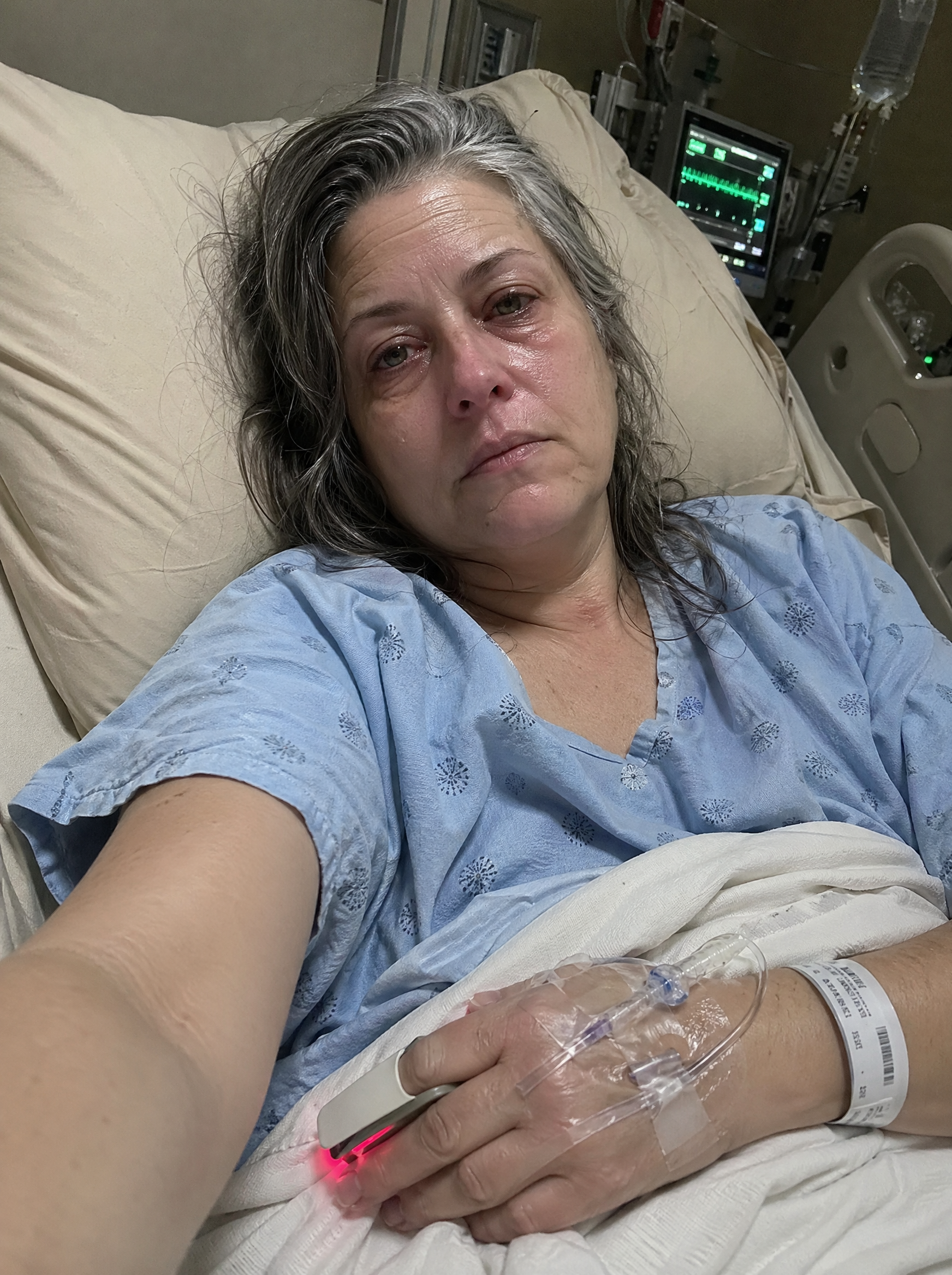
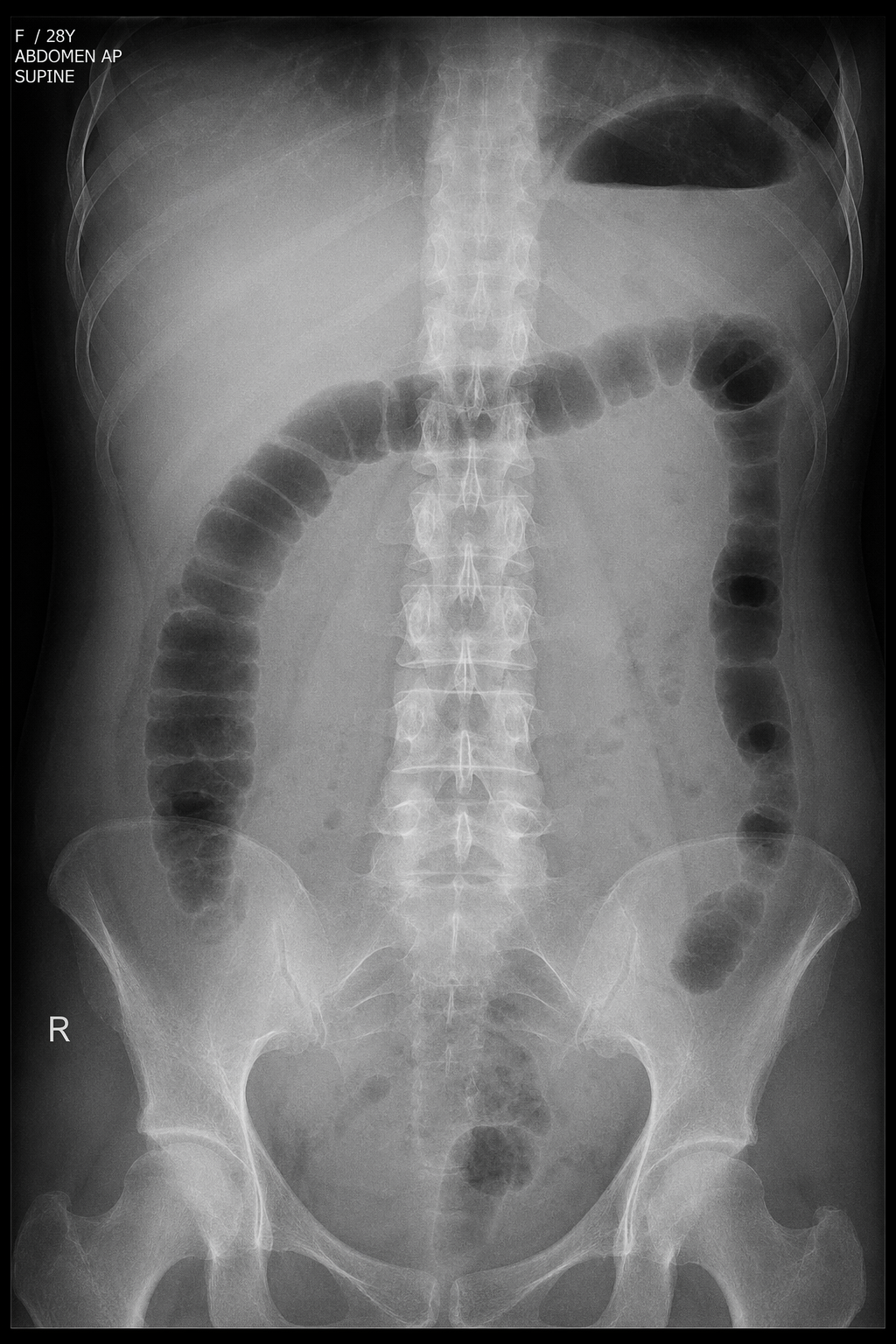
I hadn't pooped in 14 days. I'd been on Miralax every morning for 4 years. Senna at night for the last 3. Up to 4 pills. I had been to 4 gastroenterologists, tried 31 different things, and the only thing any of them had ever told me was "keep taking the Miralax, it's safe forever." On a Tuesday in April, after 14 days without a single bowel movement — after taking enough laxatives to drop a horse — my husband Robert carried me out of our bedroom in a robe at 2:47 in the morning and drove me to an ER while I sat slumped against the passenger door, barely able to keep my eyes open. What an ER doctor I had never met told me at 6:30 the next morning — and what happened over the next 8 weeks — undid 6 years of suffering and gave me my body back. If you are a woman who has tried what I tried and is still not going right, please read this all the way through. I am writing this for you. I'm Margaret. I'm 52. I live in suburban Pennsylvania with my husband Robert and our 20-year-old daughter Maya, home from college for the summer. And I have been silently dependent on laxatives since I was 46. I'm not embarrassed anymore. I used to be. I'm not anymore. Because I now know that what was happening inside my body wasn't a willpower problem. It wasn't an "IBS-C" problem. It wasn't a "redundant colon" problem. It wasn't a "you should drink more water and eat more fiber" problem. It was a specific, biological, well-documented condition that 4 gastroenterologists missed in a row. And I want to tell you exactly what it was. But first I need to tell you a few things about my life over the last 6 years, because I'd bet money you'll recognize at least one of them. I have been mixing Miralax into my coffee every single morning for 4 years. If you stir a capful into hot black coffee with a splash of cream, you can't see it. You can't taste it. The only person who knows it's there is the woman doing the stirring. I have done this every morning for 4 years and I have never once told my husband. I have stood in my own bathroom at 9 at night holding an orange box of senna in one hand and a green box of Dulcolax in the other, doing math in my head about which one to take and how many. I have taken the dose, gotten into bed, then gotten back up at 11pm to take more — because I wasn't sure the first dose was strong enough. I have hidden bottles of laxatives in the back of my underwear drawer. In a Ziploc in the glove compartment of my SUV. In a coffee can in the back of the pantry. In the inside pocket of a winter coat I haven't worn since March. I have skipped my best friend's birthday lunch because I was on day 9 and I couldn't trust my body in public. I have unbuttoned my jeans under my desk at 4 in the afternoon because I looked 6 months pregnant by lunchtime. I have stopped going to the diner with my husband on Saturday mornings — a thing we did every weekend for 22 years — because I couldn't be more than 8 minutes from a bathroom. I have lain awake at 3 in the morning with a kind of gripping anxiety I had never felt before in my life and I had no idea where it was coming from. I have forgotten words mid-sentence in meetings. I have woken up with a low-grade headache I had stopped noticing because I'd had it for so long. I have looked in the mirror at the end of a day and not recognized the soft, swollen, exhausted woman looking back at me. If any of that sounds familiar, the next part is going to make your jaw drop. Because all of it — every single thing on that list — was being caused by one specific thing inside my body that not one of my 4 doctors thought to test for. I want to be precise about how much I tried. I have been to 4 gastroenterologists in 6 years. The first one put me on Miralax and told me to take it forever. He said his mother took it. He said the box was wrong about the 7-day limit. The second one ordered a colonoscopy that came back completely normal and told me I had "a redundant colon" and "kinks" and there was nothing surgical to be done. He wrote down a name on a notepad and slid it across his desk. It cost me $267 a month. It worked for 6 weeks. Then my body adapted and I went up to 2 pills a day to stay ahead of it. Six weeks after that, it stopped working entirely. The third one ordered another colonoscopy. Also normal. Switched me to something different. Did nothing. That was $289 a month for the 3 months I gave it before I quit. The fourth one was a functional medicine practitioner who didn't take insurance, charged me $650 for a single appointment, ran a $400 GI-MAP test, and put me on a 90-day protocol of 14 different supplements at $312 a month. After 90 days I was no better than when I started. Add to that 4 specialist consultations, two colonoscopies my insurance only partially covered, an anorectal manometry test that nobody had pre-authorized, six years of CVS Carepass orders for Miralax and senna and magnesium that I was buying every 3 weeks, and a long graveyard of probiotics I tried at $40 to $60 a bottle. By the time I stopped counting, I had spent eleven thousand dollars trying to make my body do what it used to do for free. I have tried, by my count, 31 different things. Every laxative on the shelf. Miralax. Senna. Dulcolax. Phillips' Milk of Magnesia. Magnesium in every form. Citrate. Oxide. Glycinate. Every herbal — Smooth Move tea, Triphala, Cascara, aloe juice, castor oil, apple cider vinegar. Every fiber — psyllium husk, ground flax, chia, Sunfiber. Every probiotic on the market — Align, Culturelle, Seed, Visbiome, kefir, kombucha. Everything a GI would hand me. Every device and body work — Squatty Potty, pelvic floor PT, acupuncture. Every diet — low-FODMAP, carnivore for 30 days, intermittent fasting. Digestive enzymes. Atrantil. IBgard. Peppermint oil capsules. None of it worked. Some of it made me worse. By April of this year, I was 51 years old and I was looking at the next 30 years of my life thinking — is this it? Am I going to be on Miralax until I die? Am I going to spend the rest of my life rearranging my schedule around my own bathroom? That's when things got dangerous. I want to tell you about the 14 days. I'm not going to dramatize this. I'm just going to tell you what happened. It started on a Tuesday. By Friday I realized I hadn't gone since the previous Tuesday. That's 9 days. I doubled my Miralax. I took 6 senna instead of 4. I drank a full bottle of magnesium citrate the size of a small soda. Saturday. Nothing. Sunday I added Dulcolax to the stack and drank another bottle of magnesium citrate. I sat on the toilet for 90 minutes Sunday morning and produced a few hard pellets the size of pencil erasers. I told myself I was going. I wasn't. By the following Tuesday I was on day 14. I couldn't button any of my pants. I couldn't take a deep breath without sharp pain behind my ribs. I was so confused that I was getting words wrong in conversation. Robert kept asking if I was okay. I kept telling him I was fine. That night I got out of bed at 2 in the morning to look for an extra bottle of Dulcolax I had hidden in an old shoe in the back of the closet. I was going to take 6. I made it 4 steps and my legs went out from under me. Robert woke up to me on the floor, pale, sweating, unable to speak. He didn't ask anything. He picked me up, wrapped me in a robe, carried me to the SUV, and drove me to the ER. By 3:30 I was in a CT scanner. By 4:15 I was in a hospital bed with an IV in my arm. By 4:45 the ER doctor — a woman named Dr. Sarah Chen, about my age — sat down in the chair next to my pillow and held the CT scan up. She said: "Margaret. I need to tell you what I'm seeing on this scan, and then I need to tell you something else that's going to make you angry." I had 14 days of impacted stool packed into my colon. It was so compacted that no laxative was going to move it. They had to remove it manually, in the hospital, that night. I am not going to describe what happened over the next 90 minutes. It is the most humiliating experience of my life and I have already promised myself I am only going to write about it once, which is now, and never again. By 6 in the morning the impaction was out. I was exhausted, sore, embarrassed, and I just wanted to go home. But Dr. Chen came back to my bed at 6:30 with two coffees in her hands. She gave me one. She sat down. And she said: "Now I'm going to tell you the part that's going to make you angry." She started by asking me a question. "How many doctors have you been to about this?" "Four." "How many of them have used the words 'biofilm' or 'methane SIBO' with you?" "None." She nodded like she had expected that answer. She told me she'd done a fellowship in motility disorders at the Cleveland Clinic before deciding ER medicine was a better fit for her young kids. She wasn't a regular ER doctor. She was just covering a shift for a colleague who'd called in sick. She was the right person in the right room at the right time. She pulled a pad off the rolling cart and drew a circle. "This is your colon," she said. "In a healthy 52-year-old woman's colon, you have something like 38 trillion bacteria. Most of them are good. They digest your food, make B vitamins, train your immune system. Beautiful little ecosystem." She drew dots inside the circle. "But sometimes that ecosystem flips. Antibiotics can do it. A C-section delivery can do it. The hormonal shift of perimenopause is a huge one — and that's where I think yours started, given your timeline." I thought about my 44th birthday. The first month I noticed things were off. "When the ecosystem flips, the good bacteria die back and the bad bacteria take over. We call it dysbiosis. In your case, I'd bet money on a methane-dominant version of small intestinal bacterial overgrowth — methane SIBO — and a parallel overgrowth in the colon." I asked her: "But why didn't my immune system kill them?" "Good question," she said. "It tried." She paused. "Here's what bacteria do when they're under attack. They build a shield. An invisible slime made of polysaccharides and proteins and DNA, all woven together. They hide inside it. We call it a biofilm." She let the word sit there. "You've actually seen one. That fuzzy film on your teeth in the morning before you brush — that's a biofilm. The bacteria in your mouth build it overnight to protect themselves from your saliva. It's why brushing matters. The mechanical disruption breaks the biofilm so the antibacterial agents in your mouth can finally reach the bacteria." I touched my front tooth with my tongue without meaning to. "In your colon, Margaret, the same thing has been happening for years. There's a sheet of biofilm coating the inside of your large intestine. Behind it is a colony of bacteria your body cannot reach. Your immune cells can't penetrate it. Your stomach acid never makes it that far. Your good bacteria — the ones that should outcompete the bad ones — they bounce off the wall of the fortress." She drew a thick line around the dots. "That's why every probiotic you've ever taken has done nothing. They can't colonize behind the wall. They can't kill what's behind the wall. They wash through." I sat there with my mouth open. "Now here's the part that explains why you can't poop." She drew an arrow coming out of the dots. "Behind that biofilm wall, there is a specific kind of organism called a methanogen. What matters is what they produce. Methane gas." She tapped the arrow. "Methane is not a bystander. It is a chemical signal that tells the smooth muscle in your colon to slow down. There is a major study out of Cedars-Sinai — Dr. Mark Pimentel's group — that showed methane can slow gut transit by up to 59 percent. There are women I have seen whose entire chronic constipation diagnosis is reducible to one number: their breath methane level." I asked her "why didn't anyone test for that?" She shrugged. "Most GIs don't run methane breath tests. They don't think to. It's not in the standard workup for IBS-C. It is a research-medicine concept that hasn't fully made it into clinical practice yet. Your doctors weren't bad. They were trained 20 years ago. The science has moved." She drew another image. "Think of it this way. Your colon is a highway. The smooth muscle is the engine. Normally the engine pulses every 90 seconds — we call those migrating motor complexes — and the highway moves along. But methane is a fog that descends on the road. The cars are still there. The road is still there. The drivers can't see two feet in front of them, so they slow to a crawl. Sometimes they stop. That is what has been happening to your colon for years." "It hasn't forgotten how to work. It has been driving in the fog." I felt something shift in my chest. For 6 years I had thought my colon was broken. Dr. Chen was telling me it wasn't broken. It was paralyzed. "And there is one more thing," she said. "While that fortress sits inside you, the colony also leaks toxins through your gut wall into your bloodstream. Lipopolysaccharides — LPS for short. They are inflammatory. They cross the blood-brain barrier." "That is where your brain fog comes from. The 3am anxiety. The joint pain. The constant headache. The exhaustion you have been chalking up to 'just being 52.'" "None of that is aging, Margaret. Your body is being slowly poisoned by a colony of gut bacteria your body cannot get rid of." I sat there in that hospital bed in complete silence. Six years. Six years of being told it was IBS-C. Six years of being told to "just take more Miralax." Six years of being told my colon was kinked. Six years of supplements and tests and protocols and doctors who all missed it. And the answer had been sitting in the medical literature the whole time. I asked her the question every woman in my position would ask. "So how do I fix this?" She said: "We are getting there. But first I need you to understand why everything you have already tried failed. Because if you don't understand that, you'll just buy the next thing on Amazon and end up back in this hospital bed in 18 months." So we went through them. Every single one. "Miralax." "Polyethylene glycol — PEG 3350. An osmotic agent. It pulls water into the colon to soften what is there so it can pass. That is all it does. It does not address the bacterial overgrowth. It does not dissolve the biofilm. It does not reduce methane. It does not restore motility. It is a workaround, not a fix. You are flushing past the fortress without ever breaching it." "Senna." "A stimulant. It chemically irritates the nerves in your colon wall to force a contraction. Strong enough to override the methane signal — for a while. But over time, those nerves become less responsive. You go from 1 pill to 2 to 4 to 6. That is not the senna failing. That is your nervous system protecting itself from a chemical assault." I thought about the 4 senna sitting in my bathroom cabinet at home. "Magnesium citrate." "Same osmotic mechanism as Miralax in a green bottle. Doesn't touch the biofilm. Doesn't reduce methane." "What about the things my GI gave me?" "Prokinetics. They activate motility receptors that the methane is suppressing. They override the brake. They do not repair what is making the brake stick. The minute you stop them, you are back where you started — and your insurance copay is gone. None of them touched the cause." "Probiotics. I've spent thousands on probiotics." She actually laughed at this one. "Margaret, this is the saddest one. The good bacteria in those capsules are real. They are exactly what your colon needs. But they cannot get behind the biofilm wall to colonize where they need to live. They wash through. It is like sending reinforcements to a city whose gates have been welded shut. The reinforcements arrive. They cannot enter. They retreat." "More fiber. My GP said 30 grams a day." "That is the worst advice you can give a woman with methane SIBO. You are feeding the colony behind the wall. The fortress grows. The methane increases. Your transit got worse on fiber, didn't it?" "Yes." "That's why." "Smooth Move tea. Triphala. The detox teas." "Senna in a pretty box. You have already explained to me what senna did to you long-term. The fact that the box says 'natural' does not change the chemistry." "Squatty Potty. Pelvic floor PT. Acupuncture." "Mechanical and nervous system interventions. They can help a normally-populated gut work better. They cannot evict a biofilm-protected colony of methane producers from your colon." "Colonoscopy. Bloodwork." "They measure the highway. Not the fog. Not the fortress." She set the pad down. "Margaret, listen to me. Your gastroenterologists weren't lying to you. They weren't being lazy. The standard tests they ran weren't designed to find what is actually wrong with you. You needed a methane breath test. You needed a comprehensive stool analysis with biofilm markers. You needed someone to think about what you have, not just rule out what you don't. And in a 14-minute insurance appointment, that does not happen." I just stared at her. I was thinking about every $267 monthly copay, every $40 bottle of probiotics, every 14-minute appointment where a man behind a desk had told me to drink more water. Six years. Then I asked the question. "So how do I fix it?" She put her hand on my arm. "The protocol has 3 steps. In this order. And every supplement company in America has been getting the order wrong for 30 years." She held up one finger. "Step one. Dissolve the biofilm. As long as that shield is up, nothing you take can reach what is behind it. This is the step every doctor and every probiotic and every cleanse skips." Two fingers. "Step two. Once the shield is down, kill the methanogens hiding behind it. Quickly. Before they can rebuild the wall." Three fingers. "Step three. Spare the good bacteria. Antibiotics nuke everything — they kill the methanogens and your good bacteria, and you end up worse than when you started 8 weeks later. That is why the standard antibiotic approach has something like a 60 percent relapse rate. Whatever you use for steps one and two has to be selective enough to leave the healthy ecosystem alone." I asked the obvious question. "What does all three?" She looked at me for a long second. "There is a compound called S-Allyl Cysteine. SAC for short. It is a sulfur compound that occurs in garlic — but only in significant quantities once the garlic has been fermented. It has been studied at universities in Korea and Japan for about 20 years. It dissolves polysaccharide biofilms — that's step one. It is selectively antimicrobial against methanogens but not against most beneficial bacterial strains — that's steps two and three. There is nothing else I know of that does all three at once." "Garlic? Like the kind I cook with?" "Not the kind you cook with. Raw garlic has trace amounts of SAC. You'd need to eat several pounds a day for years to dissolve a 6-year biofilm. And you'd destroy your stomach in the process." "It only develops in significant quantities when garlic is fermented under specific conditions for 60 to 90 days. The fermentation multiplies the SAC content by a factor of 6. The garlic turns black. The smell disappears. What is left is one of the most studied biofilm-dissolving compounds in the published literature." "And most fermented black garlic on the market — the stuff at Whole Foods, the Amazon brands — is fermented for 30 days or less. They look black. They do not have the SAC concentration to do the job." She pulled a pad off the rolling cart and wrote down four things. Active compound. S-Allyl Cysteine. SAC. Source. Fermented black garlic. Fermentation. Full 60 to 90 days. Not 30. Not the Whole Foods version. Not most of what's on Amazon. Dose. At least 6,000 milligrams per serving. She handed me the paper. "I can't recommend a specific product to you in a hospital. What I can do is tell you what to look for. If you find a formulation that meets all four of these, it will work. If it misses on any one of them, it won't. Most won't." "Order it tonight, before you change your mind. Give it a full 8 weeks before you judge it. Biofilms that took 6 years to form do not dissolve in 6 days." I took the paper. I ordered it from the hospital parking lot at 8 in the morning, after Robert had pulled the SUV up to the doors and helped me into the passenger seat. I sat in the lot with my phone for almost 40 minutes before I clicked buy. I cross-referenced every brand of fermented black garlic I could find against the criteria Dr. Chen had written down. Most of them failed on fermentation length. The Whole Foods version was 21 days. Two of the Amazon brands didn't even disclose their fermentation time on the label — which Dr. Chen's note had warned me about. One brand met all four criteria. 6,000 milligrams. Full 90-day ferment. Verifiable third-party testing. A name I had never heard of. It was called Lanural. I ordered five bottles from the hospital parking lot. The bottles came three days later. Here is exactly what happened over the next 8 weeks. I am going to be precise, because I know what these stories usually sound like, and I know how full of it they usually are. Week 1. Almost nothing. I took 2 capsules with breakfast every morning. No garlic taste. No garlic burps. Nothing. By day 5 I was about ready to call Dr. Chen and tell her this wasn't working. I hadn't gone any more than I had been going. If anything I felt slightly more bloated. I am so glad I didn't call. Week 2. Something small. My afternoon bloat dropped from a 9 out of 10 to a 6. Not gone. Just less. I could still feel my pants getting tight by 4pm — but it was tolerable. I went to the bathroom one Tuesday morning without any laxatives in my system from the night before. It was small. It was hard. But it was something. Week 3. The unexpected one. I woke up on a Wednesday morning and laid in bed for about 20 minutes before I figured out what was different. My head didn't hurt. I'd had a low-grade headache for so long I had stopped noticing it. It was just the texture of my mornings. The thing my forehead did when I was awake. It was gone. I laid there in the dark trying to remember the last morning I had woken up without it. I couldn't. I went downstairs and made coffee and sat at the kitchen table and I just kept touching my forehead with my fingertips like an idiot. Like I was checking to see if it was still gone. It was still gone. That was the morning I first believed something was actually working. Week 4. I stopped the senna. I had been taking 4 senna tablets every night for 3 years. I asked Robert to take them out of the bathroom and put them in his car so I couldn't grab them in a panic at 11pm. The first 3 nights without them were rough. I felt anxious without my routine. Night 4, I went to bed without them and I woke up in the morning and I went to the bathroom on my own. A normal, complete, formed, painless bowel movement. I sat on the toilet and cried for 20 minutes. It was the first time in 6 years I had gone without any chemical help. I didn't know my body could still do that. Week 5. Steady. Going every morning. The afternoon bloat was 70 percent gone. I could button my jeans at 9pm. I had forgotten what that felt like. I lost 6 pounds of what I now know was water and inflammation. Not weight loss. Decompression. Week 6. Maya asked me at dinner why I had been "different lately." I asked her what she meant. She said: "You smile more. You're at dinner. Like, you're at dinner. You used to just sit here and stare." I had not realized that was how I had been showing up to dinner. Week 7. I stopped the Miralax. I had been taking a capful in my coffee every single morning for 4 years. I told Robert at breakfast that I was going to try a morning without it. He set his coffee down. He looked at me for a long second. Then he said: "I know." I had no idea he had known. He said he'd known for about 2 years. He had never said anything because he didn't want to embarrass me. He said he had been waiting for me to be ready to talk about it. We sat at the kitchen table and held hands across the table while the coffee got cold. Week 8. Follow-up with Dr. Chen. She ran a methane breath test. Methane production over 10 ppm is considered abnormal. Dr. Chen told me that based on my symptoms, my reading at the start would almost certainly have been in the high 30s. My new reading was 7. She also ran an inflammation panel. My CRP had dropped from 4.8 to 1.1. She gave me a hug. She said: "Margaret. You did it." The Saturday after my appointment with Dr. Chen, Robert and I drove to the diner. We sat in the same booth we had sat in for 22 years. We ordered the same plate of pancakes we had been splitting for 22 years. I drank the coffee — black, no Miralax — and I read him the headlines from the Sunday paper. When we got home, I packed an overnight bag. We drove to the cabin in the Poconos that we had not been to in 3 years because I had been too afraid to be more than 8 minutes from a bathroom. We watched the sun come up over the lake on Sunday morning. Robert made coffee on the stove. I drank it without anything in it. He looked over at me and he said 3 words. "There you are." Just like that. "There you are." Like I had been gone for 6 years and just walked back through the door. And reader — I had been gone. I just hadn't known it until that moment. I am writing this from my kitchen table on a Sunday night. Maya is asleep upstairs. Robert is reading next to me on the couch. There are no laxatives in my house anymore. Not in my underwear drawer. Not behind the tampons. Not in the coffee can. Not in my purse. Not in the inside pocket of my winter coat. I have nothing to hide. I am writing this because I know what it is to be a woman who has tried everything. I know what it is to spend $11,000 over 6 years and end up worse than where you started. I know what it is to stand in your bathroom at 9 at night holding 2 boxes of laxatives and negotiating with yourself. I know what it is to lose 3 years of Saturday mornings with your husband. I know what it is to watch your mother spend her last decades like this and quietly realize you are walking the same path she did. My mother spent the last 22 years of her life on a daily laxative. Senna at first. Miralax once it came out. Magnesium when the doctor changed his mind. Whatever was on her bedside table that month. She missed my college graduation in 1995 because she said she was "having stomach issues." She told me near the end of her life that she felt like she had "missed a lot." I am not going to spend my last 22 years that way. And neither should you. When I went back to see Dr. Chen for my 8-week follow-up, I asked her if there was a way I could share what worked for me with other women in my position. She told me Lanural runs a special price for first-time customers if you go through their direct link instead of buying it later from their main site. She said I could share that link. It brings the first bottle to $29.99. For perspective: I was paying $267 a month for something that stopped working after 8 weeks. That is 9 bottles of Lanural for the price of 1 month of something that didn't even fix the problem. There is a Buy 2 Get 1 Free option for women who want to do the full 90-day protocol the way I did. There is a Buy 3 Get 2 Free option for women who want to send some to their sister, their best friend, their mother. Lanural backs the entire protocol with a 60-day money-back guarantee. If you do the protocol for 60 days and you are not having complete, daily, painless bowel movements — if your bloating hasn't dropped — if your brain fog hasn't lifted — you send the bottles back. Even the empty ones. They refund every penny. I am 52. I had 14 days of stool packed inside me on a Tuesday in April. I was being slowly poisoned by my own gut for 6 years before anyone figured out what was wrong. And one bottle of properly fermented black garlic, taken every morning for 8 weeks, gave me my life back and my marriage back. It can do the same for you. Don't wait until you go 14 days. Don't wait until your husband has to carry you to a car. Don't wait until a stranger in scrubs has to tell you what 4 doctors should have told you years ago. Tap the link below. Order one bottle. Or three. Or five. Do it before you change your mind. I am so glad I didn't change mine. — Margaret https://get.lanural.com/6reasons/
For Women Who Have Tried Everything
Lanural fermented black garlic: six reasons women with chronic constipation keep choosing it for easier mornings, less bloating, and laxative-free routines.
LEARN MORELike this ad? Make it yours.
Crush rebuilds this exact creative around your product — your brand, your colors, your offer — in about a minute.