
Active· since Sep 2, 2026
- 12
- days running
- 1
- relaunches
Ad copy
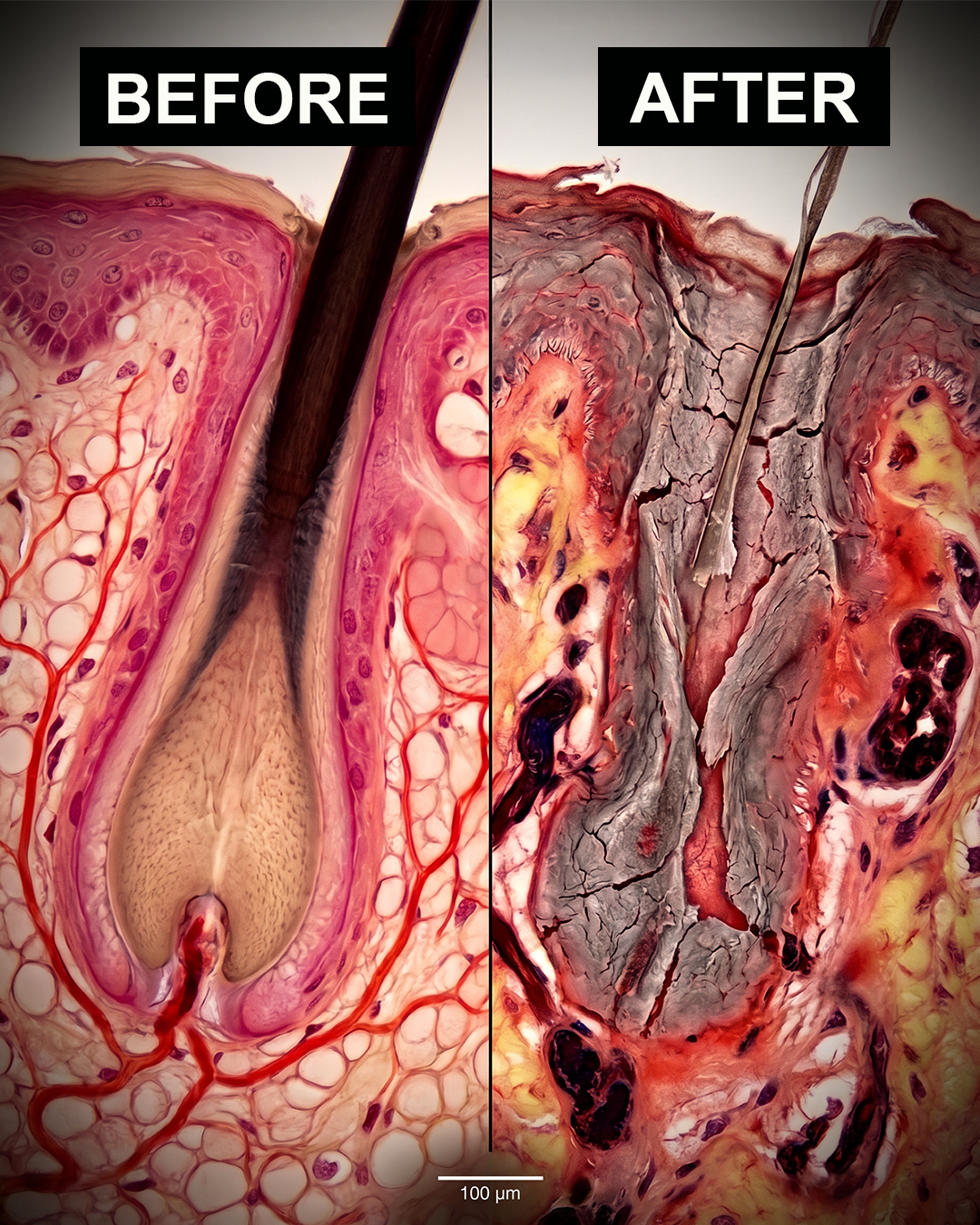
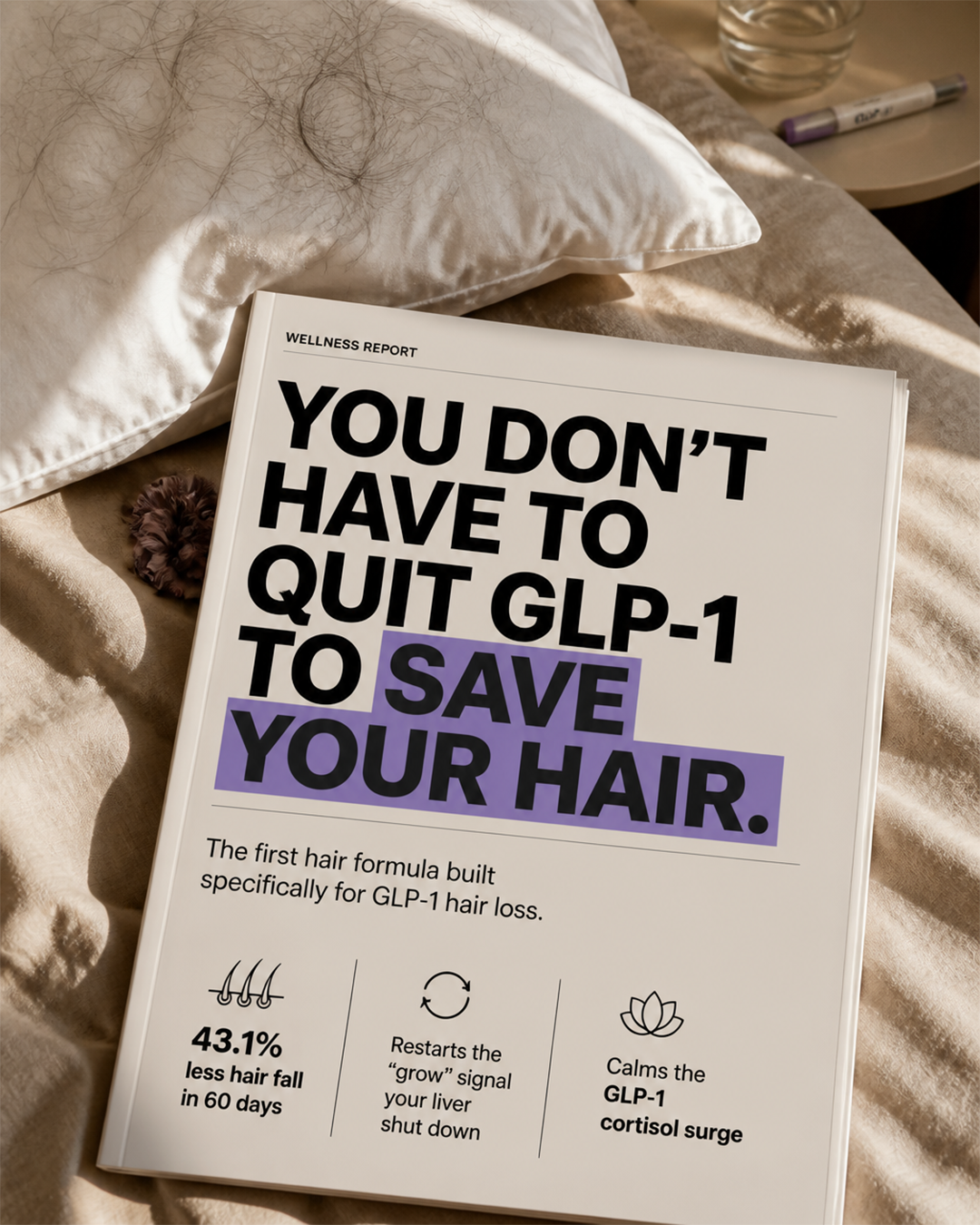
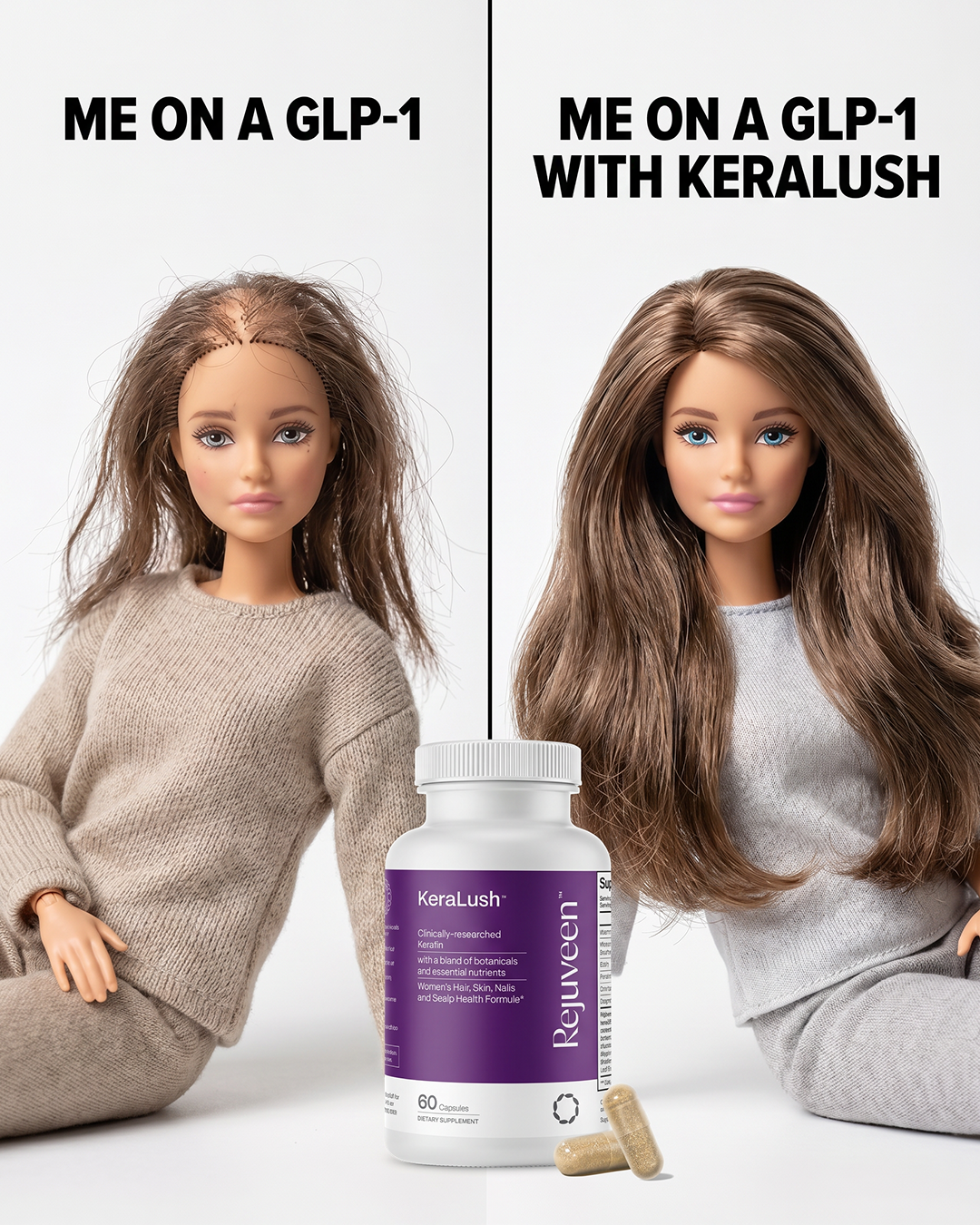
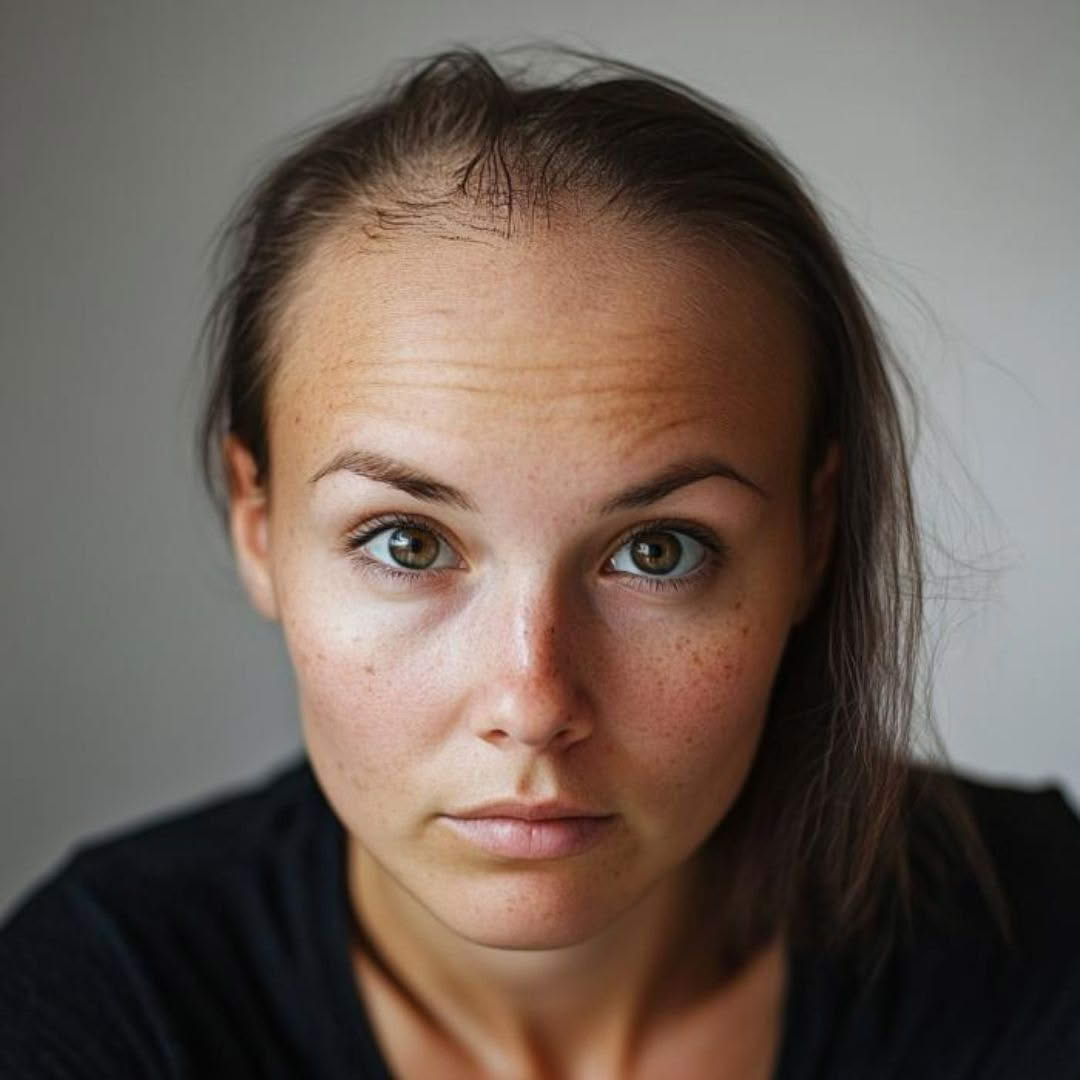
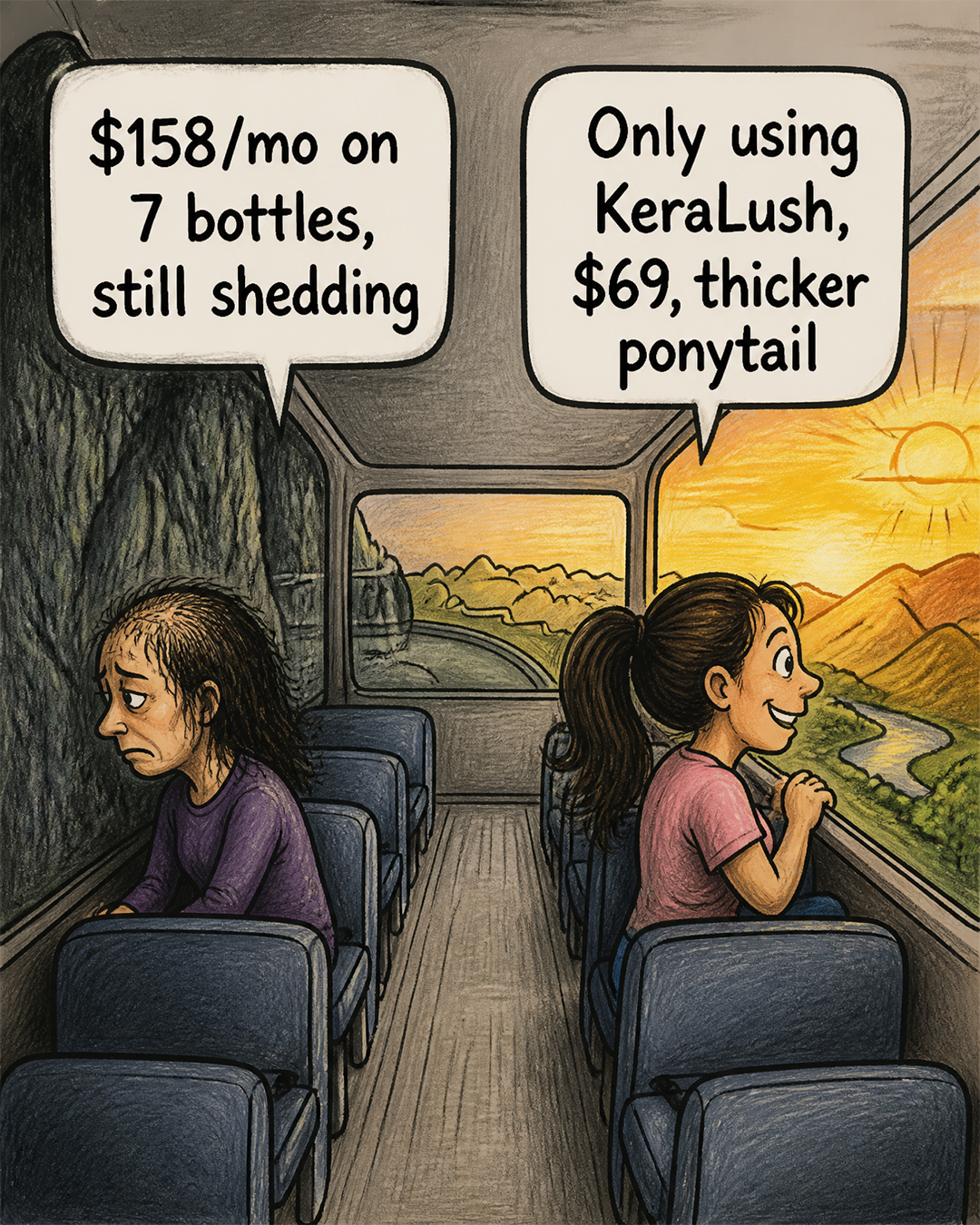
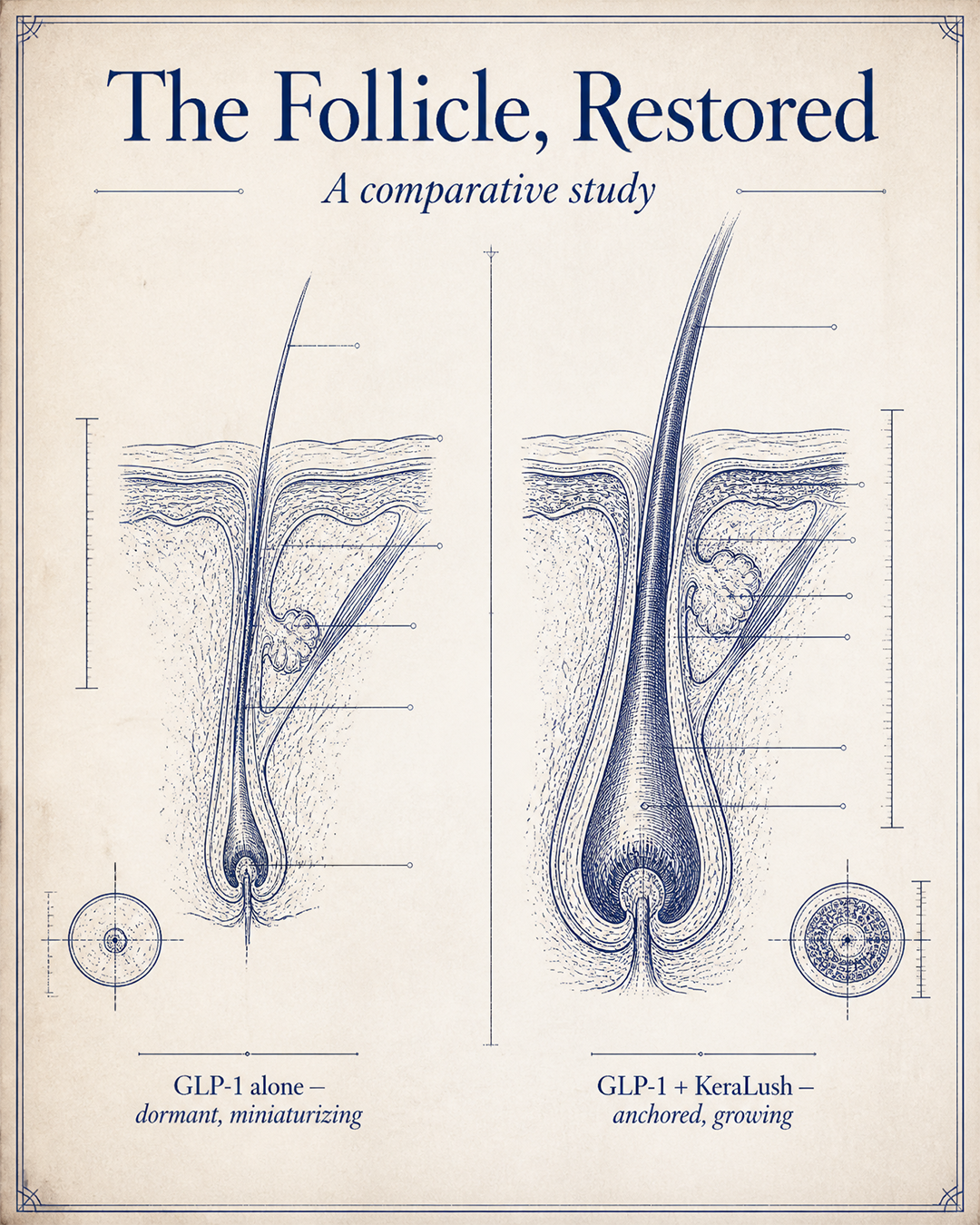
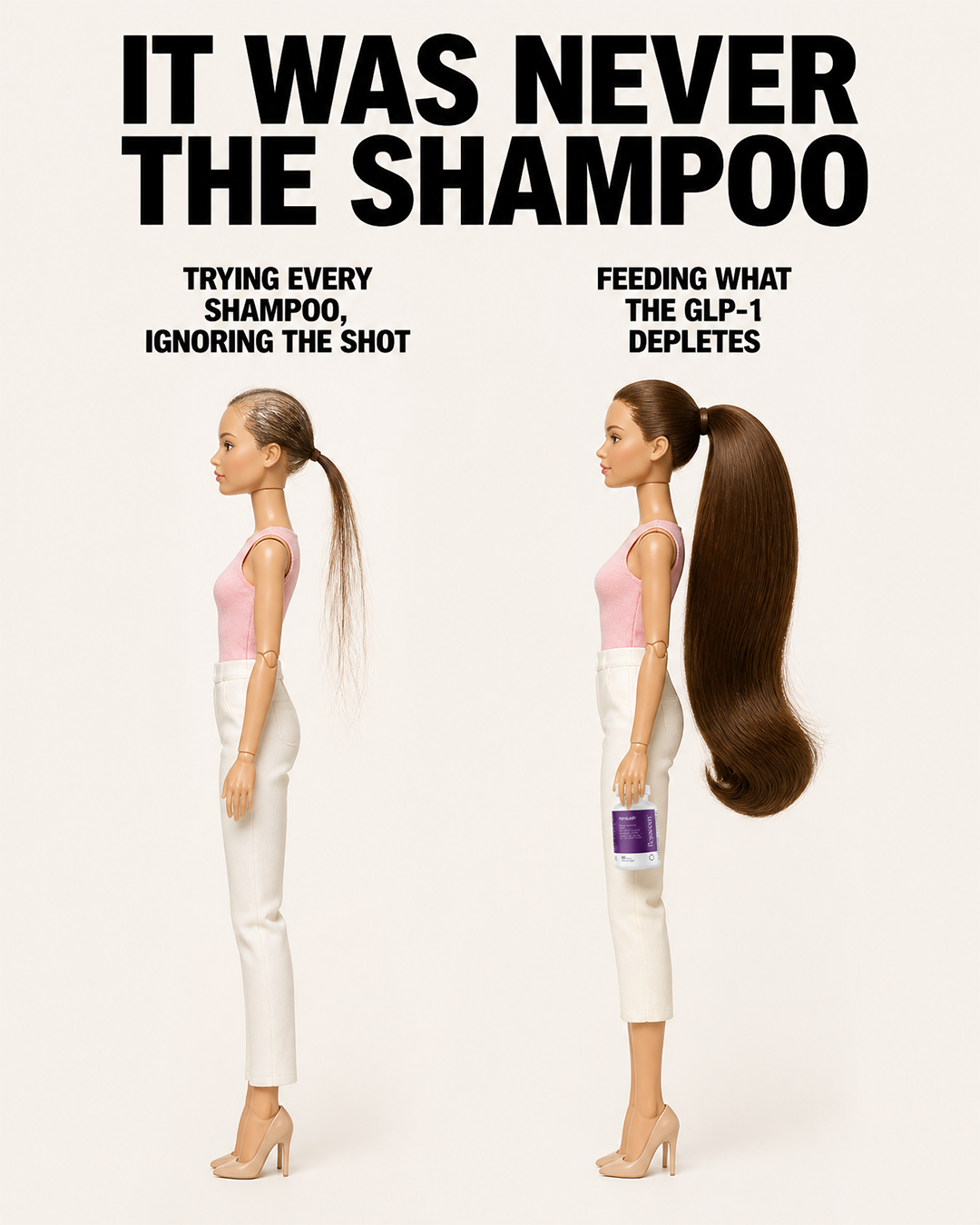
At 54, Zepbound made me pick between the body I'd wanted since high school and my hair. I couldn't keep both. Down 62 pounds, and every shower ended with me peeling a wet rope of hair off the tile. I turned my head away from anyone who stood over me at my desk. I wore the same low bun to the office every day like a uniform nobody issued. My stylist stopped asking about my summer plans and started asking how I was sleeping. My husband stopped putting his hand on the back of my head, and neither of us ever said a word about why. I am not anti-GLP-1 and I never will be. I would take my shot again tomorrow morning. It gave me back my knees, my energy, and the ability to buy a dress off the rack without a plan. Nobody told me I'd be paying for it with my hair. ======== The morning that broke me was headshot day at work. New website, new photos, twenty-two people in my department. The photographer kept moving his ring light and asking me to turn. "Let's try parting it on the other side." I said sure, like it was nothing. Then he moved the light again, and I understood what he was doing. He was hunting for an angle where my scalp didn't show. Everyone else was in and out in three minutes. Mine took nineteen. I went back to my office, shut the door, and sat with my hand over my mouth so nobody would hear me. Then I did the thing I'd been avoiding for months. I held my phone above my head and took a picture of the top of my own head. I have never deleted a photo that fast. ======== My dermatologist had already run labs twice. Thyroid, ferritin and B12 all came back fine. She smiled and said it was probably telogen effluvium and to give it six months. That's the medical term for "your hair is falling out and we don't know why." Six months of waiting, for a woman keeping a lint roller in her car. My stylist had mentioned a trichologist twice, so I stopped waiting and booked her. The first thing I noticed about Marisol's office was the scalp camera and the absence of a prescription pad. ======== She put the camera on my part and threw it up on a screen the size of a television. My own scalp, magnified, in a room with the lights on. "See the little white bulb on the end of that strand?" she said. "That hair didn't snap. It let go at the root." Then she drew four boxes on a notepad and started filling them in. "Your signal is down. Your intake dropped to somewhere near eleven hundred calories a day, so your liver cut production of IGF-1, which is the messenger that tells a follicle to start a new hair." She tapped the second box. "Your cortisol is up, because your body cannot tell the difference between choosing to eat less and having nothing to eat. Cortisol blocks a molecule called GAS6, the alarm clock for your follicle stem cells. Nothing wakes up." The third. "Separately, that same cortisol degrades the anchor proteins holding each strand into the follicle. COL17A1. Molecular Velcro. That's your white bulb." The fourth. "And your follicle is short on raw material. You're getting maybe fifty grams of protein a day, and a strand of hair is physically built out of protein and minerals." I asked how my labs kept coming back fine through all of that. "Your bloodstream gets protected first," she said. "Your body takes from hair and nails to keep that panel clean. That reference range was built to tell your doctor whether your blood is in trouble. It was never built to report what a follicle is getting." I sat there holding my coffee and not drinking it. ======== Then she told me the part that kept me up for three nights. "A follicle that empties out is shrinking the whole time it waits. Every month it sits idle it gets a little smaller and grows a thinner hair, until it stops growing anything." She turned her tablet toward me. There was a study of 484 patients who lost their growth signal, and 34% of them never got full regrowth back even after the original cause was corrected. Their follicles were still alive. They had simply sat dormant long enough to shrink past the point of coming back. "So 'give it six months' isn't a treatment plan," she said. "It's a countdown." ======== I asked her what actually works. "All four boxes, inside the same sixty days. Correcting one just means you get to watch the other three keep working." She wrote it on the back of her card. The anchors needed hydrolyzed keratin peptides, the kind the gut absorbs and the blood carries to the follicle. The cortisol needed ashwagandha standardized to 35% actives, which is 3.5 times more concentrated than the version at the drugstore. The signal needed pantothenic acid at 100 mg, because that dose feeds the cells at the base of the follicle and helps restore IGF-1 production. And the supply needed the minerals my intake had dropped below. "Find one formula with all of it," she said. "Separately, you'll quit before it works." ======== I drove home with that card on the passenger seat, and for the first time every wasted dollar under my sink made sense. I'd spent $89 on biotin gummies, which are building material with no work order. My nails have never looked better and my hair kept leaving. I'd spent $440 over five months on the supplement every woman in the groups swears by, and its ashwagandha is 3.5 times weaker than what the clinical research calls for, with no keratin peptides for anchor repair. Collagen powder cost $210 and hands your body the wrong amino acids for hair. Diesel in a gas engine. Rosemary oil was $42 and sat on the outside of chemistry happening inside the follicle. The dermatologist was $350 for twelve minutes and a pamphlet, and another $200 went on a silk pillowcase and a scalp massager. Every one of those was the right answer to a different question. That's $2,100 spent and zero hairs saved. ======== So I sat up that night comparing labels like I was auditing a vendor. Most covered one of the four boxes, a few covered two. Then I found a women's group thread where the same name kept coming up, and I read the panel against Marisol's handwriting. KeraLush. Anchors: keraGEN-iV keratin peptides, hydrolyzed and absorbed through the gut, clinically shown to cut hair fall by 43.1% in 60 days. At 200 strands a day that's down to around 115. Alarm clock: Shoden ashwagandha at 35% actives, 3.5 times more concentrated than most calm-support supplements, which dropped cortisol up to 65% in 60 days and extended the growth phase by 20%. Signal: pantothenic acid at 100 mg, the exact dose she'd written down. Supply: zinc at 15 mg, because 65.5% of women with hair loss test zinc-deficient, with copper balanced against it so the two don't compete, plus the zeropollution botanical complex that cut scalp inflammation by 71%. All four boxes, in one bottle. At $2.33 a day, after $2,100 of nothing, it felt like a rounding error. ======== Week 2: the shower tile stayed clean enough that I noticed I'd stopped bracing before I rinsed. Week 5: I pulled the brush through twice and it came out almost empty. I checked it again under the light because I didn't believe it. Week 7: blow-drying, something caught the light near my temple. I stopped the dryer, grabbed my phone flashlight and leaned in. Short hairs, fine, standing straight up out of skin that had been bare since February. I counted twenty-three of them, crying, in a towel. Week 10: my stylist ran her hands through the back before I even sat down. "Girl. What did you do?" Month 4: the hair tie went back to two wraps, and I only noticed because I'd stopped reaching for the thin one. Week 14 of the new photos: mine took four minutes, and I wore it down. ======== Here's what still makes me furious. I asked Marisol why my dermatologist had never mentioned any of this. "Because you can't patent a keratin peptide, and you can't bill ashwagandha through insurance," she said. "So nobody employs a person to sit in her office and explain it to her. And whoever wrote up those trials filed hair under cosmetic." She said most women reach her after a year or more of shedding, and by then some of their follicles have shrunk past where anything helps. I read the write-ups myself that night. Nausea, vomiting and constipation are documented in full paragraphs. Hair loss got a line. ======== The ingredient studies ran across 60 days and the money-back window runs 90, so you can finish the whole studied window and still have a month left to decide. If your shower tile doesn't get cleaner, if baby hairs don't show up, if your ponytail doesn't thicken, you email them and every penny comes back after you've used every capsule. It works out to $2.33 a day, less per day than the supplement I took for five months with nothing to show for it. I pay hundreds a month for the shot and I've never once resented it. This was $2.33 a day to stop paying for it with my hair. Most women take the 3-bottle option to cover the whole window. Click here to try KeraLush risk-free for 90 days: https://rejuveen.com/pages/keralush-quiz-v2 ======== P.S. I'm still on my shot, still down 62 pounds, and still in the dress. I just refused to accept that the price of my body was my hair, and it turned out the price was $2.33 a day. P.P.S. If a provider has you on "give it six months," ask her what happens to a follicle during the wait. It shrinks. That is the entire reason 34% of the patients in that study never got all the way back.
Zepbound Took 62 Pounds. Then My Ponytail.
LEARN MORELike this ad? Make it yours.
Crush rebuilds this exact creative around your product — your brand, your colors, your offer — in about a minute.