Vedex
VedexVedex Facebook ad: “He Could Handle The Miles, Not The Recovery”
Ran for 12 days, from July 28 to August 9, 2026, the last day Crush saw it.
Run by Vedex on Facebook. Crush is not the advertiser and does not verify its claims. See this ad in Meta's Ad Library(opens in a new tab)
Want an ad like this for your product?
Crush makes new ad images for your product from this ad: your logo, your product photo, your offer.
Trials from $19.95 USD, then $79.95 USD a month. Cancel anytime.
About this ad
- Meta Ad Library ID
- 1767822537687084
- Platforms
- Facebook, Instagram, Audience Network, Messenger and Threads
- Relaunches
- 1
Ad text
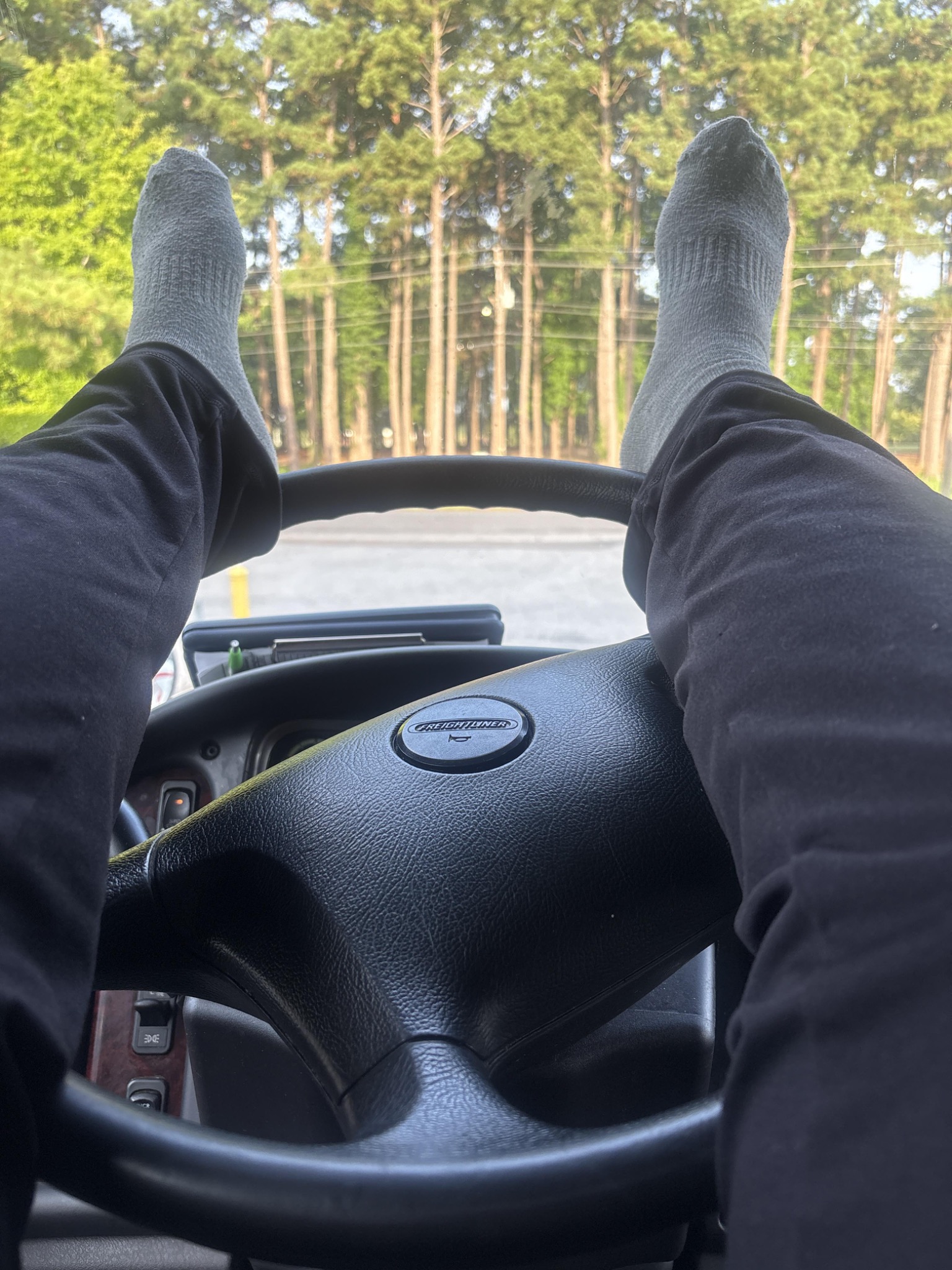
My Husband Had Taken Off His Own Work Boots After Every Run for Eleven Years. The Night He Asked Me to Do It for Him, I Knew Something Had Changed. Ray is 61. I am 59. We met at an auto-parts store in 1994 when the alternator in my old Buick died three days before Christmas. He was standing at the counter in a denim jacket with grease on one sleeve. I was holding the alternator with both hands because I had no idea where else to put it. He looked at the part and said: “That thing is cooked.” I told him I had figured that out when the car stopped. He laughed. I did not. He carried the alternator to my car anyway, and sixteen months later we were married. Ray started driving professionally in 2005. He ran local routes for two years, then regional, then OTR when the company offered enough money to make the time away feel worth it. For the last eleven years, he has hauled refrigerated freight through Ohio, Pennsylvania, Indiana and West Virginia. He normally gets home late Thursday night. Sometimes it is Friday morning, and sometimes it is a day later because freight, weather or dispatch has decided our plans do not matter. I hear the truck before I see it. The dog hears it before I do. Ray backs beside the garage, sets the brake, grabs the same black duffel bag and walks through the kitchen door smelling like diesel, coffee and four days on the road. Then he leaves his work boots beside the bottom step. For years, he took them off the same way. He hooked the toe of one boot behind the heel of the other and stepped out without using his hands. Left boot first. Right boot second. The boots landed beside the door. The dog ran circles around him. I complained about the dirt on the kitchen floor, and Ray told me I should be happy he had made it home. That was our Thursday-night routine. It was one of the most reliable things in my life. It is also where I began to notice my husband becoming a different kind of driver. The kitchen step had not changed. The boots had not changed. Ray had. When he first started running those routes, he came home ready to move. He would carry his bag inside, shower, eat whatever I had kept warm and then spend an hour in the garage because he had thought about some project for four days and wanted to start it immediately. By 2018, he usually sat at the kitchen table for half an hour first. By 2021, he had started eating in the recliner. Last year, he began leaving the duffel bag in the cab until the next morning. He said he was tired. Not sick. Not hurt. Just tired. The boots changed around the same time. At first, he sat on the bottom step because his back was stiff. Then he started loosening the laces instead of stepping straight out of them. Some nights he would sit there for several minutes, rubbing one calf before taking off the second boot. He always had an explanation. The seat had been bothering him. The road had been rough. He had spent too long waiting at a dock. He had not walked enough during his thirty. Every explanation made sense by itself. Then one Thursday night in November, Ray came through the kitchen door without his duffel bag. He sat on the bottom step and placed both hands on his knees. The elastic around his work socks had left deep marks above his ankles, and his lower legs looked puffy against the leather. I waited for him to make a joke. Ray normally makes a joke whenever his body does something he does not like. That night he did not. He looked down at his left boot and said: “Can you take this off for me?” I thought I had heard him incorrectly. Ray had driven through snowstorms, unloaded freight with a bad shoulder and worked an entire week with two cracked ribs before finally admitting he was hurt. He had never asked me to remove his boots. I knelt on the kitchen floor, held the heel and pulled. The boot came off slowly. Ray rubbed his calf for almost a minute before asking me to remove the other one. He said his legs were only tight from being in the seat all day. He said he needed to walk more during his breaks. He said he was getting older and had put a lot of miles on himself. All of that sounded reasonable. But I looked at the man sitting on the bottom step and realised he had been explaining away the same changes for nearly three years. The road had not suddenly become harder. The boots had not suddenly become harder to remove. Ray had slowly become a different kind of driver. As I pulled off the second boot, Ray pressed his thumb into his shin. The mark stayed there for a moment after he moved his hand. He pressed it again. He told me one of the other drivers had asked whether his legs were holding fluid. The driver’s name was Mick. I knew Mick. He was sixty-seven, owned his truck and had delivered freight through enough winters to have an opinion about every road, every company and every part ever installed on a diesel engine. Mick was not the kind of man who offered advice unless he thought you were doing something stupid. Ray told me Mick had watched him climbing down at a receiver outside Columbus. He had seen Ray stand beside the truck and wait for his legs to start working properly. Then Mick had said: “You keep blaming the seat for everything below your waist.” Ray ignored him at first. Drivers had already given him enough advice to fill another trailer. One said to raise the seat. Another said to lower it. One said to fill the seat with air. Another said too much air was the reason his legs felt bad. They recommended cushions, braces, stretches, vitamins, boots, socks, water, less coffee and more coffee. Ray had tried enough of it to know that every solution helped somebody. Mick told him his own legs had felt the same way a few years earlier. Heavy after long runs. Cold feet. Deep marks from his socks. A dull ache that was not quite muscle soreness and not quite pain. He kept changing the seat and blaming his back until he realised the problem followed him even when the seat changed. Then Mick said something Ray had not heard from any other driver. “He told me I was looking at it like a pressure problem,” Ray explained. “Pressure from the seat, pressure behind the knees, pressure through the hips. He said the pressure mattered, but it wasn’t the whole thing.” “Mick said he started paying attention to what ten or twelve hours with barely any leg movement might be doing to his circulation. He still changed the seat. He still walked on his thirty. He still wore compression socks when he knew it would be a long day.” “But he added something else to his routine.” Ray paused before saying the name because he already knew how it sounded. Nattokinase. I told him it sounded made up. Ray said that was exactly what he had told Mick. Nattokinase is an enzyme derived from natto, a traditional fermented soybean food. Mick had not told Ray it would fix his legs. He had not called it medicine, and he had not told Ray to stop anything his doctor had prescribed. He told Ray it supported healthy blood flow and the body’s natural fibrinolytic processes. Then he told him to read about it himself. He also told Ray not to take it casually because nattokinase may affect clotting and can interact with anticoagulants, antiplatelet medication, aspirin and other treatments. Ray had spent almost three hours reading about it at a truck stop outside Columbus. He had read about fibrin. Fibrin is a protein the body naturally uses in clotting and repair. The body also has natural processes for breaking fibrin down. Healthy circulation depends partly on maintaining the normal balance between those two sides of the process. Ray was careful about how he explained it to me. He was not claiming that years of driving had filled his legs with fibrin. He was not claiming that nattokinase treated swelling or pain. He said that after years of sitting, rising blood-pressure readings and less recovery between shifts, he wanted something that supported circulation from the inside instead of buying another object to sit on. I asked what Mick had actually noticed. Ray said: “He told me his legs did not feel as heavy at the end of the day. He still gets stiff. He still walks during breaks and he still uses the socks on long runs.” “But he said climbing out of the truck stopped feeling like the worst part of the day.” Mick had been following the routine for almost two years. Ray said Mick lied about fuel mileage, how quickly he could chain up and the size of every fish he had ever caught. But Ray had watched him climb down from the truck. Mick was six years older. He moved the way Ray used to. I sat across from Ray and looked at the mark his thumb had left in his shin. He told me he was not planning to order anything without first speaking to his doctor. That sounded like Mick too. Enough information to make you curious. Not enough to let you borrow his conclusion. The next afternoon, Ray called his doctor’s office from a rest area. He gave the nurse the product name, explained the full protocol and listed everything he was currently taking. The nurse told him she would speak with the doctor. She called back the following Monday. The doctor did not tell Ray nattokinase would fix his legs. He did not tell him it would treat swelling, clear an artery or replace blood-pressure medication. He reviewed Ray’s medication list, explained the potential interaction and bleeding concerns, and told him what symptoms required immediate medical attention. Sudden one-sided swelling. Severe leg pain. Chest pain. Shortness of breath. Weakness or any other acute change. Then the doctor told Ray whether the supplement was appropriate for his individual situation. That conversation mattered more than the product. It meant we were not guessing. The following Thursday, Ray came home with Mick’s recommendation written on the back of a fuel receipt. Vedex Nattokinase. Underneath it, Mick had written: 10,800 FU. Enteric coated. Empty stomach. Ask your doctor first. Ray had compared it with cheaper nattokinase supplements online. What interested him was not merely that the bottle contained nattokinase. It was the protocol. Vedex provides 10,800 FU per day. FU means fibrinolytic units. It measures nattokinase enzyme activity. That distinction mattered to Ray because two bottles could both list nattokinase while providing very different amounts of measured activity. The second part was delivery. Nattokinase is a protein enzyme, and the stomach is designed to break down proteins. Vedex uses enteric-coated delayed-release protection designed to prevent the softgels from releasing too early in the stomach. The third part was use. Four softgels in the morning. Four later in the day. Taken on an empty stomach according to the directions. Enough measurable enzyme activity. Protection from early stomach release. Clear instructions. Consistent use. It sounded less like a miracle and more like a maintenance protocol. That was why Ray was willing to give it a shot. We ordered the first bottle that night. The package arrived the following Wednesday while Ray was still on the road. I placed it on the kitchen counter beside his coffee machine. He came home Thursday evening, climbed down slowly and stood beside the truck before walking to the house. Then he came inside, saw the bottle and read the label twice. The following morning, Ray took four softgels with water before breakfast. He took the other four later that day, away from food. Nothing happened. His legs did not suddenly feel twenty years younger. He did not walk around the kitchen announcing that circulation had arrived. He took four softgels. Then four more. That was the whole first day. The first week was indistinguishable from any other week. I want to be careful about what I tell you next because I do not want to overstate what I observed. Ray is one man. His body is his body. What he noticed might not be what another driver notices. Some people may notice something earlier. Others may take longer. Some may notice very little. A supplement is not a guarantee. It is not treatment for a swollen leg. It is not a replacement for medical care, regular movement or anything a doctor has prescribed. What I can tell you is what I watched. For the first ten days, I watched Ray take four softgels in the morning and four later in the day. He kept the bottle beside the bag containing his logbook and set two reminders on his phone. He did not change the seat again. He did not stop wearing compression socks. He continued walking during his thirty when freight and parking allowed it. He drank more water and moved his ankles while waiting at docks. Vedex was added to those things. Not replacing any of them. The second Thursday after he started, Ray came home at 6:21. I heard the truck, the dog ran to the kitchen door and I waited where I always waited. The cab door opened. Ray climbed down carefully, but he did not stand beside the truck afterward. He took his duffel bag from the cab, carried it inside and asked whether I needed him to bring the recycling bins back from the road. I told him no. Then I watched him do it anyway. I did not say anything. The following morning, he went into the garage before breakfast and spent forty minutes changing the blade on the mower. He came inside, made coffee and sat at the kitchen table instead of the recliner. I did not mention that either. I wanted to see whether it was simply a good morning. The next week was normal. A long run. A late delivery. Too much time waiting to get unloaded. Ray came home tired. He sat behind the wheel for around two minutes before climbing down. Not seven. Two. His legs still felt stiff. He still rubbed his calf after dinner and put his feet on the coffee table. Nothing dramatic had happened. But the recovery day was beginning to look more like Friday again. Not Friday and Saturday. About a month in, our daughter asked us to attend our grandson’s school fundraiser. It was held in an old elementary-school gym with metal chairs, concrete floors and children running everywhere. It was the kind of evening Ray had started avoiding after a full week. I expected him to sit near the wall. Instead, he walked around with our grandson, bought raffle tickets, helped carry two folding tables and then stood in the parking lot talking to another father for twenty minutes after everyone else had left. On the drive home, I asked how his legs felt. He told me they felt fine. Not young. Not unusually light. Just fine. Then he looked out the passenger window and said: “They don’t feel as heavy.” That was all he said. I did not ask whether it was the nattokinase. Neither of us could know that. He had also been walking more, drinking more water and paying closer attention to how long he remained completely still. The supplement had been added to those habits. Not replacing them. About six weeks in, Ray came home after a fourteen-hour day. He parked, climbed down and walked directly toward the house. The dog ran into him so hard that he nearly dropped his bag. Ray bent down and scratched the dog with both hands, then stood back up without reaching for the wall. I was watching from the doorway. He noticed. “You’re counting my steps again,” he said. I told him I was married to him and therefore allowed to look at him. He carried the bag inside and went into the garage after dinner. Twenty minutes later he returned with the small wooden toolbox he had started making for our grandson almost a year earlier. The corners were unfinished and the handle still needed sanding. Ray put it on the kitchen table and said he was going to finish it Saturday. He did. Our grandson painted it red. Ray complained that the boy had covered the wood grain, then helped him paint over the rest of it. A couple of months into the routine, Ray’s route changed for three weeks. More miles. Less predictable stops. Two nights when he could barely find parking. He came home worn out, but he did not spend the entire weekend recovering. He slept late Friday, mowed Saturday and went with me to our daughter’s house on Sunday. Monday morning he left again. I stood in the driveway while he checked the trailer. Before climbing into the truck, he said something I have remembered ever since. “I feel like I’ve got more left when I get home.” I asked what he meant by more. He said he did not know how else to describe it. He still got tired. He still became stiff. But the run did not take everything. That sentence stayed with me. The run did not take everything. Because that was what had been happening. Ray had enough for the route, enough for the delivery, enough for dispatch and enough for the truck. Then he came home with nothing left for himself. Or me. Or our children. Or the dog waiting at the kitchen door. The problem was never that Ray could not keep driving. He could. The problem was that driving had begun taking the rest of his life with it. About four months after he began the routine, we went to our grandson’s seventh birthday. Someone brought a small football. Our grandson asked Ray to throw it, and Ray stood up and walked into the yard. He stayed there for almost an hour. He threw the ball, chased it when the child missed, bent down to pick it up and then went inside to help our daughter carry food to the table. On the drive home, I reminded him that he had raced our grandson to the mailbox. Ray said the boy had cheated. I reminded him the boy was seven. Ray said that was exactly the problem. “No respect for the rules.” I laughed. Then I cried quietly while looking out the passenger window. Not sad crying. The other kind. Ray reached across the console and held my hand. He told me his legs were not twenty-five. I knew. He was still 61. I knew that too. He said: “I just don’t feel completely beat up all the time.” That is the thing I have been trying to describe in this whole long letter. He did not feel young. He did not feel cured. He did not become a different man. He felt 61 and capable. I am telling you this because there is a chance you have been adjusting your life around the seat the way Ray had been adjusting his. You used to climb down and keep moving. Now you need a minute. You used to finish the run and still have a weekend. Now the weekend is the recovery period before the next run. You used to walk through the truck stop without thinking about your legs. Now you notice every step. You used to get home and go into the garage. Now the chair is the first place you go. You have bought the cushion, changed the seat, raised the air, lowered the air, moved the wheel and walked on your thirty. You have stretched beside the truck, tried compression socks and taken something for the pain. Some of it helped. None of it changed what happened when you spent another ten or twelve hours barely moving. You are not weak. You are not lazy. You are not imagining it. You have spent years putting hours on a body that does not get the recovery time it used to. Most drivers think the problem is only pressure. Pressure from the seat. Pressure behind the knees. Pressure through the hips and back. Pressure matters. But sitting for that long affects more than where your body touches the seat. Your lower legs rely partly on movement. Every time the calf muscles contract, they help move blood through the lower body. When your feet stay almost motionless for hours, that natural calf-pump action does less work. Your legs may begin feeling heavy, tight, cold, numb, puffy or simply shot by the end of the run. Then you park. Lie down. Recover as much as you can. And begin another shift before your body feels fully reset. That repeated pattern creates what I think of as cab-bound circulation debt. Each new shift starts while your legs are still paying for the last one. There is another internal process most drivers have never been given a reason to think about. Your body naturally creates and clears a protein called fibrin. Fibrin plays a normal role in clotting and repair. Healthy circulation depends partly on maintaining a normal balance between fibrin formation and fibrin breakdown. Most driver solutions do not address that process. A cushion changes pressure. Compression socks provide external support. Walking activates the calf muscles. Stretching helps stiffness. Painkillers change how discomfort feels. Those approaches may all have a place. But they are not the same thing as supporting the body’s natural fibrinolytic processes. That is where nattokinase fits. Nattokinase is an enzyme derived from natto, a traditional fermented soybean food. It supports the body’s natural fibrinolytic activity. It also supports healthy blood flow and normal circulation. Vedex Nattokinase is not designed as an occasional capsule you take when your legs hurt. It is a structured daily circulation protocol. The full protocol provides 10,800 FU per day. FU means fibrinolytic units. It is the measure of nattokinase enzyme activity. That distinction matters because milligrams alone do not tell you how active an enzyme is. Two bottles may both list nattokinase while providing very different levels of measured activity. Vedex also uses enteric-coated delayed-release protection. Nattokinase is a protein enzyme. Your stomach is designed to break down proteins. The enteric coating is designed to prevent the softgels from releasing too early in the stomach. The daily protocol is divided between morning and later-day use. Four softgels in the morning. Four later in the day. Taken on an empty stomach according to the product directions. Enough measurable enzyme activity. Protection from early stomach release. Clear instructions. Consistent use. That is the mechanism. It is added to whatever else you are already doing. Getting out of the truck when possible. Walking during breaks. Moving your ankles and calves. Staying hydrated. Using a properly adjusted seat. Following medical advice. Taking prescribed medication exactly as directed. Vedex does not replace any of those things. It does not treat a blood clot. It does not treat sudden swelling. It does not replace blood-pressure medication. It does not fix a damaged disc, sciatica or a mechanical injury. It is targeted circulation support. That is the whole thing. Whether your body responds the way Ray’s appeared to respond is something neither he nor I can promise. Bodies are different. Some people may notice something during the first several weeks. Others may take longer. Some may notice very little. What I can tell you is what I watched. I watched Ray climb out of the truck without remaining beside it for seven minutes. I watched him carry his bag inside. I watched him finish the toolbox. I watched him walk around a school gym after a long week. I watched him throw a football with his grandson. I watched Friday become part of his life again rather than the day he spent recovering from work. I watched the run stop taking everything. That is what I can tell you. The rest begins with a conversation with your own doctor or pharmacist. That step matters especially if you take anticoagulants, antiplatelet medication, aspirin, blood-pressure medication or anything else that may interact with nattokinase. Give them the product name. Tell them the full daily protocol. Ask whether it is appropriate for your individual situation. If they say no, then no. If they say yes, follow the directions exactly. Do not stop prescribed medication. Do not ignore sudden one-sided swelling, severe leg pain, chest pain, shortness of breath, weakness or other urgent symptoms. Nattokinase is not emergency treatment. It is not a reason to delay medical care. It is a daily supplement designed to support normal circulation and the body’s natural fibrinolytic processes. That is all it should be presented as. P.S. If you are the man reading this in the cab while your legs feel heavy, you are not being dramatic. You are not getting soft and you are not failing at the job. You have spent years putting hours on your body while the bills, the miles and the delivery windows kept moving. You are allowed to notice that climbing down feels different now, and you are allowed to want something left when you get home. P.P.S. Ray still adjusts his seat. He still walks on his thirty when he can, wears compression socks on certain runs and has good days and bad days. Vedex was added to those things. It did not replace them. That distinction matters. P.P.P.S. Here is what Ray would tell another driver to do: call your doctor or pharmacist first, give them the brand name and your complete medication list, and ask whether nattokinase is appropriate for you. If they say yes, follow the label exactly. Take four softgels in the morning and four later in the day on an empty stomach as directed. Do not treat it like a painkiller or take it only when your legs feel bad. It is a consistent daily circulation protocol, so give your body enough time before deciding what you notice. P.P.P.P.S. Vedex comes with a 90-day money-back guarantee. That gives you time to follow the routine rather than making a decision after a handful of days. Individual experiences vary. Review the current guarantee terms on the product page before ordering. P.P.P.P.P.S. The truck will always ask for another mile. Dispatch will always have another load, and the bills will still arrive whether your legs feel good or not. You may not be able to stop driving. But you can stop pretending that feeling completely beat up is the only way the job has to end.
Where the ad sends people
vedex.store
He Could Handle The Miles, Not The Recovery
Vedex
See details: vedex.store(opens in a new tab)