
Inactive· since Sep 11, 2026
- 6
- days it ran
- 0
- relaunches
- 8,361
- EU reach
Ad copy
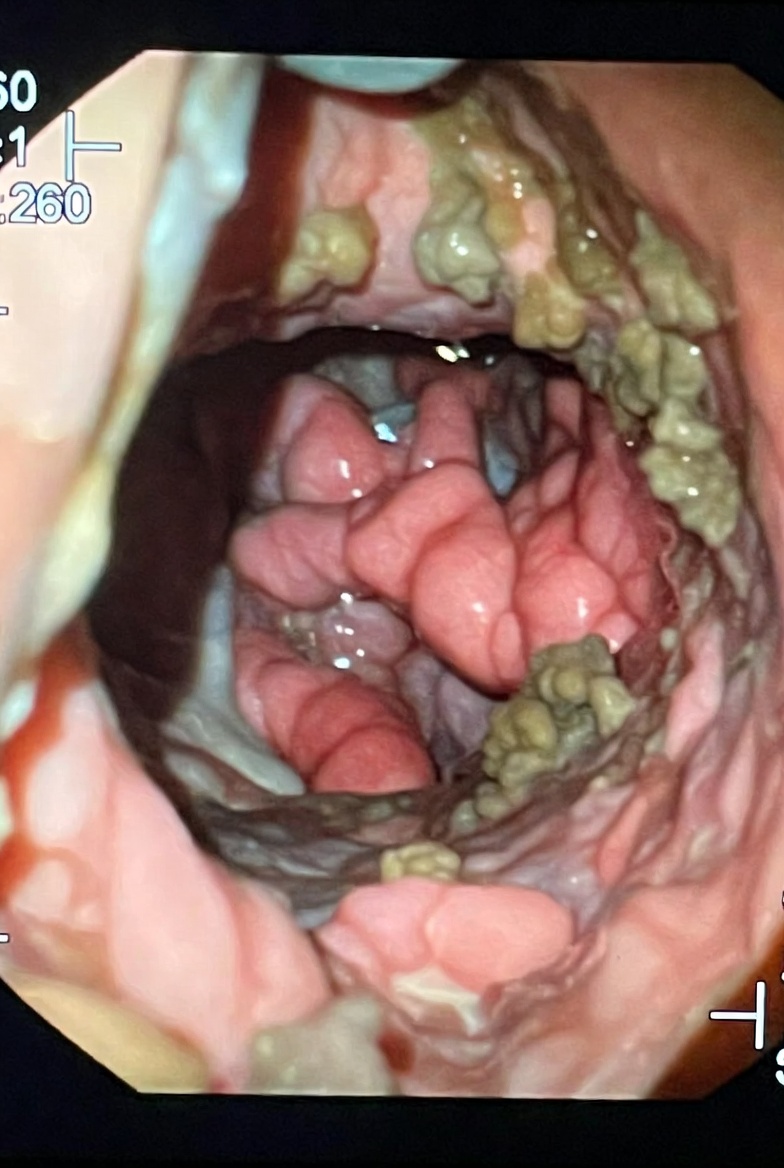
I had Miralax packets in my dinner clutch the night I found a young waitress bleeding on the staff bathroom floor. At the time, I thought her crisis had nothing to do with me. Three nights later, I opened that same clutch at 2 AM and realized I had been hiding my own body problem for seven years. My name is Patricia. I'm 56 years old. I've been married to my husband Mark for 31 years. I used to think of myself as the kind of woman who was prepared. Not anxious. Prepared. I packed vitamins in labeled bags. I kept antacids in my purse. I had travel-size everything. And for the last seven years, I had carried what I privately called my stomach pouch. Miralax packets. Magnesium capsules. Dulcolax for emergencies. A backup suppository I never admitted to anyone. All of it zipped into a cream-colored toiletry pouch that looked too nice to be embarrassing. If you have been on Miralax or magnesium or anything stronger for more than a year, and part of you still believes your version is fine because it is measured and clean and doctor-approved, I need you to read this whole thing. Because I thought my version was different. I thought desperate looked like someone else. I did not know it could look like me, smiling at dinner with packets in my purse. I want to tell you what happened at the resort first. Then I want to tell you what happened three nights later. Because the first thing did not diagnose me. It did something more dangerous. It made me recognize myself. Mark and I were at a lakeside resort for a long weekend with two other couples. It was the kind of place where everyone lowers their voice in the lobby without being told. White tablecloths. Tall windows. Little lamps on the dinner tables. The first two nights, I was exactly who I always tried to be in places like that. Easy. Polished. The woman who had the reservation number, the extra wrap, the Tylenol, the Tide pen, the mints. No one knew that before dinner, I had stood in the bathroom and checked the pouch. No one knew that I had taken Miralax that morning. No one knew that I had packed magnesium for after dessert. No one knew that I had not had a bowel movement without taking something in so long that I could not remember what normal felt like. On the third night, we were halfway through dinner when a young waitress knocked a tray against the service station. Not badly. Just enough that everyone looked over. She apologized. Her face was gray. I remember that. Not pale. Gray. A few minutes later, she disappeared through a side door near the restrooms. I would not have followed her except she had been the one bringing our table tea all weekend, and I had noticed her holding the edge of the station like she might fall. I told Mark I was going to the ladies' room. In the hallway, I heard someone crying. Not loud. Trying not to be loud. The door to a small staff bathroom was partly open. She was on the floor, curled around herself, shaking. There was blood on a folded towel. There was a phone on the tile. I am not going to turn what happened to her into a story it was not. She had gone through an abortion procedure privately, and something had gone wrong. She kept saying, "I thought it would stop." I called 911. The resort had an on-call physician they used for guest emergencies. The front desk called him while I stayed with her. He came down before the ambulance arrived. He knelt beside her. He did not lecture her. He did not make a face. He just said, "You're not in trouble. We're going to get you help." When she whispered that she had waited because she was ashamed, he did not flinch. He said, "People wait too long when they think the truth will disgust someone." The ambulance took her out through the side entrance. She survived. I never saw her again. But that one sentence stayed with me. I stood there in the hallway with my dinner clutch under my arm. My cream-colored pouch was inside it. I am not comparing what happened to her with what was happening to me. I want to be very clear about that. Her emergency was medical and immediate. Mine was slow, private, and self-managed. It was not the same crisis. But it was the same hiding. I went back to the table and told myself it had nothing to do with me. Mark asked if I was okay. I said I was fine. That was what I always said. Three nights later, I was home. It was 2 AM. Mark was asleep next to me. I had taken my normal Miralax that morning. Magnesium after dinner. A Dulcolax at 11 PM because I was starting to panic. Nothing had happened. I had been bloated all day. My stomach felt hard under my palm. I got out of bed and went into the bathroom without turning on the overhead light. I opened the cabinet. Then I opened the cream-colored pouch. Three nights later, I opened my own pouch and finally understood why that sentence had followed me home. People wait too long when they think the truth will disgust someone. There I was. Miralax packets. Magnesium. Dulcolax. The suppository I had never told Mark I carried. Seven years of "prepared" sitting in my hand. I had made a private pharmacy out of fear. And for the first time, I saw it differently. Not as preparation. As hiding. I remember sitting on the closed toilet lid and thinking, what happens when a colon just stops answering? That was the sentence that made me pick up my phone. First I searched, "can laxatives make your colon stop working." That was when I saw the phrase that made my stomach drop. Cathartic colon. I typed the words "cathartic colon." If you don't know what cathartic colon is, don't Google it tonight. Read the rest of this first. Because what I read at 2 AM that night was the beginning of the worst twelve months of my life. Cathartic colon, in the way it gets described online, in old medical literature, on the threads I'd read, is what happens when your colon has been chemically pushed for so long that it stops answering. The muscles stop contracting. The colon goes dead. And the only treatment, the women writing online said, was surgery. A partial colectomy. They take the dead section out and reconnect what's left. Some women in those threads had had this done at 60. Some at 55. Some at 48. I sat there and read every single thread I could find, and then the page after that, and then the page after that. I read women describing recoveries. I read women describing complications. I read one woman -- and I will not forget this for the rest of my life -- describing what it's like to live with a permanent colostomy bag at 52. A colostomy bag is a pouch attached to an opening in your abdomen so stool can leave your body into the bag instead of through your rectum. I had known the words before. I had never pictured them happening to me. She wrote about learning how to empty the pouch without looking down for too long. She wrote about planning clothes around whether the outline would show. She wrote about checking for leaks before leaving the house. She wrote about worrying about odor in a quiet room. She wrote about lying beside her husband and feeling like there was a part of her body she could no longer keep private. And all I could think was: if I kept forcing my colon every day, was that where this ended? I closed my phone at 4:30 AM. I did not sleep. That night didn't really leave me for the next twelve months. Every dose I took, I thought about it. Every time the dose didn't work, I thought about it harder. Every time I zipped that cream-colored pouch, I heard the doctor's sentence from the resort. People wait too long when they think the truth will disgust someone. Once, that fall, I tried to stop. Cold turkey. I made it three days before I had gained six pounds of water weight and could not button a single pair of pants I owned. I went back on the Miralax. I never tried again. I made an appointment with my GP, the one who had told me Miralax was safe years before. I told him I was scared I had damaged myself. He looked at my chart. He said: "Your bloodwork looks fine. You had a colonoscopy at 50, that was clean. You're okay. Just keep doing what you're doing. We don't really have great options for chronic constipation." This was not the answer that changed everything. This was the appointment that made me realize no one had answered the thing I was actually afraid of. I drove home from that appointment crying. Not because he'd been mean. Because he hadn't. He'd been kind, and he'd told me there was nothing else. He had basically told me this was just my life now. The Miralax. The bottle in the cabinet. The cream-colored pouch. The quiet check before every dinner reservation. The backup packet in every travel bag. The calculation before every flight. The question of whether I should take more now or risk paying for it later. The fear that every missed morning would become two missed mornings. The knowledge that no matter how polished I made the routine look, the routine was still in charge. All of it. Forever. It felt less like a treatment plan than a sentence. And I had no idea how many years I was supposed to serve. I want to skip ahead now, to the day everything changed. It was a Wednesday in May. I had taken my full evening stack the night before -- magnesium powder, two Dulcolax -- and woken up Tuesday morning to nothing. I'd added another capful of Miralax Tuesday morning. Nothing. By Tuesday evening I was so bloated I couldn't button my work pants. I took an extra Dulcolax Tuesday night. Nothing. Wednesday morning I woke up at 5:30 and lay in bed with my hand on my stomach, and I could feel it. It was hard. It was distended. It had not moved in four days despite everything I had thrown at it. And the thought that came into my head, lying there in the dark, was: this is it. This is the day my body finally stopped responding. I have hidden this so long that now I may have to live with what hiding cost me. I told Mark I needed to go to urgent care. He offered to come with me. I told him no. I told him I was constipated and scared it had become something serious. What I did not tell him was that I had already taken Miralax, magnesium, and Dulcolax, or that this had been building for years. I told him I didn't want him sitting there while someone told me I had waited too long. I drove myself to the urgent care on Farmington Avenue. I sat in the waiting room for an hour and a half. When the doctor saw me -- a woman maybe in her forties, in scrubs, tired -- I told her I thought I had an obstruction. I told her about the seven years. I told her about the doses. I told her I had not had a bowel movement in four days despite every laxative I owned. She sent me for an abdominal X-ray. I waited another forty minutes. She came back into the exam room with the result on a tablet. She turned the screen toward me. She said, "There's no obstruction. You have a significant amount of stool throughout your colon, but no obstruction. Your colon is just being sluggish today. I'd recommend a stronger dose tonight. Maybe try an enema if it's not moving by tomorrow." I sat on the exam table and stared at her. I had been preparing, for an hour and a half in the waiting room, for her to tell me my colon was dead. I had been preparing for surgery. I had been preparing for the worst. What she'd told me was almost worse. She had told me nothing was wrong. That what I was experiencing -- the bloat, the not-going, the four days of nothing -- was just a normal Wednesday for me now. That I should take more. I drove from the urgent care to an empty parking lot and sat in my car for forty-five minutes and cried. This is what I want every woman reading this to understand. I was not crying because I was sick. I was crying because no one in medicine was going to help me. I had been to my GP, who told me I was fine. I had been to an urgent care, who told me to take more. I had had a colonoscopy at 50 that came back clean. I had had bloodwork that came back clean. The system had nothing else to offer me. And I was certain, in a way I'd been certain for almost a year, that I had broken something inside me that was not going to come back, and I was going to have to live with it. I went home. I told Mark what had happened. For once, I did not make it sound smaller than it was. Then I showed him the part I had still managed to keep hidden. I put the cream-colored pouch on the kitchen table. I told him what was in it. I told him how long it had been there. He sat down next to me and held my hand and said: "There has to be a doctor somewhere who treats this. There has to be a specialist. Let's find one." So we started searching. What I learned in the days that followed is that most gastroenterologists treat structural problems, Crohn's disease, ulcerative colitis, polyps, cancer screening, hemorrhoids. There's a smaller subspecialty within gastroenterology called motility. Motility doctors focus on how the gut moves, rather than what it looks like. Most major university hospitals have one or two motility specialists on staff. Most regional hospitals have none. The first thing I learned was how rare they are. The second thing I learned was how hard they can be to get in front of. The offices we called were booked out for months. Some required referrals. Some did not take new patients. Some consultations were the kind of expensive that makes you put the phone down and stare at the wall for a minute. Even with insurance, I could see why most women would stop looking right there. The one Mark found was Dr. Karen Mitchell. She had completed her gastroenterology training at the Cleveland Clinic in the 1990s and stayed there for the first decade of her career doing research on the bacterial ecology of the human colon. She moved to Connecticut in 2012 to build the motility program at the university hospital here. Her clinic was eight weeks out for new patients. She did not advertise. She took referrals only from primary care physicians or other gastroenterologists. Mark got my GP to write the referral letter the day after I came home from urgent care. The reason we found her at all was that a woman in Mark's office had a sister-in-law who had been her patient three years earlier and would not stop talking about her. That is how rare this kind of doctor is. The eight weeks of waiting were ordinary -- I did what I had been doing for seven years. I want to take you to the morning of the appointment. It was a Tuesday in July. I had myself fully prepared for what Dr. Mitchell was going to tell me. I had Googled "cathartic colon" probably a hundred more times in the eight-week wait. I was convinced she was going to look at my chart, run a test, and tell me my colon was structurally damaged. That maybe I'd need surgery in five years. That I had done this to myself and now I had to live with it. I went in expecting the death sentence I had been preparing for since the previous July. The waiting room had a poster about colon cancer awareness on one wall and a fake plant in the corner. When she walked into the exam room, the first thing I noticed was that she was about my age. Late fifties. Short gray hair. Wire-rimmed glasses. She sat down on the rolling stool, opened her laptop, and read my chart in silence for almost two full minutes. Then she looked up at me and asked: "When was the last time your body went without anything?" I sat there trying to count back. I couldn't. The honest answer was I genuinely could not remember the last time my body had done that on its own. She watched me try to count, and then she said, very quietly: "It's okay. I want you to know that I see this pattern every single week, multiple times a week. Women your age. Women younger than you. You are not unusual. And you are not broken in the way you think you are." I started crying right there in the exam room. I had spent a year preparing for the opposite sentence. She handed me a tissue and she waited. Then she said: "I want to run one test on you today, just to confirm severity. But I want you to understand something before I do." She said: "I have already heard enough from you to know what's going on. The test won't change my diagnosis. It'll only tell me how far along it is." She ordered a sitz marker test. You swallow a capsule containing 24 small radio-opaque markers, and they take X-rays at 24, 48, and 72 hours to see how many have moved through your system. The point was to give my colon's movement a number by showing how many markers were still stuck after 72 hours. It also was not the kind of test I could have casually ordered for myself the first night I panicked. It was a specialist-ordered, multi-visit imaging test -- exactly the kind of thing that can turn into a very expensive bill fast. So when she ordered it, I understood why most women never get this far. "Come back in three weeks. We'll go over the result." Three weeks later I was back. She came in with a folder and sat down and said, "I want to walk you through what's been happening to you. And I'm going to take some time with this. Because nobody has probably explained it to you this way before." Here is what she told me. I'm going to do my best to reproduce it the way she said it, because I have replayed this conversation in my head a hundred times since. She started by drawing a circle on a notepad. "This is your colon." She drew a wavy line across the inside of the circle. "Inside your colon, you have an entire ecosystem. Trillions of bacteria, fungi, archaea. Most of them are beneficial. They digest your food, regulate your immune system, produce vitamins, and tell your colon muscles when to contract." She paused. "In a healthy gut, the good bacteria outnumber the bad ones by a huge margin. The bad ones are still there -- but they're crowded out, kept in check, and they can't really establish themselves." She drew a few small dots inside the circle. "In a gut like yours -- and I see hundreds of these every year -- the worker bacteria that help run the rhythm have thinned out. The pattern you're describing to me, the dose-stacking, the progressive failure of every laxative class, the bloating pattern -- that's almost always one specific thing. Your colon is intact. Your colon isn't dead. The signal has gone quiet." I asked her what that meant. "It means your colon muscles are still there. The nerves are still there. But the little chemical messages that tell the muscle to move are not arriving the way they should." She made a fist and slowly opened it. "This is what your colon muscles should do -- contract, relax, contract, relax. That's called peristalsis. It's what moves food through your intestines." She held her fist closed. "When the signal gets weak, the muscle doesn't fire normally. The colon doesn't go dead. It goes quiet. Your body is not damaged in the way you think. It's being under-signaled. Chemically. By what's missing from that ecosystem." I had to ask her to slow down. She did. She said: "Your sitz marker test showed you retained 21 of 24 markers at 72 hours. That puts you in the severe slow-transit category. Most healthy adults retain fewer than five at 72 hours." I knew the number was bad. Hearing her say it made me feel sick. "Here's what's happened over the last seven years. Every time you've taken a stimulant laxative -- your Dulcolax -- it whips the muscles into a contraction. You get a bowel movement. But it doesn't rebuild the signal. The signal stays quiet." She paused. "And every time you've taken Miralax, you've drawn water into the colon and forced material through. Again -- you may get through today. But the rhythm that should run tomorrow does not come back." Another pause. "And every round of magnesium you've ever taken? The reason it stopped working is because your colon adapted. The worker population didn't rebuild. The signal just kept getting quieter." I asked her the question I had asked four doctors over seven years: "Why couldn't anyone else see this?" She gave me a tired smile. "Because we don't think about it this way in mainstream gastroenterology. The standard workup looks at structure -- your colonoscopy looked at the walls of your colon, which were normal. Your bloodwork looked for warning signs, which were normal. But neither one looked at whether the rhythm was being properly signaled." She said: "Most of us were trained to ask, is there a blockage, inflammation, bleeding, cancer, something visible?" She said: "We were not trained to ask, can this colon still initiate movement without being pushed?" Then she said the thing I want every woman reading this to hear. I want you to read it twice if you have to. She said: "What you have is real. It is diagnosable. And it is reversible. You have not destroyed your colon. You have a quiet-signal problem." I am not going to pretend I didn't sob. I had spent a year in a private hell of believing I had broken something inside my body that couldn't be repaired. A year of 2 AM Googling. A year of looking at my abdomen in the mirror and seeing a body I had ruined. A year of preparing for surgery. And in one sentence, a doctor I had known for 25 minutes had taken all of it back. Then she said: "But I have to tell you the rest of it. Because the part you haven't heard yet is the most important." She said: "The reason your body hasn't rebuilt that rhythm, even after everything you've thrown at it -- and I do mean everything -- is that the bacteria involved in that signal need to be fed." She tapped the notepad. She said there is a short-chain fatty acid called butyrate. It is one of the go-signals that helps tell the colon muscle to contract. Certain beneficial bacteria in the colon lining produce it. Those bacteria do not come back just because you keep forcing water through with a scoop. "They need food." "Very specific food." I asked her what kind. She said: "There is a group of dark plant pigments called anthocyanins. They're what give certain plants that deep red, purple, almost ruby color. And in the colon, those pigments can feed the bacteria that help produce the signal." She must have seen my face, because she smiled. She said: "I know how this sounds. I know -- believe me -- I know how this sounds. I'm a board-certified gastroenterologist. I spent twenty years prescribing prokinetics. I would have laughed at this in 2012." She said the difference was the literature. She named the research on hibiscus anthocyanins, microbiome diversity, beneficial bacteria, and butyrate production. I did not understand every study she mentioned. I am not going to pretend I did. What I understood was the part I could not stop repeating in my head. The scoop had been helping me get through a morning. But it had never been feeding the part of me that was supposed to make mornings work again. That is what I could not stop thinking about. Seven years of forcing today's load. Seven years of never rebuilding tomorrow's rhythm. I asked her what we do about it. She said: "Three things have to happen. In this exact order." She held up one finger. "First -- you have to feed the bacteria involved in the signal." Second finger. "Then you have to do it consistently enough that the rhythm has a chance to come back." Third finger. "And you have to do it gently, without turning your morning into another emergency." She looked at me. "Stimulants fail the third step. They can force a movement, but they can also create cramps, urgency, and more fear." "Osmotic laxatives fail the first step. They move water. They do not feed the signal." "That is where Miralax falls." "It may help you get through today, but it does not feed the bacteria involved in natural bowel movements." "Most probiotics fail because they are not food for the bacteria already living in your colon lining. You're throwing seeds onto ground you haven't fed." She paused. "There are not many everyday foods that deliver the right pigments in a form most women will actually use every day." Then she told me about whole hibiscus flowers. Not hibiscus flavor. Not a red tea bag. Whole hibiscus flowers. She said the deep ruby pigment is the point. She said the darker the flower, the more of those anthocyanins it tends to carry. She said the flowers have to be grown, picked, dried, and kept in a way that preserves that pigment. She said if the hibiscus is crushed into dust, blended with other herbs, or sitting in a weak little tea bag, the cup can look red and still not be the ingredient the research successfully used. I asked her where you get the right kind. She laughed and said, "This is where it gets interesting." "This is the part most people get wrong." She said she did not care what brand I bought yet, as long as it was true whole-flower hibiscus with deep pigment. She said whole hibiscus flowers were the point. Not hibiscus flavor. Not a red tea bag. Whole flowers. She said the flowers had to stay intact enough to carry the dark pigment into the cup. She said most cheaper hibiscus teas were made for flavor and color. Not for delivering enough intact plant pigment to make a daily digestive ritual worth doing. I thought I understood. What I heard was hibiscus. I wish someone had stopped me right there, because the next thing I did was exactly what you may be tempted to do. Then I asked the question that had been building in my throat for an hour. "Do I have to stop the Miralax?" This is the part I want every woman reading this to underline. Because I know this fear. I know it because the thought of stopping cold turkey was, in some ways, more terrifying than anything she had said up to this point. I had tried, the previous fall, and I had made it three days. She said: "Absolutely not. You keep taking your Miralax. We do not change anything in your current protocol on day one." She said: "Do not stop because you're ashamed. Shame creates emergencies." She said: "Here's what's going to happen." "You're going to start whole hibiscus flowers." "Two servings a day." "One deep ruby serving in the morning." "One more after dinner." "You continue everything else as normal." "Over the first three to four weeks, as the bacteria get fed and the signal starts to come back online, your own motility will start to come back online." "As it does -- and you will feel this -- you will naturally need less and less Miralax." "Your body will tell you." "We don't taper on a schedule." "We taper on response." I started crying again. I had not realized, until that moment, how badly I needed somebody to tell me I did not have to choose between the laxatives that had broken my body and the terror of withdrawing from them. That I could keep my safety net. That my body would be the one to tell me when to put it down. She walked me out. It was a sunny Tuesday in July. I sat in my car in the parking garage for almost forty minutes before I drove home. I had walked into that office with a year of fear sitting in my chest. I walked out with a different sentence in my head than the one I'd been carrying since the previous July. But I want to be honest about something I did wrong first. Because this is the part that almost made me think the whole thing was nonsense. The next morning, I went to the grocery store. The tea aisle had three kinds of hibiscus. A red box with a flower on it. A blended herbal tea. The store brand. I bought the familiar red box because it was $3.79 and it said hibiscus on the front. I started drinking it the way she told me to: two cups a day. One in the morning. One after dinner. Week one on the grocery tea: still one scoop in my coffee. Still no morning rhythm. Week three on the grocery tea: the same cramping. The same hard pressure under my ribs. The same quiet check of the cream-colored pouch before every dinner out with Mark. Something had to be wrong. Six weeks later, I was sitting at the kitchen table with the empty box beside me. I turned it over and read the ingredients again. Hibiscus. Rosehips. Lemongrass. Peppermint. Natural flavor. That was the part I couldn't ignore. I had bought a tea that happened to contain hibiscus. I had not bought the thing Dr. Mitchell had actually described. She had described whole flowers carrying deep pigment. I had bought a blend in a paper tea bag. That night, I pulled up the notes from her office again. I wanted to know exactly what kind of hibiscus she had told me to look for. That's when I saw the words I had skipped past. Whole flower. Deep pigment. Carefully dried. The anthocyanins were the point. Not flavor. Not a pretty red tea bag. The intact flowers had to carry enough of the dark pigment to be worth doing every day. Then I understood the delivery problem. Most grocery-store hibiscus was broken petals and dust. Blended with other herbs. Crushed into tea bags and left on shelves because it made a cheap, red cup of tea. But crushing the flower exposed more surface area. Heat, air, and time took more of the pigment away. By the time a lot of grocery-store hibiscus reached your cup, you were drinking red water with a memory of the flower that was supposed to do the work. It wasn't that hibiscus didn't work. It was that I had bought the version with none of the qualities Dr. Mitchell had told me to look for. High-altitude growing mattered because the flowers had to make more of that protective pigment under stronger sun. Hand-picking mattered because the deepest-red flowers could be chosen at their peak instead of stripped for volume. Careful drying mattered because the pigment is fragile. Keeping the flowers whole mattered because dust and fragments can lose the very compounds you're trying to preserve. That was the difference I had missed when I grabbed the $3.79 box. But I found one company making a whole-flower tea that matched what she had been talking about. PiPi Tea. Organic whole hibiscus flowers. High-altitude grown. Hand-picked. Carefully dried. Deep ruby flowers, not dusty fragments swept into a tea bag. The thing that made me trust them was not just that they sold hibiscus. Everyone sells hibiscus. It was that their entire product was built around the same details Dr. Mitchell had told me to look for. Whole flowers. Deep pigment. No dusty blends. No "hibiscus flavor." No weak tea bag pretending color was the same thing as substance. When the bag arrived, I could actually see the difference. The flowers were still there. Not hidden inside a paper bag as red powder. Whole, dark, ruby pieces that made the grocery-store tea look like a shortcut. I read the reviews. Women describing exactly what I was going through. Years of Miralax that never restored their rhythm. Then, within weeks, mornings when they could finally go on their own. I ordered a bag at 3:15 AM. When it arrived, I started immediately. I want to tell you what happened next, but I want to be honest with you about the first three weeks. Because this is the part where people give up. Week one on PiPi Tea: nothing dramatic. I felt about the same. I drank two servings of PiPi Tea every day -- one in the morning, one after dinner. I kept the Miralax. I waited. The only thing I noticed in week one was that my bathroom trips were maybe -- maybe -- slightly less effortful. Week two: I woke up one morning and my stomach was flat. Not bikini-flat. Normal-flat. The way mine used to be when I was 47. I stood in front of the mirror and stared at it. Then I did something I hadn't done in seven years. I went downstairs, made coffee, and didn't add the Miralax to it. I just wanted to see what would happen. At 9:15 AM, on my own, with no chemical assistance, I had a real bowel movement. I sat there afterwards and cried for ten minutes. I texted Mark. I just said, "I went on my own." He wrote back, "Honey." That's the whole text. Just: honey. Week three: I had three unassisted bowel movements that week. The bloating was noticeably down by mid-afternoon. I cut the Miralax to half a capful in the morning, just as a hedge. Week four: I started forgetting my magnesium. By the time I'd remember, it was 10 PM and I'd think, well, let's see what happens if I don't take it. The next morning, on my own, I went. Around week five something happened that I didn't connect to any of this until later. Mark and I met friends for dinner. For years, before any restaurant meal, I had done the same quiet scan. Where are the bathrooms? How far is our table? How long is the drive home? Did I bring the pouch? That night, I did not scan the room. I did not realize it until after the appetizers came. I had been sitting there, listening to a story, laughing at the right parts, eating what I wanted. No inventory. No clock. No private calculation. Week six: I had not taken Miralax in nine days. I had not taken magnesium in eleven days. I had not taken Dulcolax in over a month. Week eight: Mark said the thing I will not forget for the rest of my life. We were out for dinner again, at a little Italian place near our house. I had put my clutch on the table. The cream-colored pouch was not inside it. Halfway through the meal, Mark looked at me and said, "You didn't scan the room tonight." I said, "What?" He said, "For the bathroom. You always used to look before you sat down. Tonight you just sat." I am 56 years old. I have been married to that man for 31 years. And until that night, I did not understand that he had spent years watching me prepare to leave rooms before I had even entered them. Month six: I went back to see Dr. Mitchell for a follow-up sitz marker. I retained 4 of 24 markers at 72 hours. Down from 21. She showed me the comparison on her laptop and shook her head slowly and said, "This is what your colon looks like when you let it work." If you've stayed with me through all of this, you're probably the woman I was writing this for. There are a few things I want to say to you specifically. If you have spent a single night in the last year Googling "cathartic colon" or "laxative dependence" or "is my colon permanently damaged," I want you to know that there is a very good chance the answer is no. There is a very good chance what you have is what I had. A quiet-signal problem. A colon that is still intact, but has not been getting the support it needs to run its own rhythm. The thing that helped me, PiPi Tea's whole hibiscus flowers, is not a miracle pill. It was the first thing I'd tried that was aimed at the rhythm instead of the emergency. It is a simple daily tea made from organic whole hibiscus flowers, high-altitude grown, hand-picked, carefully dried, and naturally deep ruby from the anthocyanins Dr. Mitchell told me to look for. Not the grocery-store red box I bought first. That box said hibiscus, but it was blended tea-bag hibiscus, not whole flowers. I am 56 years old. I don't trust easy answers and I don't trust supplements. I trusted this one because my motility specialist sat in a chair and walked me through the research, and I went home and verified what I could. PiPi Tea offers a 90-day money-back guarantee. If it isn't right for you, send it back within 90 days for your money back. I am not affiliated with them in any way other than as a customer. I'm writing this because I know what it is to make a private pharmacy out of fear and call it being prepared. I want to be the person who says what I needed someone to say. You can keep your Miralax for now. You don't have to stop anything. You just have to start one thing. And see what your body does over the next 90 days. You can look into PiPi Tea here: https://shop.pipitea.com/hbt/kd/c/sp-nm Seven years ago a doctor told me I could take Miralax as long as I needed to. I lost seven years to that one sentence. A year ago I told myself, every night at 2 AM, that I had destroyed my colon and would have to live with the consequences forever. I lost a year of my life to that one belief. And after that night at the resort, I told myself it was not the same hiding. That was wrong too. Yours might be wrong too. Click below to try PiPi Tea. https://shop.pipitea.com/hbt/kd/c/sp-nm
Natural Relief in Weeks
LEARN MORELike this ad? Make it yours.
Crush rebuilds this exact creative around your product — your brand, your colors, your offer — in about a minute.