Hazel Boone
Hazel Boone Facebook ad: “€22,000 on Rehab. A €39 Bracelet Did What 14 Years Couldn't.”
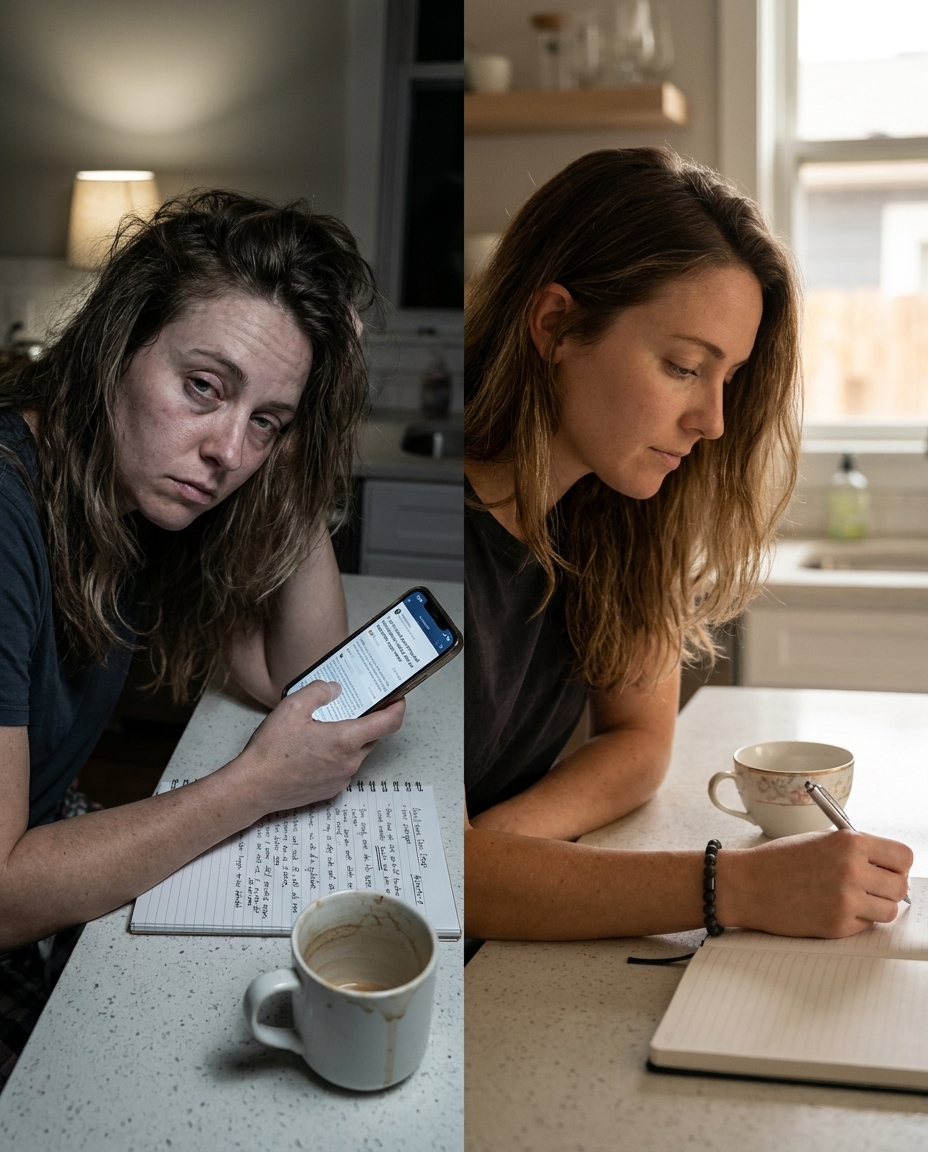
Ran for 1 day, from May 27 to May 28, 2026, the last day Crush saw it.
Run by Hazel Boone on Facebook. Crush is not the advertiser and does not verify its claims. See this ad in Meta's Ad Library(opens in a new tab)
Want an ad like this for your product?
Crush makes new ad images for your product from this ad: your logo, your product photo, your offer.
Trials from $19.95 USD, then $79.95 USD a month. Cancel anytime.
About this ad
- Meta Ad Library ID
- 1773236750791079
- Platforms
- Facebook, Instagram, Audience Network, Messenger and Threads
- Relaunches
- 0
- EU reach
- 1
- Niche
- Education & Courses
Ad text
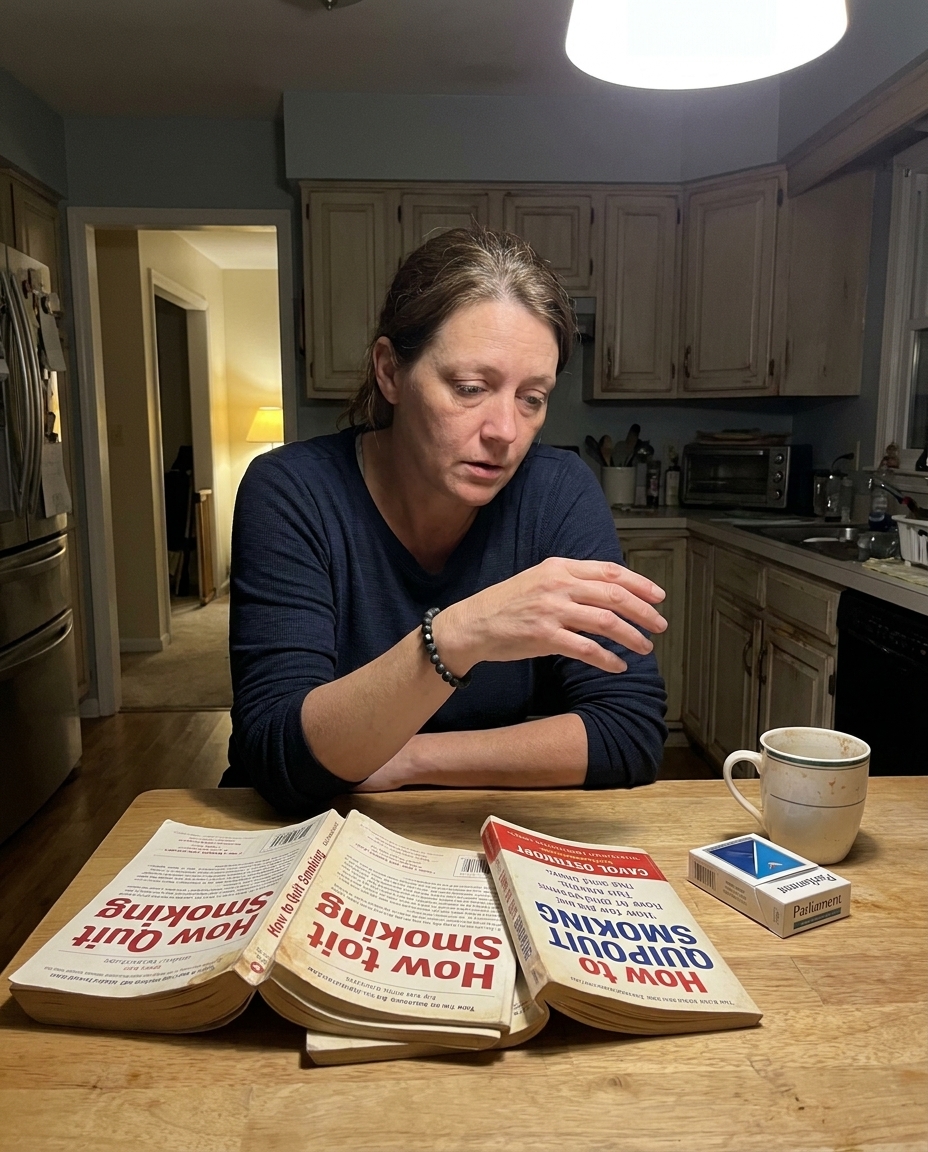
If you've poured everything you had into stopping — the rehab, the therapy, the willpower — and still poured a glass at 5 PM on a Tuesday, I need to tell you about a forum post that found me at 2 AM. Fourteen years ago, I sat across from a counsellor in a grey office in Dublin and she said the thing I'd been steeling myself for: "Frances, alcohol use disorder is a chronic condition. We can manage it, but you're going to be in recovery for the rest of your life. This is who you are now." I was 48. I nodded. I thanked her for her time. I drove home along the quays and sat in the car outside our house for twenty minutes before I could make myself go inside. Because here's what "managing it" actually looked like: By 7 PM, I'd have a glass of red open on the kitchen counter. Just one, for cooking. My husband Colm would be on his way home from work. By 9 PM, the bottle was finished. I'd put it in the recycling bag under the sink, not in the bin where he'd see it. I'd open the second one and pour it into my mug so it looked like tea. By 11 PM, I'd be in bed promising myself — again — that tomorrow would be different. Absolutely, categorically, finally different. By 2 AM, I'd be wide awake. The shame would settle on my chest like a stone. I'd lie there going through the arithmetic of how to fix it. And by 5 PM the next evening, the whole thing would start again. Colm would come home and I'd be at the hob with my back to the door and he'd say something ordinary about his day, and I could tell from the slight pause that he could smell it on me. He never said a word. He stopped asking how I was, after a while. That was worse. So I tried to fix it. Methodically, the way I'd done everything in my life. AA meetings in a church hall every Tuesday night. The fellowship helped. I lasted six weeks before I slipped, and then I didn't go back because I couldn't face sitting in that chair again. A CBT therapist who specialised in addiction. €120 a session, twice a month. She was good. I learned an enormous amount about my triggers. I kept a journal. I identified my patterns. I drank anyway. Naltrexone, prescribed by my GP. €180 a month. It took the edge off, sometimes. But it didn't stop the 5 PM pull. By Saturday evening it was like the tablet wasn't there at all. An acupuncture course — twelve sessions, €90 each. My acupuncturist was a kind man from Donegal who said my liver was holding grief. Maybe it was. The wine didn't stop coming out of the bottle. Inpatient rehabilitation. Three weeks, €14,000, and I want to be precise about that number because I want you to understand I was not someone who did things by halves. Four months after discharge, I relapsed at Christmas dinner. An online recovery programme with video modules and a digital workbook. I completed every section. I got a certificate. I had a drink the night I received it. A mindfulness app. Journaling. Every supplement that claimed to reduce cravings — L-glutamine, kudzu root, milk thistle, magnesium glycinate, a proprietary craving-support blend from a website that looked slightly more credible than the others. All told, between the rehab, the therapists, the medication, the supplements, the programmes — I'd spent somewhere over €22,000 trying to stop drinking. Colm never complained about the money. He understood that I was trying. That was almost worse than if he'd been angry about it. I'd become a sort of professional failure at recovery — 400 browser tabs, a shelf of books with underlined passages, a notebook full of trigger logs and sobriety plans and breakthrough moments. None of it held. All it did was make me more certain that I was beyond help. At some point I stopped searching for the answer. I thought: this is just what my life is now. Manage it. Don't let it get worse. Keep functioning. I'm not writing this for sympathy. But I'm writing it because ten months ago, at 2 AM — lying awake with that familiar stone on my chest — I was on my phone scrolling a recovery forum I'd never visited before, and I found a thread that stopped me completely. The title was: "If you've tried everything and still relapsed, nobody told you about the vagus nerve." 1,847 comments. I scrolled through the first hundred. Over 1,600 were people describing exactly the same cycle — the 5 PM pull, the hiding, the shame at 11 PM, the 2 AM arithmetic. Over 900 said their cravings had dropped significantly within the first month. I kept reading until 5 AM. I made notes on a legal pad. I am a retired school principal and I genuinely cannot help it. The thread was about Dr. Amy Reynolds, a neuroscientist from Stanford's NeuroBehavioral Lab who'd been studying the neurological basis of alcohol cravings for over two decades. And here's the sentence that kept appearing: People who'd been through the exact same cycle — the rehabs, the therapists, the medication, the years — kept writing the same four words: "Nobody told me this." When people who've tried everything say those exact words, I stop scrolling and start reading. I found the original research. An article by Dr. Reynolds about what actually drives alcohol cravings at the neurological level. I had to put my phone down and just sit in the dark for a moment. What most addiction counsellors call "chronic relapse" is only half the story. My counsellor wasn't wrong that I had alcohol use disorder. She was wrong about why I kept going back to the bottle every time I tried to stop. Here's what she never explained. What nobody explained, across fourteen years and €22,000: When you drink repeatedly over a long period of time, your brain's dopamine reward system gets physically rewired. Alcohol becomes the primary signal for relief and pleasure. Every other source — a nice meal, a walk, a conversation with your daughter — gets quieter. The brain doesn't ask you consciously. It just starts telling you it needs the thing, at the same time every day, with the same reliable pull. That's not weak willpower. That's not a character flaw. That's a neural pathway strengthened by years of repetition. And here's why every solution I tried failed: AA taught me coping strategies. The strategies work until the pull is stronger than the strategy. Naltrexone blocked some of the reward signal but didn't reset the pathway. Rehab removed me from my triggers for three weeks — then sent me back into the same neurological wiring I'd left. Every single intervention I'd tried was addressing my behaviour after the craving fired. Nothing was addressing the craving at its source. Dr. Reynolds' research asked a different question entirely: can you reset the dopamine reward system itself? Not manage it — actually retrain it, at the neurological level? The mechanism is the vagus nerve. It runs from the brainstem down through the chest and abdomen. But it also has a significant branch that runs through the wrist. And when that branch is stimulated with targeted magnetic pulse therapy at precisely 17,000 Gauss — the medical-grade calibration used in the Stanford trial — it sends a signal directly to the brainstem that begins to interrupt and reset the reward pathway. Not by suppressing cravings with chemicals. Not by willpower or distraction. By actually changing the neural signal that's producing the craving in the first place. Stanford's NeuroBehavioral Lab ran a clinical study. 91% of participants showed a significant reduction in alcohol cravings. 73% lower relapse rates at six months compared to the control group. I want to be honest with you: I sat with my notepad at 5 AM and thought, this sounds absolutely mad. I also thought: I have spent €22,000 and fourteen years on things that sounded perfectly sensible. And I'm still awake at 5 in the morning with a stone on my chest. I found the product Dr. Reynolds had been recommending to patients — a dark beaded magnetic therapy bracelet, designed to deliver the 17,000 Gauss calibration to the vagus nerve branch at the wrist throughout the day. The price was €39. After fourteen years of what I'd spent, I'm embarrassed by how long I hesitated. Colm saw me reading about it on my tablet one morning. I explained it, feeling slightly foolish. He said: "Frances, you've tried everything that made sense. Maybe try something that doesn't." That was the most sensible thing anyone had said to me in years. The bracelet arrived in four days. I opened it with a kind of flat feeling I'd developed for new recovery products — the feeling of someone who has learned not to want things too much. It was heavier than I expected. Dark, properly substantial. Not a tourist-shop piece of nonsense. The magnetic calibration was marked on the documentation inside. I put it on my left wrist. Week 1: The 5 PM pull came, as it always did. But it was quieter. Like a conversation in another room. I noticed it rather than being gripped by it. I made dinner. I didn't open the wine. Week 2: I told no one except Colm. He started watching me with a quiet attention I recognised — it was the same attention he'd been paying me for years, but now it seemed like something other than worry. Week 3: My daughter rang on a Sunday evening. We talked for forty minutes. At the end she said: "Mam, you sound different. You sound like yourself." I didn't know what to do with that, so I thanked her and said goodbye and then sat in the kitchen and cried. Week 4: I realised I'd gone twenty-eight days. I hadn't counted them, which was itself remarkable. I'd always counted before, white-knuckling each one. The second bottle in the garden shed, behind the potting soil — I took it out and poured it down the sink. Not dramatically. Not as a gesture. Just: it was time. The stone on my chest at 2 AM has been gone for ten months now. Here's what keeps coming back to me. Right now, somewhere, there's another woman in her kitchen at 9 PM with her back to the door. She's already tried the therapy and the meetings and the medication. She's told herself tonight is the last time so many times the words have lost their meaning. She has no idea that her brain's dopamine system has been rewired — and that it can be reset. That it's not a character question. That it's neurological. That there is a mechanism, and it's never come up with her counsellor — not because anyone hid it, but because it just never came up. So if you're someone who's tried to stop drinking and relapsed more times than you can count... If you've been told this is who you are now, that you can manage it but not fix it... If you've spent thousands on rehab and therapy and medication that didn't hold... If you're exhausted by fighting the same pull every single evening... Here's the deal: the Anti-Alcohol Bracelet is running 70% off for first-time customers. That's €39 for the same 17,000 Gauss magnetic calibration used in the Stanford NeuroBehavioral Lab trial. It comes with a 90-day money-back guarantee. If it doesn't work, you get every penny back. It's what Dr. Amy Reynolds recommends to patients who want to address cravings at the neurological source — without medication, without side effects, without another programme to fail. Either your cravings reduce in a way you haven't experienced before, or you return it and lose nothing. I've left the link below so you can read about how it works. You deserve to make dinner without it being a negotiation with yourself. P.S. — If you've tried craving supplements before and they didn't work: the difference is the mechanism. Supplements work on brain chemistry from the outside in. The magnetic calibration works on the reward pathway directly, via the vagus nerve. That's why the Stanford results are different from anything else I'd tried. That's the whole difference.
Where the ad sends people
news.luckybracelets.co
€22,000 on Rehab. A €39 Bracelet Did What 14 Years Couldn't.
Stanford neuroscientist reveals the vagus nerve reset that targets alcohol cravings at the neurological source. No pills. 90-day money-back.
Shop now: news.luckybracelets.co(opens in a new tab)