
Inactive· since Aug 29, 2026
- 10
- days it ran
- 0
- relaunches
Ad copy
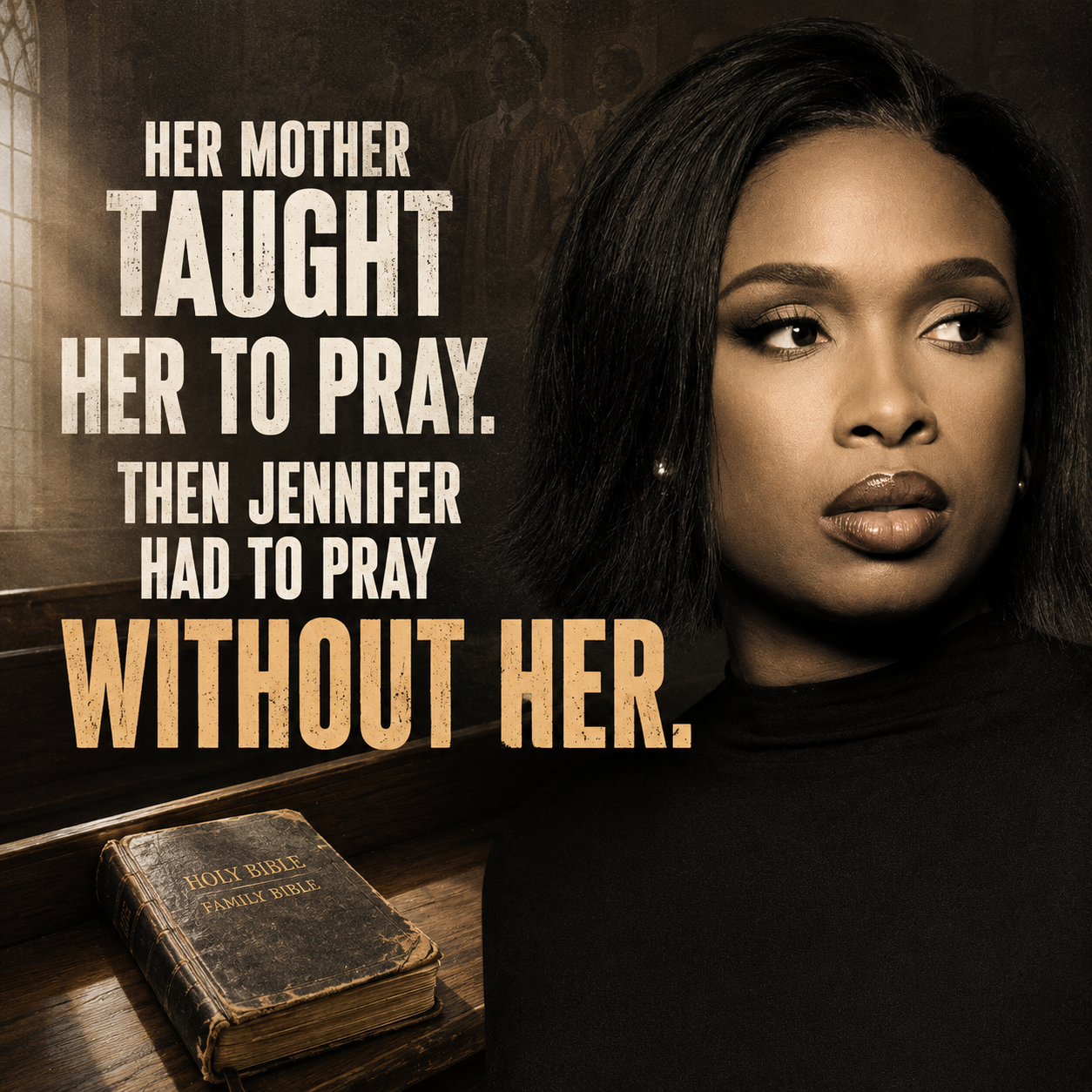
Jennifer Hudson's mother brought her up in church and taught her to pray. Then her mother, brother, and seven year old nephew were murdered, and the faith Jennifer inherited had to become strong enough to hold her without the woman who first gave it to her. Long before Jennifer Hudson sang on the world's largest stages, she sang in a church on the South Side of Chicago. Her mother, Darnell, was the church secretary. Jennifer learned gospel songs there. She learned to pray there. She learned that faith was not something the family visited for one hour on Sunday. It was part of how they lived. Then, in October 2008, the woman who had helped give Jennifer that foundation was taken from her. Jennifer's mother and brother were found murdered inside the family home. Her seven year old nephew, Julian, was missing. Three days later, he was found dead too. Jennifer later described those days as unreal. She felt separated from herself, as if her mind could not absorb what had happened. For almost two weeks, she stayed inside one room while relatives and close friends came and went. When morning came, she prayed. Before she went to sleep, she prayed again. There was no public speech that could make the loss smaller. No award that could reach it. No voice powerful enough to sing it away. The faith her mother had placed before her as a child had to become the place Jennifer stood as a grown woman. She later called faith the ultimate help through her grief. And she said something every Christian mother should stop and consider. “The greatest gift our mother gave us was introducing us to Christ and bringing us up in church.” Not her talent. Not the opportunities that eventually placed Jennifer before millions of people. Not a family name. Christ. That was the inheritance that remained when the woman who gave it was no longer there to explain it. Jennifer's story made me ask a question I had avoided for years. How much of my faith was actually mine? I grew up around Christian language. I knew what my mother believed. I remembered the phrases older women in my family said when life became difficult. I knew which verses belonged in sympathy cards and which Psalms people read at funerals. If someone asked whether I trusted God, I knew the answer I was supposed to give. But there is a difference between being surrounded by faith and being rooted in the Word that faith rests upon. There is a difference between remembering your mother's prayers and knowing how to pray when she is not there. There is a difference between repeating what your family believed and understanding why you believe it deeply enough to carry it into the hardest room of your life. I did not see that difference while life felt manageable. Borrowed faith sounds almost identical to personal faith when nothing is shaking. Both can sing the worship song. Both can attend church. Both can quote the familiar line. The difference appears when the person you leaned on cannot answer the phone. When the family changes. When the diagnosis comes. When you have to decide whether the God your mother trusted is truly the God you know. That frightened me because I owned a Bible, but I still depended on other people to tell me what it meant. I listened to sermons. I saved devotionals. I searched for a verse whenever I needed encouragement. But I had never followed the whole story for myself. I knew the conclusions without understanding the foundation beneath them. I knew that God was faithful because faithful women had told me so. But I could not have shown you how His faithfulness unfolds from Genesis to Revelation. I knew Jesus saved me. But I had never slowed down enough to understand the covenant, the promises, the failures, and the mercy that make the gospel such astonishing news. I had inherited precious words. I had not yet made time to let those words take root. Scripture itself shows us that faith can be passed down without being automatic. Paul reminded Timothy of the sincere faith that first lived in his grandmother Lois and his mother Eunice. That family legacy mattered. But Timothy still had to continue in what he had learned. He still had to know the sacred writings for himself. He still had to guard what had been entrusted to him and carry it into his own calling. The faith of Lois could point him toward God. It could not replace Timothy's own life with God. Deuteronomy tells parents to keep God's words on their own hearts and teach them diligently to their children. Psalm 78 tells one generation to tell the next what God has done so their children will set their hope in Him. The pattern is not merely tradition. It is truth understood, lived, remembered, and handed forward. That is the kind of inheritance Jennifer's mother gave her. And it made me realize what I wanted to give the people coming behind me. Not just a Bible on a shelf after I am gone. Not just a few sayings they remember in my voice. I wanted to give them the witness of a woman whose decisions, prayers, and peace had been shaped by the whole Word of God. But first, that Word had to become alive in me. That is why A Beautiful Year in the Bible met me so personally. It is a guided 52 week journey through the entire Bible, from Genesis to Revelation. It did not assume that years in church meant I understood what I was reading. Before each reading, it gave me the context I had always depended on someone else to supply. Who wrote the passage. Who first heard it. What was happening in their world. Why those words mattered. And how they connect to the larger story of God's faithfulness. Then it gave me guided Scripture readings, prayers, reflection questions, and room to write what I was learning. I was no longer borrowing someone else's finished answer. I was tracing the truth through Scripture for myself. When I studied Genesis, I saw faith move through imperfect families. Abraham received a promise he would not live to see completed. Sarah struggled to believe. Joseph carried what God had shown him through betrayal, separation, and years he could not explain. Their faith was not a polished family slogan. It was trust tested across generations. When I studied Exodus, I saw why Israel was commanded to remember. Children who had not crossed the sea would need parents who could tell them what God had done. When I studied the Psalms, I learned words for grief that did not hide from God. When I reached the Gospels, I saw Jesus welcome families, widows, grieving sisters, and people carrying needs no human relative could solve. When I read Paul's letters with context, Timothy stopped being a name I skimmed past. He became a picture of what happens when inherited faith becomes a personal responsibility. Week by week, my faith developed its own roots. I stopped saying that God was faithful only because women I respected had said it. I could point to the pattern myself. I stopped reaching for verses as if they were family heirlooms whose meaning I was afraid to touch. I understood where they came from and why they were trustworthy. My prayers changed too. They became less like rehearsed phrases and more like honest conversations shaped by what I had read. I began writing down truths I wanted to remember before I needed them. I began talking about Scripture with the people I loved, not because I had mastered it, but because it was becoming part of our real life. That is how faith becomes an inheritance. Not when children merely see a Bible in your home. When they see its wisdom govern how you forgive. How you grieve. How you respond when fear arrives. How you keep loving when a season does not make sense. How you speak about God when life tests everything you said you believed. Jennifer has never suggested that faith removed her grief. She continued to miss her family. She continued to hear her mother's wisdom in her mind. She honored her nephew through a foundation created in his name. She raised her son wanting him to receive the same love and grounding her mother had given her. She kept moving, not because the loss stopped mattering, but because what her mother planted still lived. That is a legacy no tragedy could steal. It also does not begin on the day of tragedy. It begins in ordinary mornings. In the Bible opened before anyone else wakes. In the passage you finally understand because you stayed long enough to learn its context. In the prayer you write beside it. In the truth you carry to the dinner table. In the quiet decision to know God for yourself so the people you love can see what knowing Him looks like. Perhaps your mother gave you faith. Perhaps she could not. Perhaps you are the first woman in your family trying to build this kind of foundation. Wherever your story begins, the responsibility before you is the same. Do not l... [truncated]
If you are a Christian believer, read this ☝️
Need Tools For Kids Faith Learning? Engage Them With Weekly Guided Bible Tasks. Shop Now. Curious How To Teach Bible At Home? Kid Friendly Workbook With Guided Learning.
LEARN MORELike this ad? Make it yours.
Crush rebuilds this exact creative around your product — your brand, your colors, your offer — in about a minute.