Harriet Whitcombe Wellness Tips
Harriet Whitcombe Wellness Tips Facebook ad: “Is your knee bone-on-bone, or just starving?”
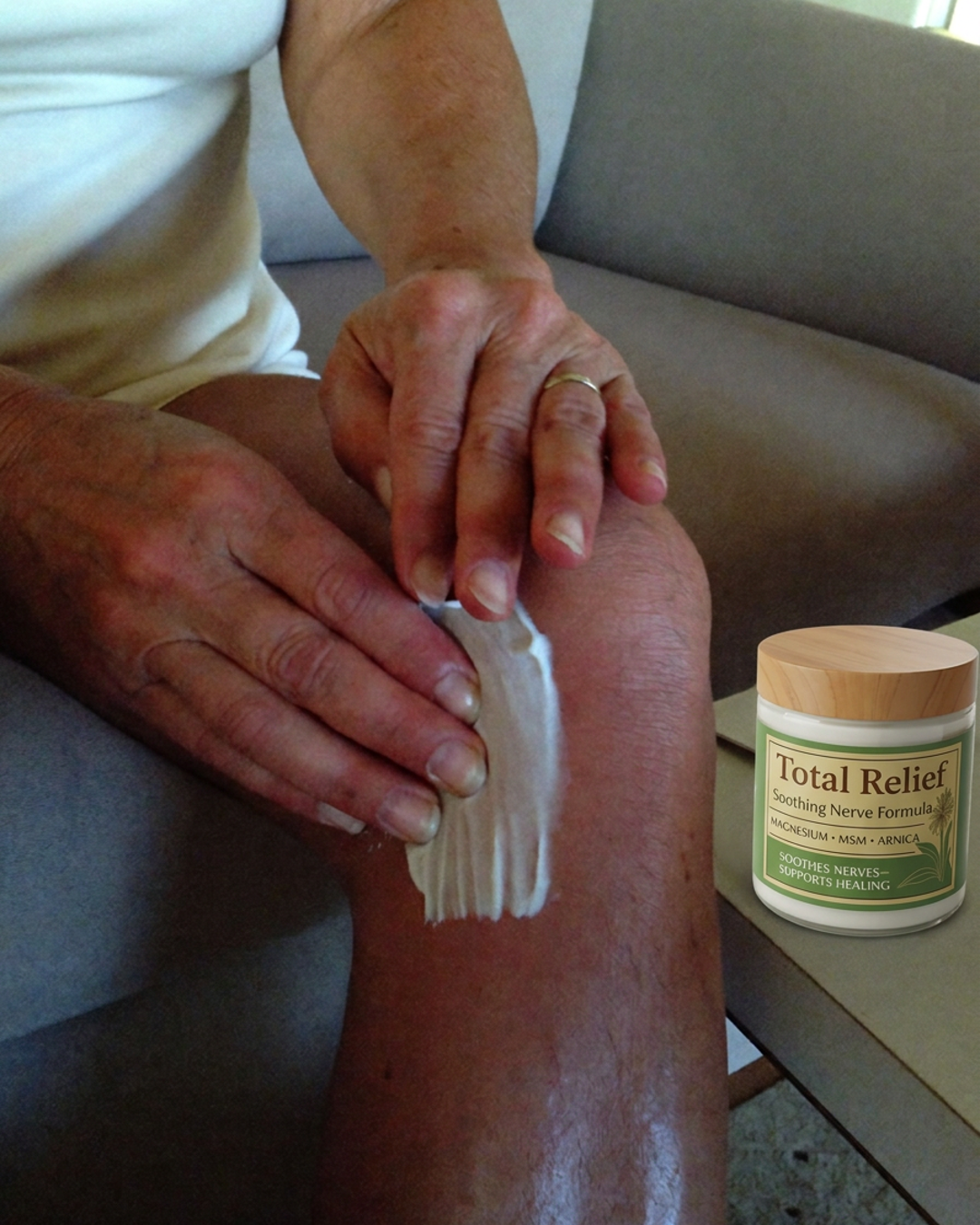
Ran for 6 days, from August 5 to August 11, 2026, the last day Crush saw it.
Run by Harriet Whitcombe Wellness Tips on Facebook. Crush is not the advertiser and does not verify its claims. See this ad in Meta's Ad Library(opens in a new tab)
Make your own version of this ad
Crush makes it, launches it in your own Meta ad account, scales the winners and pauses the losers.
About this ad
- Meta Ad Library ID
- 1795352201833994
- Platforms
- Facebook, Instagram, Audience Network, Messenger and Threads
- Relaunches
- 0
Ad text
If a surgeon has told you your knee is bone-on-bone and it's time to replace it, please do one thing before you sign: ask him the question a colleague asked me over lunch, three days before I was going to let them replace mine. It's the question that took my own name off the surgery schedule. I spent thirty-one years around bad knees — in orthopedic medicine, most of it across a desk from people in exactly the spot you may be in now. And the whole time I believed the very thing I'd heard every orthopedic surgeon say: once the cartilage is gone, it's gone. After that you manage the pain — cortisone, gel shots, anti-inflammatories — and when those stop working, you replace the joint. It's what the training teaches. It's what the billing rewards. And I was certain the X-ray proved it. Then it was my knee. It came the way it comes for everyone — a stiffness on the stairs I blamed on a long day, a catch when I stood up out of a chair. Then the morning I bent down to lift my granddaughter and my knee simply wouldn't fold, and I stood there, a woman who'd spent her whole life on other people's knees, unable to manage her own. I did everything I'd told patients to do for three decades. Anti-inflammatories until my stomach gave out. Cortisone in the joint, twice. The glucosamine off the pharmacy shelf. Nothing held more than a few weeks. So I pulled up my own films, and there it was — the same grey picture I'd turned toward hundreds of people over the years. Bone-on-bone. I scheduled the replacement myself. And for the first time in my career I was the one in the thin gown, sitting where my patients used to sit — not frightened of the operation, but of the weeks flat on my back afterward, and the thing we don't say out loud: that a fair number of these don't take all the pain away. Three days before the date, I had lunch with a man I'd trained with years earlier. I expected him to tell me I was doing the sensible thing. Instead he put down his fork and asked me something I couldn't answer. Before they took the joint apart, he said — had anyone ever actually tried to feed the cartilage that was still in there? I opened my mouth to give the textbook line — once it's gone it's gone — and realized I'd never once checked whether it was even true. I'd repeated it for thirty years and never read past the X-ray to ask what the picture was actually made of. So I went home and read. Not the surgical journals I already knew by heart — the cell biology, the part that never makes it onto an orthopedic stage. And here's what nobody had ever taught me. Cartilage isn't a dead pad between two bones. It's living tissue — a dense, wet cushion kept in constant repair by living cells inside it. Those cells run on a kind of charge the body makes, called NAD. When you're young there's plenty of it, and the cells rebuild the cushion faster than daily life can wear it down. After about fifty, that charge starts to fade. The cells get tired. And tired cells don't quietly retire — they turn into what researchers call senescent cells, the ones you may have heard nicknamed "zombie cells": not working, not dying, just sitting in the joint, leaking the enzymes that dissolve the cushion and jamming the signals that would call in fresh repairs. That is what bone-on-bone actually is. Not a part that simply wore out — a repair crew that ran out of charge while the cushion got eaten from the inside. I'd spent a whole career blaming the cushion, and never once asked about the crew that was supposed to keep it whole. And everything I'd ever offered a patient worked around that, never on it. The cortisone quieted the joint for a few weeks — and the repeated shots were quietly speeding the wear. The anti-inflammatories muffled the ache while the cushion kept dissolving underneath. And the replacement, the thing my whole field is built around, doesn't wake up a single cell; it takes the joint out and bolts in metal. There's no code to bill for feeding a cell. Nobody patents magnesium. The money, honestly, is in the injection and the operating room — and it took me far too long to say that out loud. To actually change what was happening in that joint, three things had to happen at once. Clear out the burned-out cells. Calm the inflammation they throw off. And give the cushion the raw material to rebuild itself. Miss one and nothing holds. And the cleanest way to do all three, my colleague said, wasn't a pill — a pill goes down through the gut and almost none of it ever reaches a joint that barely gets any blood to begin with. It was something you rub straight over the knee, so it lands exactly where it's needed. The one I finally landed on comes in a plain little jar, from a company I'd never heard of. It's called NuraCalm Total Relief, and what made me try it was that it does all three jobs out of the one tub. Magnesium chloride and vitamin B6 — the raw material the cells use to make that charge again, so the repair crew clocks back in; magnesium is part of the very machinery the body builds NAD with, and I'd known that as a dry fact for forty years without once connecting it to a knee. MSM — a natural form of sulfur, one of the exact building blocks the body makes cartilage from — the material to rebuild with. Arnica — to calm the inflammation those burned-out cells throw off. And a menthol finish that runs cool, then warm, opening the blood flow into a joint that hardly gets any and carrying oxygen into the starved tissue. A dozen working ingredients doing three jobs — against the drugstore rubs I used to wave patients away from, the ones with an ingredient or two that go cold for four minutes and do nothing underneath. I am a skeptic by training. But I had a date on the calendar, so I worked it into the knee twice a day and, out of habit, wrote down what happened. The first night, about fifteen minutes after I used it, the joint went quiet — not numb, just quiet, in a way it hadn't been in two years. By day five the morning stiffness was gone before my coffee was. By day eleven I came down my own stairs and never once reached for the rail. At three weeks — four days out from the operation — I got down onto the floor to play with my granddaughter and stood back up on my own, and that afternoon I called the office and cancelled. The thing I remember most isn't even the big moments. It's that my husband looked up one evening, a few weeks in, and said, "you're standing like yourself again." I hadn't told him I was doing anything. He'd just noticed his wife was back. Let me be straight with you, because I owe you that. Some knees really are too far gone — a joint that's genuinely collapsed or badly deformed still belongs in an operating room, and nothing changes that. But most knees aren't there. Most knees that get the bone-on-bone verdict still have cushion left and a repair crew that's starving, not dead — and nobody's feeding it, because there's no money in feeding it. So if a surgeon has handed you a date, I'll tell you exactly what my old colleague told me three days before mine: before you agree to lose that joint, give whatever's left in there a real chance to be fed first. You really only have two roads from here. Keep waiting on the surgery, with a real chance it doesn't take all the pain anyway — or spend a few weeks feeding the joint the one thing it's been starved of, while there's still cushion in there worth saving. It's 50% off on their site right now, and it's backed for a full 90 days: you use it every day, and if your knee isn't better you send it back — even the empty jar — and they refund every cent. In all my years I never once saw a surgical practice put anything like that in writing. They also sell out, often, so if the page is still up when you get there, I wouldn't wait around for the next run. Don't sign away that joint before anyone's even tried to feed it. That was the question I got asked three days before my own surgery, and I am so glad I stopped long enough to answer it. 👉 https://try.nuracalm.com/5464aca0-14c8-43d9-b23c-e883183bfb41.html P.S. Please don't do anything drastic on your own — don't stop a medication your doctor has you on, and don't cancel an operation because a stranger told you a story. I didn't cancel mine until my own knee had given me three weeks of proof. Use it, watch your own knee, and take something real back to your doctor. The point isn't to fight your surgeon; it's to give the joint the one thing the prescription pad and the operating room were never built to do. P.P.S. The 90 days are there for a reason. Most people feel something in the first week, but the deeper repair takes six to eight weeks of using it every day — so give it that. The only thing you're really risking is the price of a couple of takeout dinners. P.P.P.S. They sell out more often than they'd like. If it's gone when you get there, get on the list and wait — I only wish someone had asked me that one question years earlier, back when I was so sure I already knew the answer.
Where the ad sends people
try.nuracalm.com
Is your knee bone-on-bone — or just starving?
I’m about to make myself very unpopular with a few knee surgeons, a couple of injection clinics, and every company that profits when you’re told your knee is finished.
Learn more: try.nuracalm.com(opens in a new tab)