Dr. Jacob Kinson
Dr. Jacob Kinson Facebook ad: “GHK-Cu Without The Risky Injections”
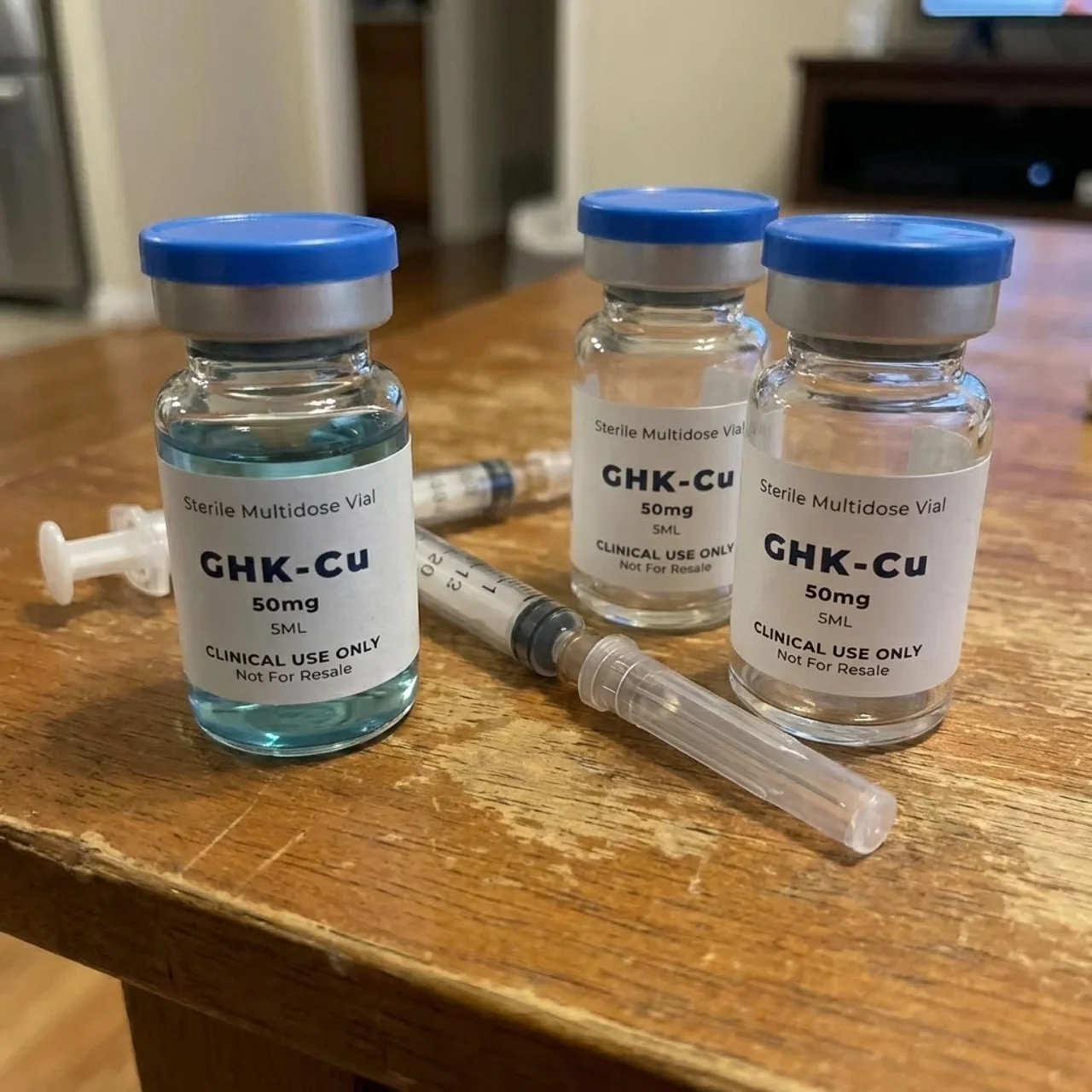
Ran for 3 days, from June 12 to June 15, 2026, the last day Crush saw it.
Run by Dr. Jacob Kinson on Facebook. Crush is not the advertiser and does not verify its claims. See this ad in Meta's Ad Library(opens in a new tab)
Want an ad like this for your product?
Crush makes new ad images for your product from this ad: your logo, your product photo, your offer.
Trials from $19.95 USD, then $79.95 USD a month. Cancel anytime.
About this ad
- Meta Ad Library ID
- 1798528774452406
- Platforms
- Facebook, Instagram, Audience Network, Messenger and Threads
- Relaunches
- 1
Ad text
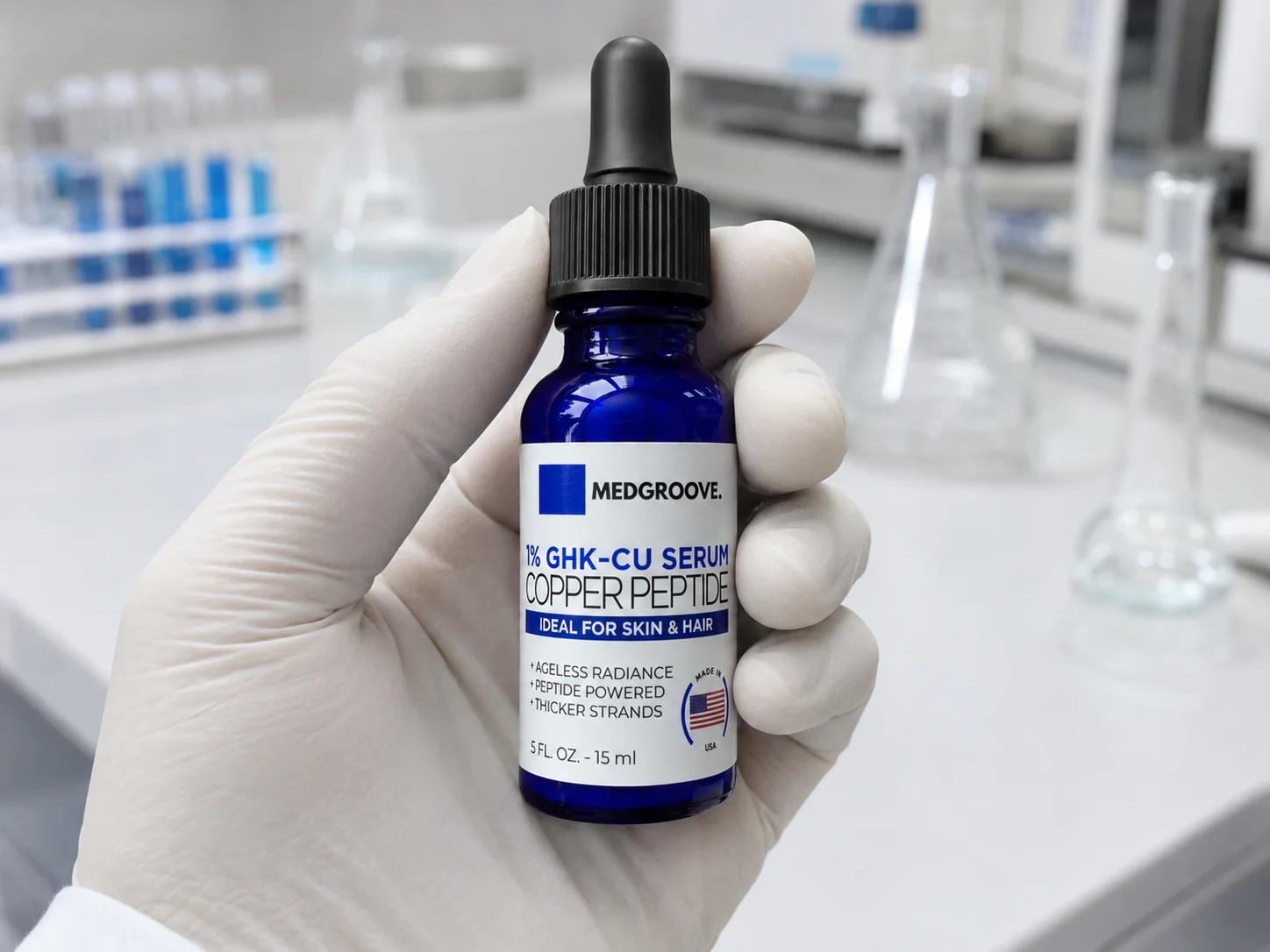
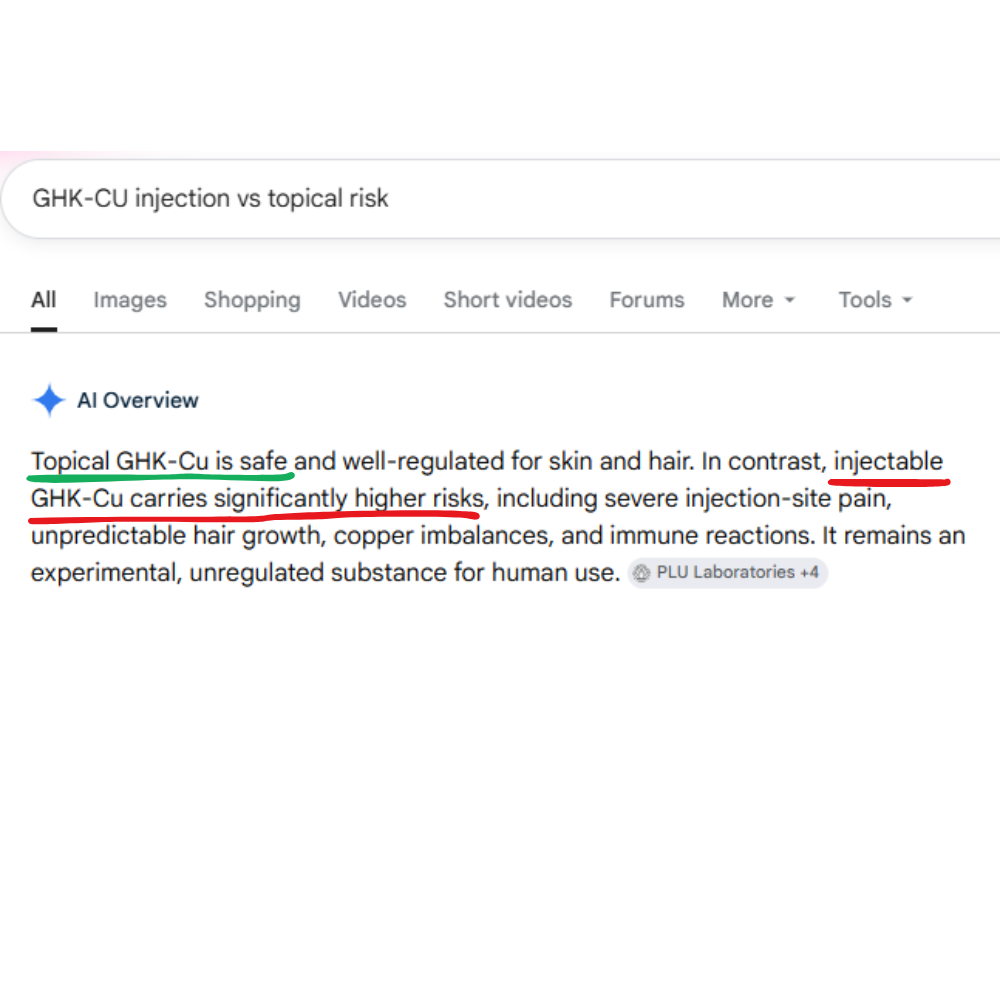
I am a dermatologist and I need to warn you about what women are injecting into their bodies right now in the name of younger skin. This is not a trend I can stay quiet about anymore. Over the last year I have had patients walk into my office and casually mention that they are injecting a peptide called GHK Cu at home using vials they bought from research chemical websites. When I ask them who prescribed it, they say nobody. When I ask what the dosage protocol is, they say they found it on Reddit. When I ask if they know what a gene expression modulator does inside the human bloodstream at unregulated concentrations, they go quiet. These are not reckless women. They are smart, educated women who did their own research and landed on the right molecule but the wrong method. Because here is what most people do not understand. GHK Cu is real. The science behind it is real. It may be the single most important discovery in skin aging in the last 50 years. But the way you deliver it into your body changes everything about whether it helps you or harms you. And right now, thousands of women are choosing the most dangerous delivery method available because nobody explained the safer one. That is why I am writing this. Not to sell you something. To stop you from hurting yourself with something that should be helping you. Let me start with what GHK Cu actually is and why it matters. GHK Cu is a copper binding tripeptide that your body produces naturally. It was first isolated in human blood plasma in 1973 by a biochemist named Loren Pickart. It is not a vitamin. It is not an antioxidant. It is not a moisturizing agent. It is a signaling molecule. Its job is to tell your skin cells what to do. Specifically, it instructs your fibroblasts, the cells responsible for producing collagen and elastin, to begin the repair and rebuilding process. It does not add collagen to your skin. It tells your body to make its own. That distinction matters more than most people realize. GHK Cu influences the expression of over 4000 human genes. Gene mapping studies show it can shift more than a third of those genes toward younger expression patterns. It upregulates the genes tied to collagen synthesis, tissue repair, and antioxidant defense. It downregulates the genes tied to inflammation and structural breakdown. In lab testing, it increased Type 1 collagen production by roughly 70% and Type 3 collagen by roughly 52% within 72 hours. No other topical ingredient I have seen in 19 years of practice has this kind of data behind it. Here is the problem. Your body produces less and less of it as you age. At 20 years old, your plasma levels sit around 200 nanograms per milliliter. By 60, that number drops to approximately 80. That is a roughly 60% decline. As that signal fades, your collagen production slows, your elastin degrades faster than it is replaced, and the structural support underneath your skin thins out year after year. That is why your skin loses firmness. That is why texture turns crepey. That is why lines deepen. Not because you are not moisturizing enough. Because the biological instruction to rebuild has gone quiet. This is why collagen creams do not work. They sit on the surface. The collagen molecule is too large to penetrate the skin barrier, so it never reaches the dermal layer where your fibroblasts live. It hydrates temporarily and does nothing structurally. This is why retinol alone is not enough. Retinol accelerates cell turnover, but it does not restore the repair instruction. It speeds up replacement without rebuilding the support underneath. This is why hyaluronic acid does not fix the problem. It holds water in the skin, which is useful, but it cannot reverse structural collapse. It is a hydrator, not a rebuilder. Every one of these products is treating symptoms on the surface while the root cause, the fading GHK Cu signal, goes completely unaddressed. Now here is what is scaring me as a physician. More and more women are discovering GHK Cu online and deciding to inject it themselves. They are buying vials from research chemical suppliers, drawing doses with insulin syringes, and injecting a signaling peptide directly into their bodies at home with no medical supervision. I need to be very direct about this. This is dangerous. Those vials are classified and sold as research chemicals. They are not manufactured for human use. There is no regulatory oversight on purity. There is no standardized dosing. There is no guarantee that what is listed on the label is what is actually in the vial. Independent testing has shown that some of these products contain contaminants, degraded peptides, or concentrations that do not match what is advertised. But the contamination issue is only the surface of the risk. GHK Cu is a gene expression modulator. It influences over 4000 genes. When you apply it topically to your skin, it interacts with the cells in the targeted area, your dermal layer, where it is meant to function. When you inject it into your bloodstream, you are sending a gene expression signaling molecule through your entire body. It reaches your organs. It reaches your endocrine system. It interacts with tissue and cell populations that were never meant to receive that instruction. We do not know what happens when GHK Cu circulates systemically at unregulated doses over months or years. There are zero long term human safety studies on injected GHK Cu. None. Not one. Every woman injecting this peptide is running an uncontrolled experiment on her own biology with a molecule powerful enough to influence thousands of genes simultaneously, with no physician monitoring the outcome. The immediate risks alone should be enough to stop anyone. Infections at the injection site. Sterile abscesses. Tissue necrosis from contaminated preparations. Localized immune reactions. But the long term unknowns are what keep me up at night as a physician. A signaling molecule that can shift gene expression patterns does not belong in the bloodstream without rigorous clinical oversight. Period. Here is what the research actually supports. Recent studies have confirmed that topical delivery of GHK Cu, specifically formulated to penetrate past the outer skin barrier and reach the dermal layer, produces measurable improvements in collagen density, skin thickness, and elasticity. The peptide reaches the fibroblasts where it is biologically designed to act. It restores the signaling instruction. It stays in the skin. Nothing enters the bloodstream. The systemic risks of injection are eliminated entirely. The most effective protocol the research supports is a two step topical system. A serum delivers the GHK Cu past the barrier into the dermal layer. A moisturizer containing the same peptide seals the active in and protects it long enough for the cells to act on the instruction. The serum delivers. The moisturizer locks. One without the other reduces the efficacy significantly. The combination is what the clinical data supports. But I have to give you a warning. Not every product claiming to contain copper peptides actually contains a meaningful concentration of GHK Cu. Some use copper peptide derivatives that are structurally different and do not have the same gene expression data behind them. Some list copper tripeptide 1 on the label but include it at trace amounts too low to produce a biological response. Some do not use the stabilized form, meaning the peptide degrades in the bottle before it ever reaches your skin. What you need to look for is a product with verified, third party tested GHK Cu at a concentration sufficient to trigger the fibroblast response. You need the serum and the moisturizer together because the delivery and sealing mechanism is what makes the topical pathway work. And you need a formulation that has been tested for stability so the active ingredient is still viable from the first application to the last. The product I use personally and recommend to my patients who ask about copper peptides is MedGroove. Their copper peptide serum and moisturizer system is the cleanest, most transparent formulation I have found. The GHK Cu concentration is sufficient. The ingredient list is intentional, nothing is in there to pad the label. And the two step delivery system aligns with exactly what the research supports. I started using it on my own skin 4 months ago. The density in my cheeks and jawline has visibly improved. The texture on my neck has smoothed. I look more rested in the morning without doing anything differently in my routine. I do not say this about products. I am saying it about this one because the science behind it is real and the results on my own face confirmed it. If you are going to use GHK Cu, use it the way the science says it works. On your skin. Not in your bloodstream. And make sure what you are putting on your face is real, tested, and formulated to actually reach the cells that need it.
Where the ad sends people
medgroove.co
GHK-Cu Without The Risky Injections
Product information: Product dimensions: 5.6 x 5.6 x 10.3 cm Net content: 100 ml Packing list: Facial Essence *1 Product Image:
Learn more: medgroove.co(opens in a new tab)