Ellis Parker
Ellis Parker Facebook ad: “If you are a Christian believer read this.”
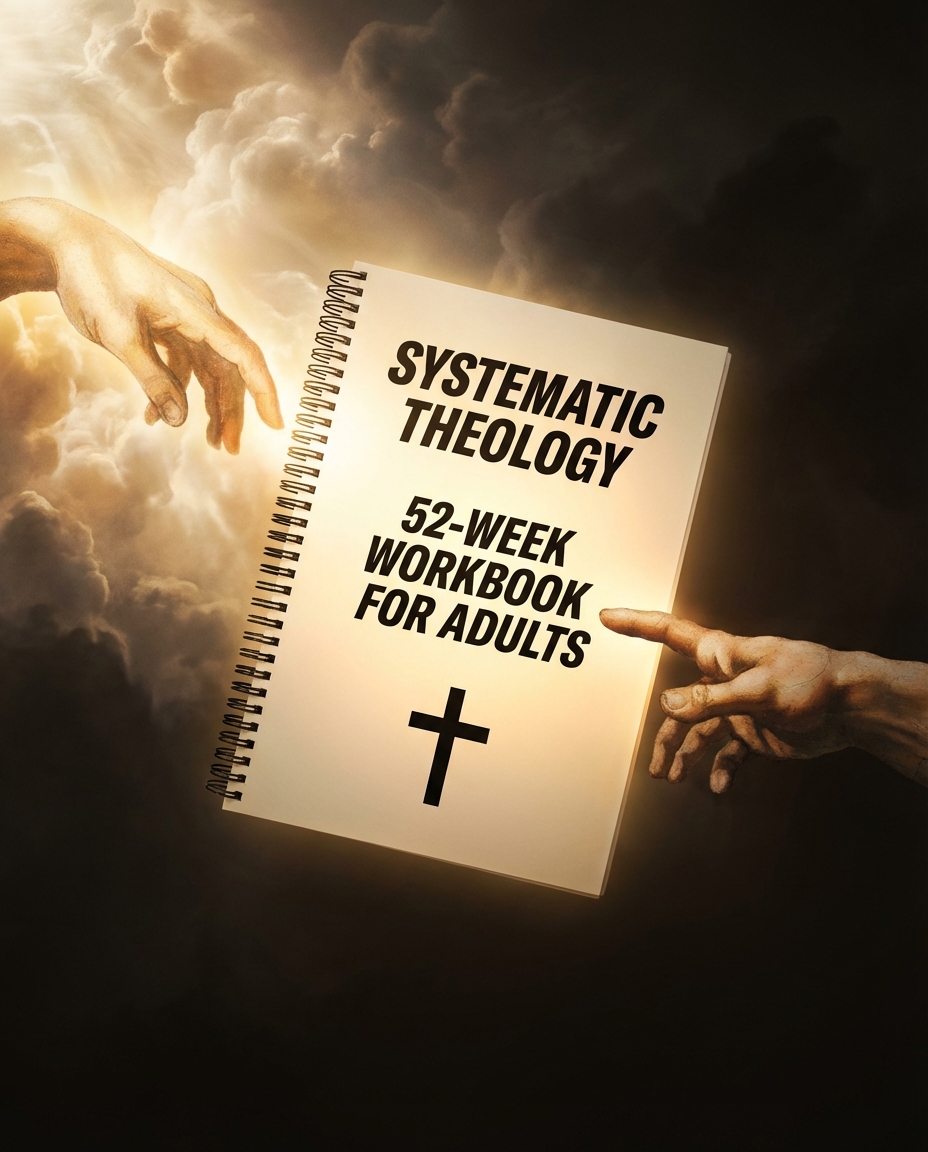
Ran for 1 day, from March 10 to March 11, 2026, the last day Crush saw it.
Run by Ellis Parker on Facebook. Crush is not the advertiser and does not verify its claims. See this ad in Meta's Ad Library(opens in a new tab)
Want an ad like this for your product?
Crush makes new ad images for your product from this ad: your logo, your product photo, your offer.
Trials from $19.95 USD, then $79.95 USD a month. Cancel anytime.
About this ad
- Meta Ad Library ID
- 1798988607448630
- Platforms
- Facebook, Instagram, Audience Network, Messenger and Threads
- Relaunches
- 0
- Niche
- Parenting & Kids
Ad text
I’m 68 years old, and I just ordered a systematic theology workbook—because after 50 years in church, I still can’t answer the questions my agnostic neighbor asks. Sunday dinner. Perfectly normal. Then my neighbor Tom asked a simple question. “If God is loving, why does He let children get cancer?” I’m 68 years old. I’ve been a Christian for 50 years. I’ve taught Sunday School. Led Bible studies. Served on the missions committee. And I had no answer. I mumbled something about “God’s plan” and “we can’t understand His ways.” Tom smiled politely and changed the subject. But I knew. He knew. I had nothing. That night, I couldn’t sleep. I’ve spent five decades in church. Thousands of sermons. Hundreds of Bible studies. Countless hours in prayer. And when a genuine question came up, I had… platitudes. Not answers. Just platitudes. The next morning, I called my daughter. “Honey, if someone asked you why God allows suffering, what would you say?” Pause. “Mom, are you okay?” “I’m fine. I just… Tom asked me yesterday and I didn’t have a good answer.” “Well, it’s a mystery, right? We’re not supposed to understand everything.” “But what if there are answers? What if I just never learned them?” That’s when I started looking. I didn’t even know what to Google. “How to defend God?” “Why does God allow suffering?” I found articles. Blogs. YouTube videos. All too complex. Too academic. Too much jargon. I needed something clearer. Something that assumed I didn’t have a theology degree. Two weeks later, I was at Barnes & Noble. Standing in the Christian section, feeling overwhelmed. Then I heard a conversation behind me. A man with his adult son—maybe thirty. The father asked, “So if someone says the Bible’s been changed over 2,000 years, what would you say?” The son didn’t hesitate. “I’d explain we have over 5,800 Greek manuscripts from within decades of the events. Compare that to any other ancient document—we only have about 10 copies of Caesar’s writings from 1,000 years later. If you don’t trust the Bible’s textual reliability, you can’t trust ancient history at all.” I stood there stunned. This man knew more than I did. I walked over. “Excuse me. What are you studying?” The father smiled and held up a comprehensive workbook. “Systematic Theology: 52 Weeks of Theological Thinking. It’s designed for adults who want to actually understand doctrine, not just memorize verses.” “Is it accessible?” “That’s exactly why we chose it. It doesn’t assume seminary training. It walks you through the arguments step by step with clear explanations.” The son added, “Last week I explained the Cosmological Argument to a colleague. He said it was the clearest case for God he’d ever heard.” I looked at the workbook. Clear layout. Structured explanations. Serious learning without prerequisites. “Do you think… would this work for someone my age?” The father smiled warmly. “Half the reviews are from people in their 60s and 70s who bought it for themselves. You’re not alone.” I bought it that afternoon. When I got home, my husband saw it. “What’s that?” “A systematic theology course.” “Why now?” “Because after 50 years as a Christian, I realized I can quote verses but I can’t defend a single doctrine. And I’m tired of feeling inadequate when people ask questions.” He picked it up. “Can I do it with you?” That Sunday, we started Lesson 1: How Do We Know God Exists? Not “because the Bible tells us so.” Actual arguments. The Cosmological Argument—explained clearly. The Moral Argument—with contemporary examples. The fine-tuning of the universe—with real data. My husband leaned in. “I never knew there were actual reasons. I thought it was just faith.” “Me too.” We spent two hours on that one lesson. Not because it was difficult. Because it was fascinating. Week 3, something shifted. At a church potluck, someone mentioned a pastor who’d become an atheist. “It’s so sad,” someone said. “He must have lost his faith.” I spoke up. “Or maybe he never had reasons for it. Maybe he only had feelings.” Everyone looked at me. “What do you mean?” “I mean… most of us can’t actually defend what we believe. We just feel it’s true. But feelings don’t survive logic.” Another person my age asked, “Where are you learning this?” “A systematic theology course. Clear, not credentialed.” “Can you send me the link?” Week 7, my grandson asked me a question. He’s 14. “Grandma, my teacher said evolution proves there’s no God. Is that true?” Old me would’ve said, “Just have faith.” New me said: “Does evolution explain where the first life came from? Or why DNA has information? Or why laws of nature exist at all?” “I… don’t think so.” “Right. Let me show you something.” We opened the course together. When he left, he hugged me. “That actually makes sense.” Week 12, Tom invited us to dinner again. I almost said no. But my husband said, “You’re ready.” Sure enough, Tom brought it up. “Another church scandal. Makes you wonder if any of it’s true.” I took a breath. “Tom, can I ask you something? Do you believe some things are objectively wrong—like torturing a child for fun?” “Of course.” “Where does that moral obligation come from if we’re just molecules in motion?” He paused. “I… never thought about that.” Later, in the car, my husband said, “In 45 years of marriage, I’ve never seen you do that.” “I’ve never been able to.” Week 31, I had a realization. I’d been a Christian for 50 years. But I’d only been a thinking Christian for 31 weeks. And those weeks transformed my faith more than the previous five decades. Here’s what I wish someone had told me earlier: Faith isn’t just about feeling. It’s about knowing. Not because feelings don’t matter. But because feelings alone can’t survive intellectual attack. If you’re my age… If you’ve spent decades in church… If you can quote Scripture but freeze at questions… I need you to know: It’s not too late. You’re not too old. Truth isn’t complicated. It just needs to be explained clearly. I wasted 50 years thinking systematic theology wasn’t for me. I was wrong. And I’m not wasting another year.
Where the ad sends people
resory.co
If you are a Christian believer read this..☝️
CHRISTIAN PARENTING INSIDER Workbook for Adults Pastor Exposes the Shocking Truth: Why 67% of Adult Believers Abandon Faith During Life's Hardest Moments (And How to Stop It) November 03 2025 at 10:24 am EDT "The adults who walked away knew all the Bible verses. That's exactly why they left." They s...
Shop now: resory.co(opens in a new tab)